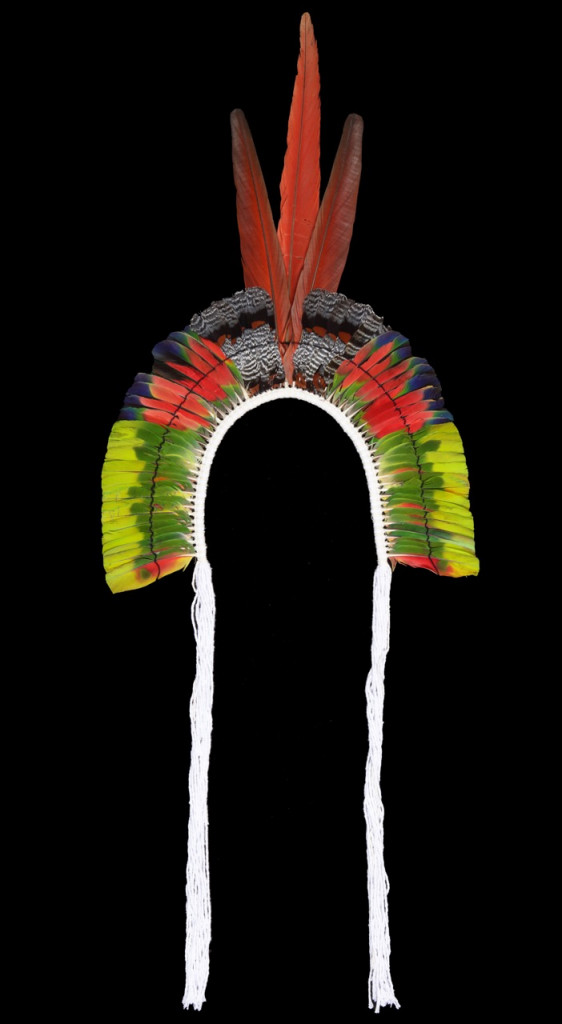
Two splendid small Kayapo Amazon Indigenous feather male 'àkkàkry-re' headdresses
Brazil, Pará, collected in the 1950s-1960s
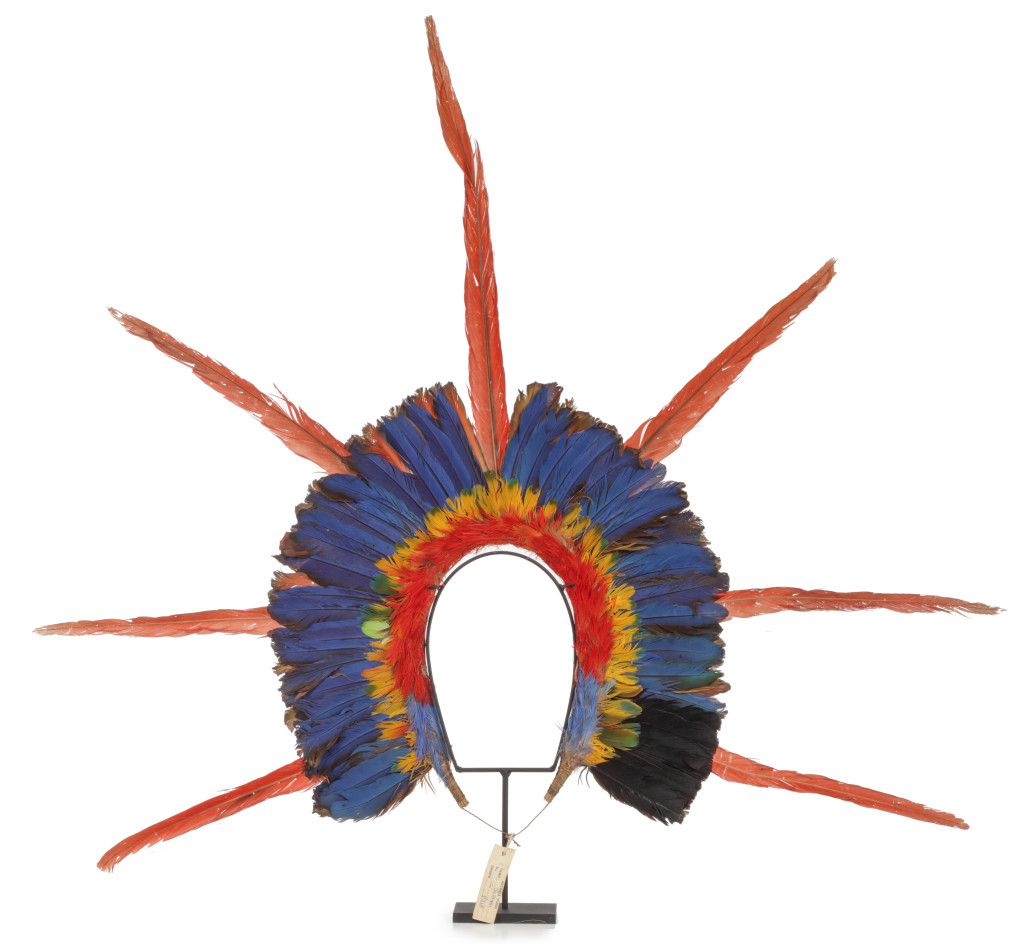
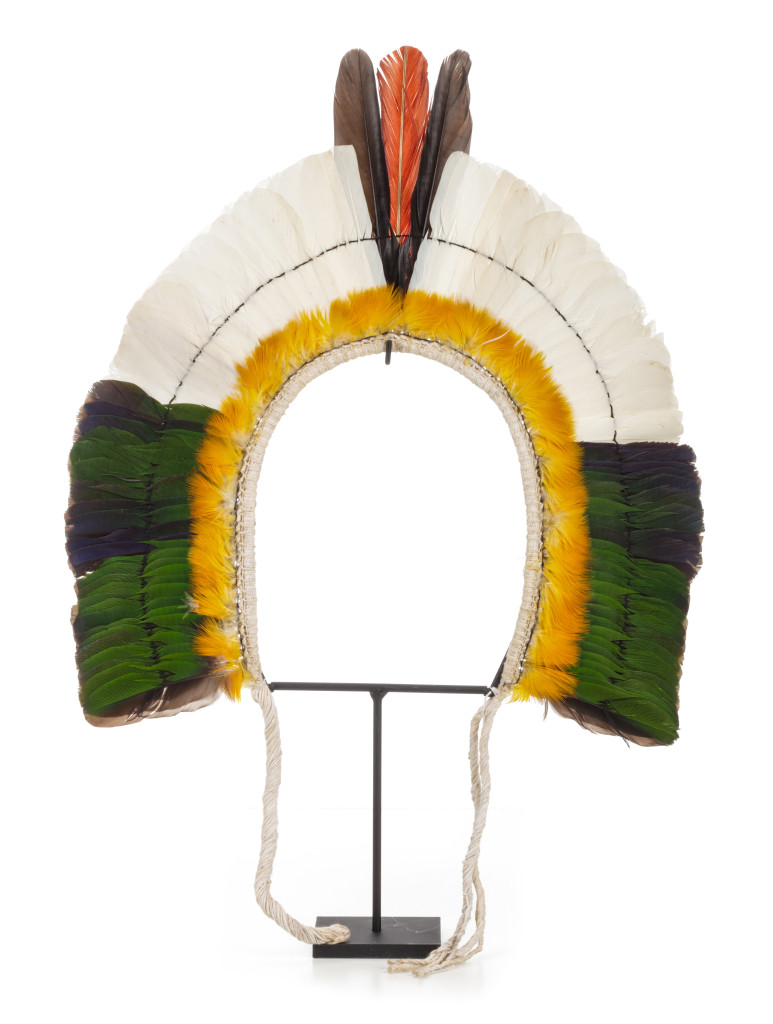
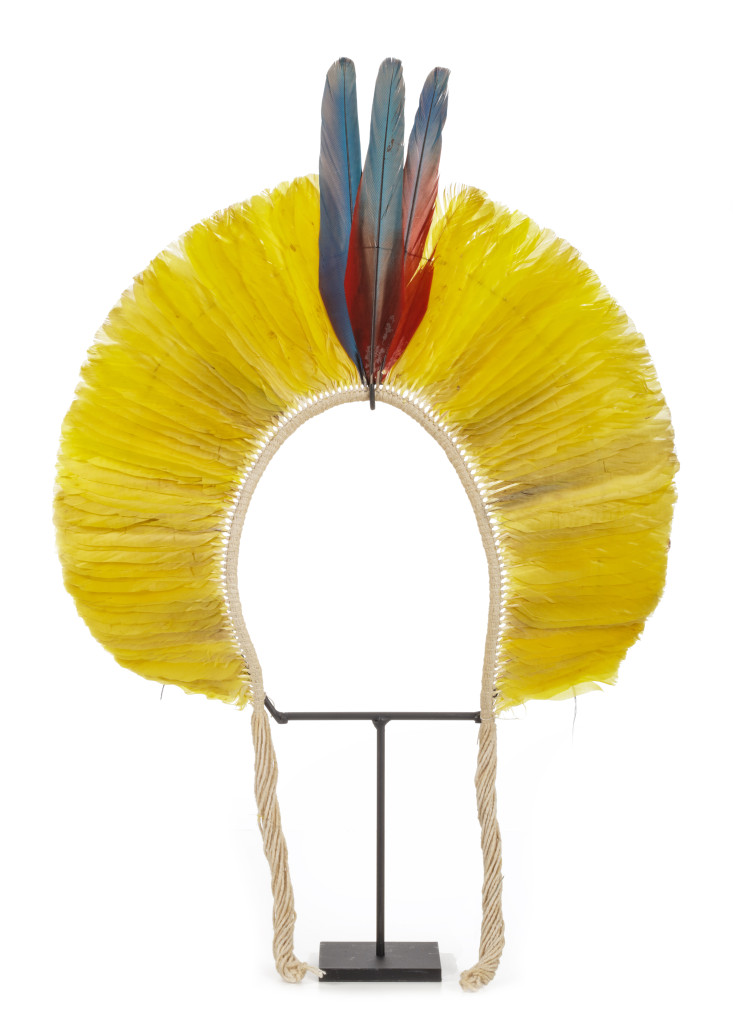
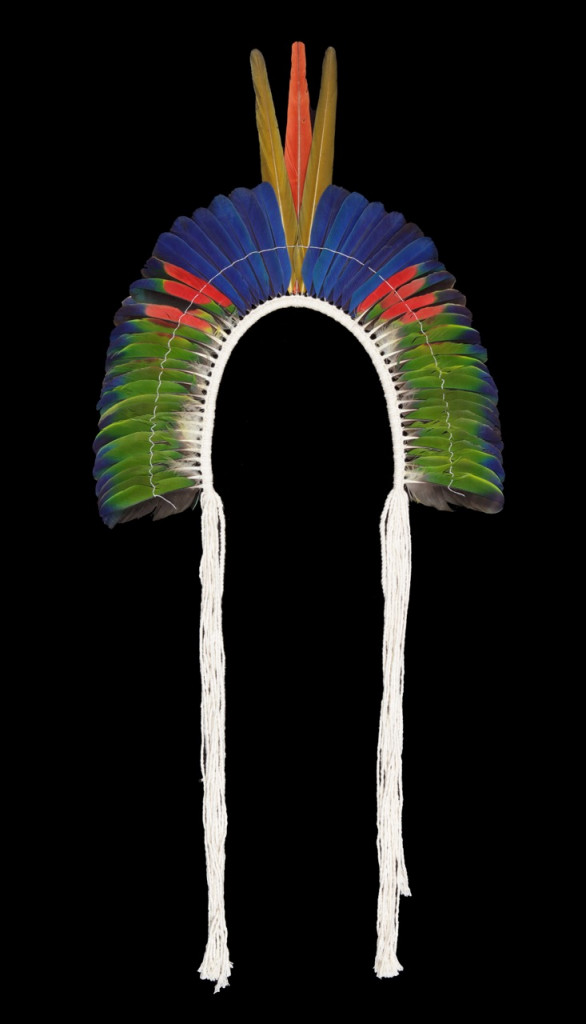
These small headdresses, which male dancers would wear during ritual and ceremony, have feathers used in variants determined by a specific ritual privilege. They both primarily consist of cotton string and green Amazon Parrot (Psittacidaespp.) feathers. One has a row of Sunbittern (Eurypyga helias) feathers to the sides of three centrally placed long Scarlet Macaw (Ara macao) wing feathers at the top. The other has a row of cropped Yellow-breasted Blue Macaw (Ara ararauna)
with centrally two yellow and macaw feathers.
H. 94 cm & H. 101 cm (incl. cotton strings)
Provenance:
Collection of an anthropologist, Ireland (collected in the 1950s-1960s)
Literature:
- Gisela Völger & Ursula Dyckerhoff et al., Federarbeiten der Indianer Südamerikas aus der Studiensammlung Horst Antes, Oktagon Verlag, Stuttgart, 1995, p. 228-229
- Gustaaf Verswijver, Kaiapo Amazonia: the art of body decoration, Snoeck- Decaju & Zoon, Ghent, 1992, p. 169
The Kayapo are linguistically and culturally counted among the Ge peoples, who once settled large parts of central and eastern Brazil but are traditionally semi-nomads. Now they no longer build their villages in remote clearings near small rivers, but on the large navigable rivers near government stations with schools, medical care, shops, and an airport. However, the men still occasionally venture on larger hunting trips. The Kayapo are passionate makers and users of feather headdresses. They keep thirty-five species of birds as pets, which they collect with blunt arrows without injuring them. Because the birds as a result of loss of habitat have become scarcer, the Kayapo now replace the valuable feathers in headdresses that are intended for sale (the Brazilian government has allowed them to do this since the early 1970s), with feathers that are more common and less important to them. Wearing feather headdresses is associated with privileges that were bestowed upon a man throughout his life. The composition, simple or detailed, as well as the form of the feather headdress, are determined exclusively by individually granted privileges. This way, leaders, elders, chiefs, and shamans are distinguished from other members of society.
These small headdresses, which male dancers would wear during ritual and ceremony, have feathers used in variants determined by a specific ritual privilege. They both primarily consist of cotton string and green Amazon Parrot (Psittacidaespp.) feathers. One has a row of Sunbittern (Eurypyga helias) feathers to the sides of three centrally placed long Scarlet Macaw (Ara macao) wing feathers at the top. The other has a row of cropped Yellow-breasted Blue Macaw (Ara ararauna)
with centrally two yellow and macaw feathers.
H. 94 cm & H. 101 cm (incl. cotton strings)
Provenance:
Collection of an anthropologist, Ireland (collected in the 1950s-1960s)
Literature:
- Gisela Völger & Ursula Dyckerhoff et al., Federarbeiten der Indianer Südamerikas aus der Studiensammlung Horst Antes, Oktagon Verlag, Stuttgart, 1995, p. 228-229
- Gustaaf Verswijver, Kaiapo Amazonia: the art of body decoration, Snoeck- Decaju & Zoon, Ghent, 1992, p. 169
The Kayapo are linguistically and culturally counted among the Ge peoples, who once settled large parts of central and eastern Brazil but are traditionally semi-nomads. Now they no longer build their villages in remote clearings near small rivers, but on the large navigable rivers near government stations with schools, medical care, shops, and an airport. However, the men still occasionally venture on larger hunting trips. The Kayapo are passionate makers and users of feather headdresses. They keep thirty-five species of birds as pets, which they collect with blunt arrows without injuring them. Because the birds as a result of loss of habitat have become scarcer, the Kayapo now replace the valuable feathers in headdresses that are intended for sale (the Brazilian government has allowed them to do this since the early 1970s), with feathers that are more common and less important to them. Wearing feather headdresses is associated with privileges that were bestowed upon a man throughout his life. The composition, simple or detailed, as well as the form of the feather headdress, are determined exclusively by individually granted privileges. This way, leaders, elders, chiefs, and shamans are distinguished from other members of society.