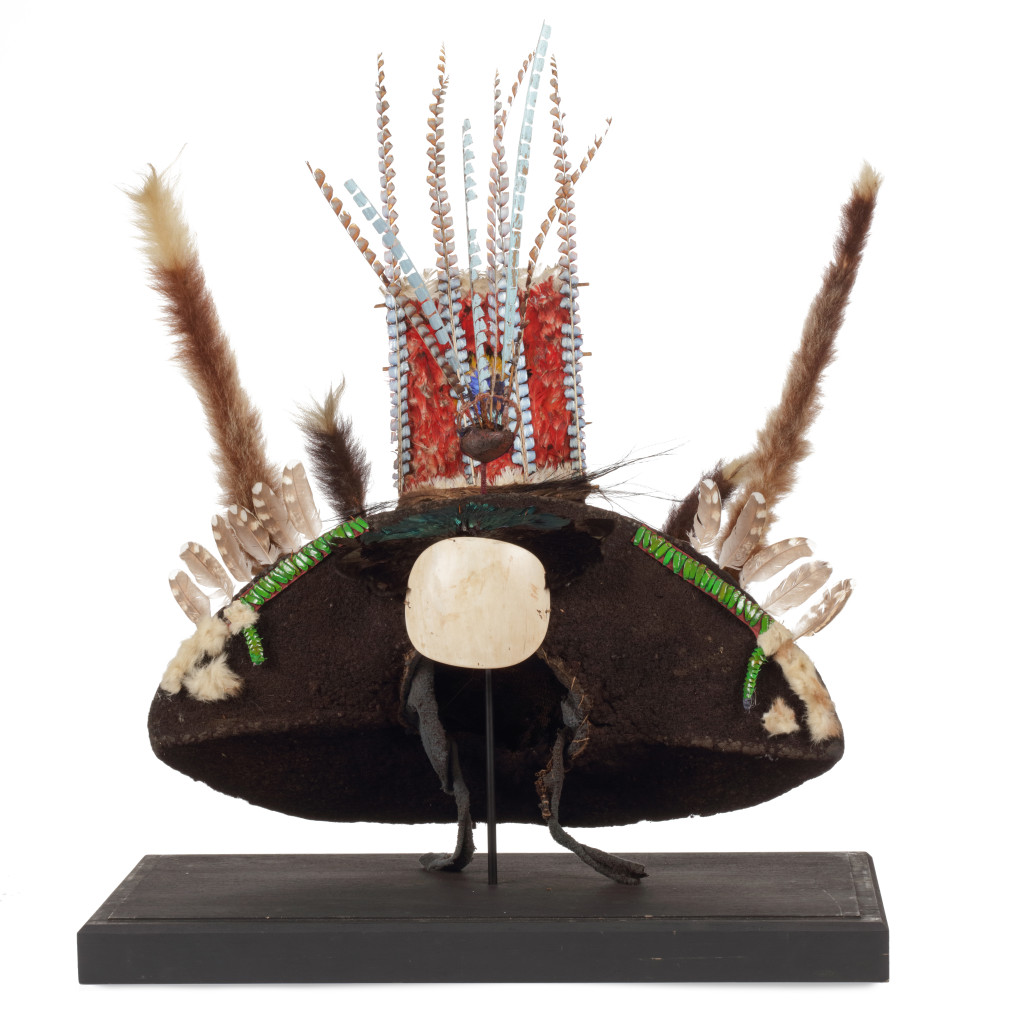
A Huli wigman's ceremonial headdress
Crafted from the wearer’s own hair and adorned with colorful bird-of-paradise feathers, flowers, scarab beetles, shells, and natural pigments
W. 85 x H. 65 x D. 33 cm
The Huli people showcase their striking headdresses, or Huli wigs, during Sing-sings — large, festive gatherings where tribes come together to celebrate, compete, and display cultural pride. These events feature traditional songs, dances, and elaborate body decorations, allowing participants to express their identity and heritage.
Young Huli men, guided by wigmasters, cultivate and shape their hair into wigs through rituals that signify their transition to manhood. When prepared, the wigs are trimmed, adorned, and frequently painted in vivid reds, yellows, and blacks to symbolise the Huli’s bond with nature and their ancestral spirits. Throughout the year, men gather and preserve the exquisite feathers of the Bird-of-paradise that adorn the wigs. During Sing-sings, these headdresses, along with face paint and feathered ornaments, create a captivating display. The men move gracefully, reminiscent of the Bird-of-paradise species their headdresses reflect, ensuring they highlight the stunning iridescent feathers and captivate the women.
Part of the Indonesian Archipelago and Oceania collections.
Related objects
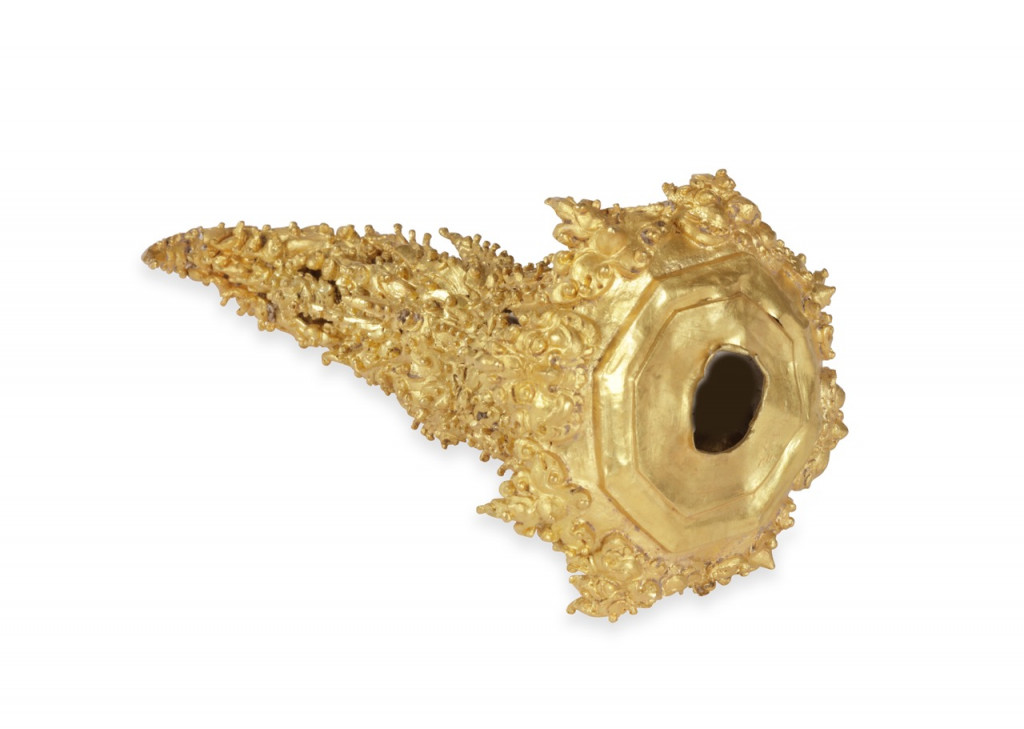
An ancient Hindu-Javanese gold ceremonial dagger or keris hilt or finial
The finial is made from three parts of which only the larger bottom part is detachable. It has a hole at the bottom and traces of clay on the inside. Formed as a slightly bent spire sprouting from lotus leaves, the sides of the bottom part with stylized flowers alternating with masks. Above it the design is continued in an abstract but floral manner. The top finial is bent slightly more, with a deity coming out of a hole on the inside of the curve. The top ending in a fine ornamental curl. The tip with an old restoration (probably early 20th century).
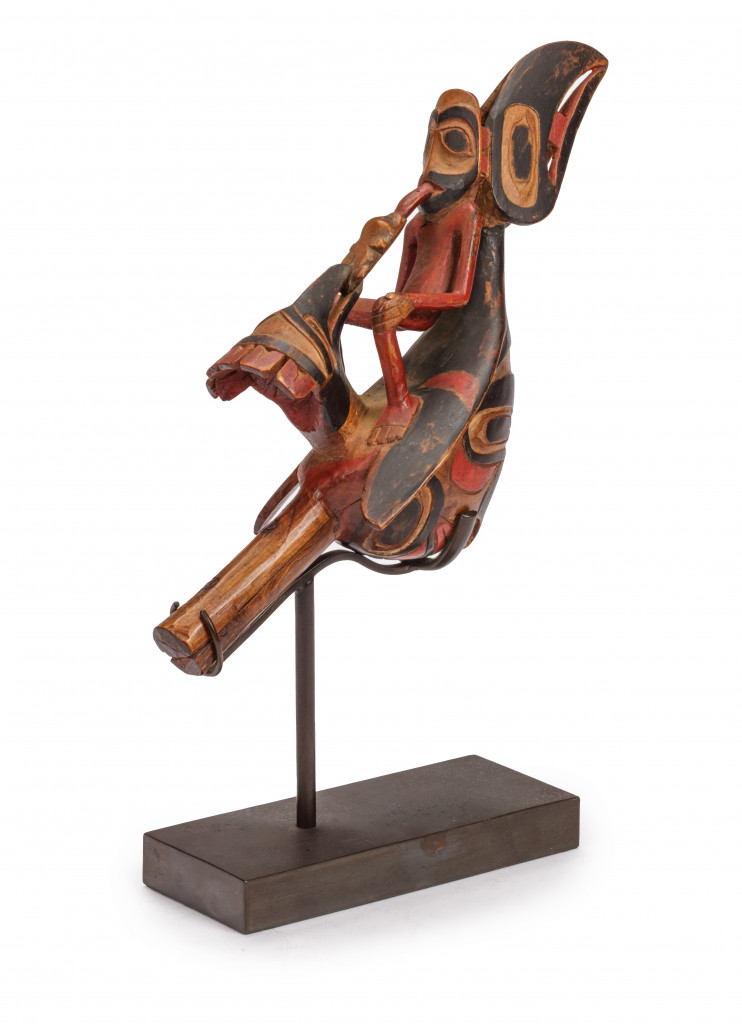
A pigmented wood Tsimshian Chief’s ceremonial ‘Raven’ rattle
_Canada, British Columbia, circa 1860-1880_ _L. 29.5 cm_ Provenance: -Private collection, Brussels -Collection Lemaire, Amsterdam (c. 1990) -Collection Pelt, the Netherlands