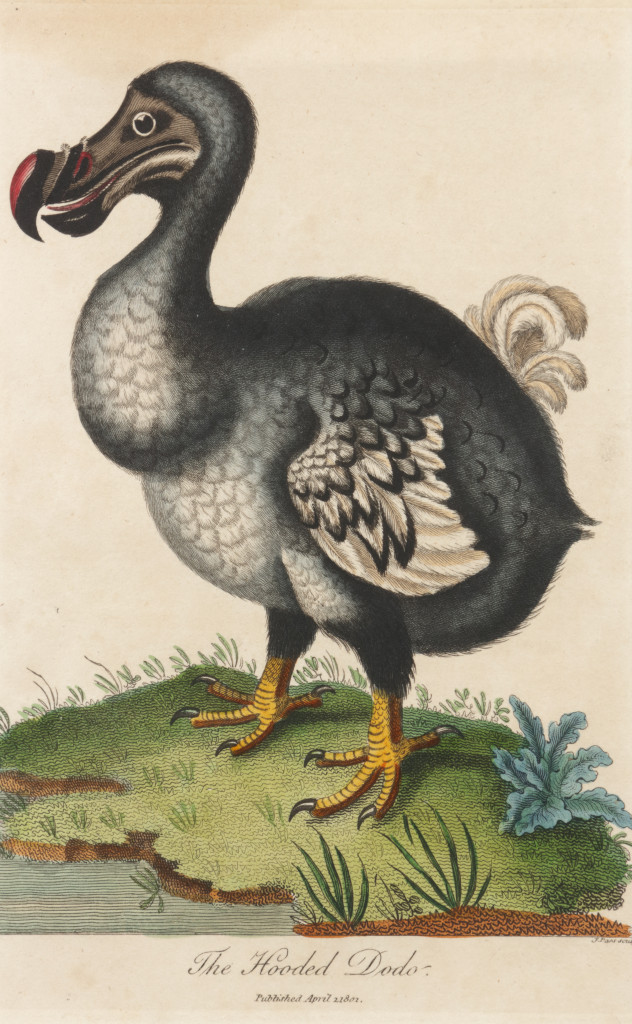
An engraving of ‘The Hooded Dodo, Raphus cucullatus’
Coloured copperplate engraving, H. 19 x W. 11.6 cm
The dodo, or walghvoghel (wallow or loathsome bird), the name given by Dutch sailers who in 1598 were the first to mention this flightless bird on the island of Mauritius, didn’t long survive the arrival of humans. Having no predators on Mauritius, the dodo was flightless and not shy, so itself and its nest were easy prey for sailers, and the rats, pigs, dogs and cats introduced by the Dutch who occupied the island, because of the precious ebony trees growing there. After the arrival of the Dutch the island, entirely covered in forest, was quickly deforestated, destroying the habitat of the dodo and many other indigenous species, contributing to their extinction. The last accepted sighting of a dodo in Mauritius was in 1662.
Part of the Africa and Indian Ocean collections.
Related objects
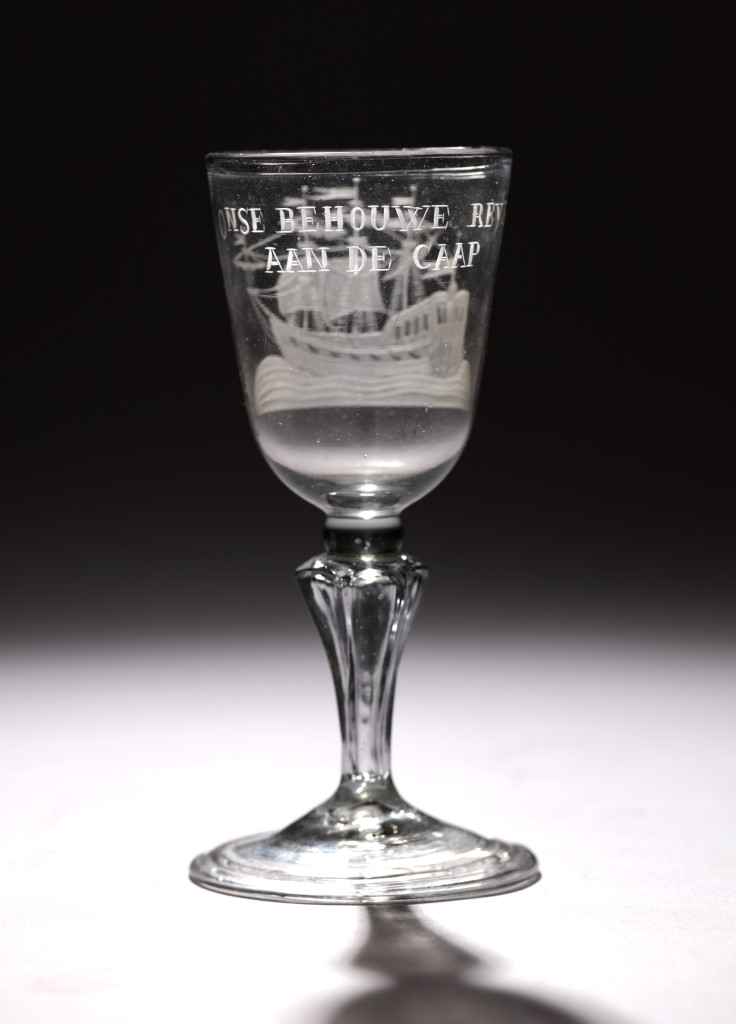
A glass with the engraving of an East-Indiaman with text
South african commemorative cape glass
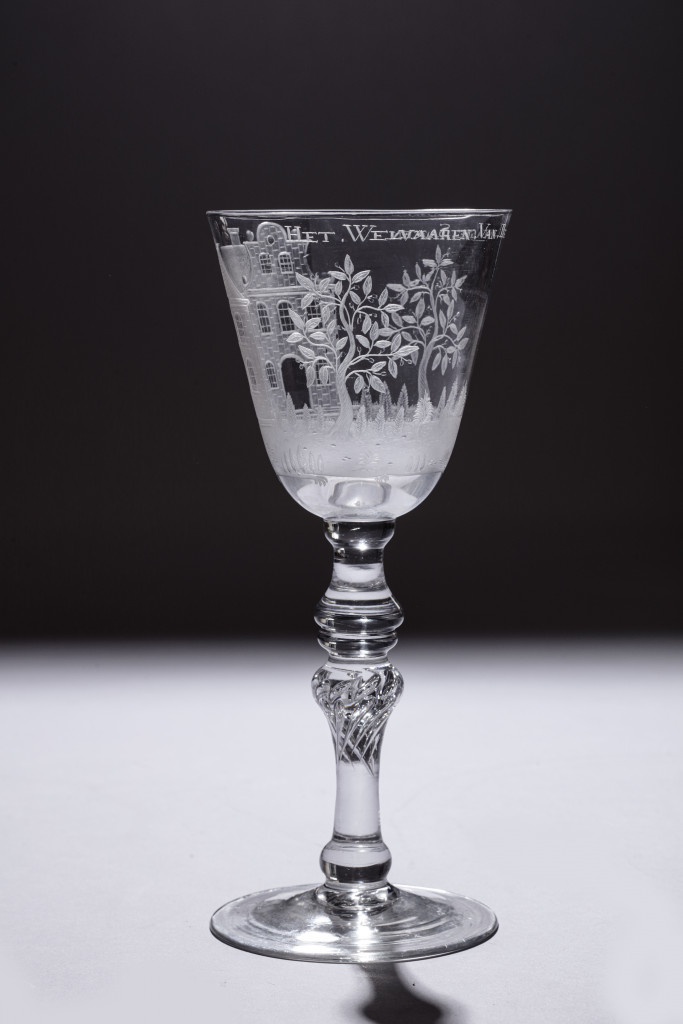
A splendid commemorating glass with fine engraving of a plantation house and coffee shrubs with a text reading: Het.Welvaaren.Van.De.Plantagie.Saxen (the prosperity of the Plantation Saxen)
This glass shows that there was a German presence in Surinam, of which the scale is unknown to many. Without doubt, the most famous German heading for Surinam must be Frankfurter Maria Sybilla Merian (1647-1717), the artist depicting the tropical flora and fauna. The Dutch historian and abolitionist Julien Wolbers (1819-1889) wrote in his book *De Geschiedenis van Suriname *(1861: 171-172) that the German migration to Surinam can be seen as a direct result of the migration of Germans to the Netherlands, which was highly constant over a course of four centuries. Images of a coffee plant can’t be found in the oeuvre of Meriam, because around 1720 the first coffee-trees were planted by a German-born silversmith named Hansbach.
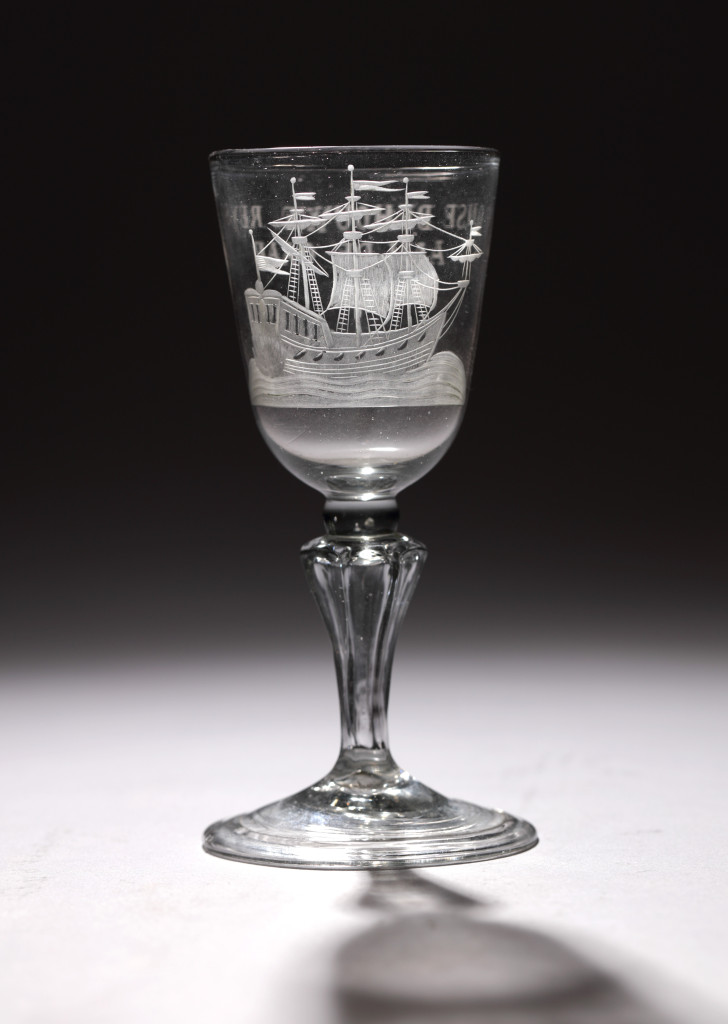
A glass with the engraving of an East-Indiaman and with text "HET WEL VAAREN VAN DE OOSTINDISCHE COMPAGNIE"
The Dutch have a long tradition of drinking games, and various glasses were made to get your guests as drunk as possible, the sooner the better. The Dutch liked (and still like) their drinks, and also during celebratory moments, the glass was raised. Often, with birth, marriage or any other family celebration, special glasses were made that were used to toast with and that would be passed to one another. But also amongst colleagues drinking was greatly appreciated. The glasses present show that the different chambers of the East and West India Trading Companies drank on the welfare of their ships and trade, and the glass welcoming people to Batavia shows that even upon arrival drinks were mandatory.