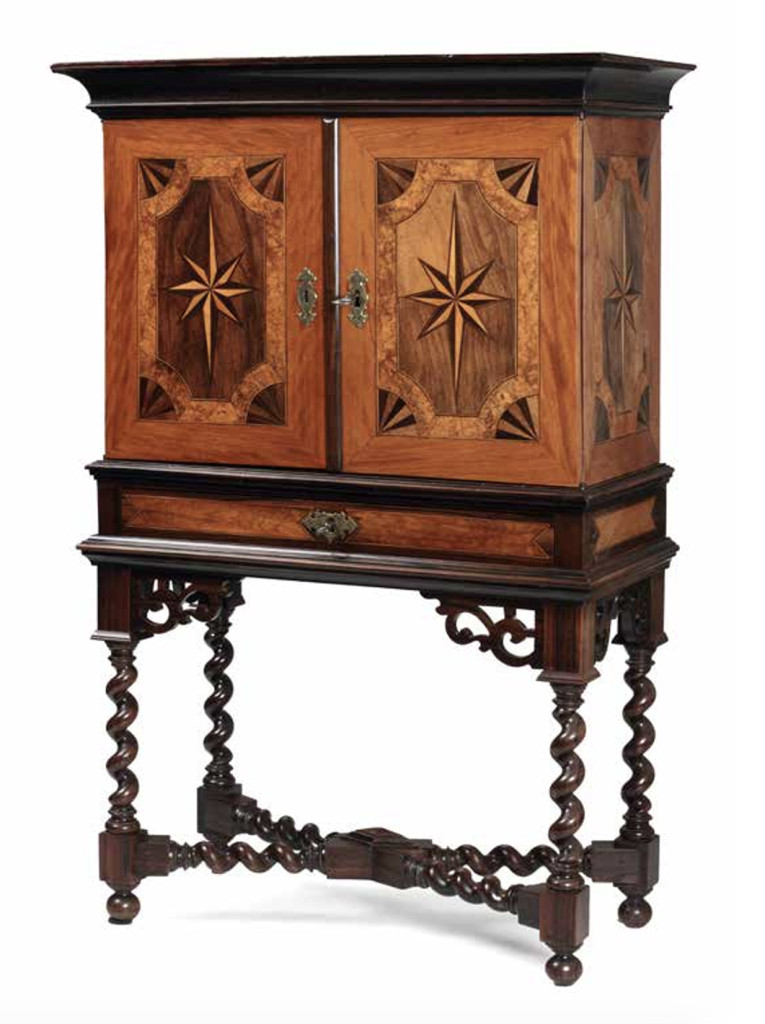
A Dutch-colonial Sri Lankan miniature cabinet on stand
Sri Lanka (Ceylon), mid 18th century
Executed in various woods, including coromandel, satin wood, rosewood, amboyna, amboyna burr, teak, palm wood, sandal, jackwood and nedun wood.
H. 96 x W. 62.8 x D. 30.7 cm
Provenance:
Jonkheer Diederik Gregorius van Teylingen (1902-1993), who was the last scion of the noble van Teylingen family. He was the son of Arnout Adriaan van Teylingen (1870-1917) and Henrietta Catherina Elisabeth Volkiera Bentinck van Schoonheten (1871-1947).
Some wealthy ladies in Amsterdam in the Dutch 17th century had extensive doll’s houses to play with (like the famous late 17th century doll’s house of Petronella Oortman, now in the Rijksmuseum). Miniature furniture was also popular among the ladies in Holland. Likewise in Batavia (Jakarta) and Colombo wealthy ladies often had fine pieces of miniature furniture for the show and to store small precious objects in. The present one is a particularly rich example with extensive inlays of a large number of different tropical woods from Sri Lanka. Furniture from Batavia with inlays is practically unknown and from Sri Lanka only a few pieces with inlays, mainly ivory and ebony star-inlays, are known. The present extensively inlaid miniature cabinet made in the VOC workshops of Sri Lanka is unique and most likely made by a Dutch cabinetmaker working in Colombo or Galle. Possibly the only completely veneered piece of furniture from one of the VOC settlements is the famous 'Swellengrebel bureau-cabinet', probably made by a German cabinetmaker working at the Cape of Good Hope in the mid 18th century (illustrated in: Uit Verre Streken, June 2005, no. 1 and in: Goede Hoop, Zuid Afrika en Nederland vanaf 1600, Rijksmuseum, pg. 98-99)
Executed in various woods, including coromandel, satin wood, rosewood, amboyna, amboyna burr, teak, palm wood, sandal, jackwood and nedun wood.
H. 96 x W. 62.8 x D. 30.7 cm
Provenance:
Jonkheer Diederik Gregorius van Teylingen (1902-1993), who was the last scion of the noble van Teylingen family. He was the son of Arnout Adriaan van Teylingen (1870-1917) and Henrietta Catherina Elisabeth Volkiera Bentinck van Schoonheten (1871-1947).
Some wealthy ladies in Amsterdam in the Dutch 17th century had extensive doll’s houses to play with (like the famous late 17th century doll’s house of Petronella Oortman, now in the Rijksmuseum). Miniature furniture was also popular among the ladies in Holland. Likewise in Batavia (Jakarta) and Colombo wealthy ladies often had fine pieces of miniature furniture for the show and to store small precious objects in. The present one is a particularly rich example with extensive inlays of a large number of different tropical woods from Sri Lanka. Furniture from Batavia with inlays is practically unknown and from Sri Lanka only a few pieces with inlays, mainly ivory and ebony star-inlays, are known. The present extensively inlaid miniature cabinet made in the VOC workshops of Sri Lanka is unique and most likely made by a Dutch cabinetmaker working in Colombo or Galle. Possibly the only completely veneered piece of furniture from one of the VOC settlements is the famous 'Swellengrebel bureau-cabinet', probably made by a German cabinetmaker working at the Cape of Good Hope in the mid 18th century (illustrated in: Uit Verre Streken, June 2005, no. 1 and in: Goede Hoop, Zuid Afrika en Nederland vanaf 1600, Rijksmuseum, pg. 98-99)
Related objects
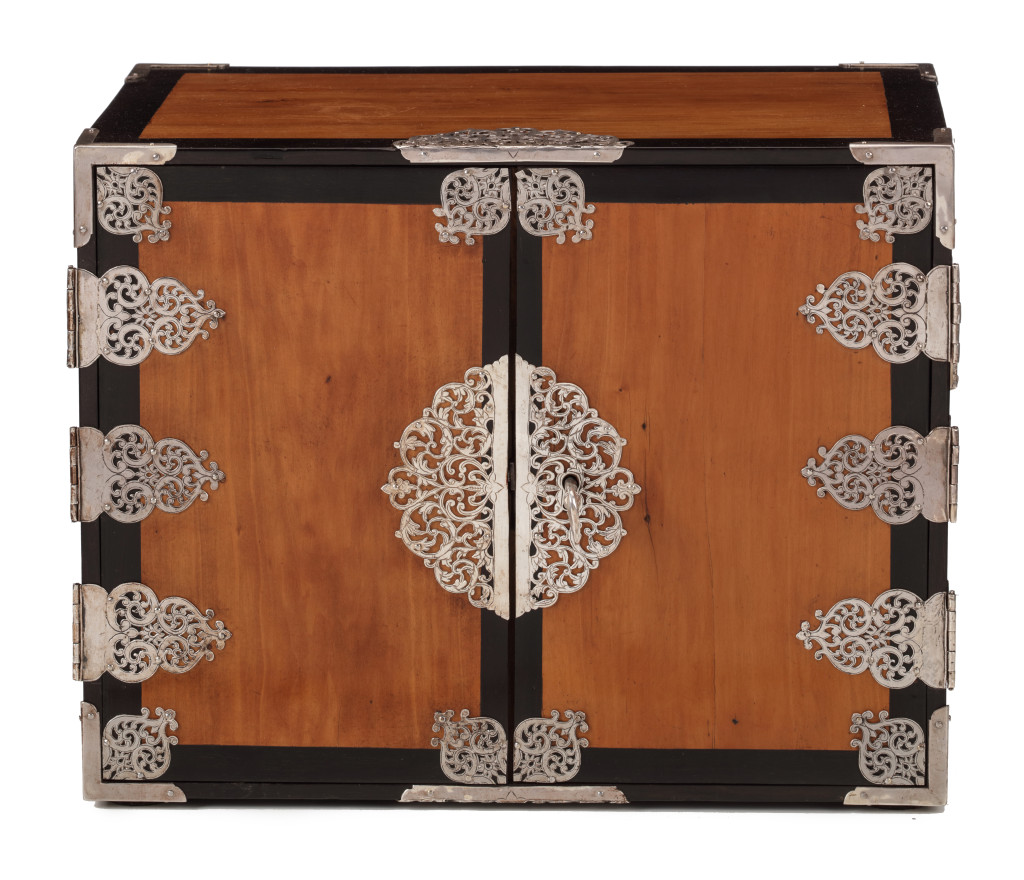
A Dutch-colonial amboyna and ebony collector's cabinet with silver mounts
_Batavia (Jakarta) or Sri Lanka, late 17th/early 18th century_ _H. 29 x W. 37 x D. 23.5 cm_ Provenance: Hague antiques trade Private collection, the Netherlands
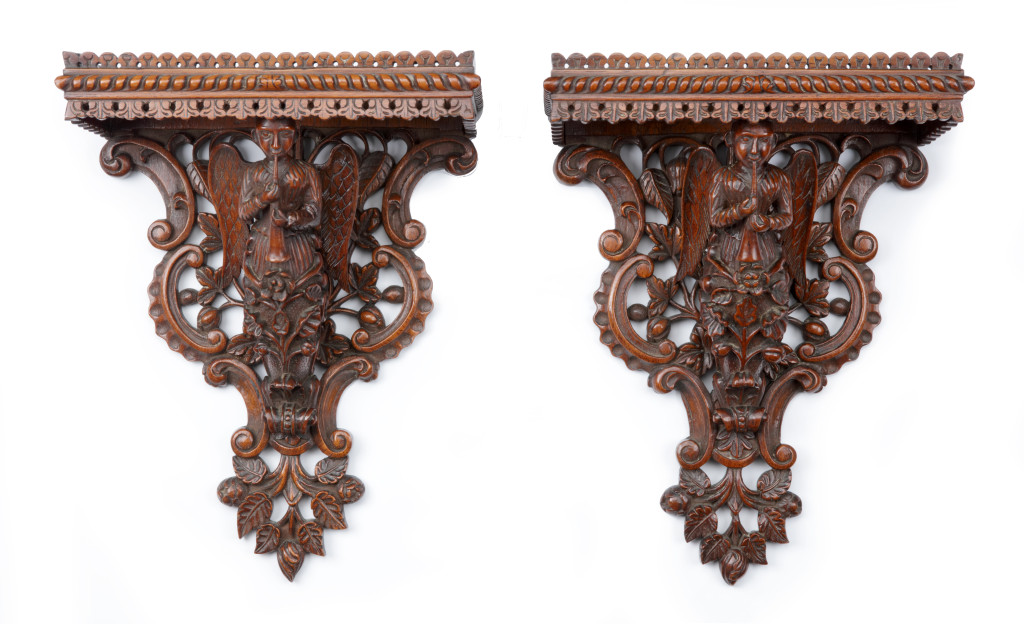
A pair of seldomly seen French Indian Colonial teak wood consoles
French India, Pondicherry, late 19th century
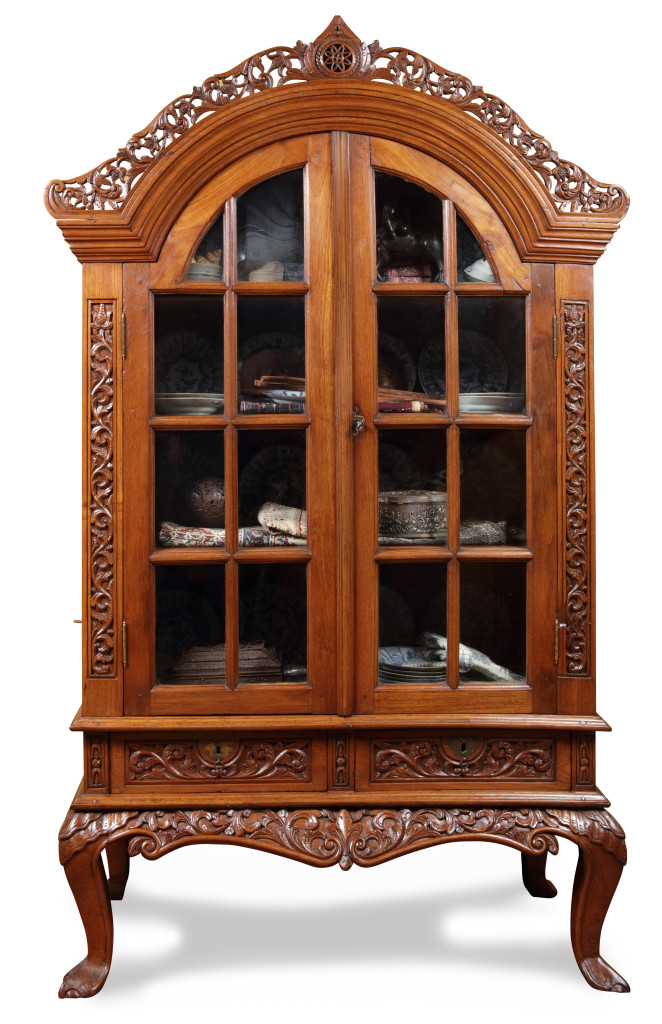
An Indonesian Djati display cabinet
Chinese furniture-makers working in Batavia, late 18th century, dated 1799