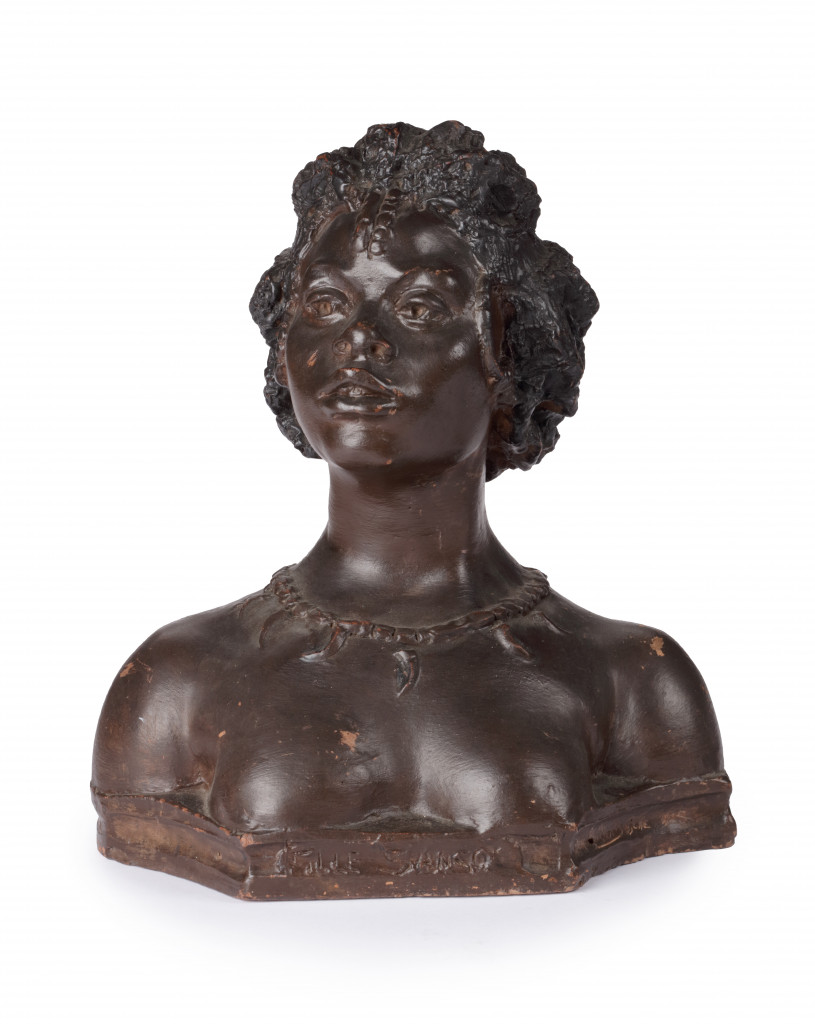
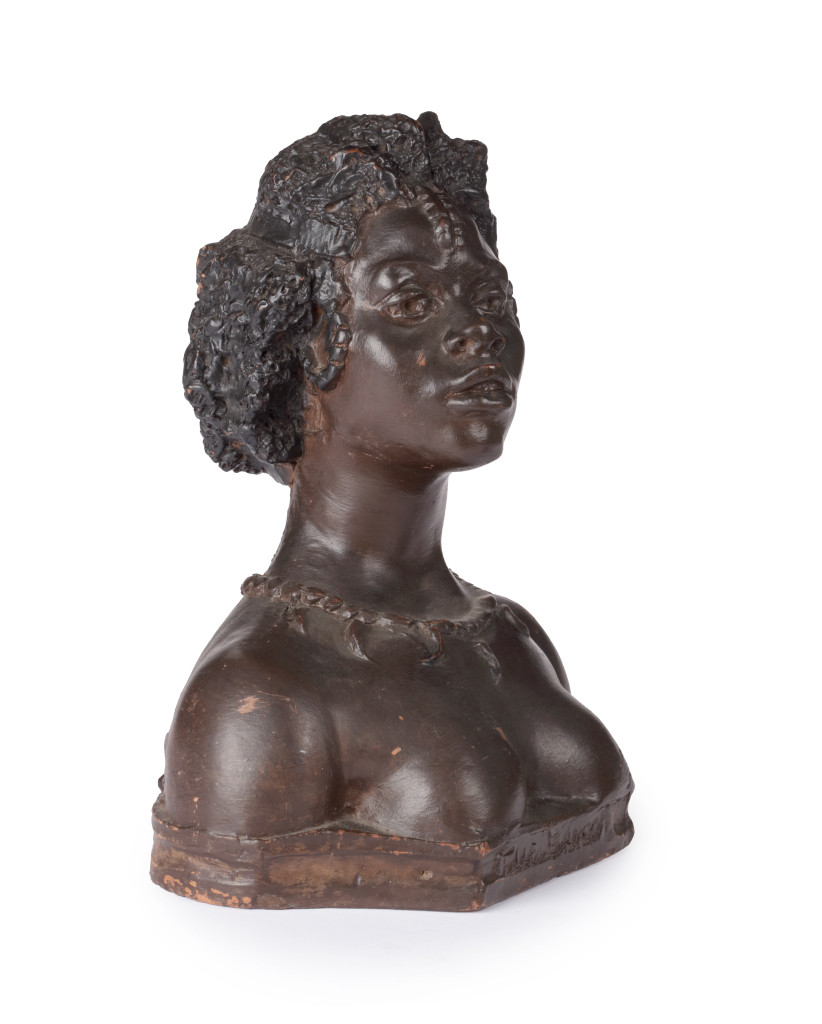
Dominique van den Bossche (1854-1906)
H. 30 cm
Depicted is her head with a striking hairstyle, decorated with jewellery that seems to continue over her face. She wears a necklace but is furthermore nude. Dominique van den Bossche (1854-1906), alias Domien van den Bossche, was a sculpturist from Ghent who worked mainly in terracotta. The woman depicted is probably a woman from a Congolese tribe, a colony of Belgium. From 1885 until 1908, Congo was (brutally) ruled by Belgium's king Leopold II. Many artists went to Africa funded by the government to depict its people, making the continent more approachable to investors.
Part of the Africa collection.
Related objects
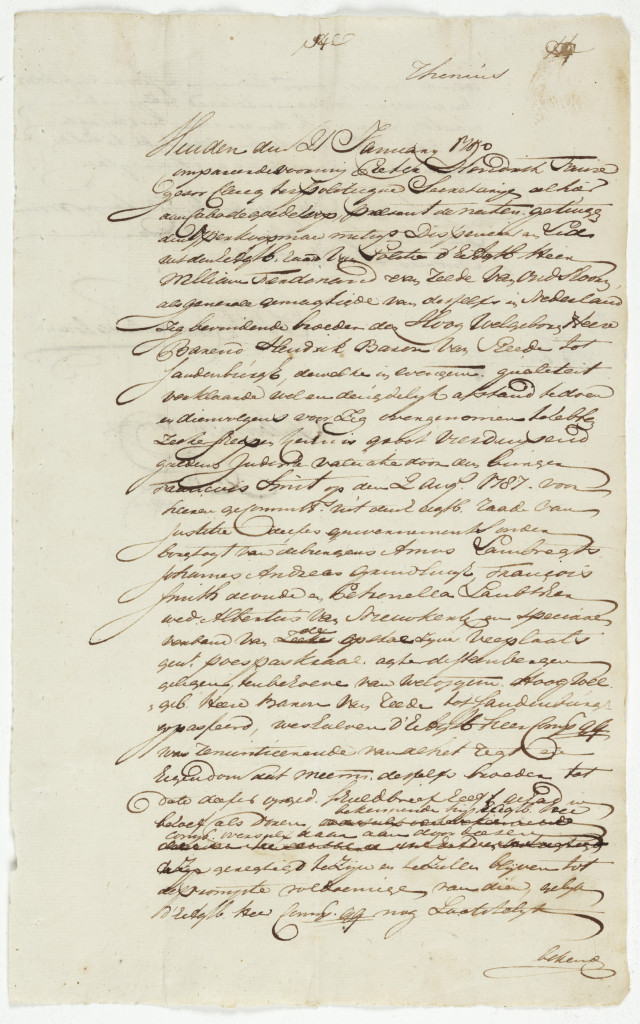
A cape of Good Hope manuscript of a land grant, dated 21 january 1780, signed by W.F. van Reede van Oudtshoorn and witnessed by P. Fauze, secretary of the council policy
South-African land grant, dated 1780
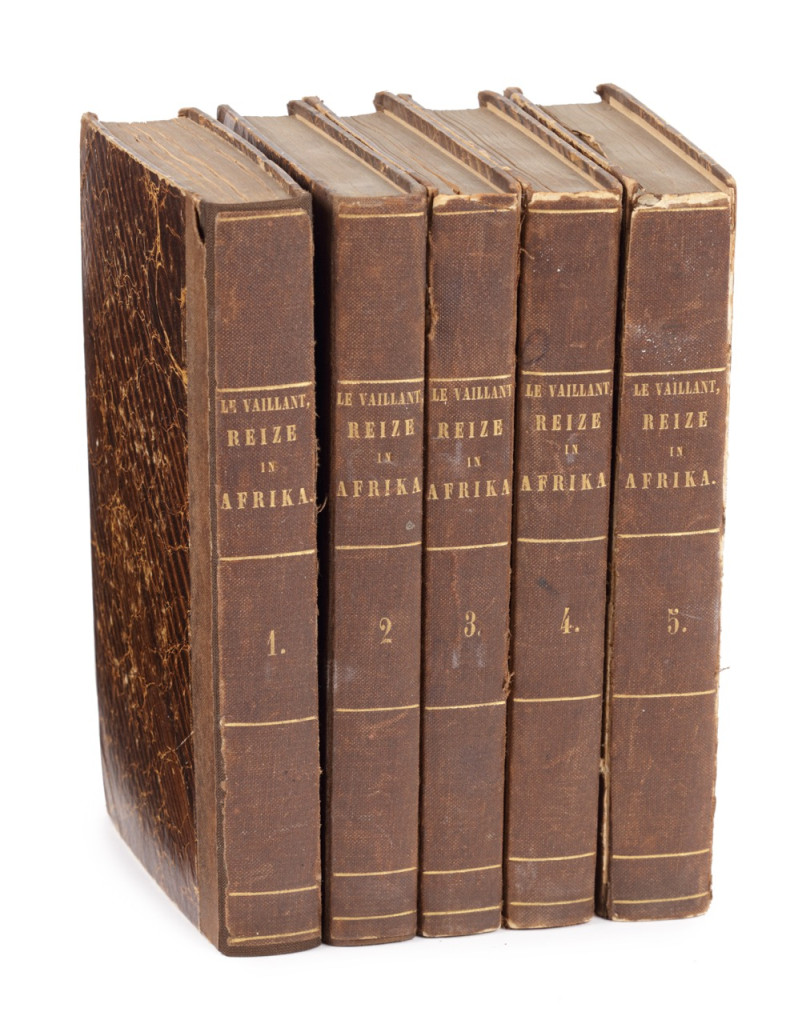
Reize in de binnenlanden van Afrika, langs Kaap de Goede Hoop, in de jaaren MDCCLXXX tot MDCCLXXXV by François Levaillant (1753-1824)
François Levaillant was a French author, explorer, naturalist, zoological collector, travel writer and noted ornithologist. In Surinam where he grew up, he developed an interest in the local fauna. In 1763 his family returned to France, where in 1773 he married Suzanne de Noor and after a short career in the army, worked with an apothecary, Becoeur, who had developed an arsenic-based soap to preserve birds, and in 1777 became a trader in taxidermy in Paris. In 1780, at the age of 27, he went to the Cape, sponsored by Jacob Temminck, with the understanding that he would strengthen Temminck’s natural history collection. There, Levaillant made three journeys into the hinterland of the Cape, collecting and describing over two thousand specimens of birds, insects, mammals and plants, which he took back to Europe, establishing his reputation within the scientific community. He published Voyage dans l’intérieur de l’Afrique (1790) and Seconde voyage dans l’intérieur de l’Afrique (1796), both of which were best-sellers across Europe. After this success he also published Histoire naturelle des oiseaux d’Afrique (1796-1808), and Histoire naturelle des oiseaux de paradis with famous drawings by Jacques Barraband.
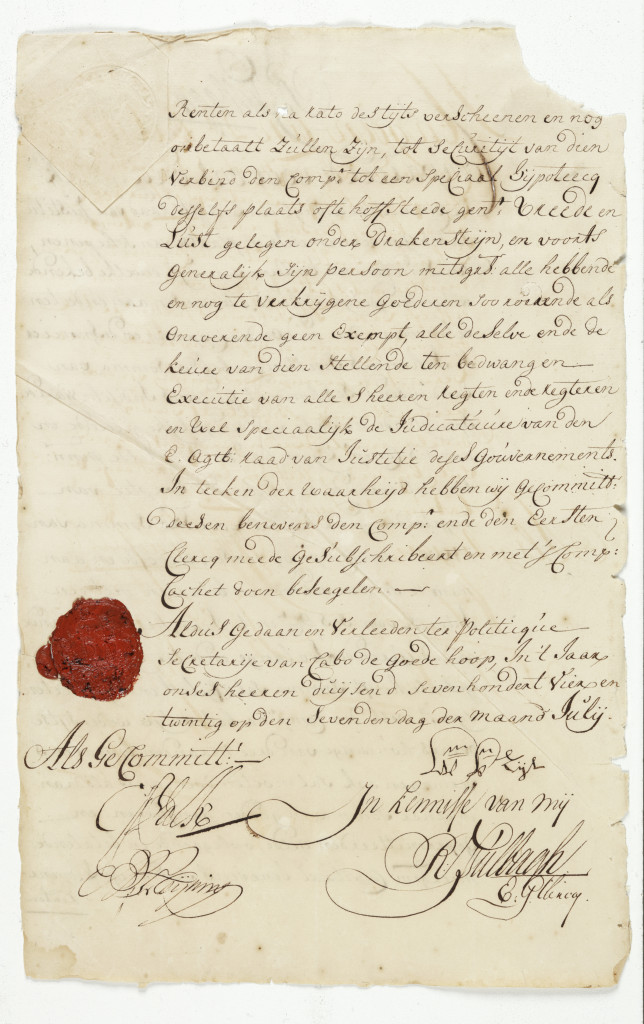
A Cape of Good Hope land grant, dated 7th July 1724, with red wax seal cdg hoop and signed by the chief clerk of the 'Raad van Justitie' Rijk Tulbagh (1699-1771)
South-African land grant, 1724, signed Tulbagh