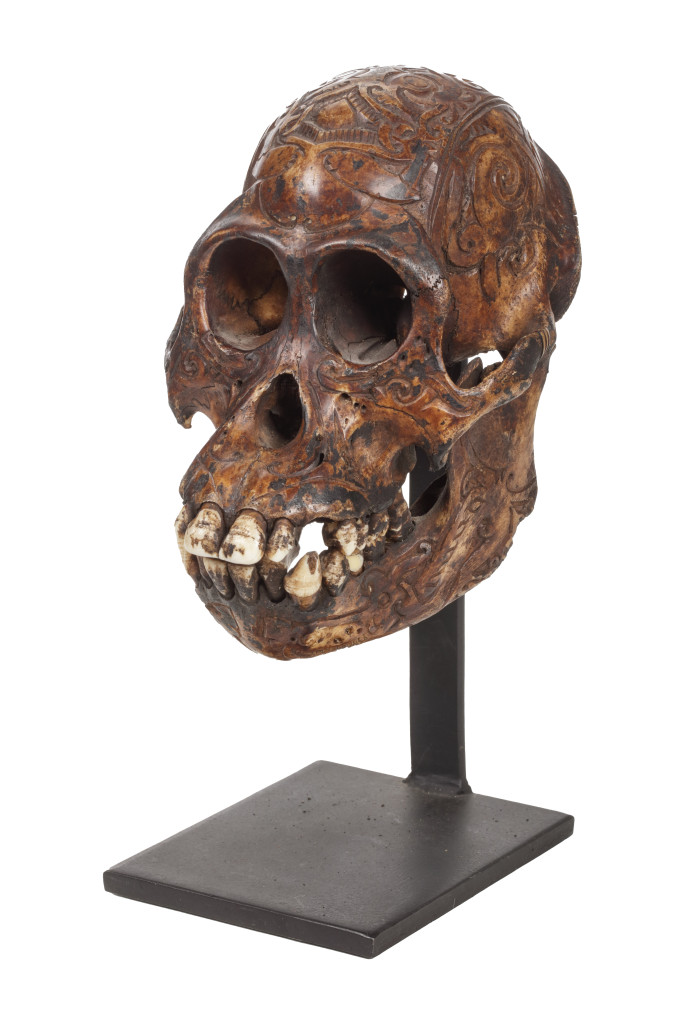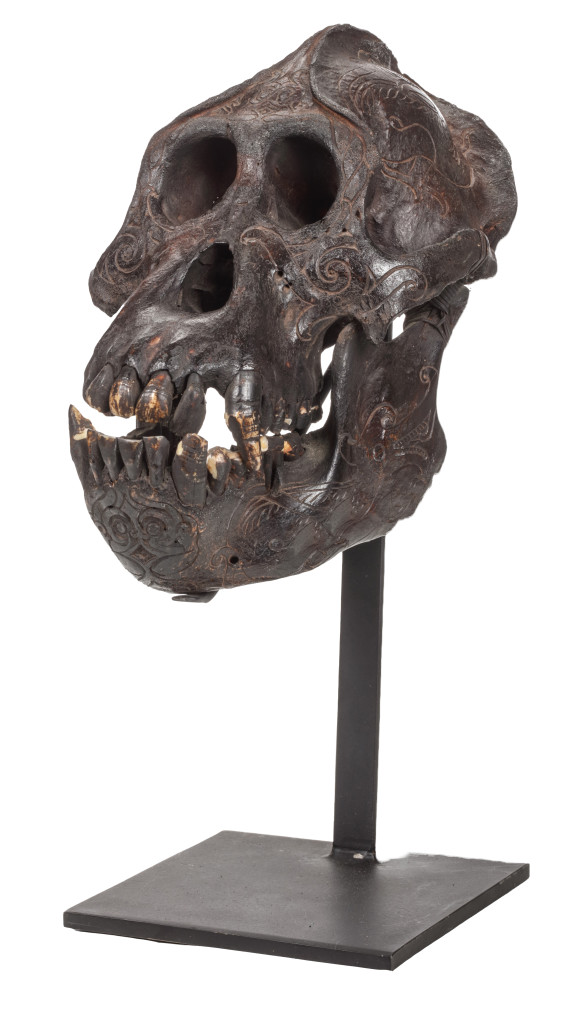
A Dayak carved male Orangutang skull (Pongo pygmaeus)
Borneo, late 19th/early 20th century
Provenance:
Collection of a Mission house, Southern Netherlands (by repute)
Collection Jo DeBuc, Belgium
Private collection, Belgium
Dayaks carve animal skulls, especially wild boar, deer, and buffalo, to symbolize and convey their affinity with nature. Hunting was formerly sacred and a means of survival. Respectful and ritualistic hunting of animals, seen as spiritual symbols, preserved human-nature harmony. The animal’s skull was cleaned and carved with intricate themes and patterns to symbolize protection, strength, and life after being hunted.
Dayak societies use carved skulls for several purposes. They are displayed in Dayak longhouses to honor the hunter’s bravery and ability. Skulls are thought to fend off evil and bring prosperity to the home. Some carved skulls are used in rituals to honor animal spirits and bless the community. These skulls connect the physical and spiritual worlds for the Dayak, promoting balance and honoring life and death.
Carving is sacred, executed by trained artisans who have passed down the knowledge. Geometric patterns, stylized creatures, and nature-inspired motifs are common. The Dayak people are connected to their ancestors and the environment via each engraving, which weaves the hunter’s story with the animal’s spiritual force.
Provenance:
Collection of a Mission house, Southern Netherlands (by repute)
Collection Jo DeBuc, Belgium
Private collection, Belgium
Dayaks carve animal skulls, especially wild boar, deer, and buffalo, to symbolize and convey their affinity with nature. Hunting was formerly sacred and a means of survival. Respectful and ritualistic hunting of animals, seen as spiritual symbols, preserved human-nature harmony. The animal’s skull was cleaned and carved with intricate themes and patterns to symbolize protection, strength, and life after being hunted.
Dayak societies use carved skulls for several purposes. They are displayed in Dayak longhouses to honor the hunter’s bravery and ability. Skulls are thought to fend off evil and bring prosperity to the home. Some carved skulls are used in rituals to honor animal spirits and bless the community. These skulls connect the physical and spiritual worlds for the Dayak, promoting balance and honoring life and death.
Carving is sacred, executed by trained artisans who have passed down the knowledge. Geometric patterns, stylized creatures, and nature-inspired motifs are common. The Dayak people are connected to their ancestors and the environment via each engraving, which weaves the hunter’s story with the animal’s spiritual force.
Related objects
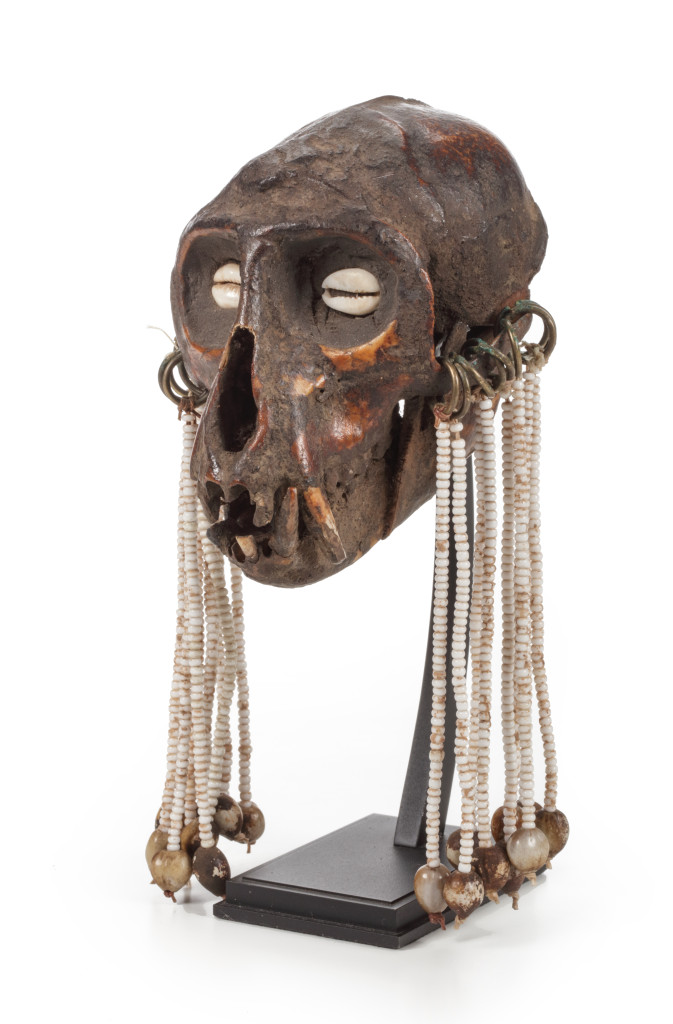
A pair of monkey skull amulets
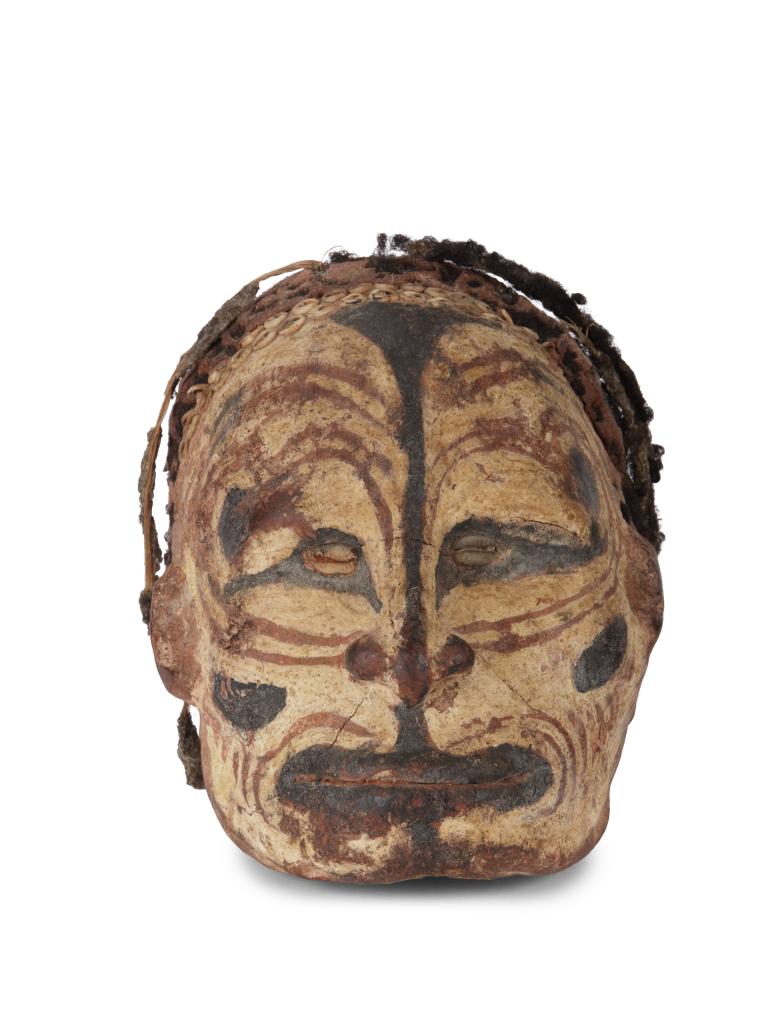
A Sepik shell-and-pigment decorated clay overmodeled ancestral skull
Village of Kaningra, Iatmul people, Middle-Sepik, Papua-New-Guinea, collected before 1914 _H. 17.5 x W. 15 x D. 22 cm_ Provenance: - Collected in German New Guinea before 1914 - Acquired by Julius Konietzko from a German Museum collection after 1912 - Acquired by Carl-Otto Czeschka between 1915-1920; it stayed in the family until 1993 - Acquired by Dieter Blume in 1993; it stayed in the family until 2023