


An Indian silver bezoar stone holder
Goa or Batavia (Jakarta), late 17th century
Overall, it is decorated in an openwork floral motif, in two parts that fit perfectly together.
Diam. approx. 8 cm / Weight approx. 200 grams
Literature:
Laue, G., Exotica, München, 2012, no. 42
For comparable bezoar holders, see the collections of London, British Museum (inv. no. 1978, 1002-804, -807 & -808); London, Science Museum (inv. no. A642470), New York, The Metropolitan Museum of Art, Rogers Fund, 2004 (2004.244a–c).
A bezoar is a gallstone and hair found in the gastrointestinal system of certain ruminants such as sheep, deer, antelope, goat and camel. In the 16th and 17th centuries, bezoar stones were famed for their powers as an antidote to poison and melancholy and were commonly used by the Iberian nobility and Habsburg monarchs. The word bezoar is derived from the Persian word for the antidote, pâd-zahr. Hormuz in Persia was the main place where the Portuguese bought these stones. Until the beginning of the 18th century, when medical science began to debunk the belief in their medical properties, the trade in bezoar stones was roaring, and they could sell for up to ten times their weight in gold. The scarcity of bezoar stones by the 17th century led a group of Jesuits working in Goa to develop a man-made version, 'Goa Stones', made of a mixture of bezoar and other precious objects believed to have the same curative powers.
References:
- Távora Sequeira Pinto, "Stories of An Empire" in: Távora Sequeira Pinto Collection, Lisbon, 2021, nos. 90 & 93
- Hugo Crespo, Jóias de Carreira da Índia, Lisbon, 2015, pp. 93-143, nos. 128-130
- W. Seipel (ed.), Exotica. Portugals Entdeckungen im Spiegel fürstlicher Kunst- und Wunderkammern der Renaissance, Vienna, 2000, pp. 191-195, nos. 101-103
- C. Gere & H. Tait (ed.), The Art of the Jeweller: A Catalogue of the Hull Grundy Gift to the British Museum, London, 1984, no. 409.
Overall, it is decorated in an openwork floral motif, in two parts that fit perfectly together.
Diam. approx. 8 cm / Weight approx. 200 grams
Literature:
Laue, G., Exotica, München, 2012, no. 42
For comparable bezoar holders, see the collections of London, British Museum (inv. no. 1978, 1002-804, -807 & -808); London, Science Museum (inv. no. A642470), New York, The Metropolitan Museum of Art, Rogers Fund, 2004 (2004.244a–c).
A bezoar is a gallstone and hair found in the gastrointestinal system of certain ruminants such as sheep, deer, antelope, goat and camel. In the 16th and 17th centuries, bezoar stones were famed for their powers as an antidote to poison and melancholy and were commonly used by the Iberian nobility and Habsburg monarchs. The word bezoar is derived from the Persian word for the antidote, pâd-zahr. Hormuz in Persia was the main place where the Portuguese bought these stones. Until the beginning of the 18th century, when medical science began to debunk the belief in their medical properties, the trade in bezoar stones was roaring, and they could sell for up to ten times their weight in gold. The scarcity of bezoar stones by the 17th century led a group of Jesuits working in Goa to develop a man-made version, 'Goa Stones', made of a mixture of bezoar and other precious objects believed to have the same curative powers.
References:
- Távora Sequeira Pinto, "Stories of An Empire" in: Távora Sequeira Pinto Collection, Lisbon, 2021, nos. 90 & 93
- Hugo Crespo, Jóias de Carreira da Índia, Lisbon, 2015, pp. 93-143, nos. 128-130
- W. Seipel (ed.), Exotica. Portugals Entdeckungen im Spiegel fürstlicher Kunst- und Wunderkammern der Renaissance, Vienna, 2000, pp. 191-195, nos. 101-103
- C. Gere & H. Tait (ed.), The Art of the Jeweller: A Catalogue of the Hull Grundy Gift to the British Museum, London, 1984, no. 409.
Part of the Indian Ocean collection.
Related objects
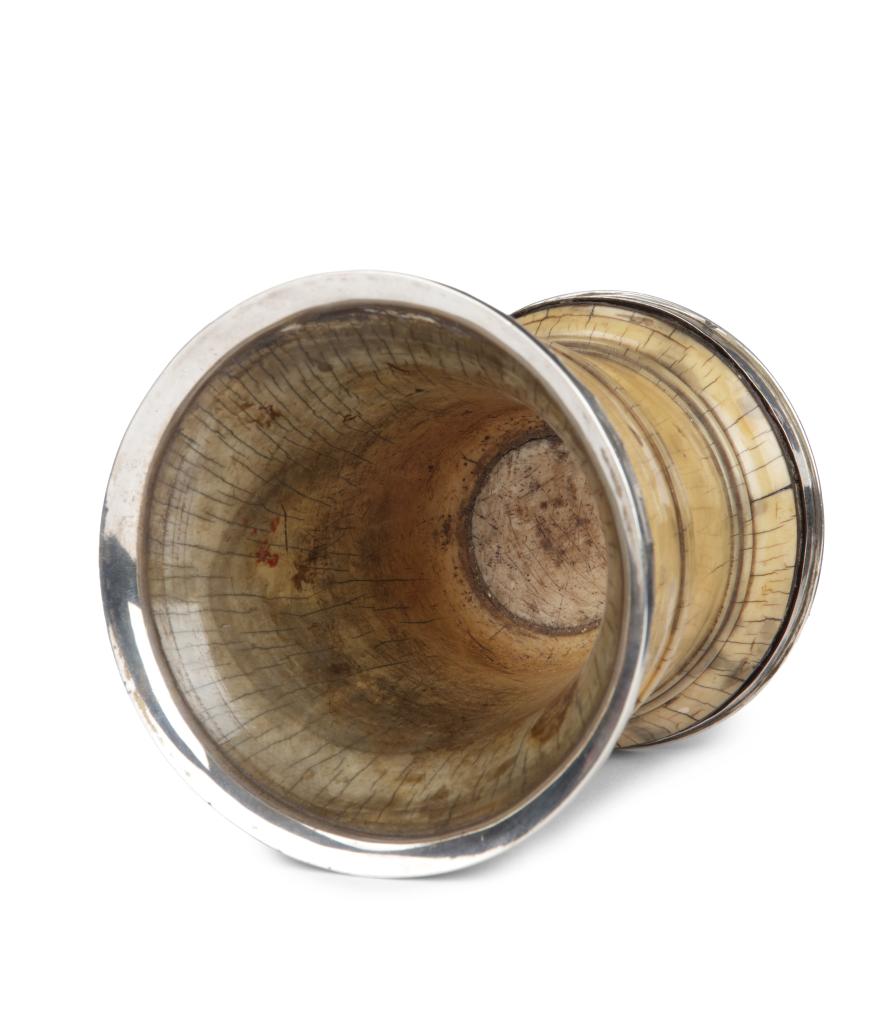
An Indian turned ivory mortar with silver mounts
Indo-Portuguese, probably Gujarat, 17th century _H. 9.5 x Diam. 9.8 cm_ Provenance: Private Collection, Portugal Exhibited: Drents Museum, Assen, _Microkosmos – The World in a Wunderkammer, _6 September 2025 - 1 March 2026
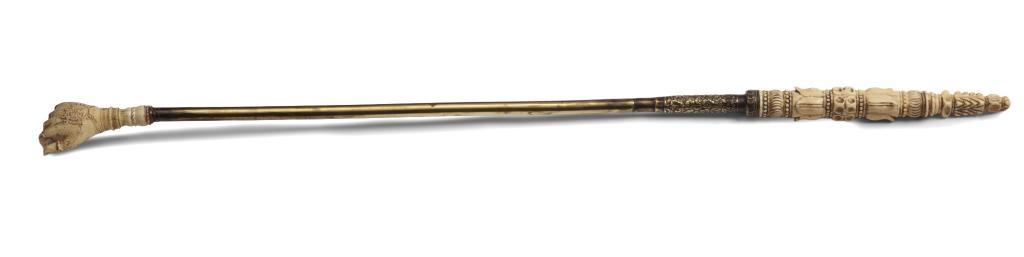
A Mughal silver and ivory backscratcher
_India, 18th century_ _L. 57 cm_ Provenance: Phillipe Missilier, Paris
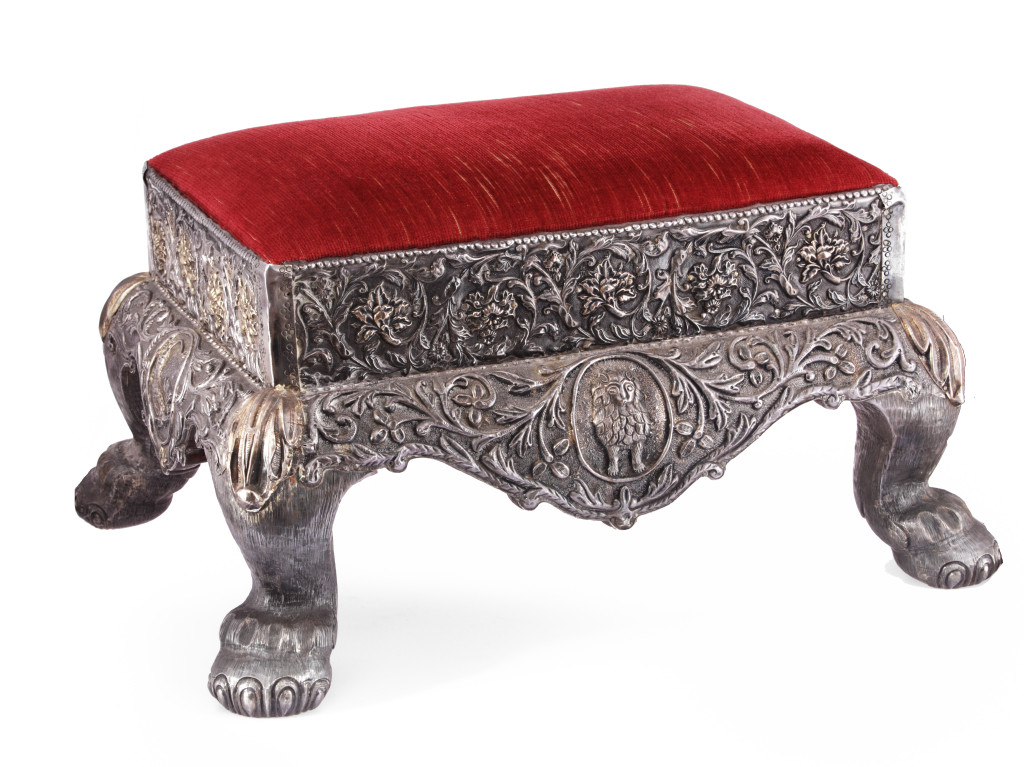
An Indian rosewood sheet-silvered part-gilt footstool for a throne
Indian sheet-silver footstool