China & Japan
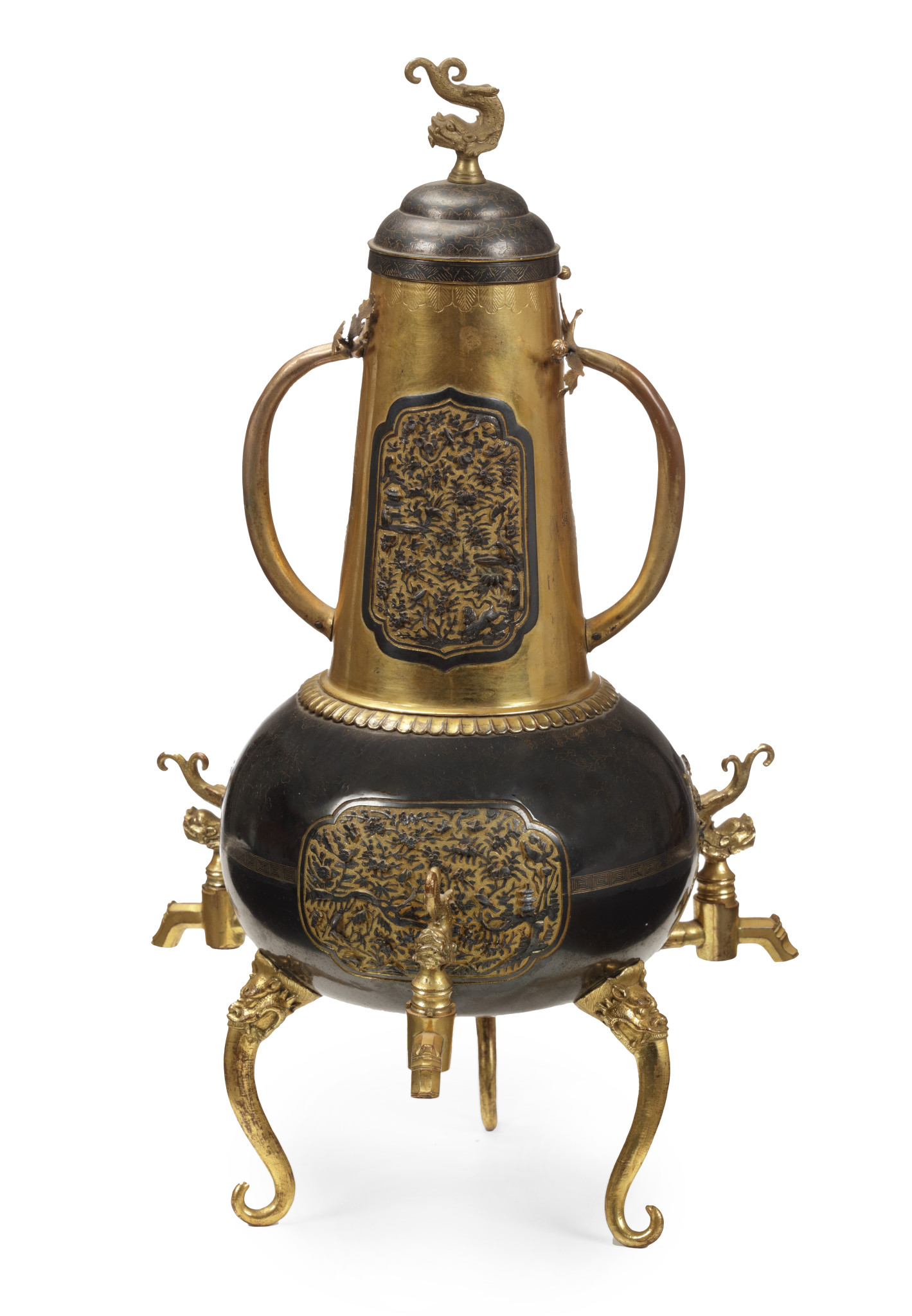
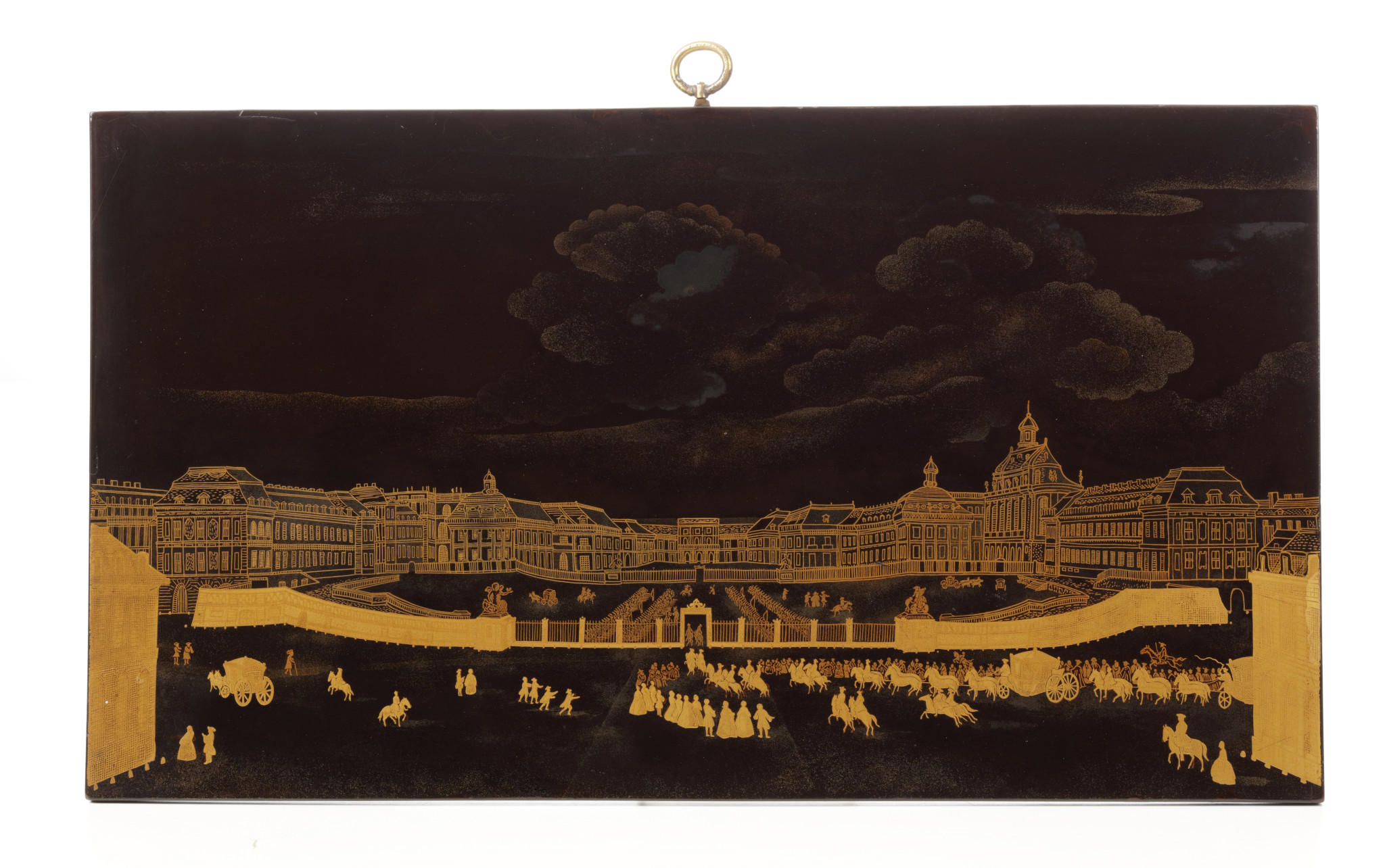

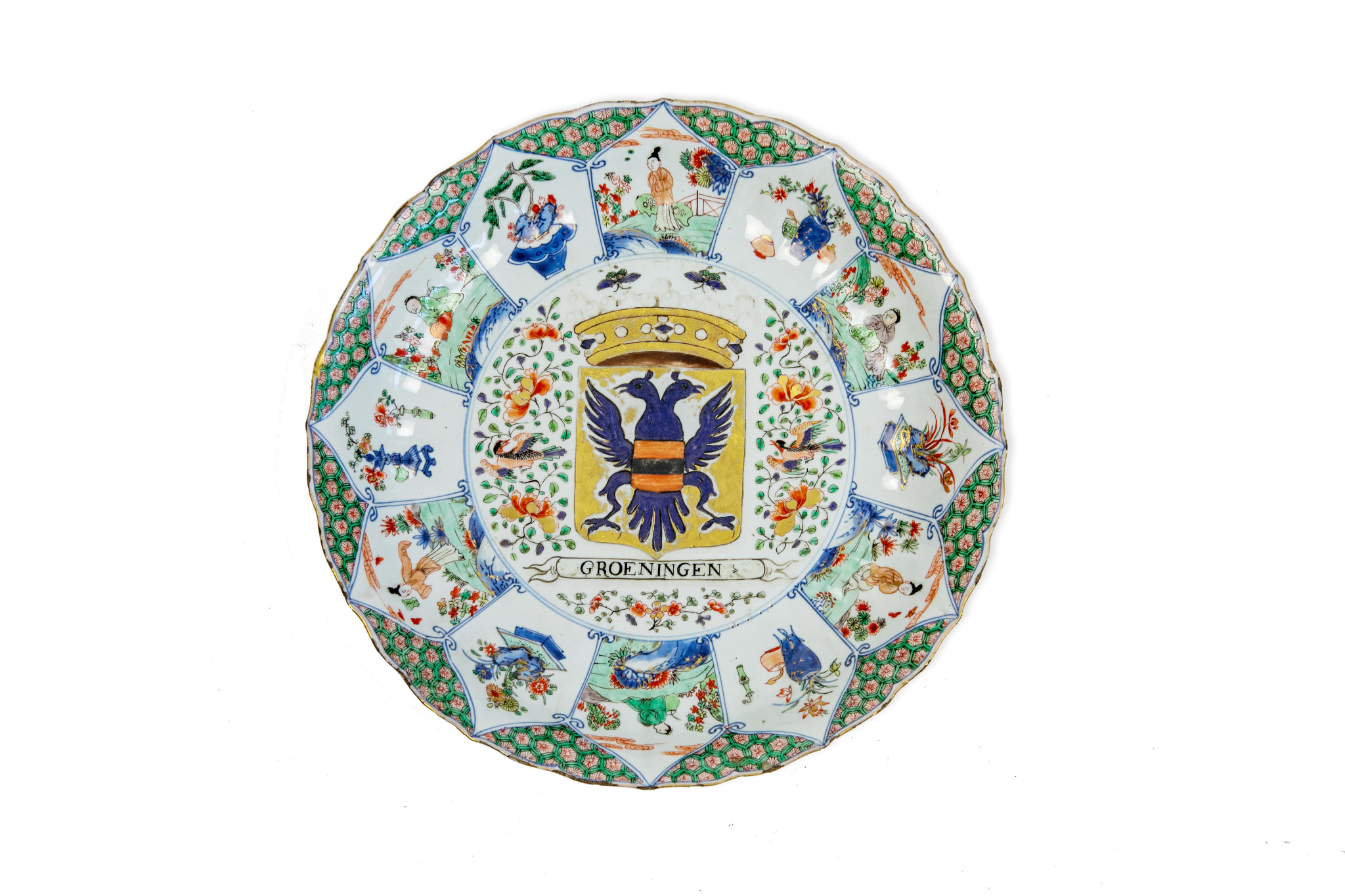
A Chinese export 'famille verte' porcelain armorial dish with the coat-of-arms of Groningen
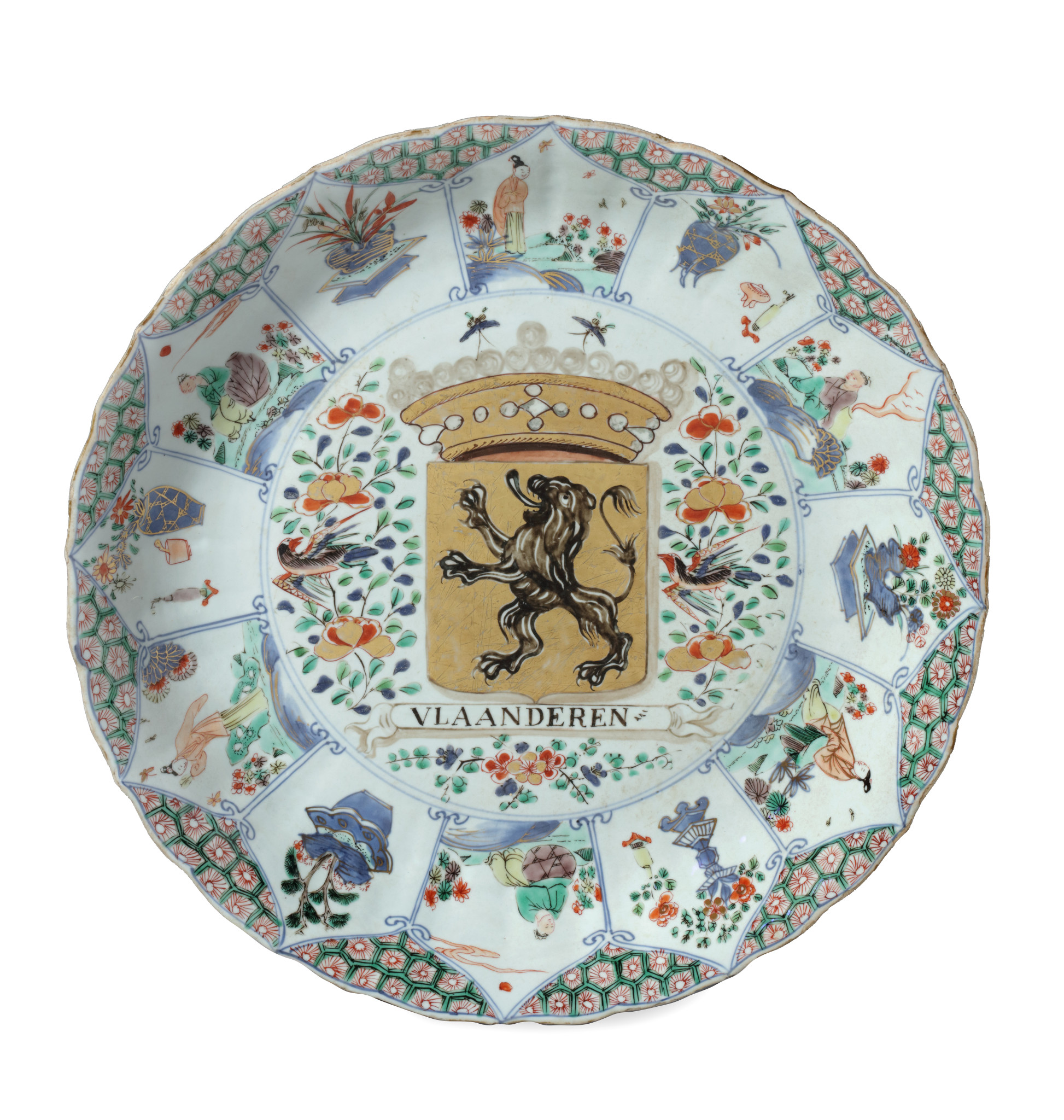
A Chinese export 'famille verte' porcelain armorial dish with the coat-of-arms of Flanders
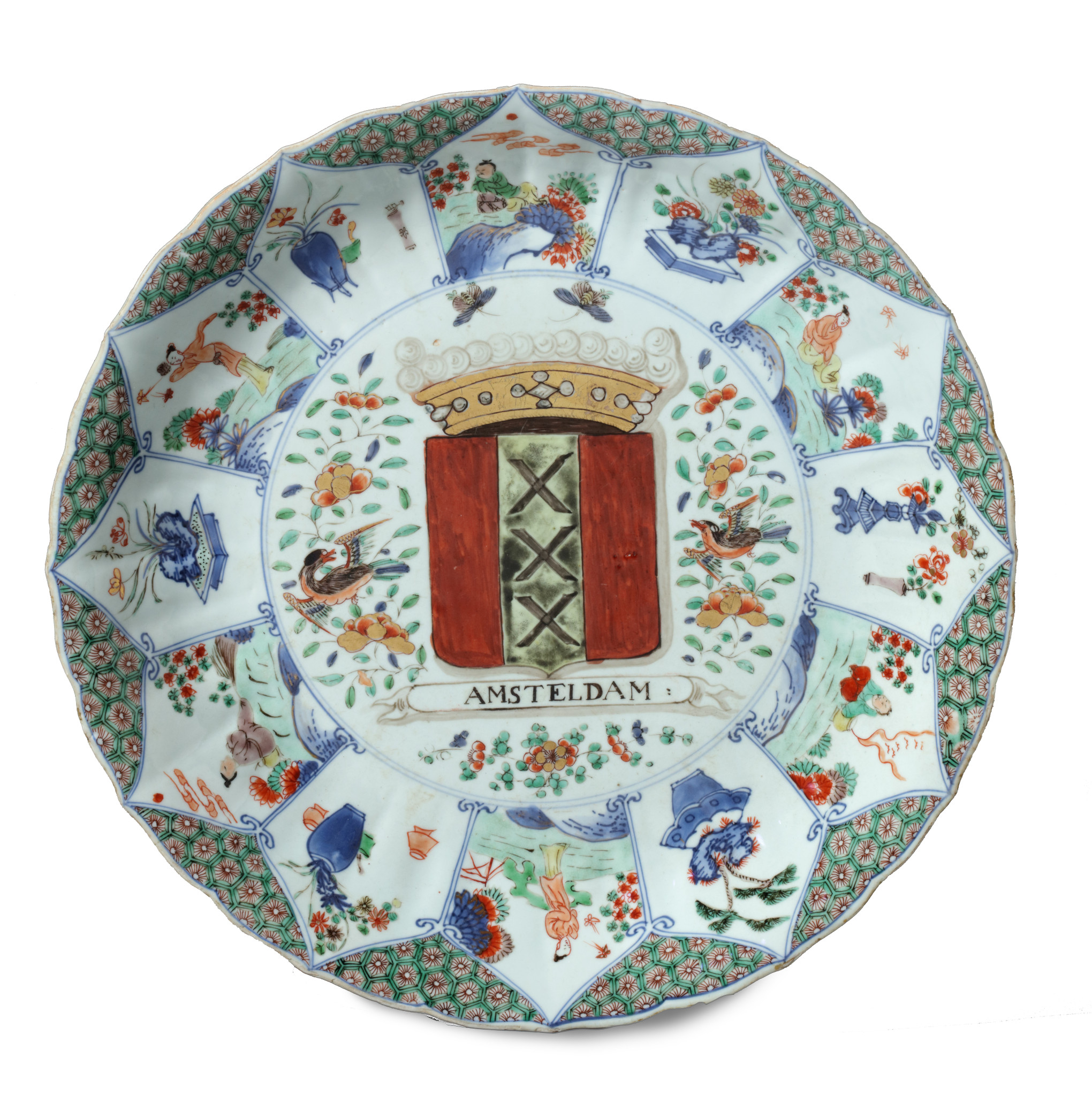
A Chinese export 'famille verte' porcelain armorial dish with the coat-of-arms of Amsterdam
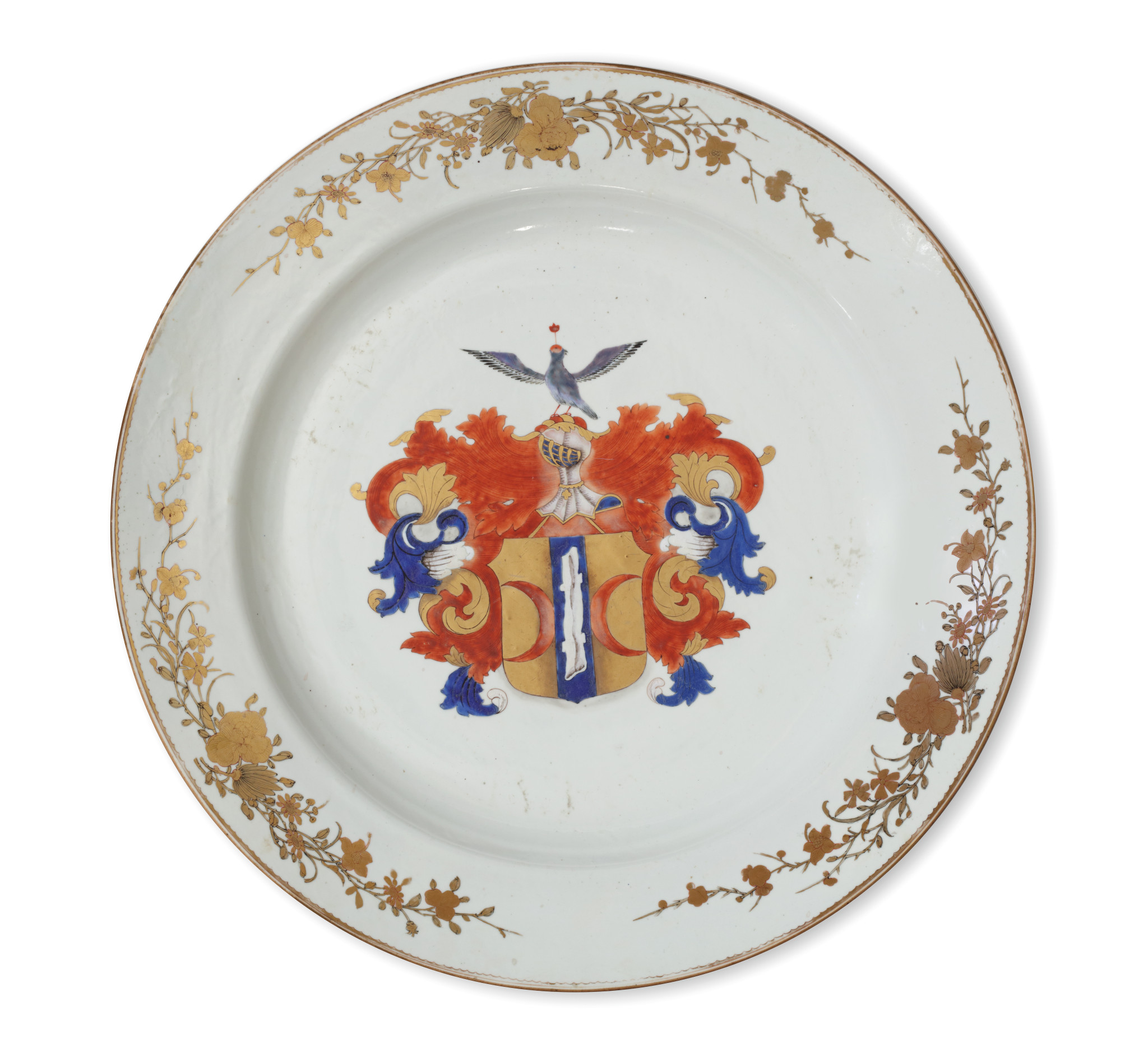
A pair of large Chinese export porcelain dishes with the Valckenier coat-of-arms
Qianlong period, circa 1735
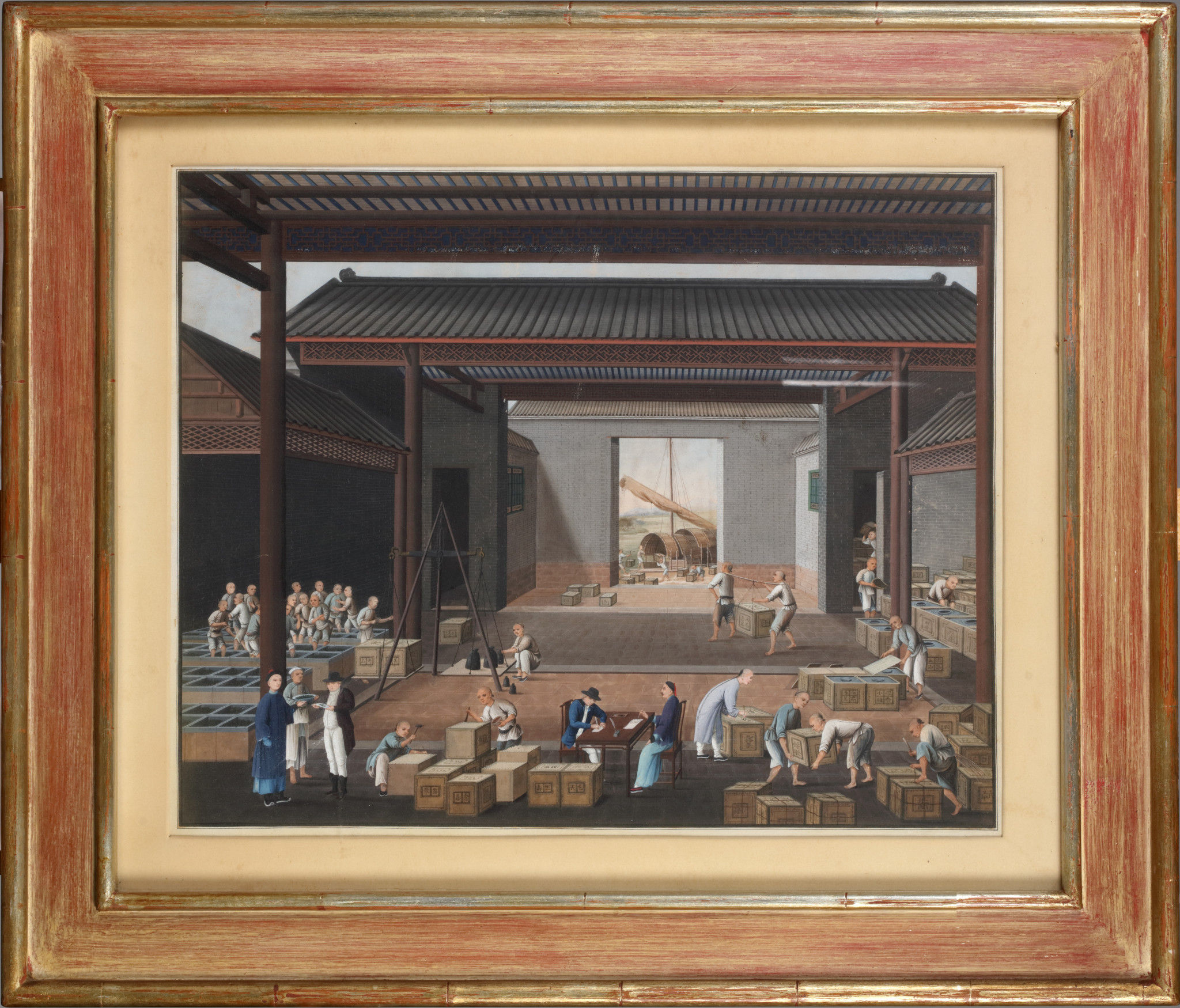
A Chinese export painting of a Canton tea-warehouse
Canton, late 18th century
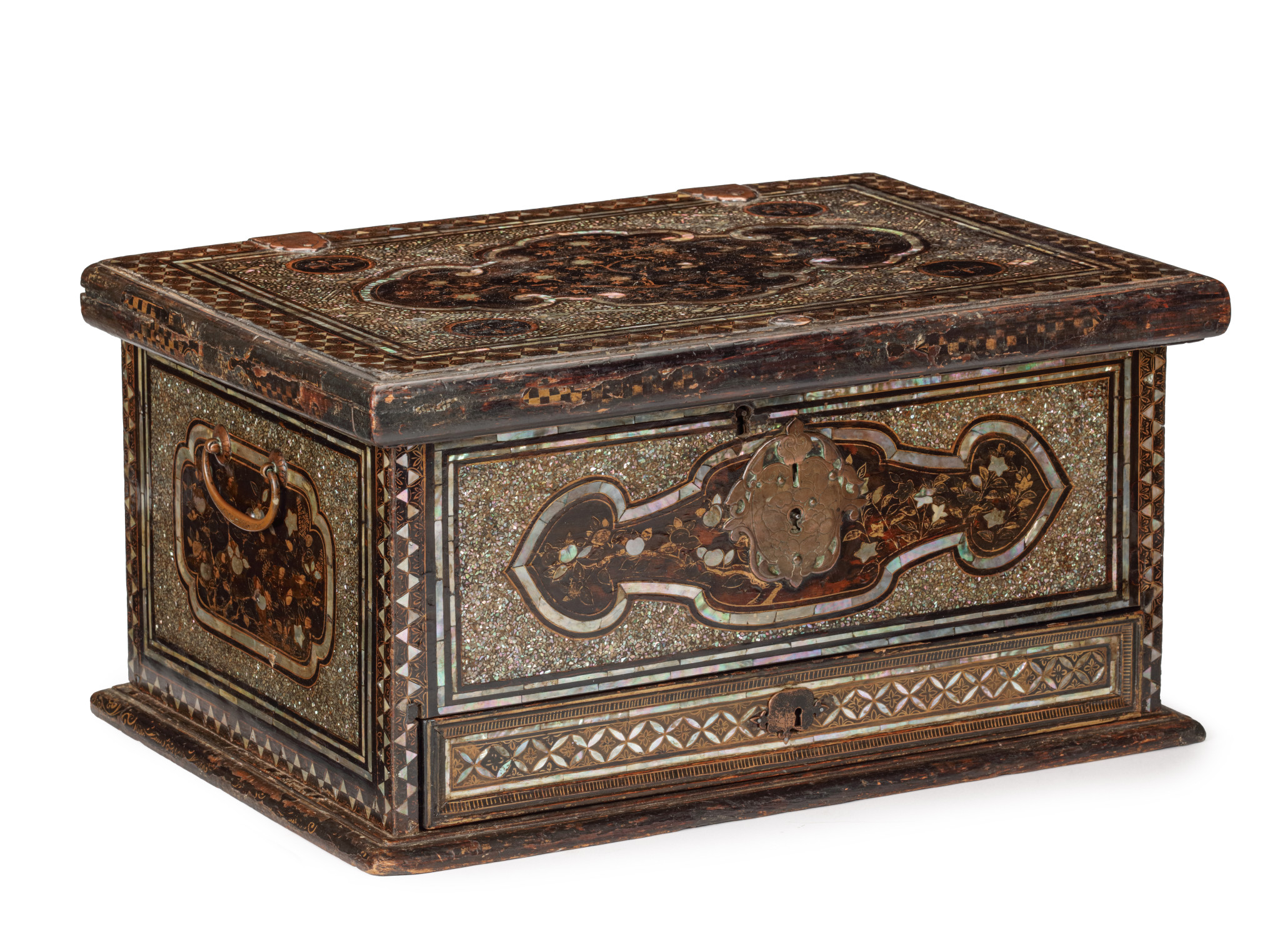
An exceptional Namban 'escritório' writing-box, with a single drawer
Kyoto, late Momoyama to Edo period, circa 1590- 1630
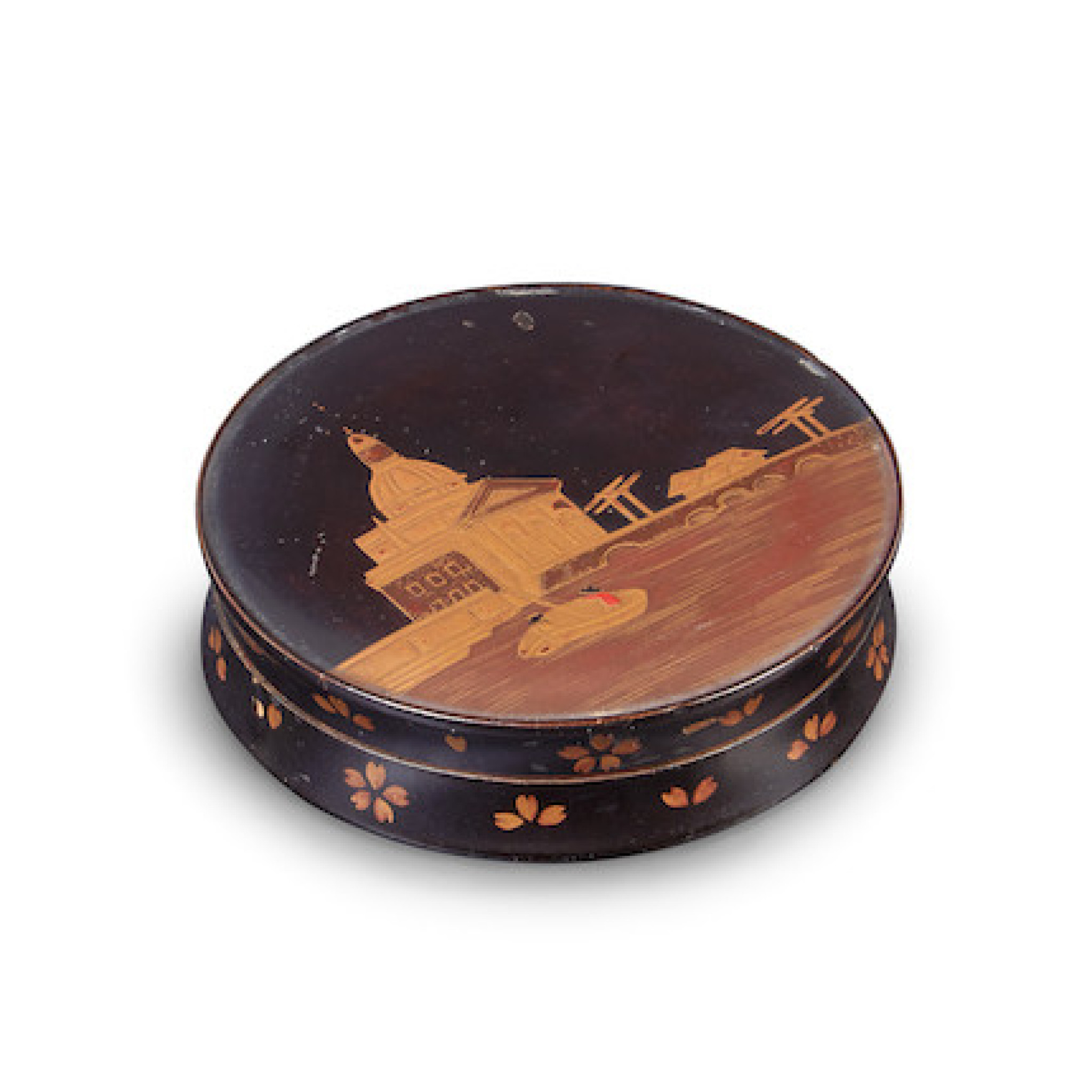
A small Japanese export lacquer circular box with a depiction of the Amsterdam Muiderpoort
Nagasaki, Edo period, 1st half 19th century
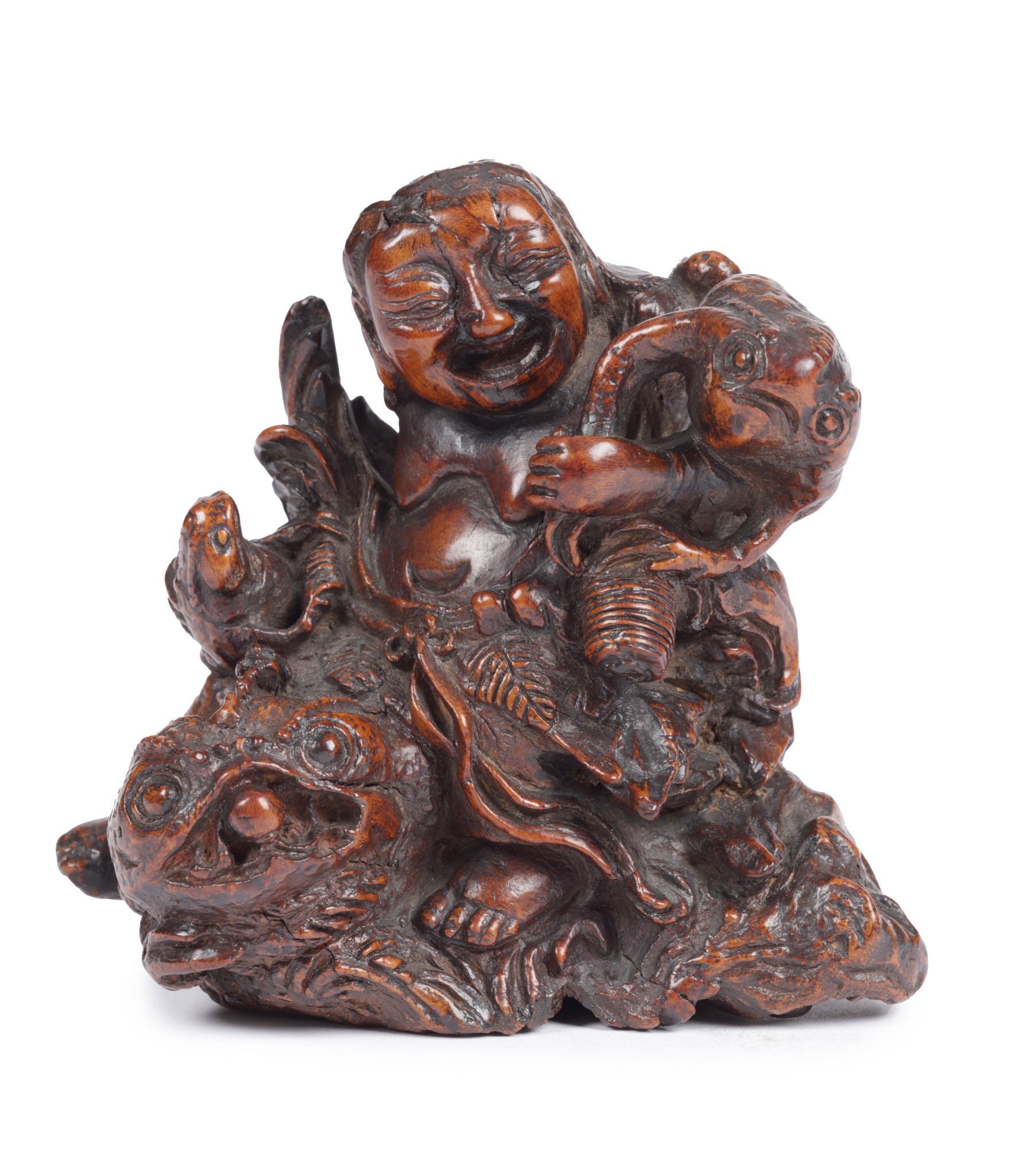
A Japanese rootwood sculpture of Gama Sennin
Edo period, 18th century

A Japanese painting depicting two European generals
Nagasaki, 19th century
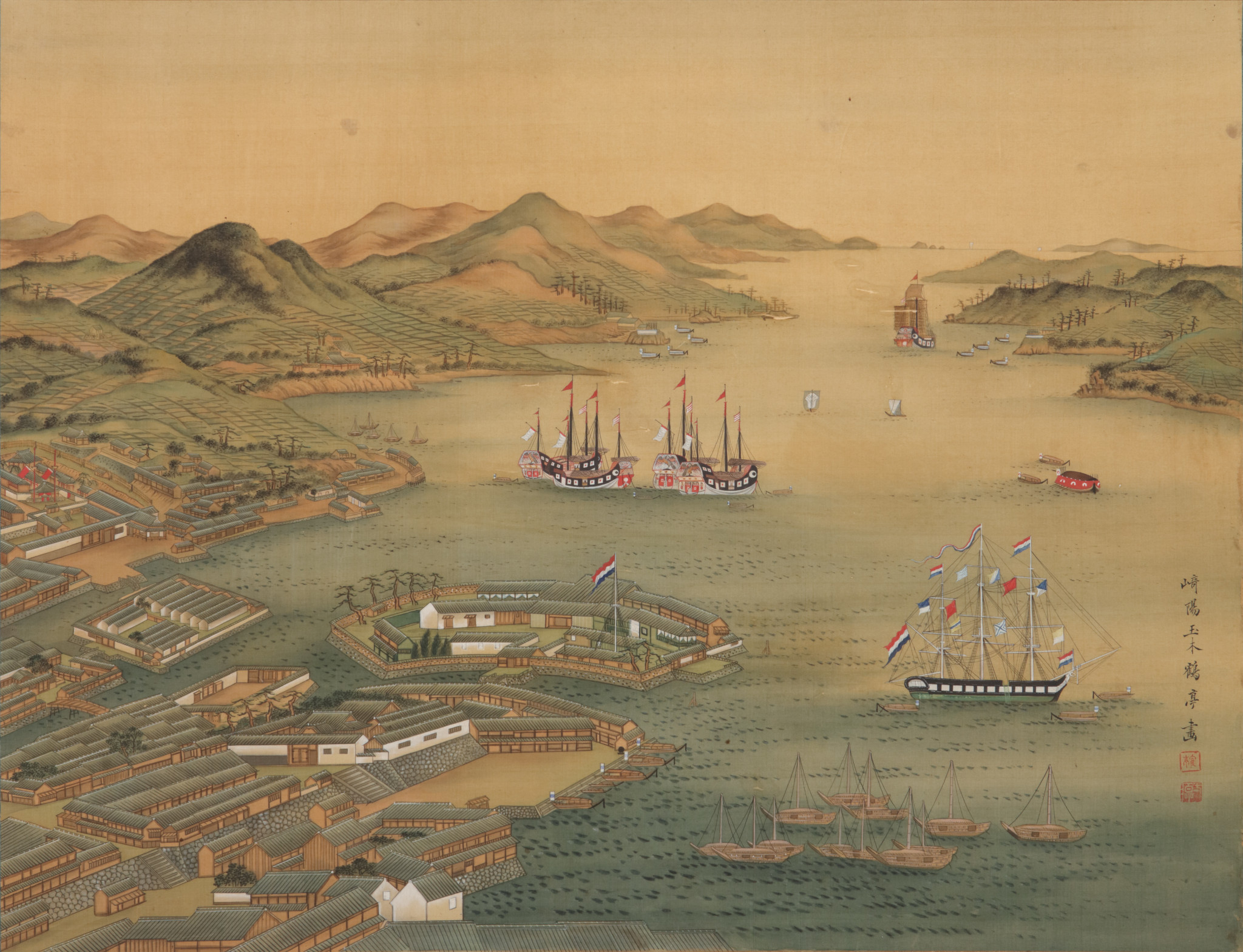
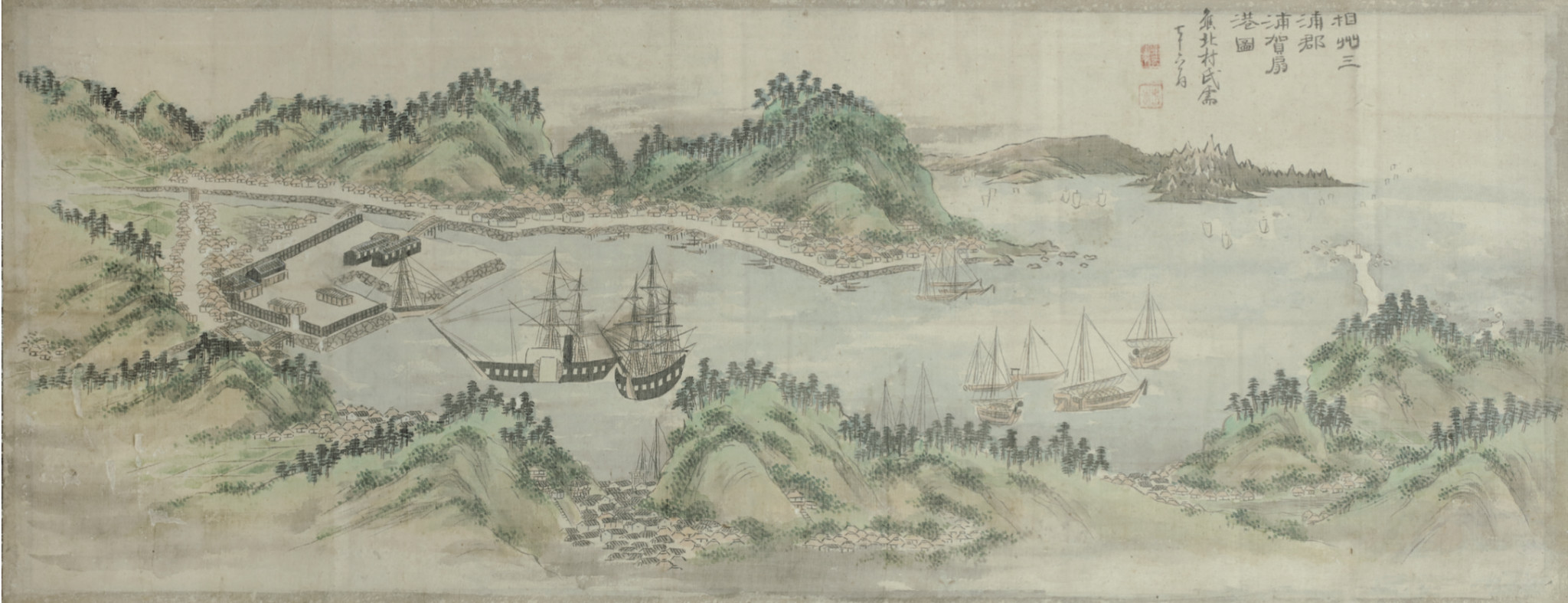
A Japanese scroll painting depicting Nagasaki Bay by Tamaki Kabutei (1807-1879)
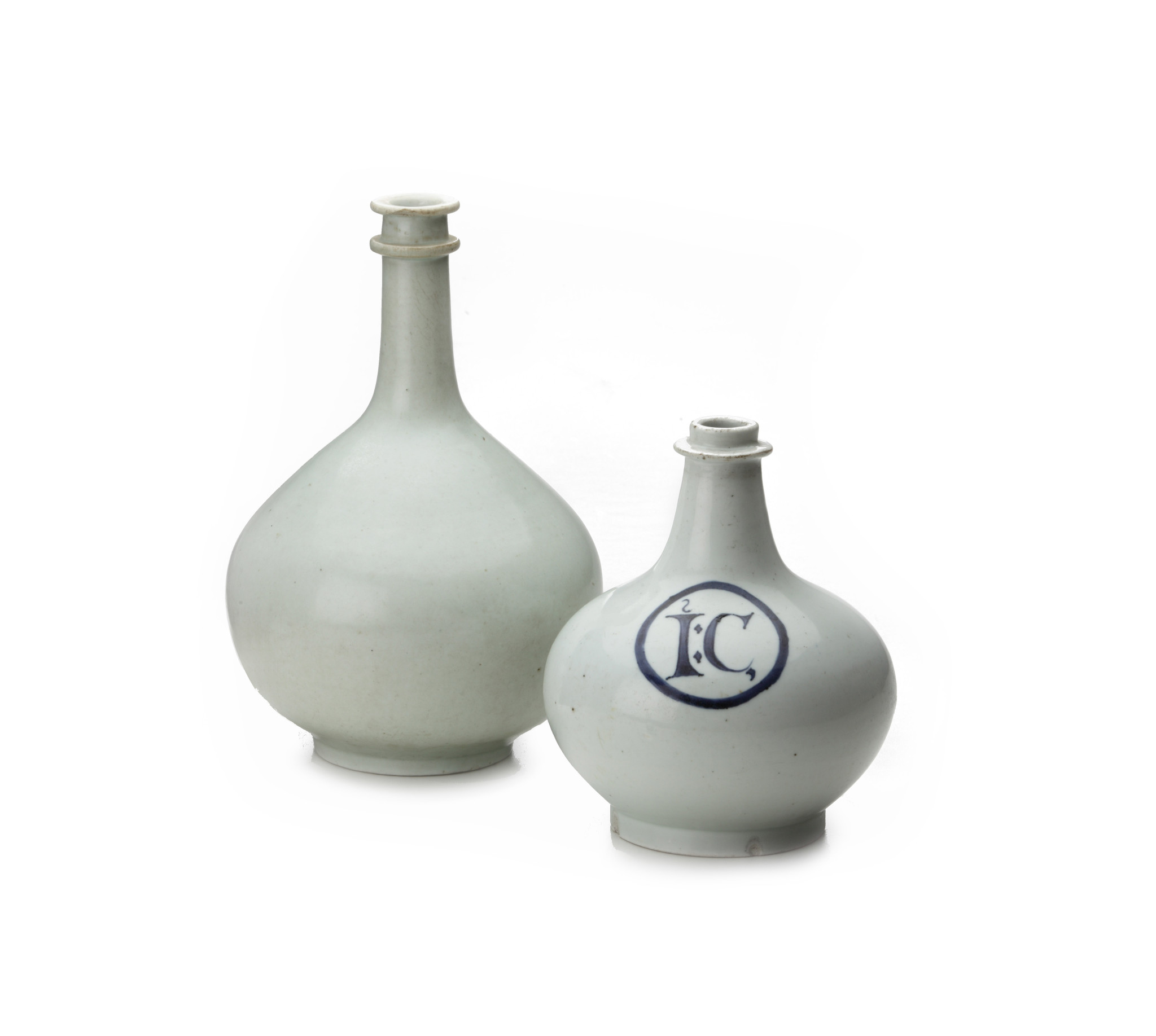
A Japanese blue-and-white porcelain with the initials of Iohannes Camphuys and an idem undecorated bottle
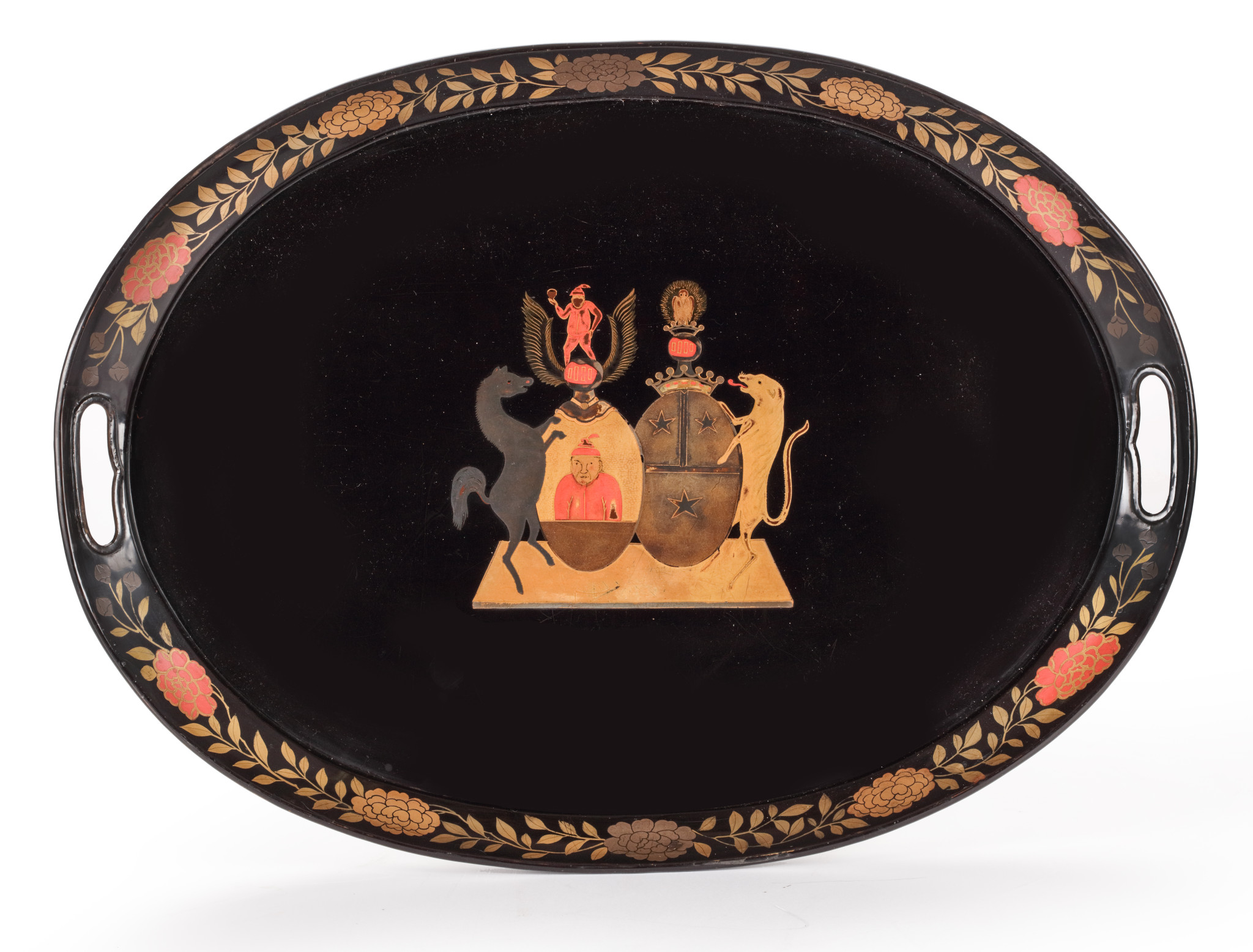
An oval Japanese export lacquer tray decorated with the alliance of the coats of arms of the Mooyaart and Pauw families
Edo-period, circa 1798
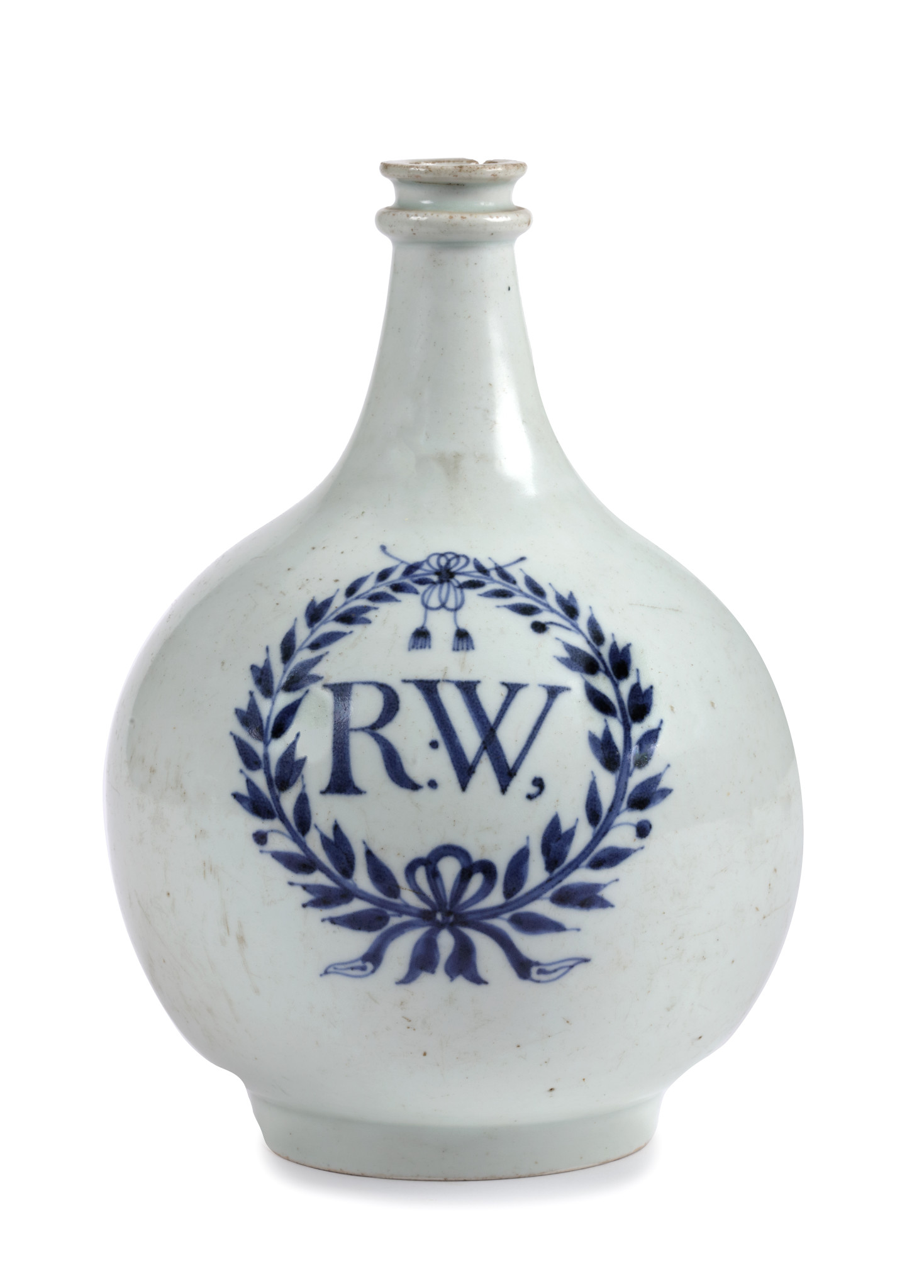
A Japanese Arita blue-and-white porcelain bottle with the initials RW
Late 17th century
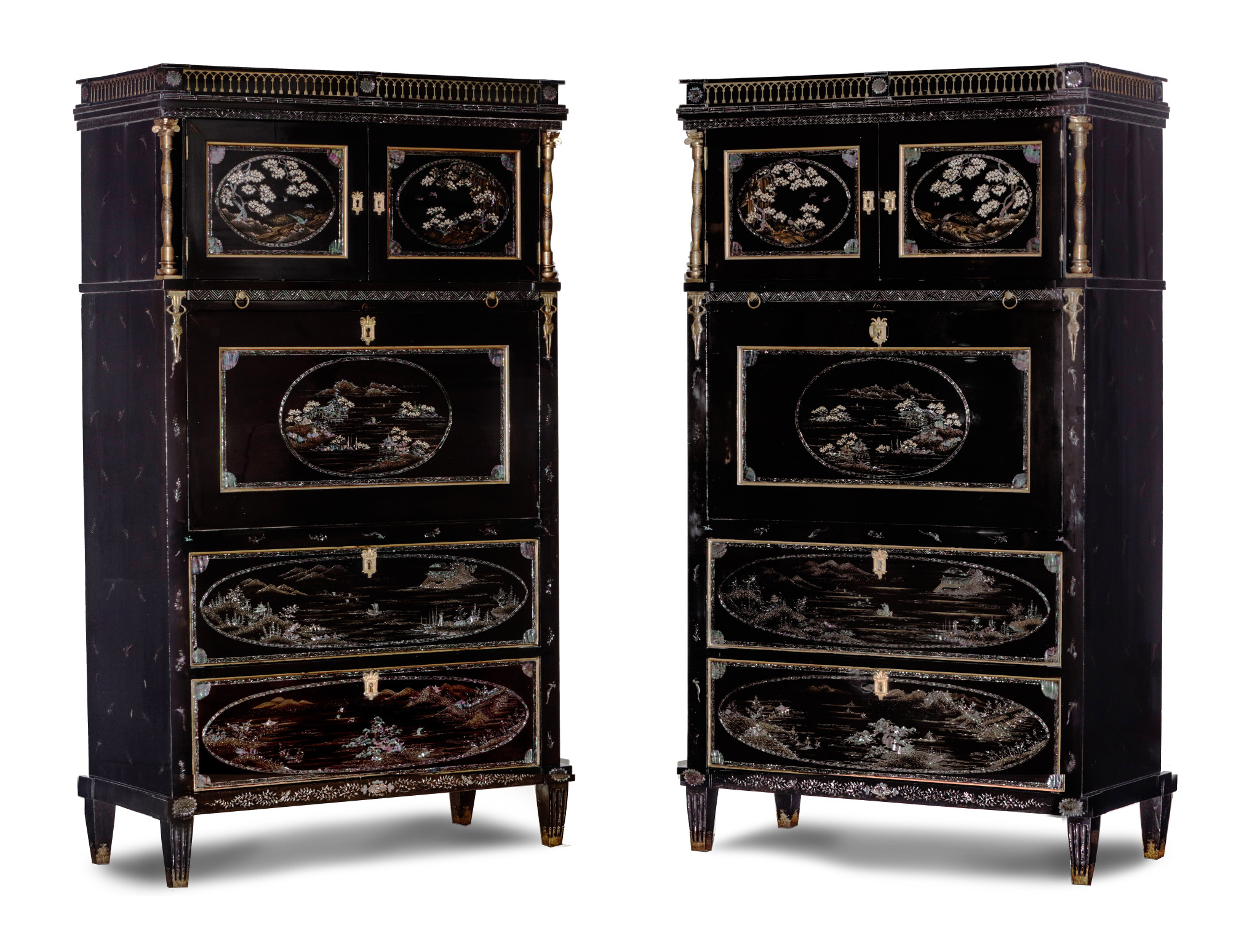
The Stamford Raffles Secretaires.
A pair of Japanese Kyoto-Nagasaki style export lacquer secretaires by ‘Lakwerker Sasaya’ each with the name ‘Olivia’
Kyoto, Edo period, circa 1800-1813
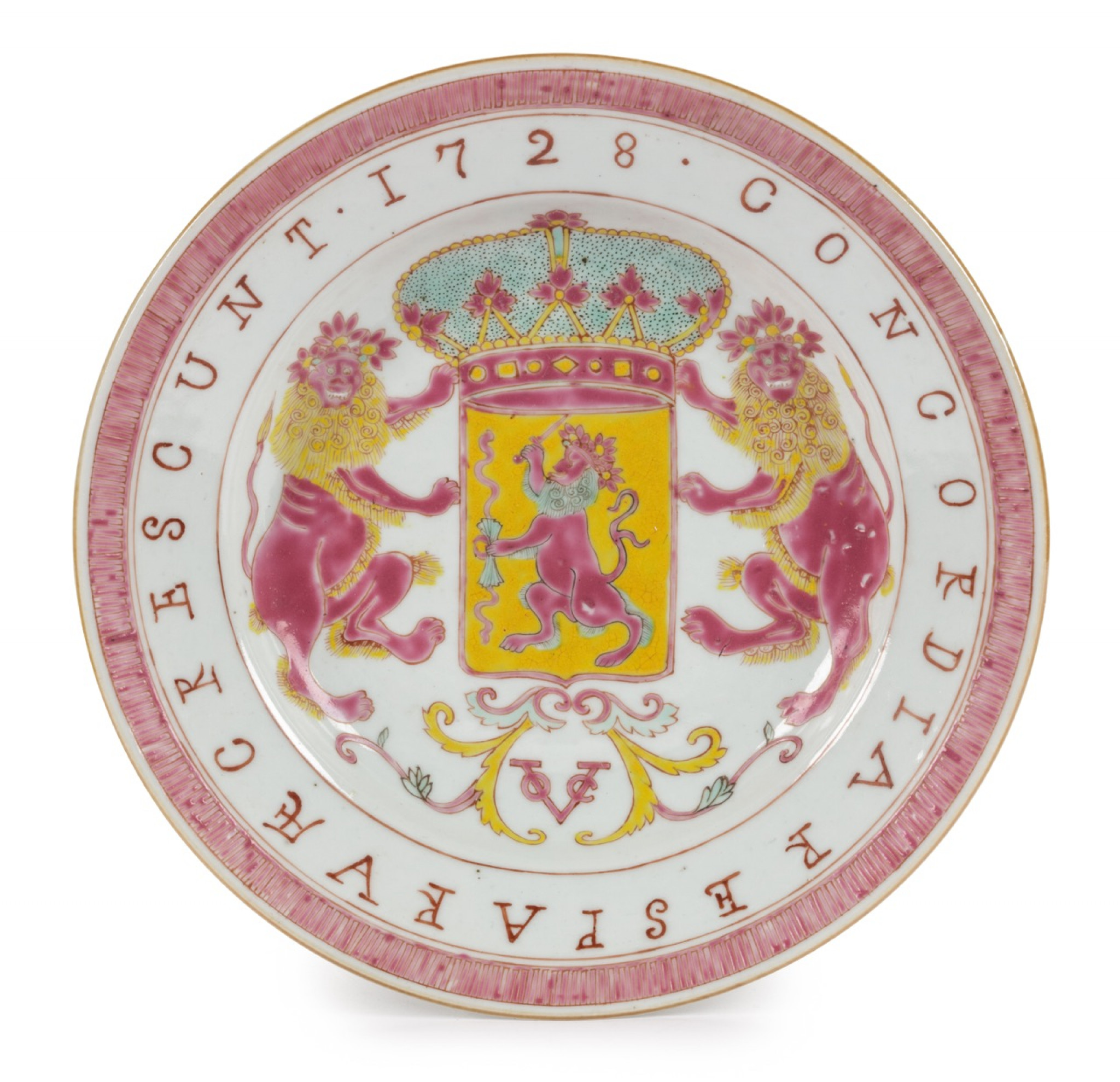
A pink, yellow and green enamelled porcelain VOC plate
China or Japan, circa 1730
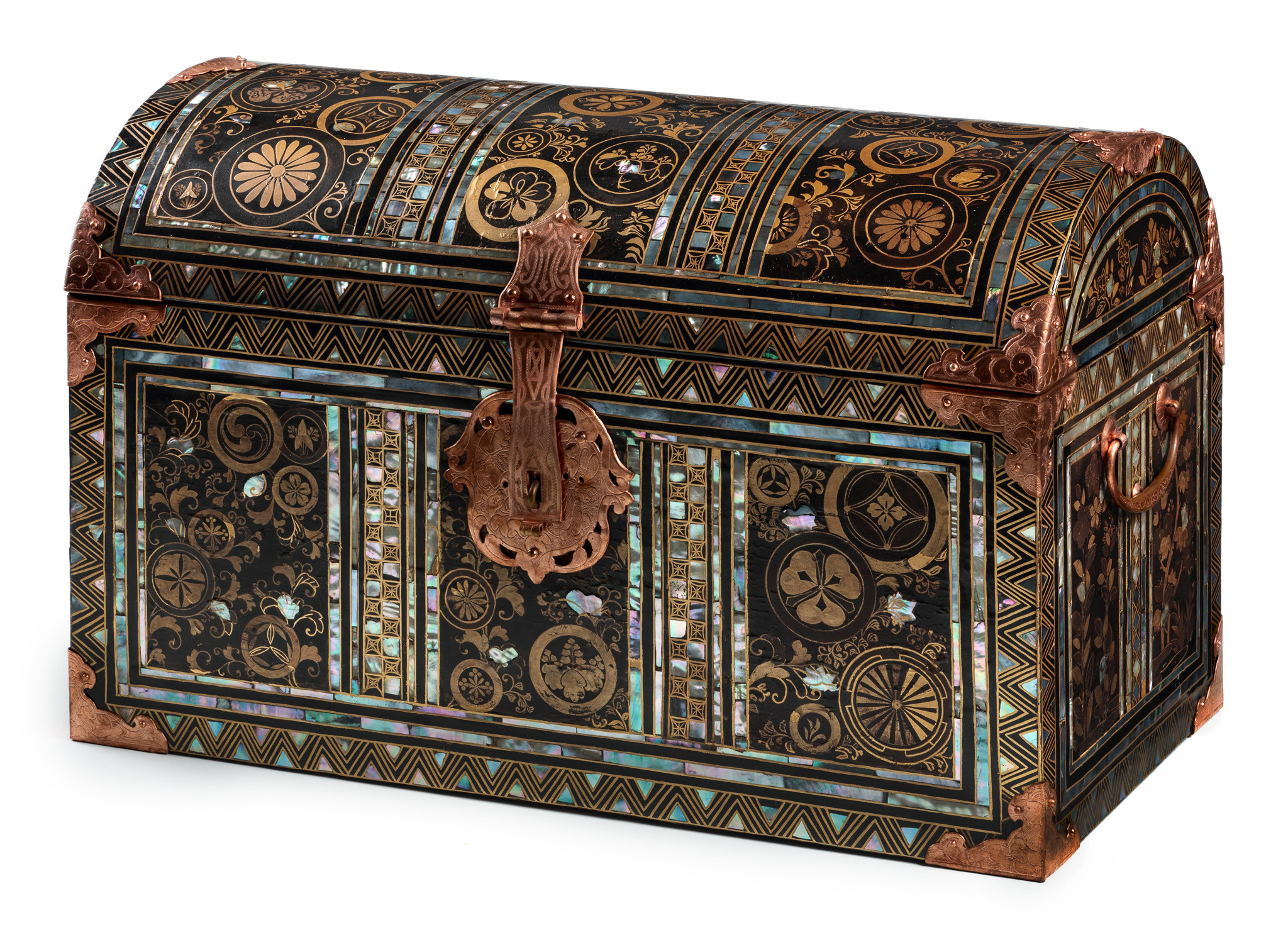
A rare Japanese Namban export lacquer coffer with Mon emblems
Late Momoyama period, late 16th century
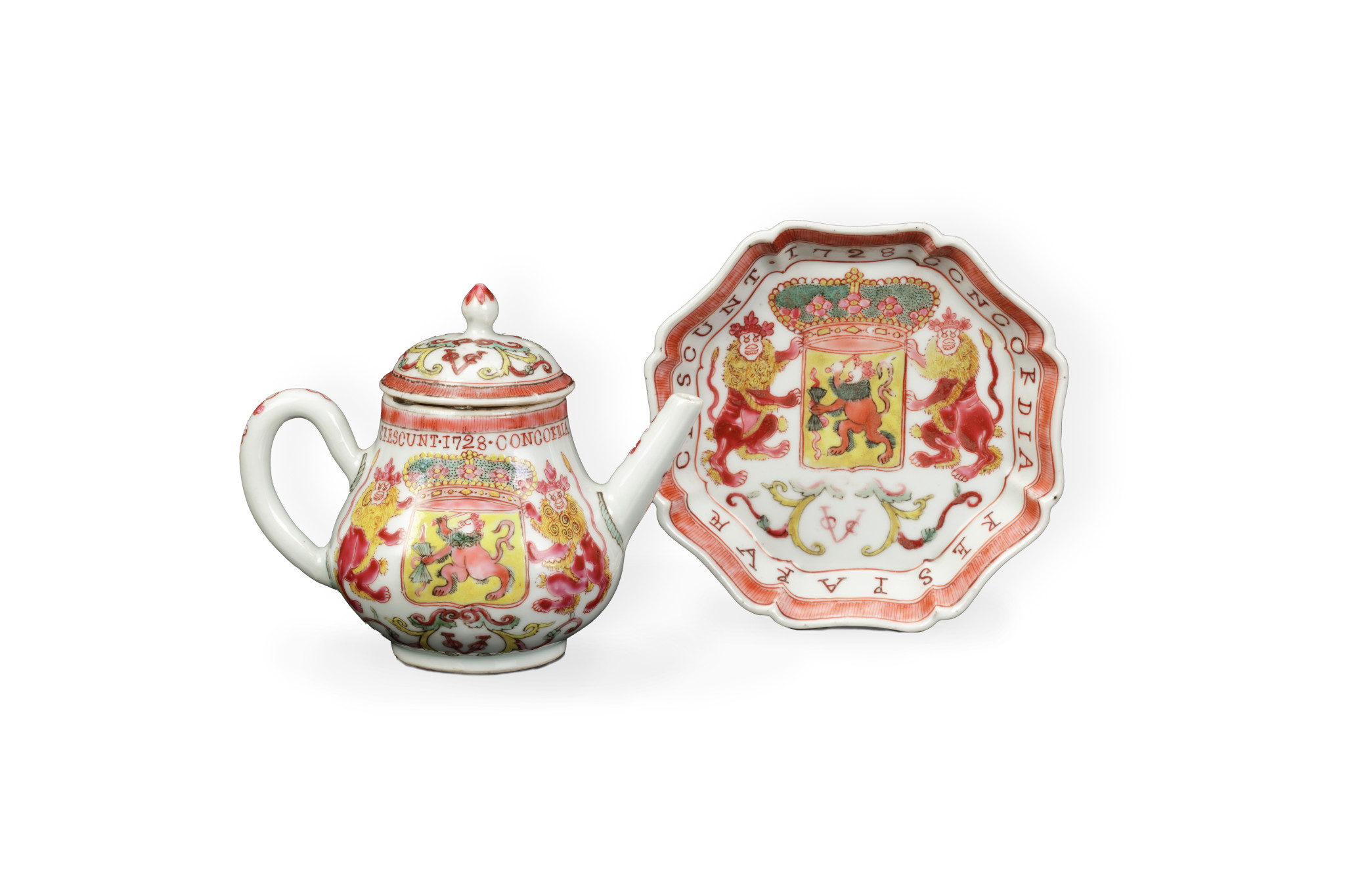
A pink, yellow and green enamelled porcelain VOC teapot and saucer
China or Japan, circa 1730
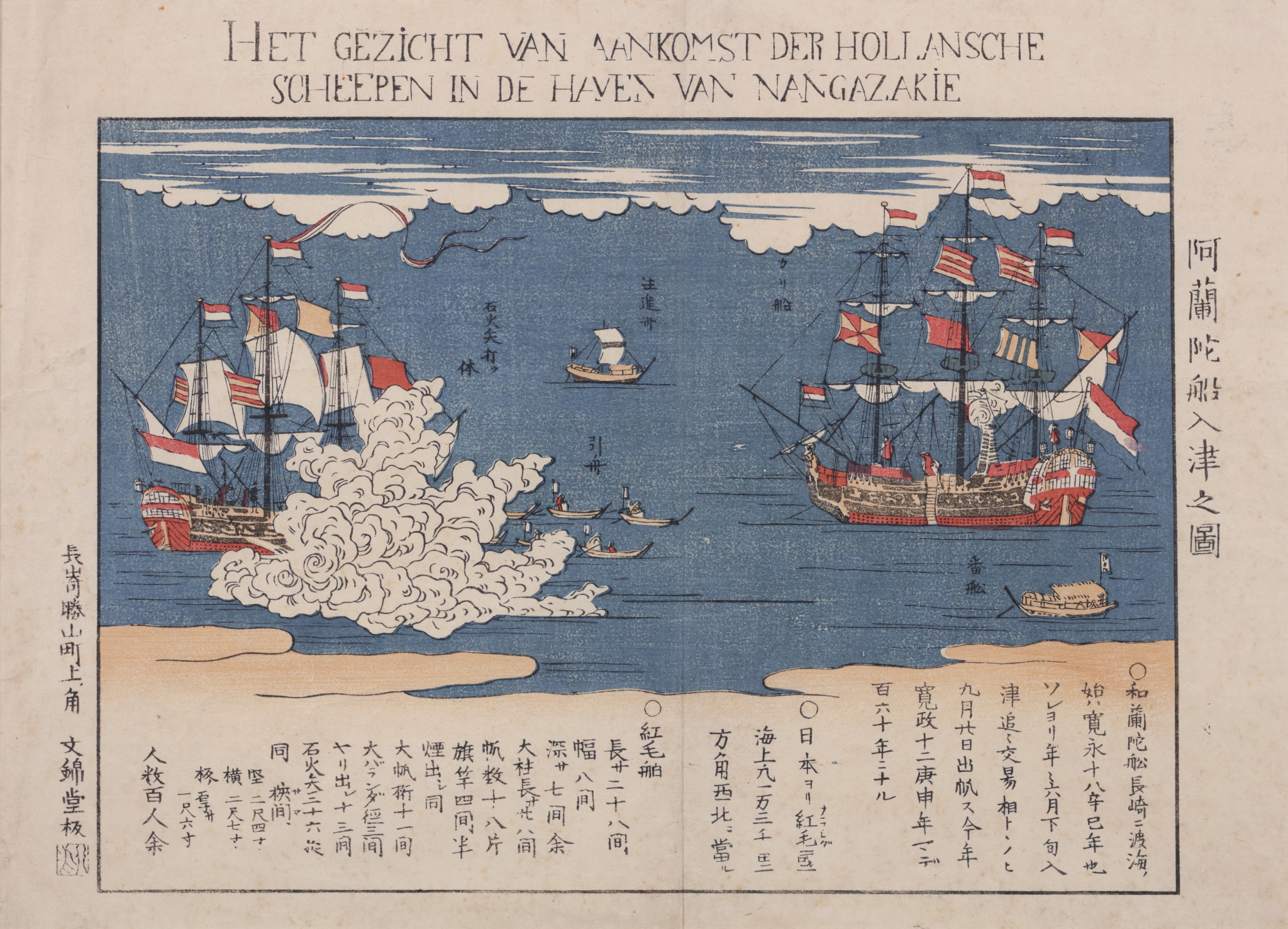
A Japanese Nagasaki-e print depicting oranda fune nyũshin no zu, the arrival of Dutch ships in the harbour of Nagasaki
Published by Bunkindõ han, circa 1801
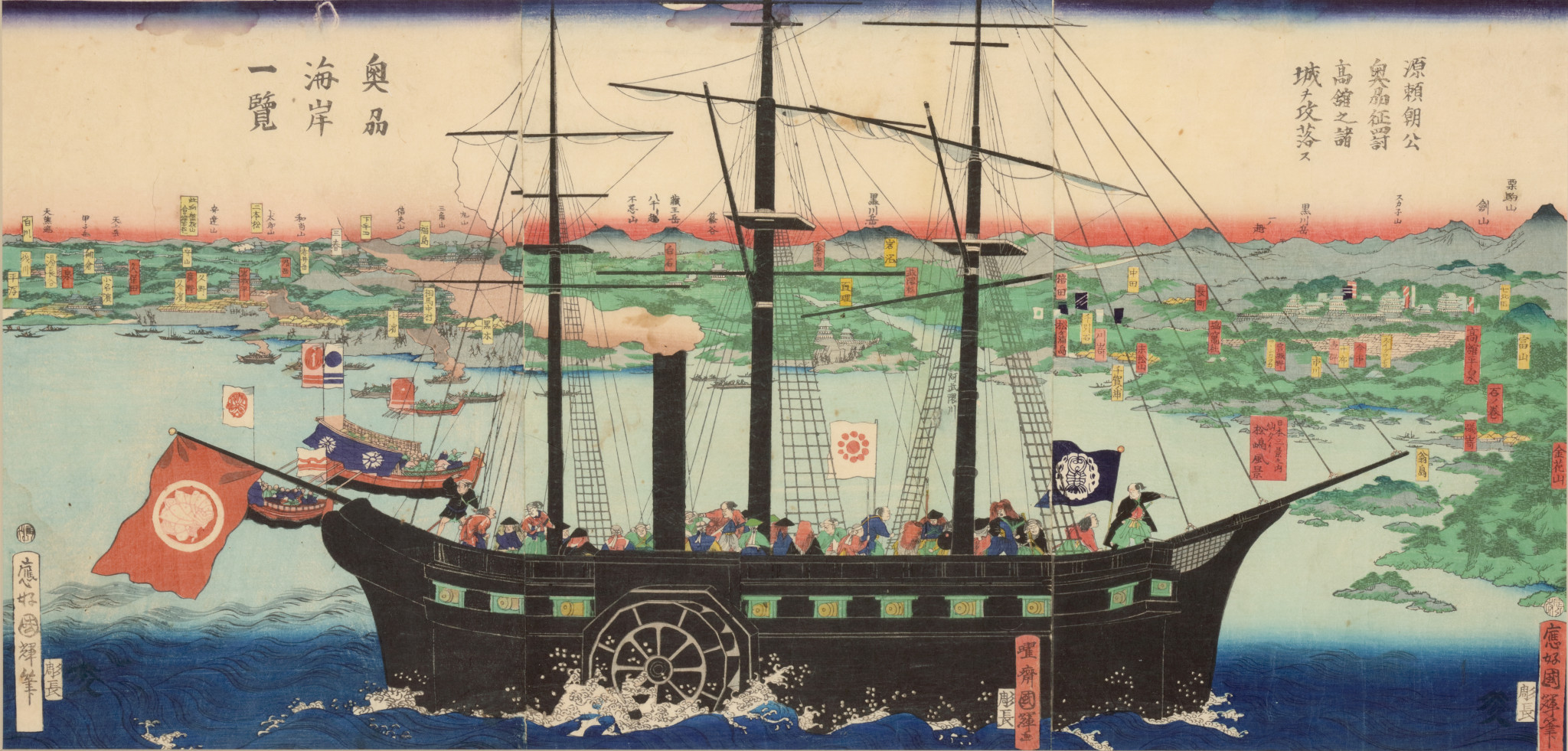
A Japanese Ukiyo-e print depicting the ‘Shogunate Minamoto-no Yoritomo attacking Takadate castle for conquest’
Carved by Katata Horinaga (act.1870s), published by Yamamoto Kyũbei
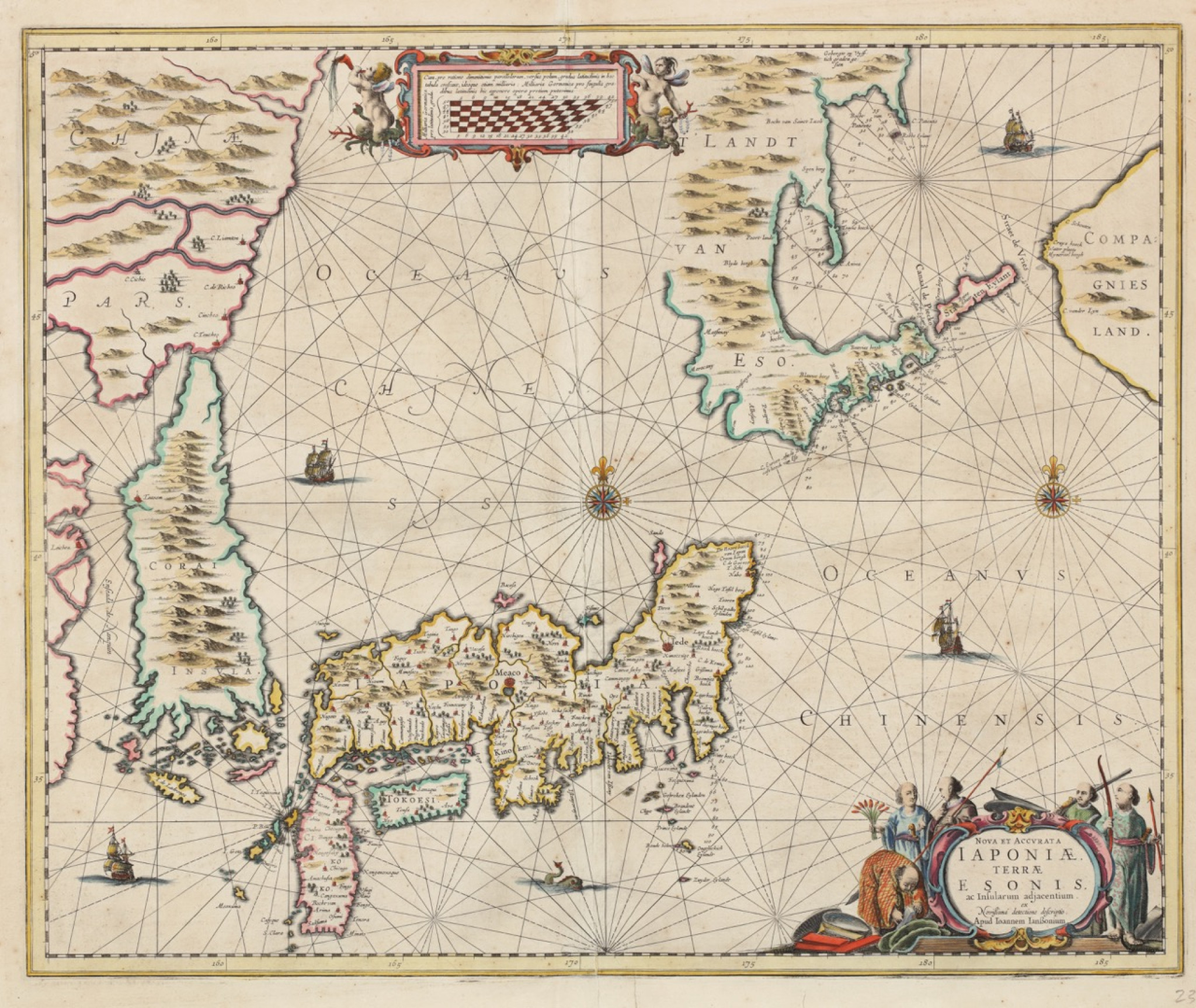
Joannes Janssonius (1588-1664)
New and accurate map of the Japanese land of Ezo and the adjacent islands: Nova et Accurata Iaponiae Terrae Esonis ac Insularum Adjacentium, from Nieuwe Atlas, Ofte Werelts-Beschijvinge, Amsterdam, 1658
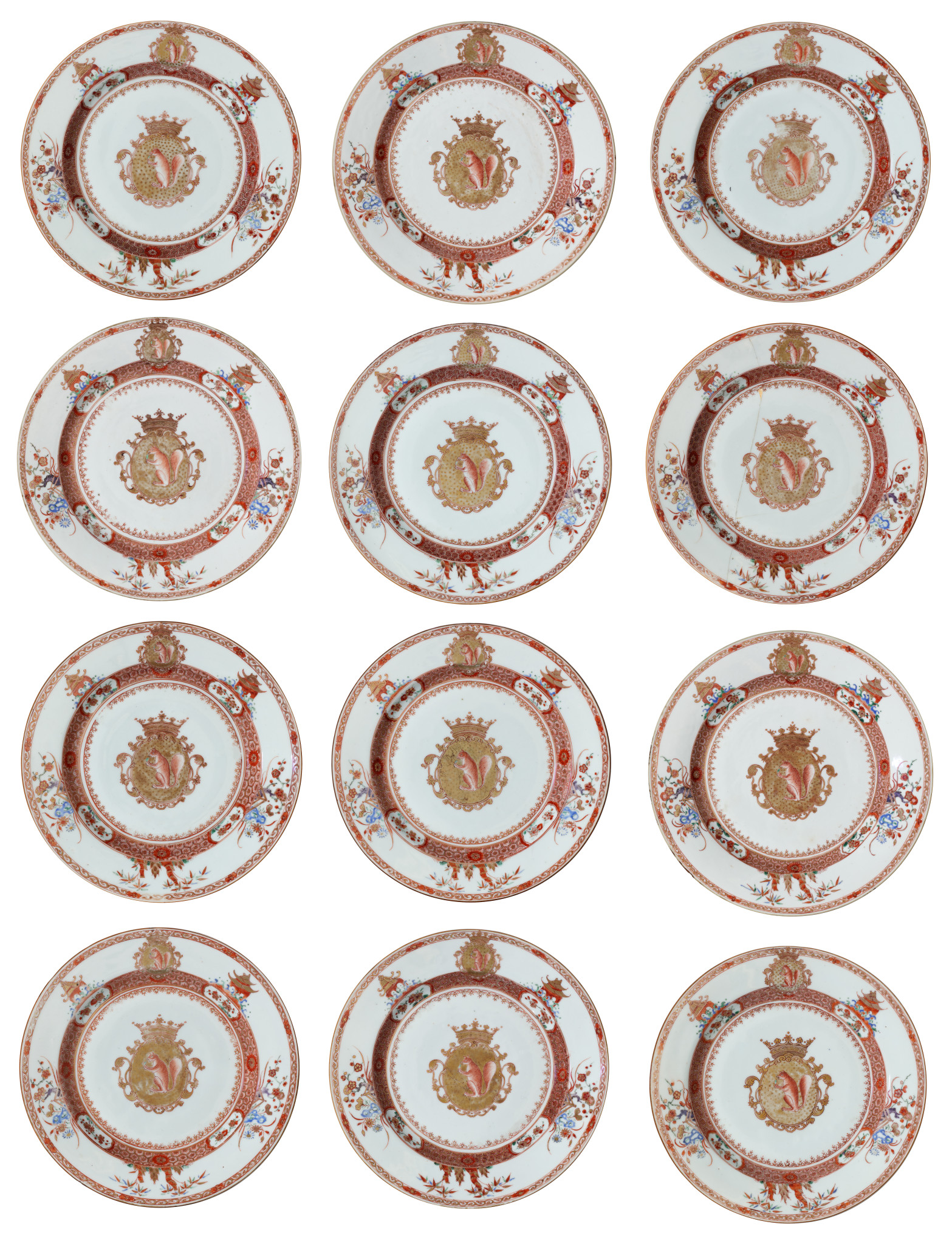
A rare set of twelve Chinese export porcelain plates bearing the arms of Jan Albert Sichterman (1692-1764)
Qianlong period, circa 1730-1735
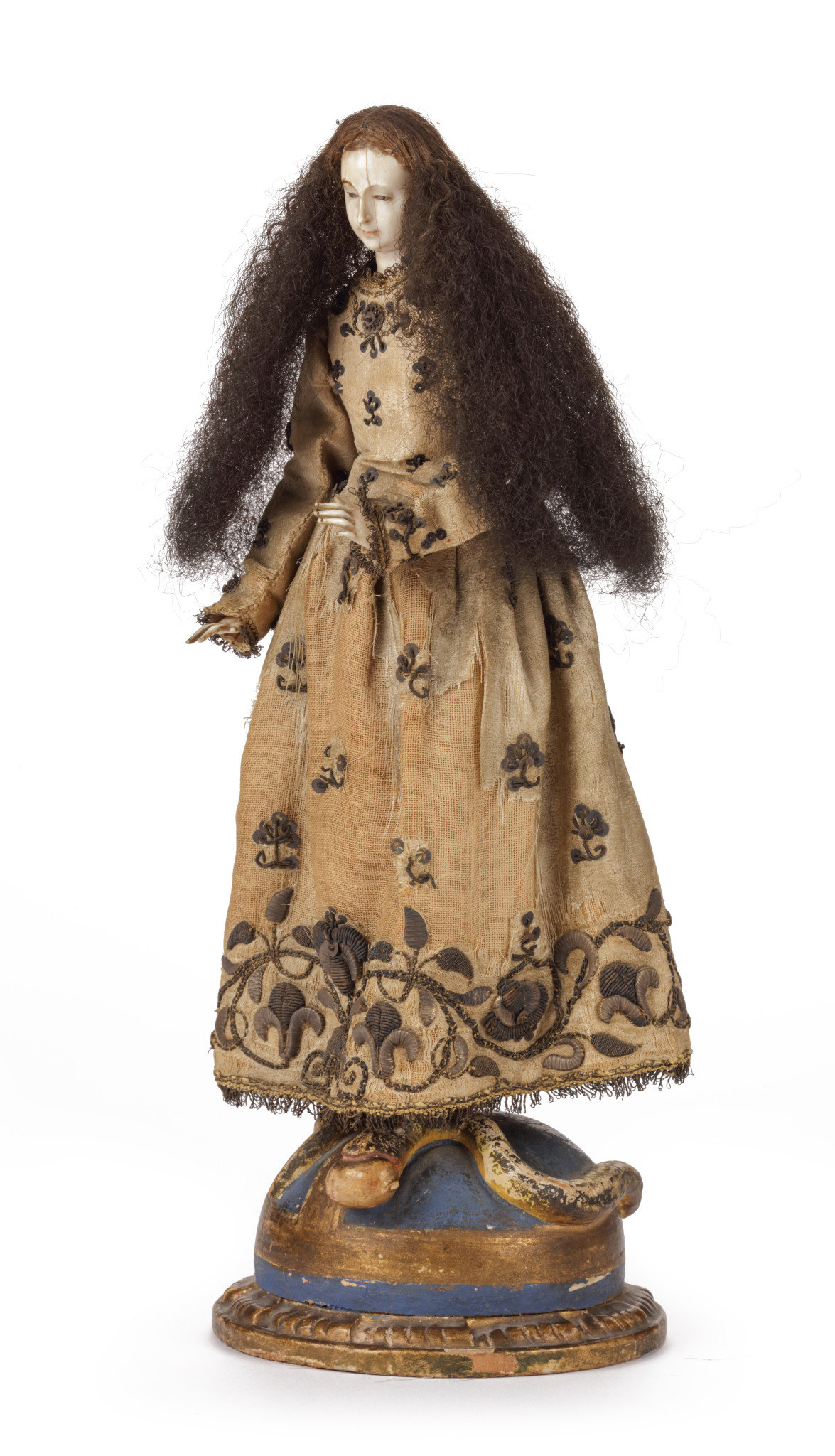
A Spanish-colonial Filipino wood, ivory, human hair and textile sculpture of the Virgin trampling the snake
The Philippines, probably Manilla, early 18th-century
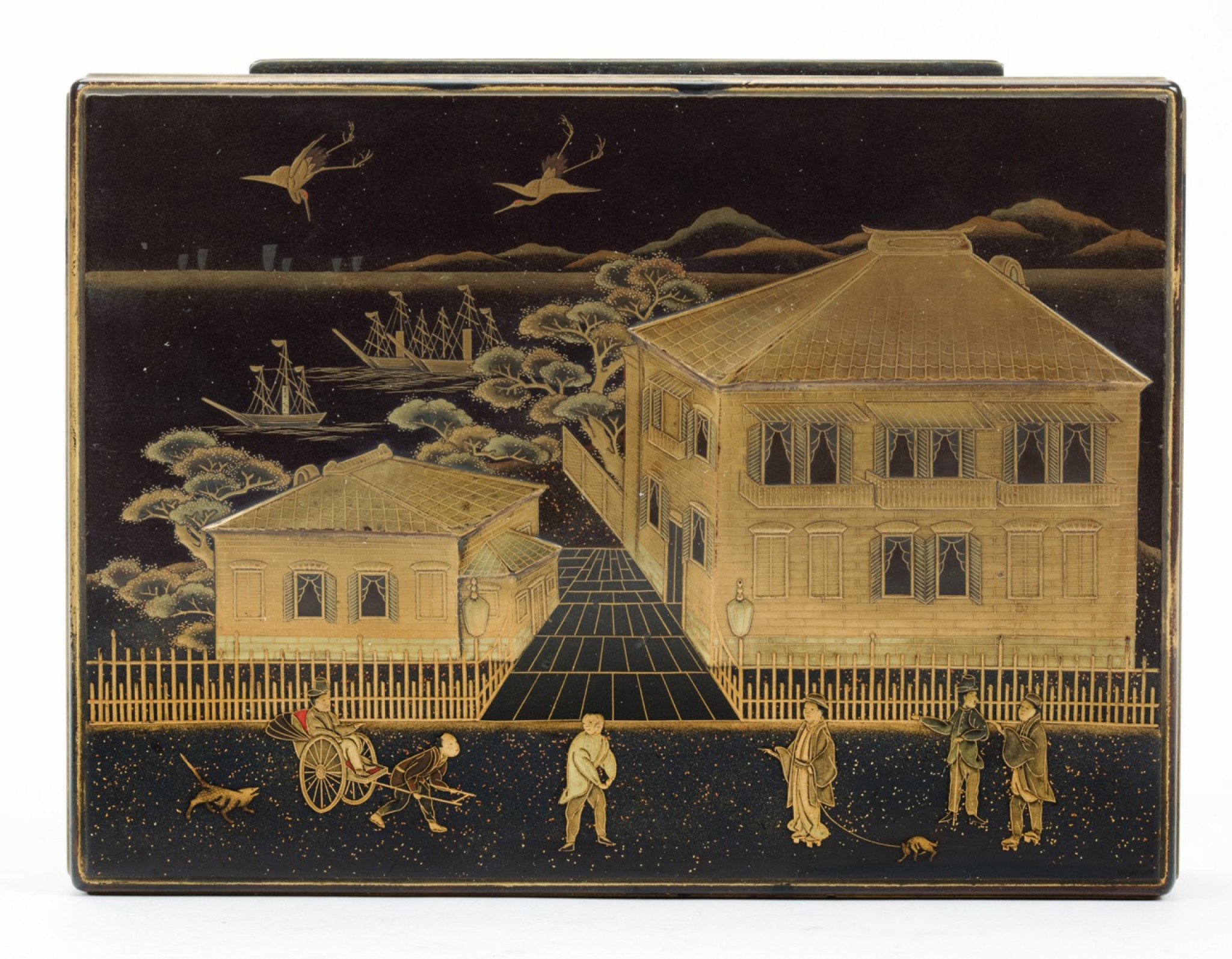
A Japanese export lacquer box with depiction of the Grand Hotel, Yokohama
Meiji period, circa 1873-1887
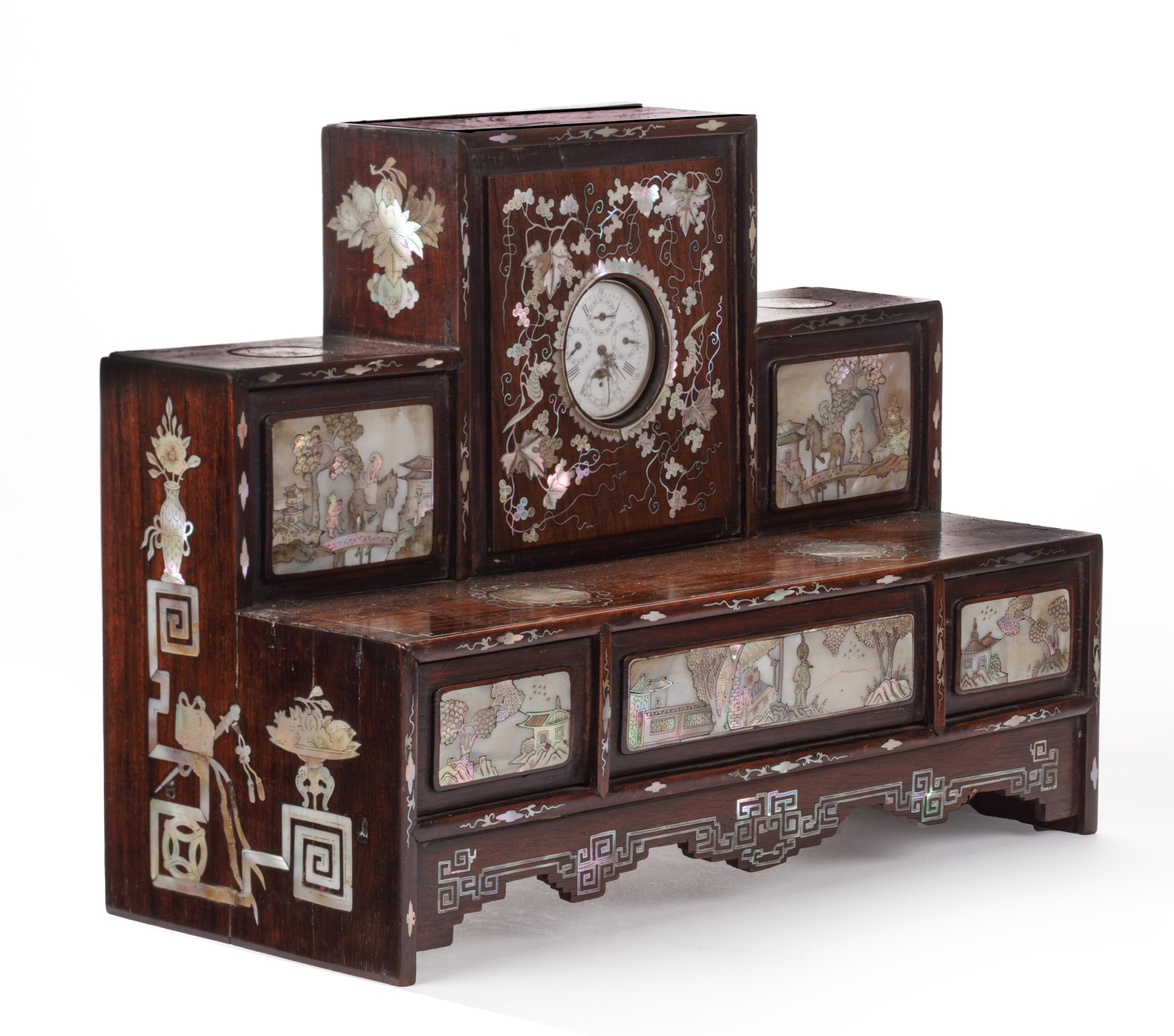
A Chinese huanghuali, wumu and mother-of-pearl watch holder
Canton, 2nd half 19th-century

A Japanese scroll painting depicting Deshima island and Dutch ships in the morning mist in the bay of Nagasaki.
Edo period, 18th century. signed Kõdõ (unknown artist)
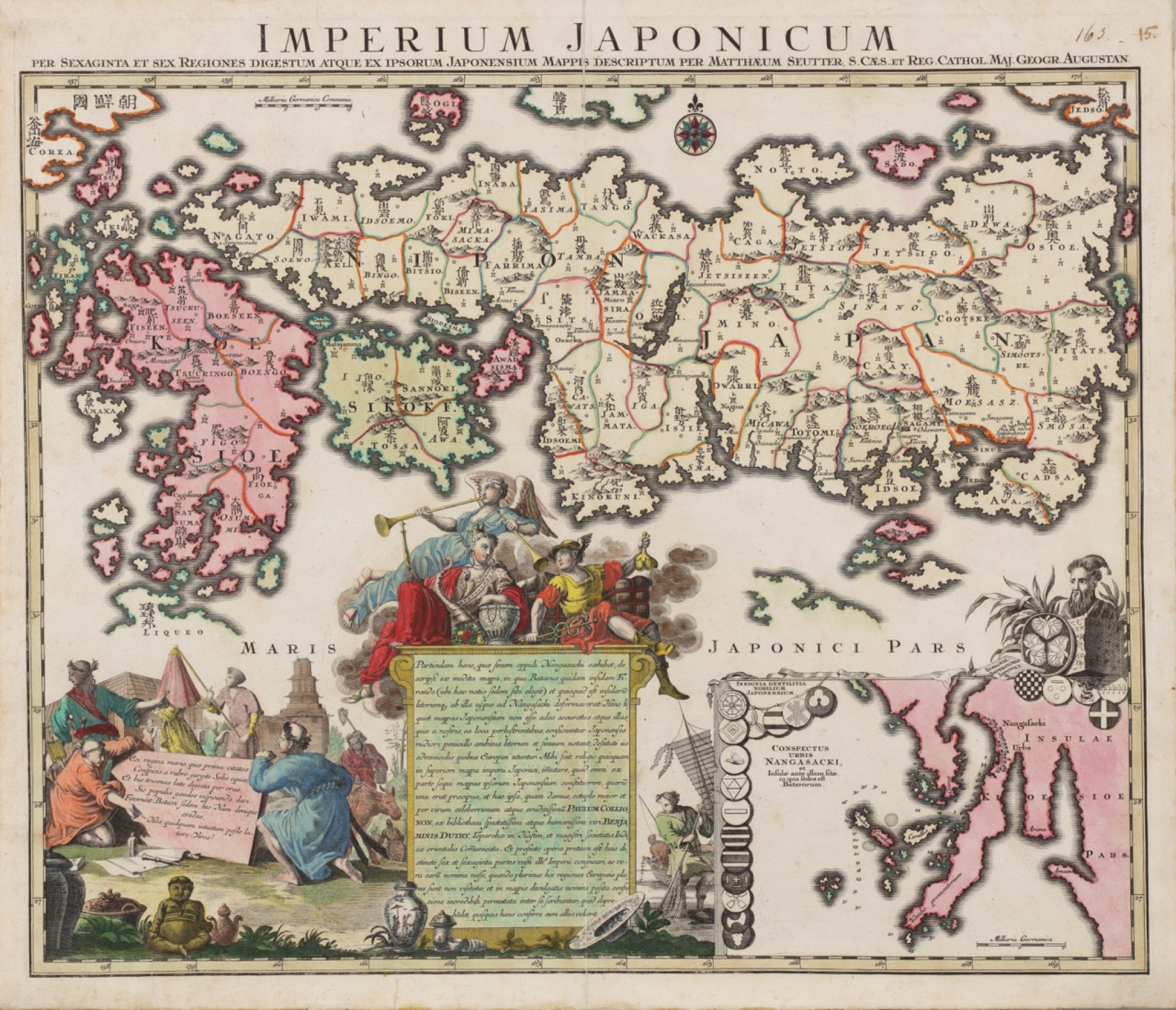
Matthaeus Seutter (1678-1757)
The Japanese Empire, divided into sixty-six regions and described by the maps of the Japanese themselves: Imperium Japonicum per Regiones Digestum sex et sexaginta atque ipsorum Japonensium Mappis from Atlas Novus, Augsburg, circa 1740
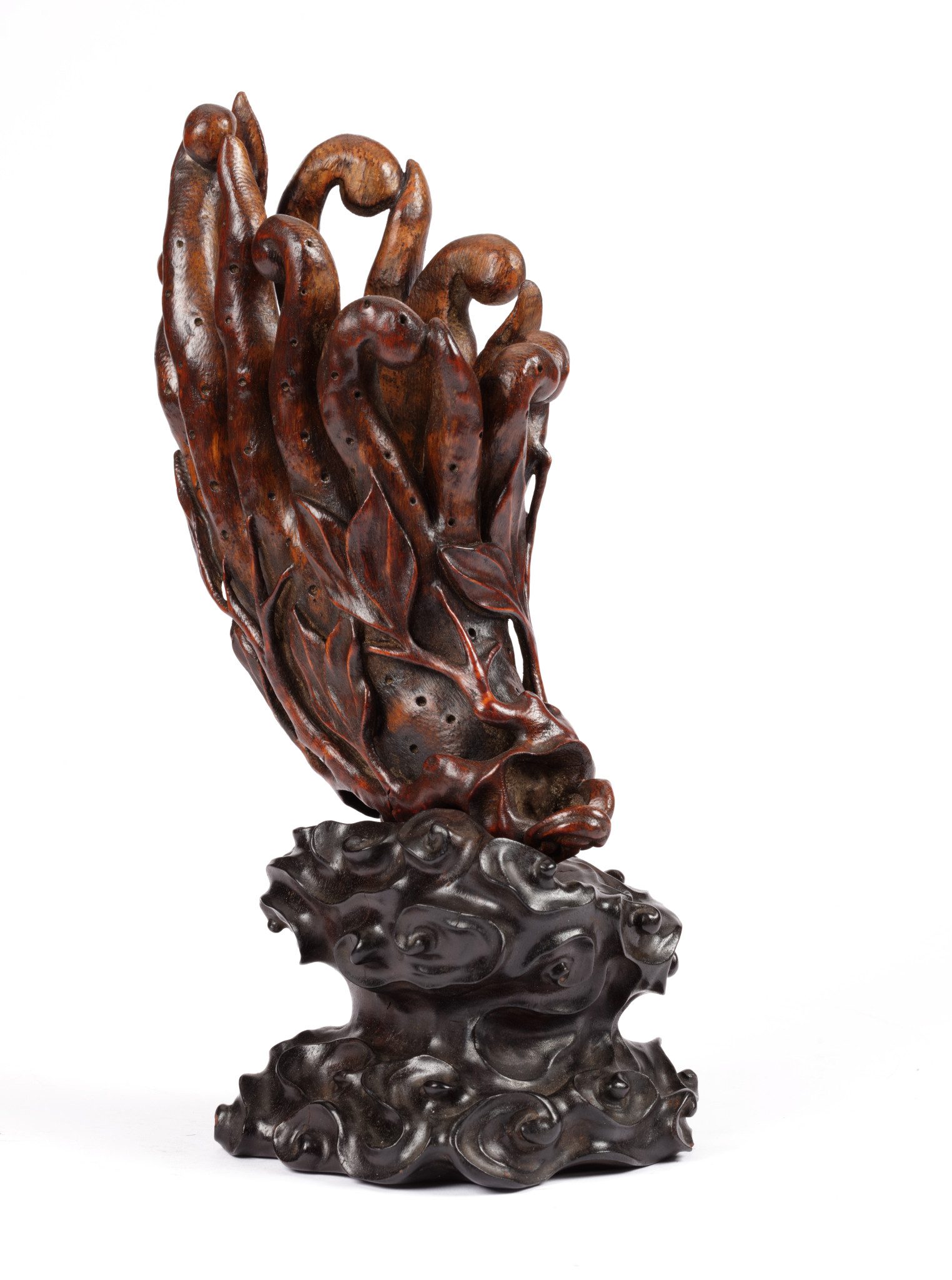
A Chinese carved bamboo Buddha's hand on an ebony base
China, 18th/19th-century
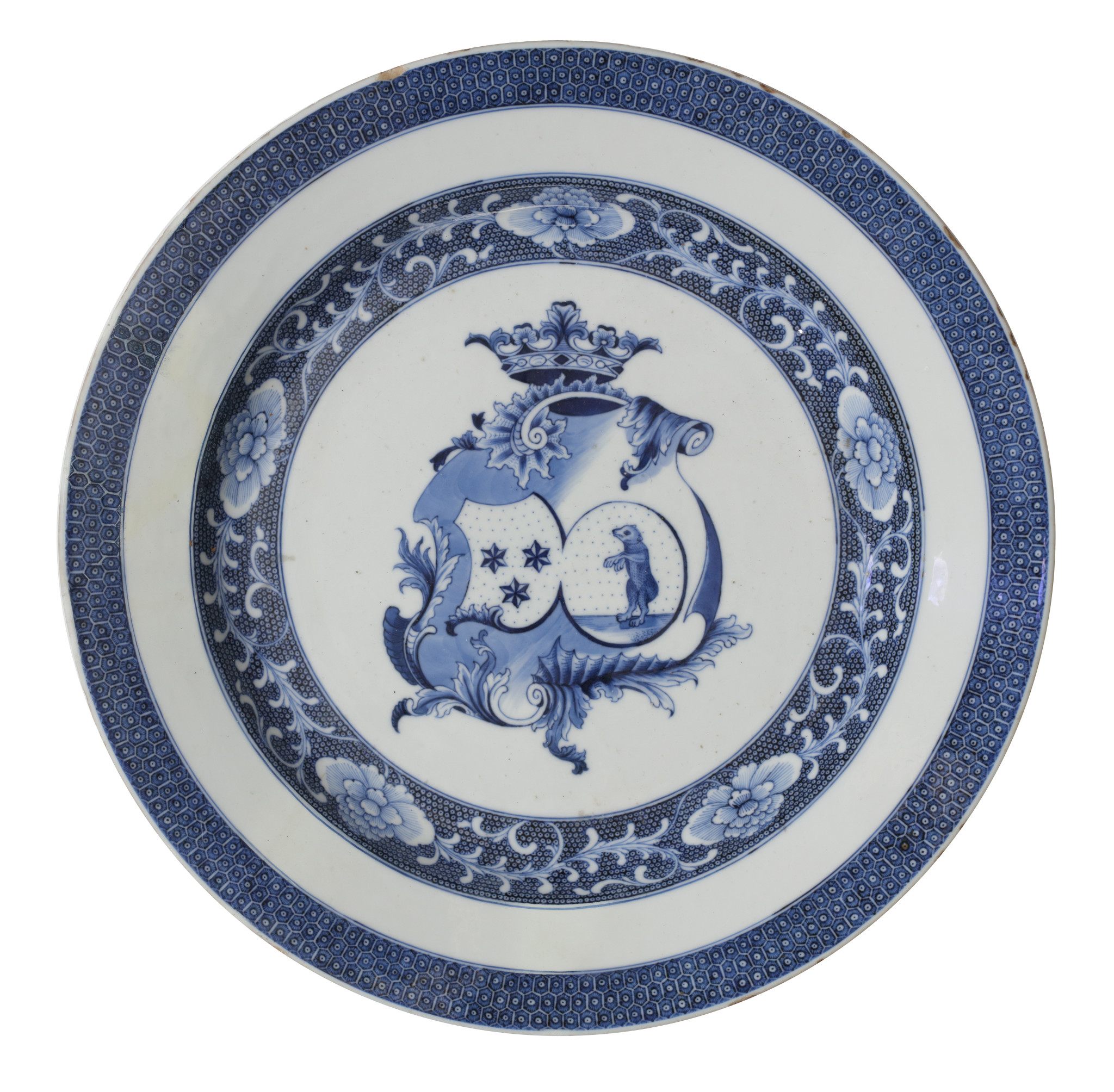
A Chinese export porcelain dish with the coat-of-arms of the Greven and Gonardt families
Qianlong Dynasty, 18th-century
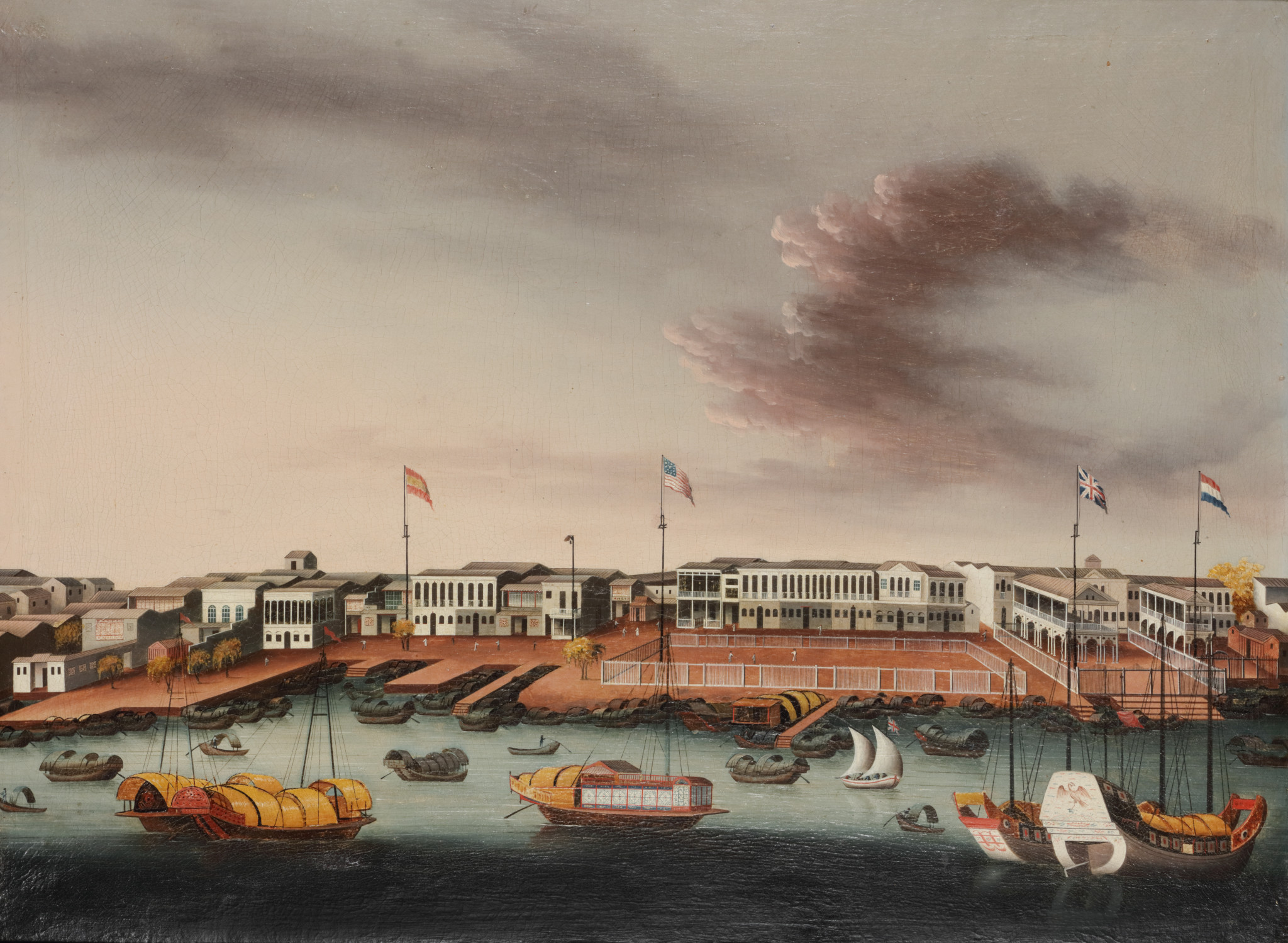
A Chinese export painting depicting the Western Hongs of Canton
Canton, circa 1802
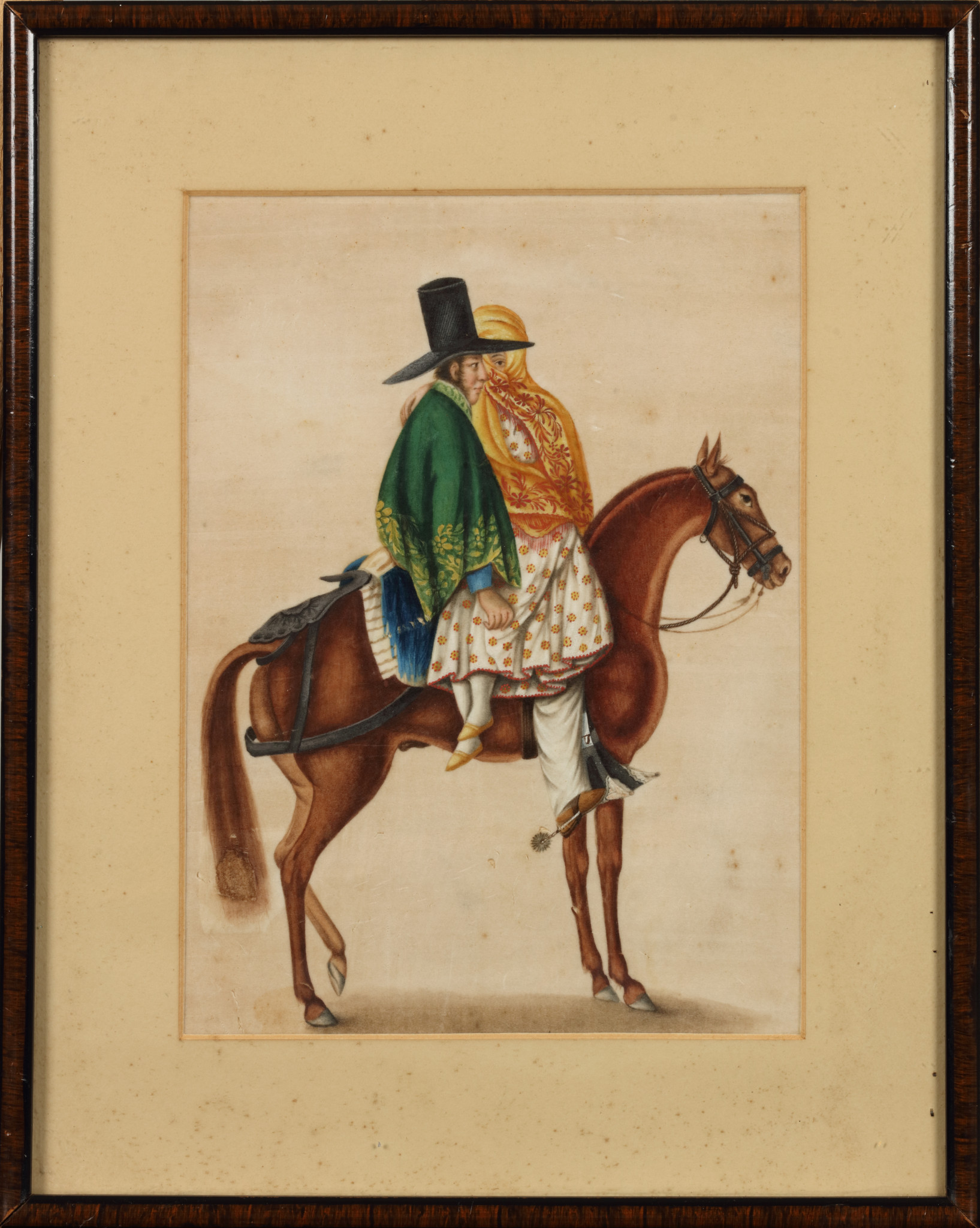
A Chinese export painting of a Peruvian couple on horseback
Canton, circa 1830
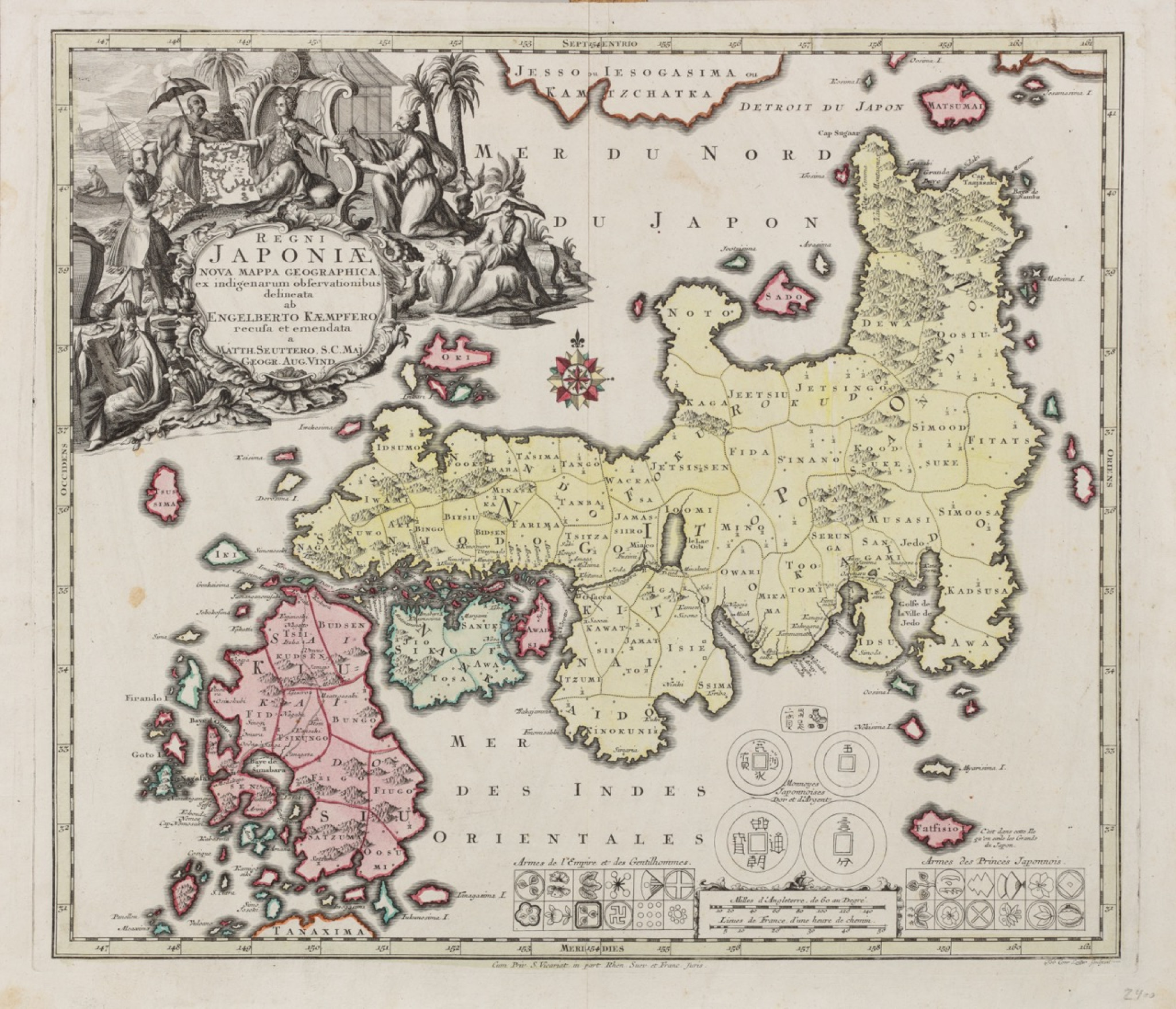
Matthaeus Seutter (1678-1757)
New geographical map of the Kingdom of Japan, drawn by Engelbert Kaempfer from the observations of local peoples and revised by Matth. Seutter: Regni Japoniae nova mappa geographica , ex indigenarum observationibus delineata ab Engelberto Kaempfero recusa et emendata a Matth. Seuttero, Augburg, circa 1740
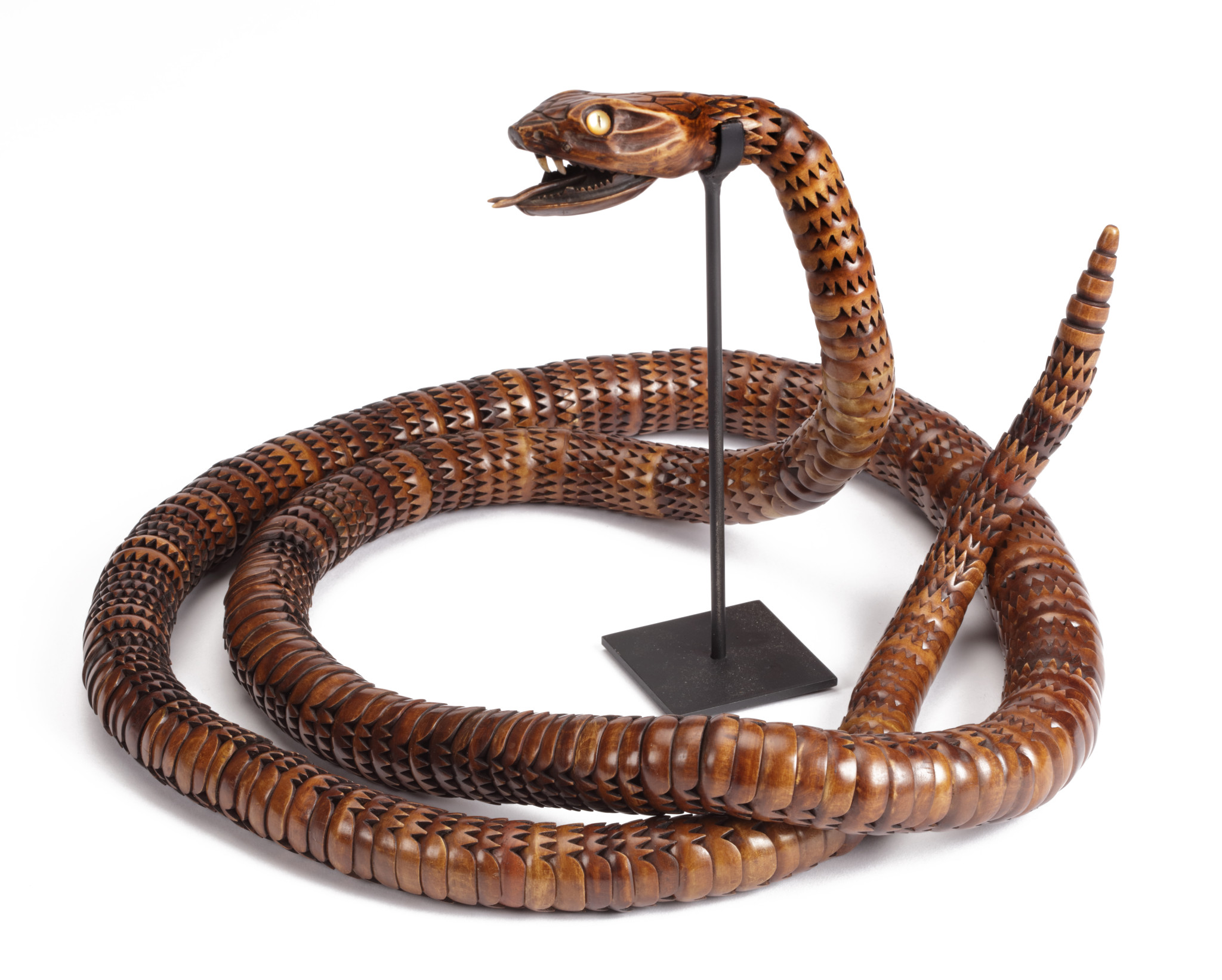
A Japanese articulated wood jizai okimono of a rattle snake by Masakazu
Meji-period, late 19th-century
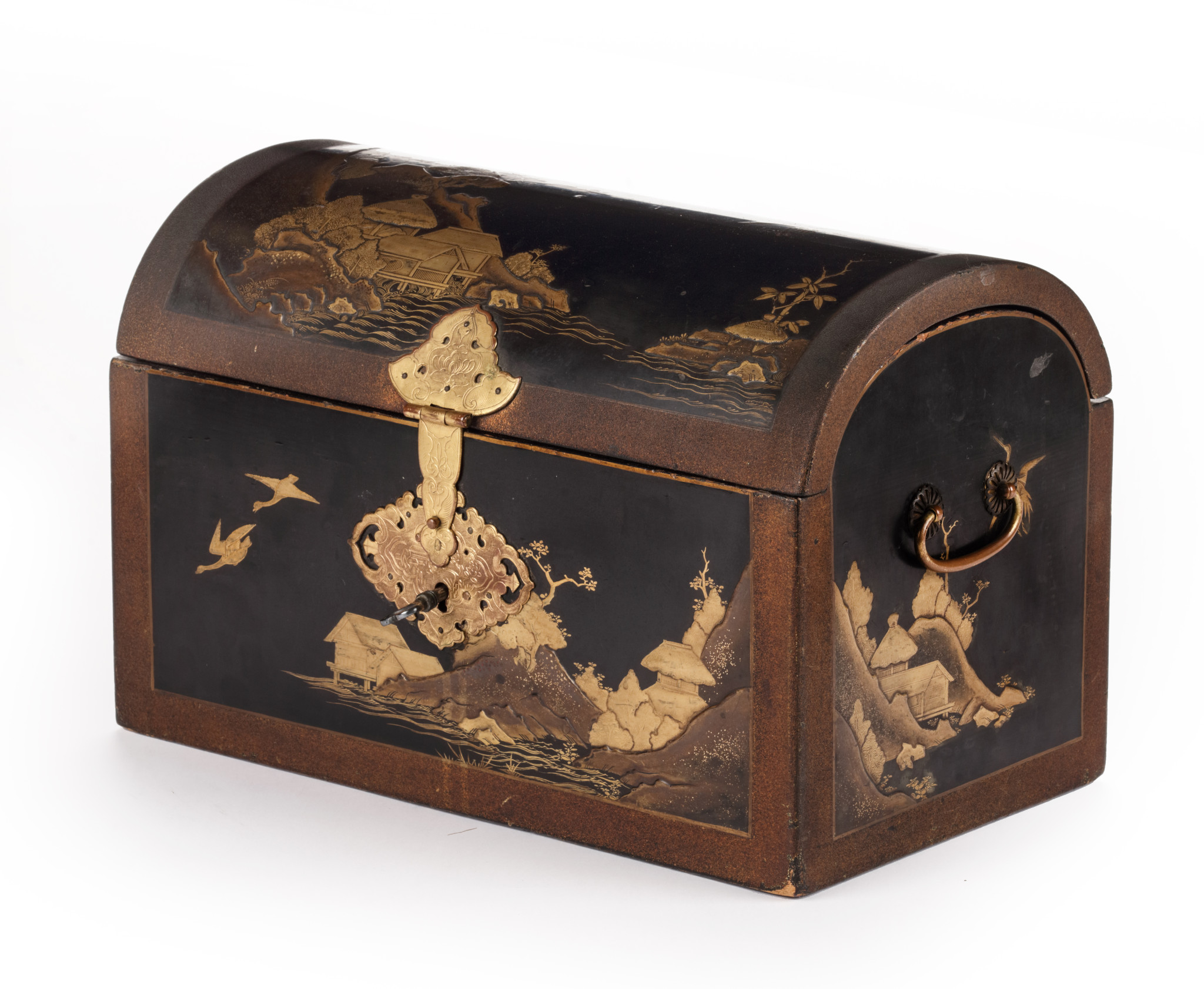
A fine Japanese export lacquer coffer in the pictorial style with gilt-copper mounts
Edo period, Kyoto, circa 1640-1670
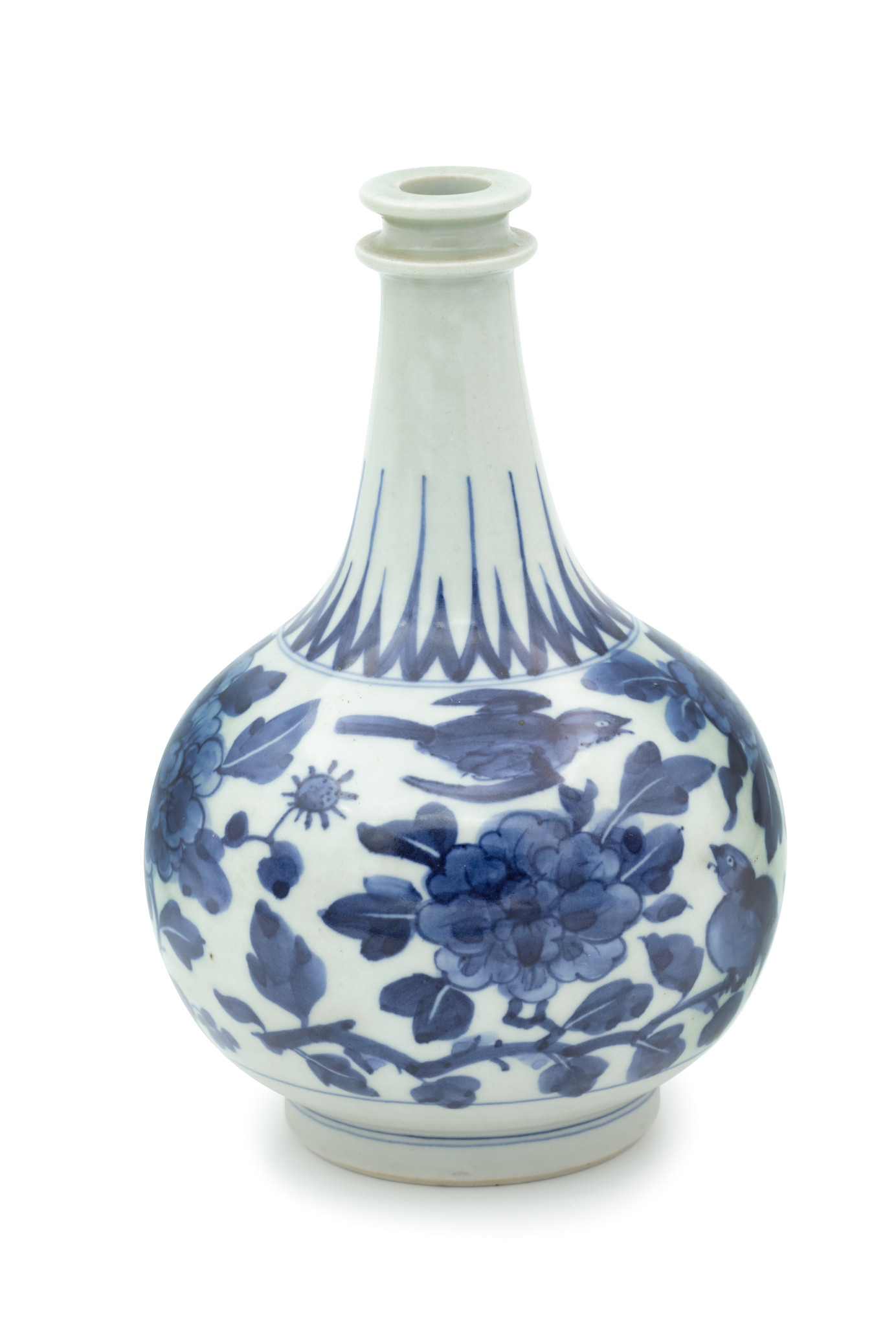
A small Japanese blue-and-white Arita porcelain bottle marked P.VD
Arita, late 17th/early 18th-century
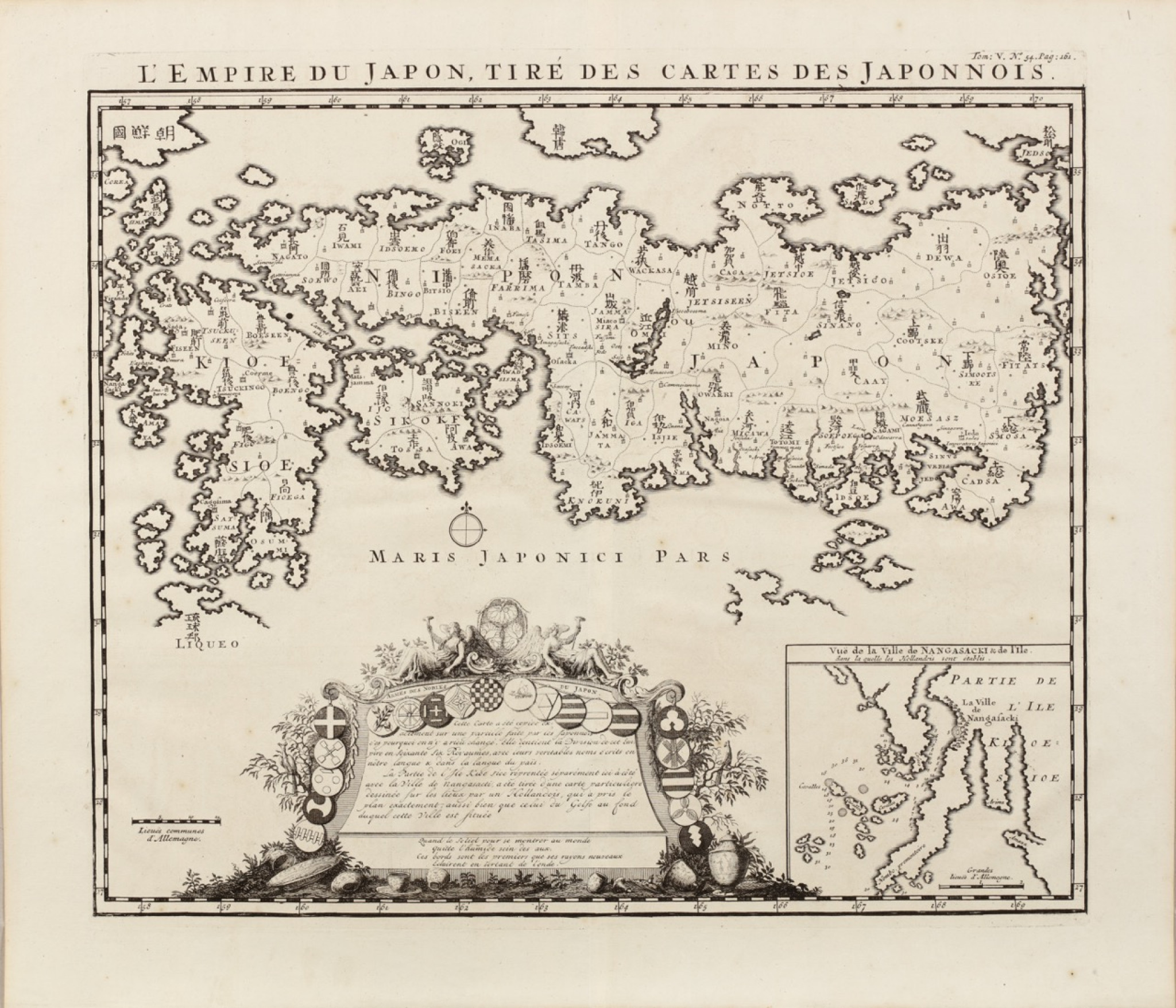
Henri Abraham Chatelain (1684-1743)
The Empire of Japan, taken from the maps of the Japanese: l’Empire du Japon, Tiré des Cartes des Japonnois from Atlas Historique, vol. 5, Amsterdam, 1719
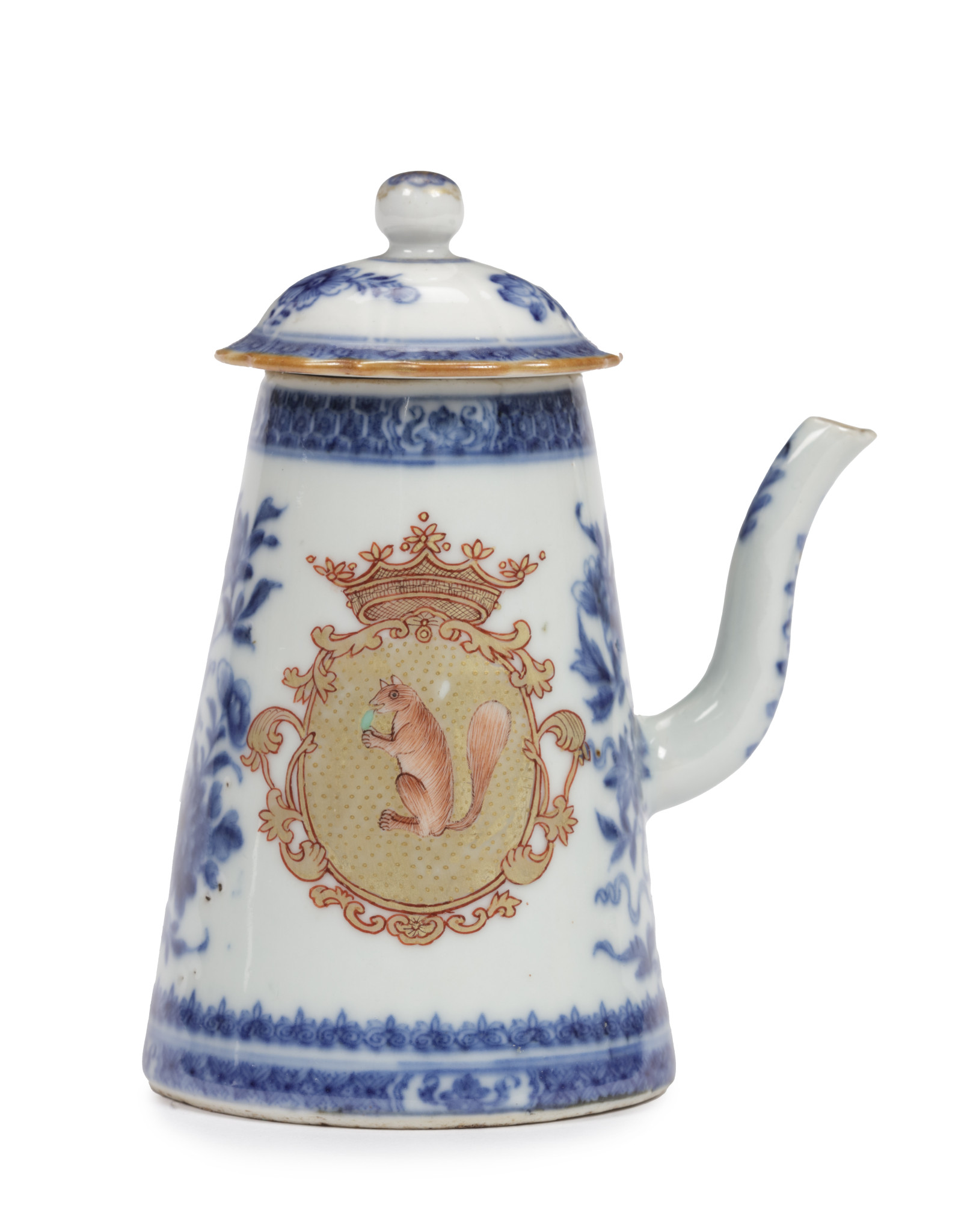
A small Chinese export porcelain coffeepot bearing the arms of Jan Albert Sichterman (1692-1764)
Qianlong period, circa 1735
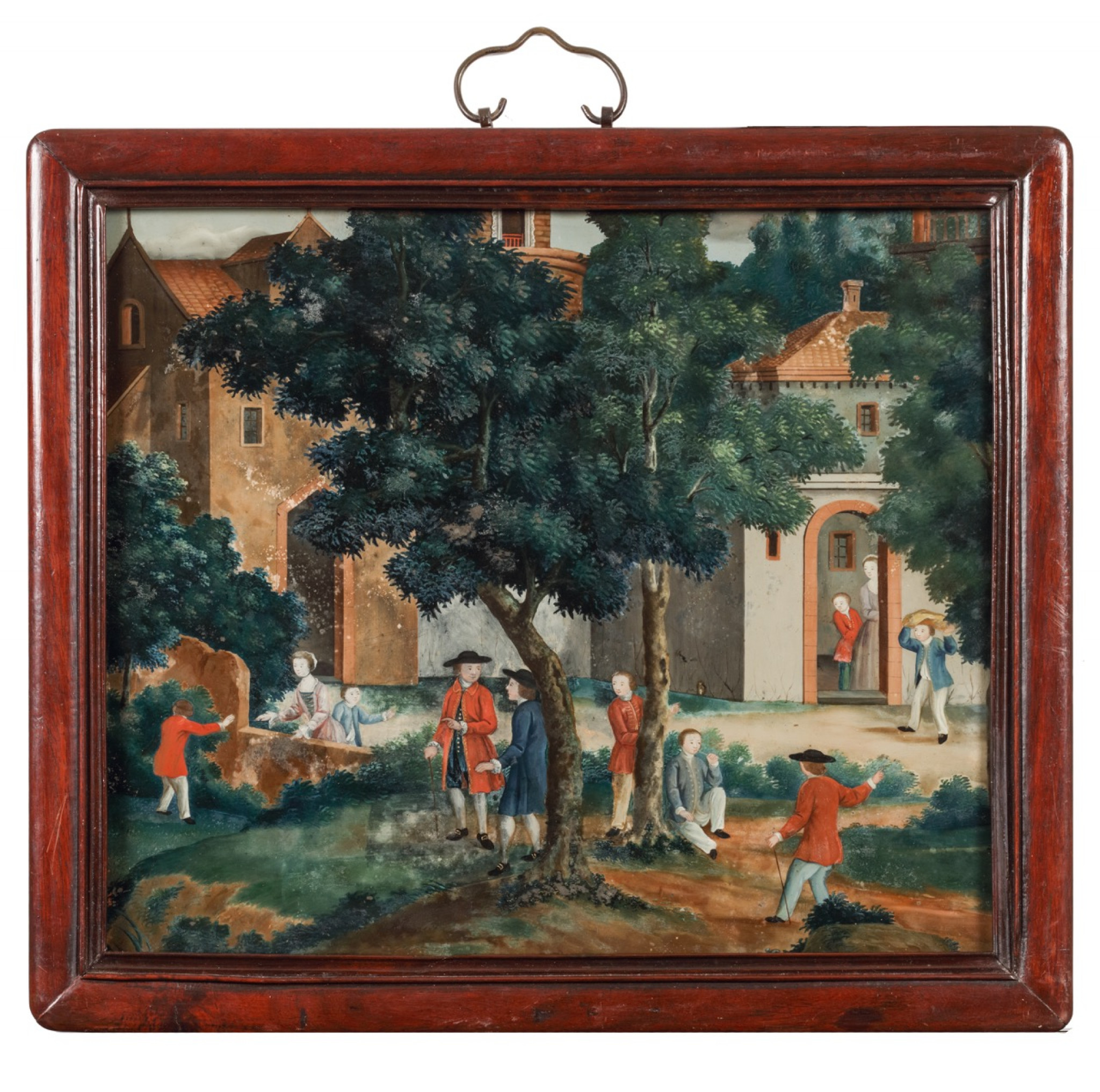
A Chinese export reverse-glass painting after an English print in original hardwood frame
Canton, late 18th-century
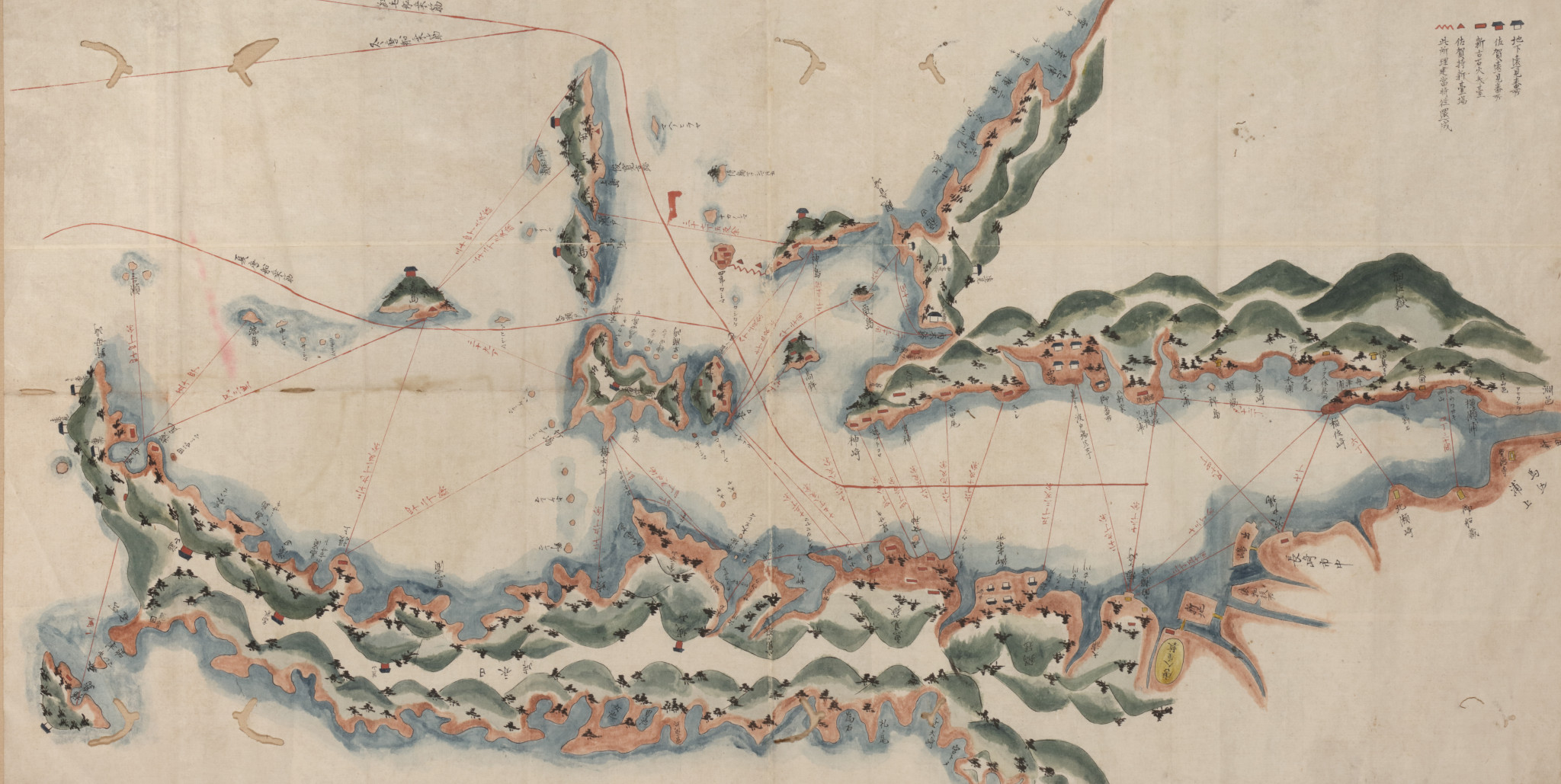
A Japanese manuscript map of the harbour of Nagasaki
Late Edo period, mid-19th-century
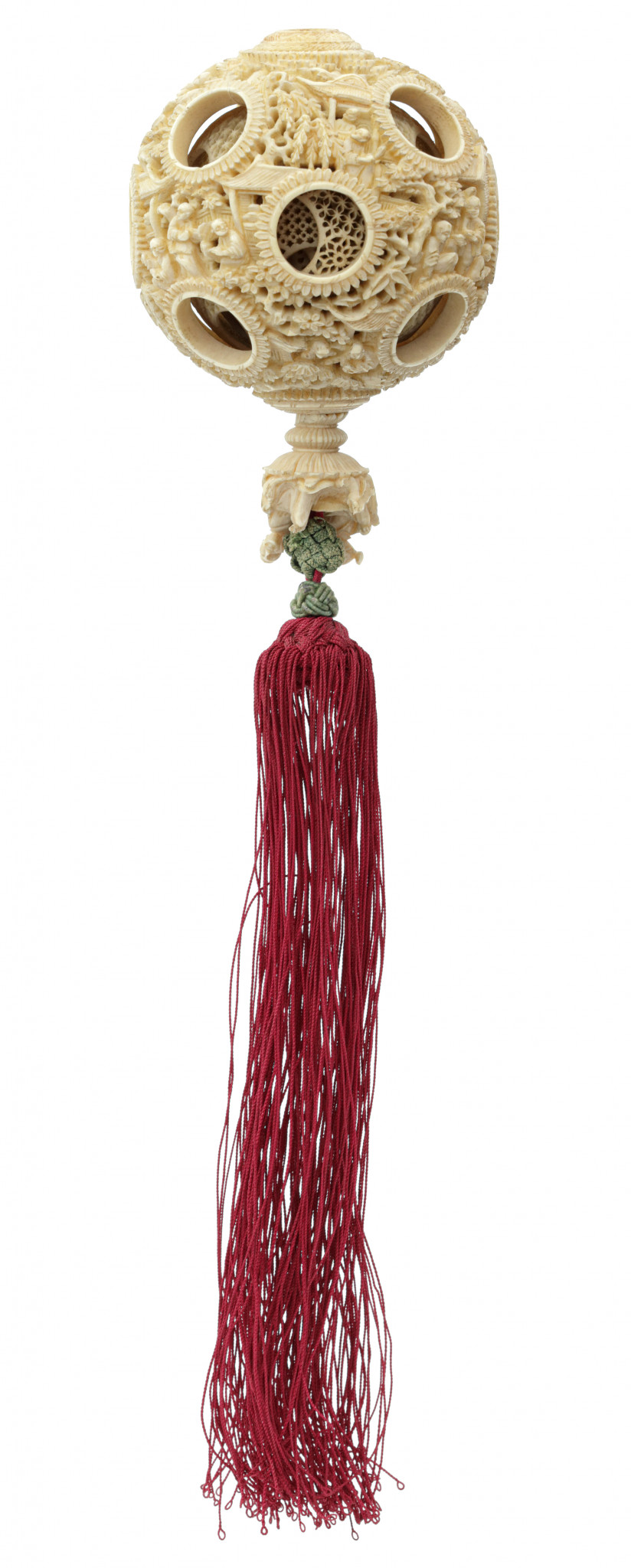
A Chinese ivory puzzle ball
China, 18th/19th-century
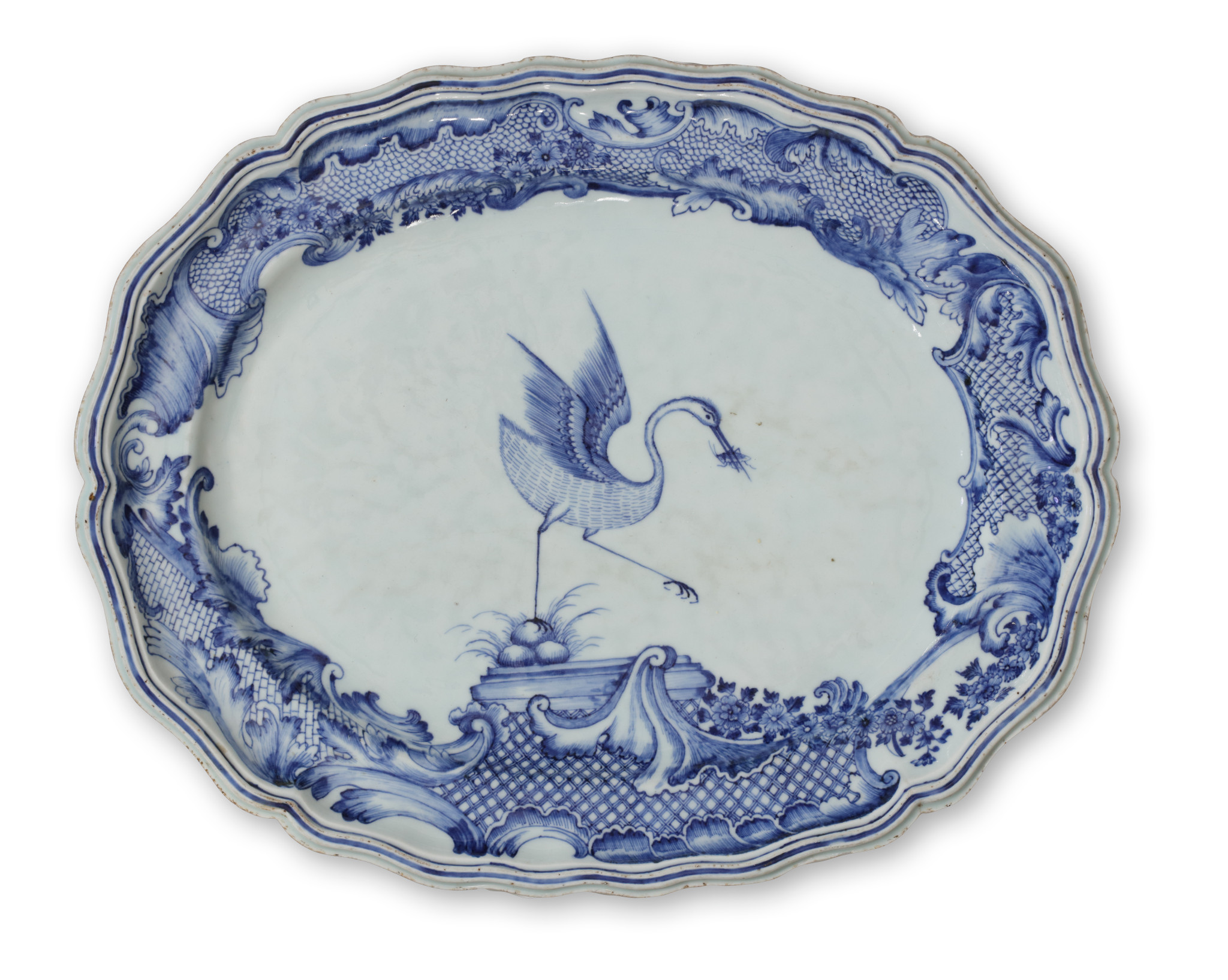
A Chinese export porcelain platter bearing the heraldic crane of the Grill family
Qianlong period, circa 1750-1760
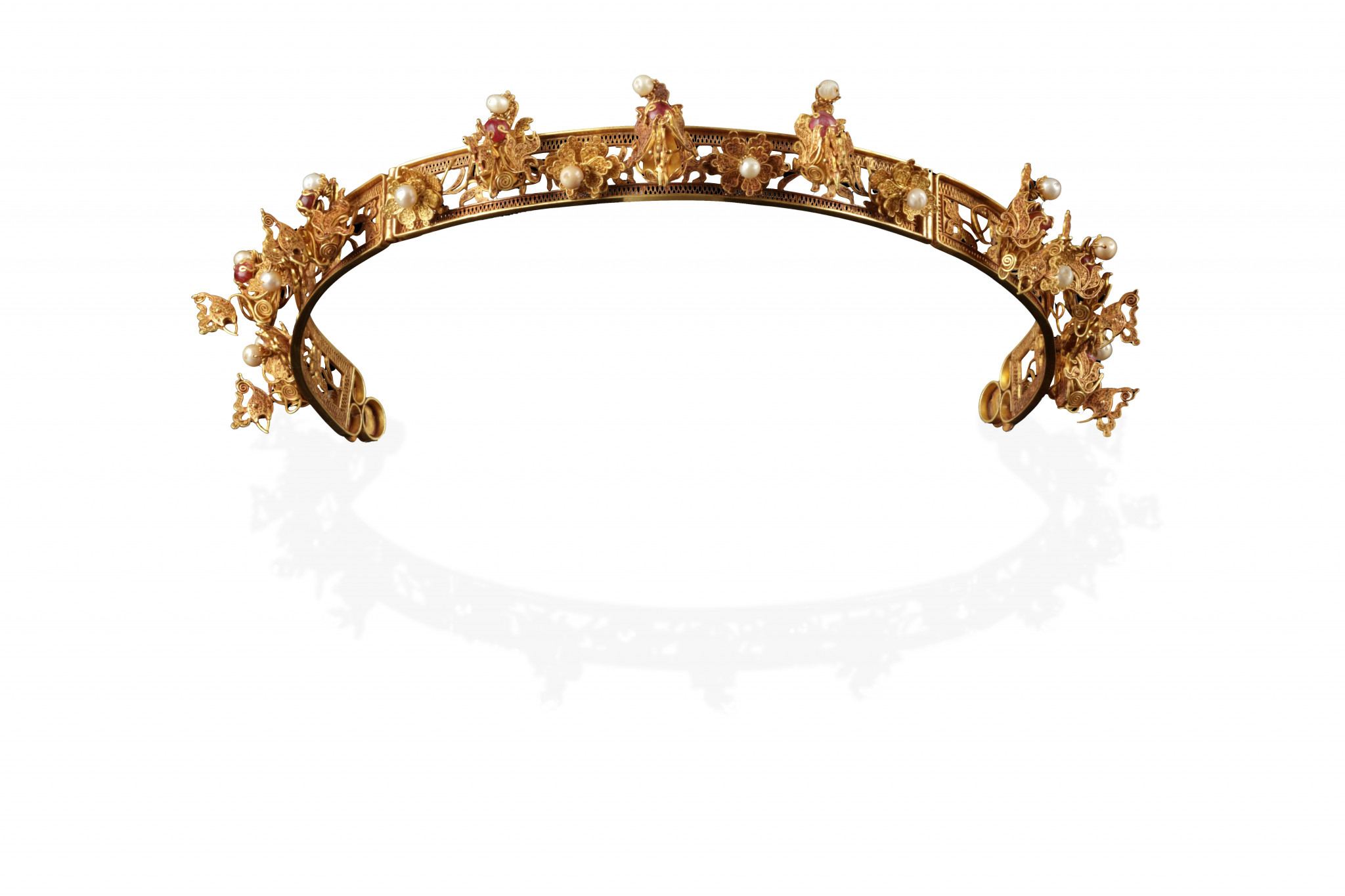
A superb ruby and pearl set Chinese Imperial 'Phoenix Crown'
Qing-dynasty, 18th century
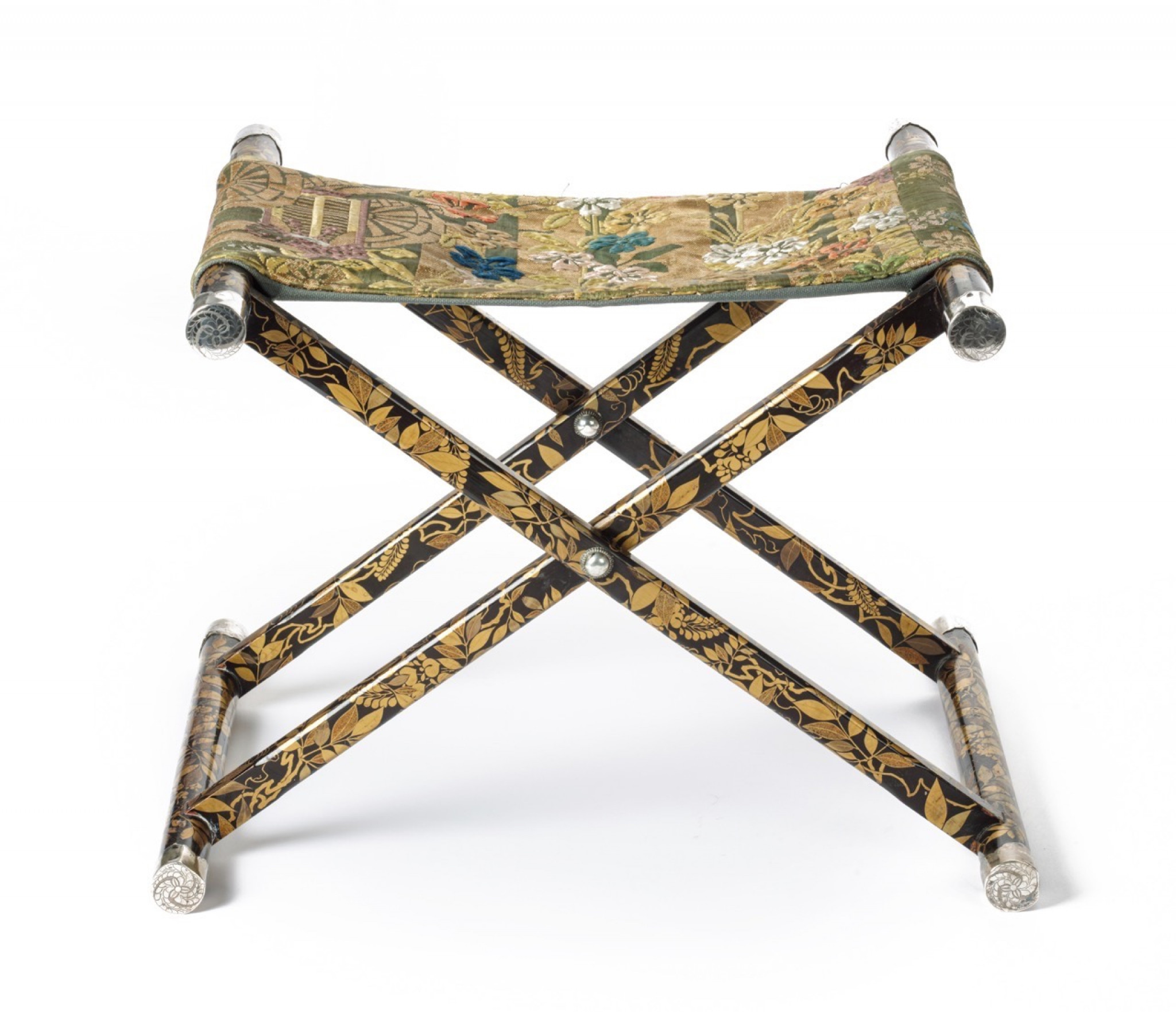
A small Japanese lacquer X-frame folding stool, or kyodusai
Momoyama period, late 16th century
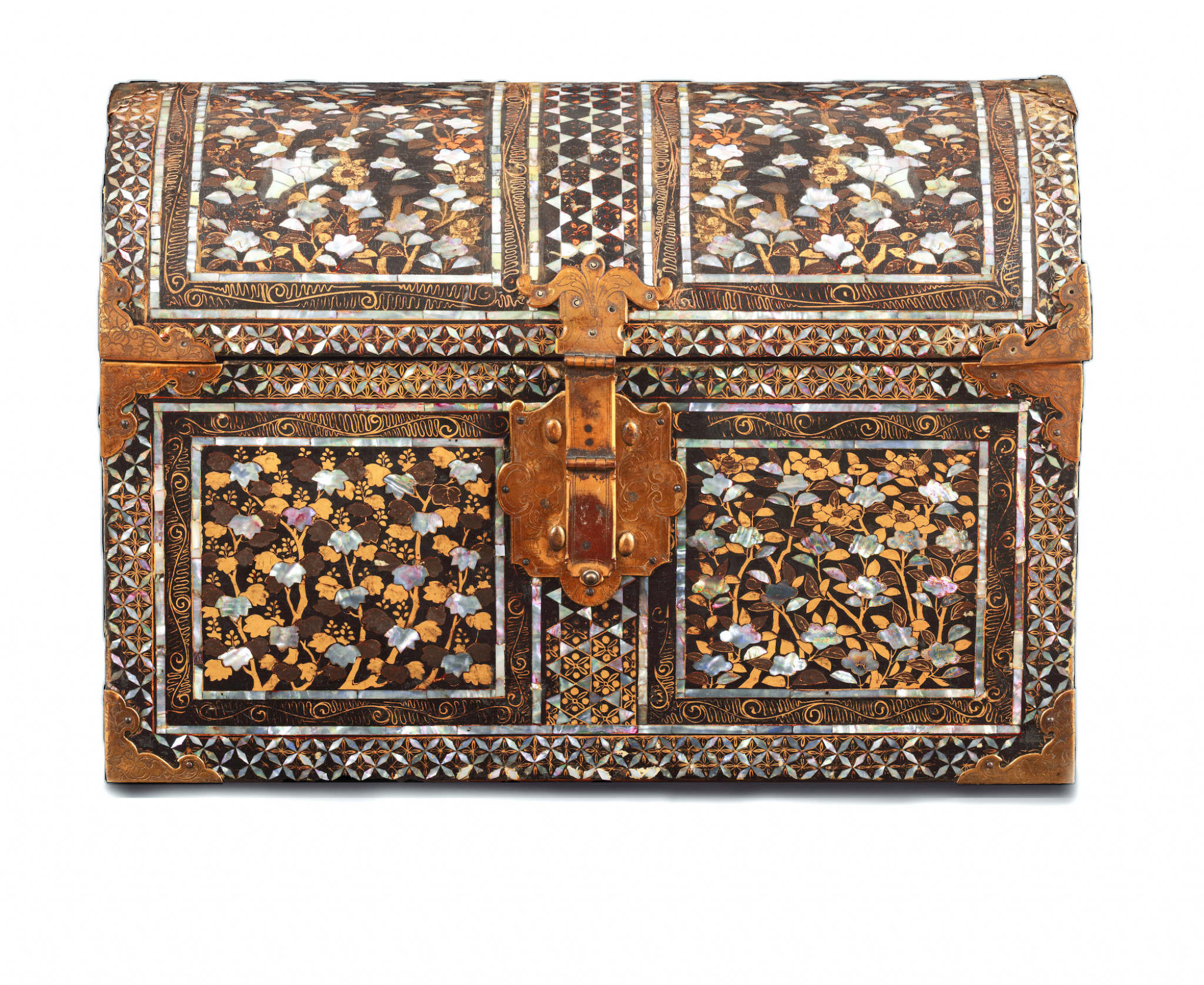
A Japanese Namban lacquer coffer with copper mounts for the European market, signed by Arisato
Momoyama period, late 16th/early 17th century
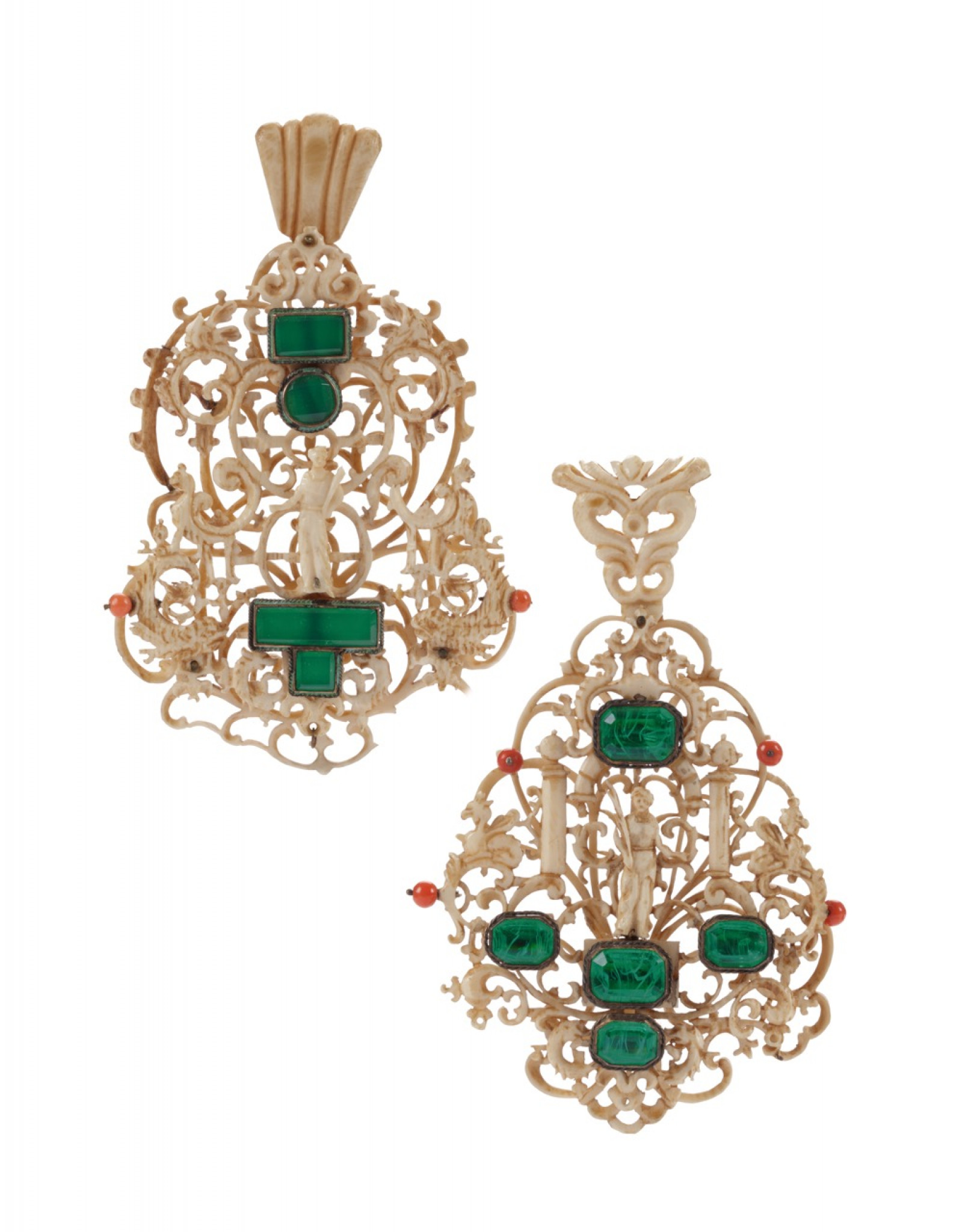
Two delicate openwork ivory Chinese export Renaissance Mignot-style pendants
Circa 1600-1650
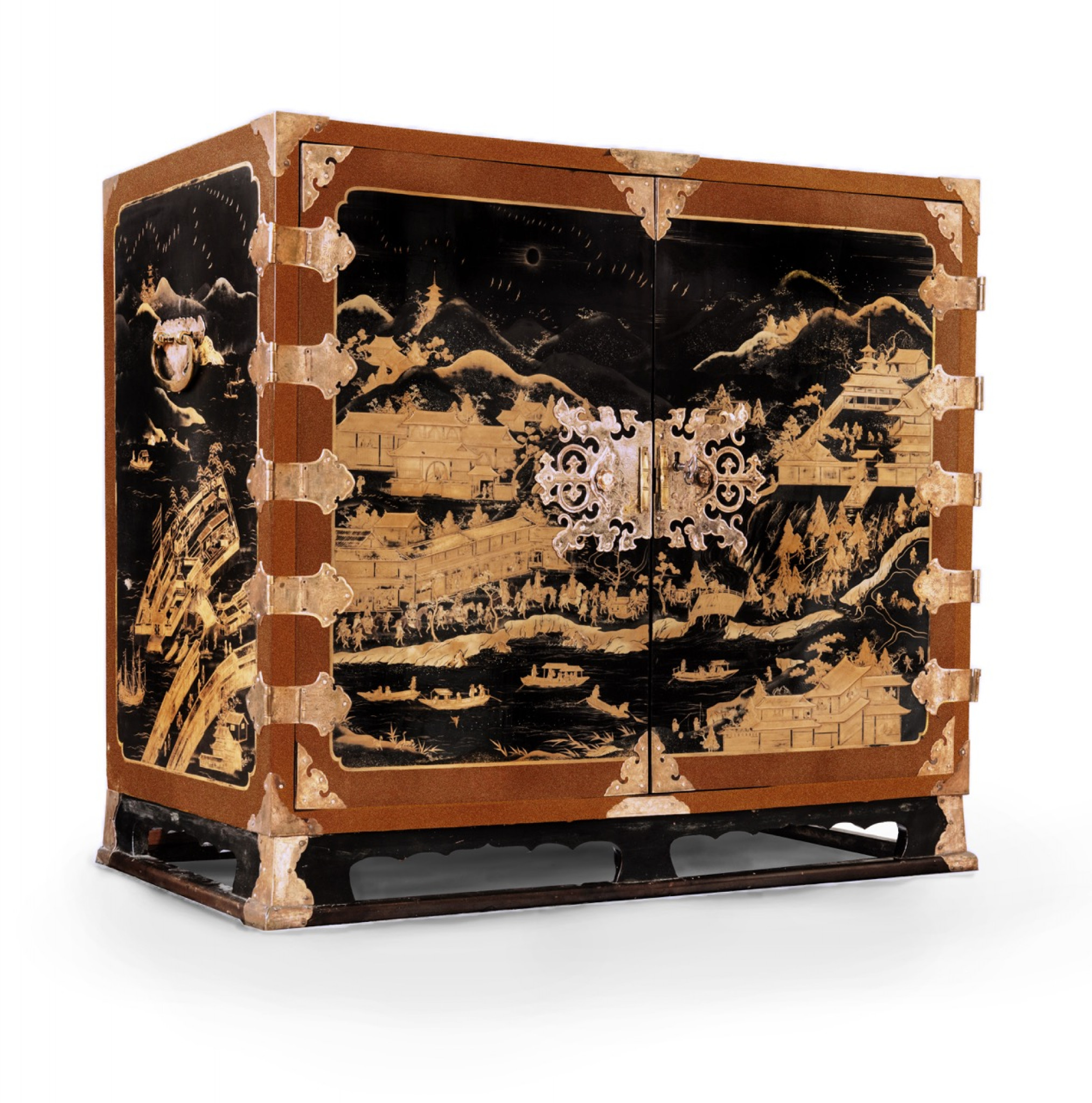
The Deshima Cabinet.
A Japanese export lacquer cabinet with a depiction of Deshima for the Dutch market with gilt copper mounts
Edo period, circa 1660-1680
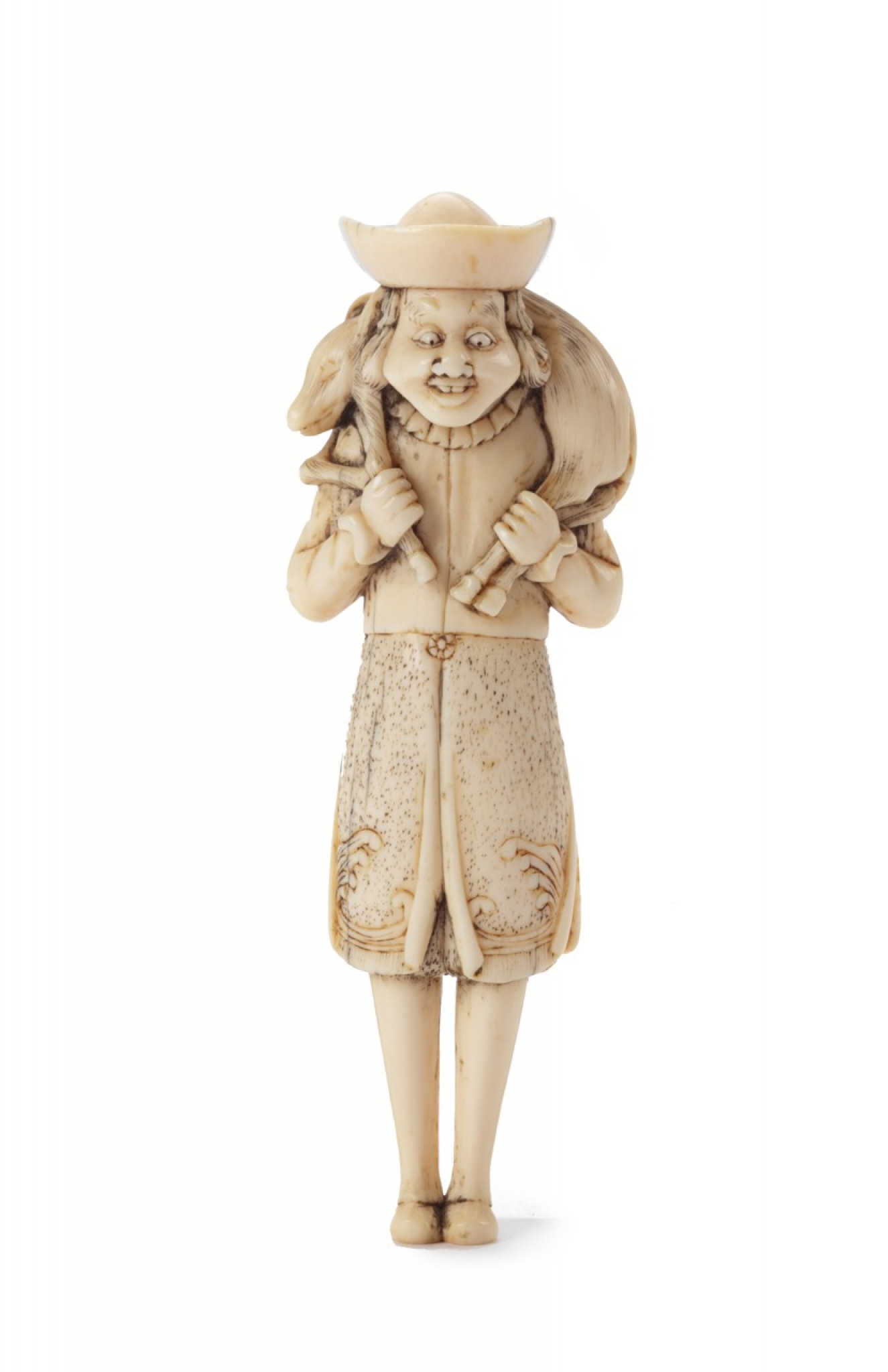
A superb Japanese ivory netsuke of a Dutchman carrying a boar slung over his shoulder
Edo period, 18th century
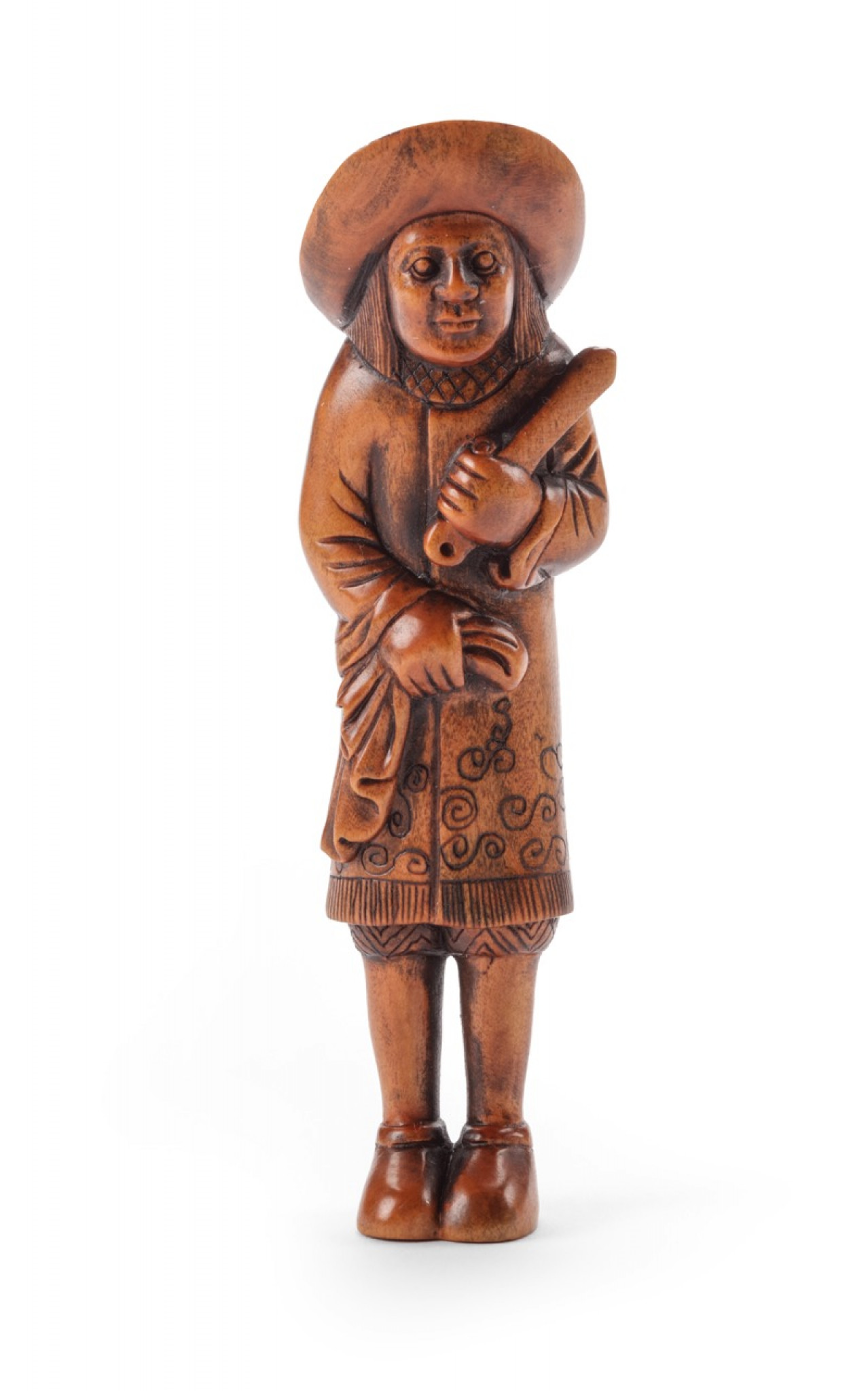
A Japanese boxwood netsuke of a Dutchman as a barber
Showa period, mid-20th century
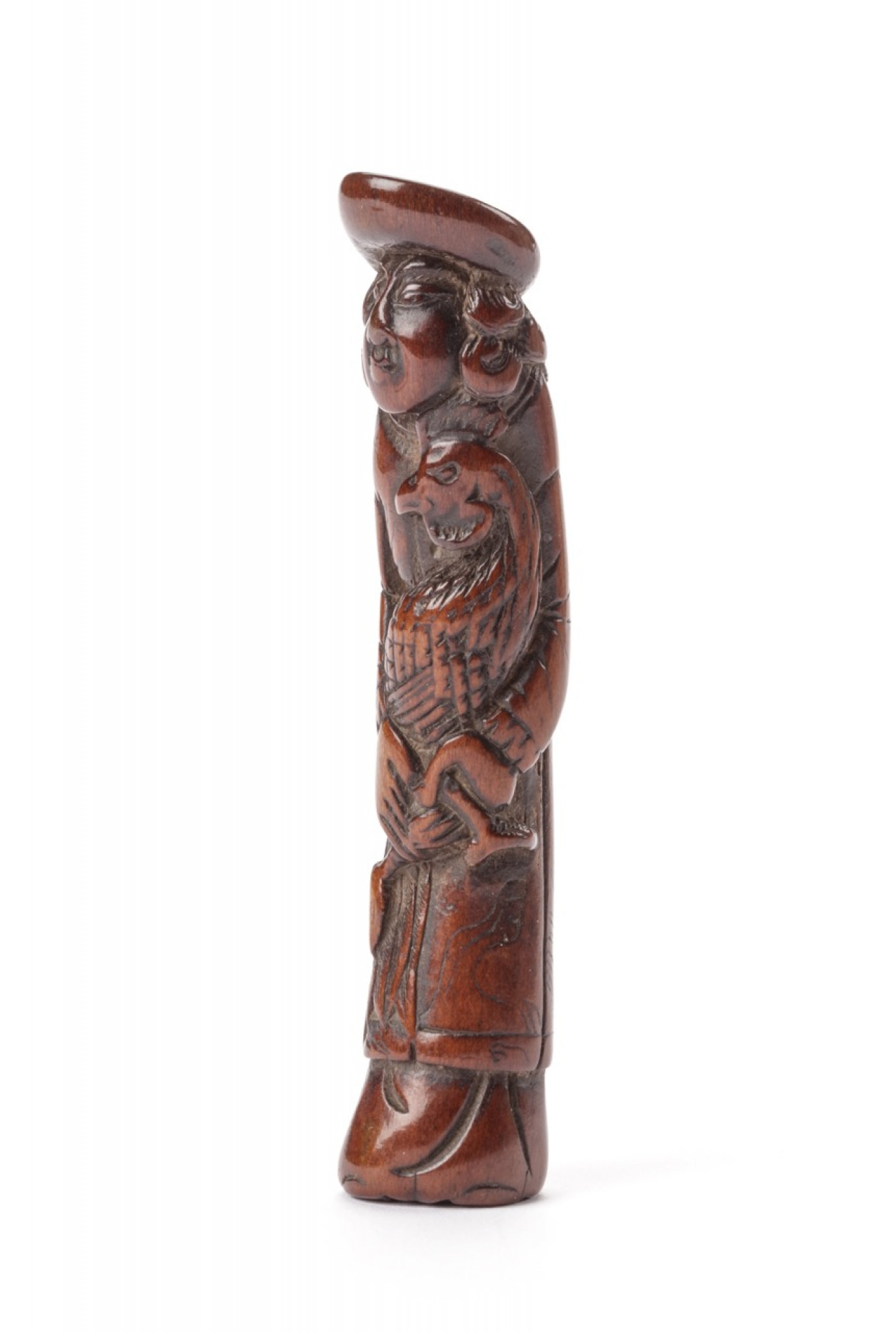
A rare bone netsuke of a Dutchman with a cockerel
Edo period, 18th century
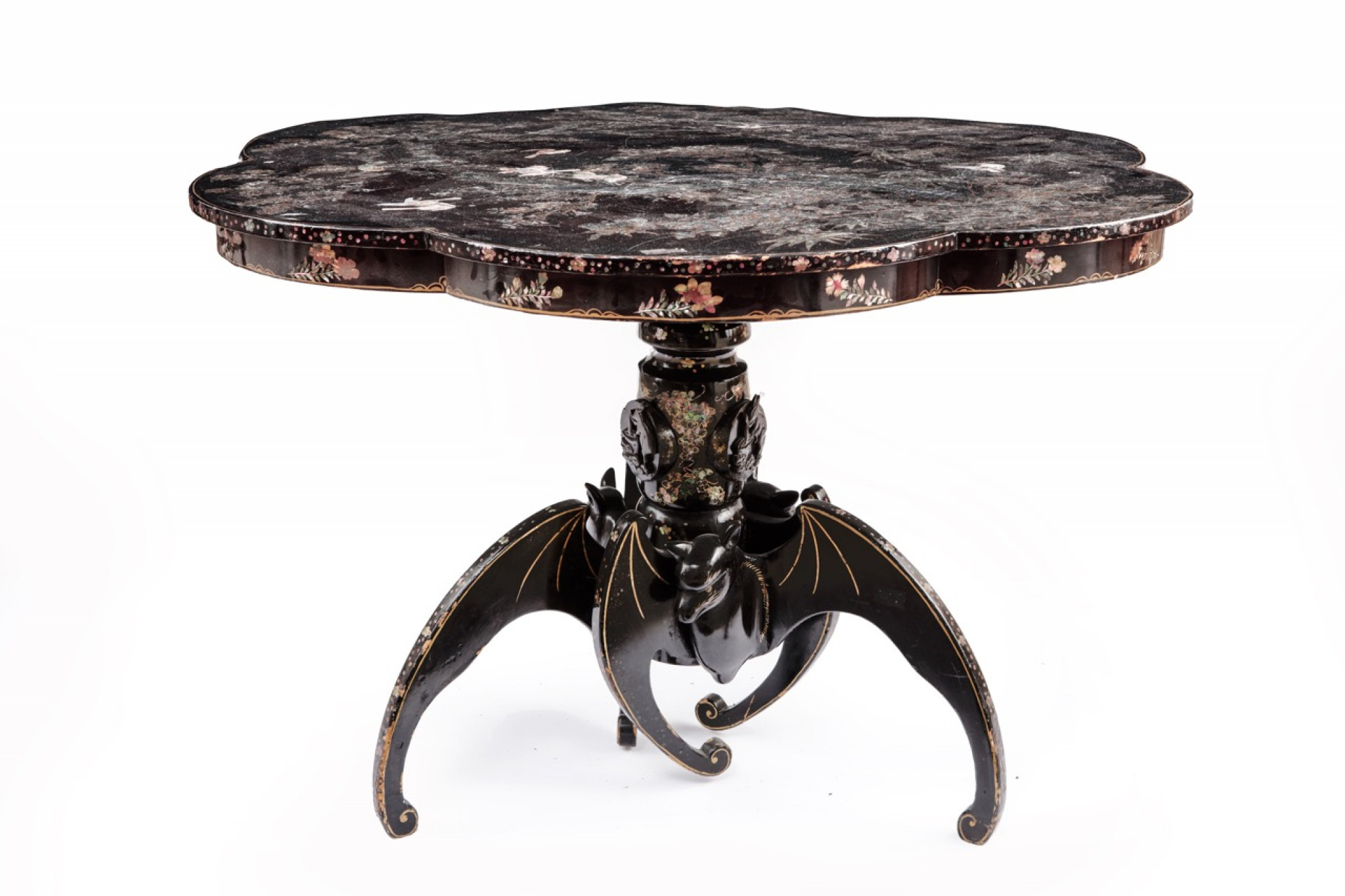
A Japanese export lacquer tripod table with feet shaped like bats
Nagasaki, 1850-1860
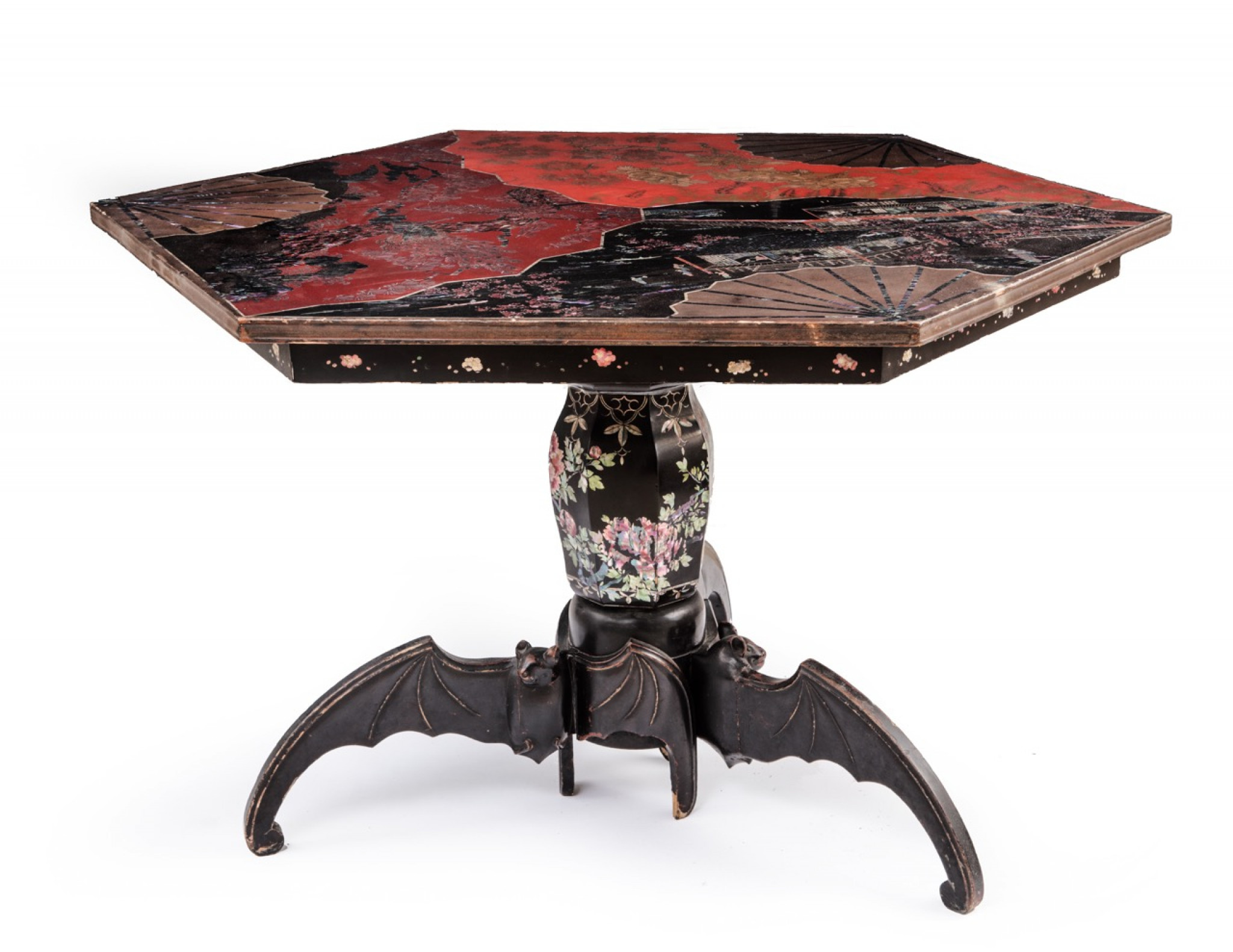
A Japanese export lacquer tripod table with feet shaped like bats
Nagasaki, circa 1850-1860
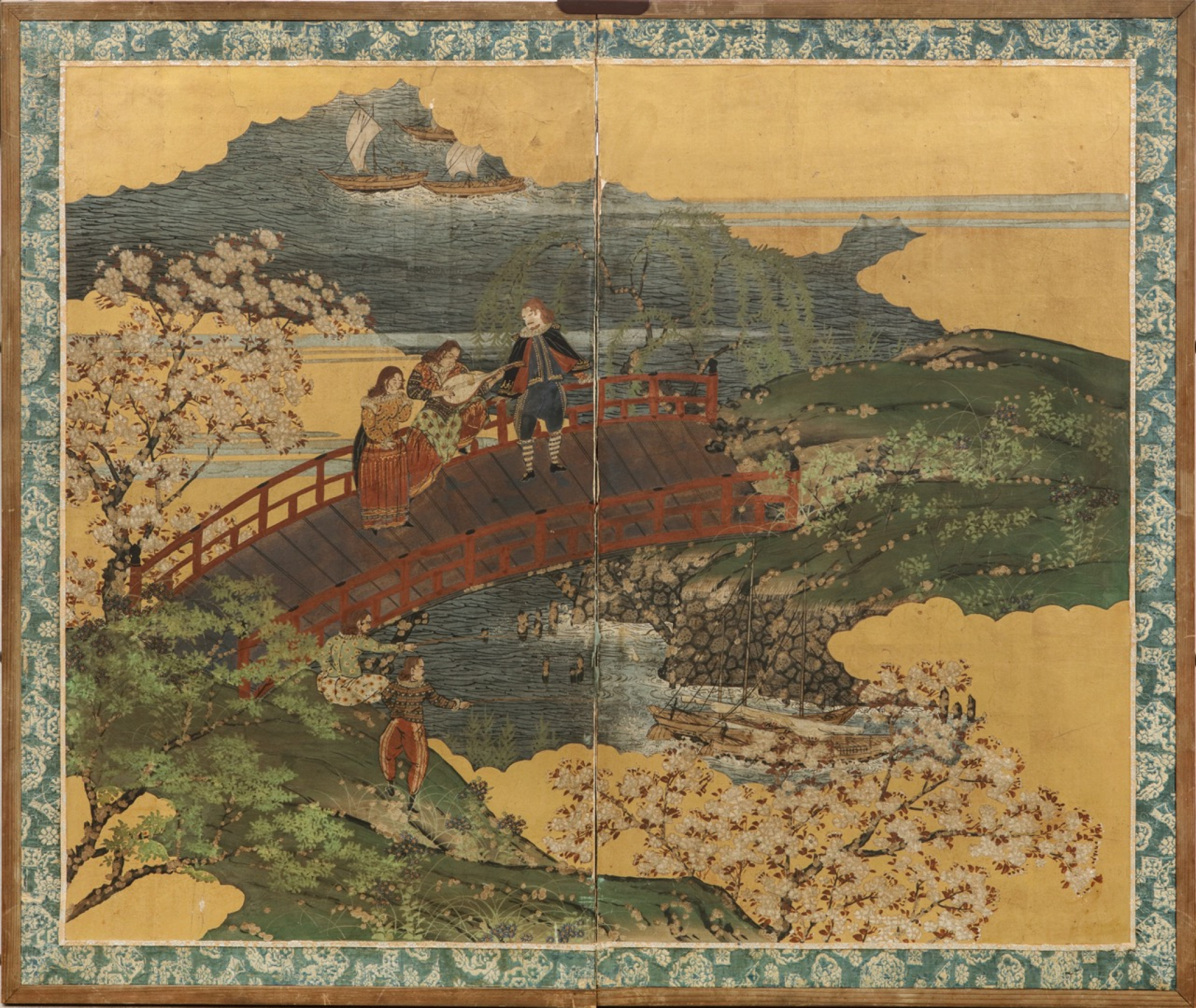
A Japanese two-fold Namban screen depicting Dutchmen and women in a garden
Early Edo period, early 17th century
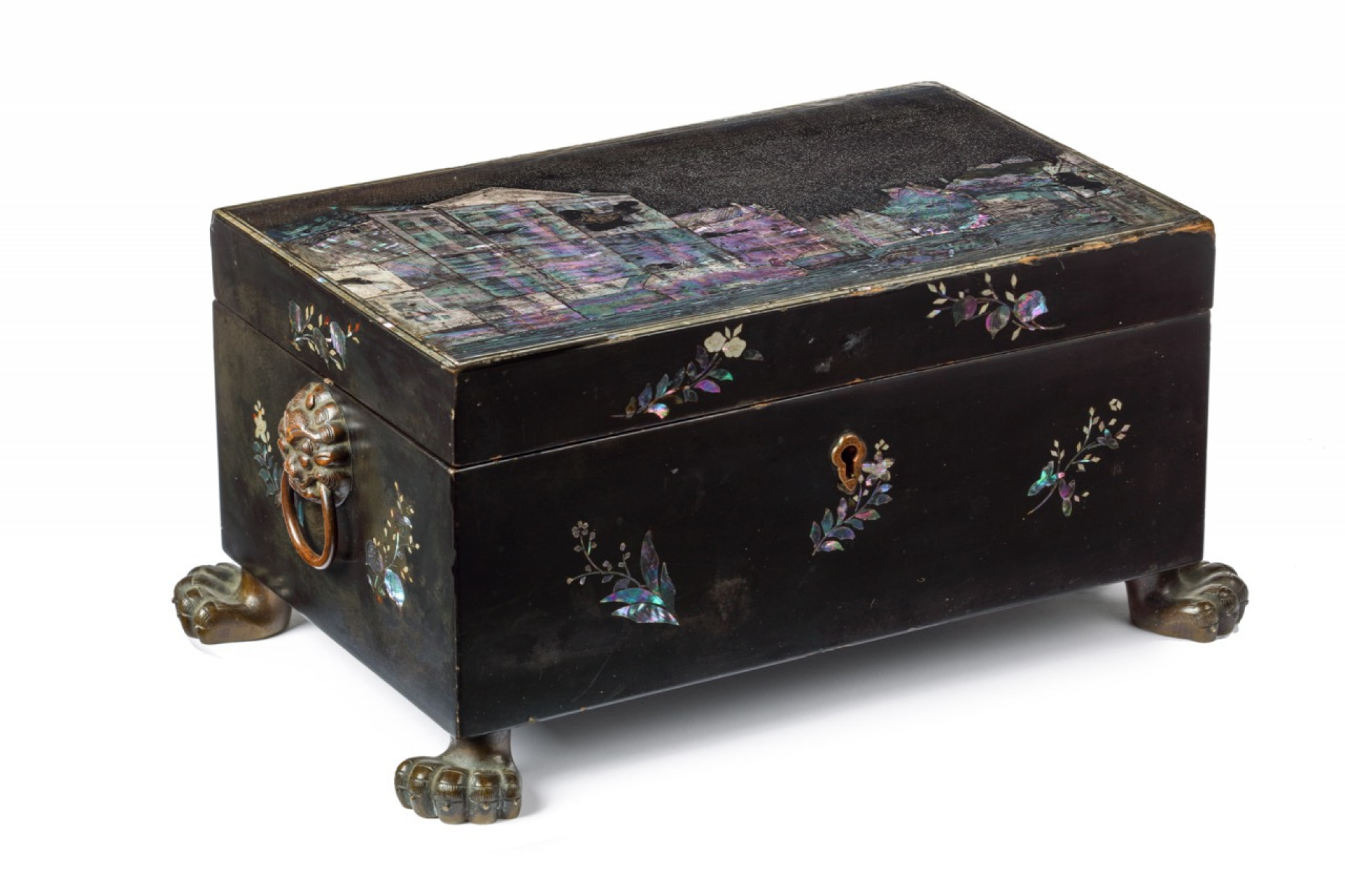
A Japanese Nagasaki export lacquer box with a mother-of-pearl depiction of the Amsterdam ‘Trippenhuis’
Edo-period, circa 1830
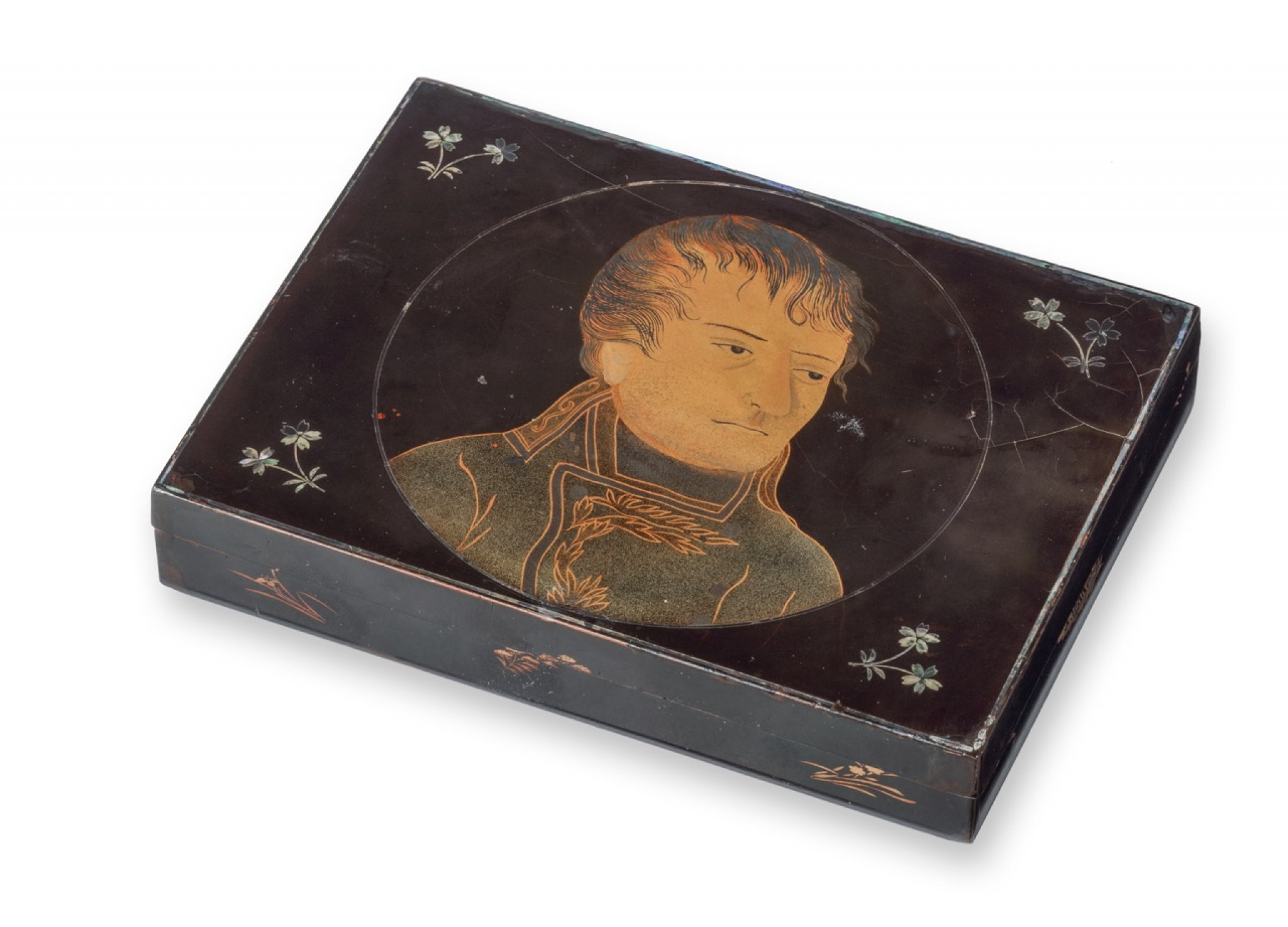
A Japanese export Nagasaki lacquer tobacco box with the portrait of Napoleon Bonaparte
Edo-period, circa 1810
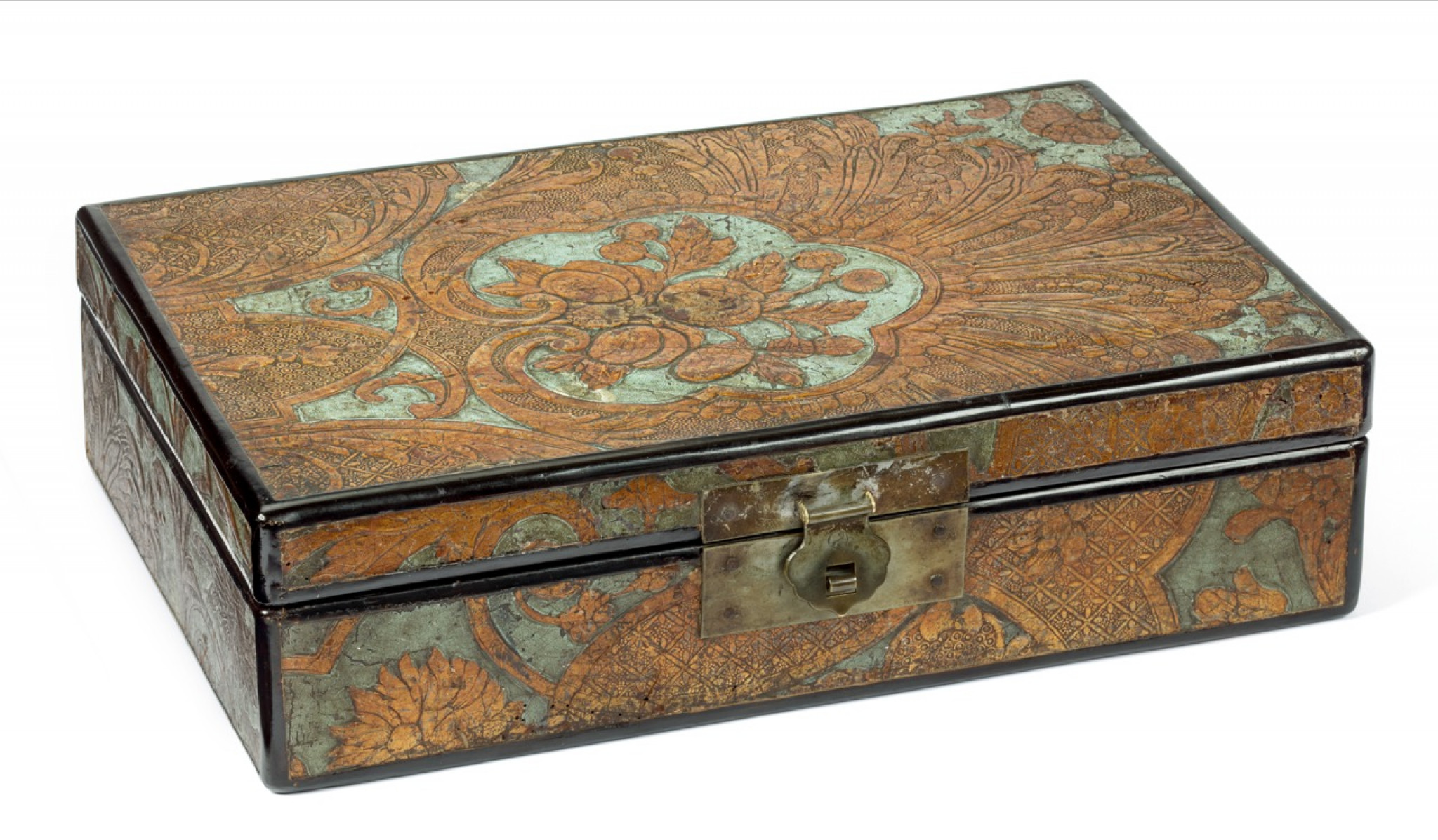
A Japanese lacquer box covered with Japanese gilt-leather paper imitating Dutch gilt leather, or kinkarakawakami
Probably Tokyo, Meiji period, circa 1880
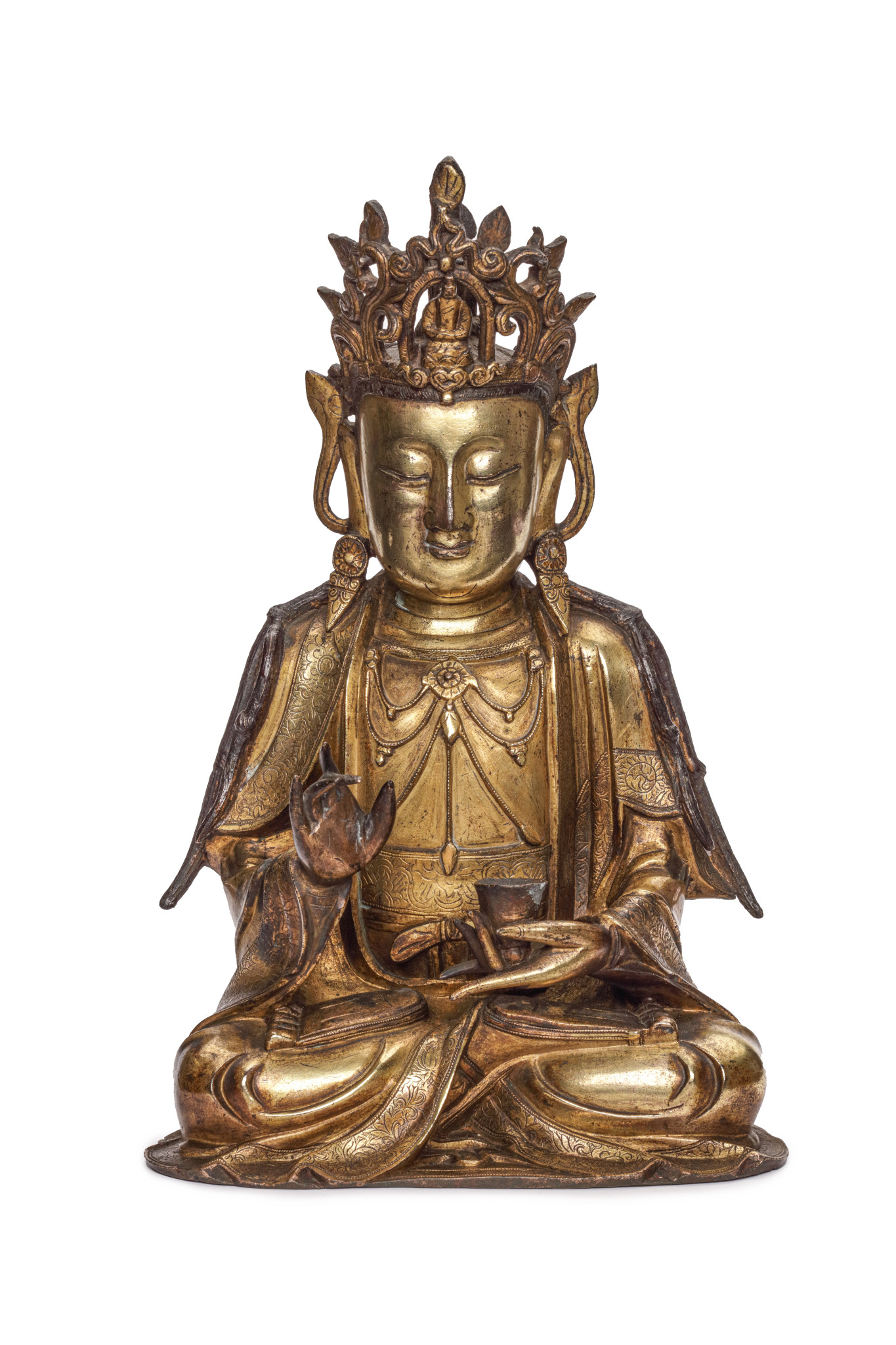
A large, magnificently serene Chinese gilt-bronze sculpture of Guanyin
Ming dynasty, 16th century
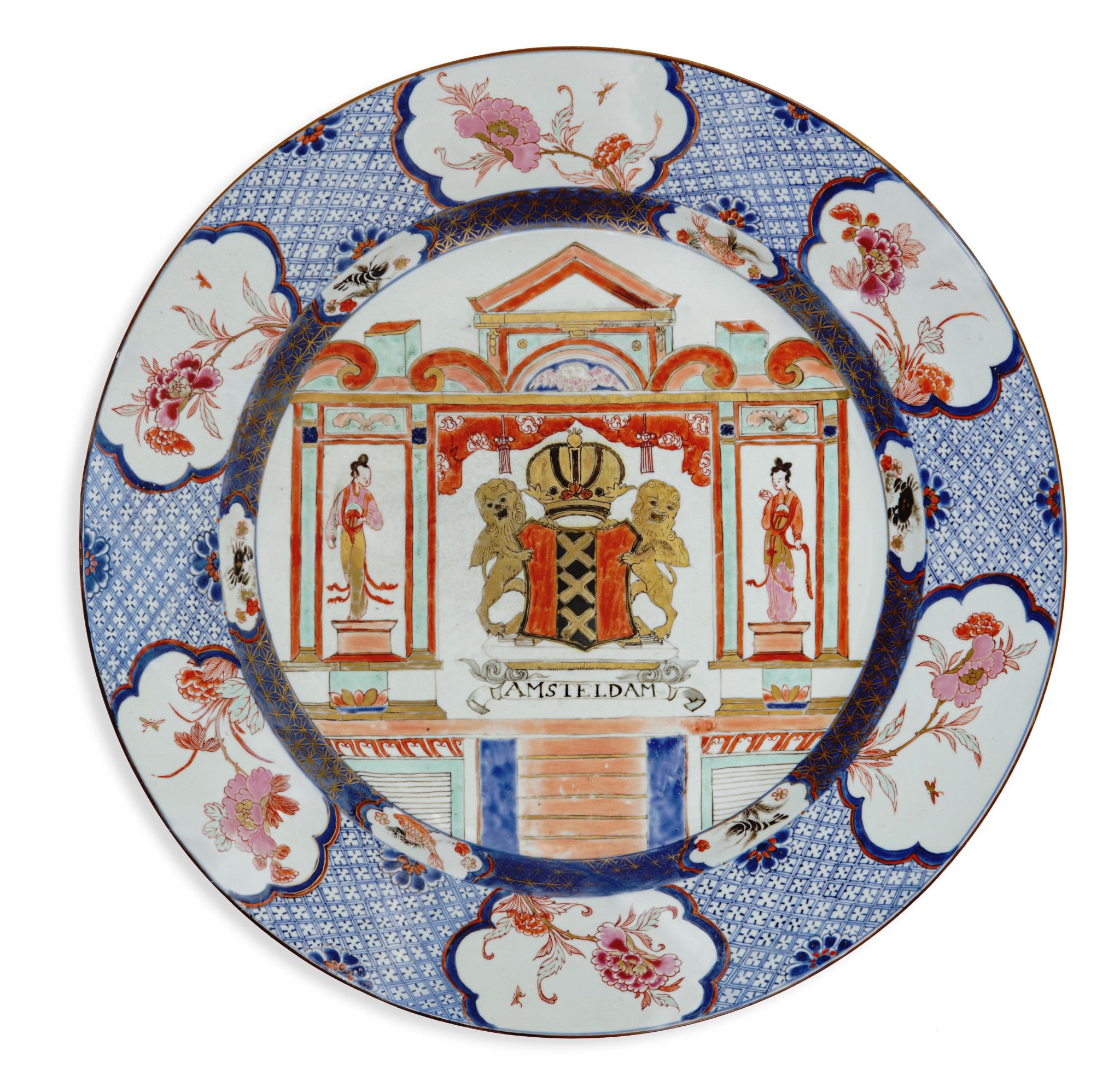
An extremely rare and large Chinese export famille rose armorial porcelain charger with the Amsterdam coat-of-arms
Qianlong period, circa 1720-1725
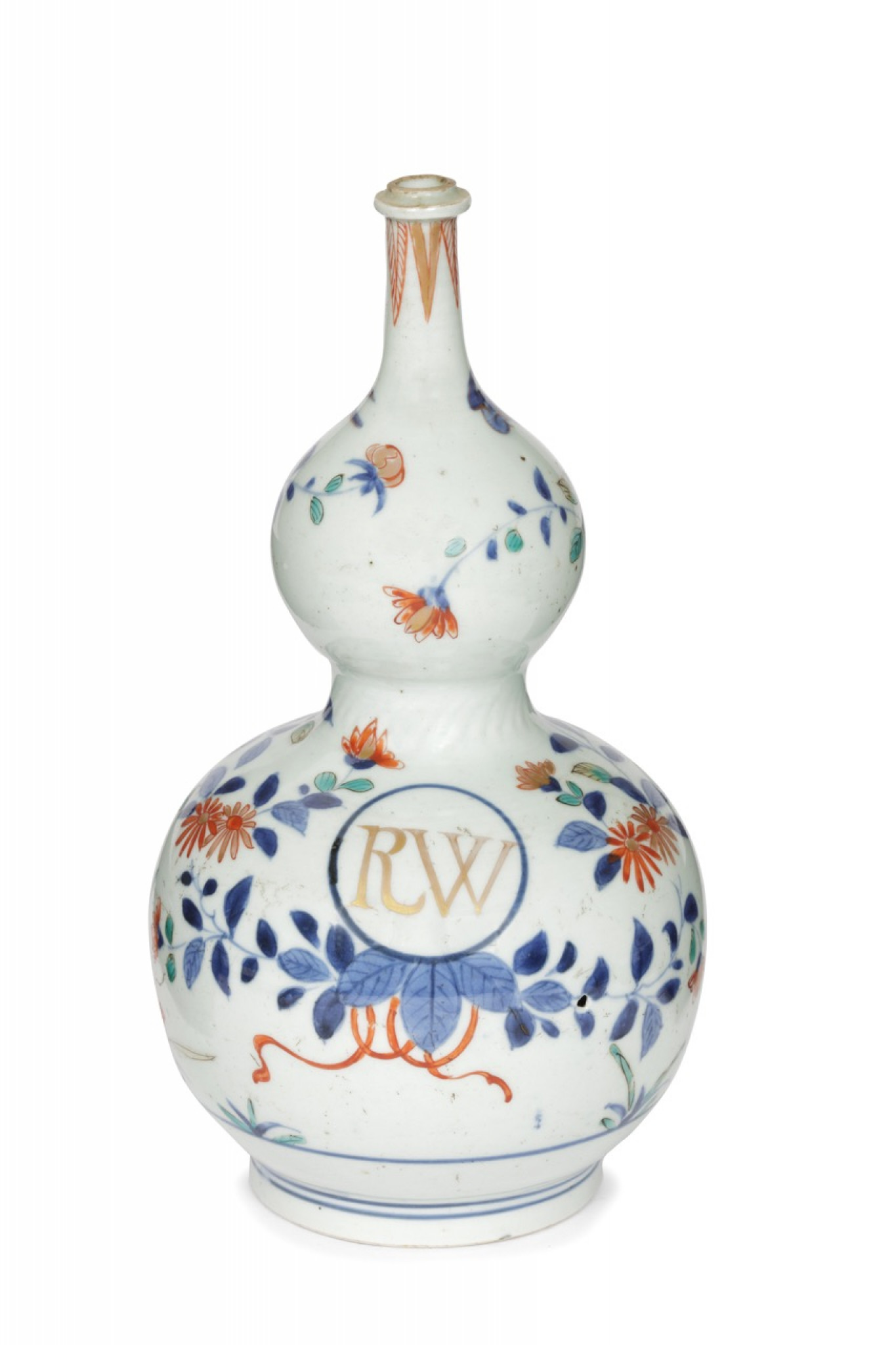
A Japanese Imari double-gourd- shaped R(hineland) W(ine) bottle
Arita, late 17th/early 18th century
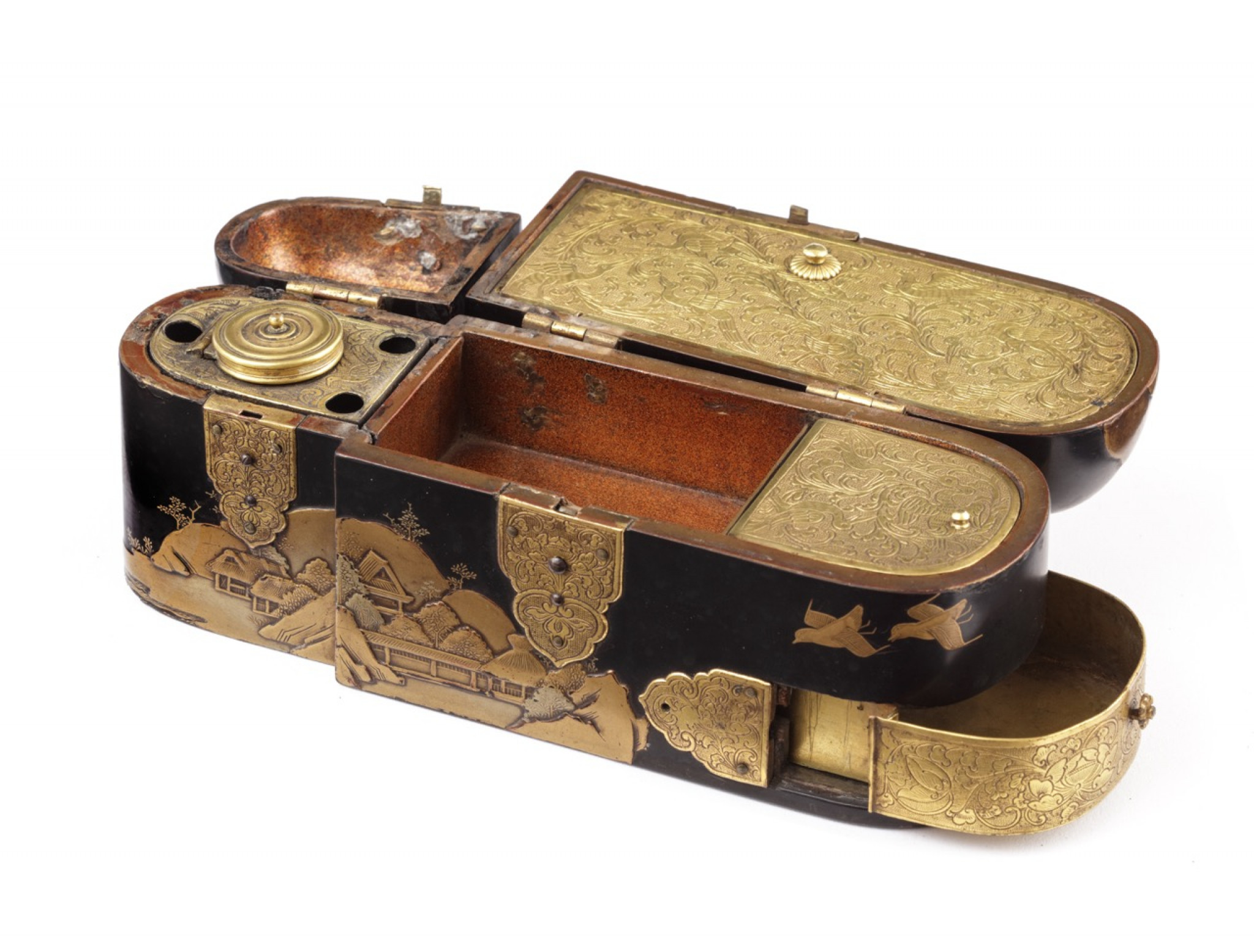
A rare Japanese export lacquer medical instrument box
Edo-period, 1650-1700
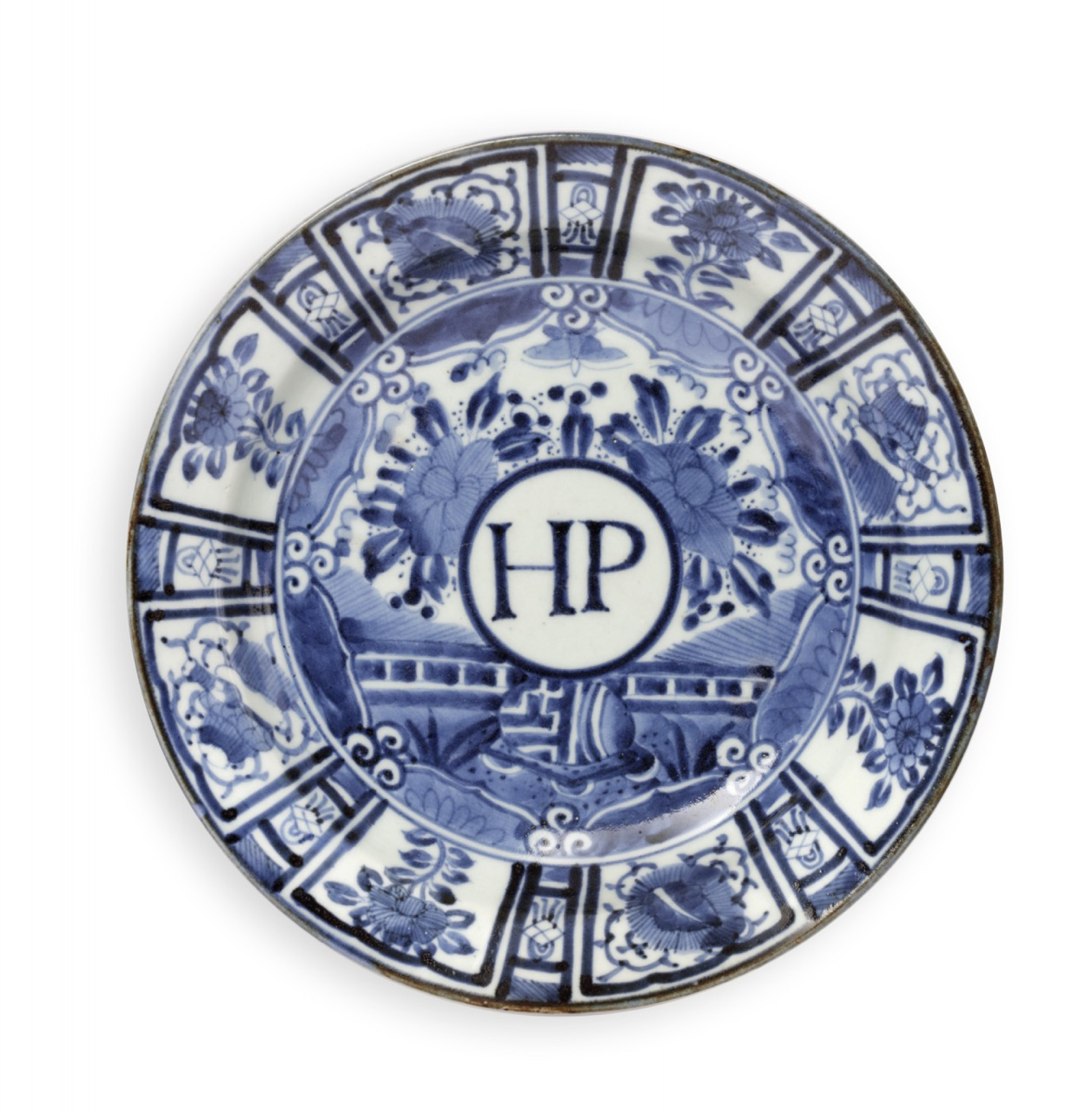
A Japanese blue and white porcelain dish with initials ‘HP’
Arita, Edo period, circa 1660-1690
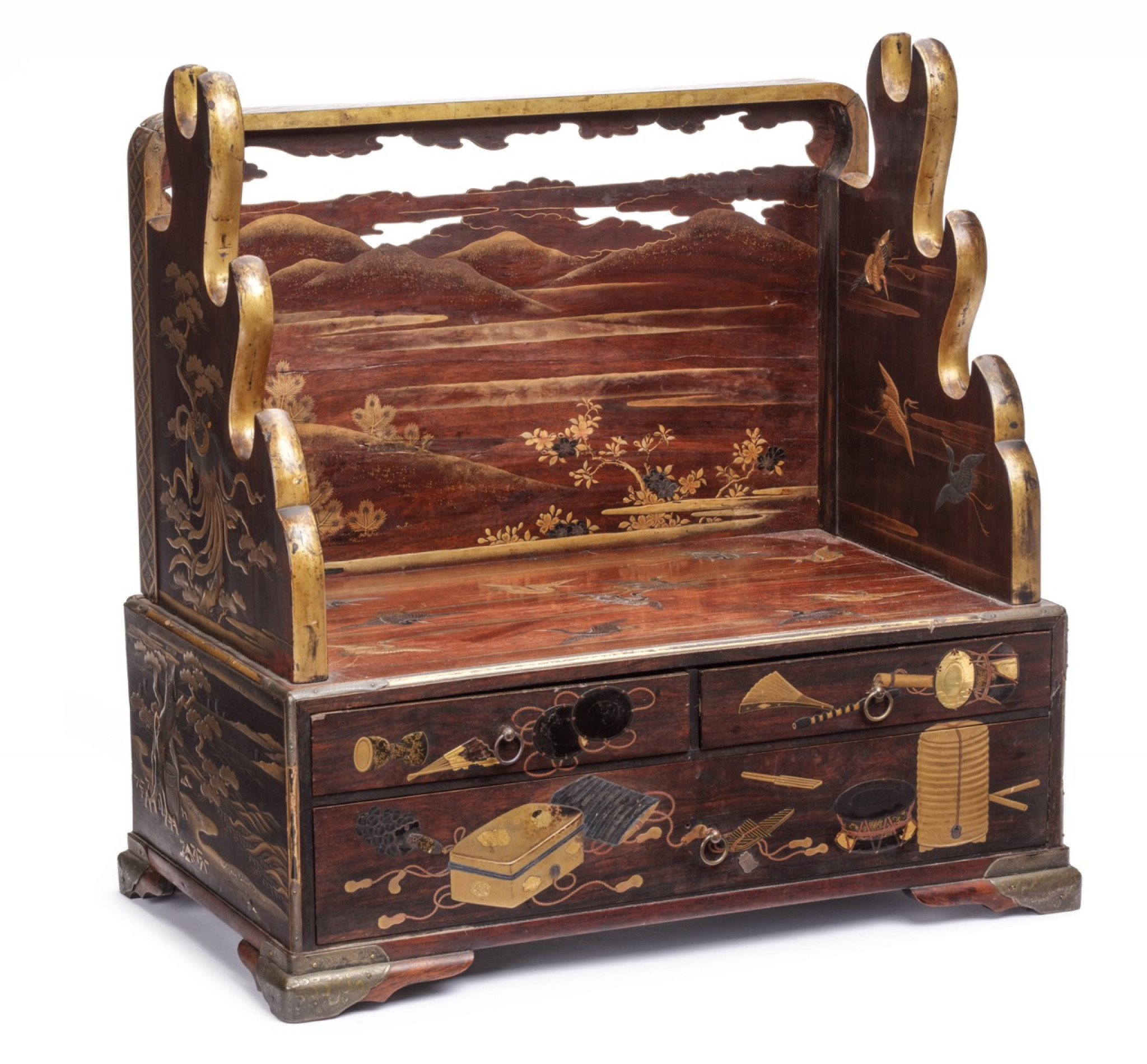
A Japanese lacquer sword-stand or katana-kake
Late Edo period, 1st half 19th century
A box that contained Marie-Antoinette's love letters..?
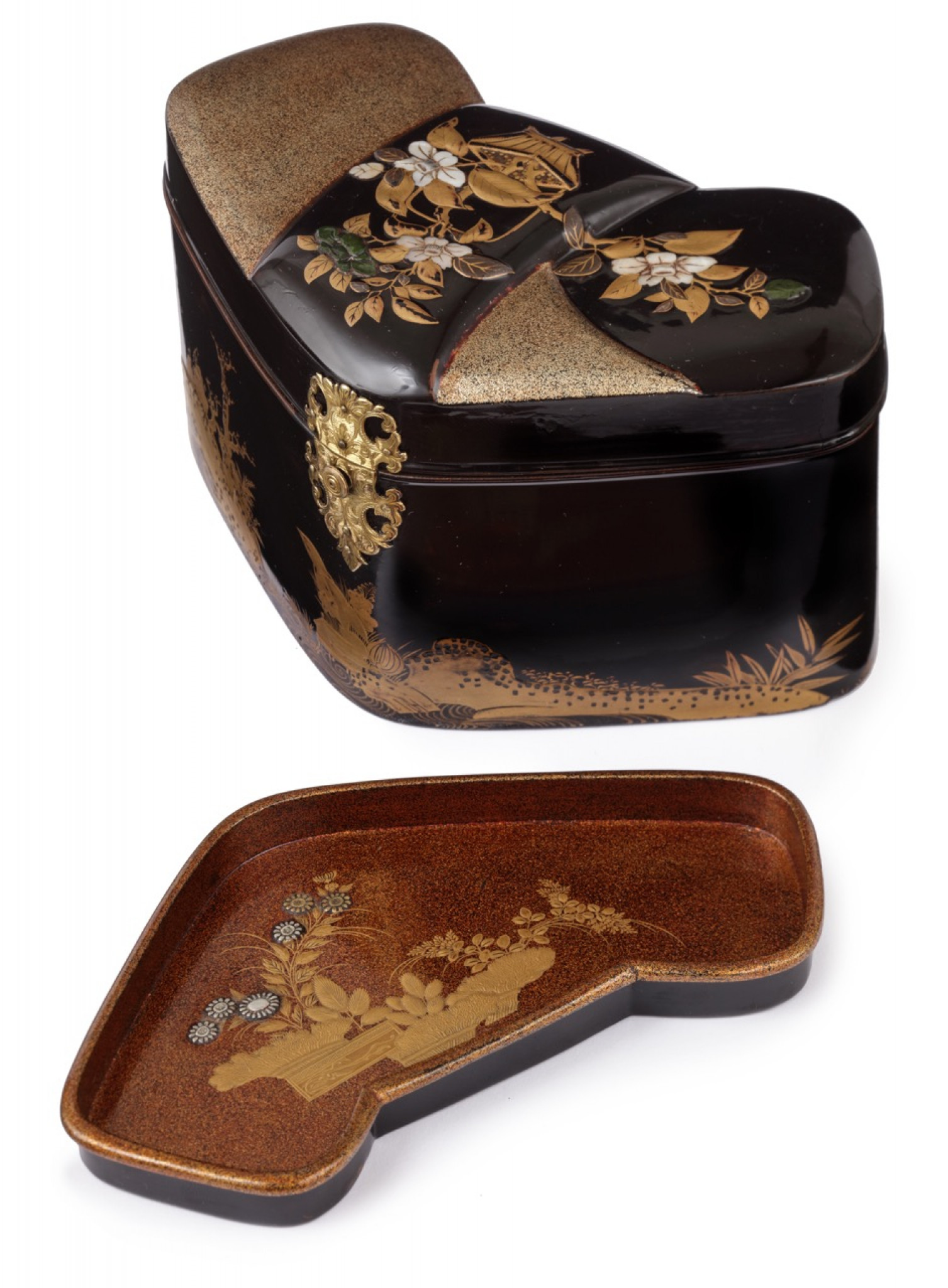
A Japanese export lacquer box shaped like a folded letter, fitted with Louis XIV ormolu mounts
Early Edo period, circa 1630
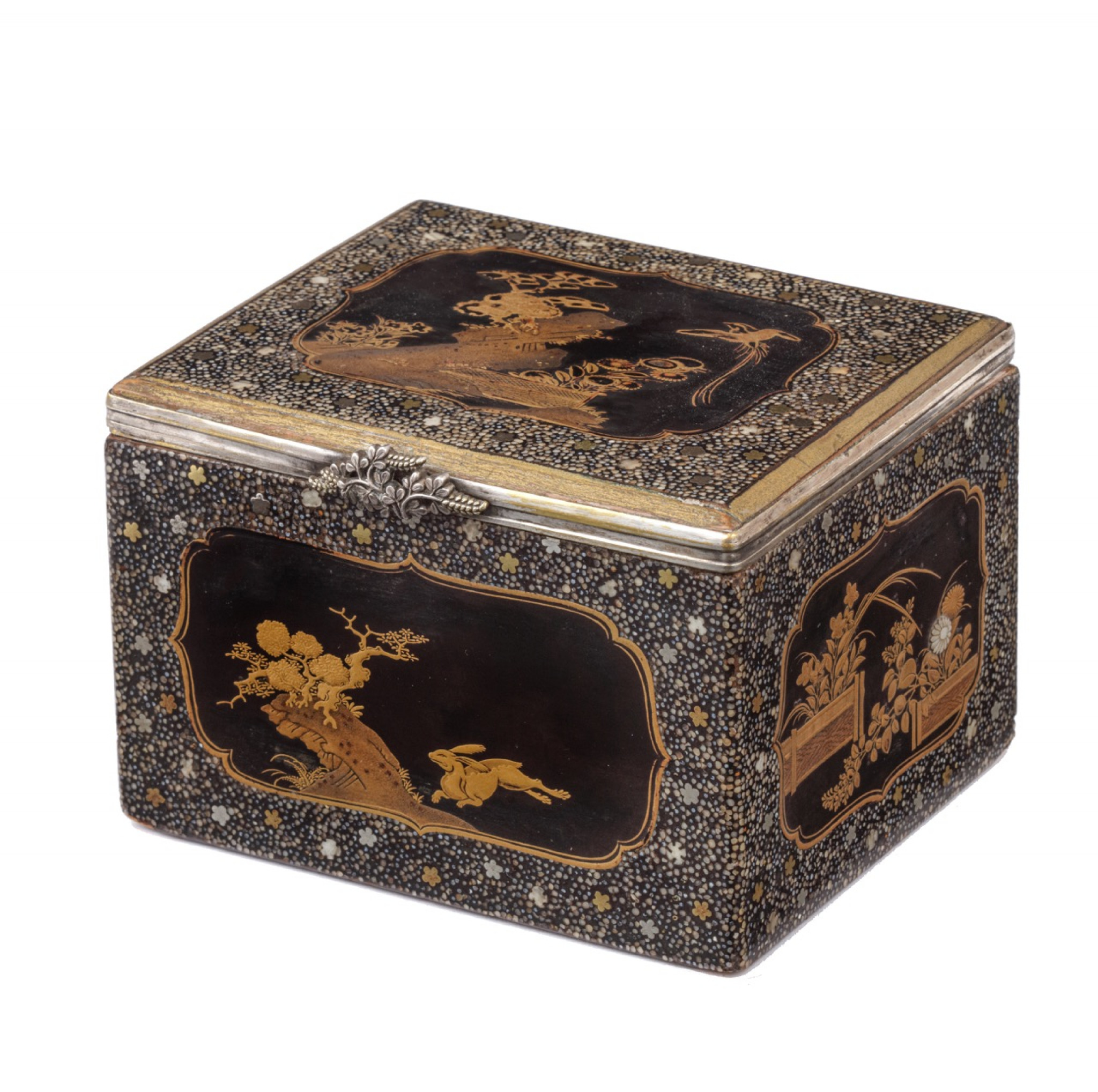
A small lacquer box with shagreen inlays and references to poetry in hira-maki-e
Early Edo period, circa 1630
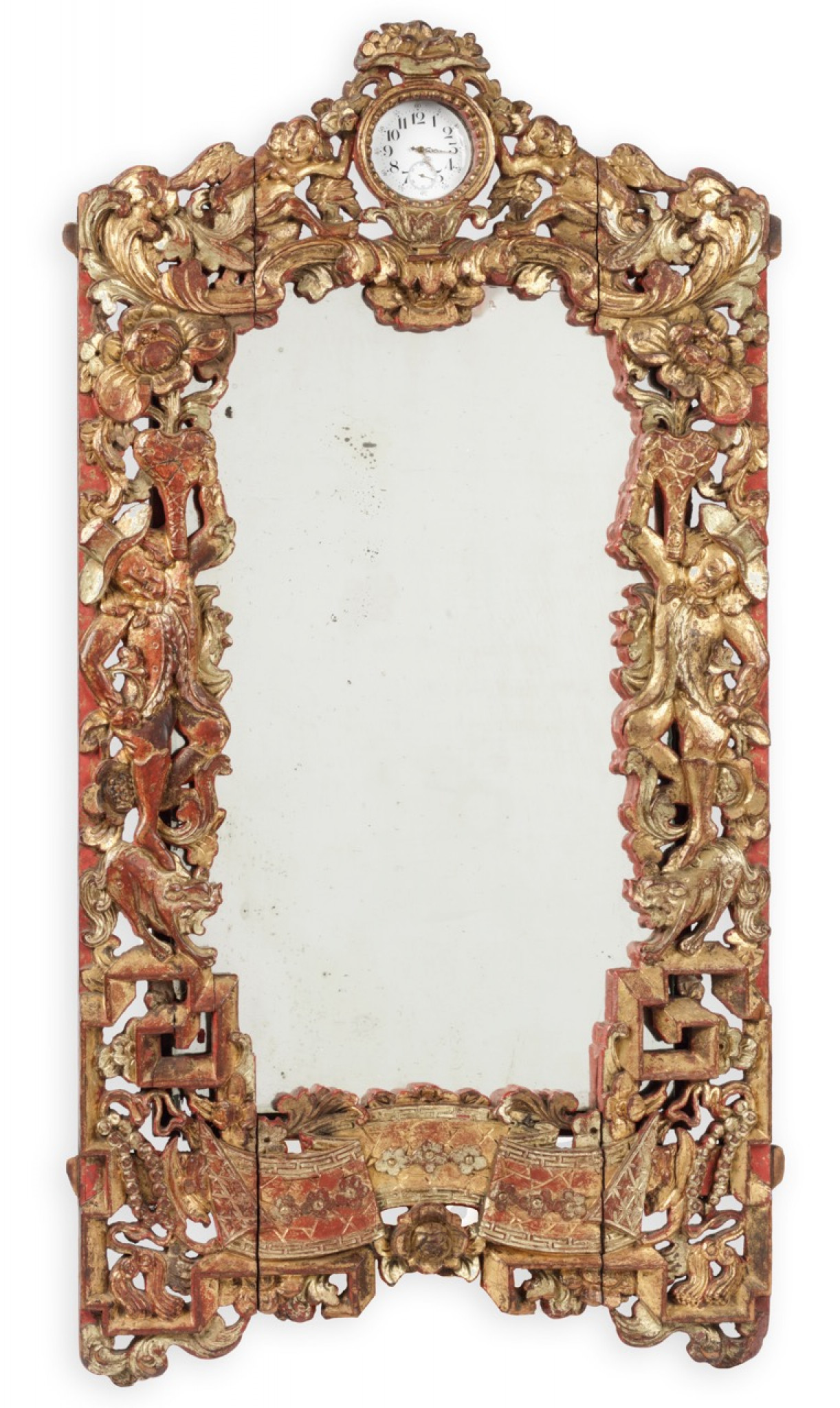
A charming carved giltwood Chinese export mirror frame with a watch-stand
Canton, Qing dynasty, early 19th century
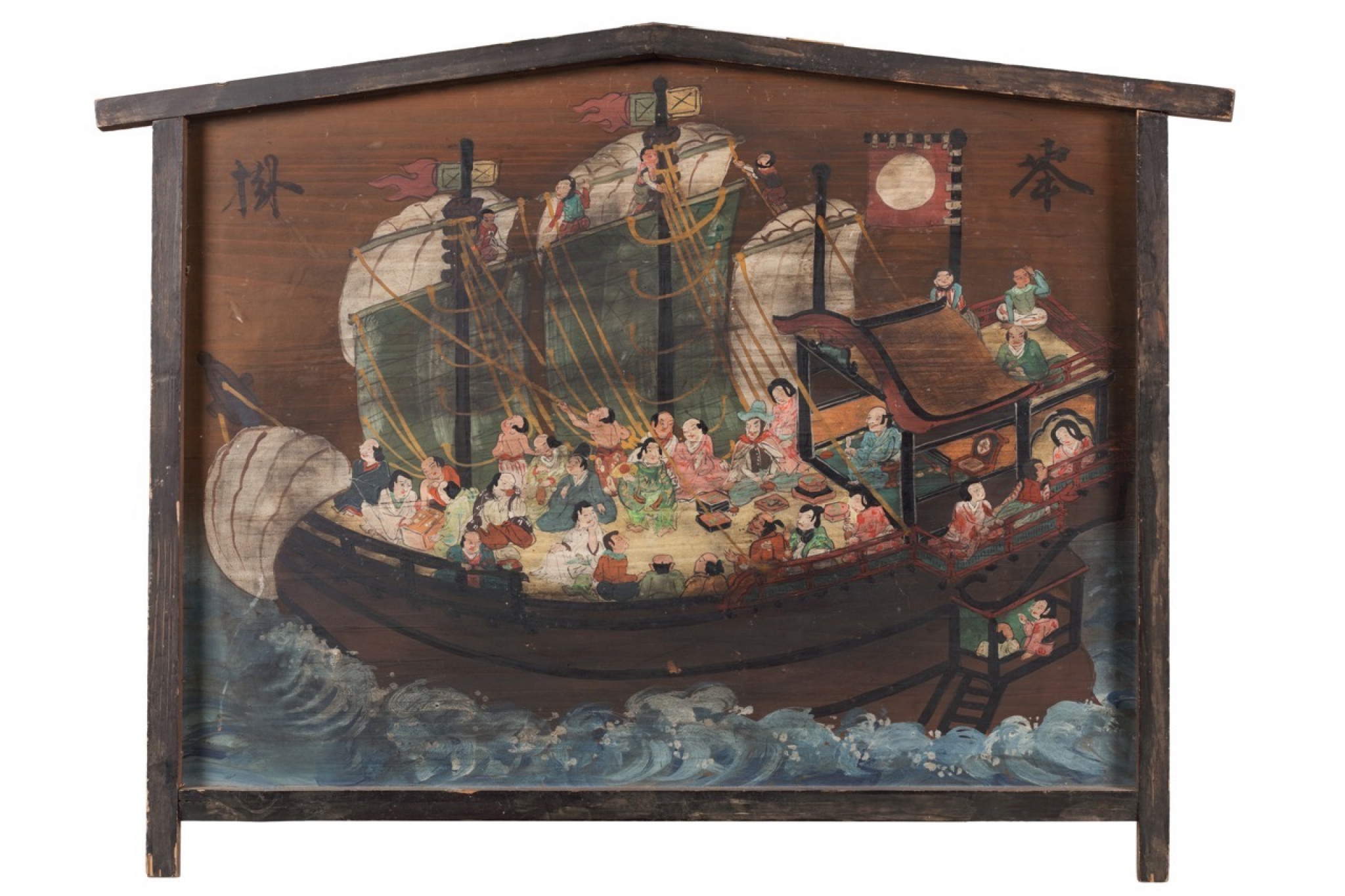
A large exceptional Japanese ema, or painted wood wishing board, depicting a ship
Edo period, 19th century
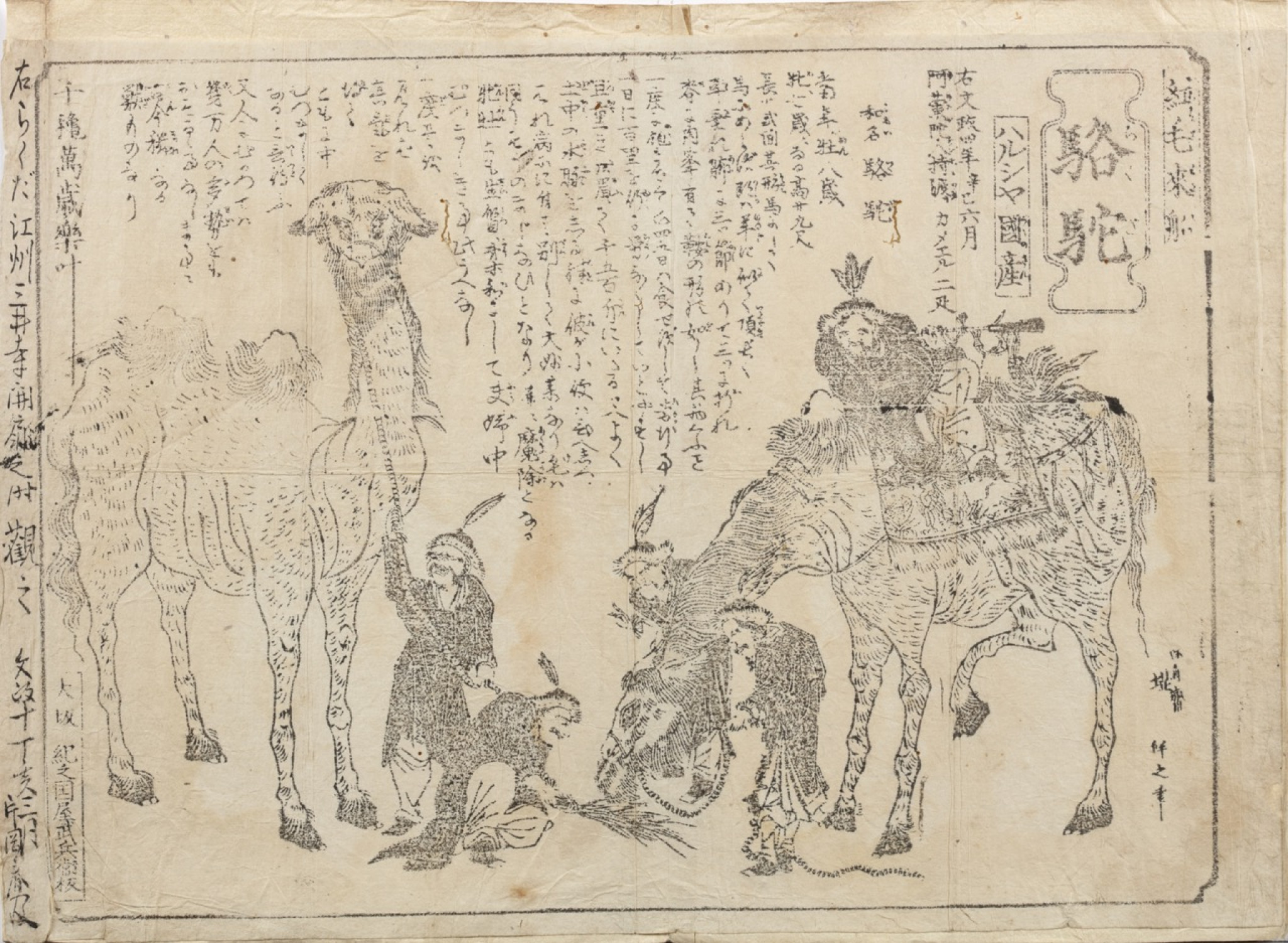
A Kawabaran woodblock print depicting two camels with their ‘exotic’ caretakers
Nagasaki, by Kataoka Harukyu, dated Bunsei 10, the year of the pig, 1827, published in Osaka by Kinokuniya
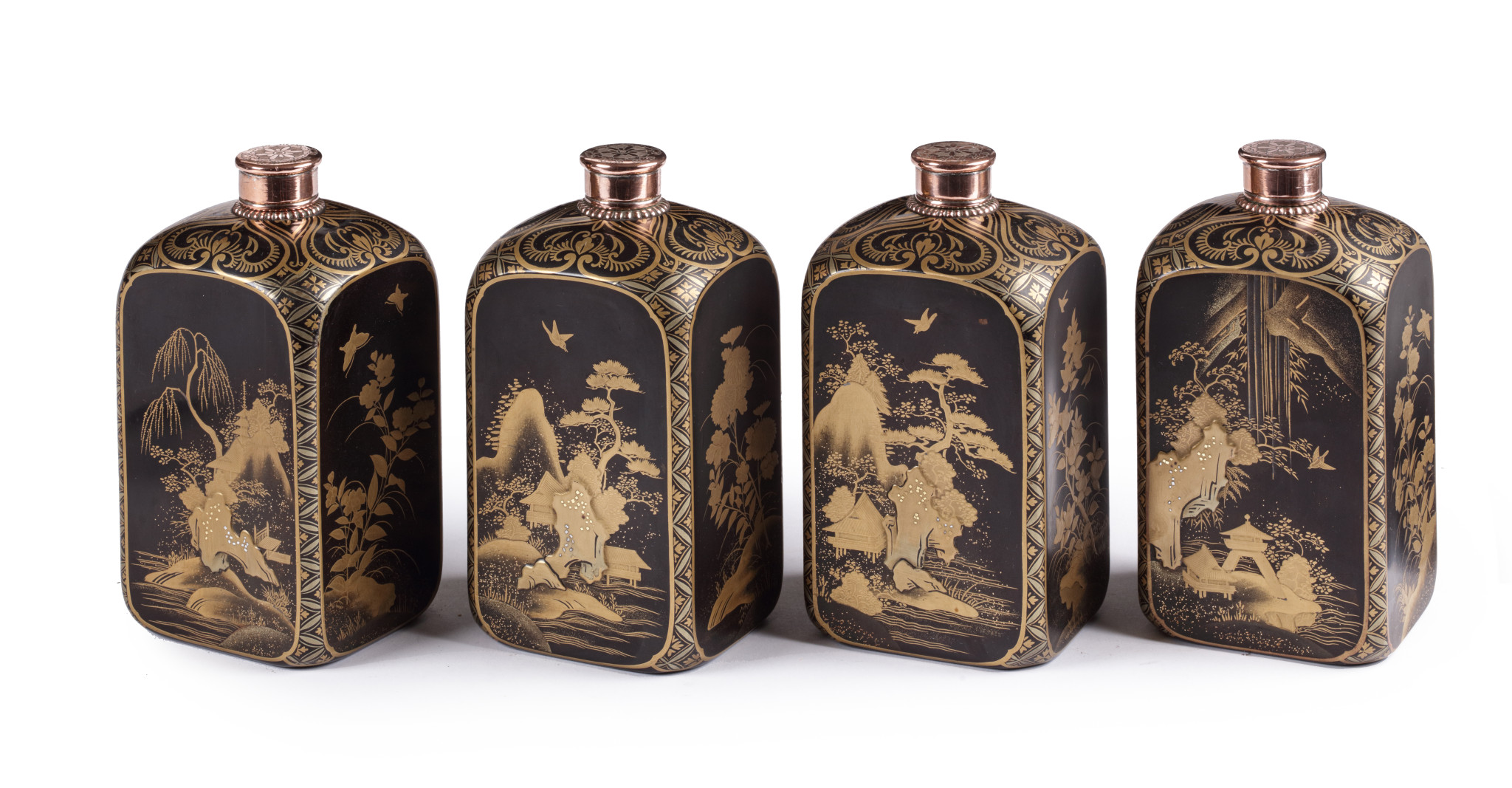
A set of four extremely rare pictorial-style Japanese export lacquer bottles
Edo-period, circa 1650-1680
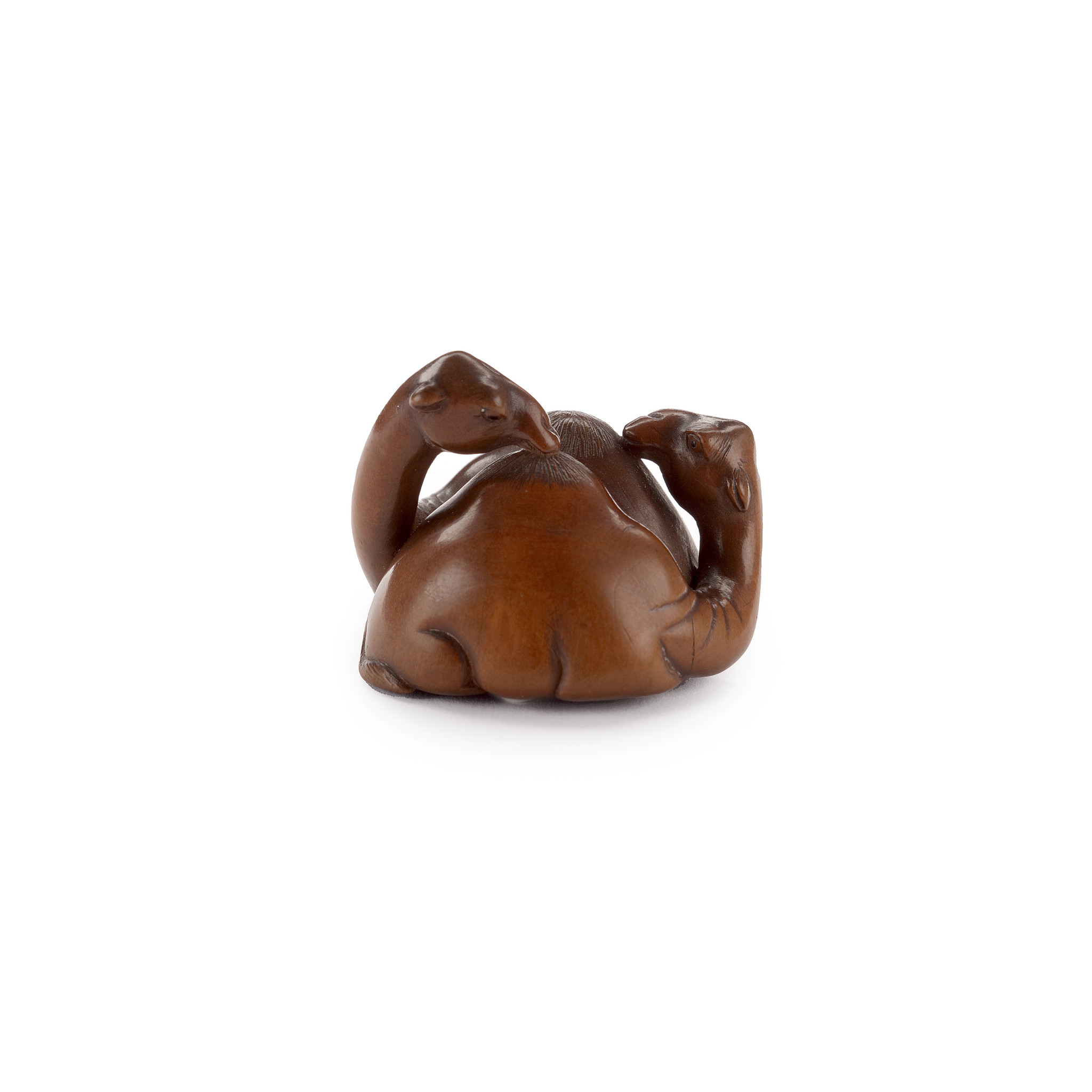
An exquisite prunus wood netsuke of ‘Blomhoff’s Dromedaries’ signed Bunpo
Japan, Bunsei-period (1818-1830), circa 1821-1825
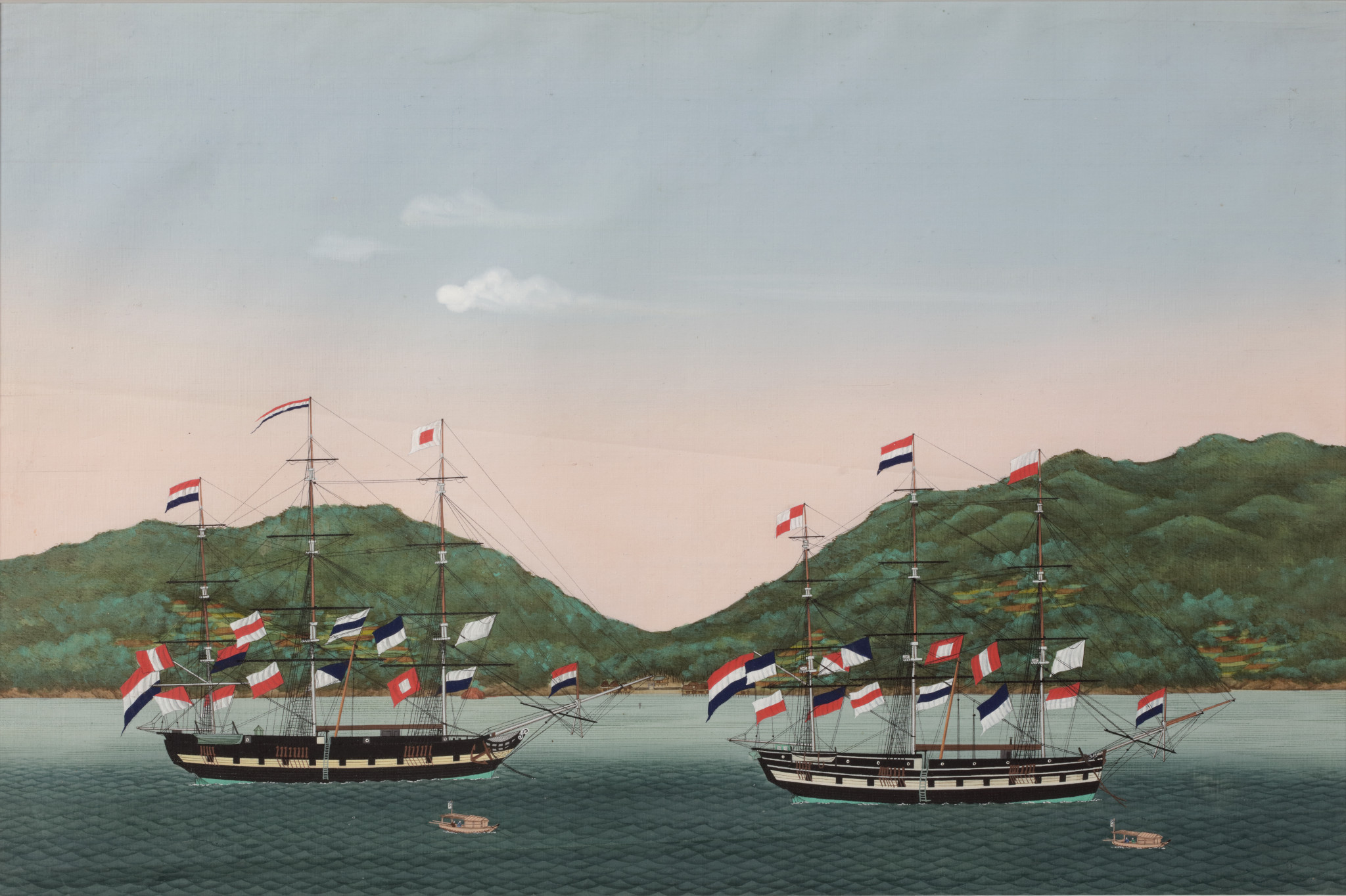
Kawahara Keiga (1786 - c. 1860)
Two Dutch ships anchored in the bay of Nagasaki
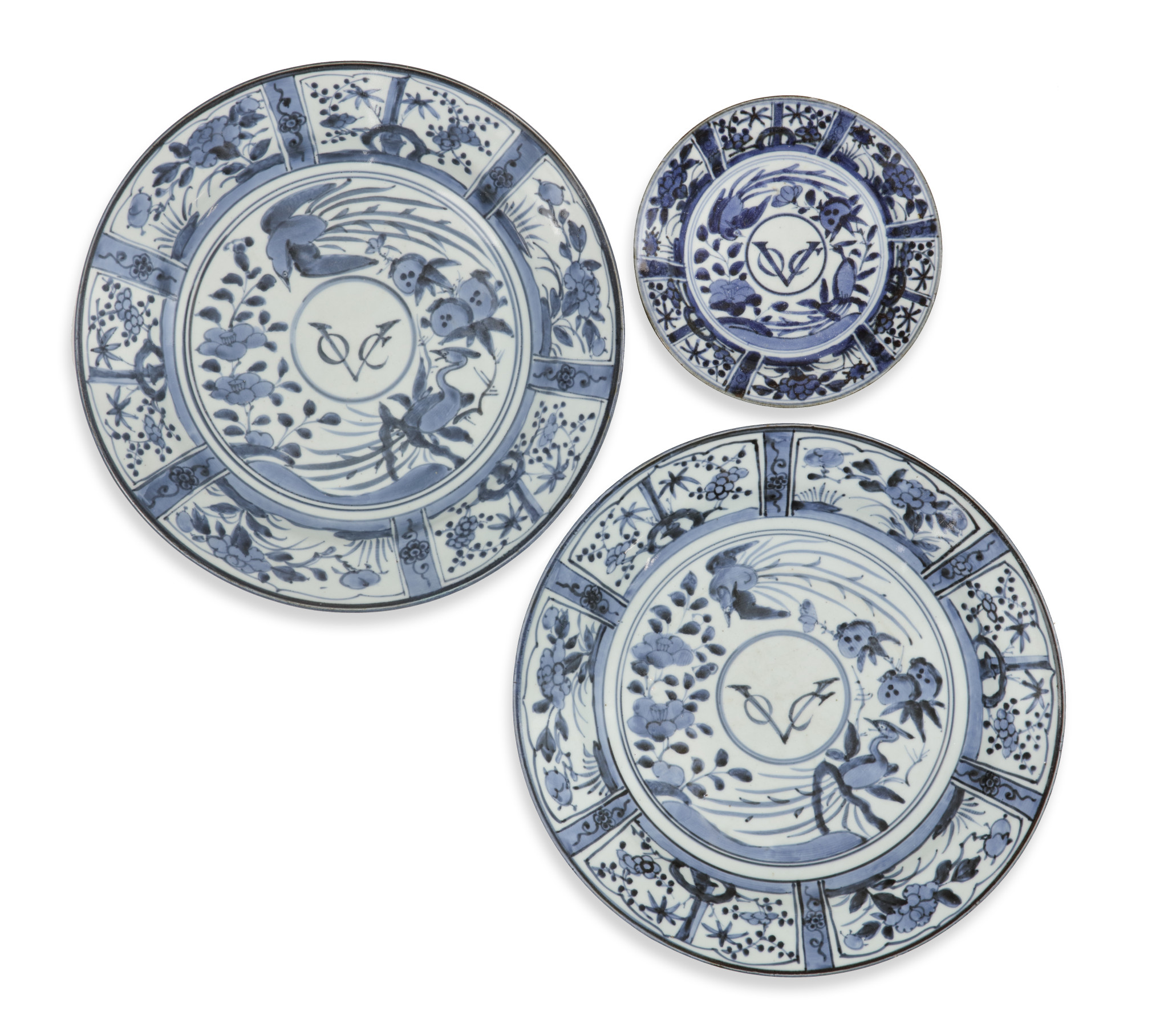
A splendid pair of large Japanese Arita blue and white porcelain VOC chargers (sold) and a rare small VOC dish
Arita, late 17th century
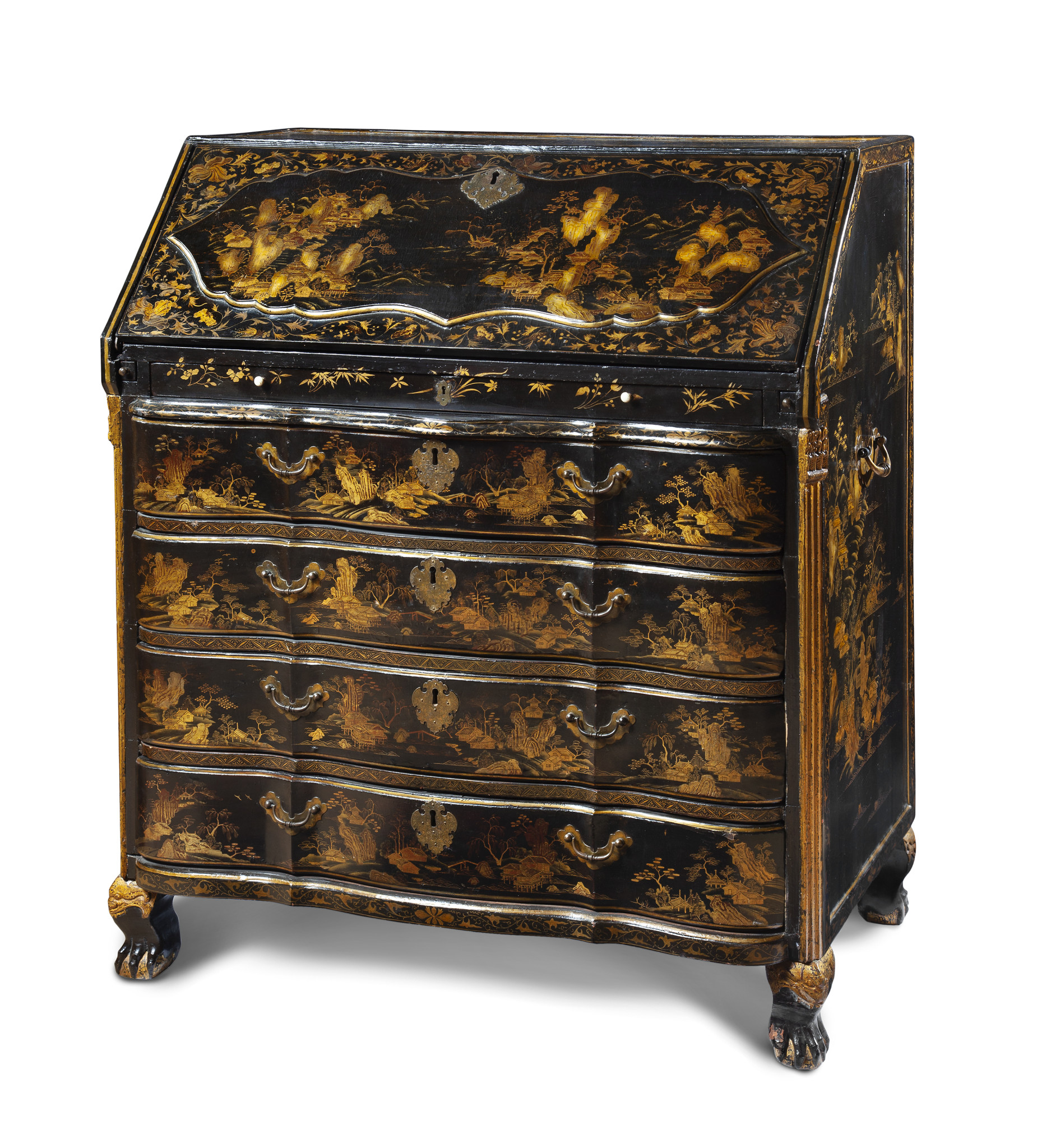
A Chinese export lacquer bureau for the Dutch market
Canton, circa 1737
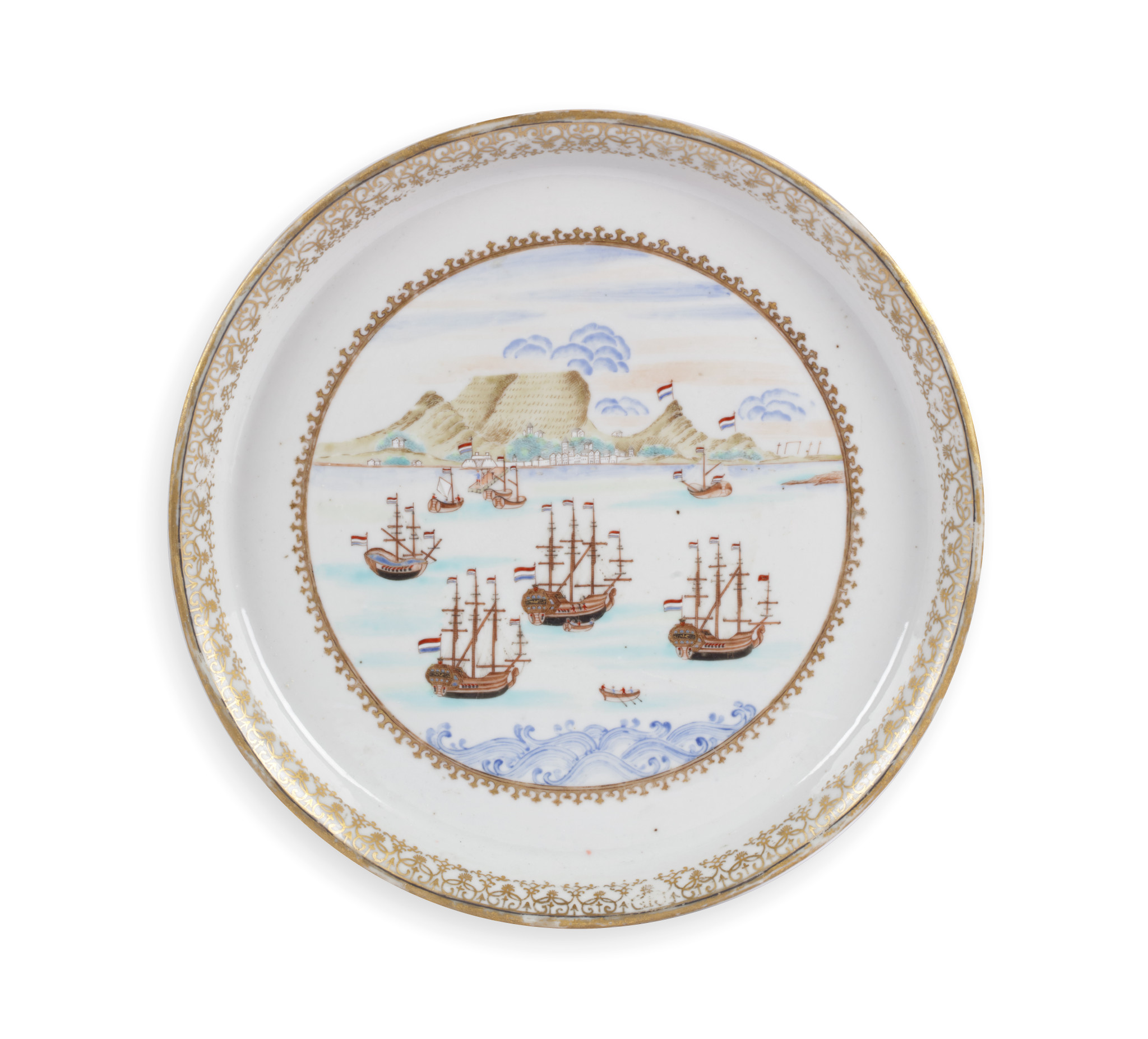
A large Chinese export porcelain 'Table Bay' or 'Cape of Good Hope' dish
Qianlong period, circa 1735-1750
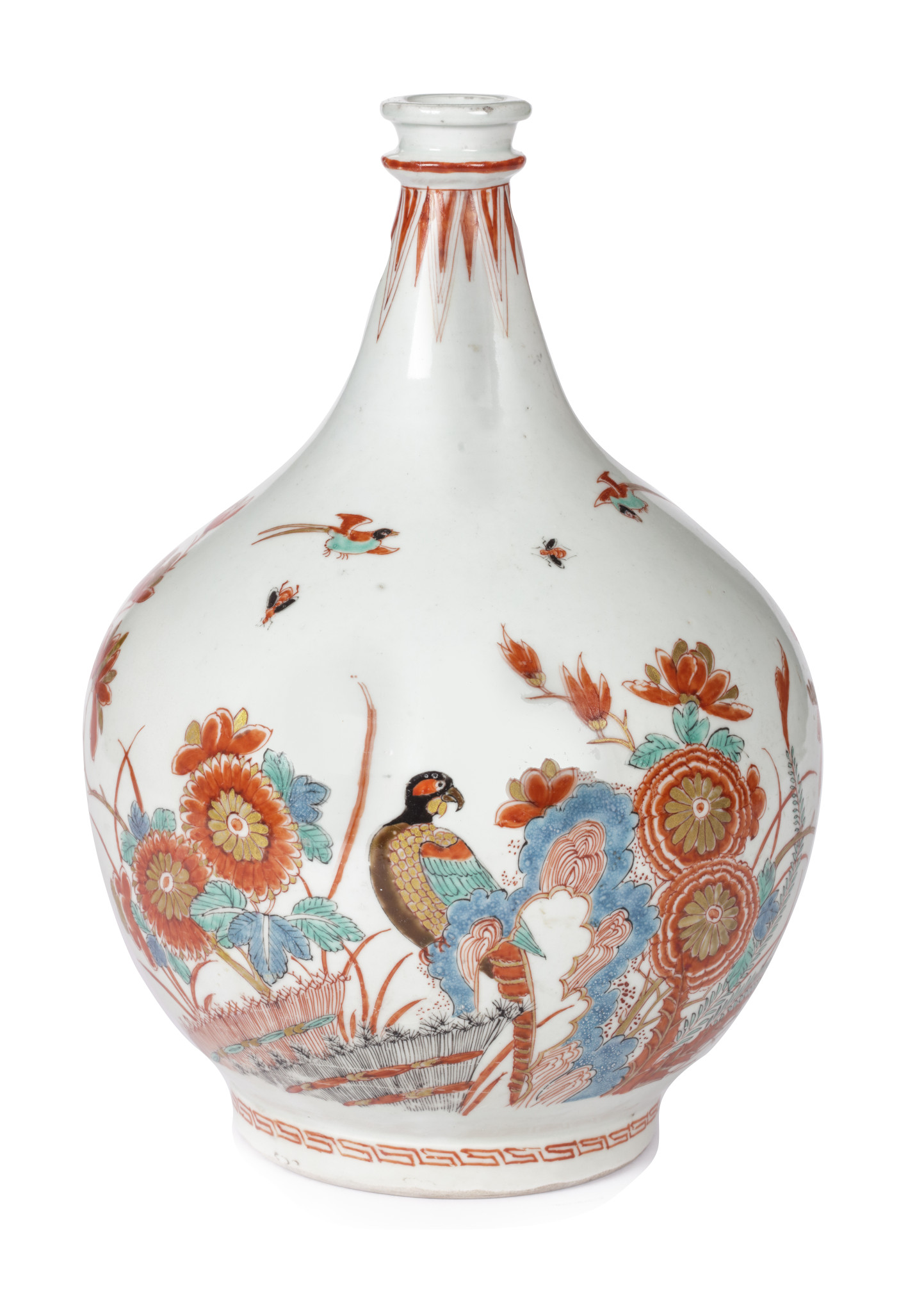
A large Kakiemon-style Dutch decorated Japanese porcelain wine bottle with initials PDR
Arita, 1670-1690, decorated in Holland, circa 1710-1725
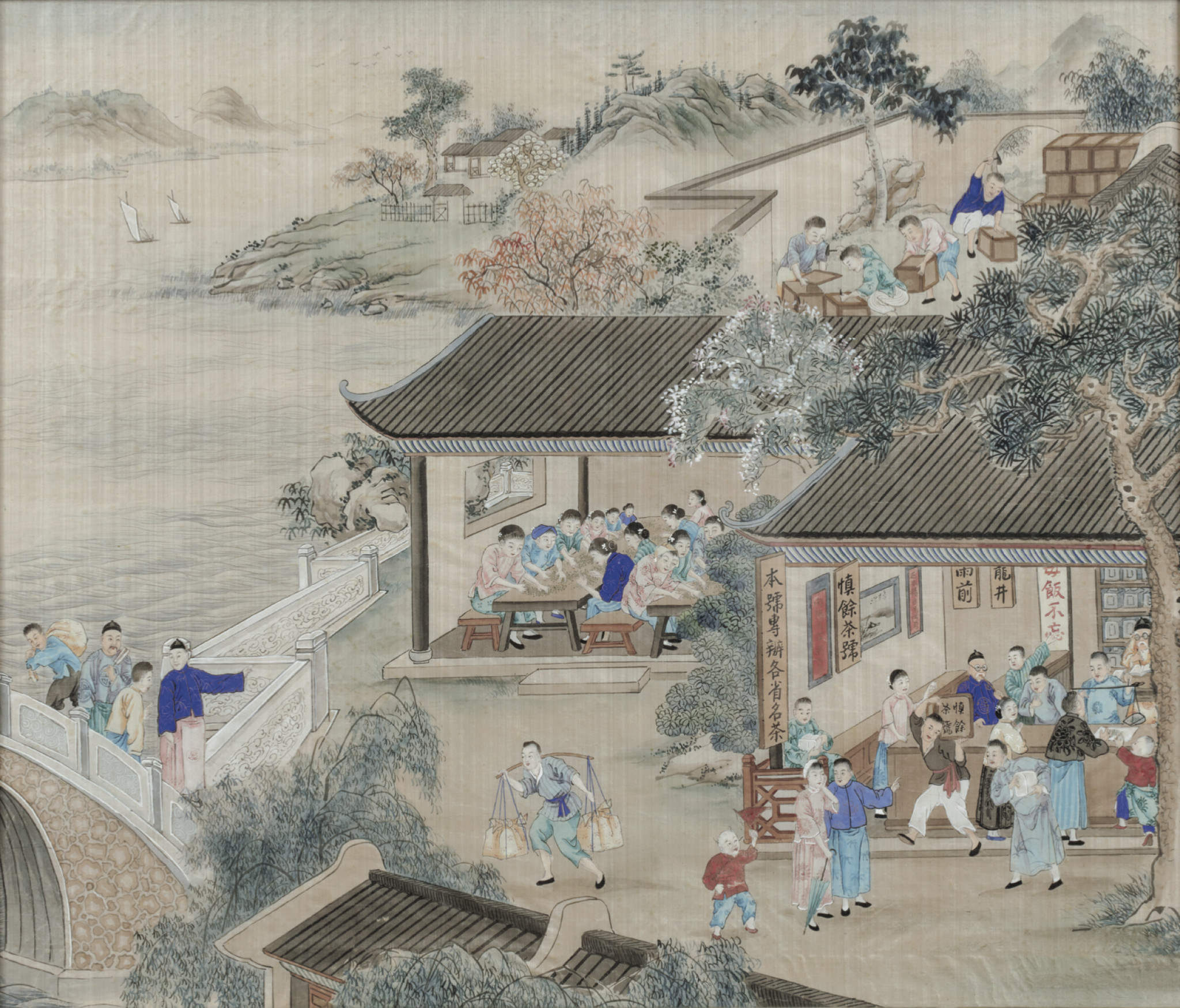
A refined Chinese export painting depicting ‘The Tea shop’
Canton, early 19th century
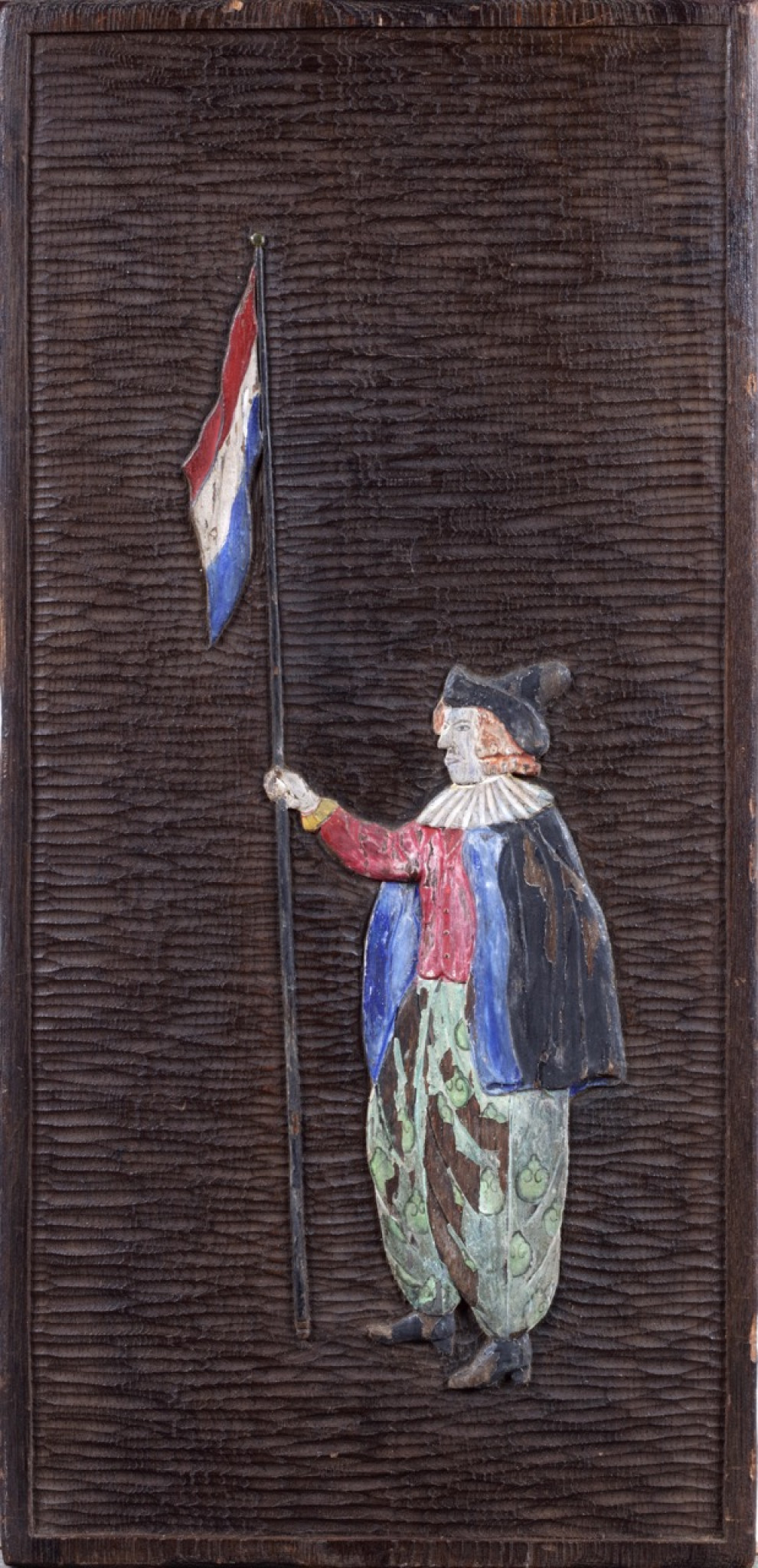
A charming Japanese ema, a painted wood wishing board
Edo period, 1st half 19th century
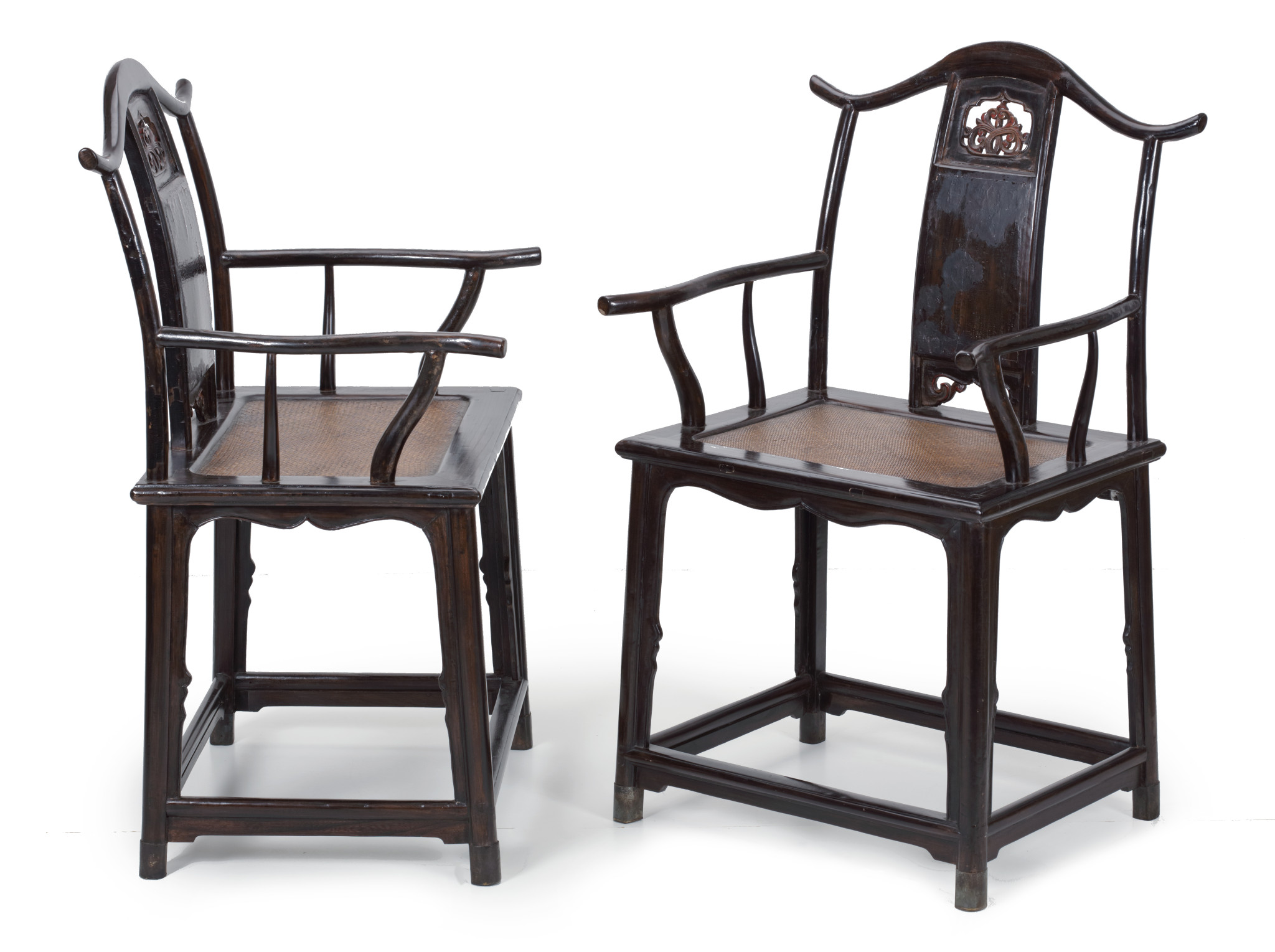
A pair of lacquered wood northern Chinese yoke-back chairs, Guan mao shi
Hebei Province, Qing Dynasty, early 18th century
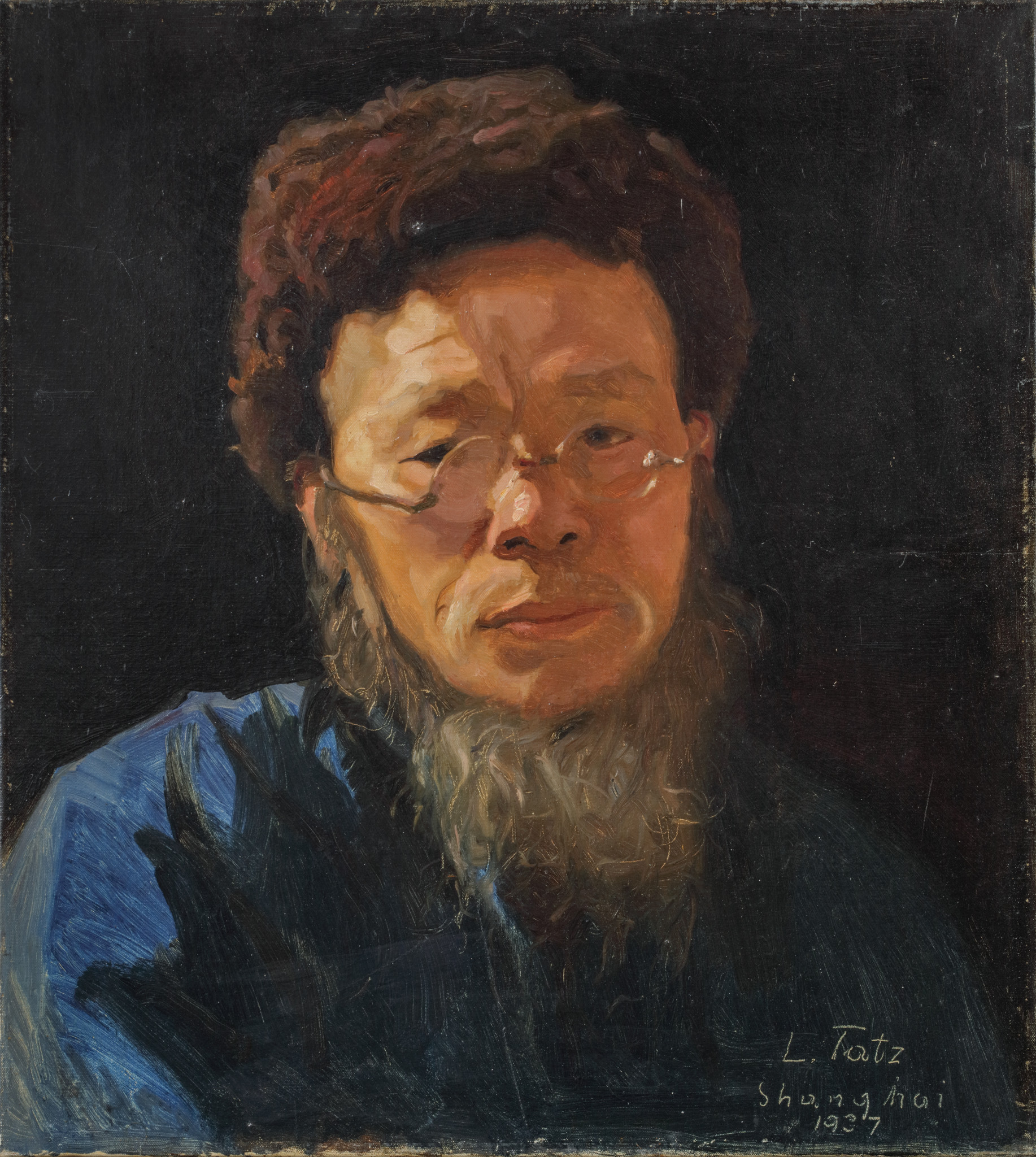
Lazlo Tatz (Hungary 1888 - Philippines 1951)
Portrait of a Chinese man
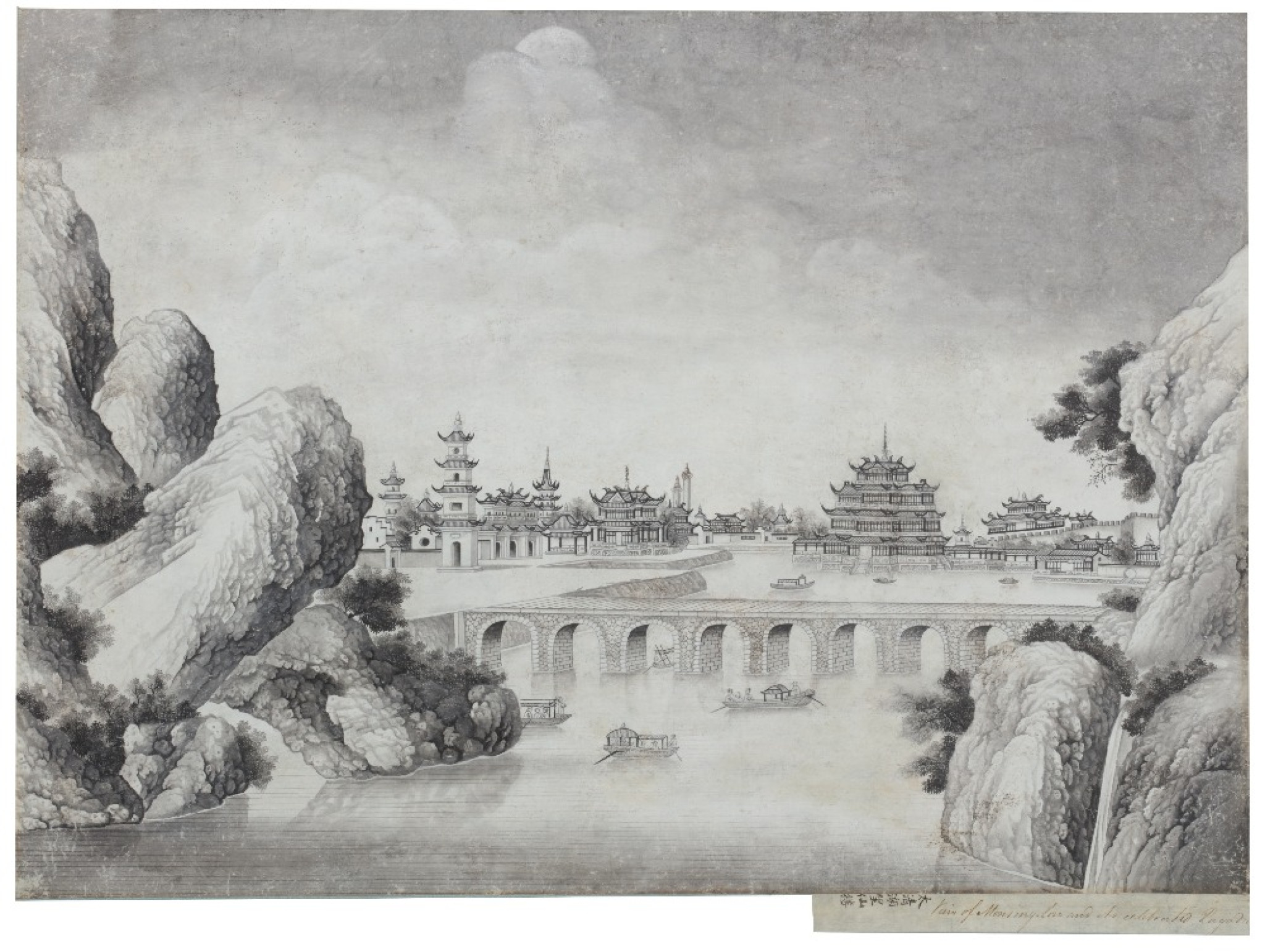
A highly important drawing related to the VOC Court Journey made between 22 November 1794 and 10 May 1795 by Andreas Everardus van Braam Houckgeest (1739-1801) to the court of Emperor Qianlong for the occasion of his sixtieth year in power
‘View of Monsing-lou (?) and its celebrated Pagode’
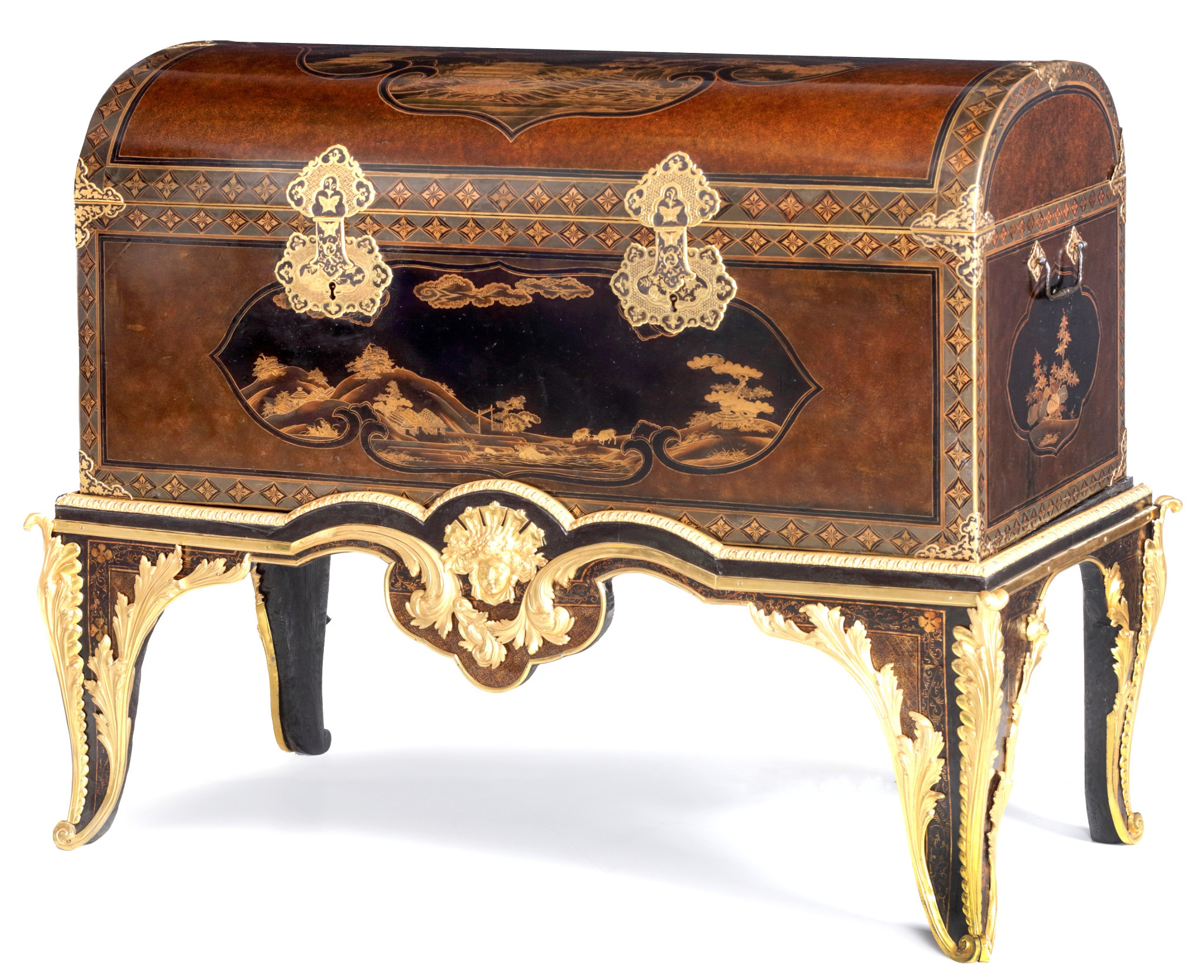
An impressive and large Japanese transition-style lacquer coffer with fine gilt copper mounts, on French Regence base part possibly by Andre-Charles Boulle (1642-1732)
Kyoto, 1640-1650, the base part 18th century
Coffer: L. 132.7 x H. 62.8 x D. 59.3 cm
Stand: L. 143.7 x H. 51 x D. 71.9 cm
Commodore Perry and the Opening of Japan:
The End of an Era
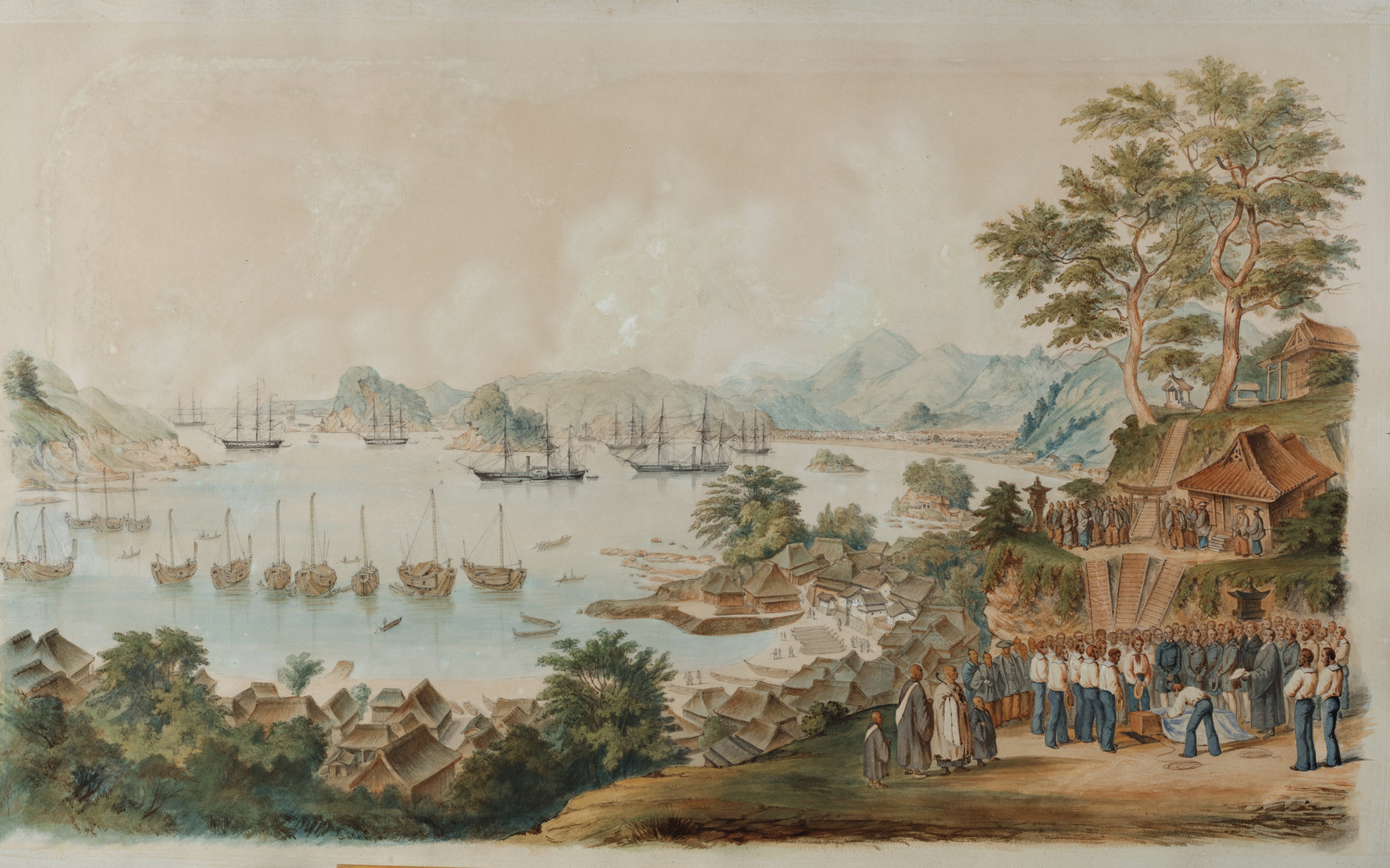
Wilhelm Heine (1827-1885)
'Funeral of Robert Williams in the cemetery of the Temple Gyokusen-ji at Shimoda in April 1854’
Watercolour on paper, H. 57 x W. 92 cm
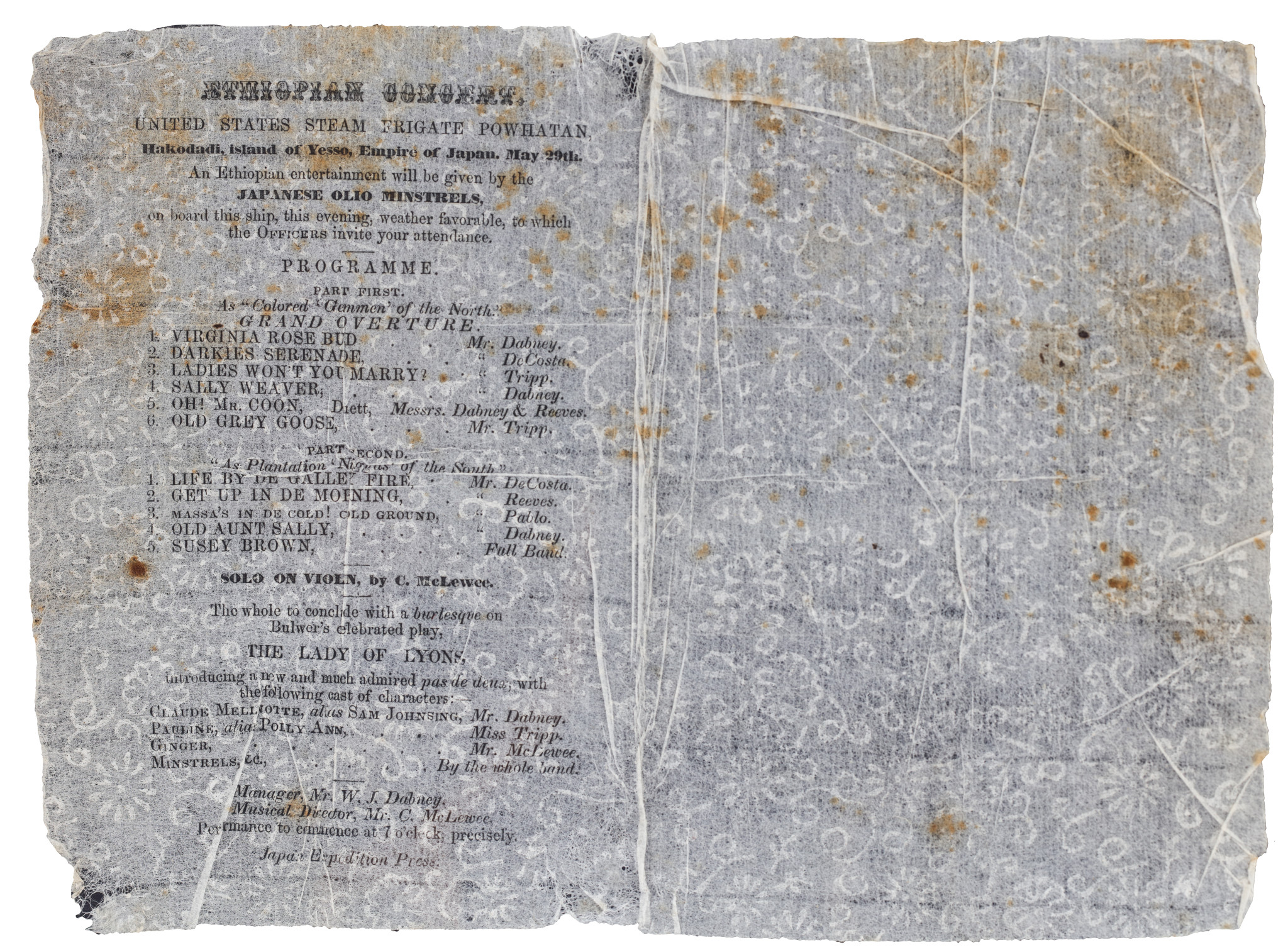
Programme printed on Commodore Perry’s frigate Powhatan, Hakodadi, Island of Yesso, Japan, May 29th 1854 for an “Ethiopian Concert minstrel show on board this ship, weather favorable, to which the Officers invite your attendance.”
Japan Expedition Press, 1854
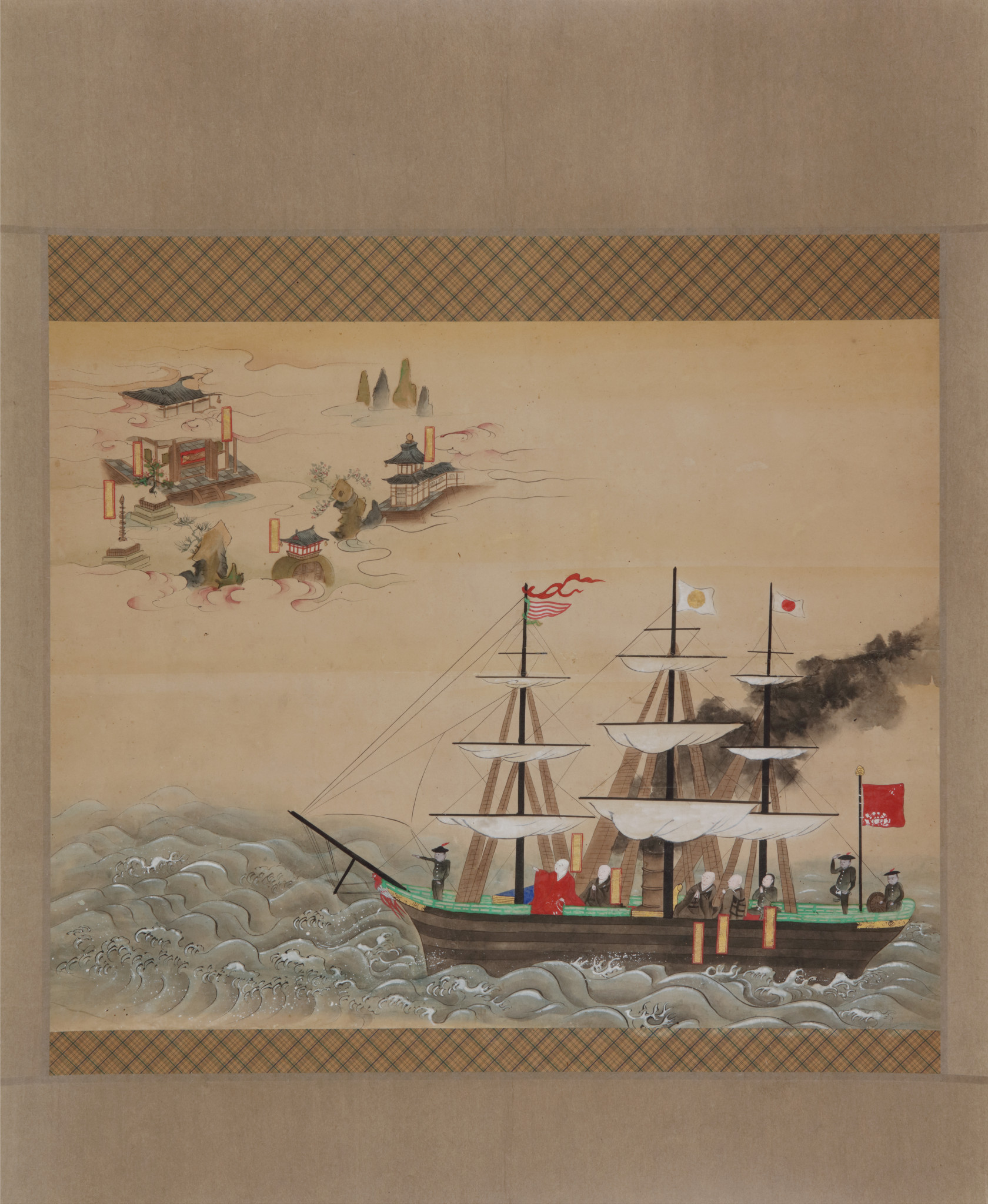
An extremely rare Japanese painting depicting Commodore Matthew Perry’s flagship USS Mississippi bringing the coffin with the remains of US marine private Robert Williams who died while serving on the USS Mississippi in Japan, March 6, 1854, aged 21, to the cemetery of the Buddhist Gyokusen-ji temple in the city of Shimoda
Bakumatsu, circa 1854
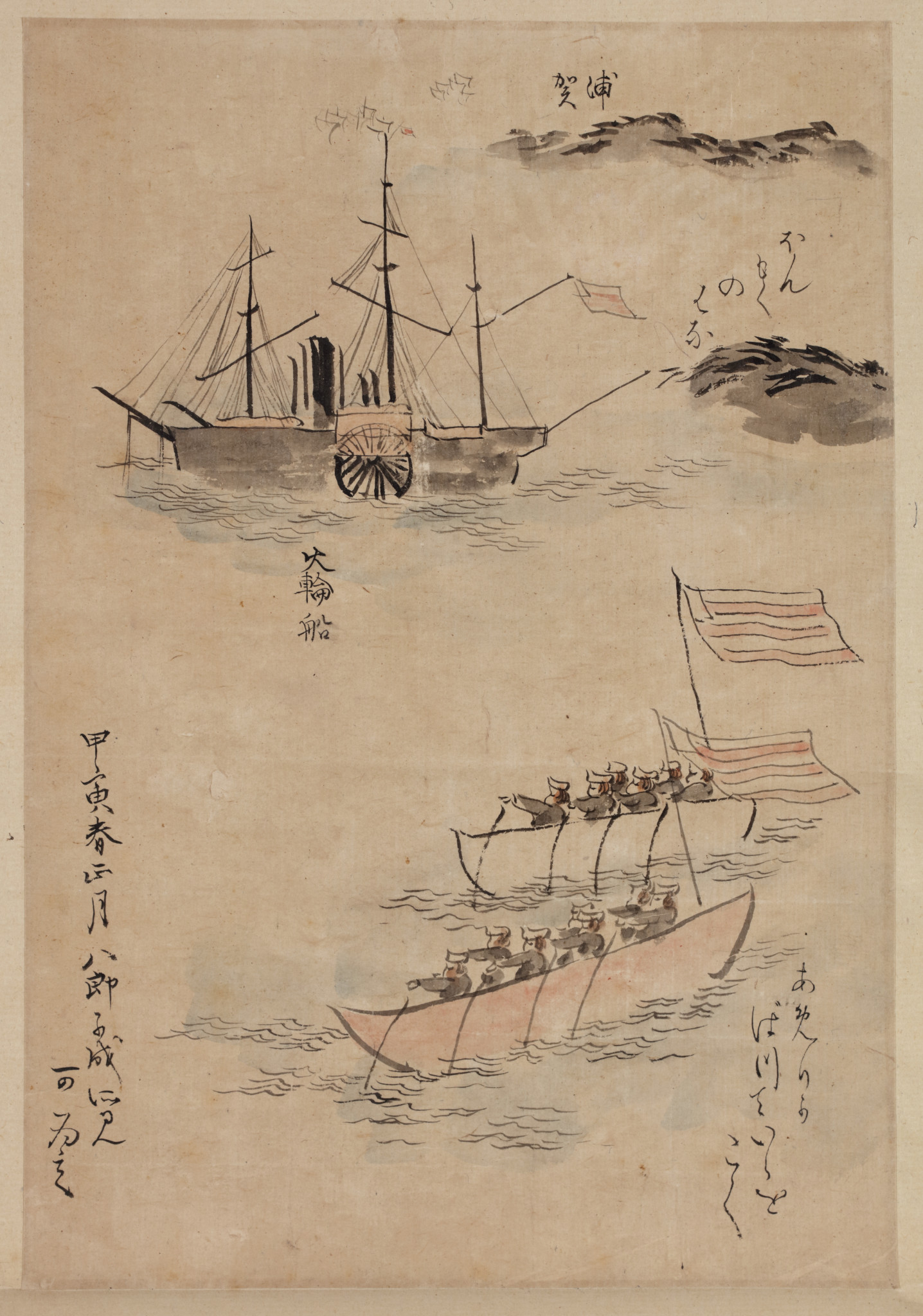
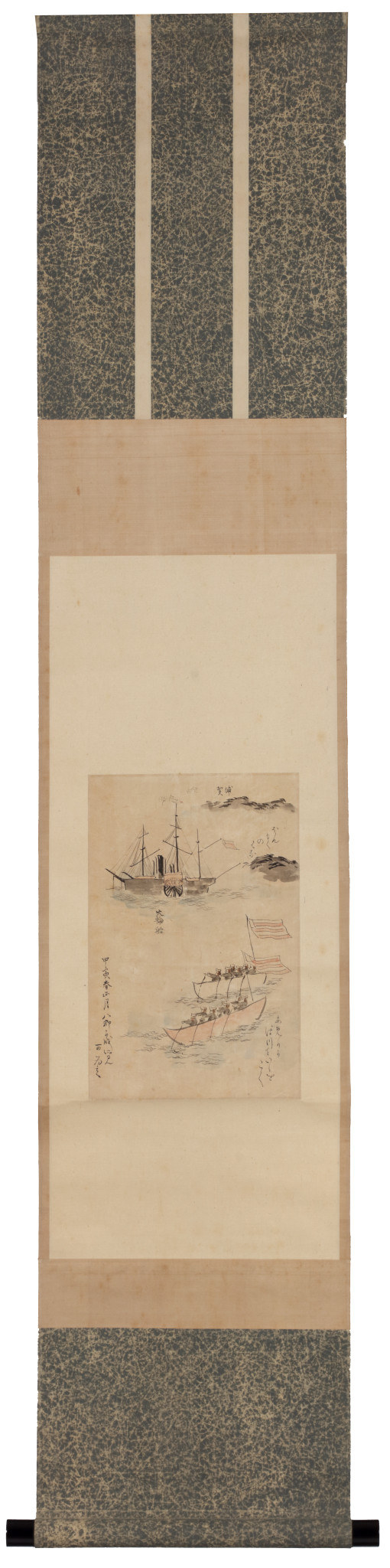
Scroll painting attributed to Ukita Ikkei (1795-1859) of Commodore Perry's Ships
'1854 Spring first month 8 xx (February) Kan-no Hachiro saw this big American wheel vessel past Cape of Kan-non going to Uraga village’
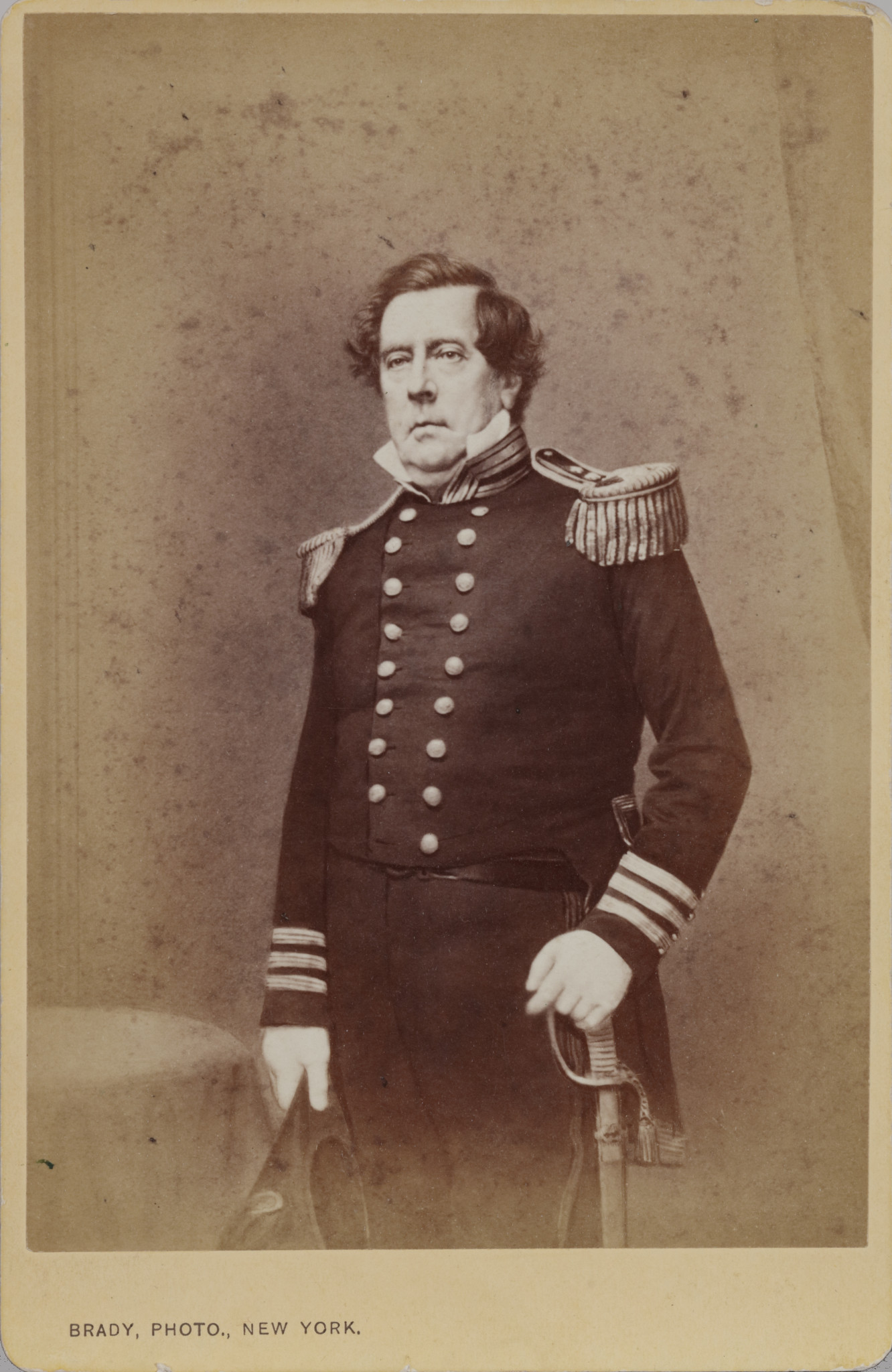
A cabinet card portrait of Commodore Matthew Calbraith Perry United States Navy
Circa 1854-58
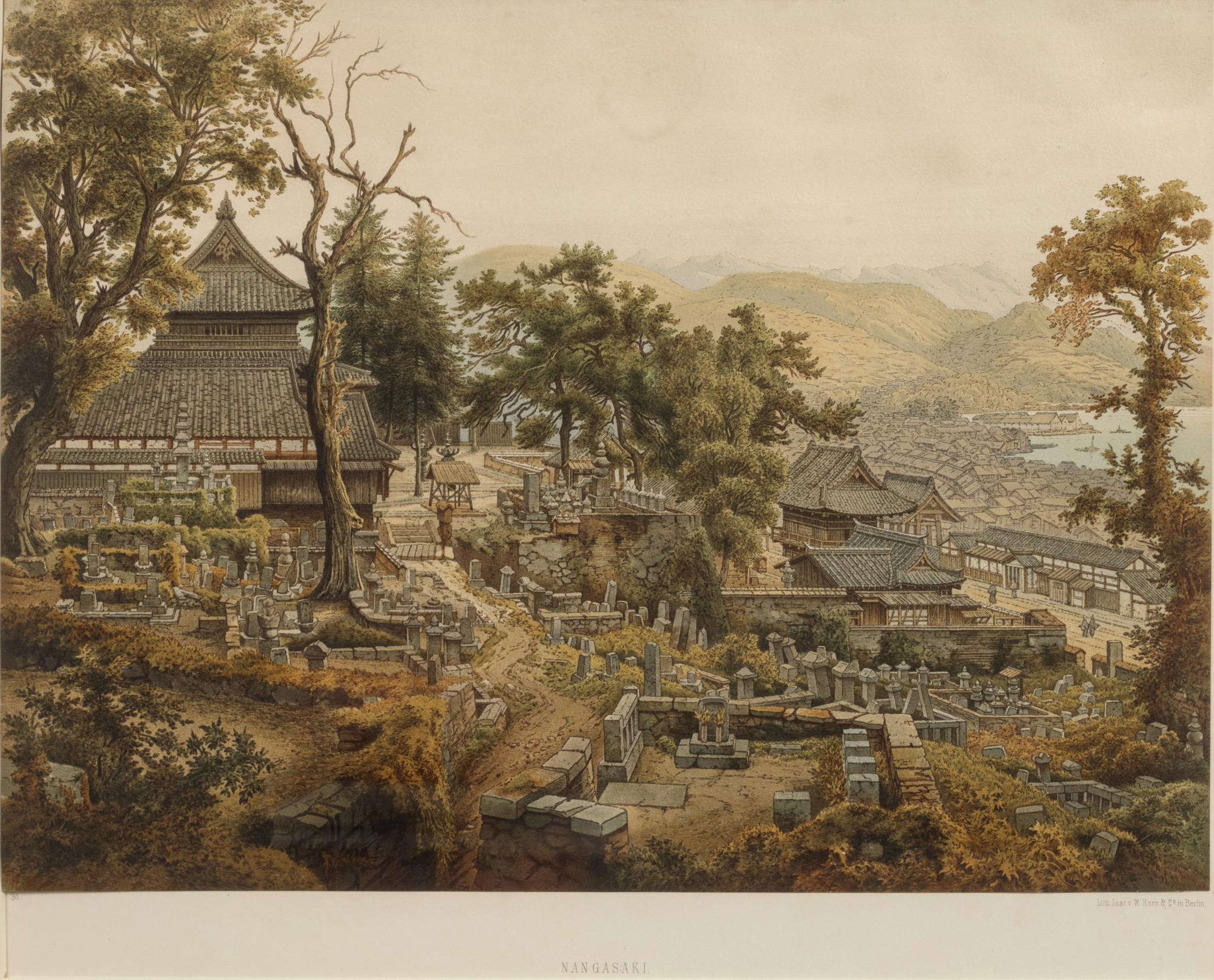
A coloured lithograph n° 30, titled ‘Nagasaki’, from: Ansichten aus Japan, China und Siam, die Preussische Expedition nach Ost- Asian, Berlin, 1864
After a drawing by Wilhelm Heine, by Lith. Inst. v. W. Korn & Co, Berlin.
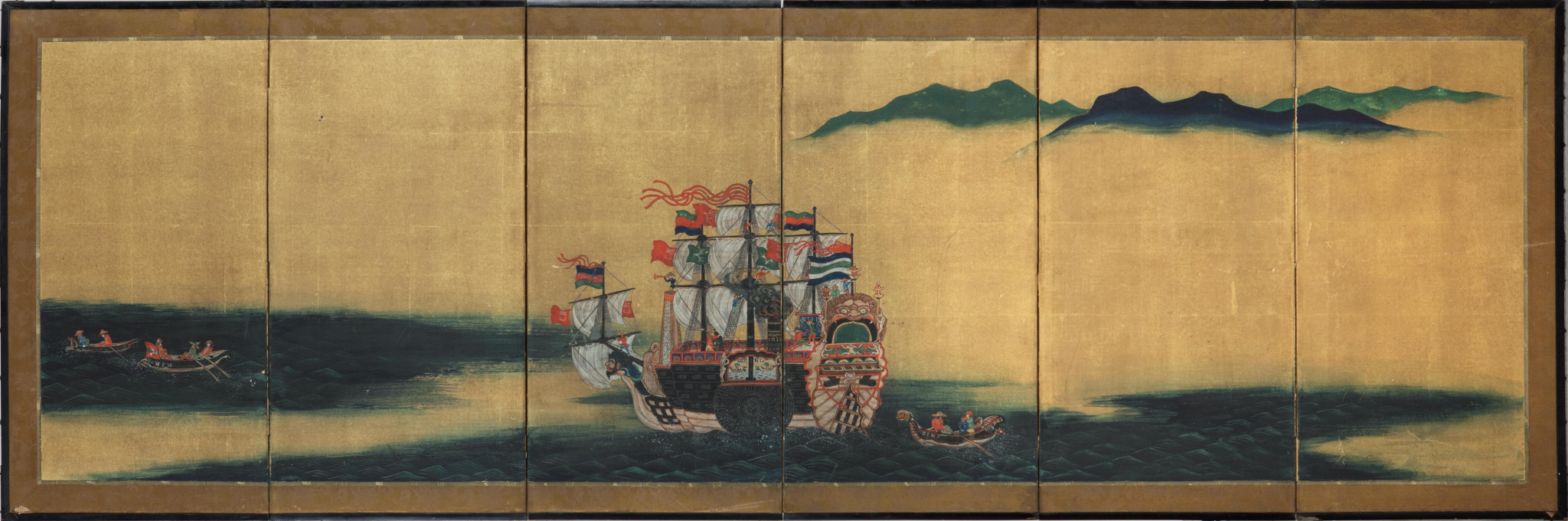
A Japanese six-fold gold-leaf screen with the depiction of Commodore Matthew Perry’s flag ship the USS Mississippi
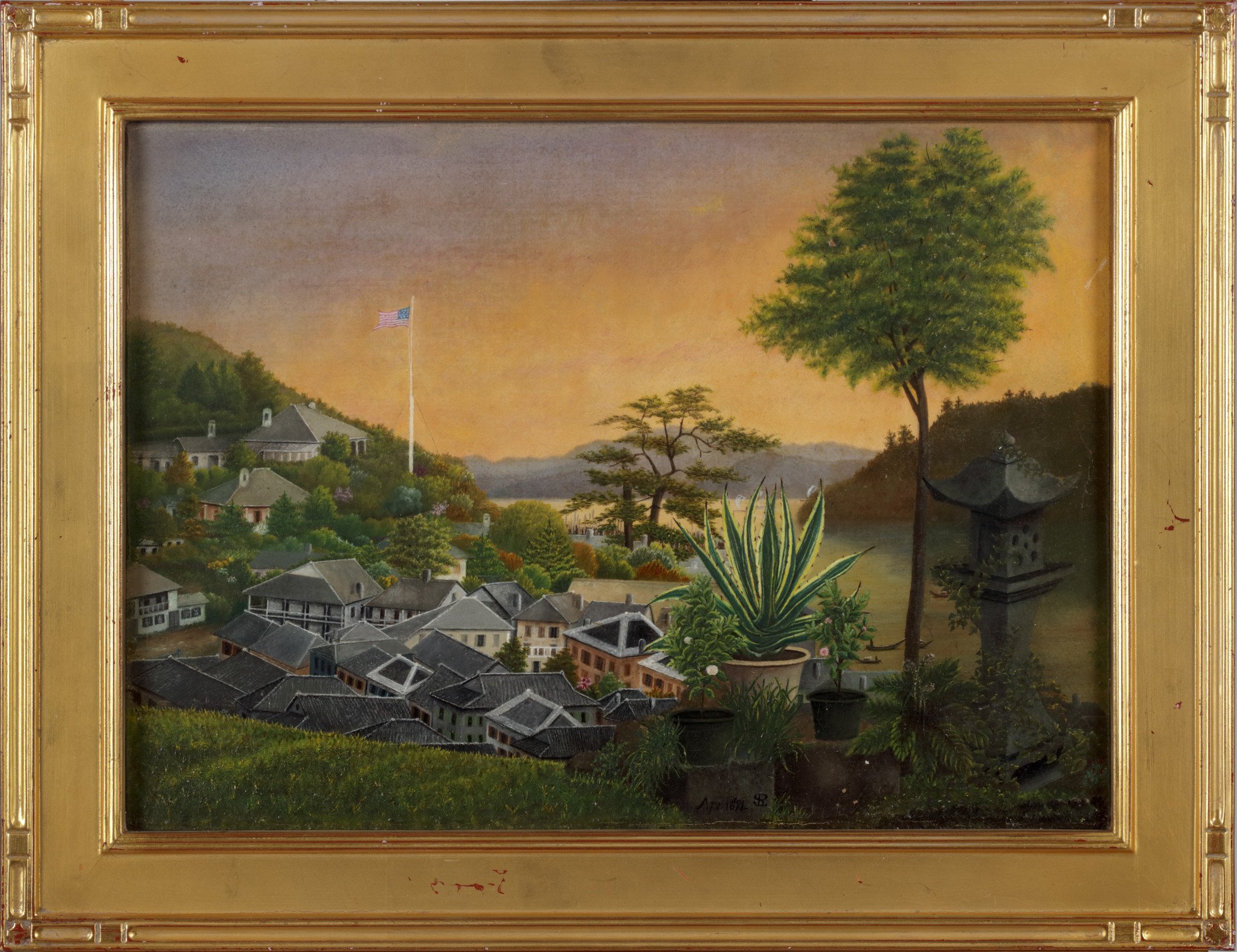
A painting depicting the Star and Stripes flying over the American Consulate in Nagasaki
Dated Apr. 1891
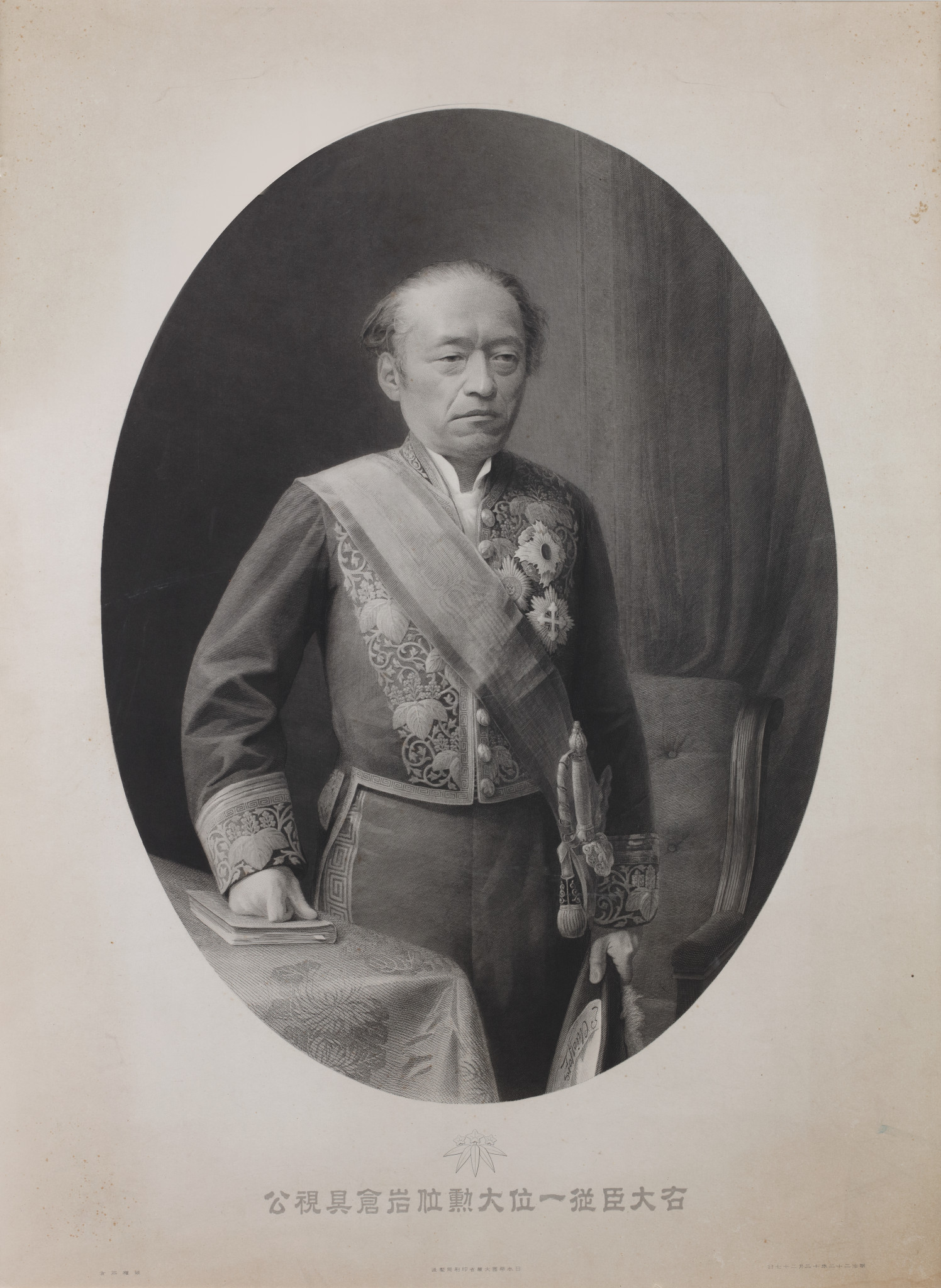
The engraved portrait of the first Japanese Ambassador to the United States of America, Tomomi Iwakura (1825-1885)
Japan, circa 1872
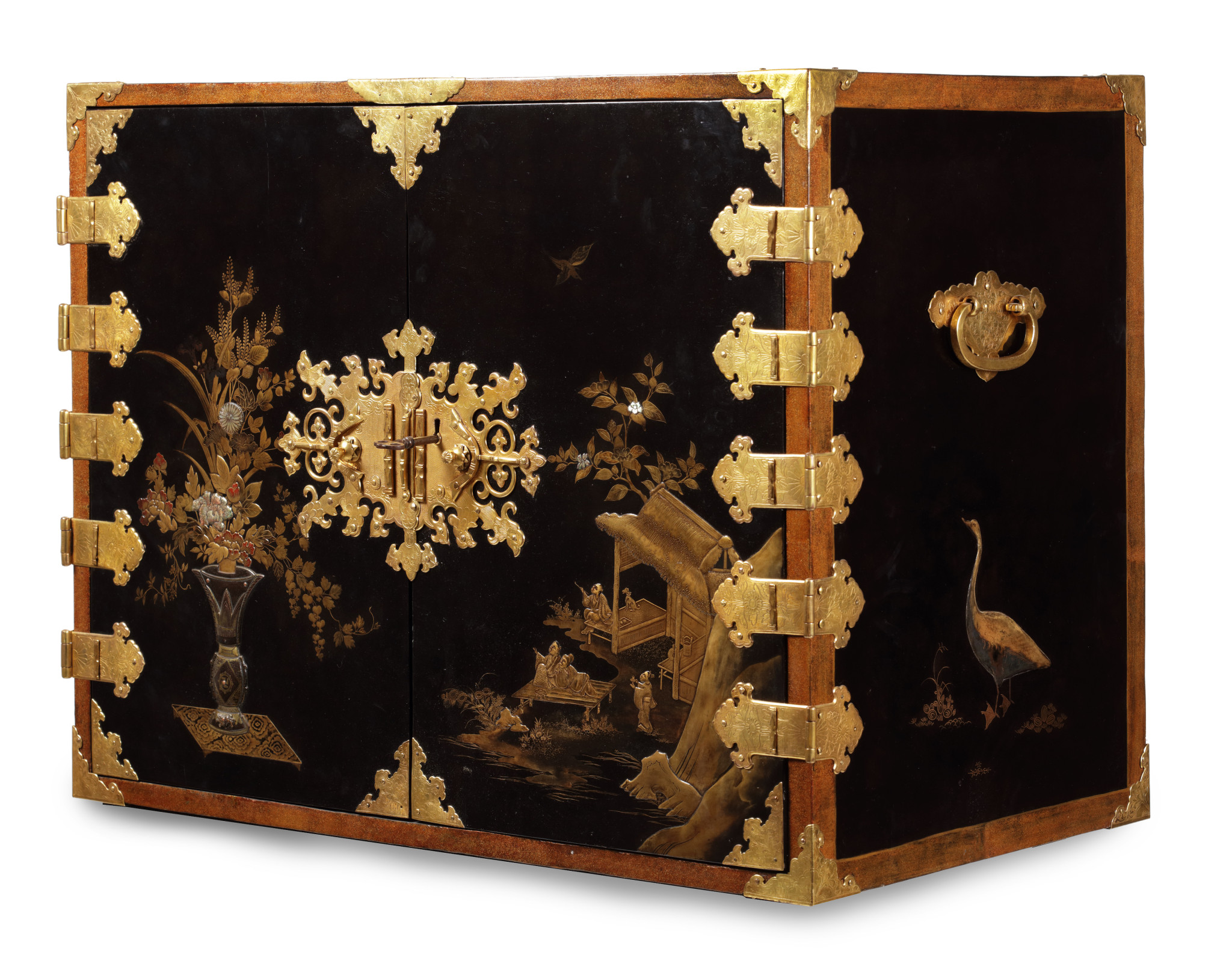
An extremely fine and important Japanese lacquer cabinet with gilt-copper mounts for the European market
Edo period, late 17th century
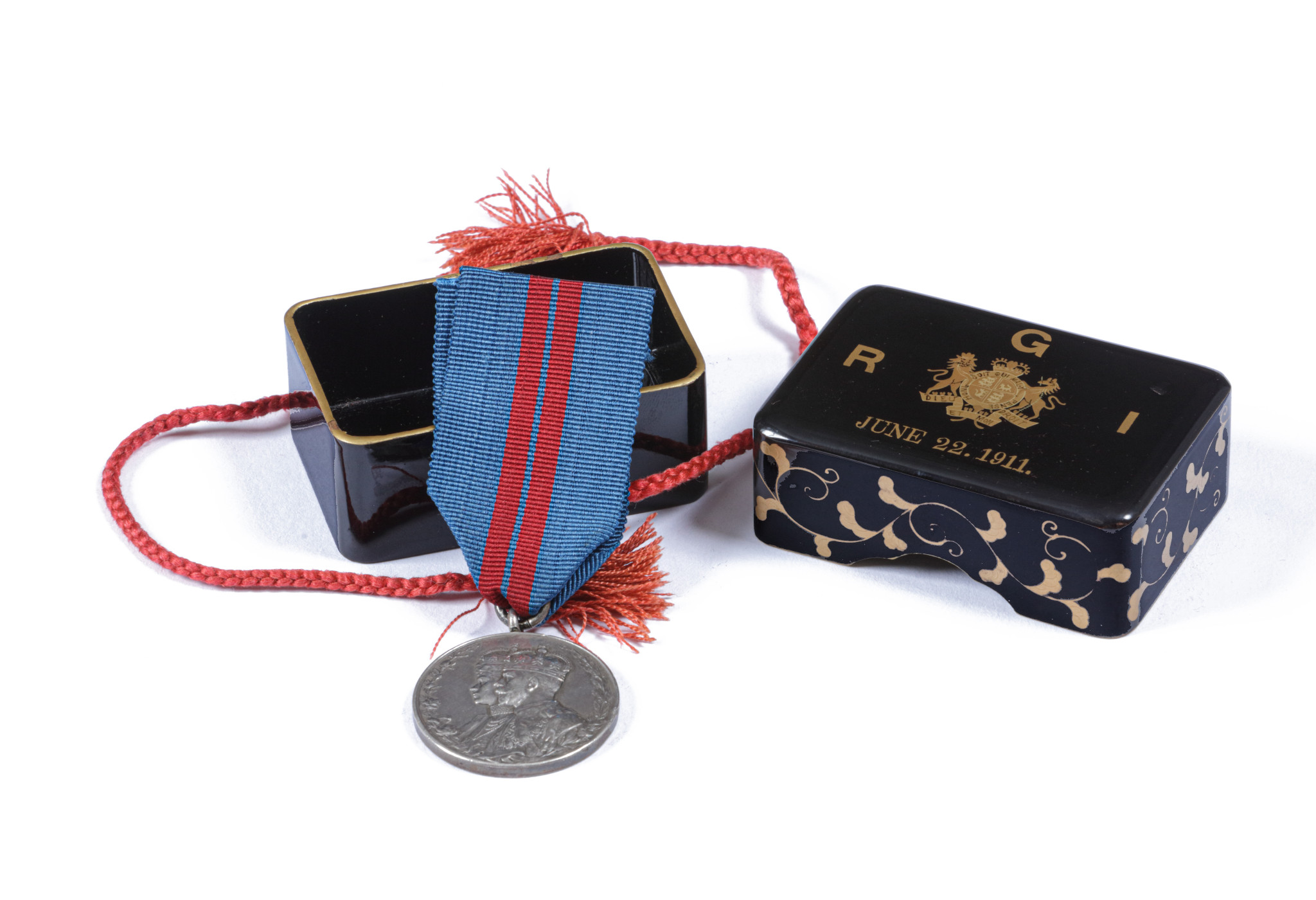
A small Japanese lacquer box with on the lid the English Royal coat-of-arms, R G I, and June 22. 1911
Circa 1911
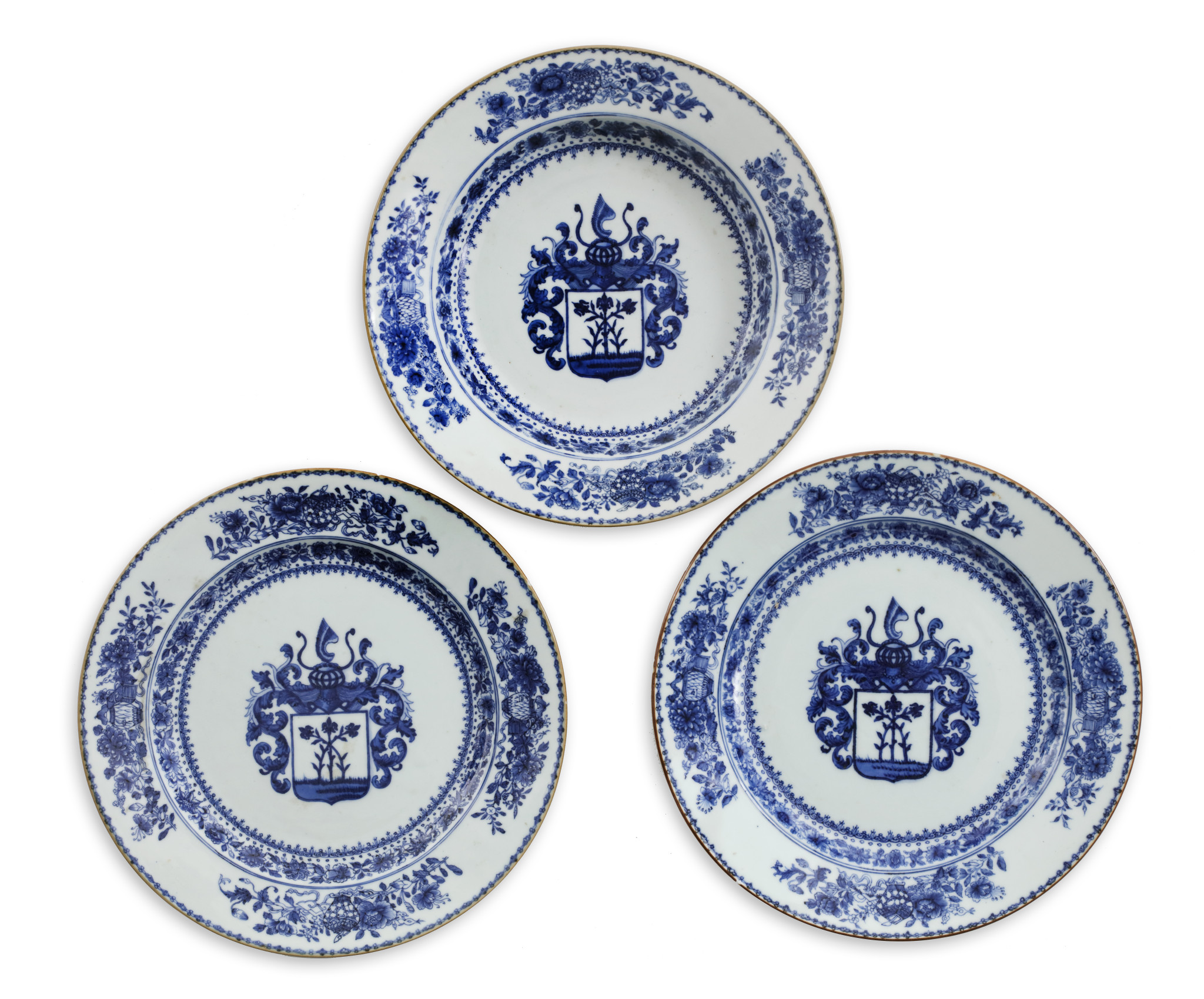
Three Chinese export armorial ‘Schreuder’ porcelain dishes for the Dutch market
Qing-dynasty, Qianlong period, circa 1735-1740
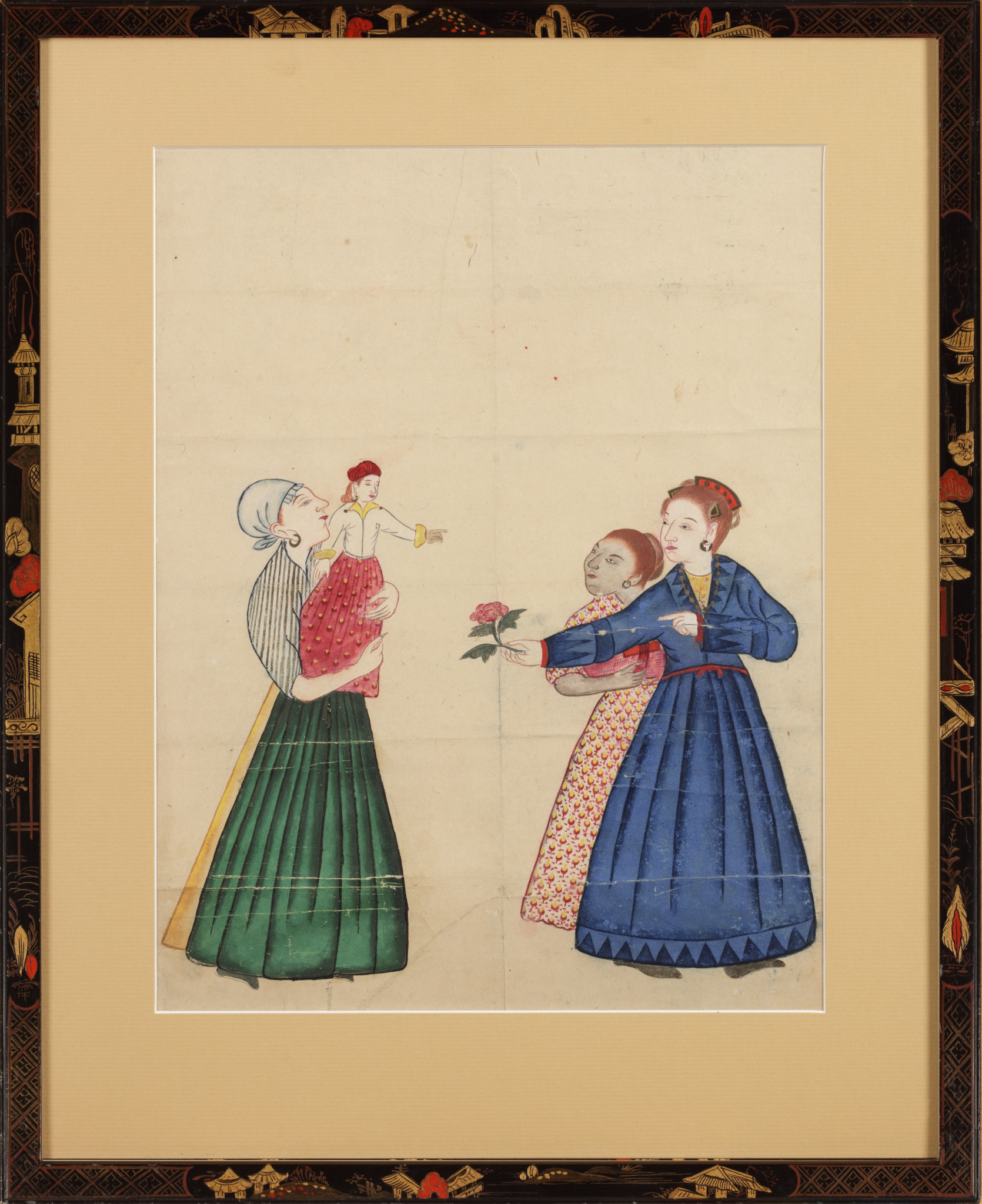
After Ishizaki Yũshi (1768-1846)
‘Titia, the wife of Jan Cock Blomhoff, with wetnurse Petronella Munts holding the son Johannes, and the enslaved Javanese maidservant Maraty’
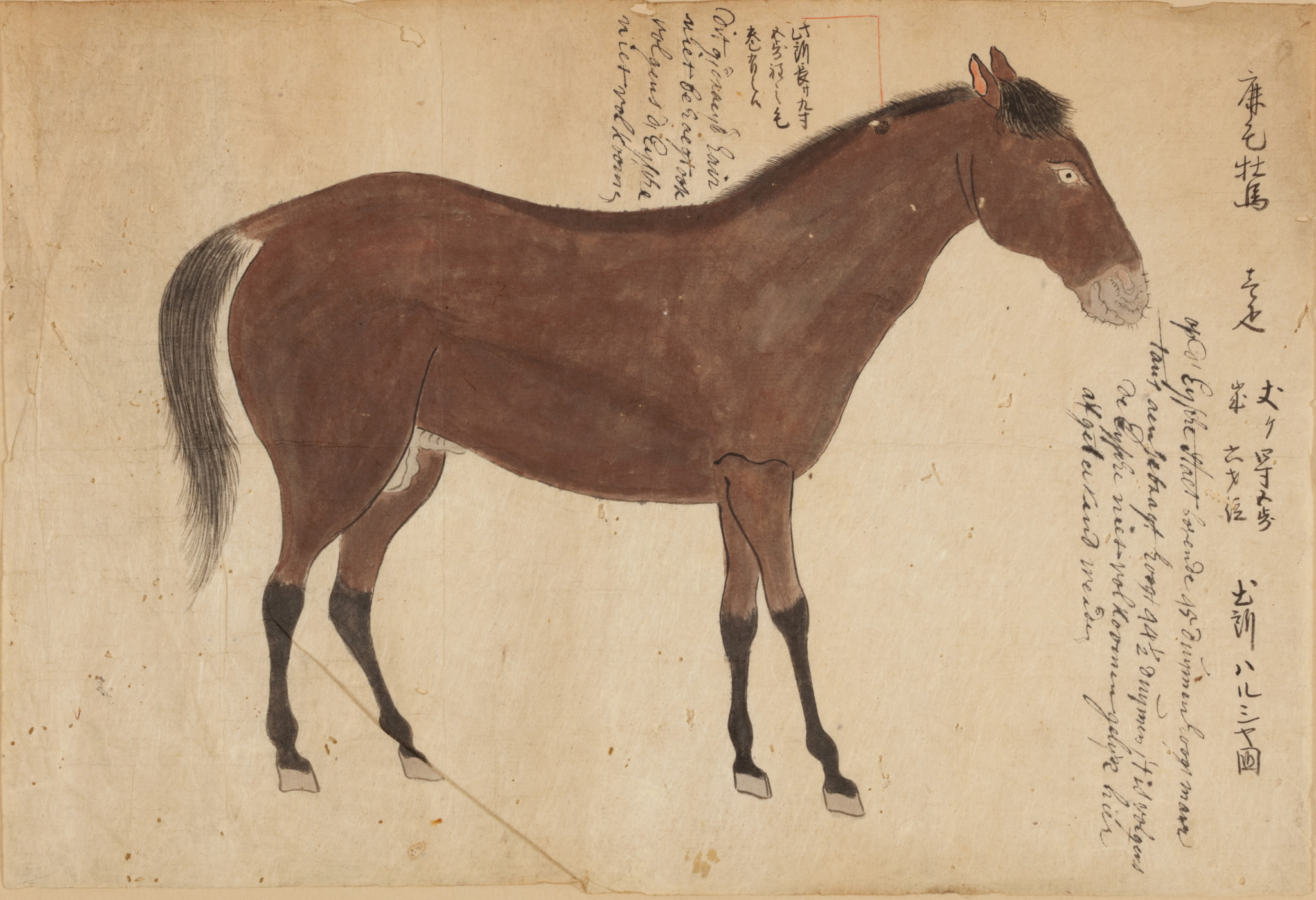
An important Japanese drawing of a Persian horse ordered by the Shogun:
‘Eene Eysche van den Keyser’
(the Emperor’s demand)
Edo period, late 18th century
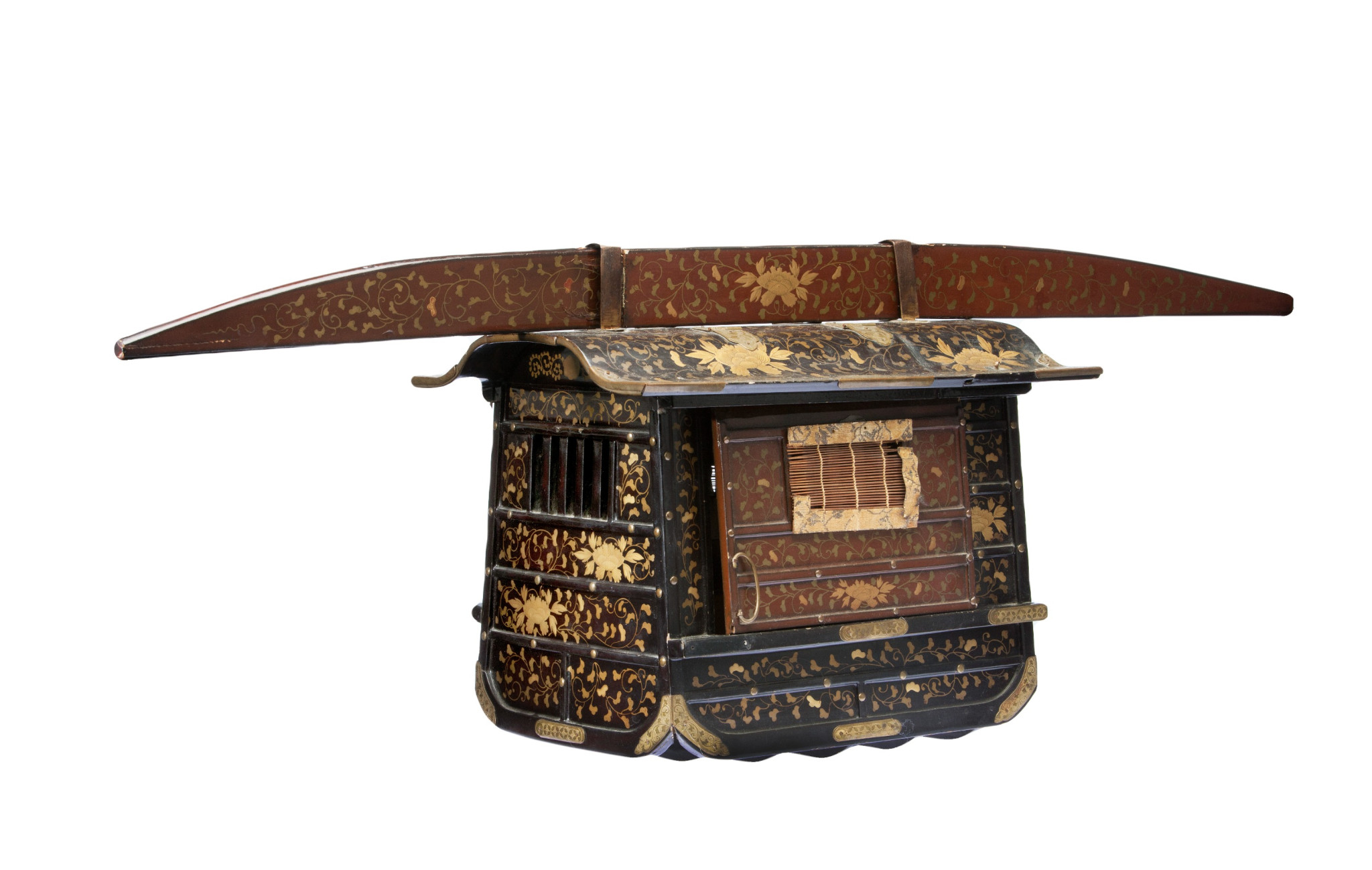
A rare miniature model of a palanquin, norimono
Japan, late 18th century
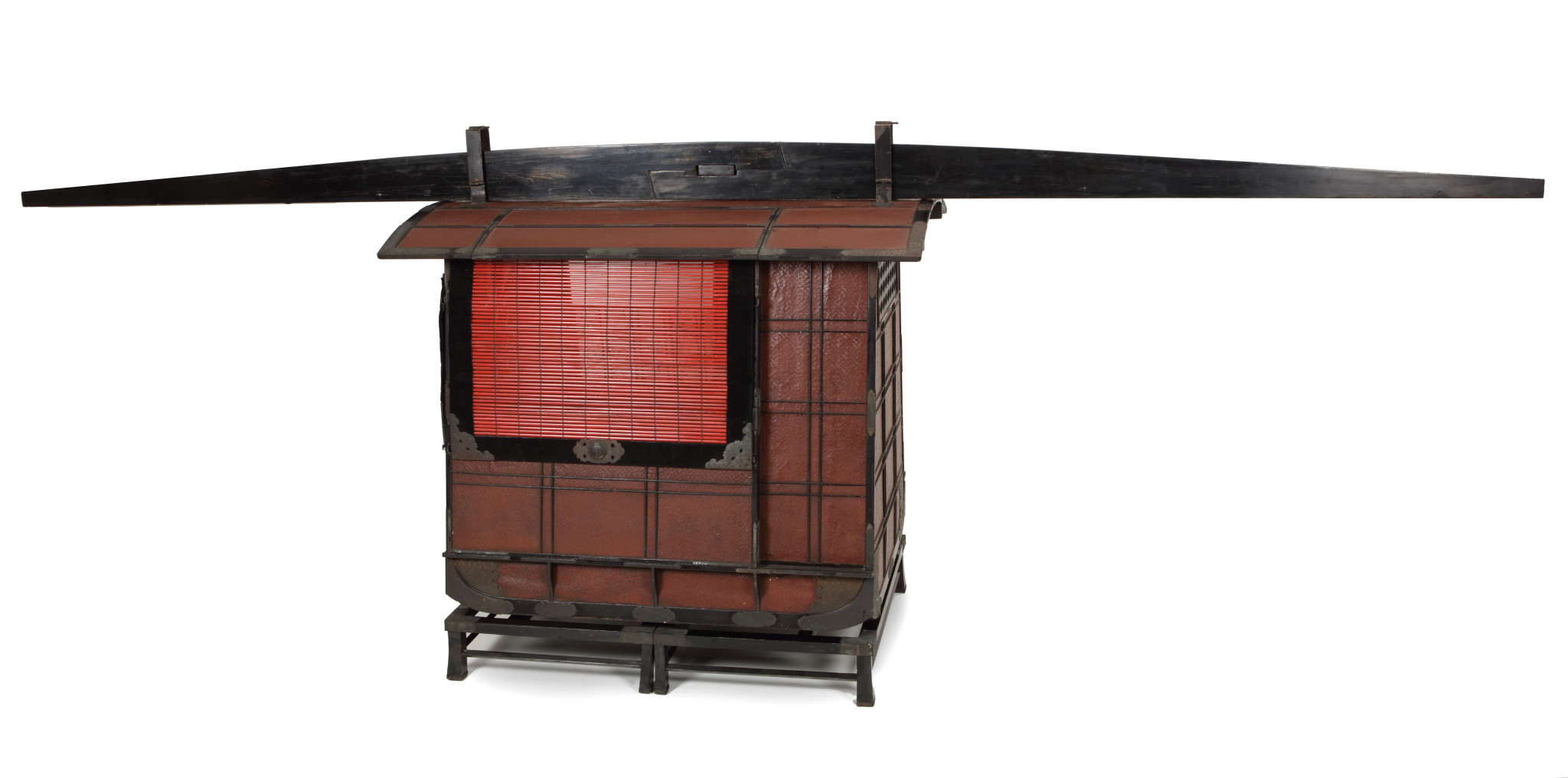
A Japanese red and black lacquered palanquin or norimono
Edo period, early 19th century
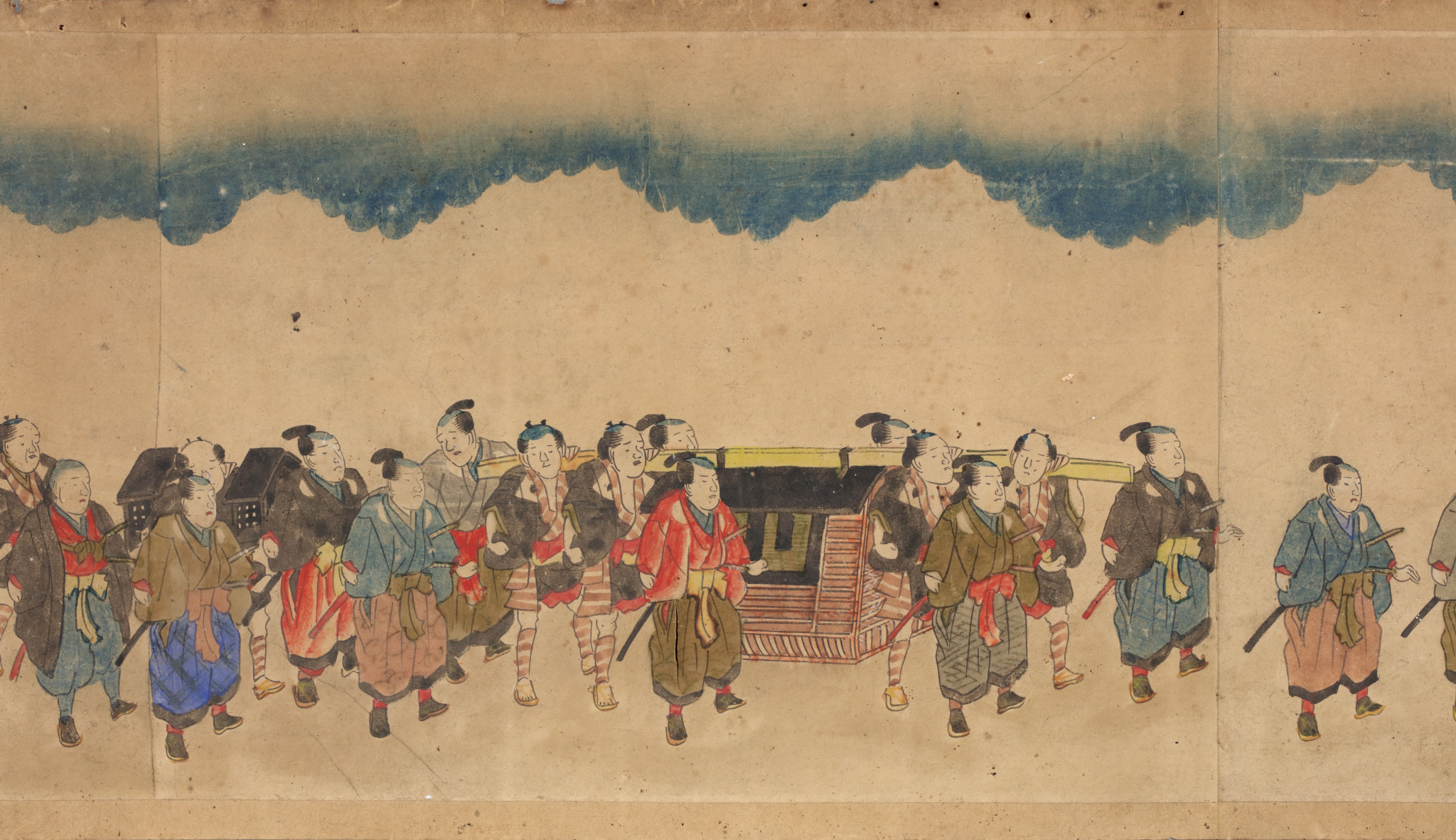
A Japanese scroll painting depicting Daimyo Gyorestu Ga, the court journey of the Daimyo
Edo period, circa 1800

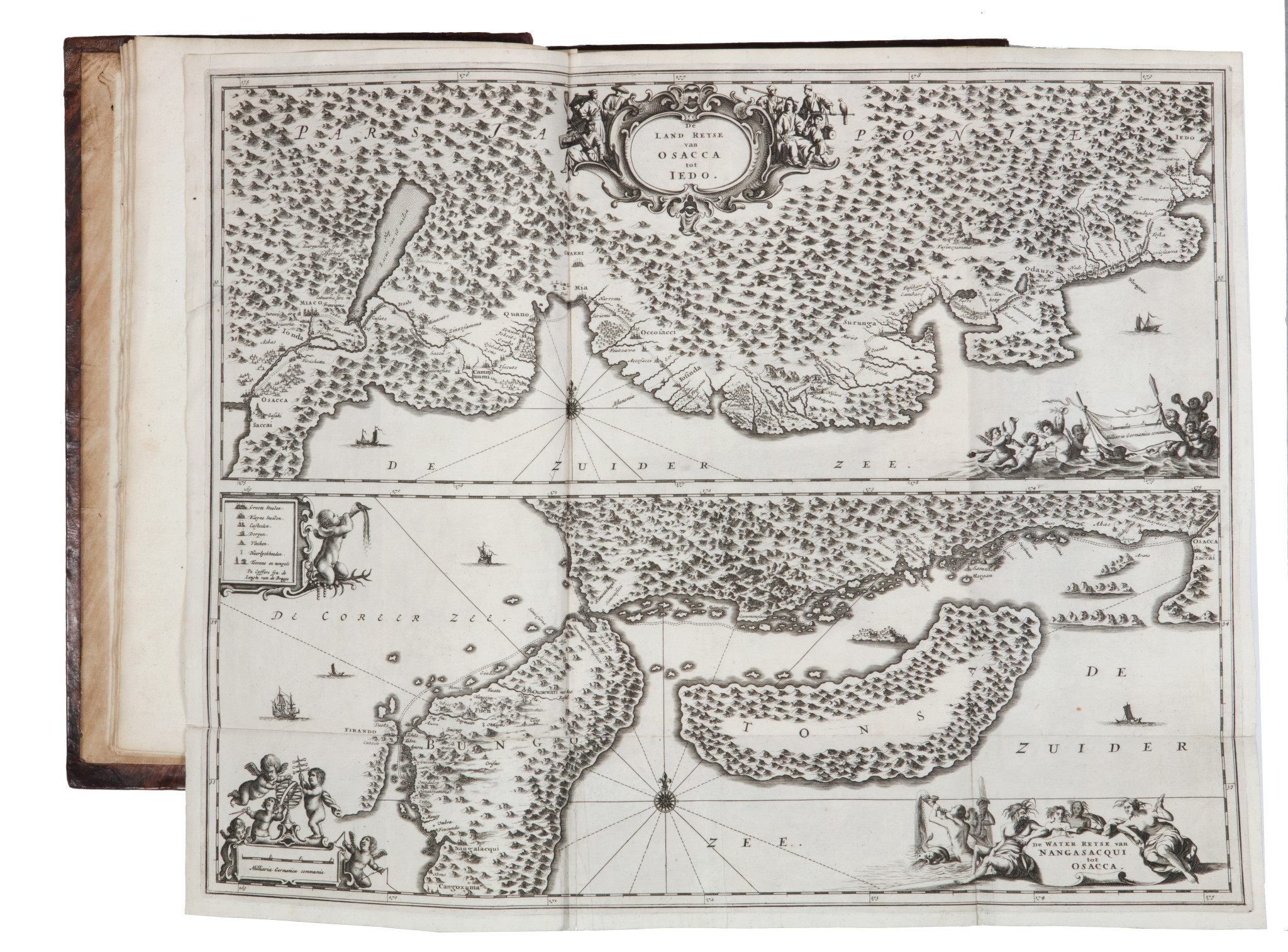
Arnoldus Montanus (1625 - 1683)
Gedenkwaerdige gesantschappen der Oost- Indische Maetschappy in ‘t Vereeningde Nederland, aen de Kaisaren van Japan: Vervatende Wonderlyke voorvallen op de Togt der Nederlandsche Gesanten..., 1669
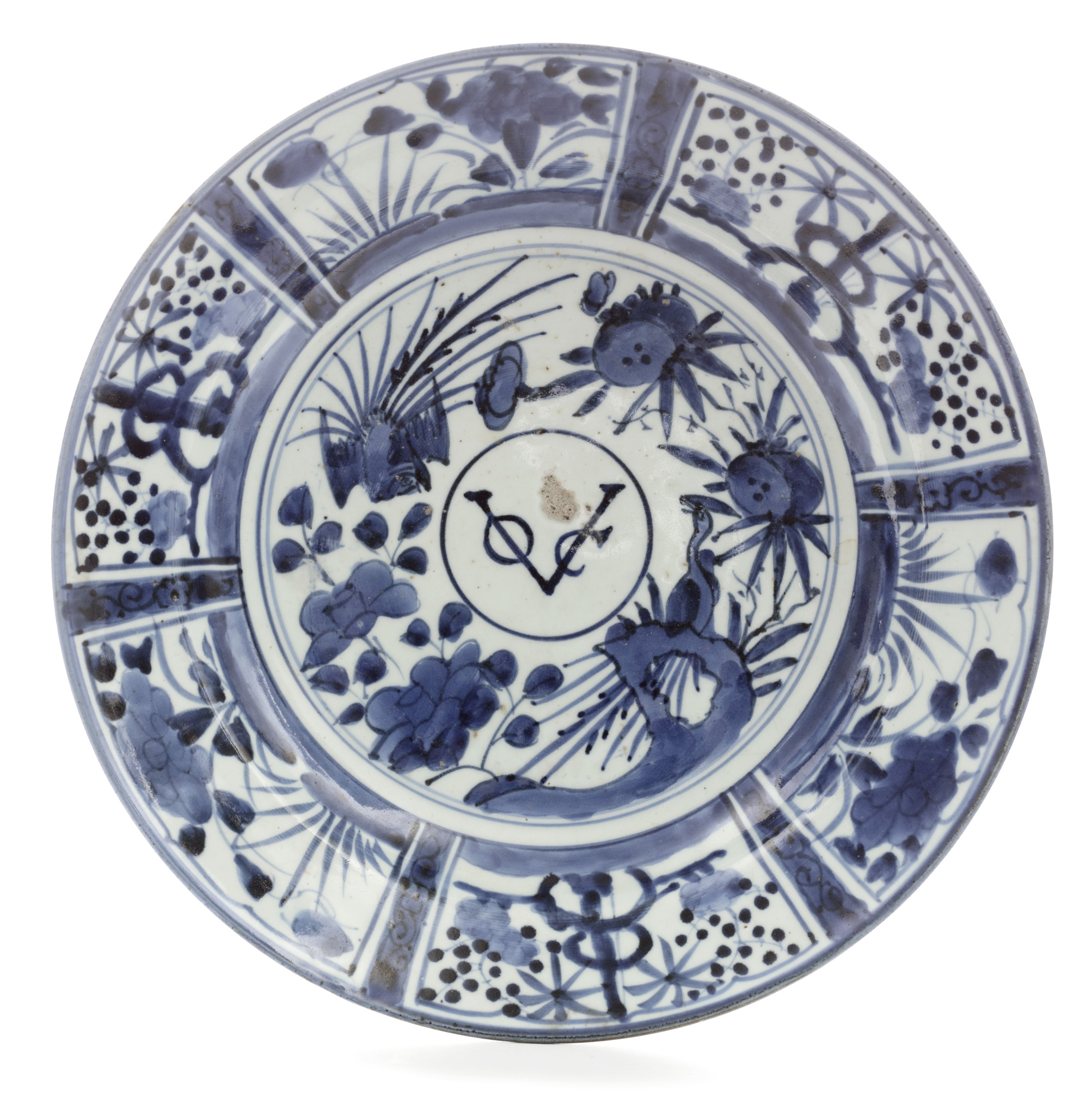
A Japanese blue and white porcelain 'VOC' dish
Arita, late17th century
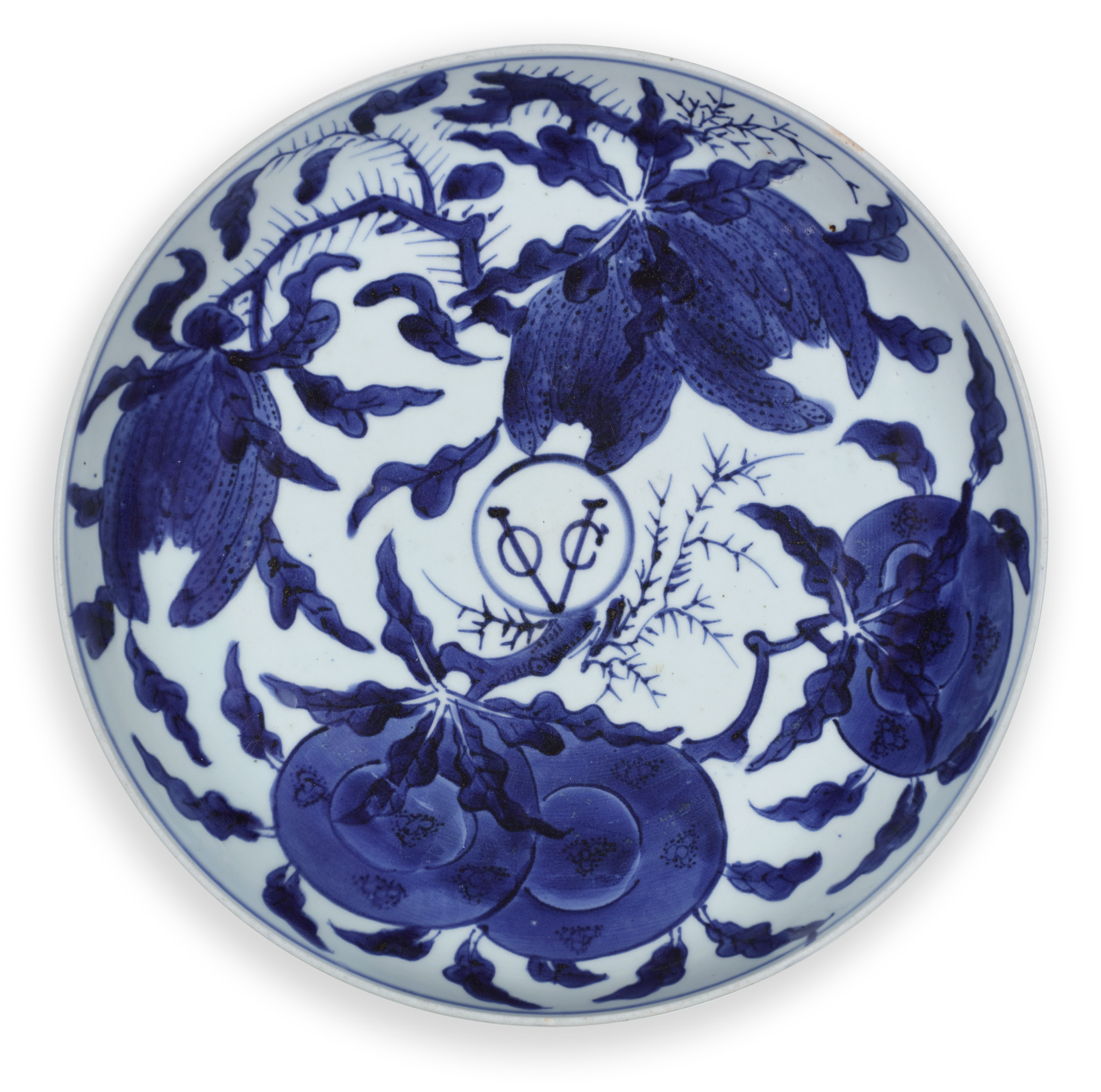
A Japanese blue and white Arita porcelain ‘VOC’ dish
Arita, late 17th century
(sold)
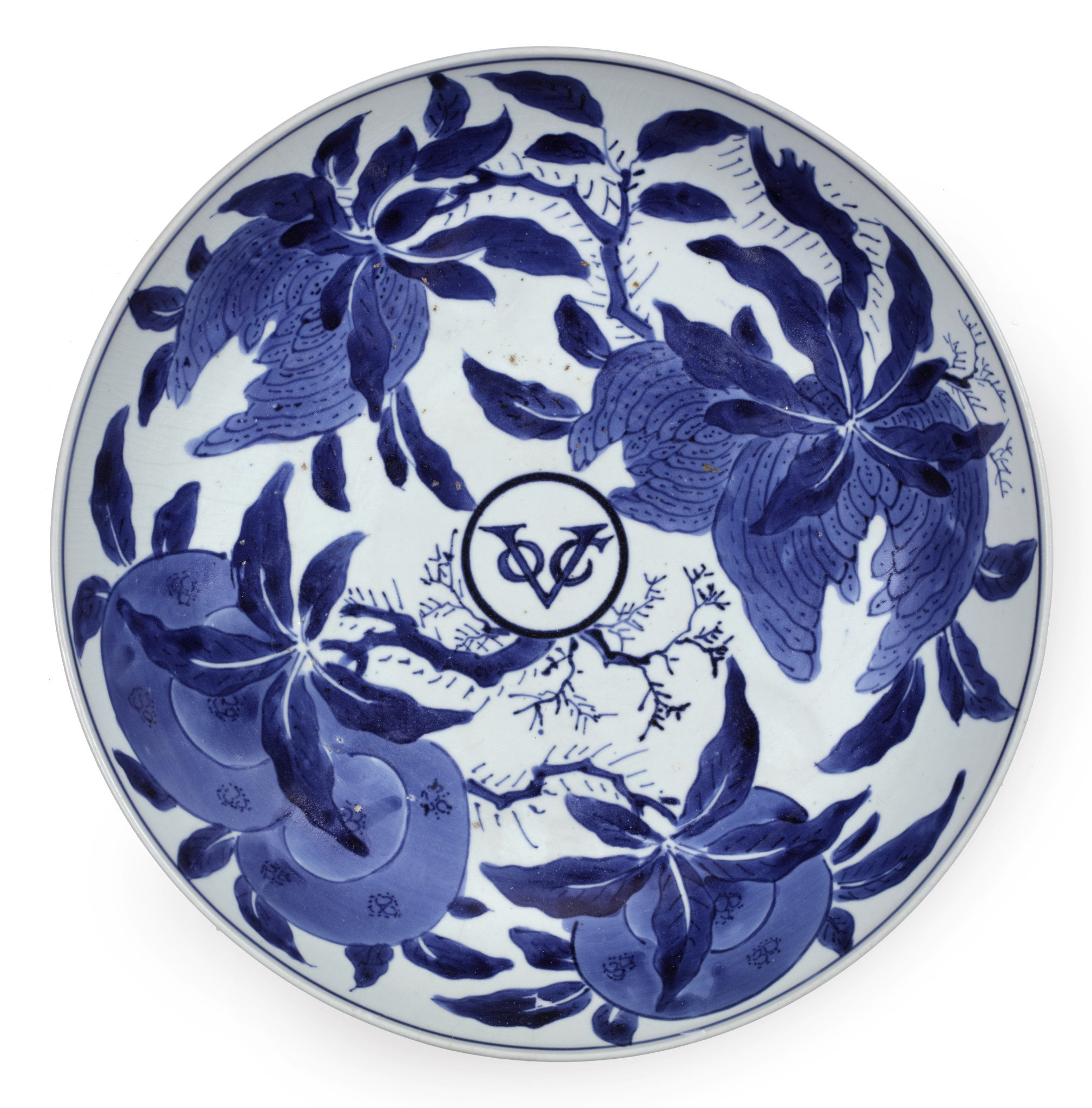
A Japanese blue and white Arita porcelain ‘VOC’ dish
Arita, late 17th century
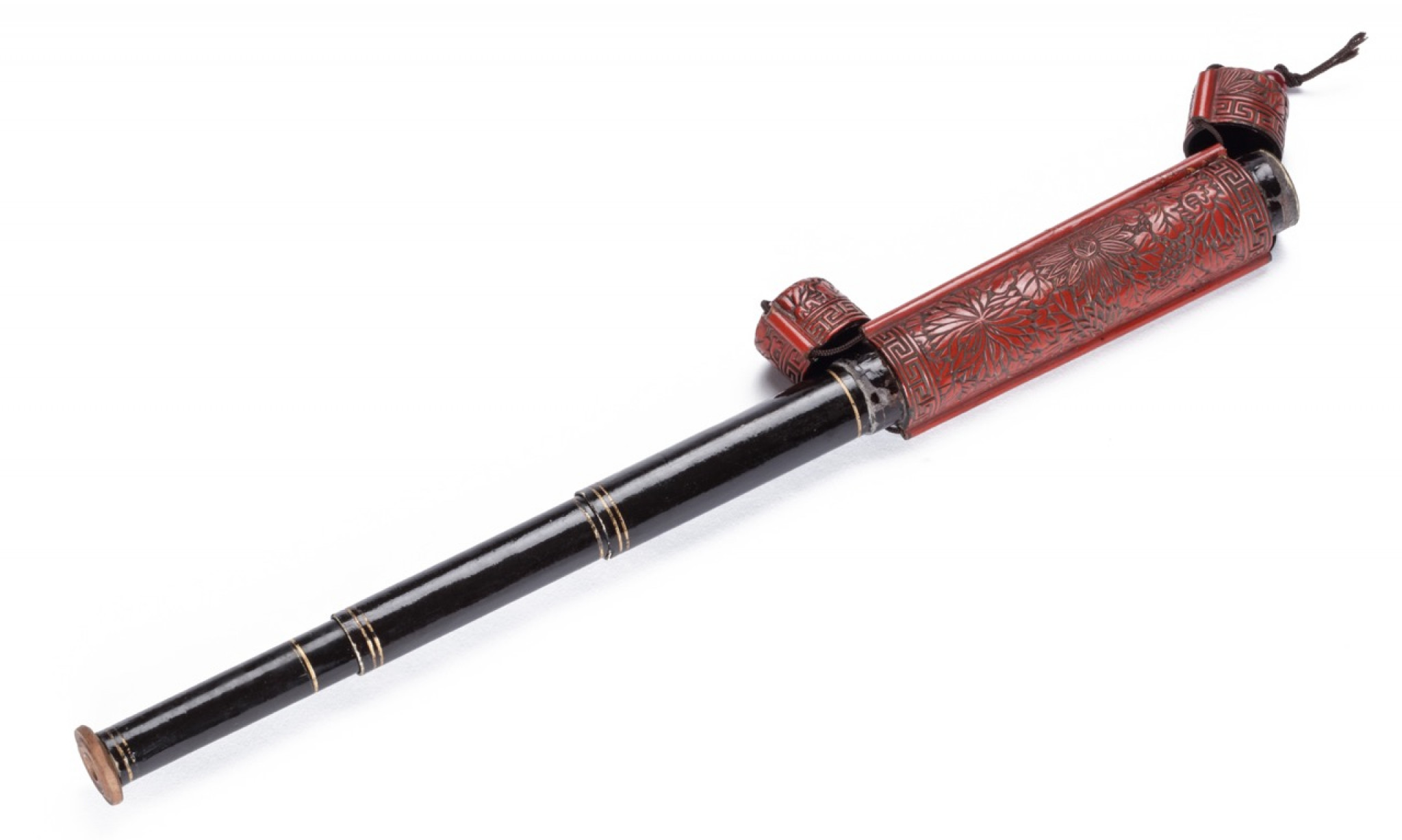
An exceptional Japanese carved red choshitsu lacquer telescope
Edo period, late 18th century
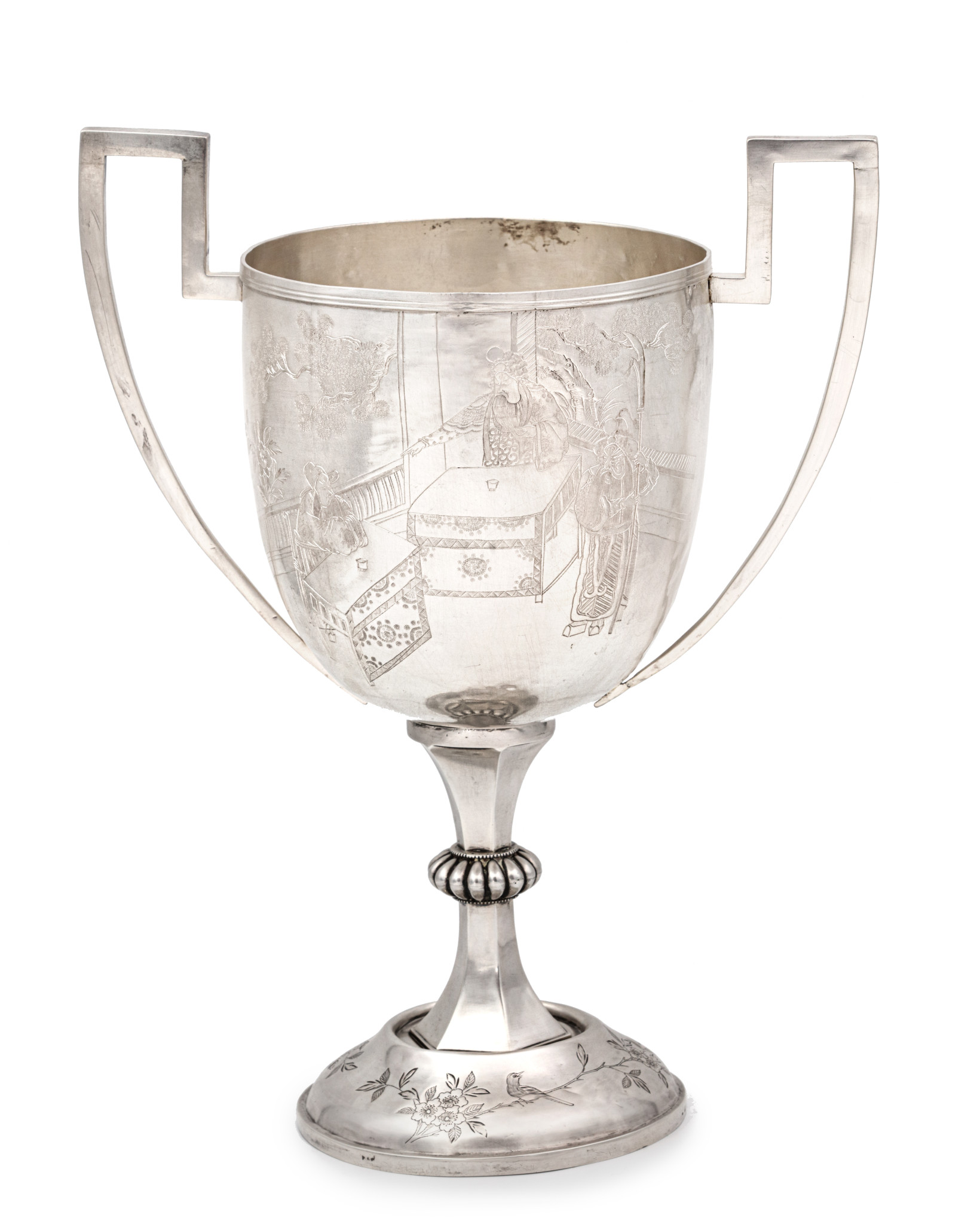
An important Chinese silver goblet with engravings, presented to the Dutch legation in Beijing by Zhang Xun (1884-1916), General to the last Manchu Emperor
Workshop’s mark ‘bao cheng(?)’, mark for pure silver ‘zhuwen’, and name of the silversmith ‘bin’
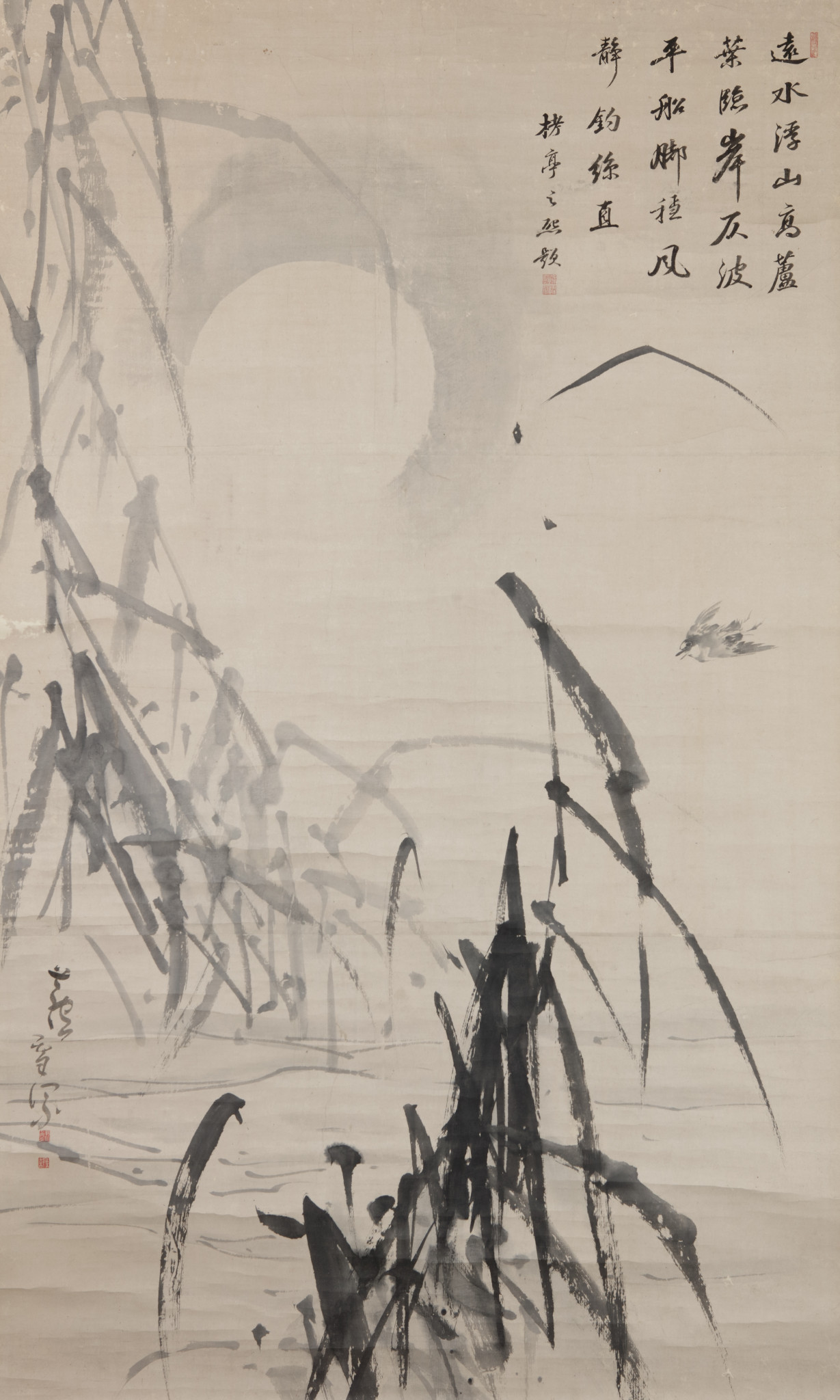
A Japanese vertical hanging scroll-painting, Kakejiku, attributed to Nagasawa Rosetsu (1754-1799)
“Seeing Lo San (Lo mountain) floating far over lake, shadows of leaves reflected by waves on lake, small boat moves with gentile wind, before the scenery (I am) sitting quietly with fishing rod.”
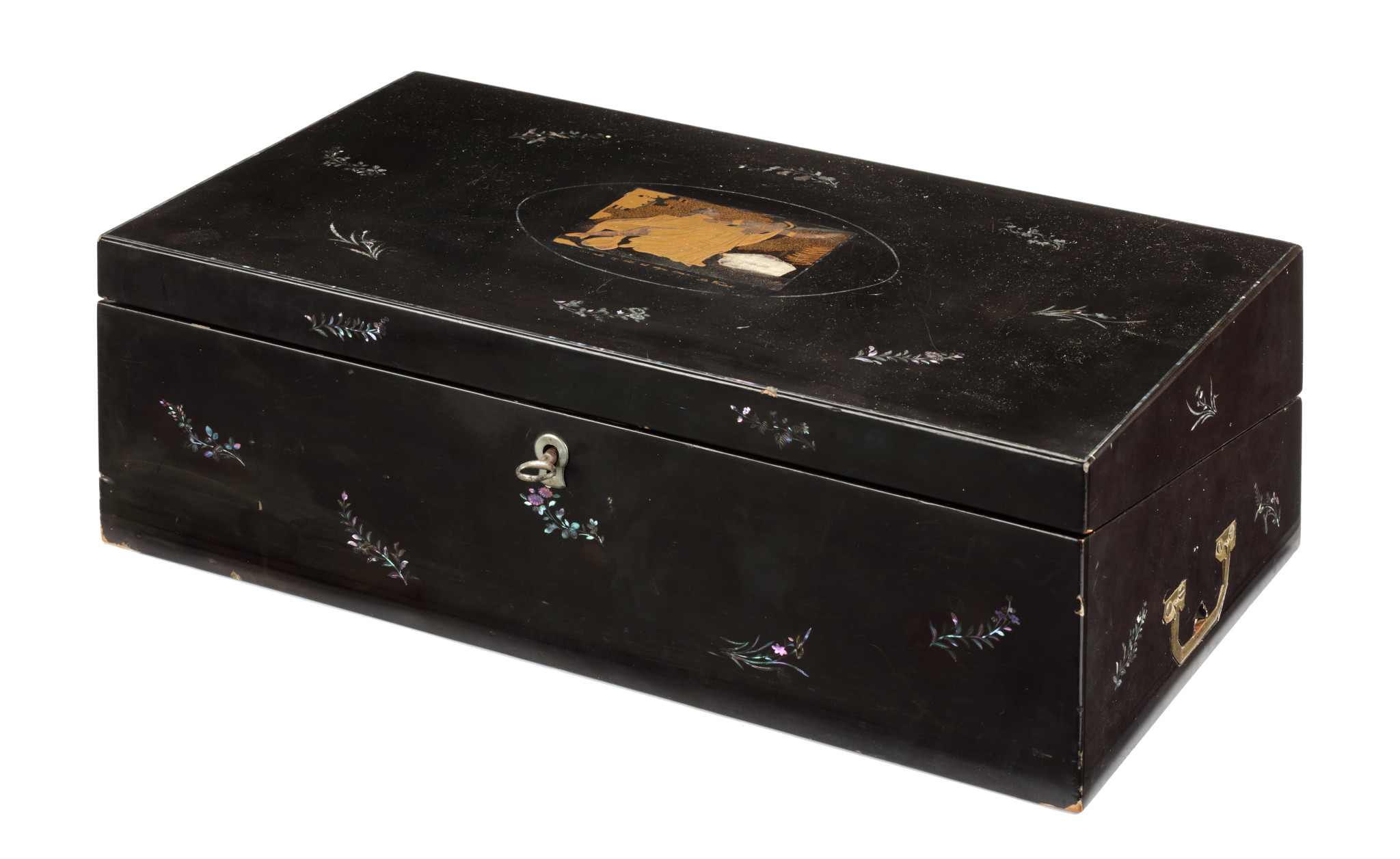
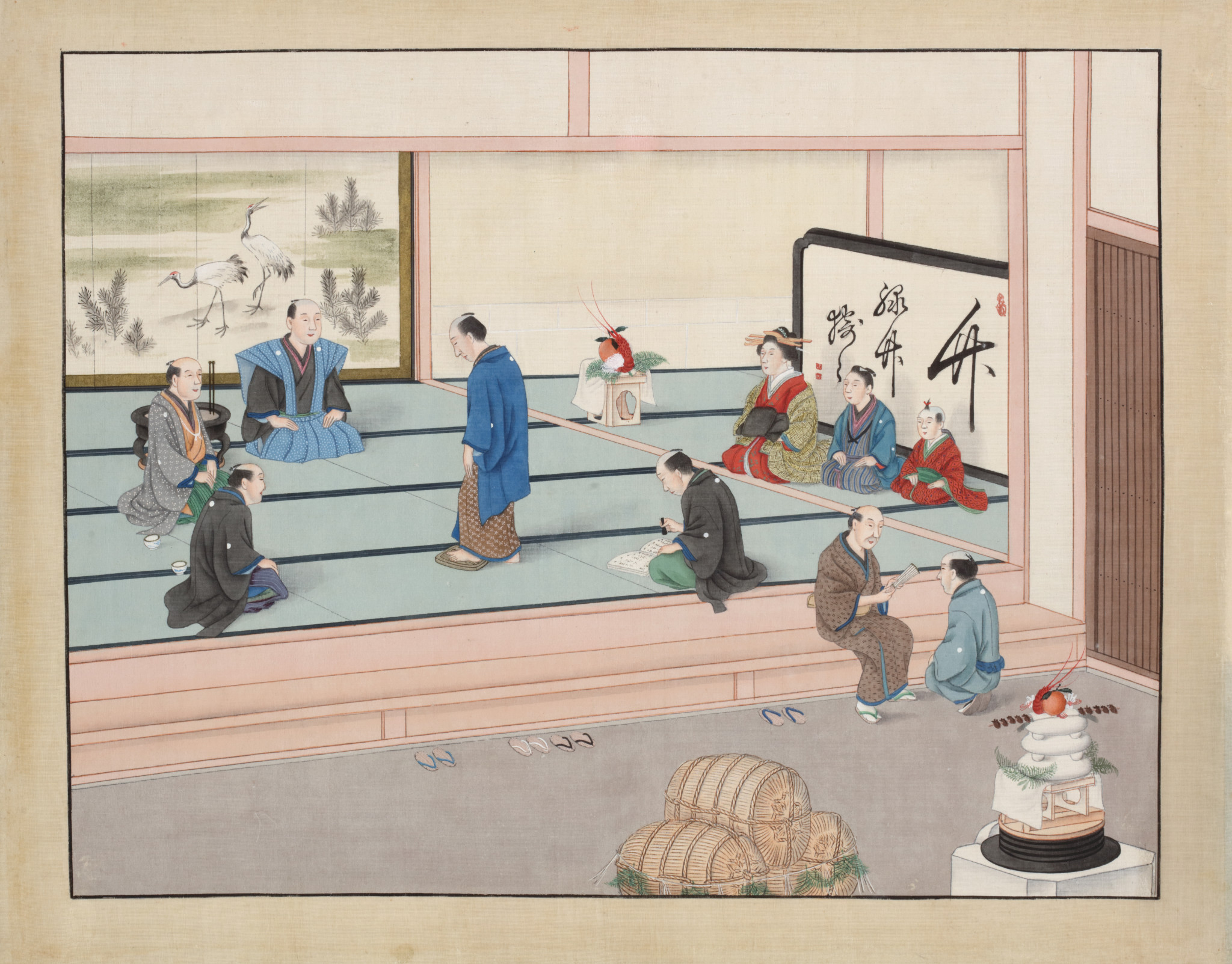
A Japanese lacquer writing box decorated with a man trying to withhold a woman from fleeing, titled ‘...rukt zij zich uit mijne armen... De Vriend’ (...she tears herself out of my arms...The Friend)
Edo period, Kyoto-Nagasaki style, 1820- 1830
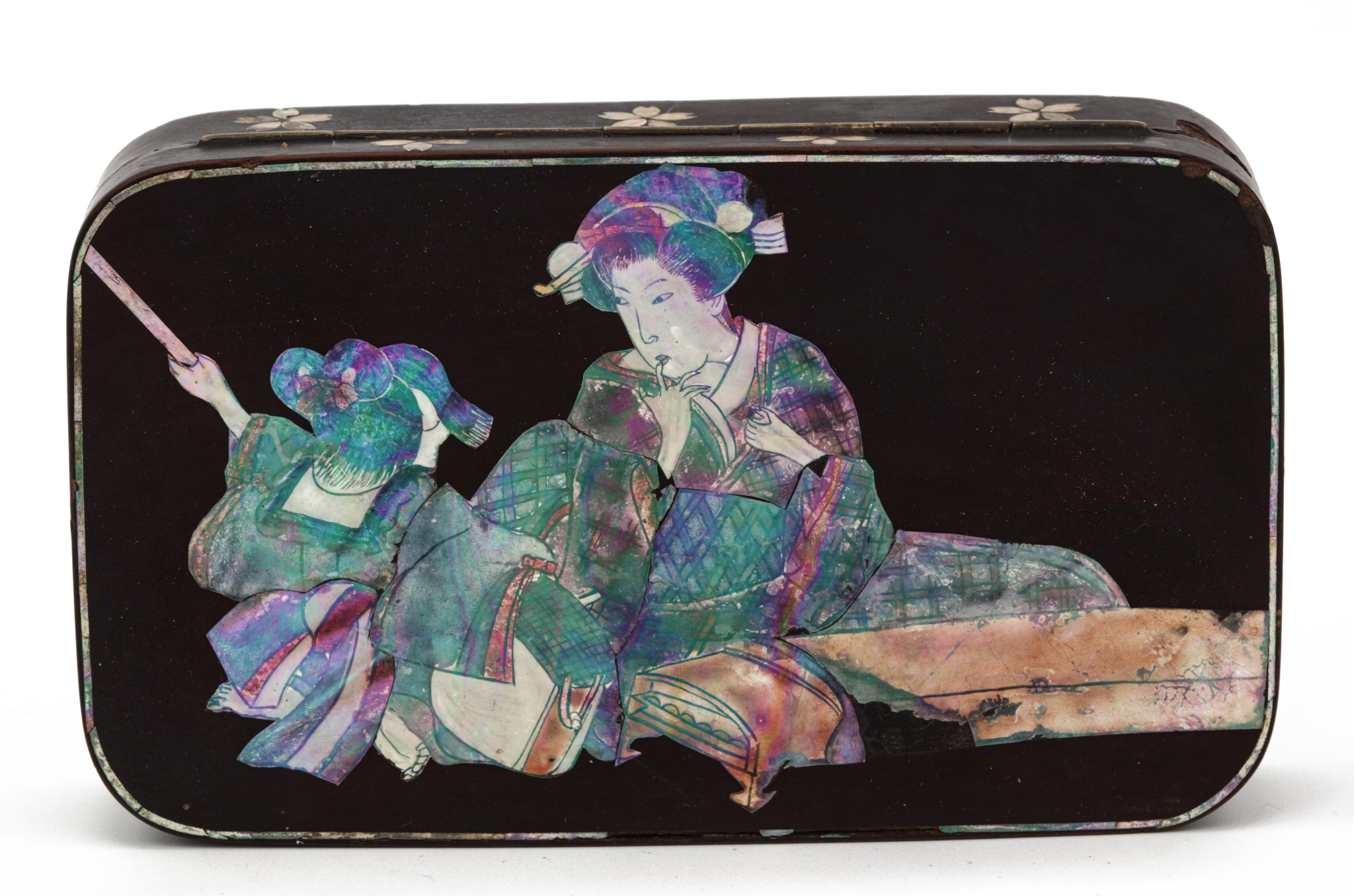
Japanese lacquered and mother-of-pearl inlaid copper tobacco box with a scene of two ladies playing the koto and the shamisen
Kyoto-Nagasaki style, 1800-1830
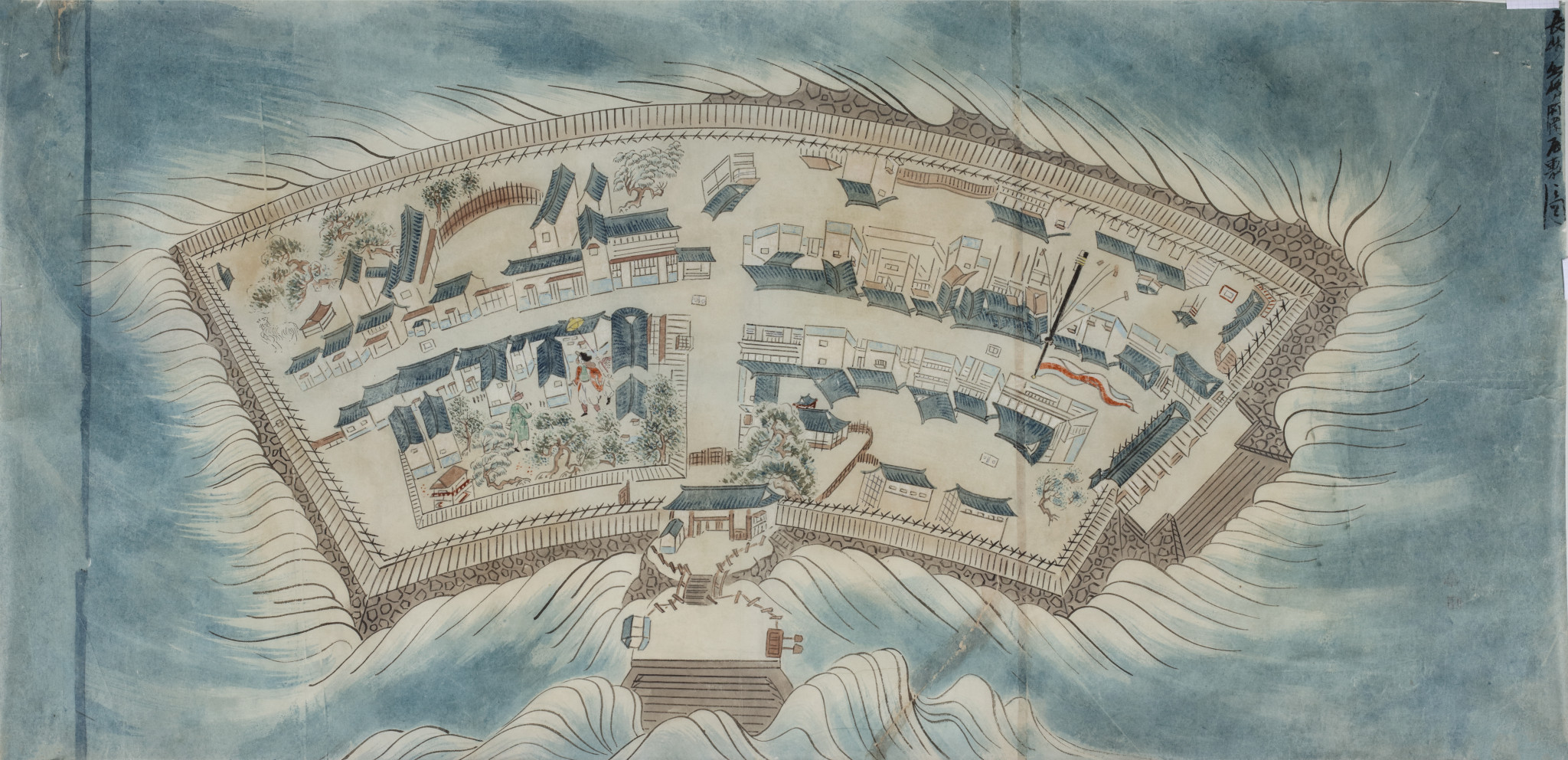
A Japanese drawing of the Dutch Residence at Deshima, Nagasaki Oranda Yahiki no Zu
20th century, after the 18th century original

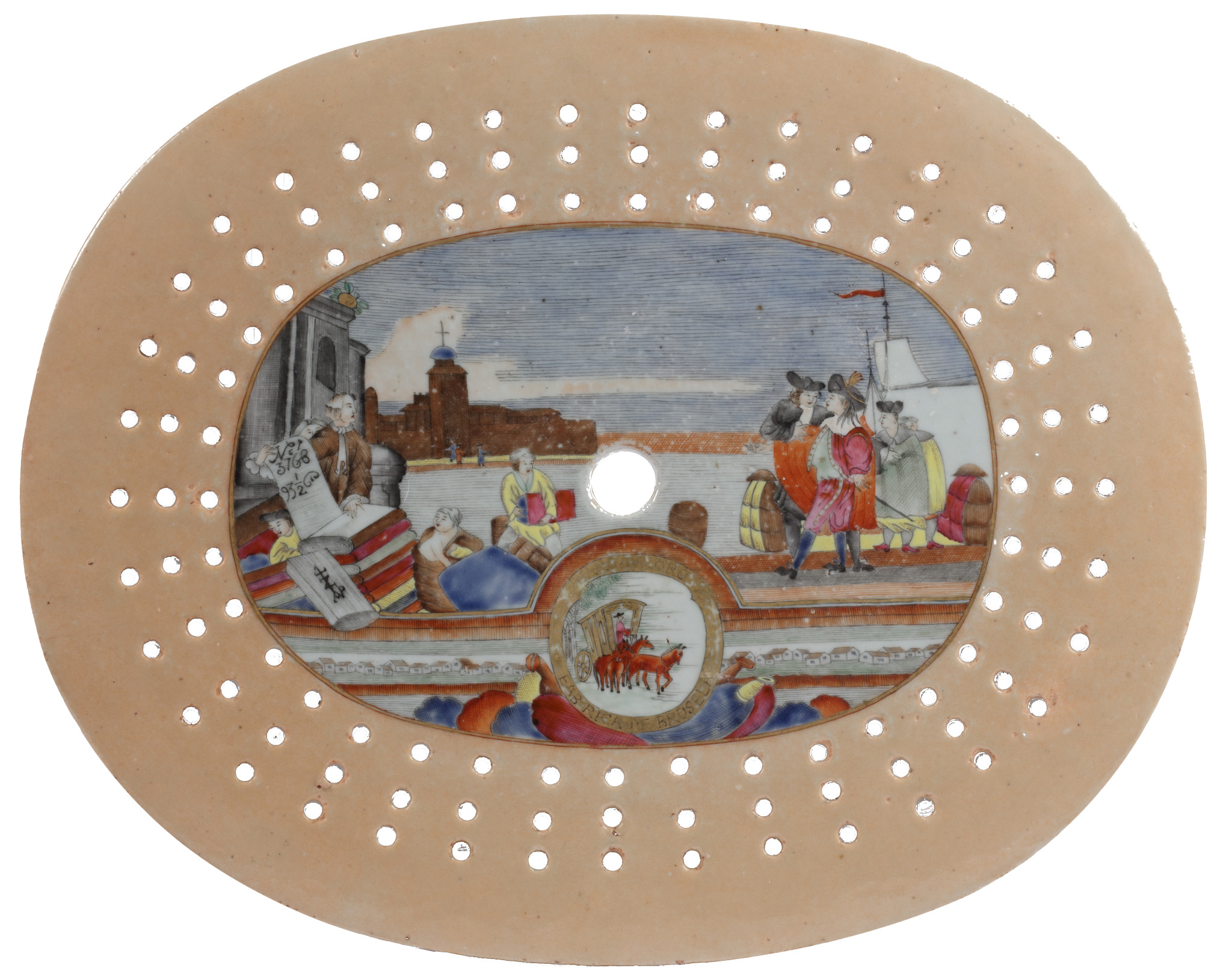
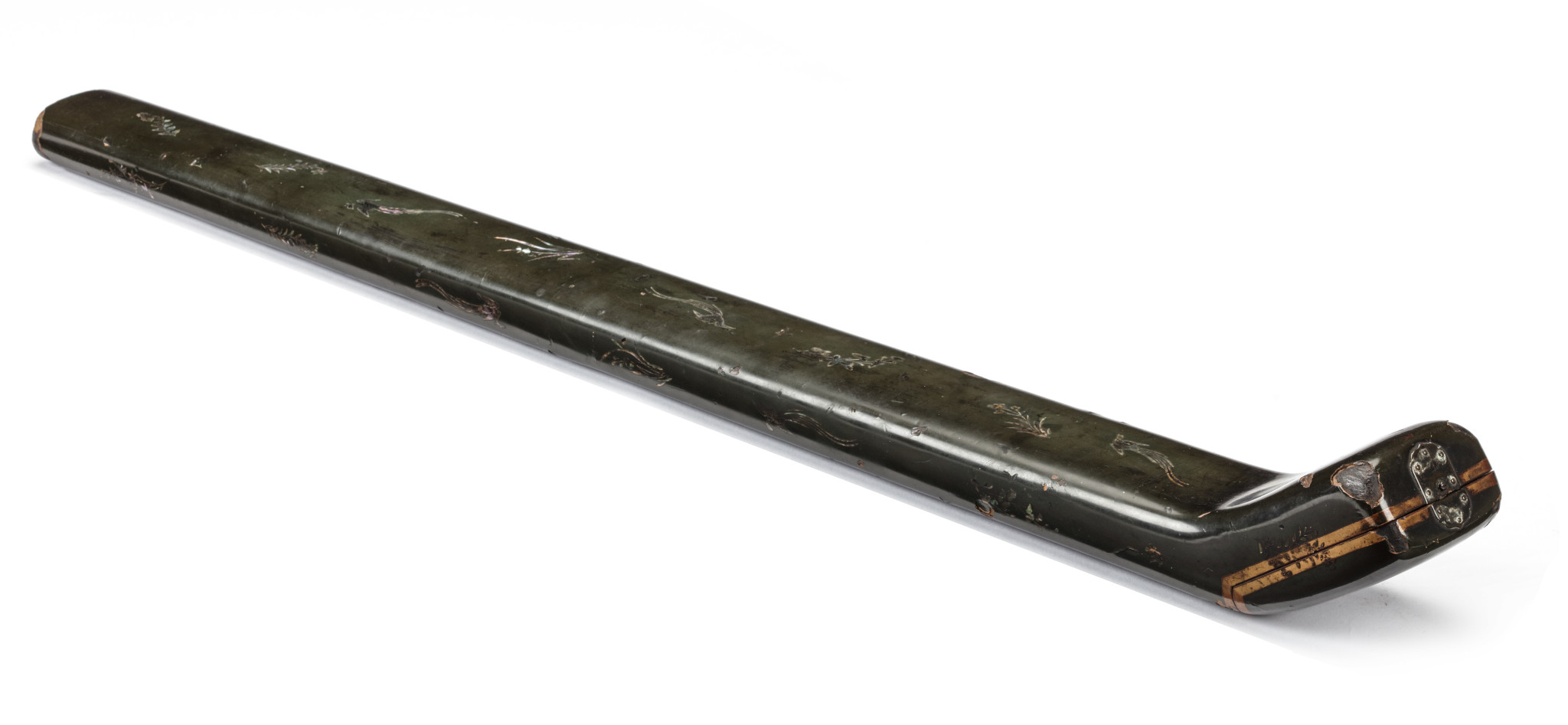
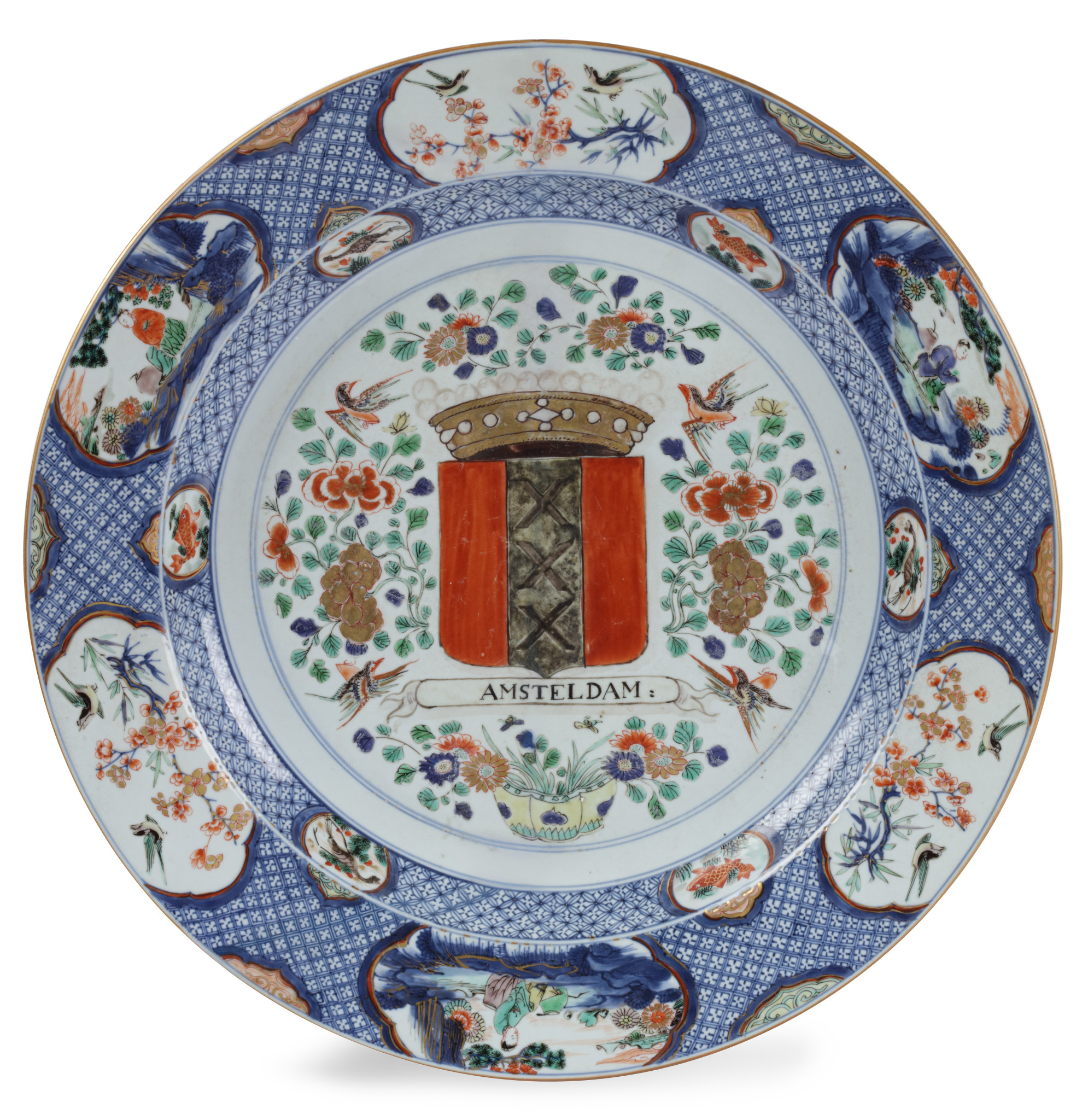
An extremely rare and large Chinese famille verte armorial dish with the Amsterdam coat-of-arms
Kangxi period, circa 1710-1720
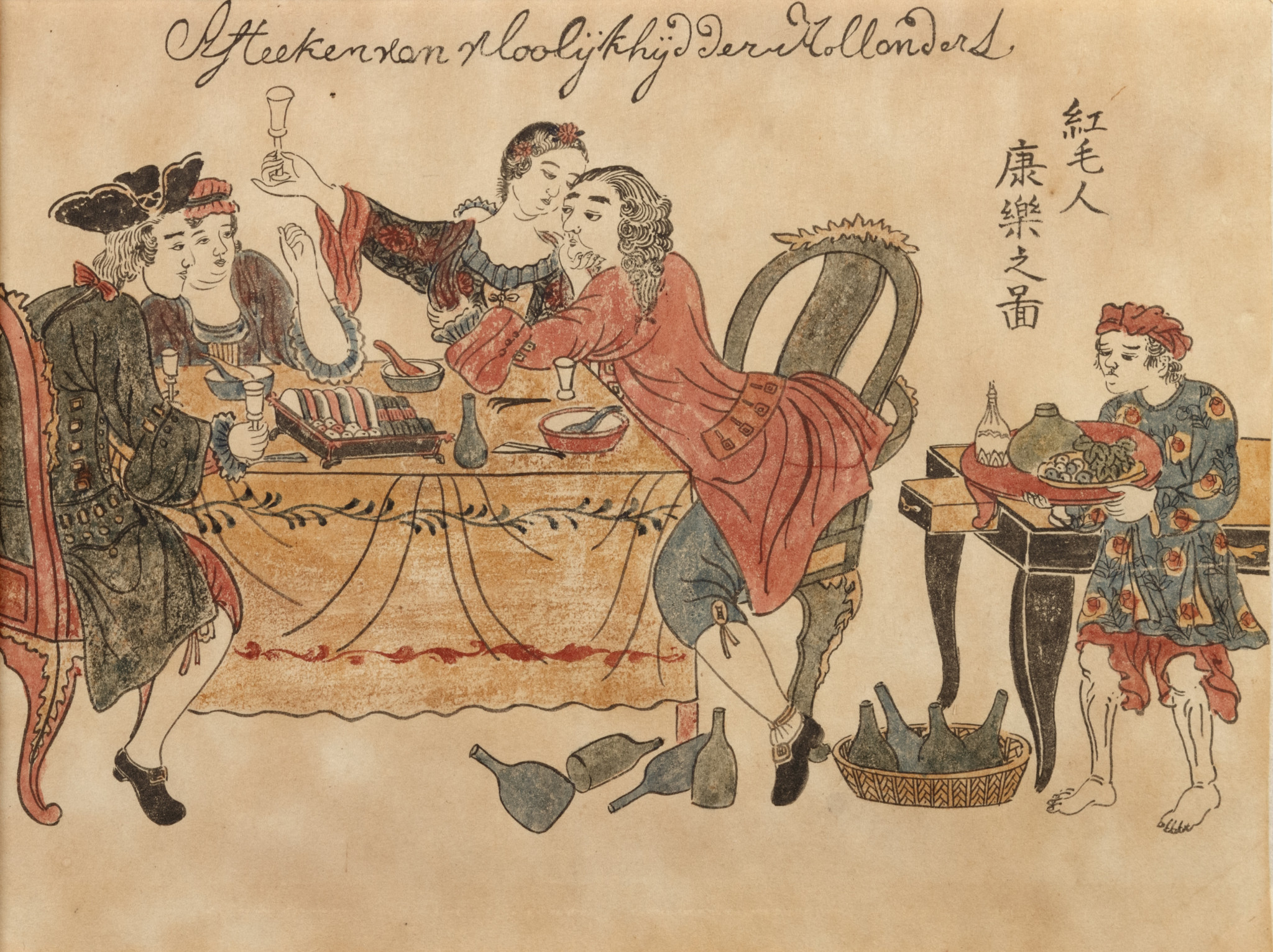
A Japanese woodblock print, Nagasaki-e, depicting Drunk Dutchmen
Early 19th century
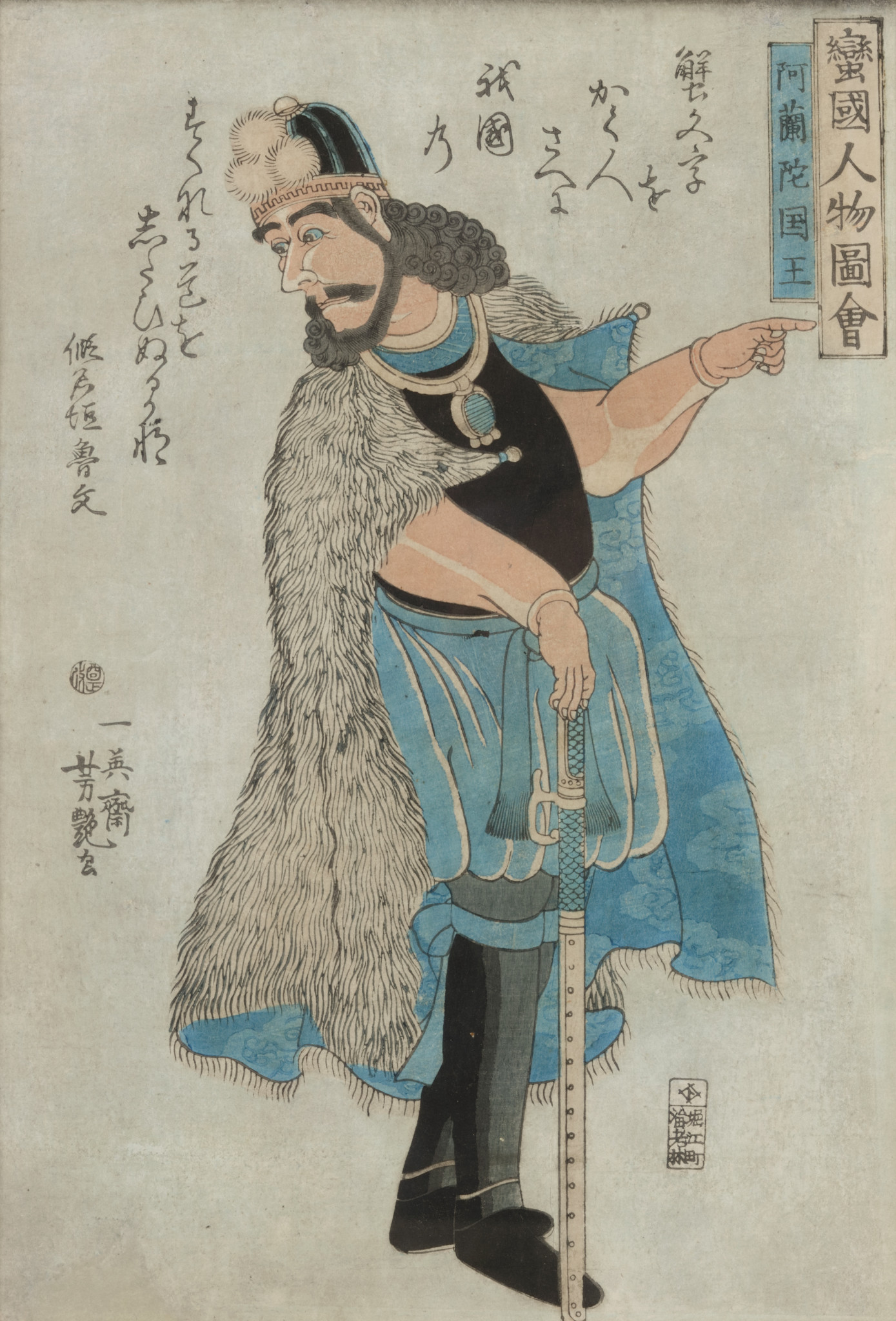
Yoshitsuya Utagawa (1822-1866)
A Japanese colour woodblock print,
Yokohama-é, depicting a caricature King William II
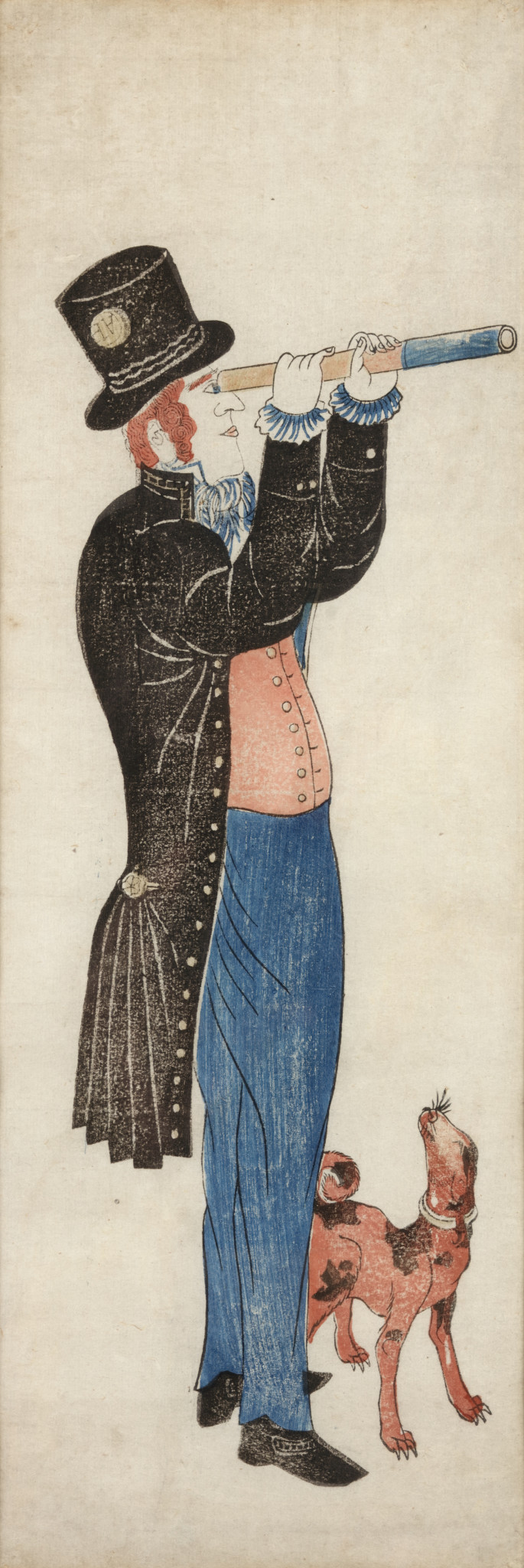
A Japanese colour woodblock print, Nagasaki-e, depicting a Dutchman
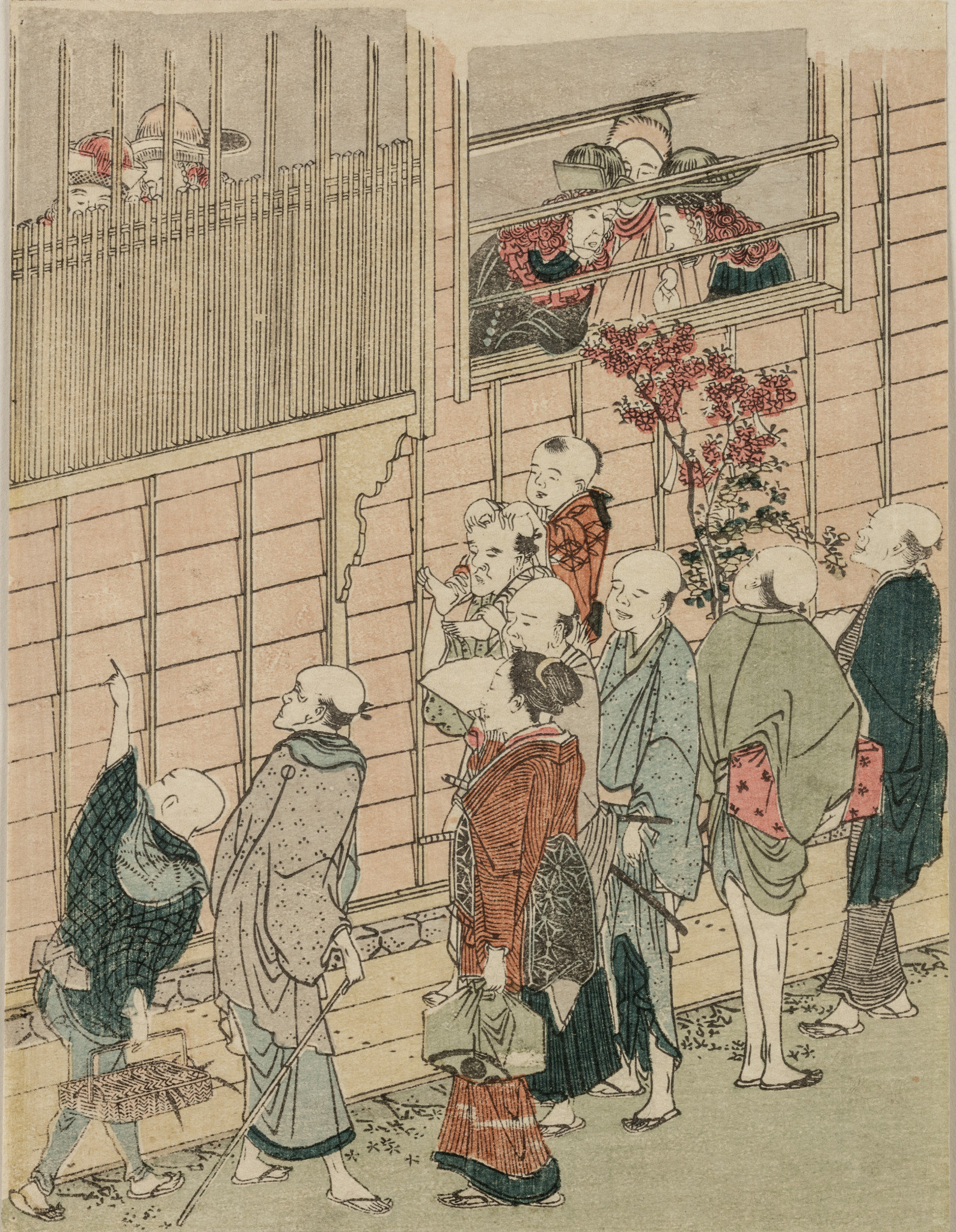
Katsushika Hokusai (1760-1849)
A Japanese colour woodblock print,
Nagasaki-é, depicting Nagasaki-ya (Nagasaki hotel)
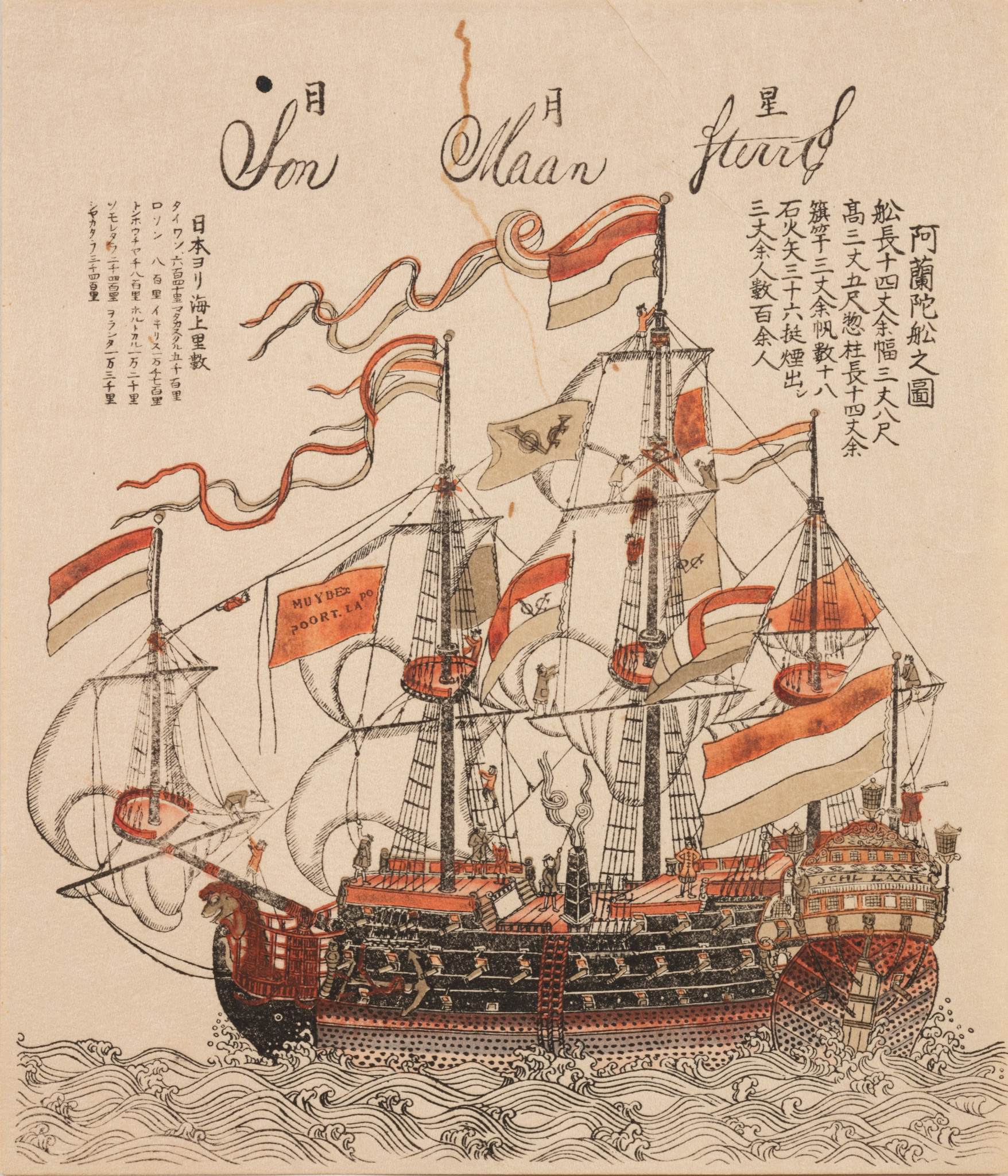
A Japanese colour woodblock print, Nagasaki-e, depicting a Dutch East Indian Ship, Oranda sen no zu, entitled 'Son, Maan, Sterre'.
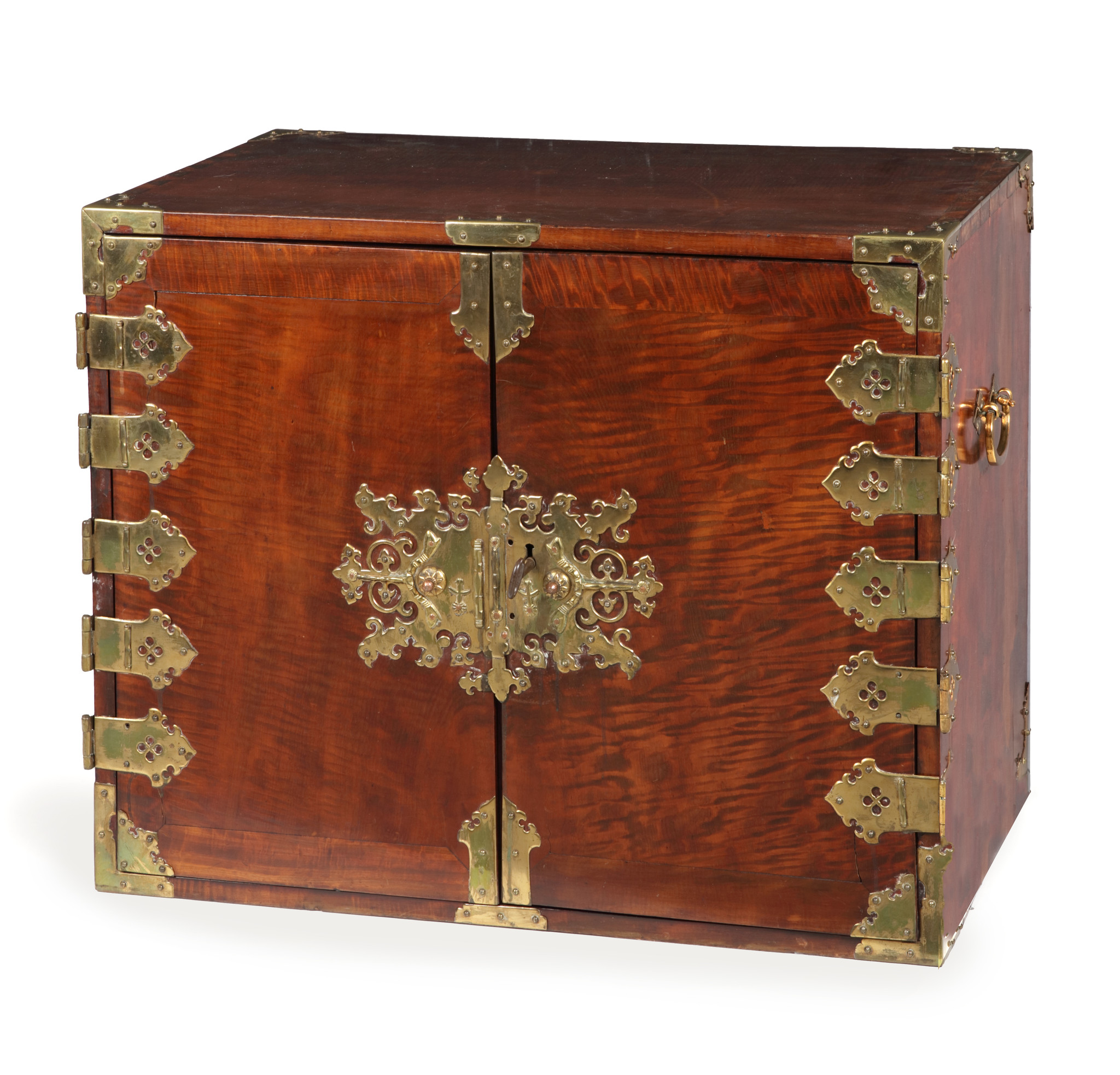
A Dutch-colonial Japanese horse chestnut (Castanopis cuspidata) two-door portable cabinet with brass mounts
Late 17th century
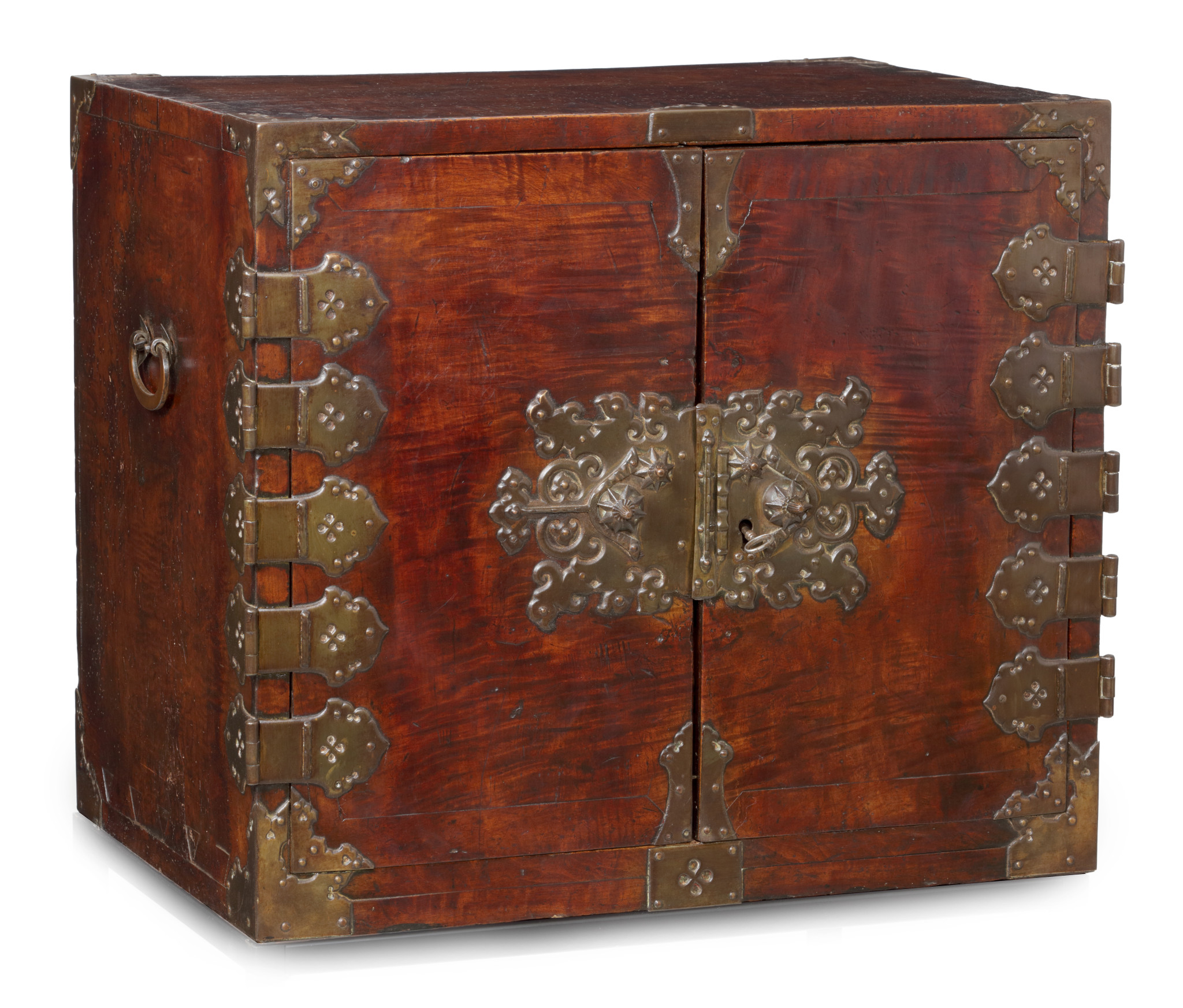
A small Dutch-colonial Japanese horse chestnut (Castanopis cuspidata), cypress wood and ebonized two-door portable cabinet with brass mounts
Late 17th century
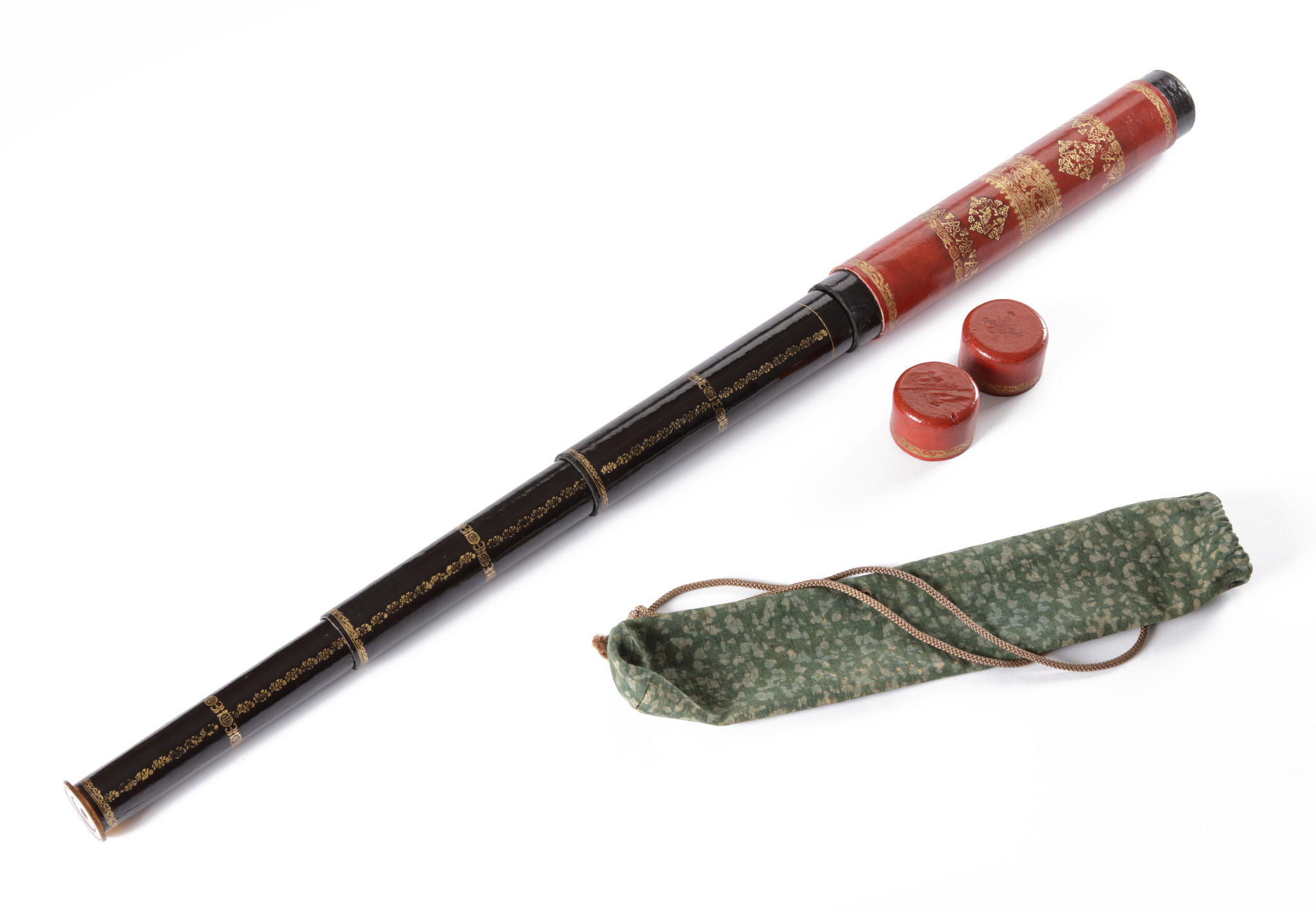
A lacquered half-inch refracting pasteboard telescope decorated with VOC monograms
Japan, Edo Period, late 18th century
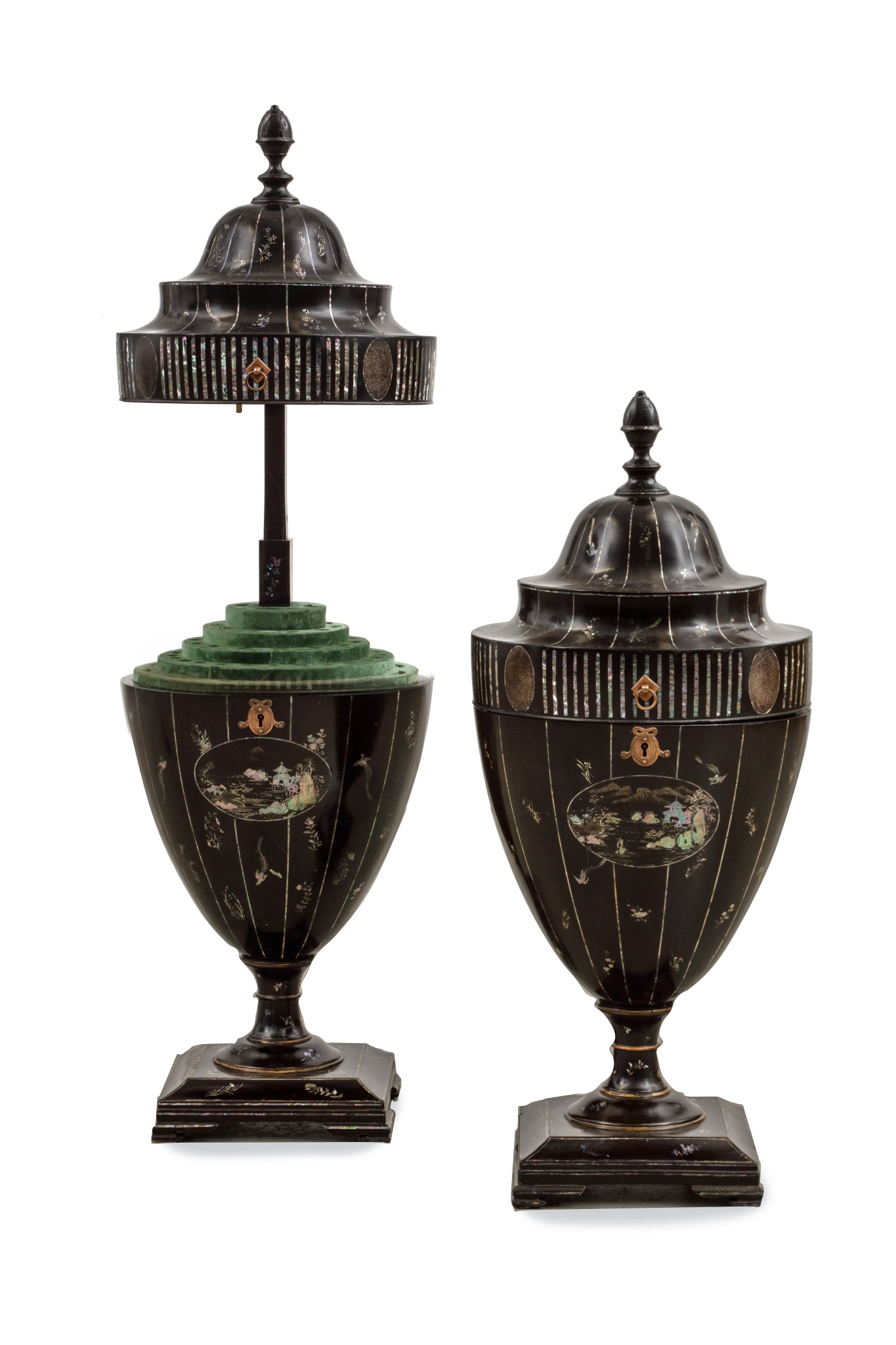
A rare pair of Kyoto-Nagasaki style lacquer and mother-of-pearl inlaid knife urns
Edo period, early 19th century
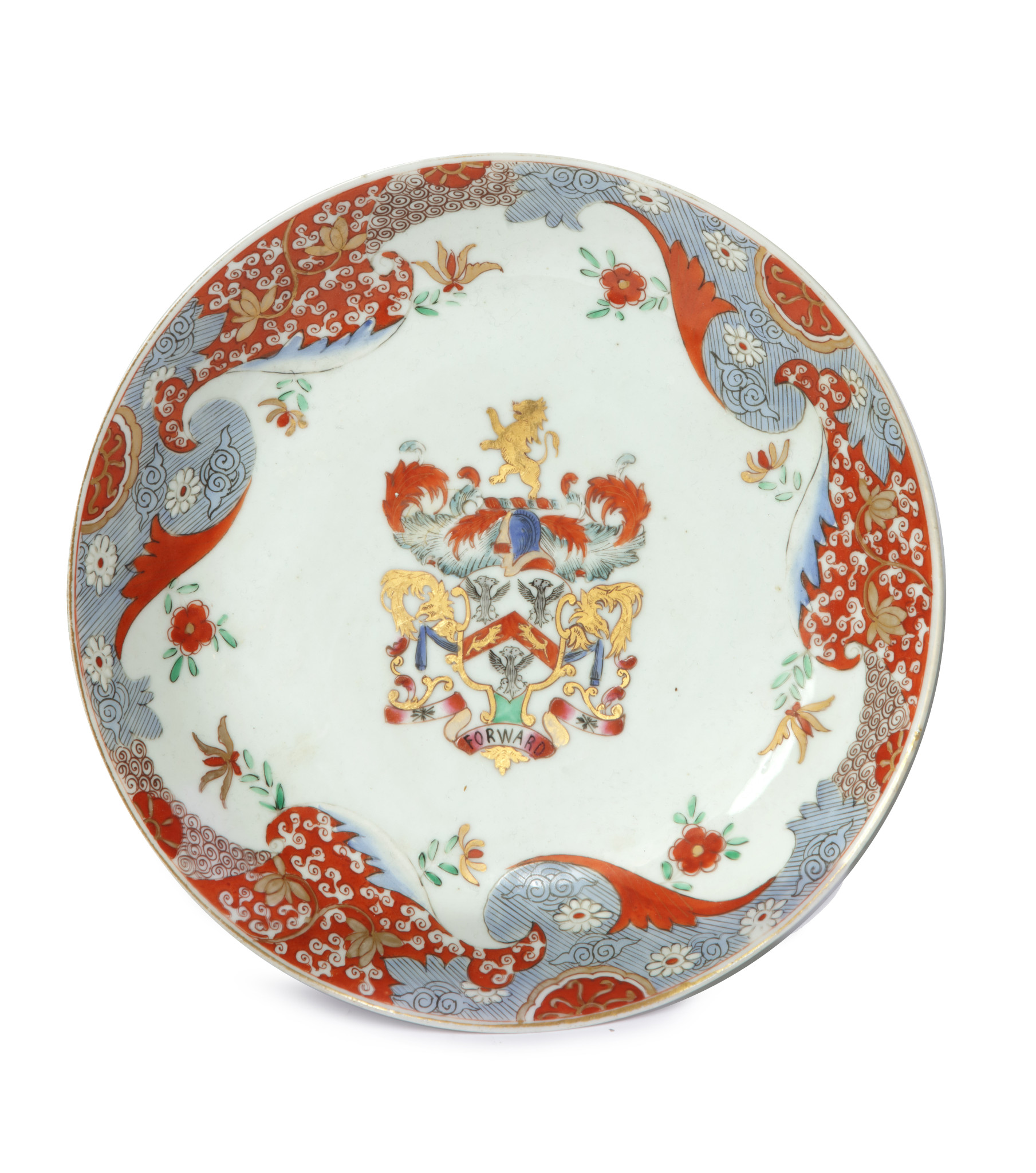
A unique Japanese Imari porcelain armorial dish with the coat-of-arms of the Danish Halling family
Arita, late 18th century
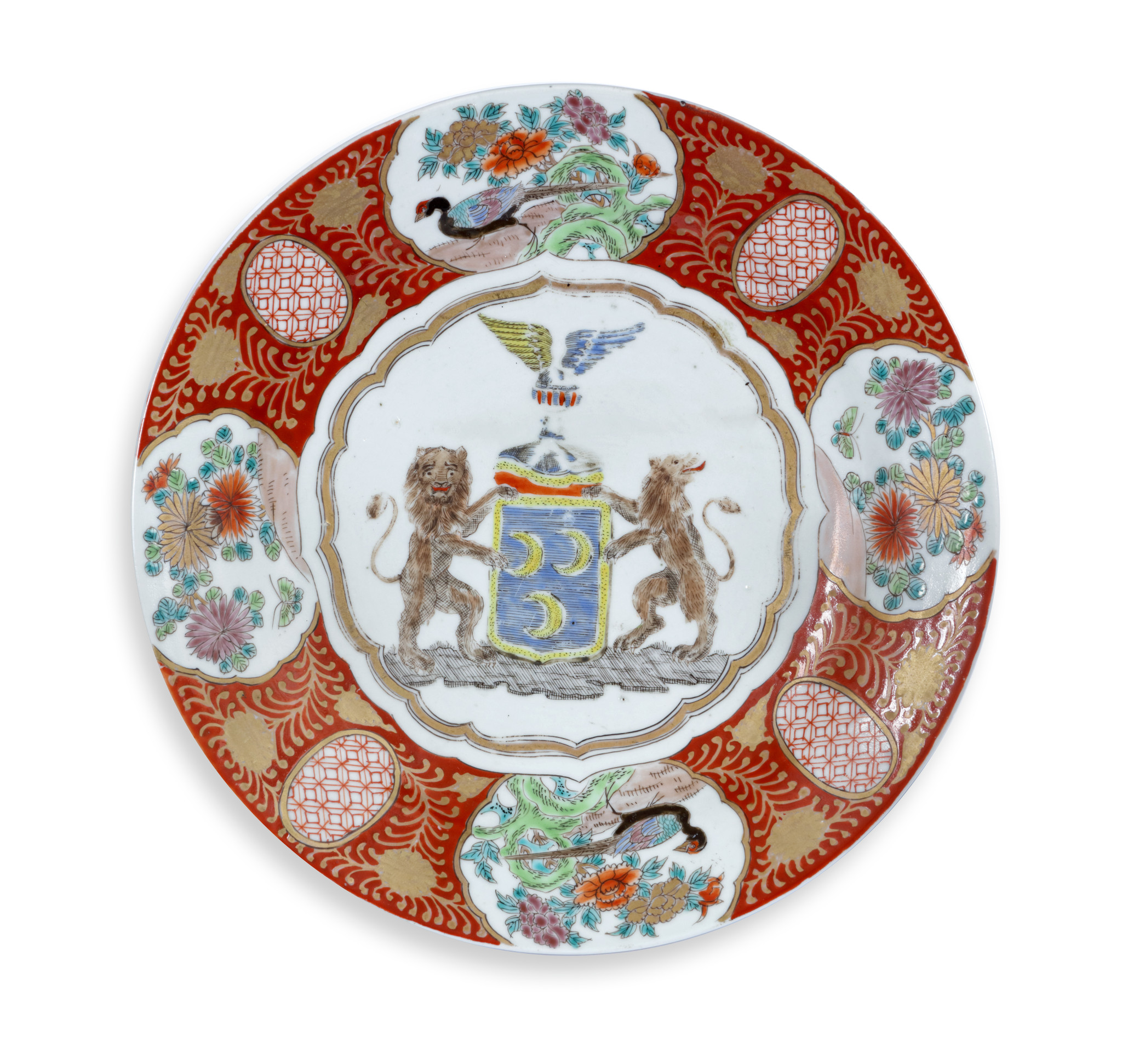
A Japanese Arita porcelain armorial porcelain dish with the coat-of-arms of Antoni Otto Herman baron Gansneb genaamd Tengnagel
Circa 1850, the reverse marked Zoshuntei Sampo Zu
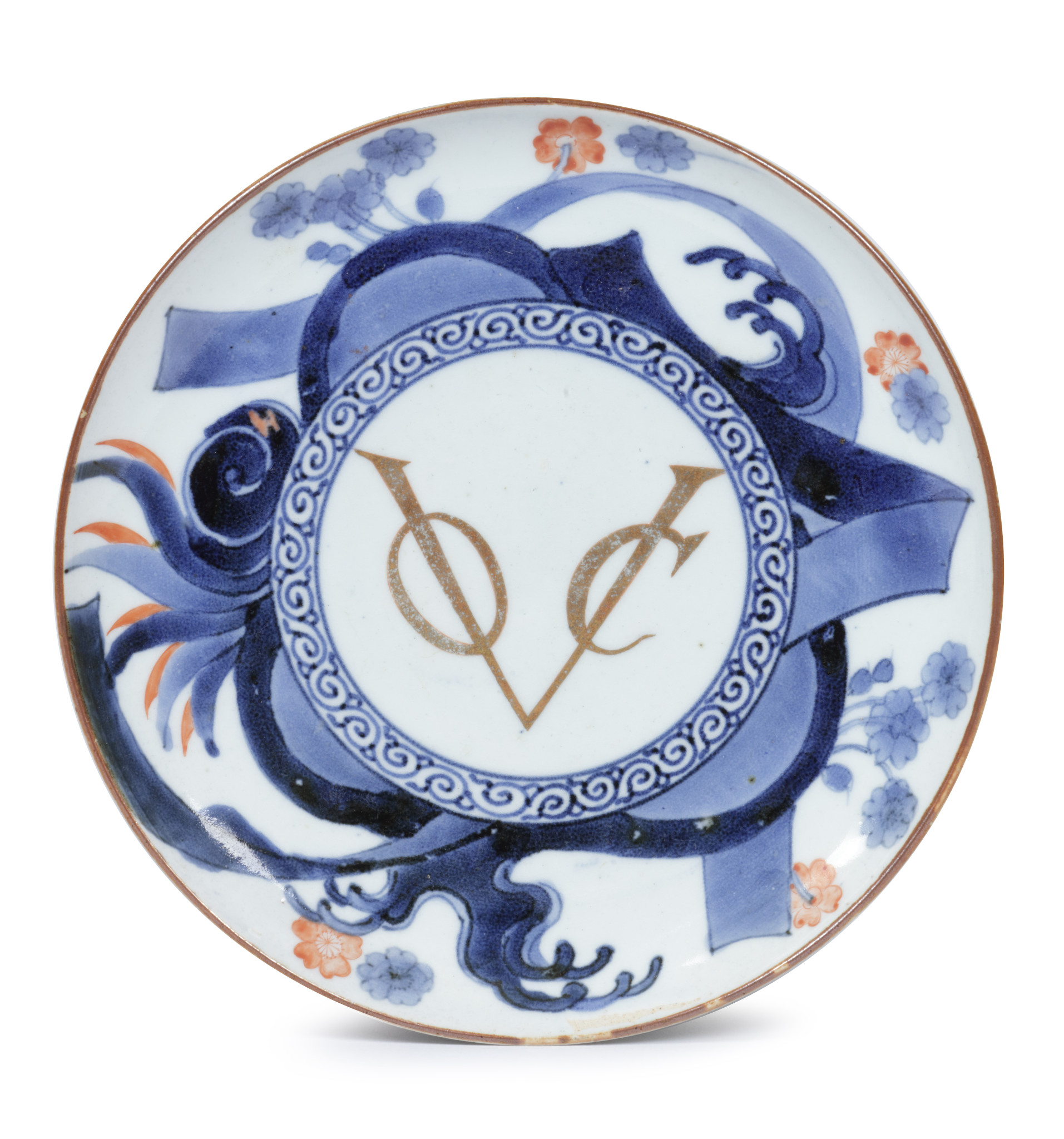
A rare Japanese Ko-Imari porcelain 'VOC' charger
1st half 19th century
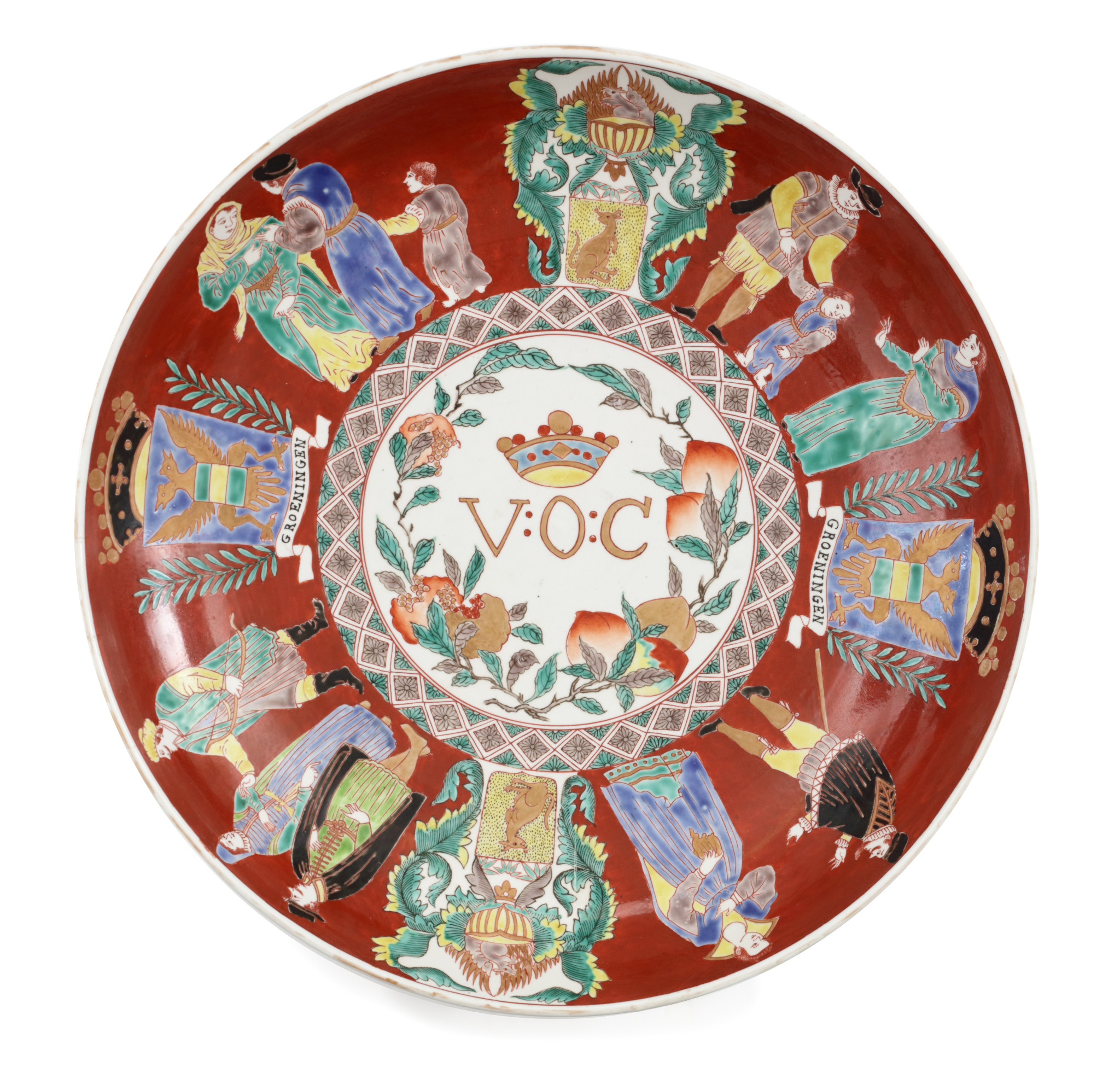
A large Japanese Imari porcelain 'VOC Groningen' dish
Arita, late 19th/early 20th century
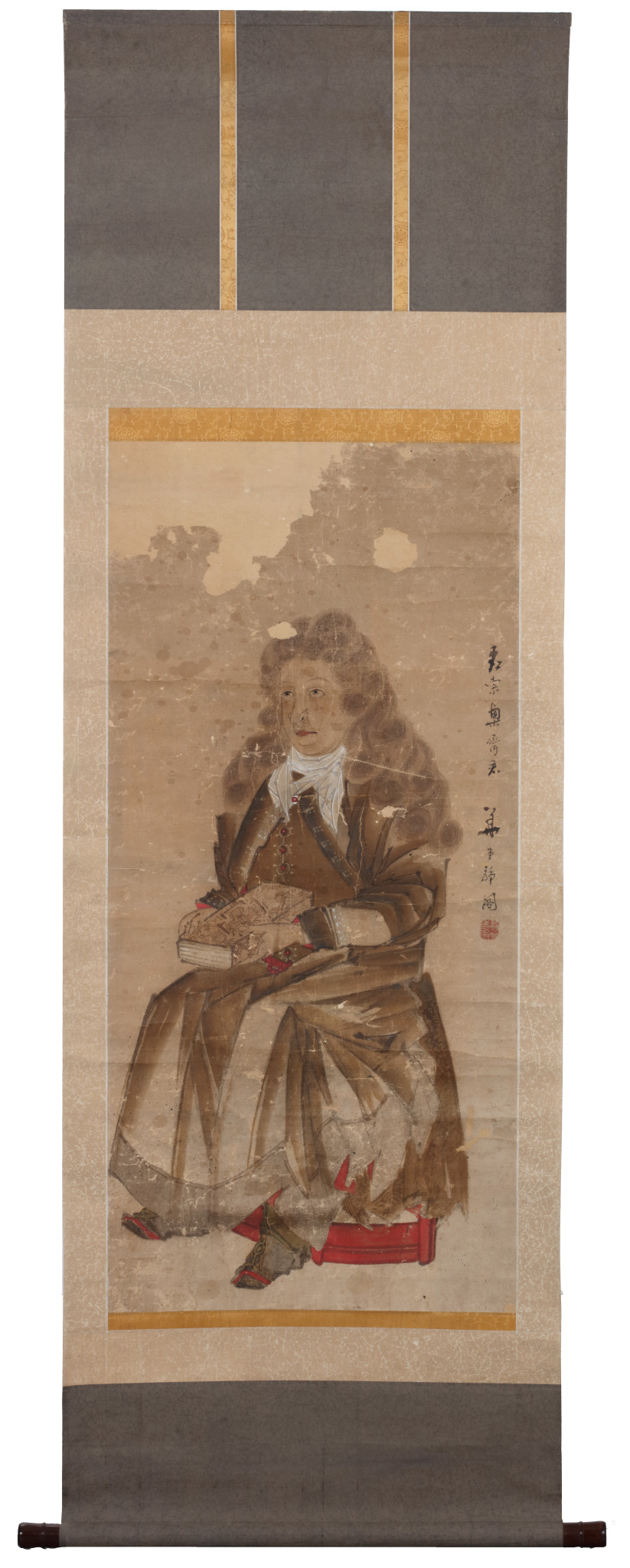
A Japanese scroll painting depicting Lorenz Heister (1683-1758)
Late 18th century
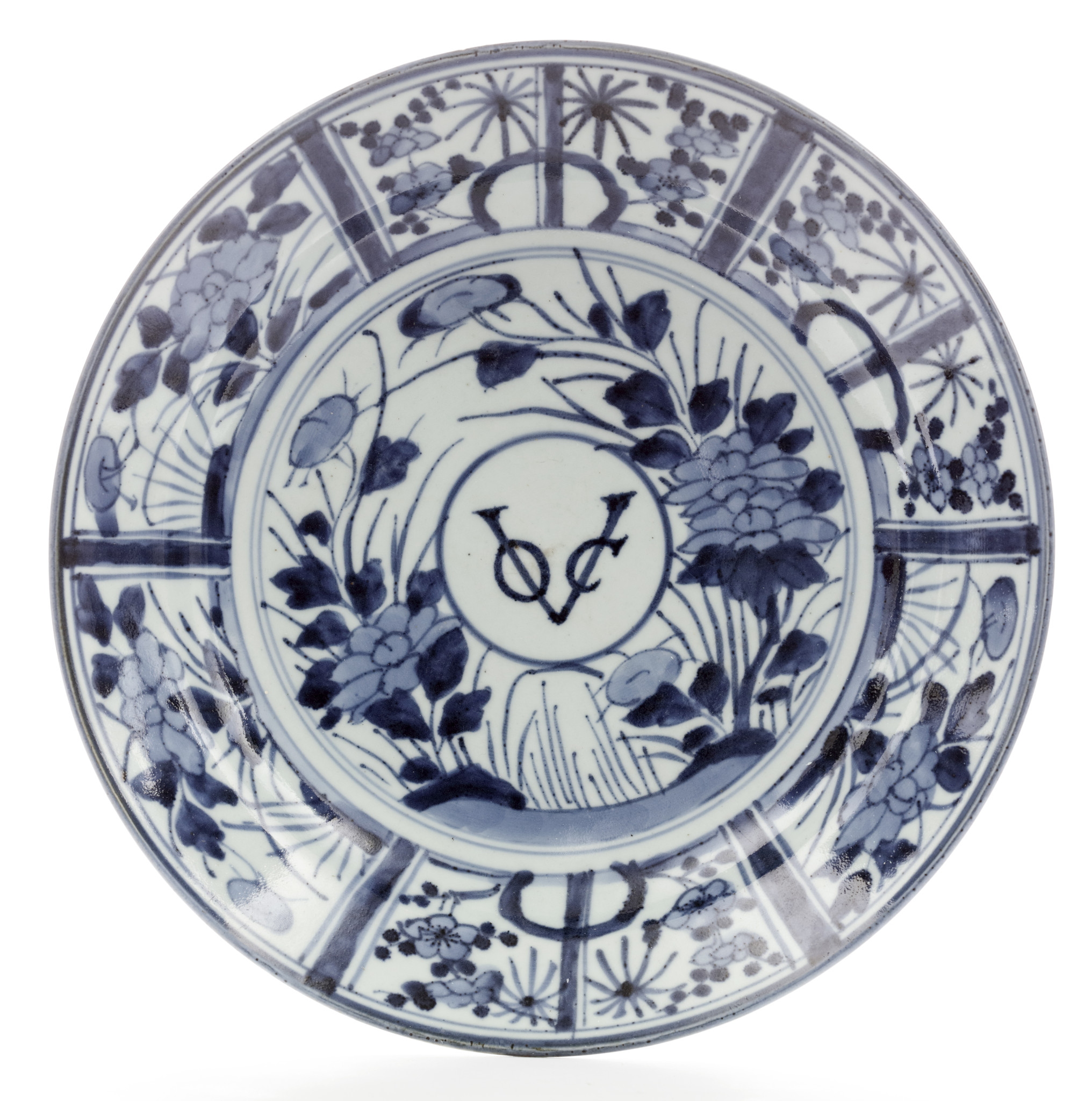
A large Japanese Arita blue-and-white porcelain VOC dish
Late 17th century
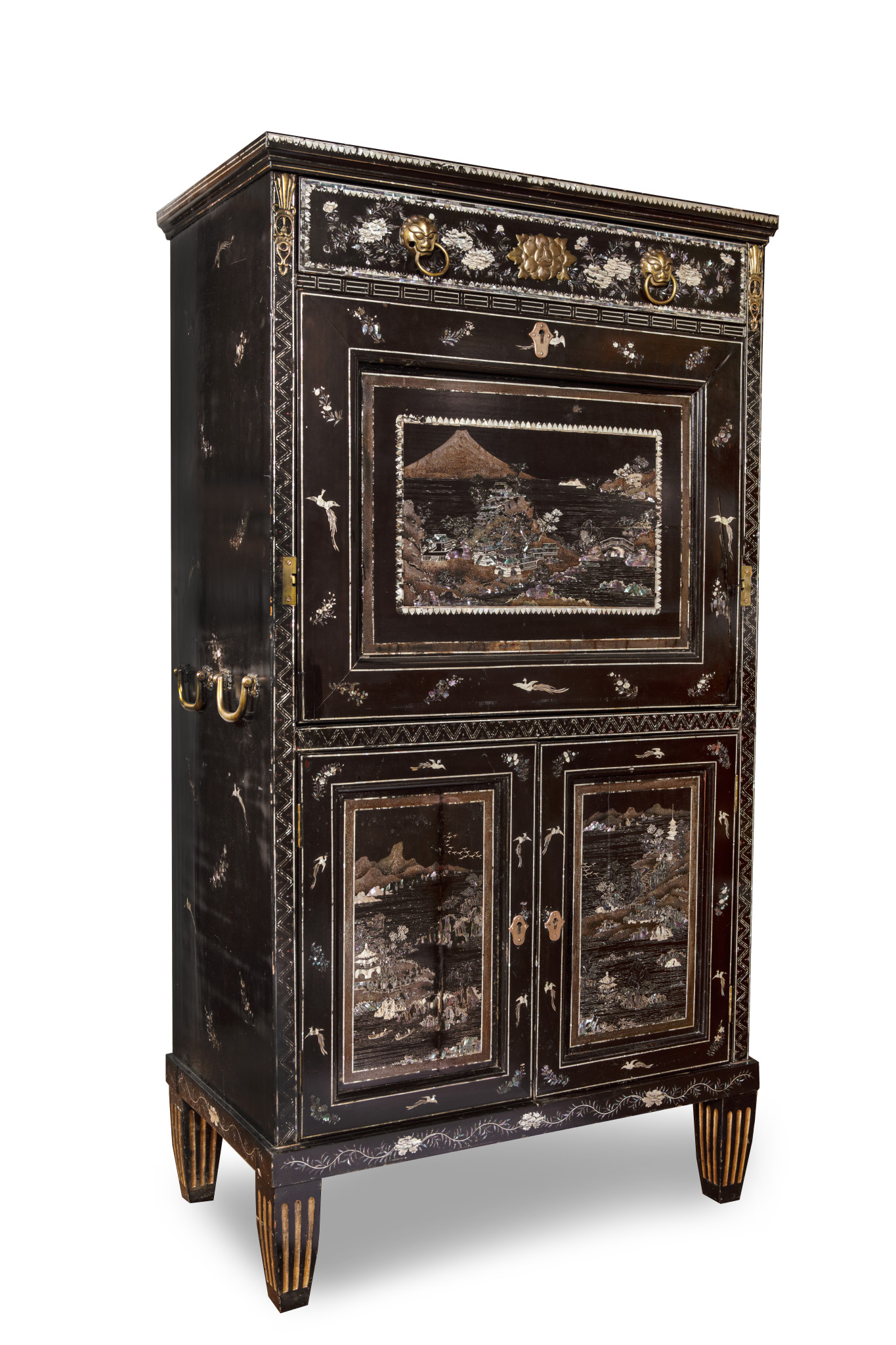
A rare Japanese export lacquer secretaire, possibly for the American market
Circa 1800-1830
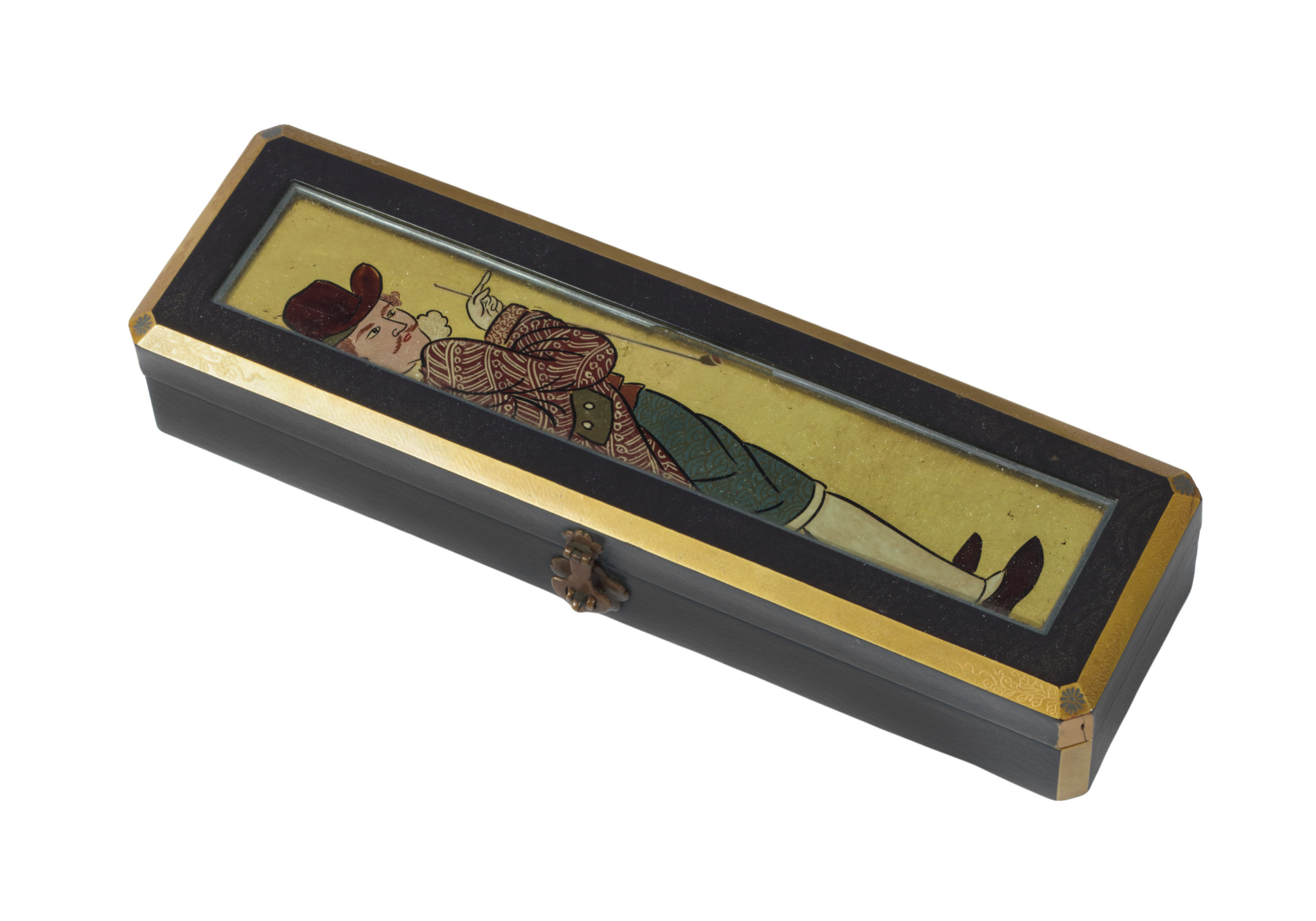
A Japanese lacquer box with depiction of a Dutchman
Late Edo period, 1st half 19th century
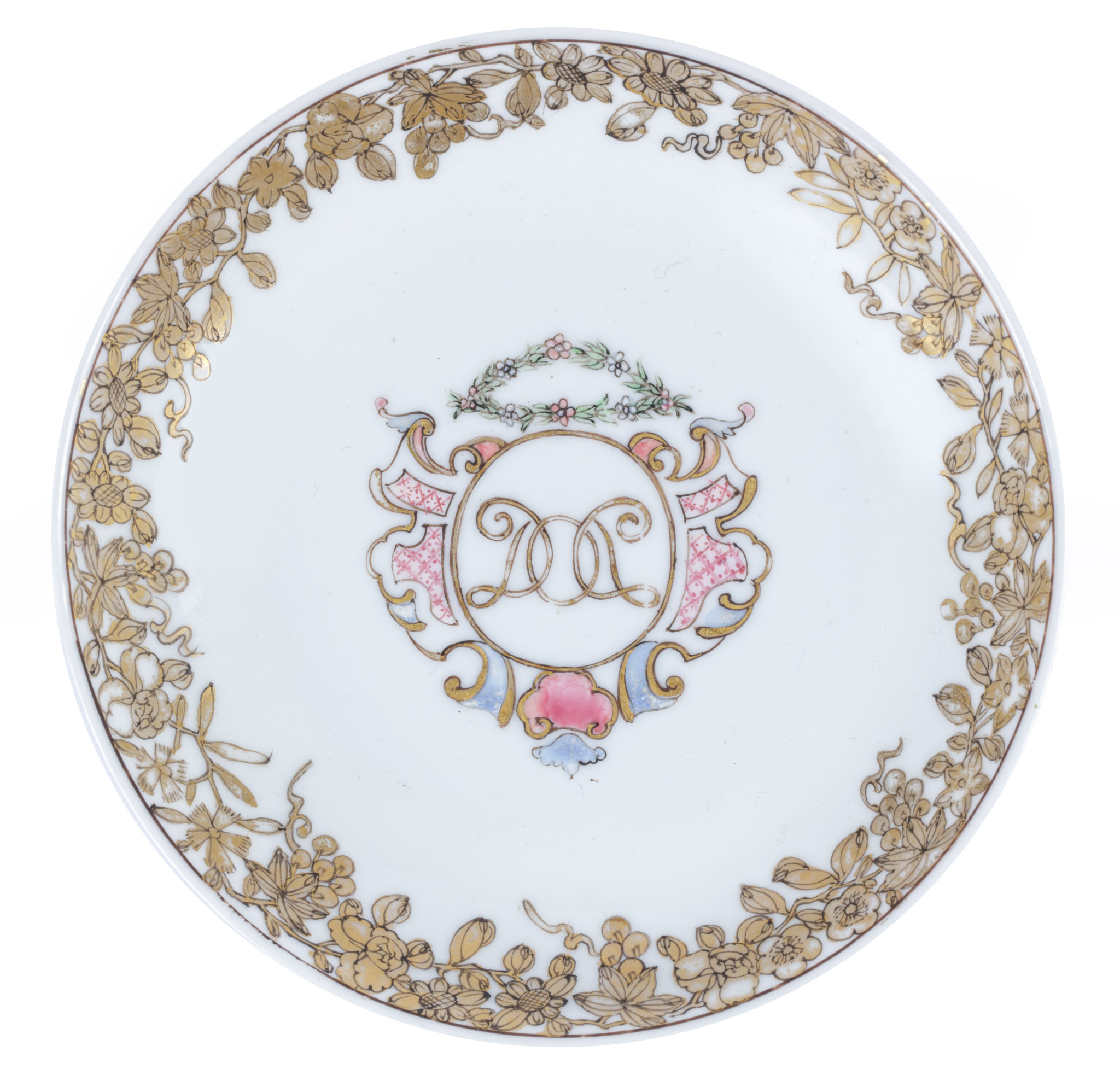
A rare Chinese export porcelain famille rose ‘Danish East-India Trading Company’ saucer
Circa 1720-1730
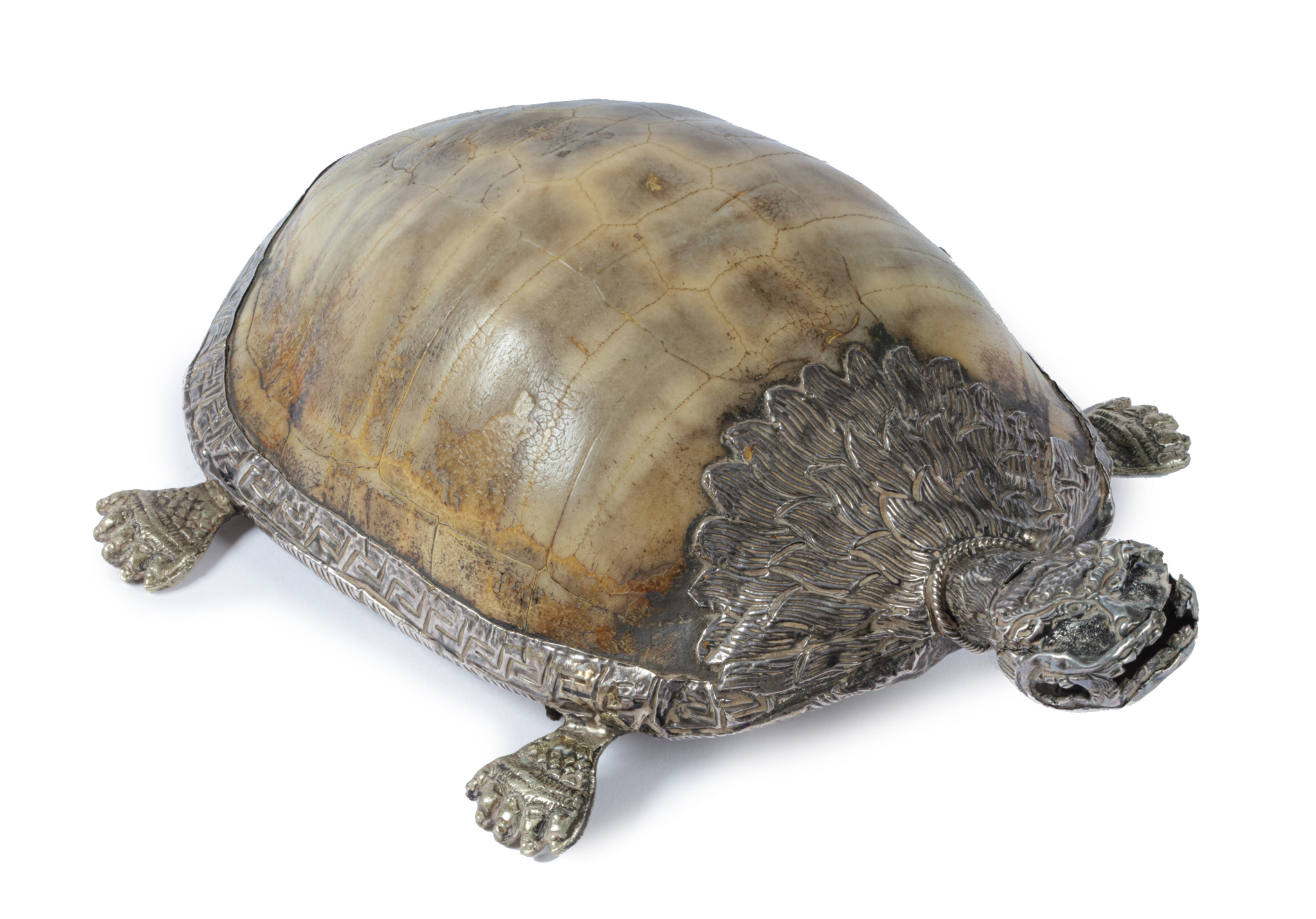
A rare Tibetan or Peranakan silver mounted tortoise carapace
Late 18th/early 19th century
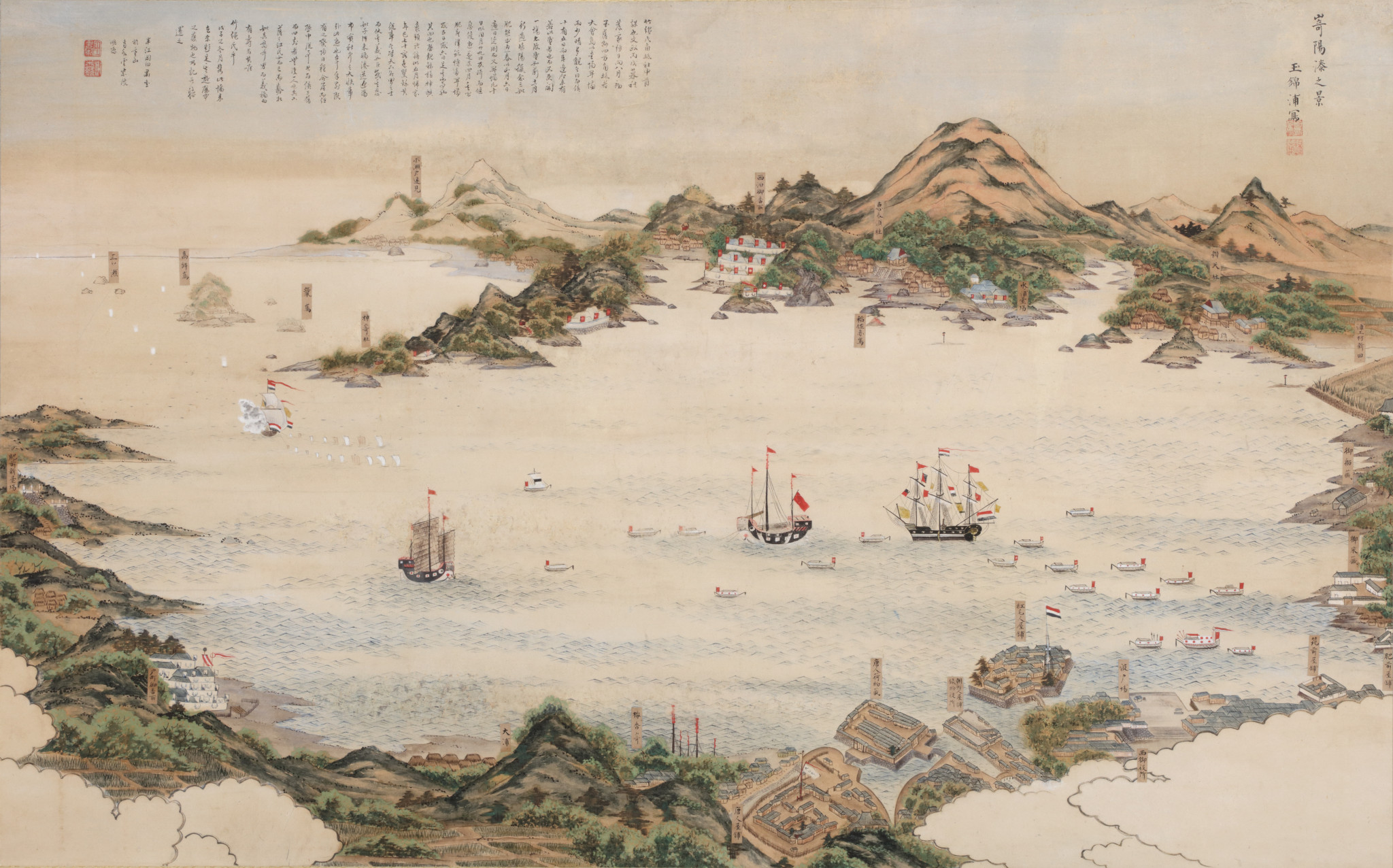
Ura Gyokukin (act. early 19th century)
View of the Port of Nagasaki with the Dutch Island of Deshima
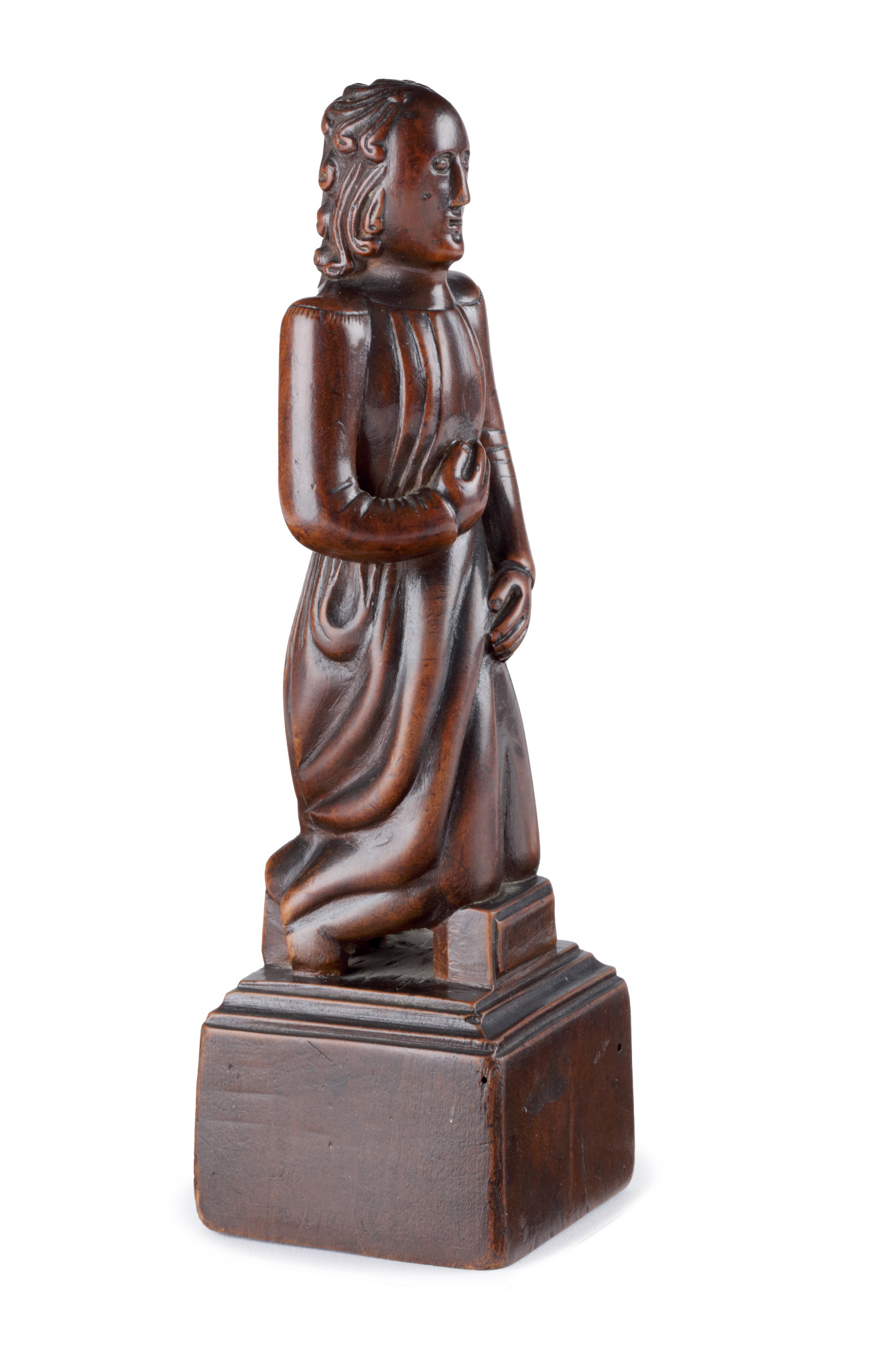
An early Chinese wood sculpture of a Portuguese or Spanish Jesuit
Possibly Macao, 17th/early 18th century, indistinctly inscribed at the front of the base
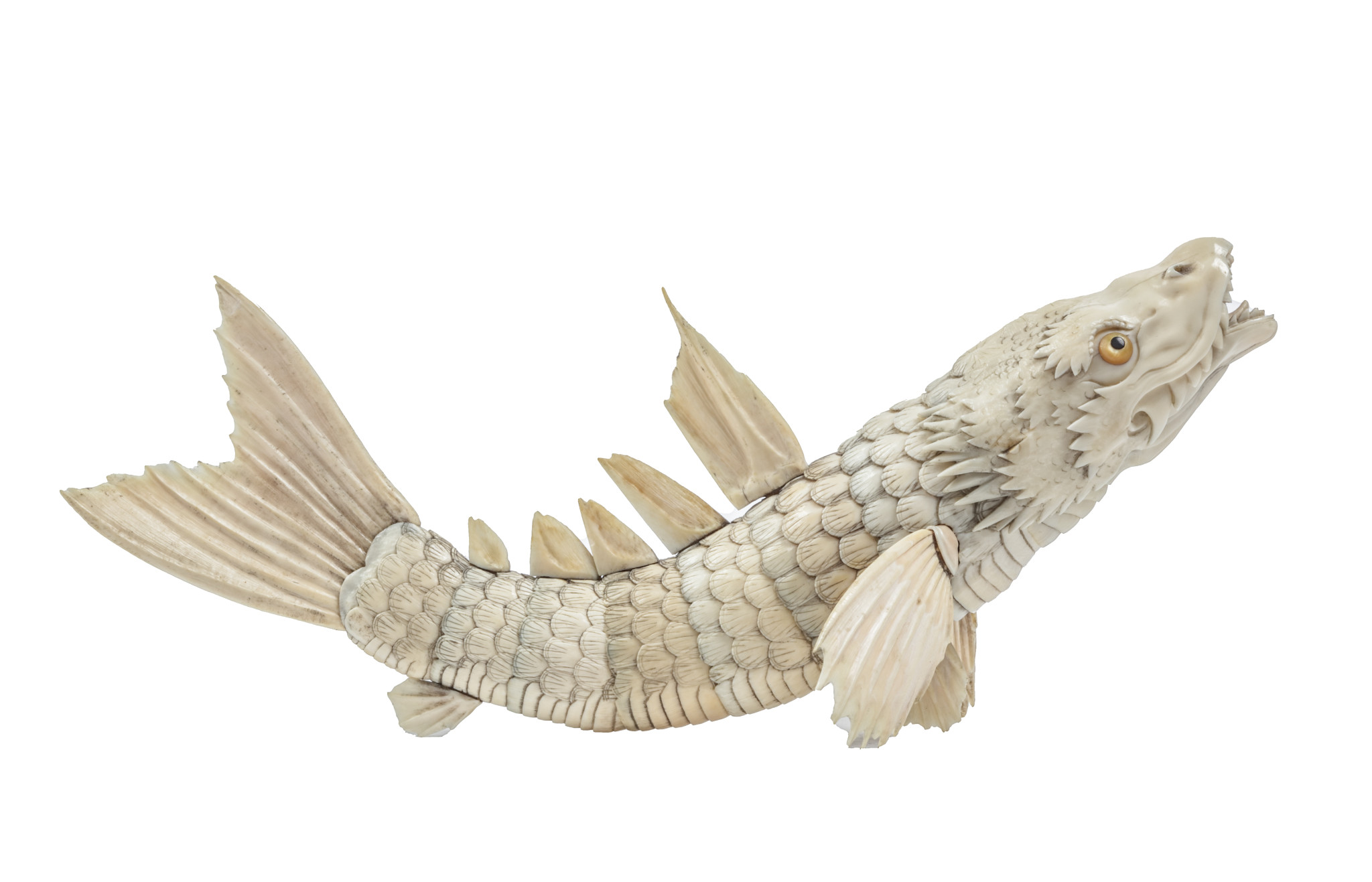
A Japanese fully articulated ivory okimono of a dragonfish
Meiji-period, 19th century
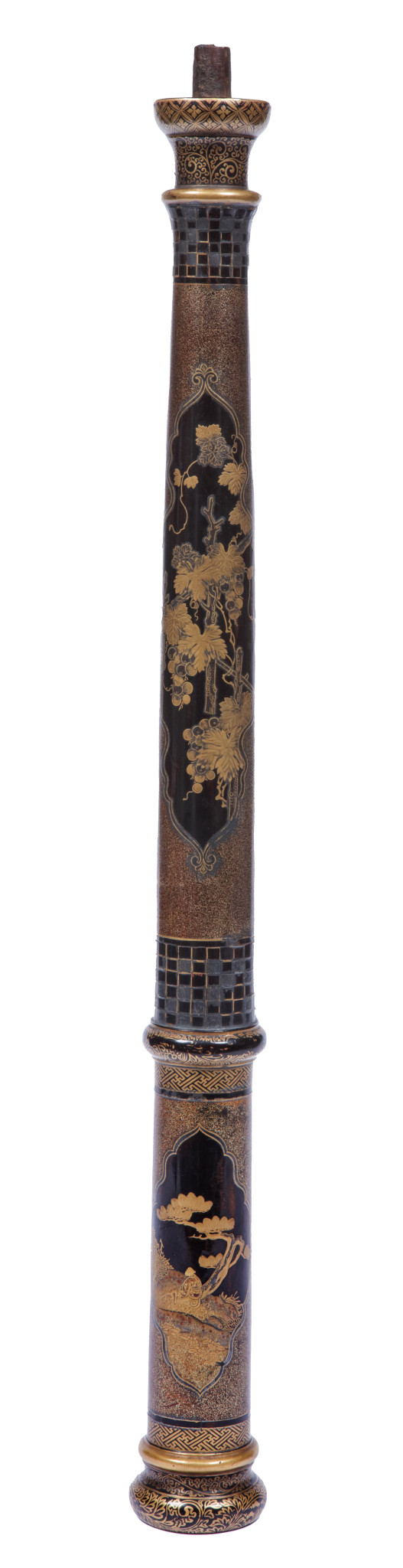
The last intact lacquer Baluster
of the Bed of State Fence gifted by the VOC to Amalia van Solms (1602-1675), the 'Mother of the house of Orange'.
An extremely fine lacquered and unique intact Japanese export lacquer baluster made on order by the VOC for Amalia van Solms
Kyoto, 1640
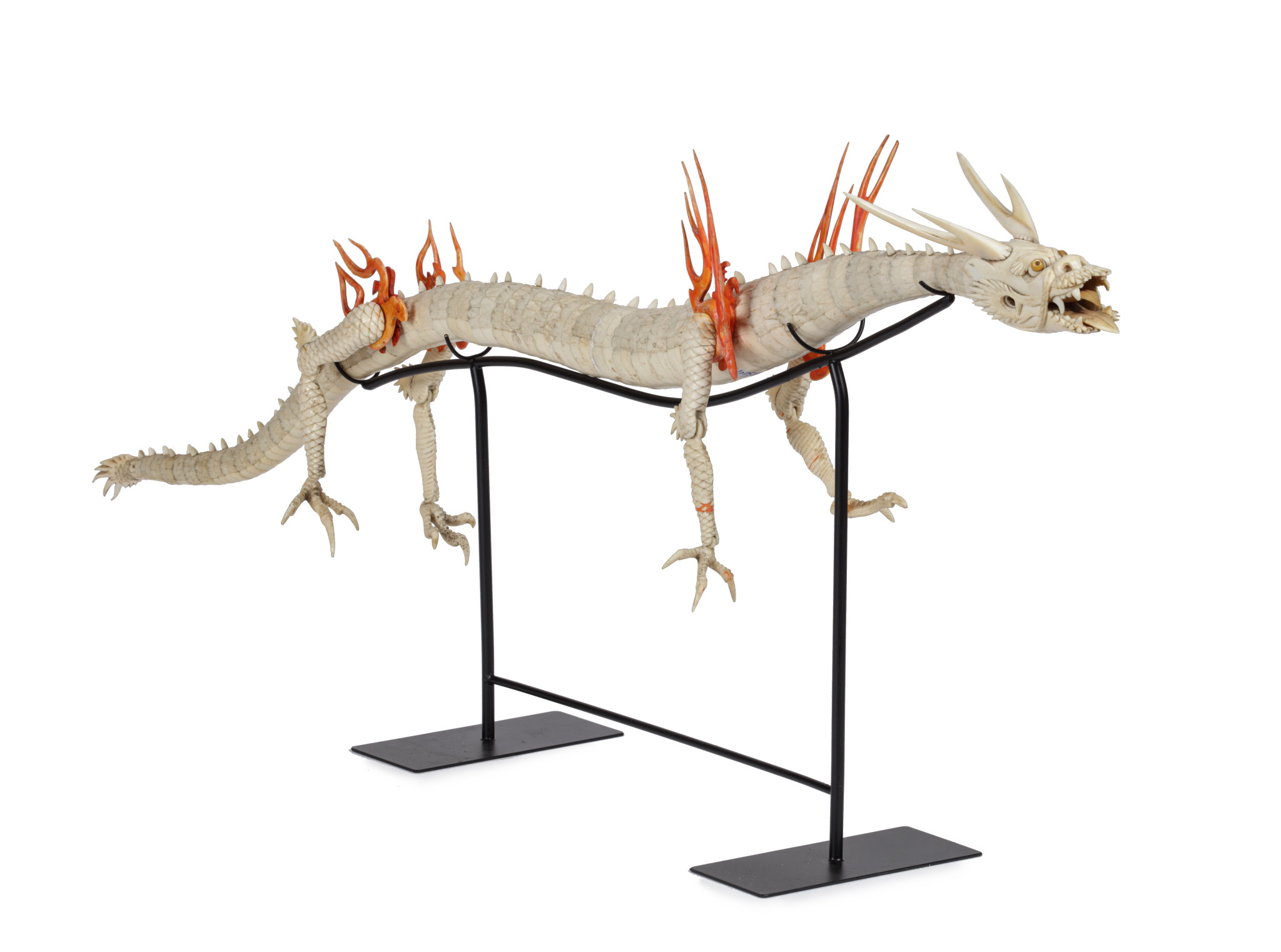
A fantastic Japanese fully articulated ivory and bone okimono of a dragon
Meiji period, 19th century
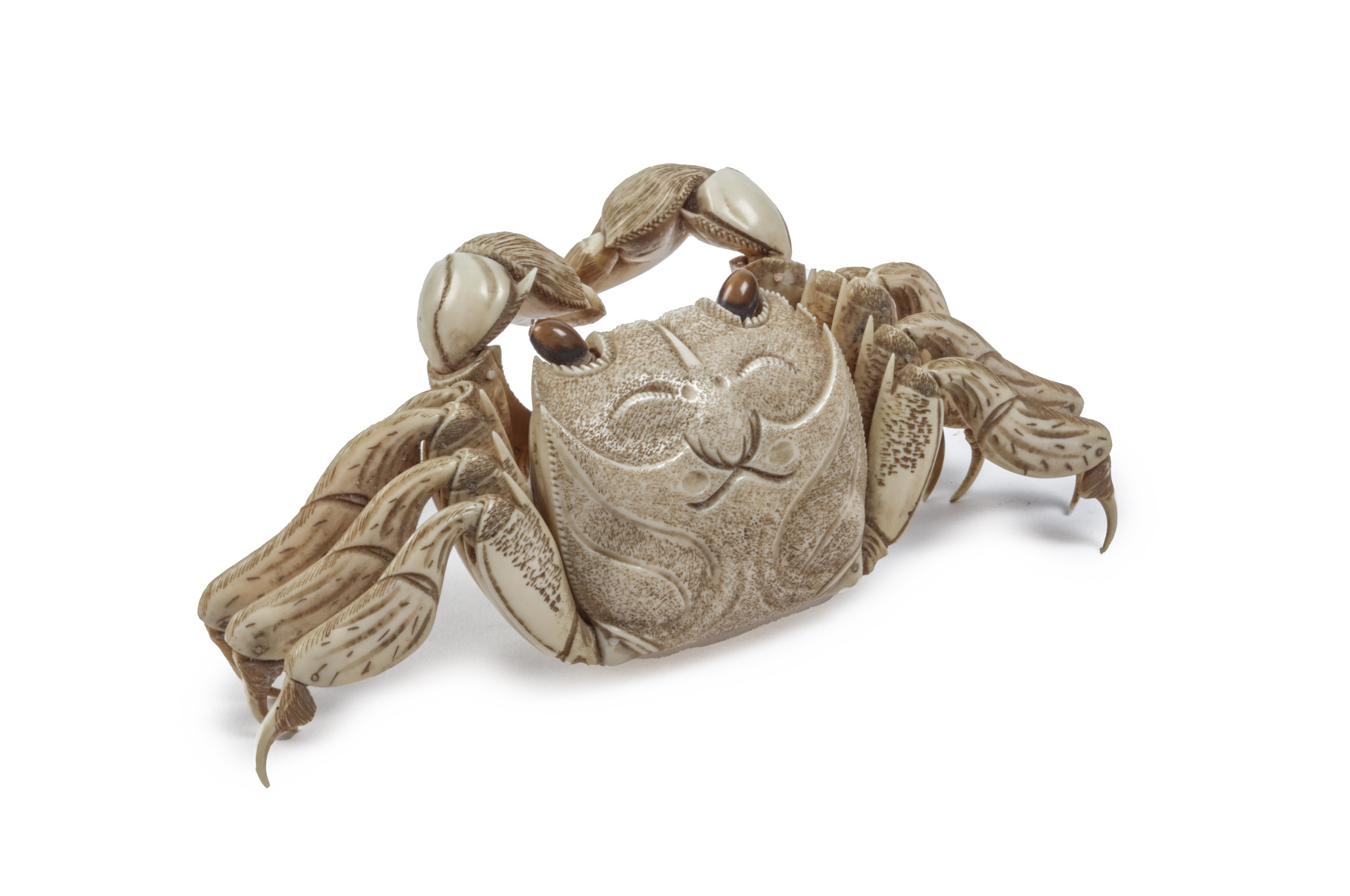
A Japanese fully articulated ivory okimono of a crab by Dai Kyoun
Meiji period, 19th century
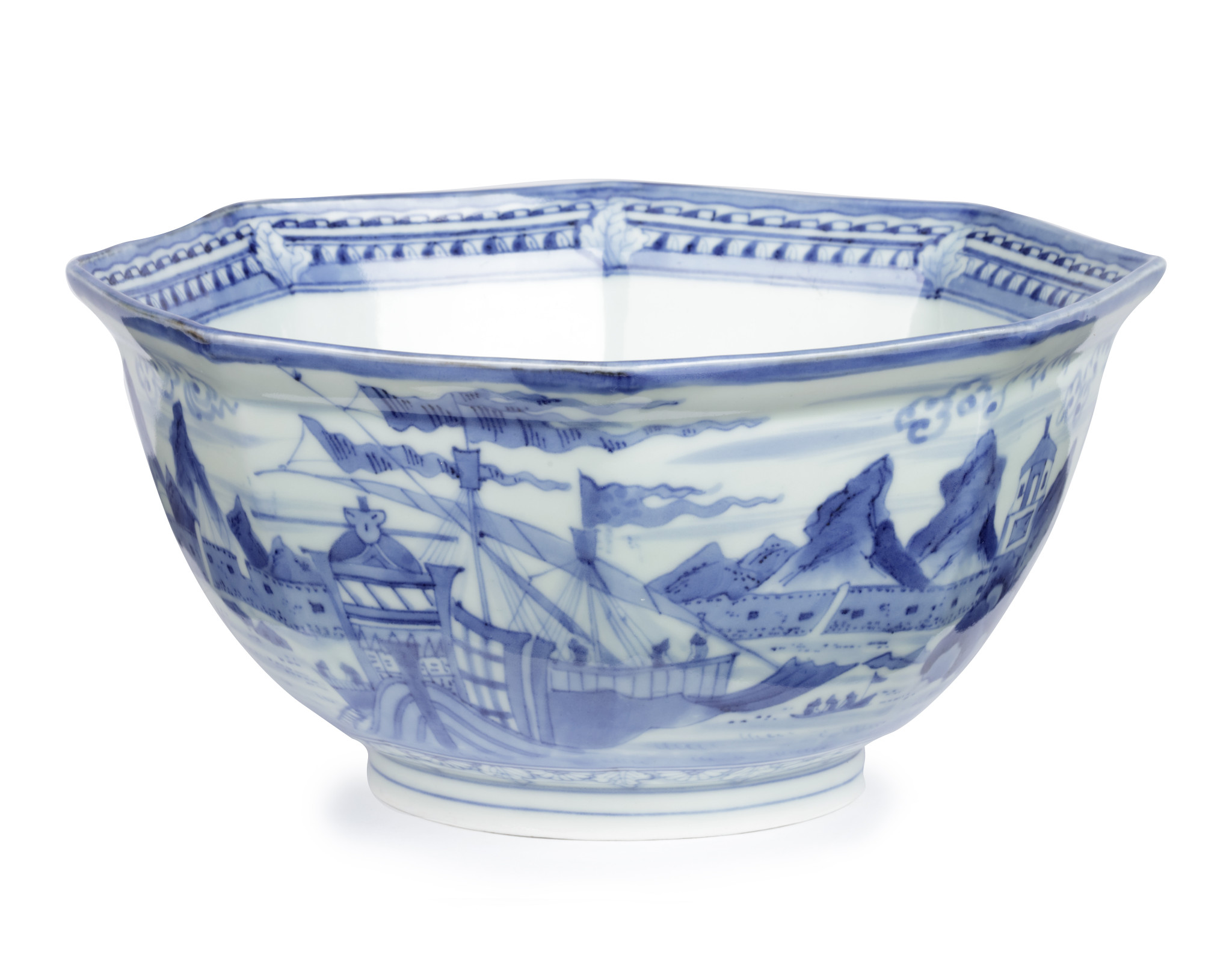
A large Japanese octagonal blue and white Arita porcelain ‘Frijtom’ bowl with a harbour scene
Arita, early 18th century
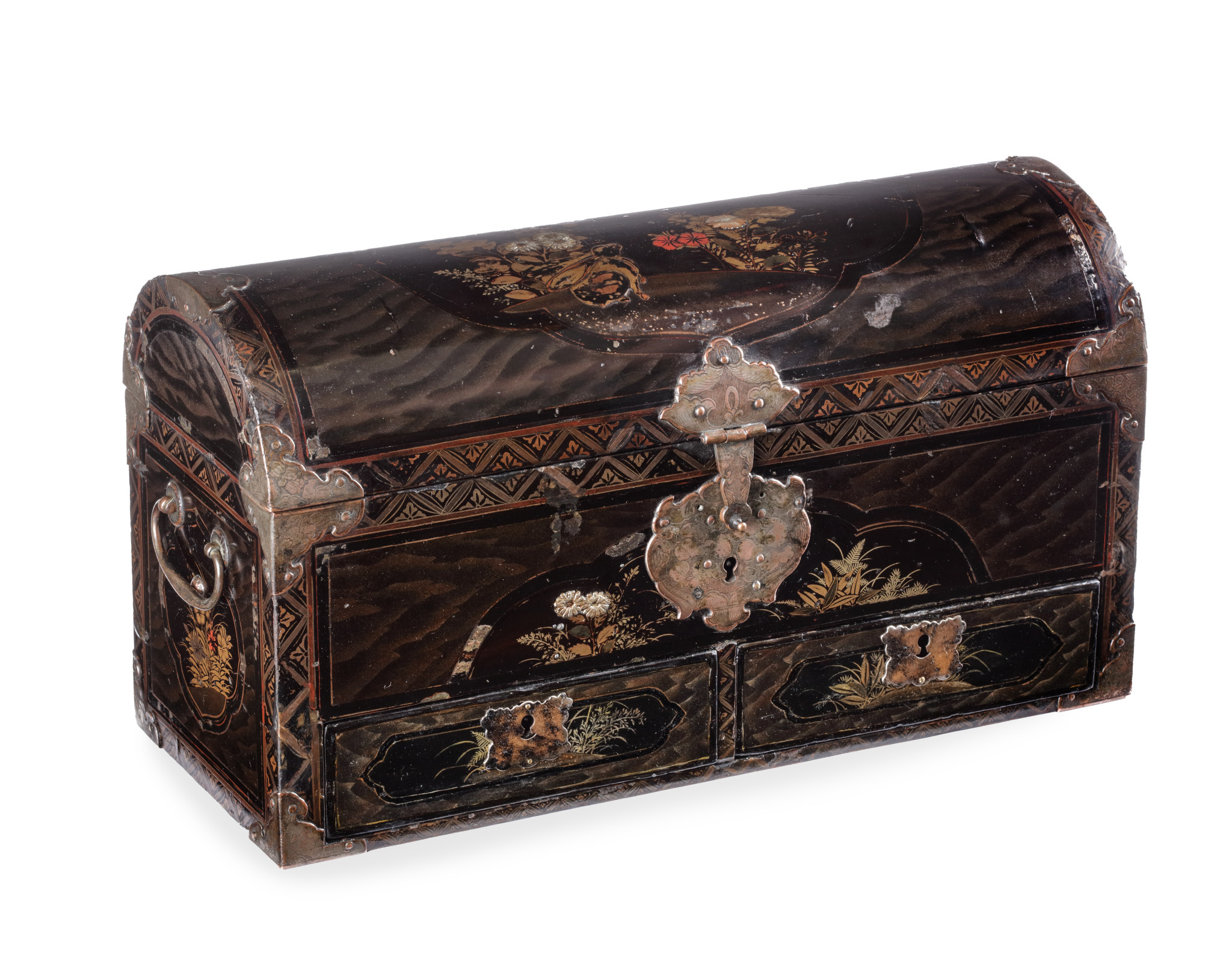
Japanese Namban lacquer transition-style coffer with two drawers
Kyoto/Nagasaki, circa 1650
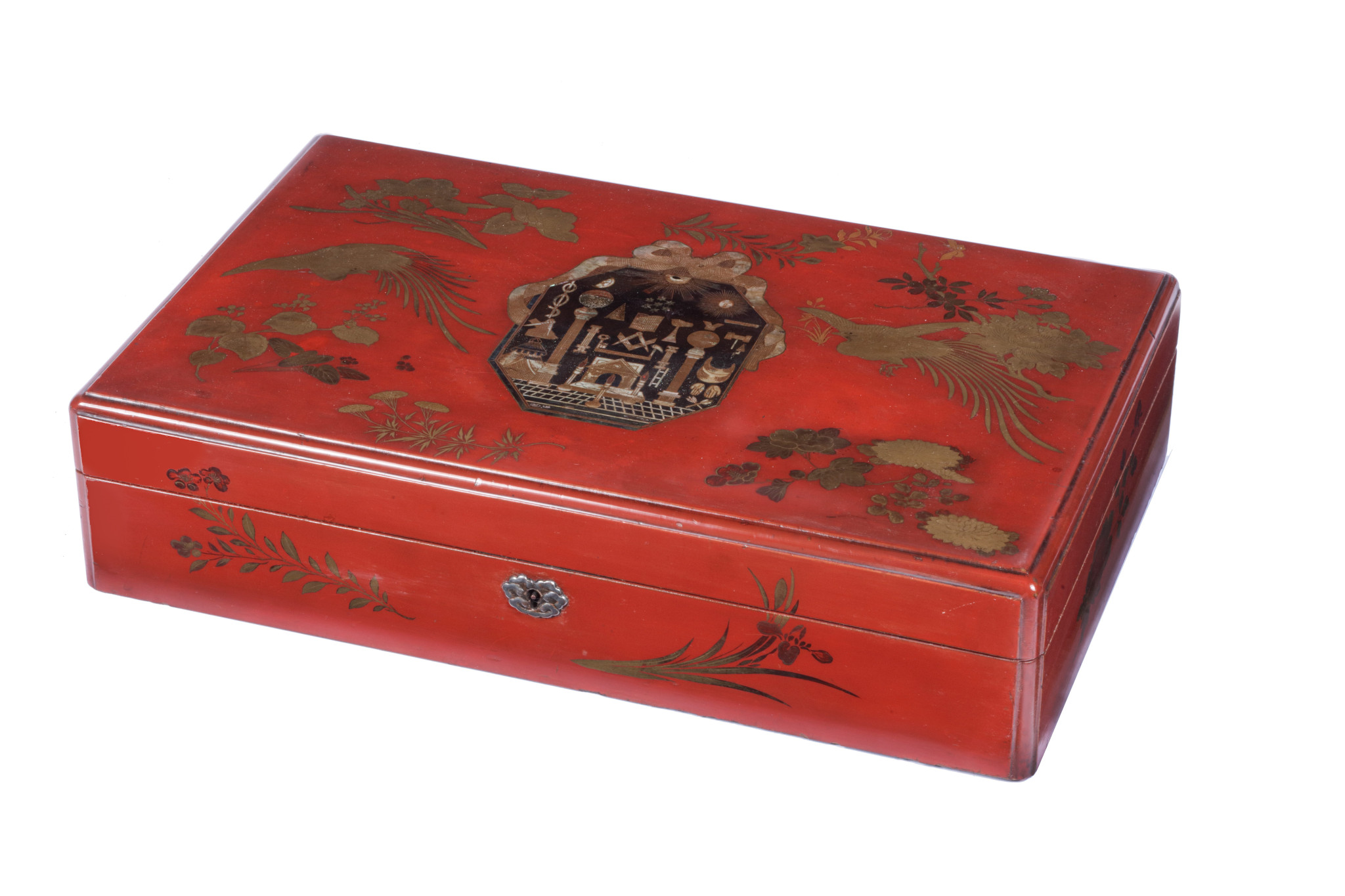
A fine Japanese export red lacquer box with Masonic symbols
Kyoto/Nagasaki, 1800-1820
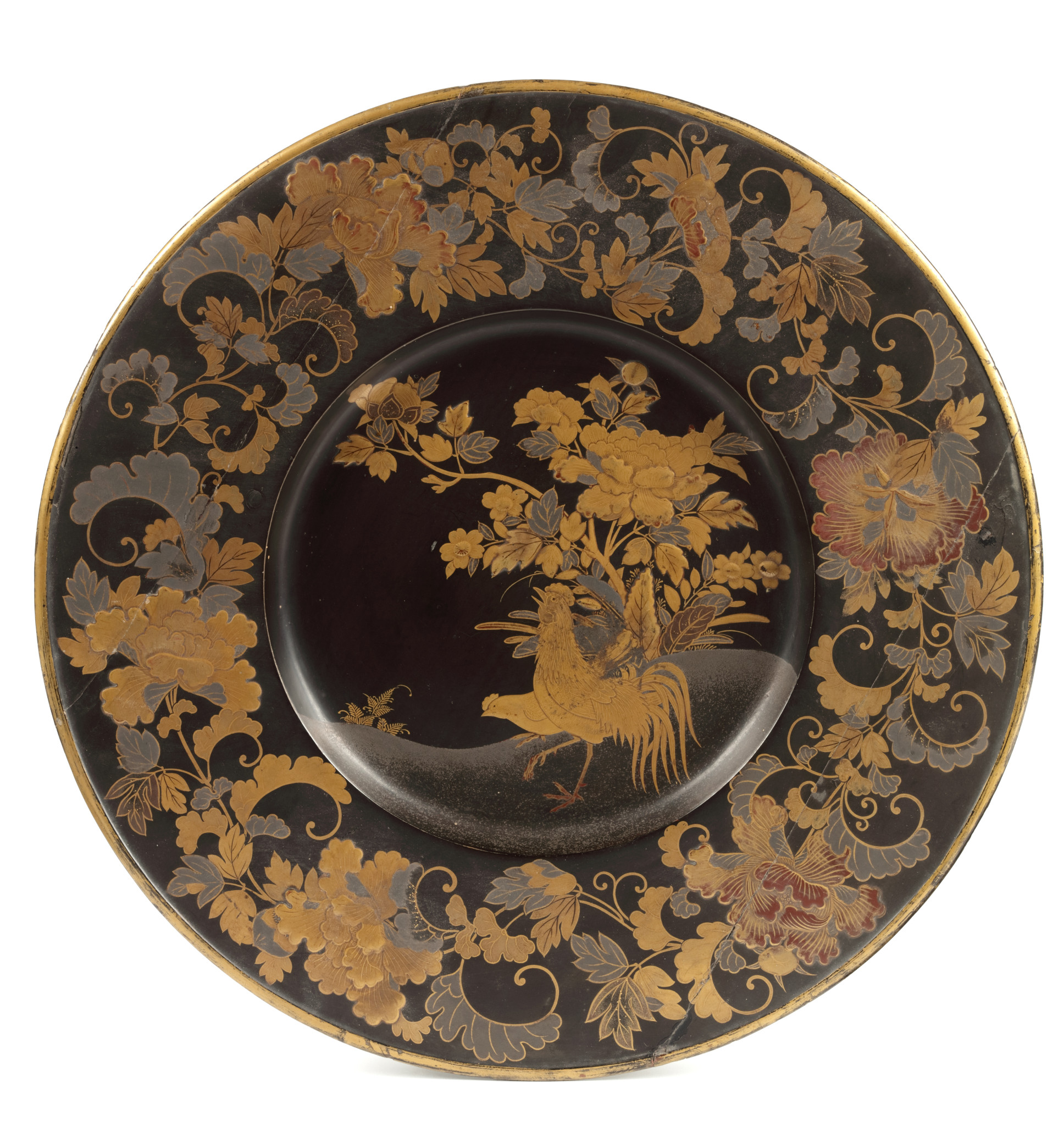
A fine Japanese export black and gold lacquered Pictorial-style dish
Nagasaki or Kyoto, 1680-1720
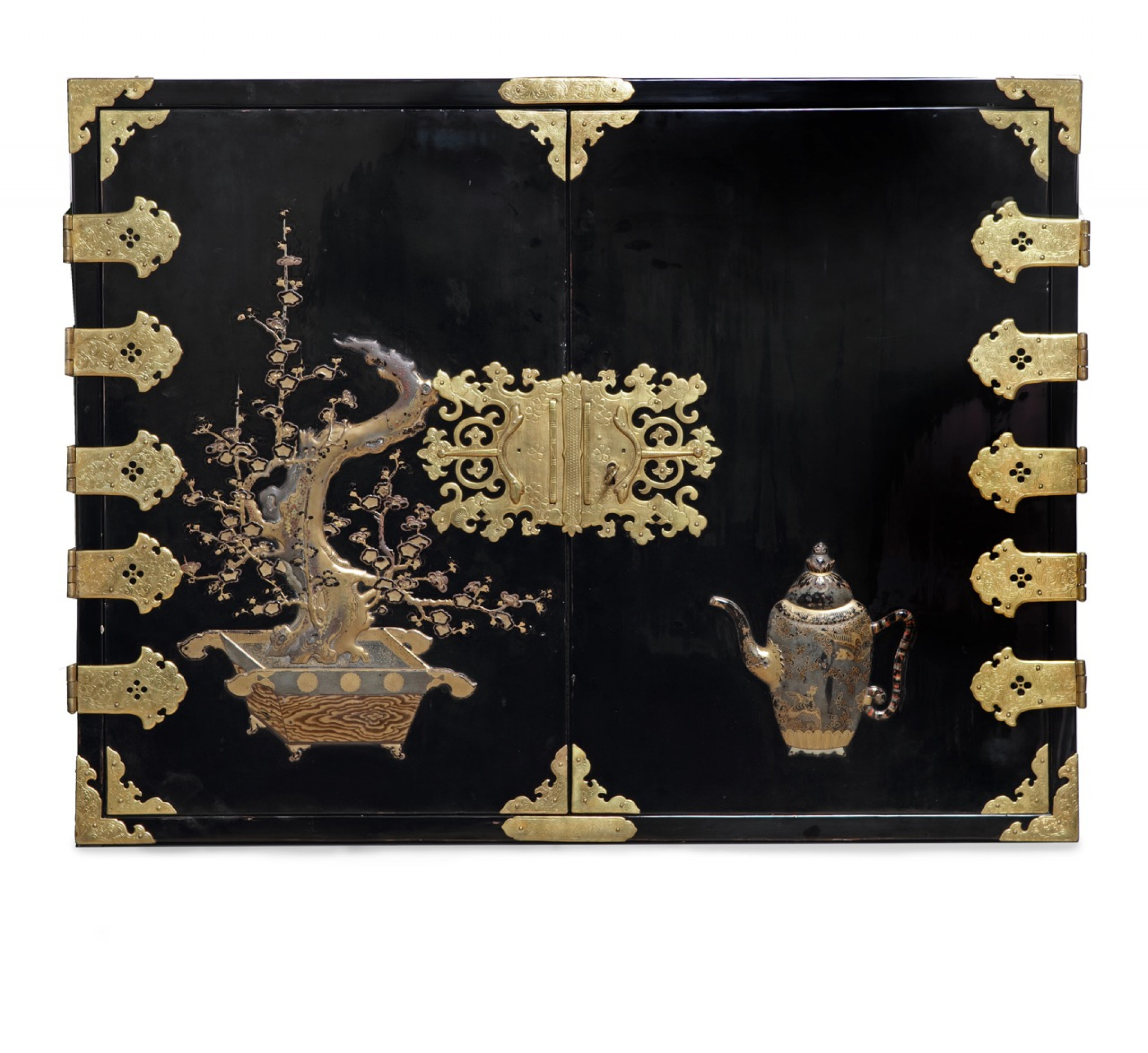
A fine Japanese lacquer cabinet with gilt-copper mounts for the European market
Edo period, late 17th century
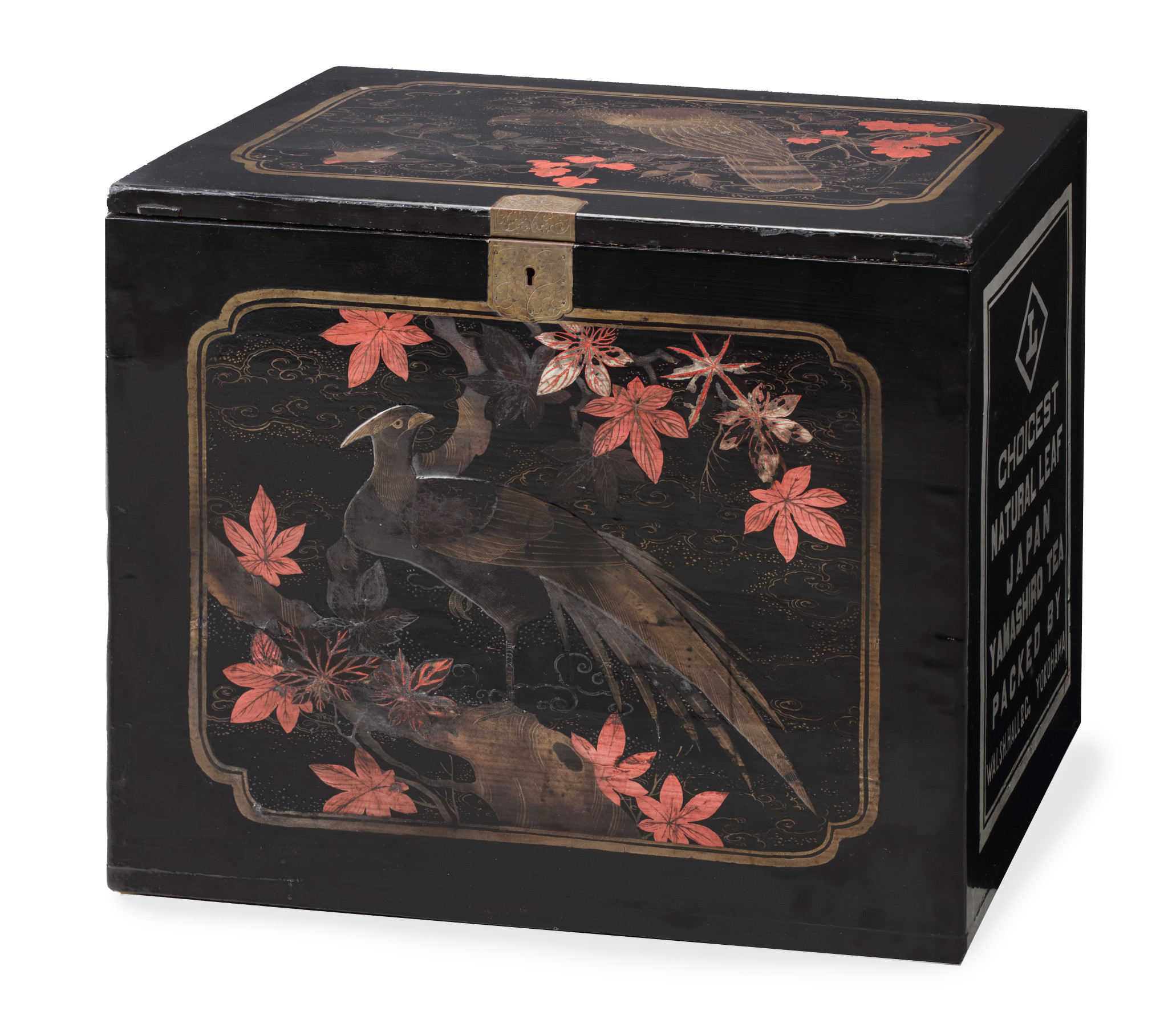
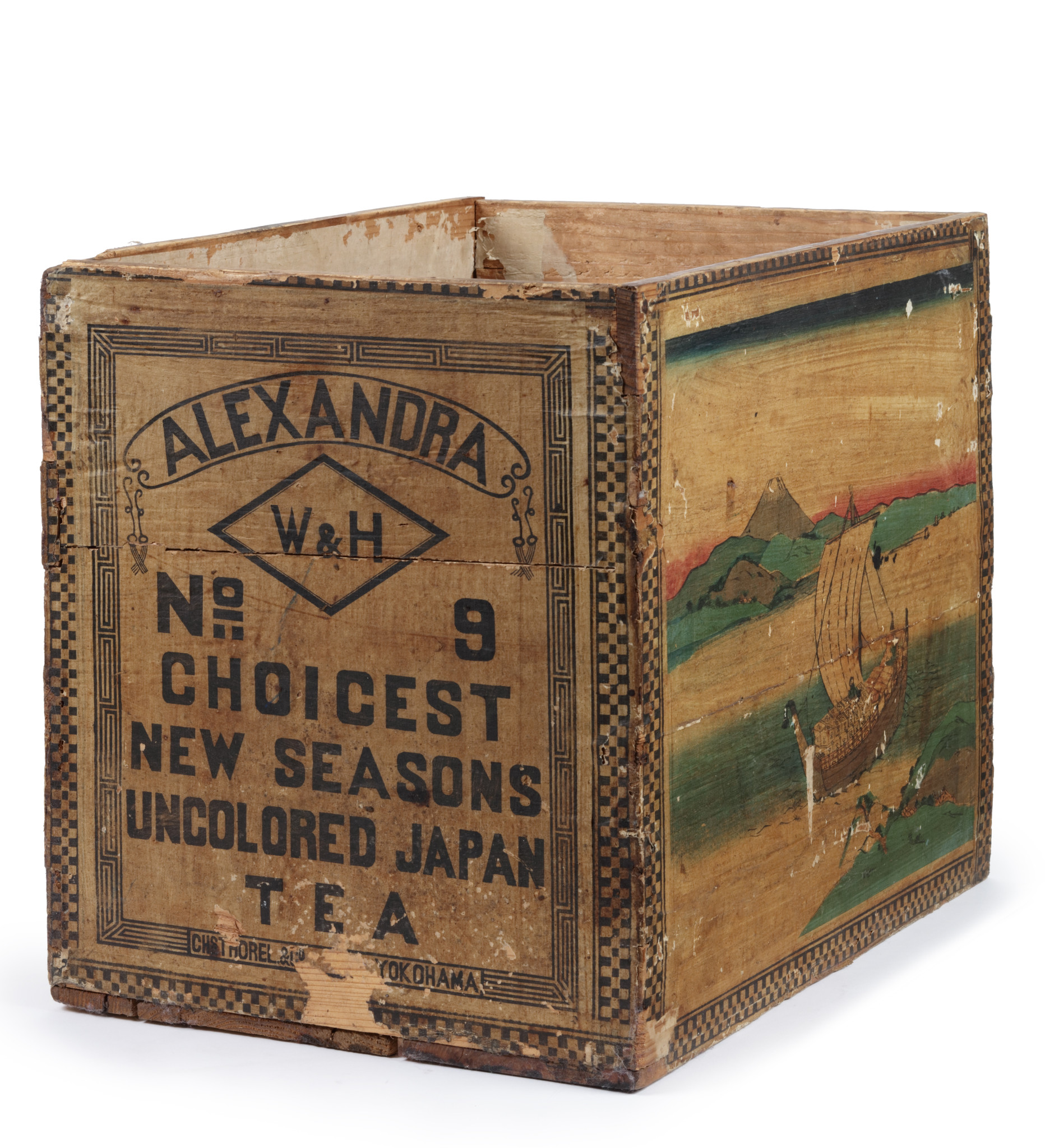
A Japanese Cypresswood or hirohi ‘Walsh, Hall & Co, Yokohama’ tea chest with wooden crate
Yokohama, 1862-1897, with inscription reading: Choicest Natural Leaf Yamashiro Tea, Packed by Walsh, Hall & Co, Yokohama
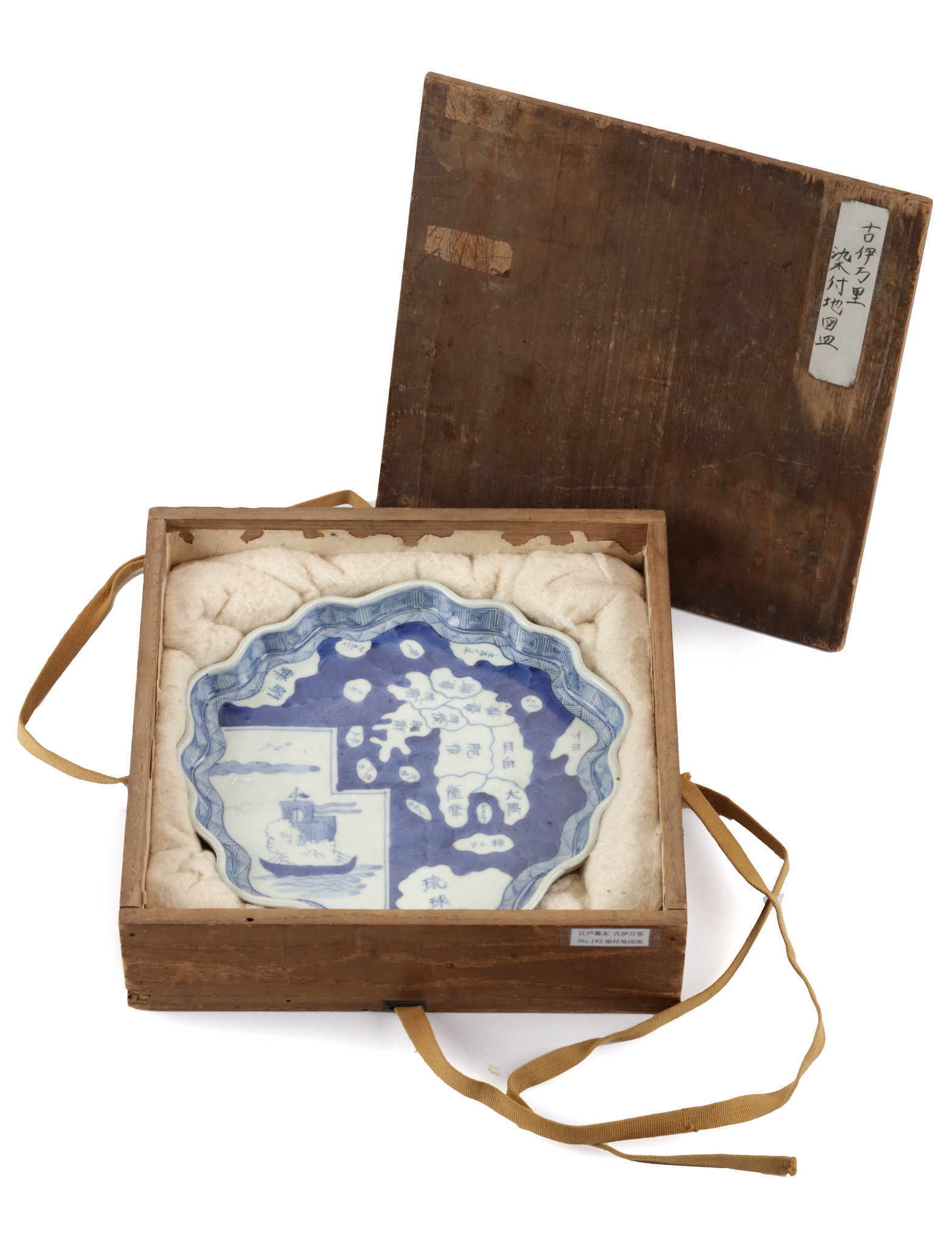
A Japanese Arita blue and white porcelain Ko-imari, map dish
Arita, Edo period, circa 1840
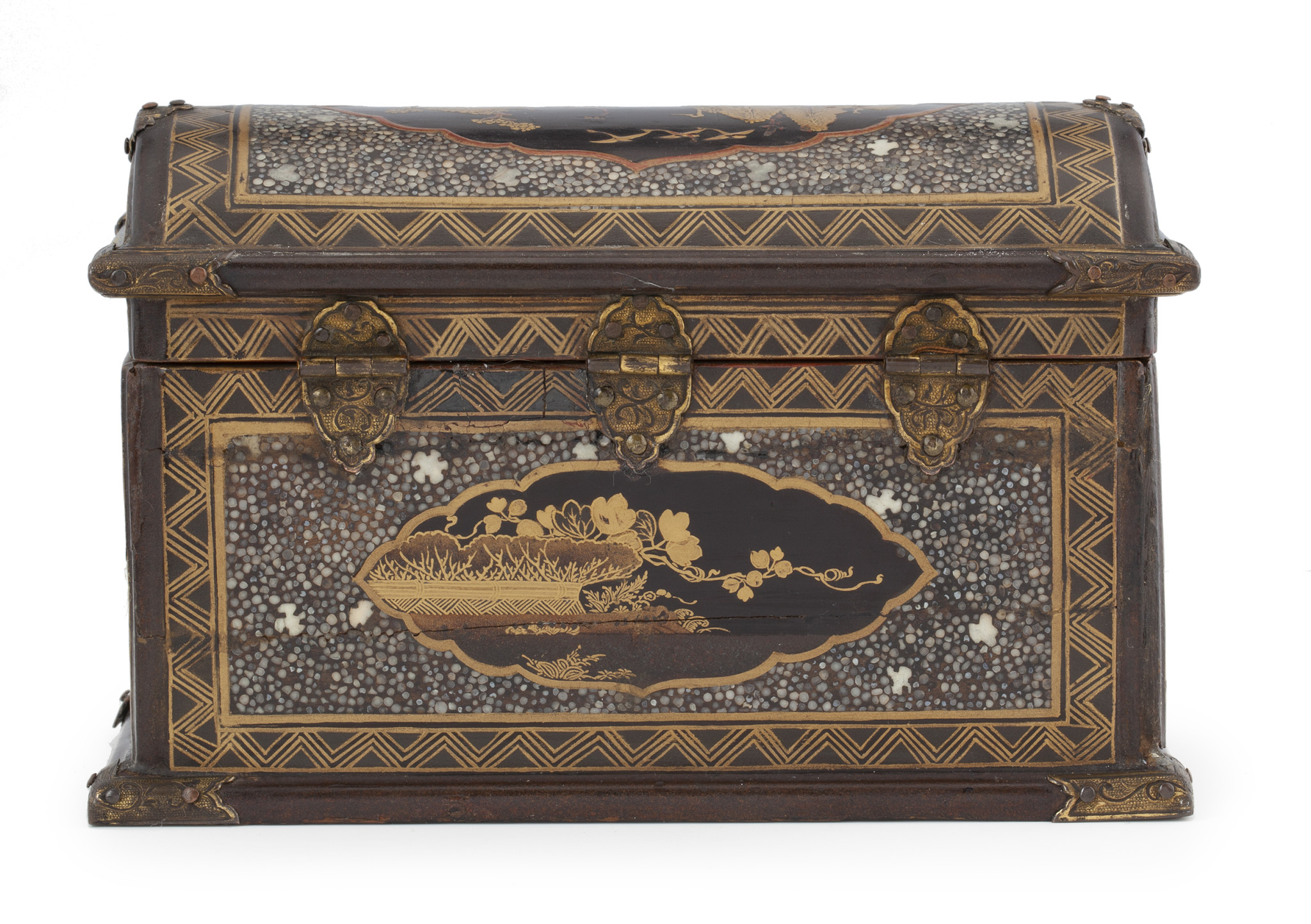
A unique and exceptional Japanese miniature or dollhouse export lacquered chest
Kyoto, circa 1620-1640
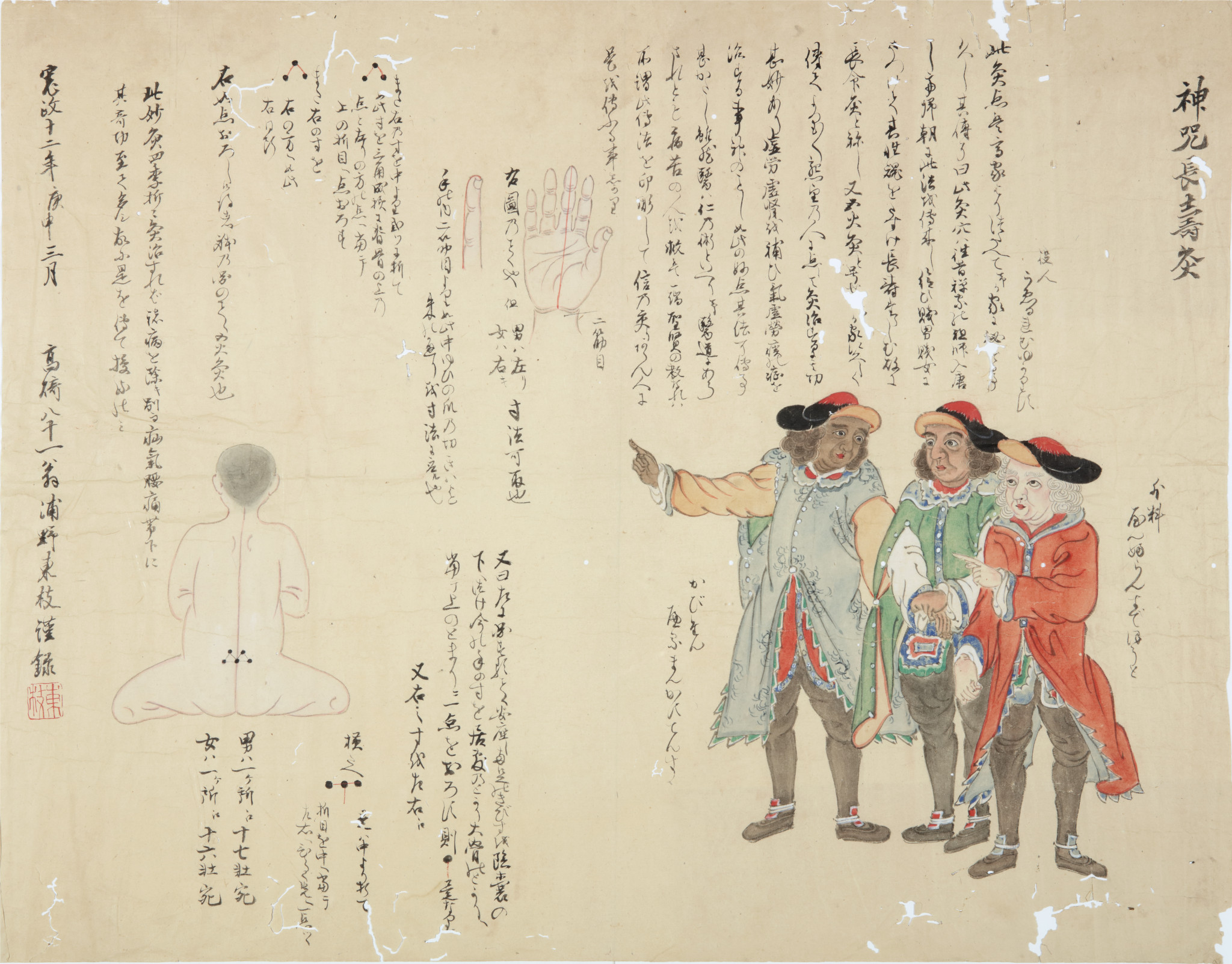
A Manuscript of a moxibustion instruction, Jinjyu-Chojyu-Kyu, as a Divine Charm for Longevity, with depiction in colour of three Dutchmen, the Dutch delegation to the Shogun in 1767
Signed and dated: Respectfully recorded at Takasaki by the 81-year old Urano Higashie, in the third month of the twelfth year of Kansei (i.e. 1800), year of the monkey with seal (Higashie Kansei 12nen kanoe saru sangatsu shirushi Takasaki hachijũichi-õ Rrano Higashie kinroku)
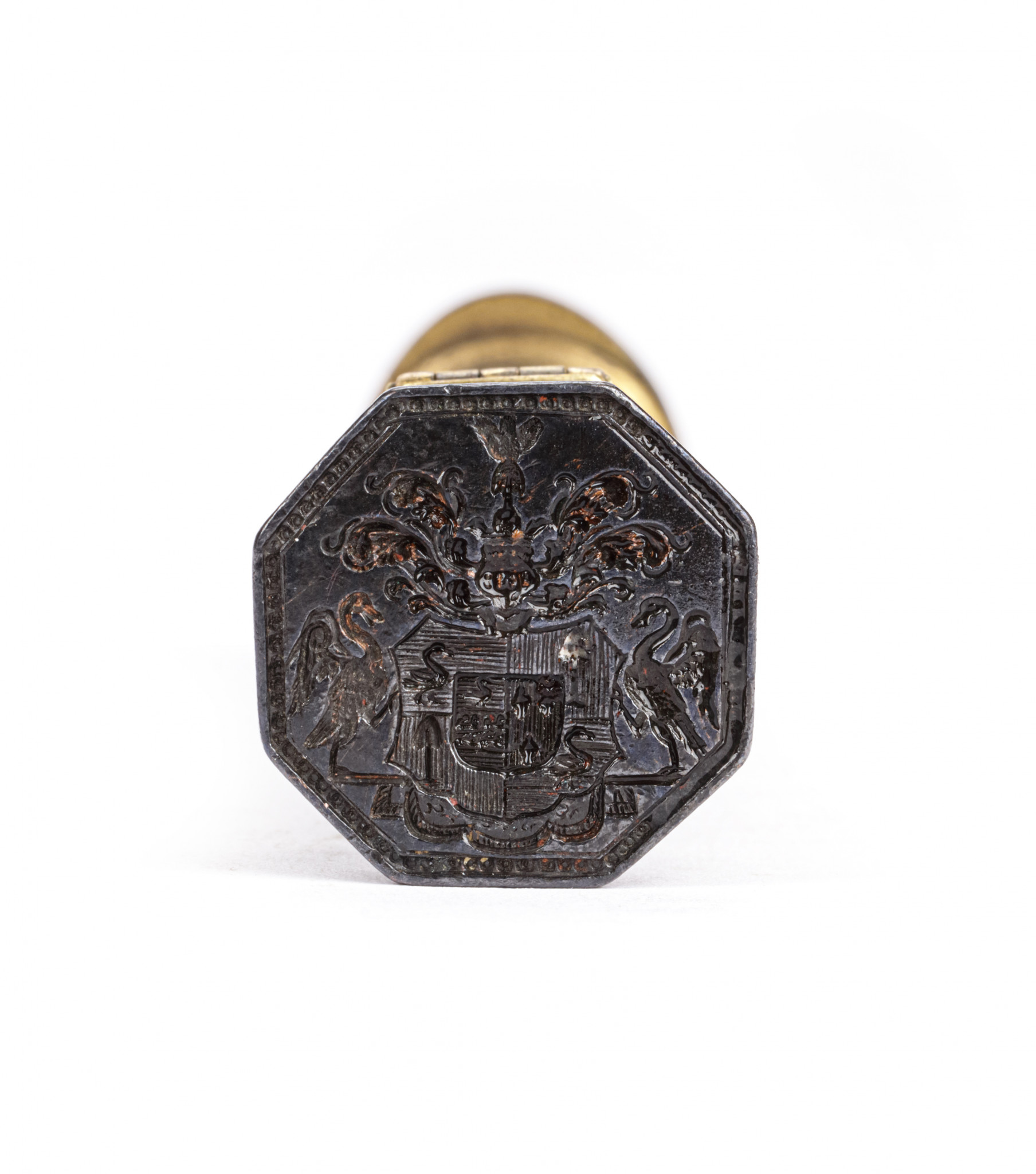
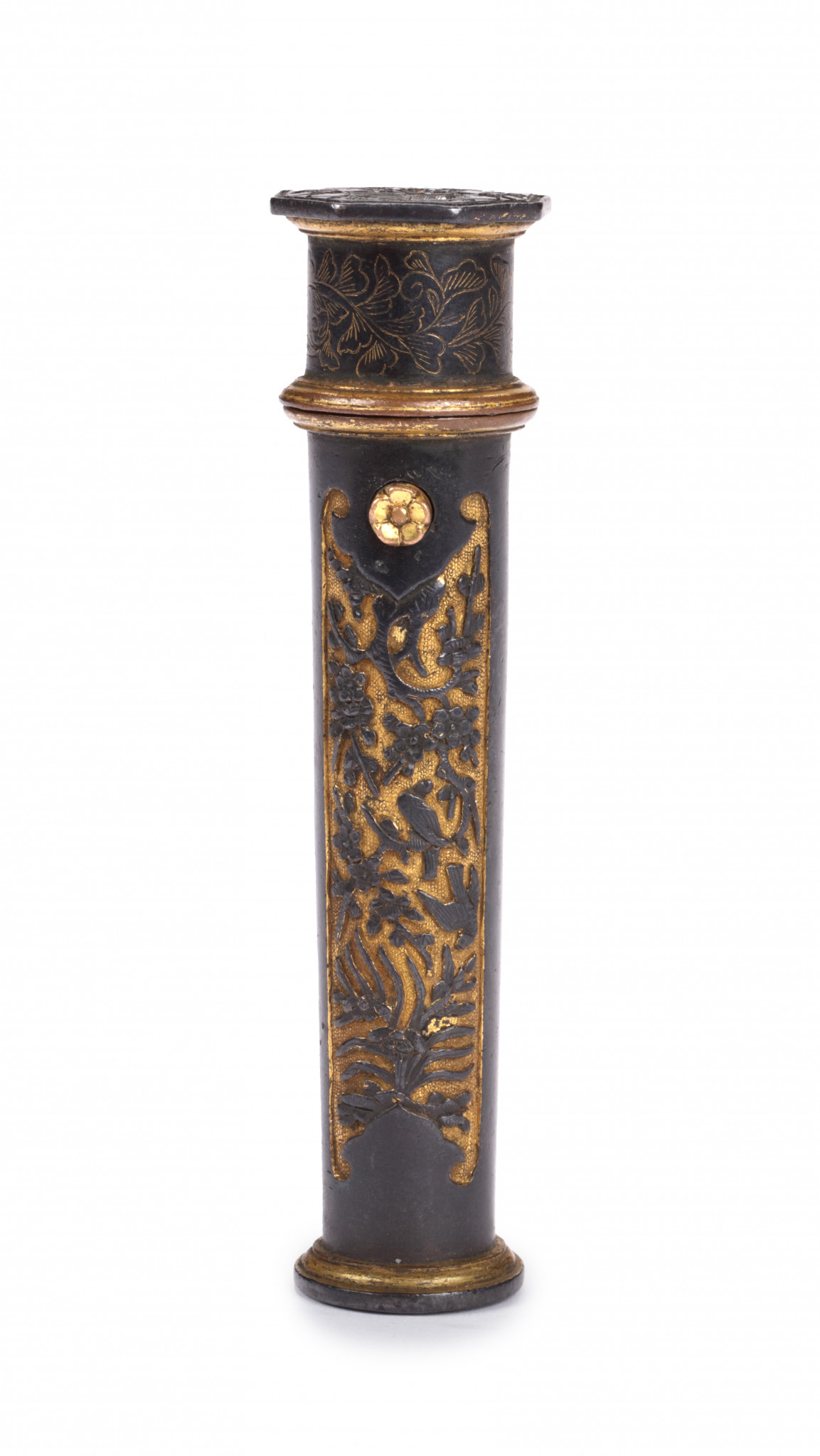
A Sawasa armorial wax container with a seal Japan
Edo period, mid 18th century

A ruyi-shaped Shakudo-style erotic tobacco or snuff box, relief-decorated with silvered applied figures
Possibly Jakarta (Batavia), first half 18th century
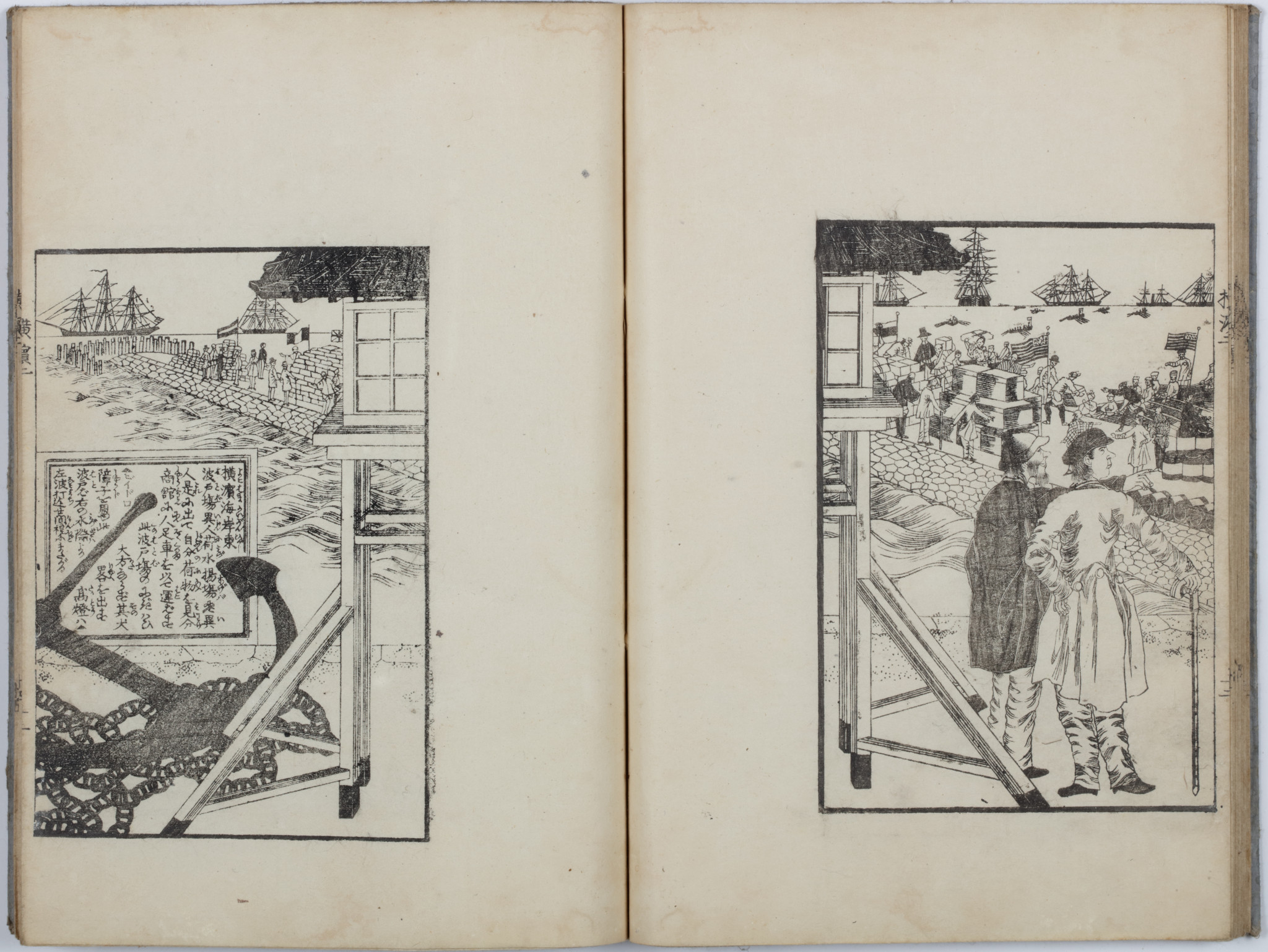
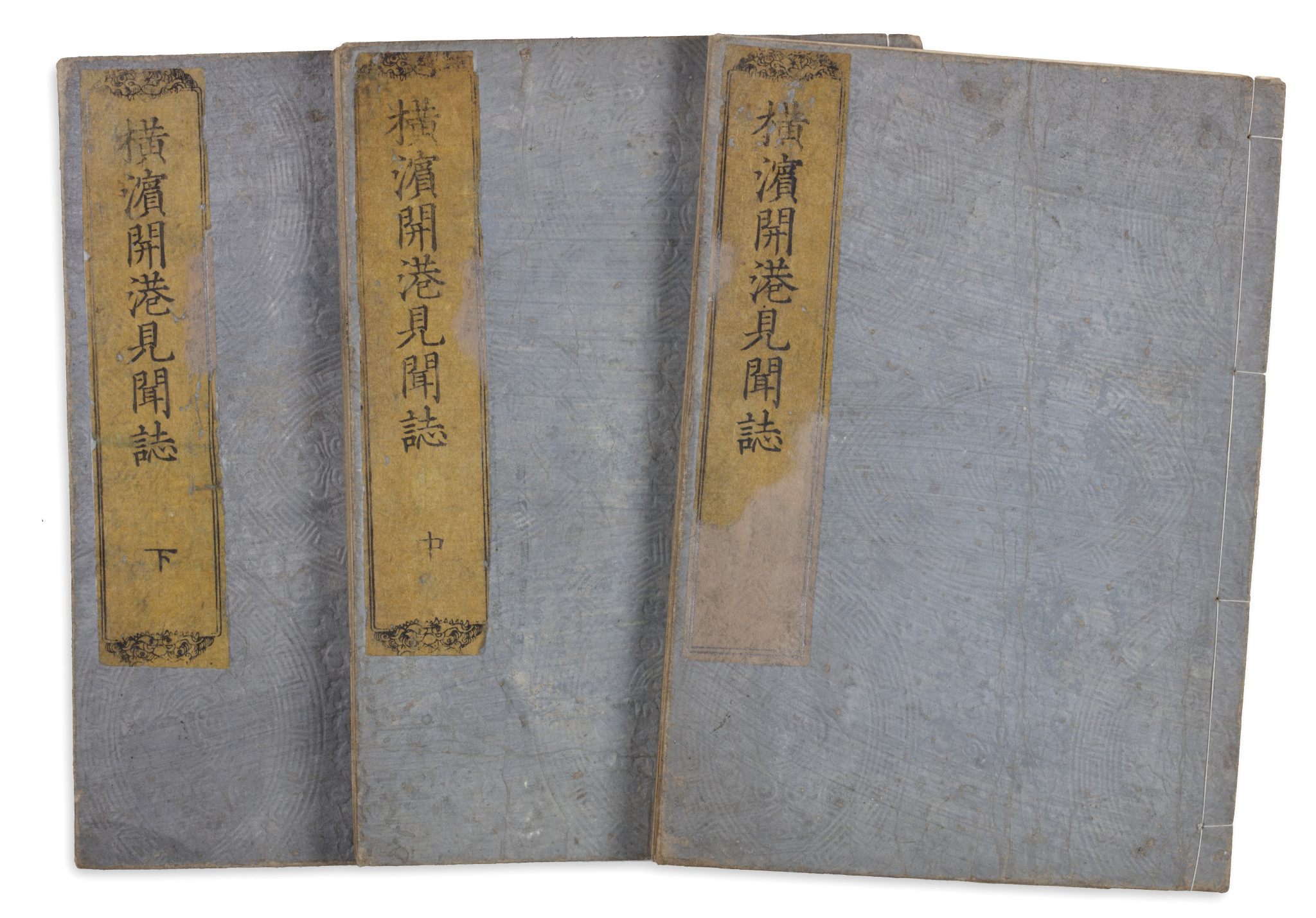
Hashimoto Gyokuransai, artist’ name Utagawa Sadahide (1807-1878/79)
Yokohama kaikoo kenbunshi (Record of sights and sounds in the open port of Yokohama, 1862)
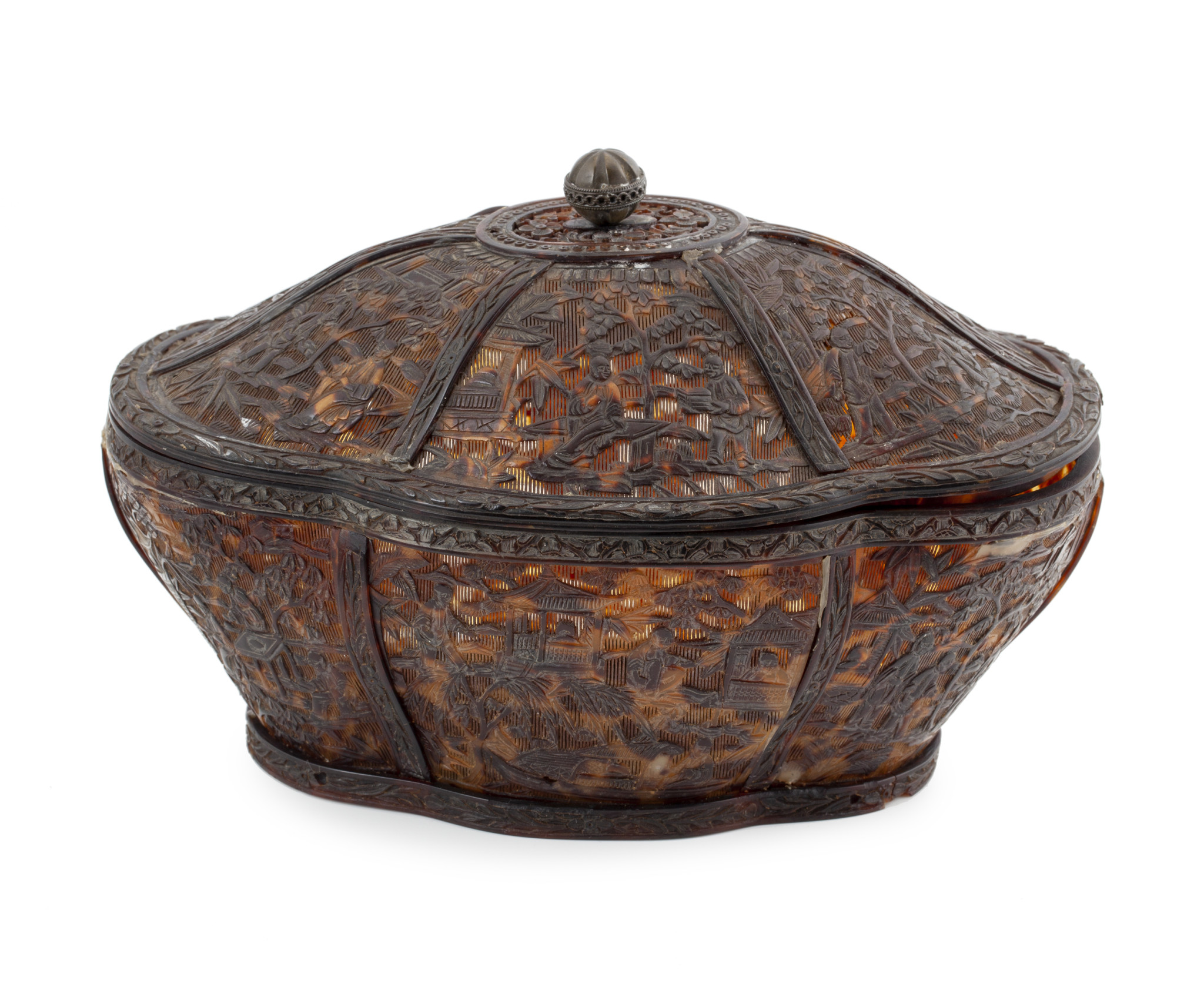
A Chinese refined reticulated tortoise-shell export basket with lid
Canton, late 18th/early 19th century
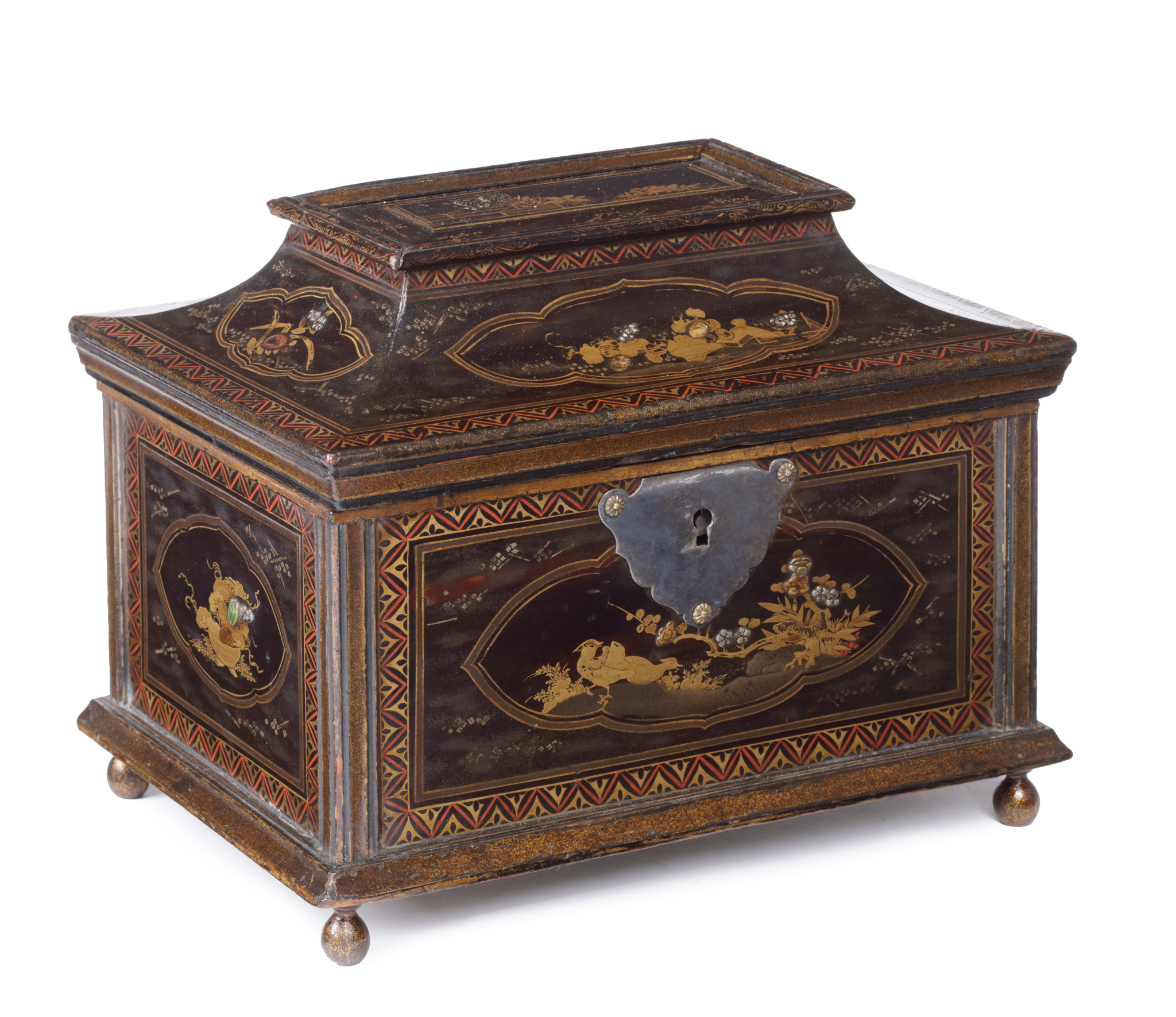
A rare Japanese export lacquer jewellery casket with inlays of precious materials, possibly by the Kichibei Studio
Japan, 1630-1640
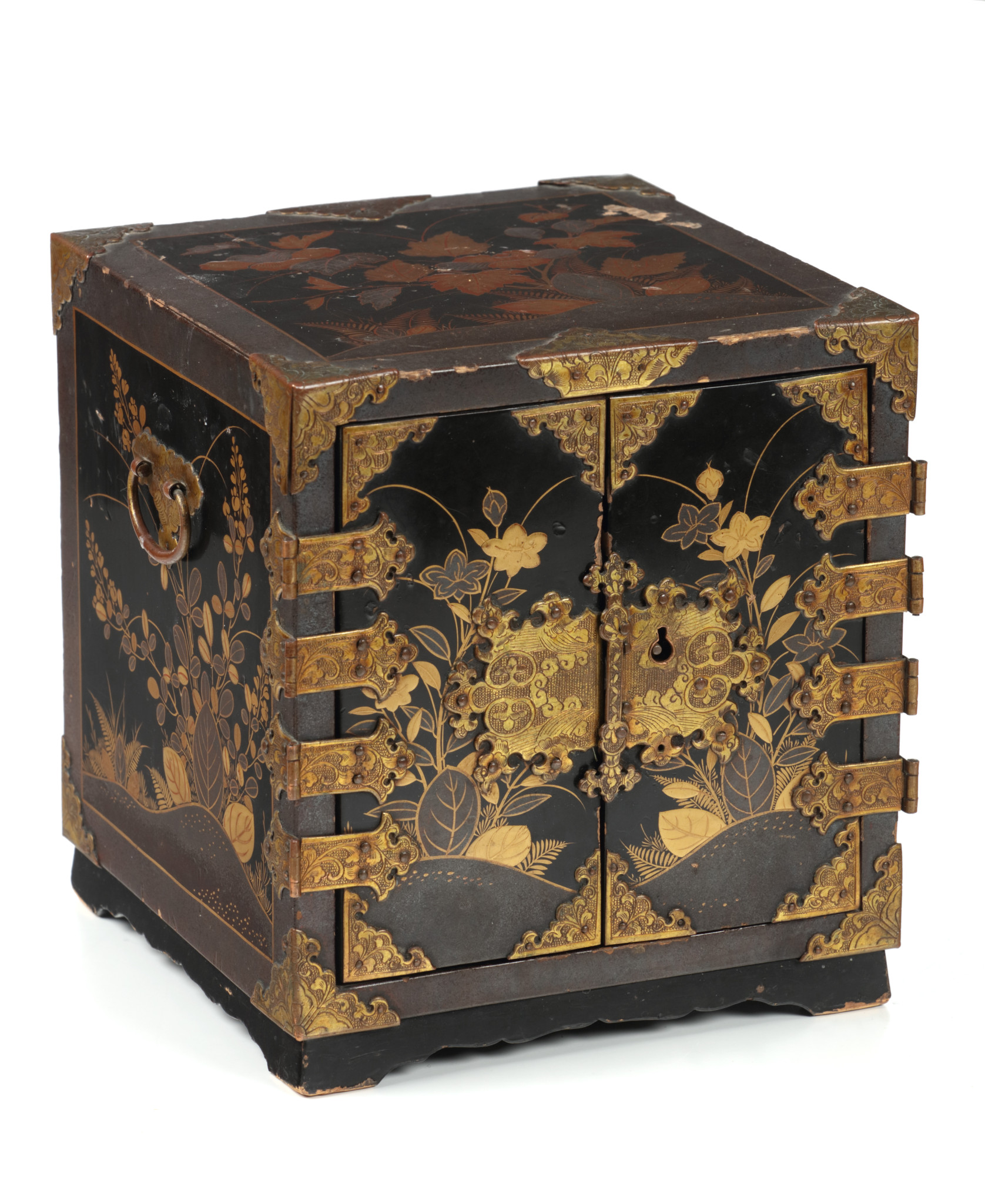
A Japanese lacquer miniature jewellery cabinet
Edo period, 17th century
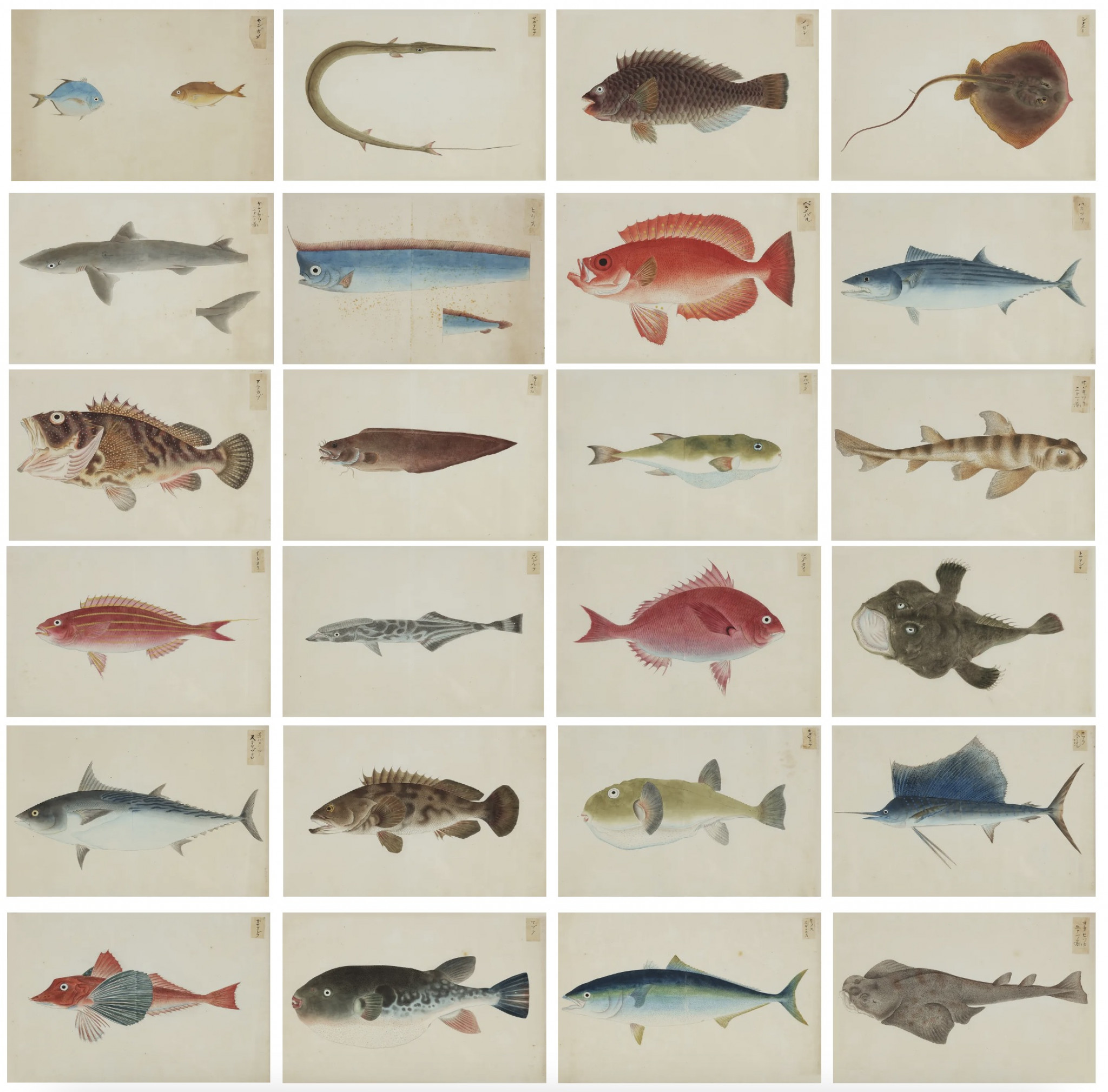
A collection of 24 fish drawings by Kawahara Keiga (c. 1786-1860) and studio
Edo period, mid 19th century
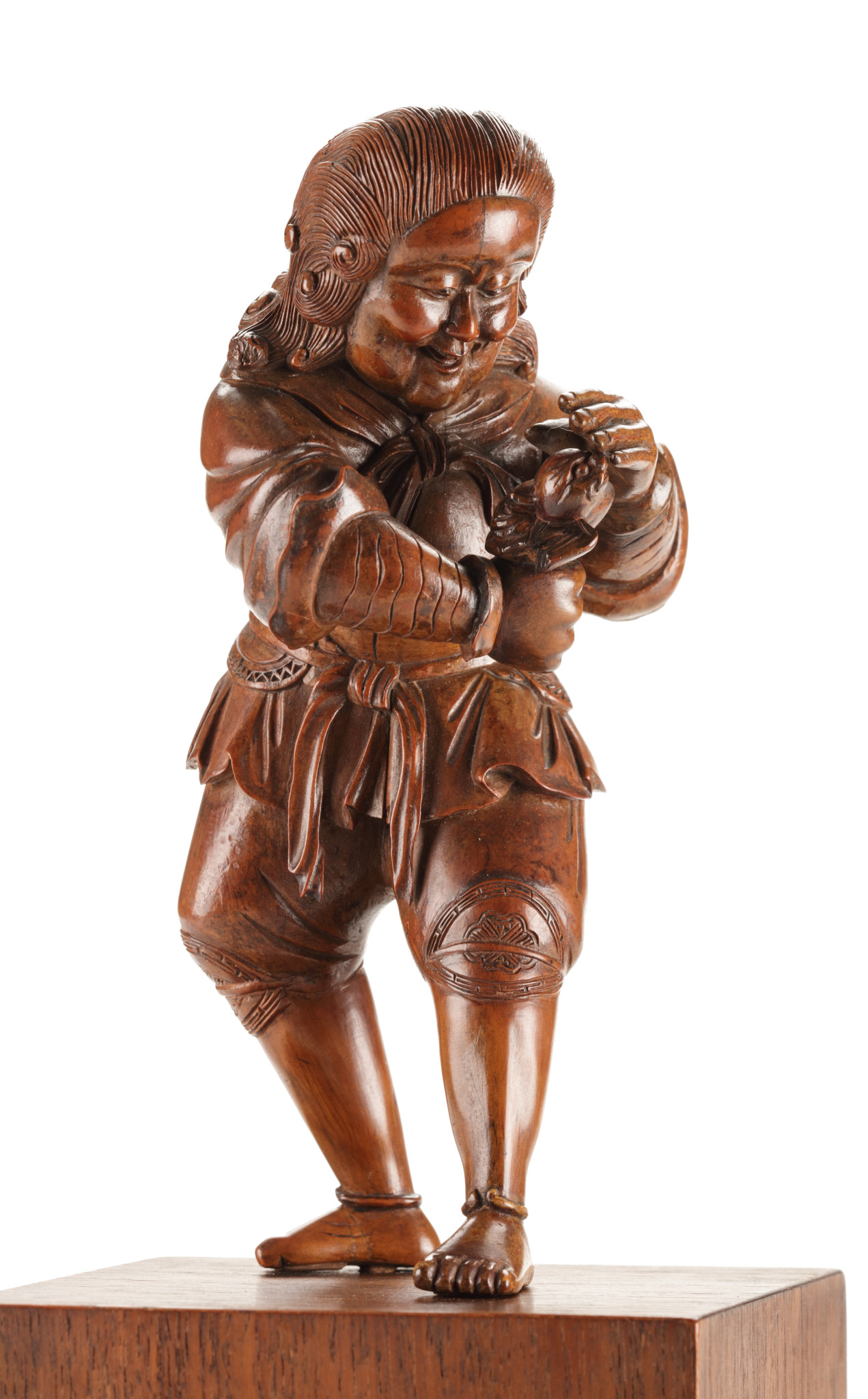
And extremely rare wood Japanese Okimono of a Dutchman playing with a bat
Edo period, 18th century or earlier
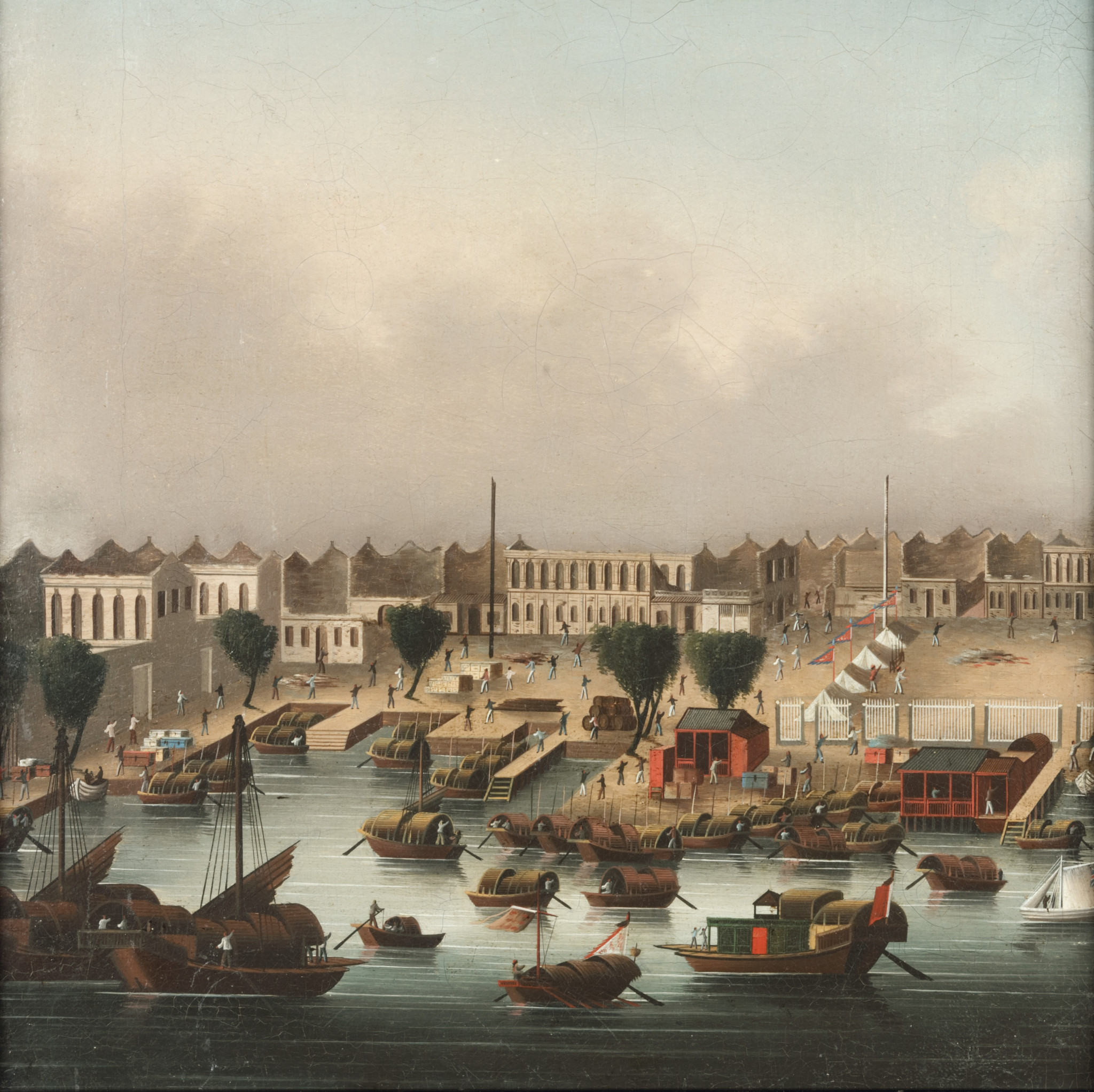
A Chinese export painting depicting Canton after the Great Fire of 1-2 november 1822
Canton, circa 1822
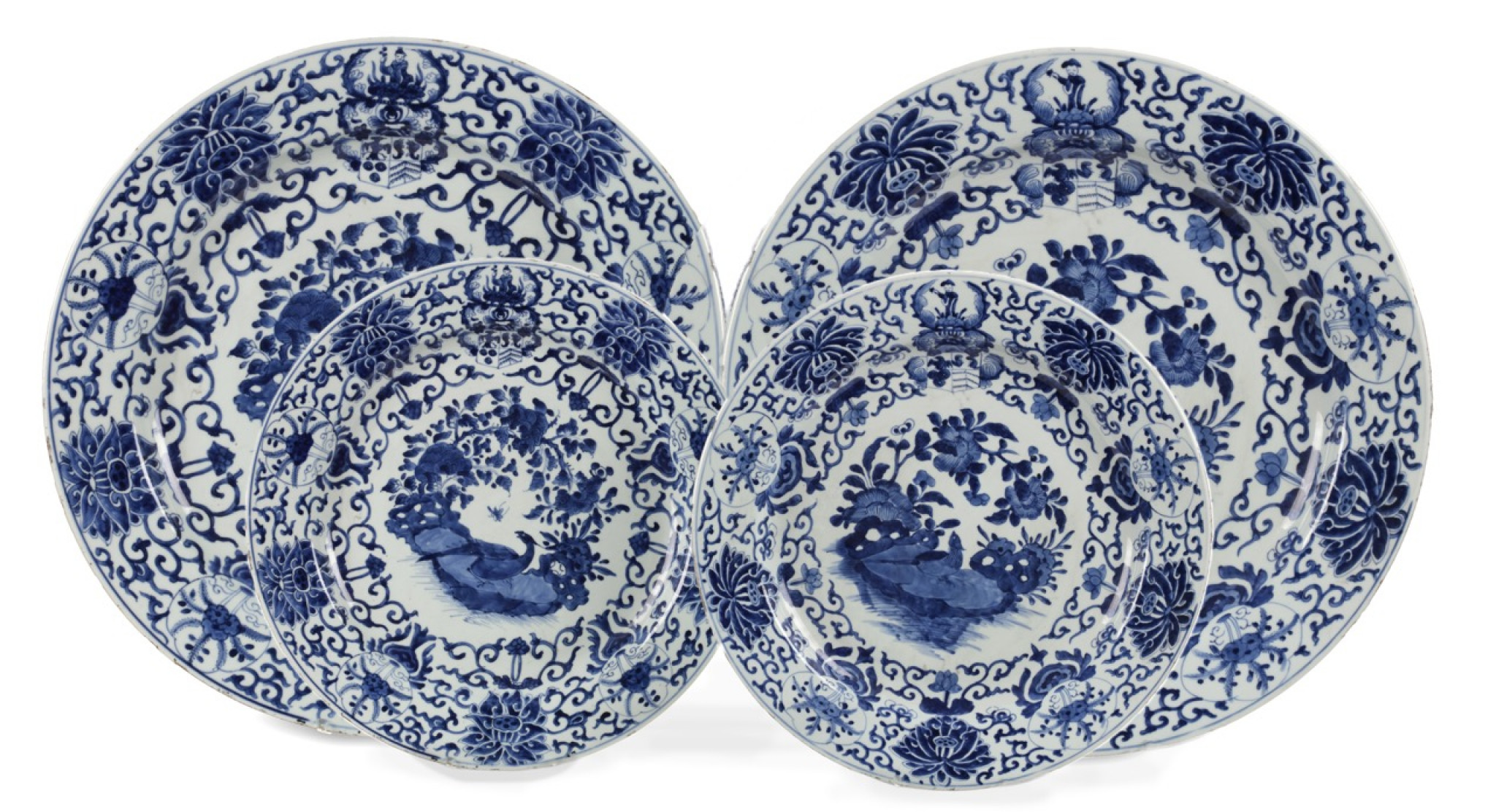
A set of four very large and two smaller Chinese armorial export blue and white porcelain 'Pelgrom' chargers
Circa 1680-1690
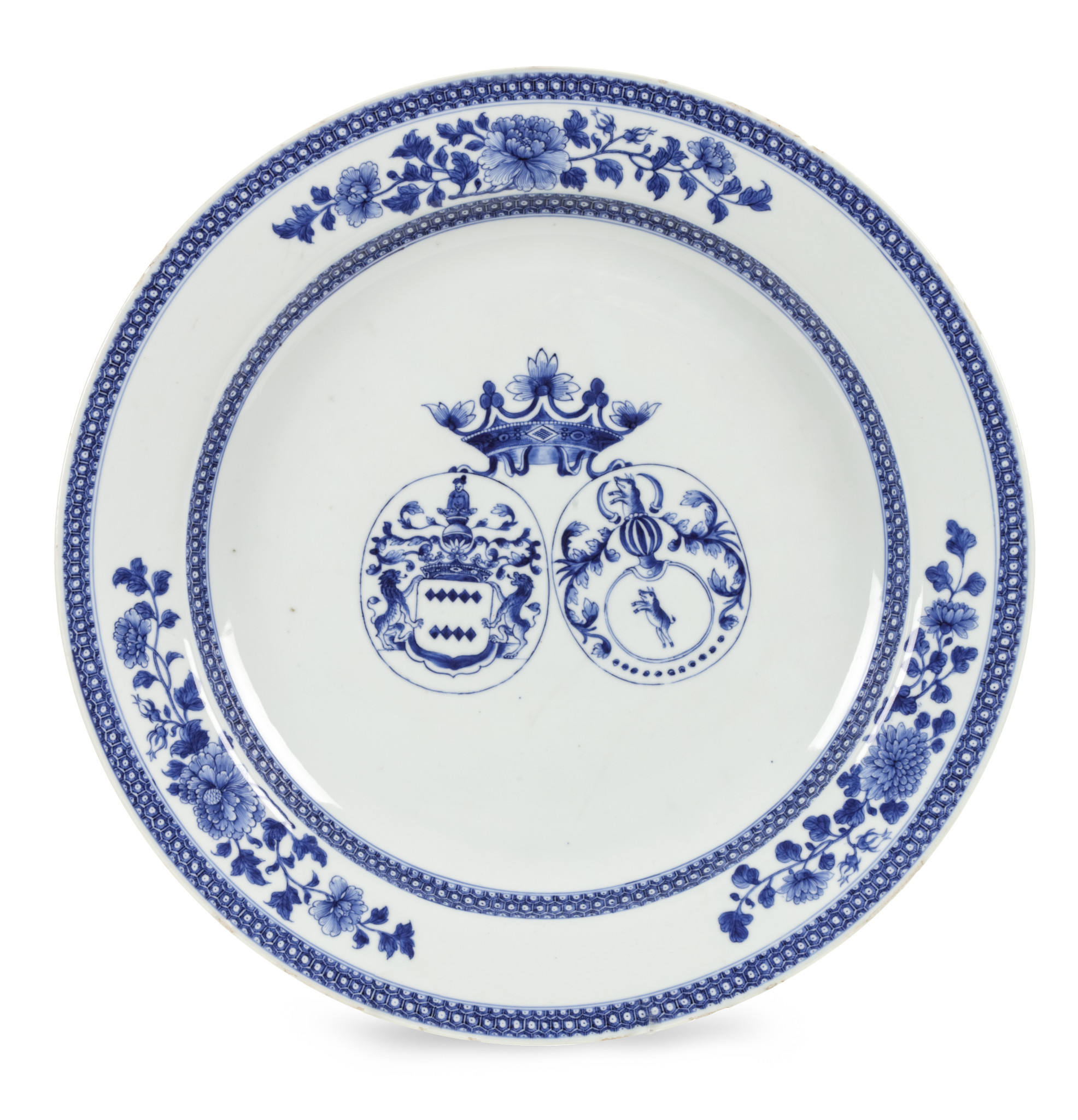
A large Chinese armorial export blue and white porcelain 'Van der Does - Stein van Gollenesse' charger
Qianlong period, circa 1755
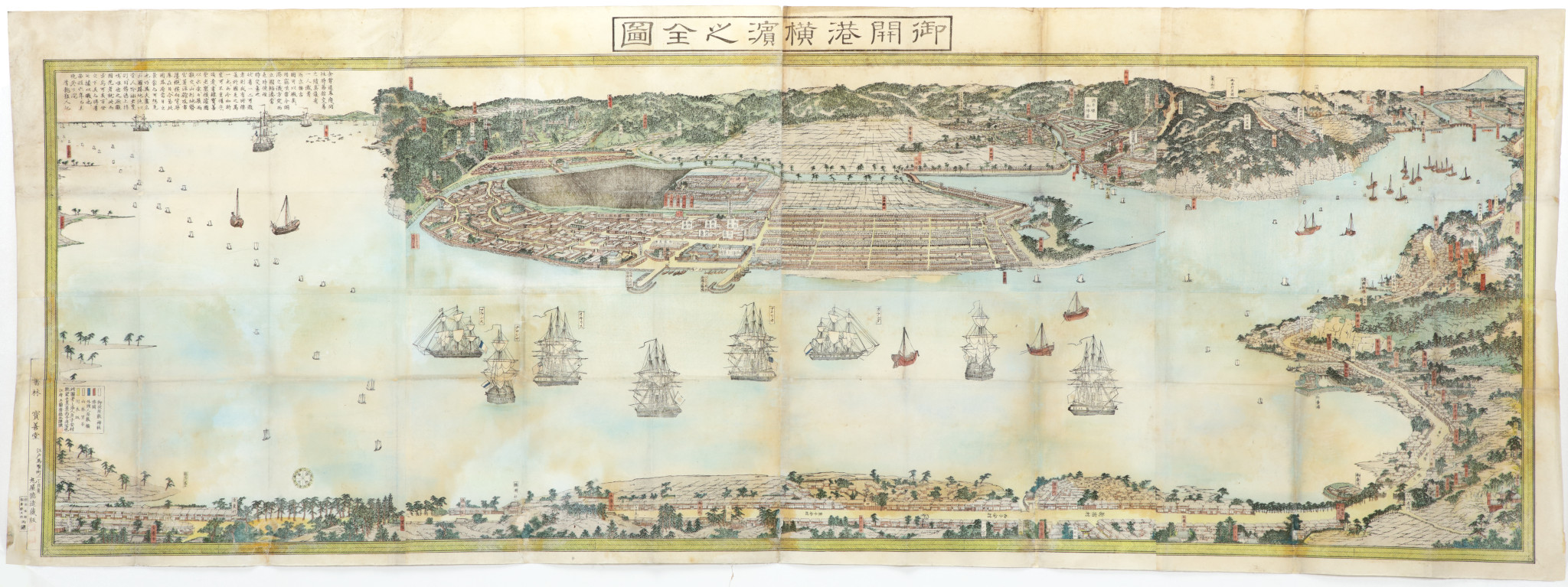
Hashimoto Gyokuransai, artist’ name Utagawa Sadahide (1807-1878/79)
Gokaikõ Yokohama õezu: kan (Large illustration of the Opening of the Port of Yokohama: complete)
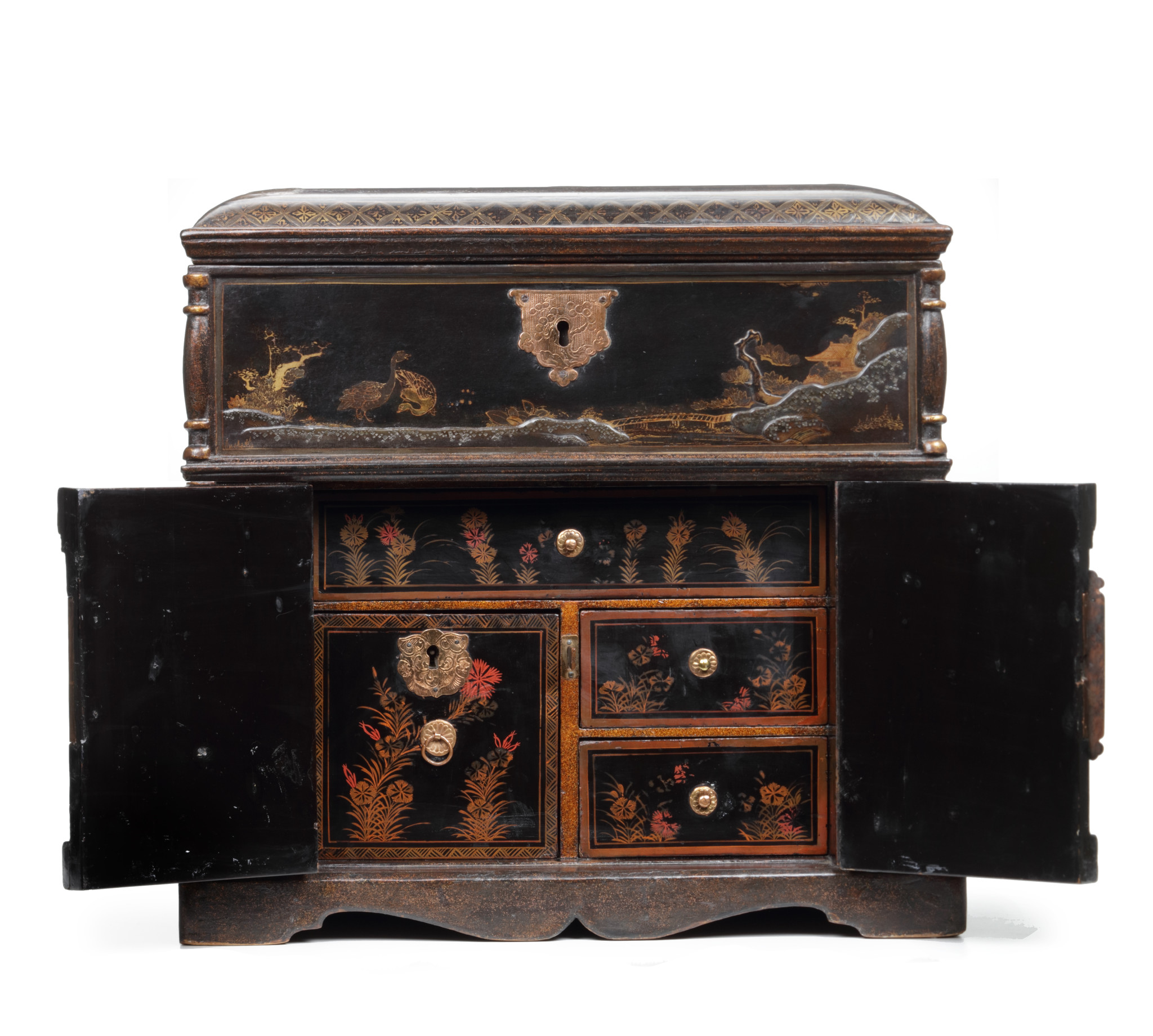
A Japanese Lacquer Transitional-Style chest in the early Pictorial-Style, with a lid, doors, drawers and pilasters on the corners
Edo period, mid 17th century
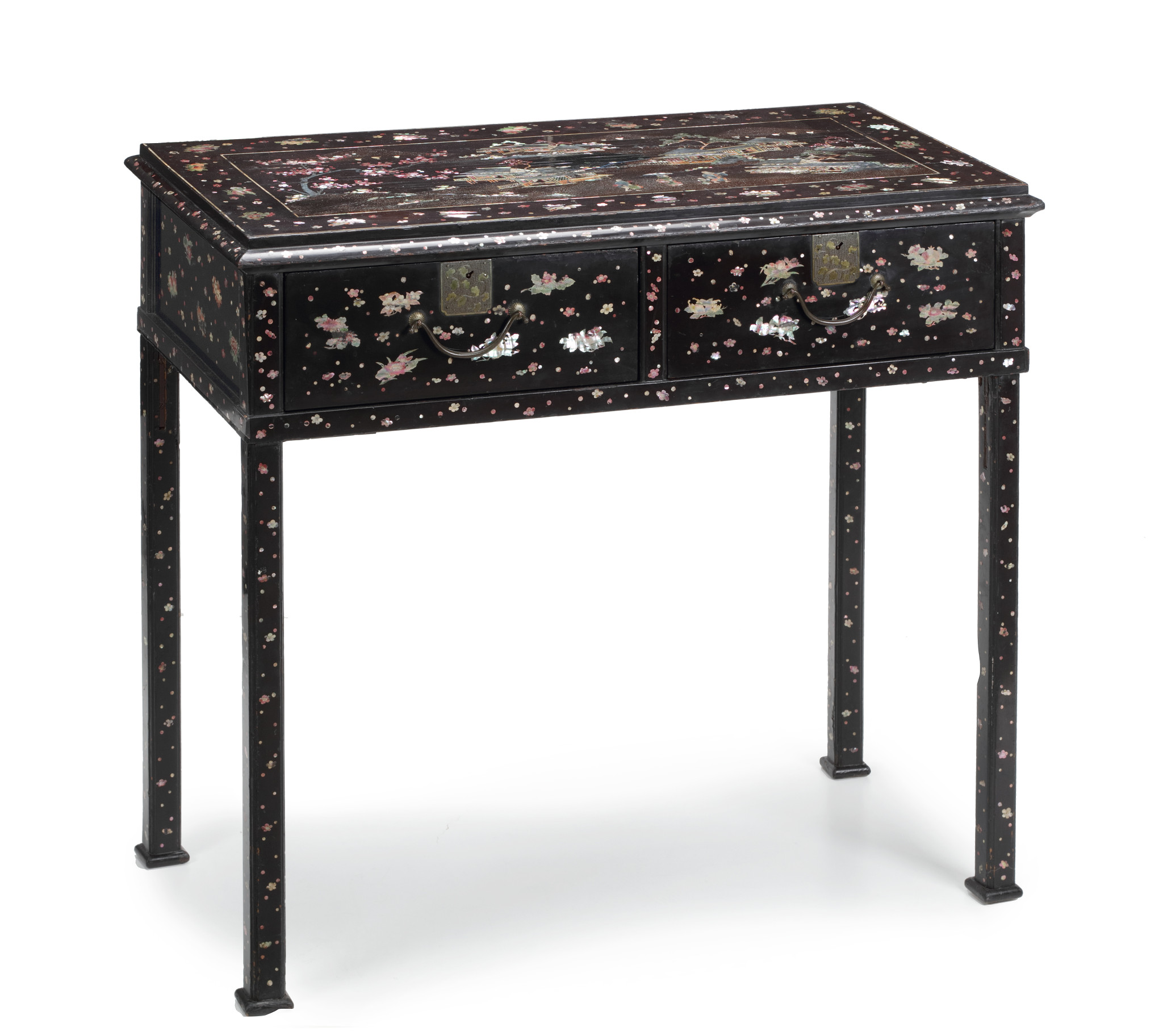
A rare Japanese export lacquered Federal-style side-table for the American market
Nagasaki or Kyoto, the table possibly USA, 1799-1803
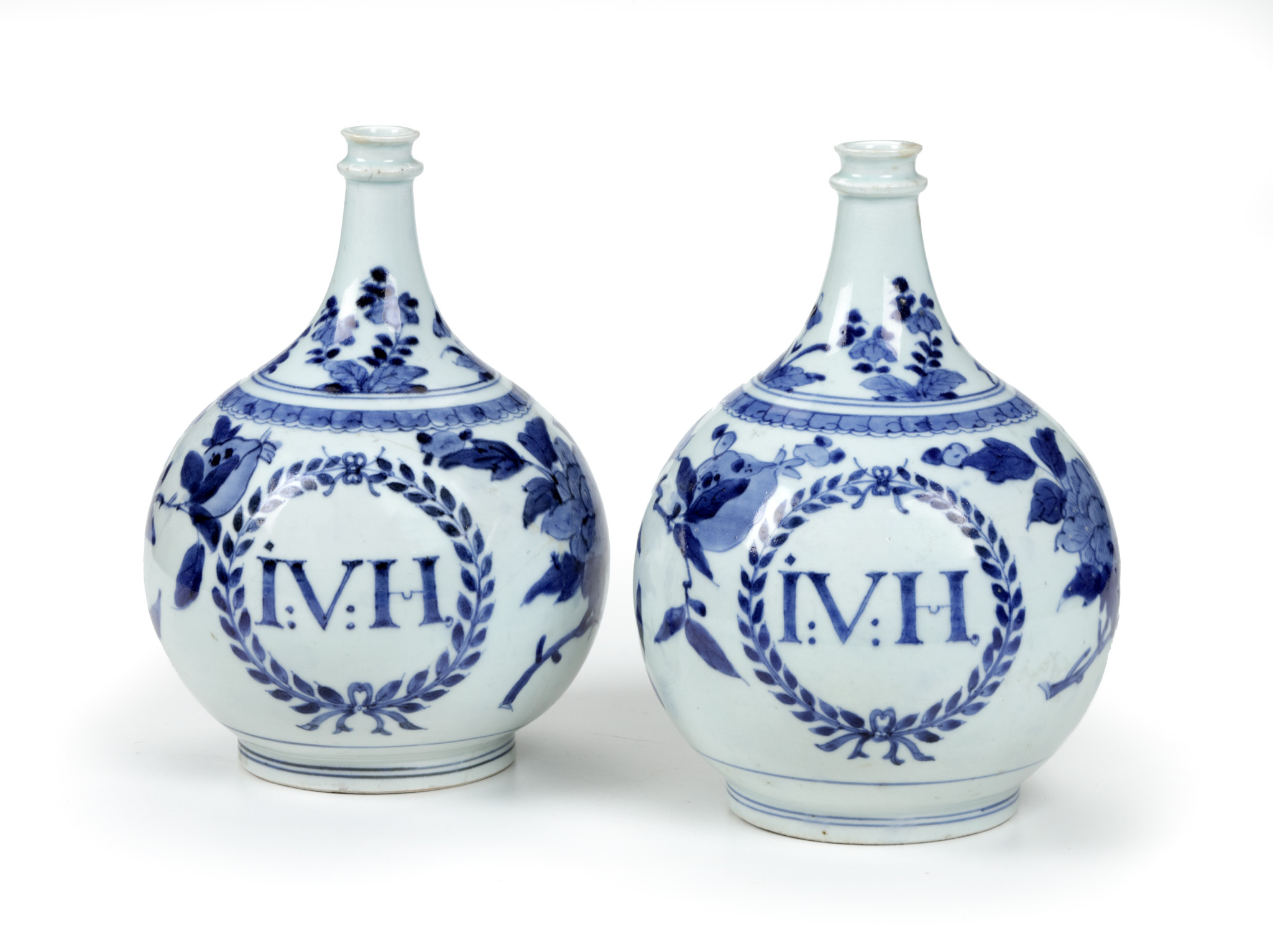
A pair of Japanese blue and white Arita porcelain bottles with the initials of Governor-General Joan van Hoorn of the former Dutch East-Indies
Early 18th century
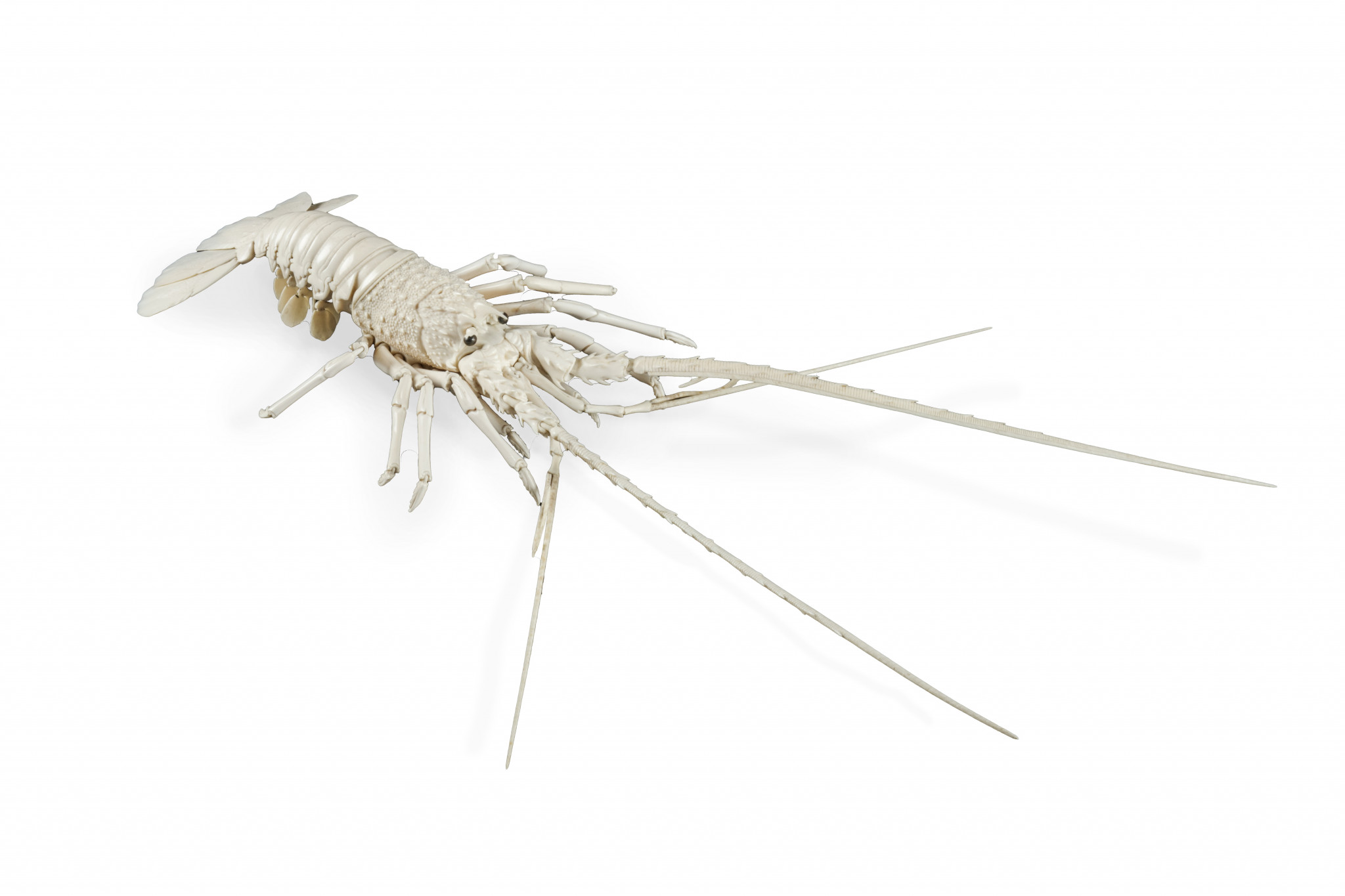
An extremely fine Japanese fully articulated ivory okimono of a spiny lobster, ebi, by Yamazaki Nankai
Meiji period, 19th century
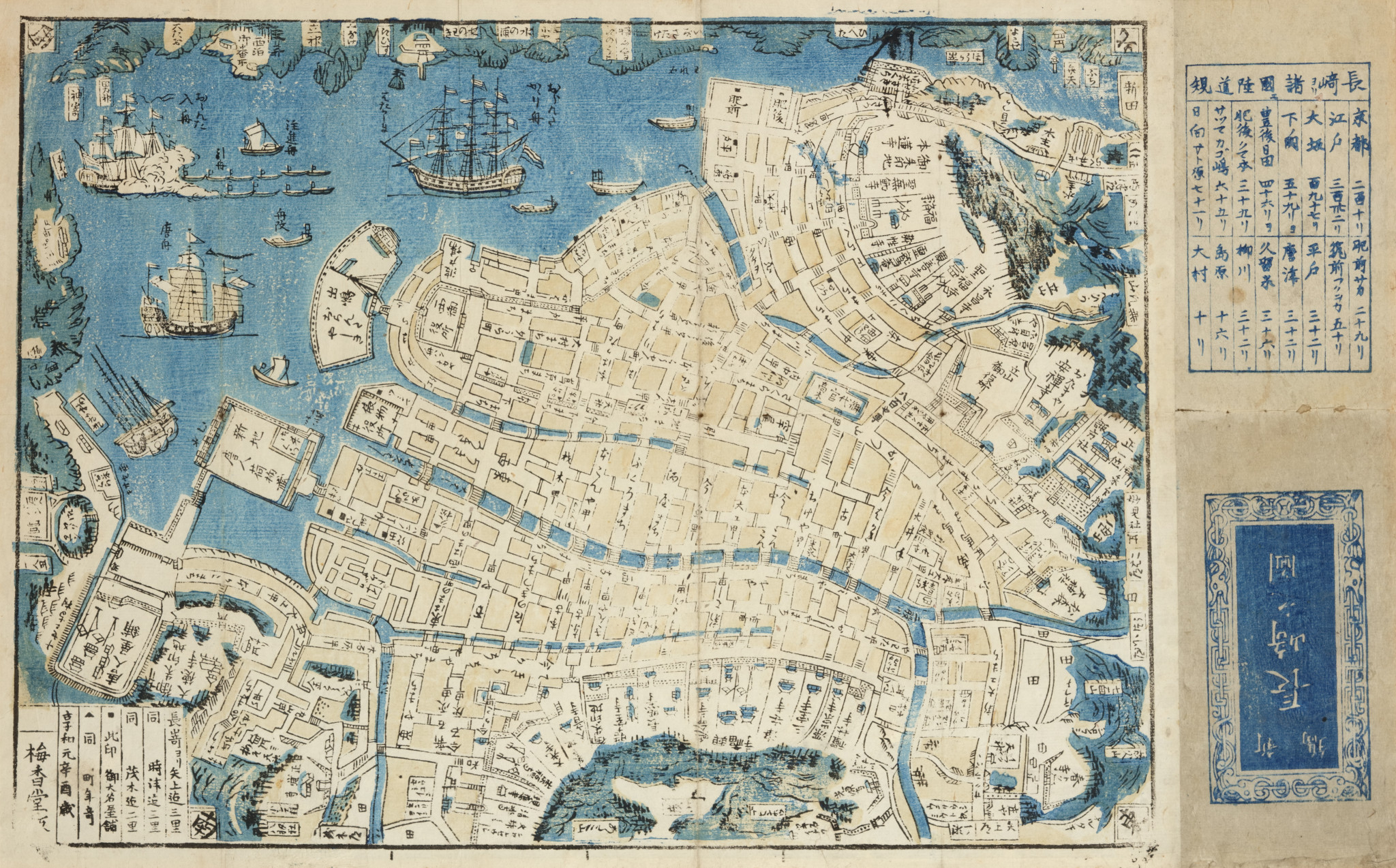
A Japanese woodblock print, Nagasaki-e, of Nagasaki Harbour, Shinkan Nagasaki no dzu
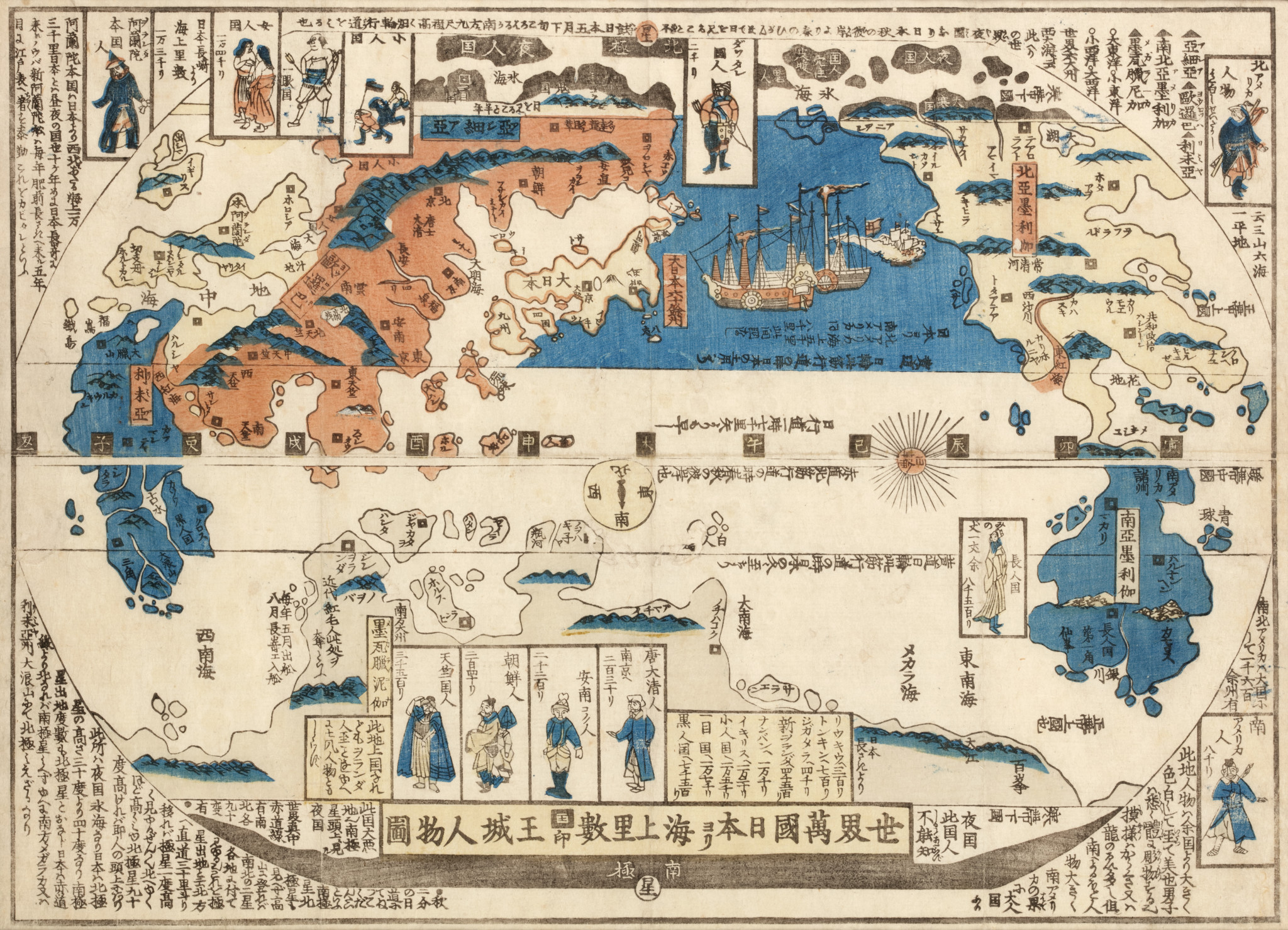
A Japanese world map woodblock print, Sekai bankoku Nihon yori kaijo risu ojo jimbutsu (Pictorial map of distances from Japan, the names of many lands and their people)
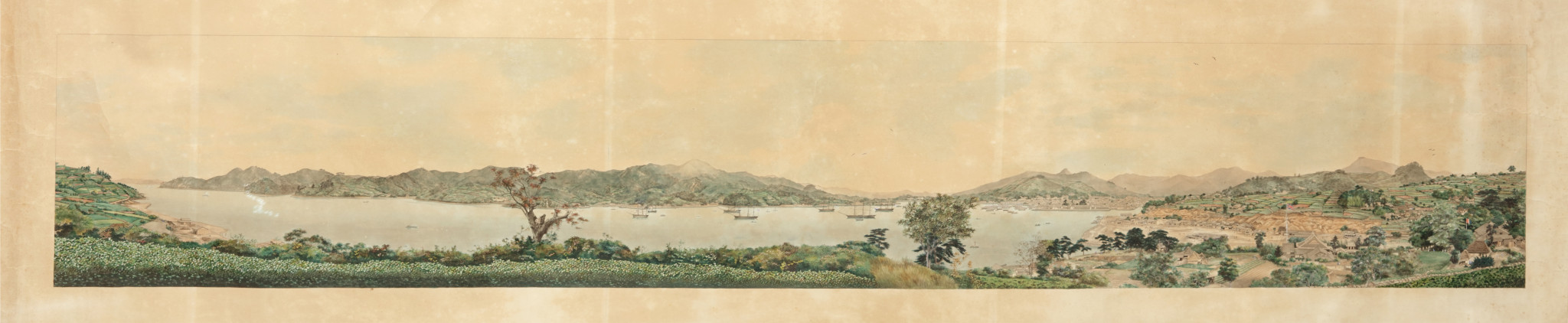
Unknown Japanese artist (19th century)
Large panoramic painting of the bay of Nagasaki, painted after photographs taken by Pierre Rossier (Swiss 1829 – c. 1886), in 1860
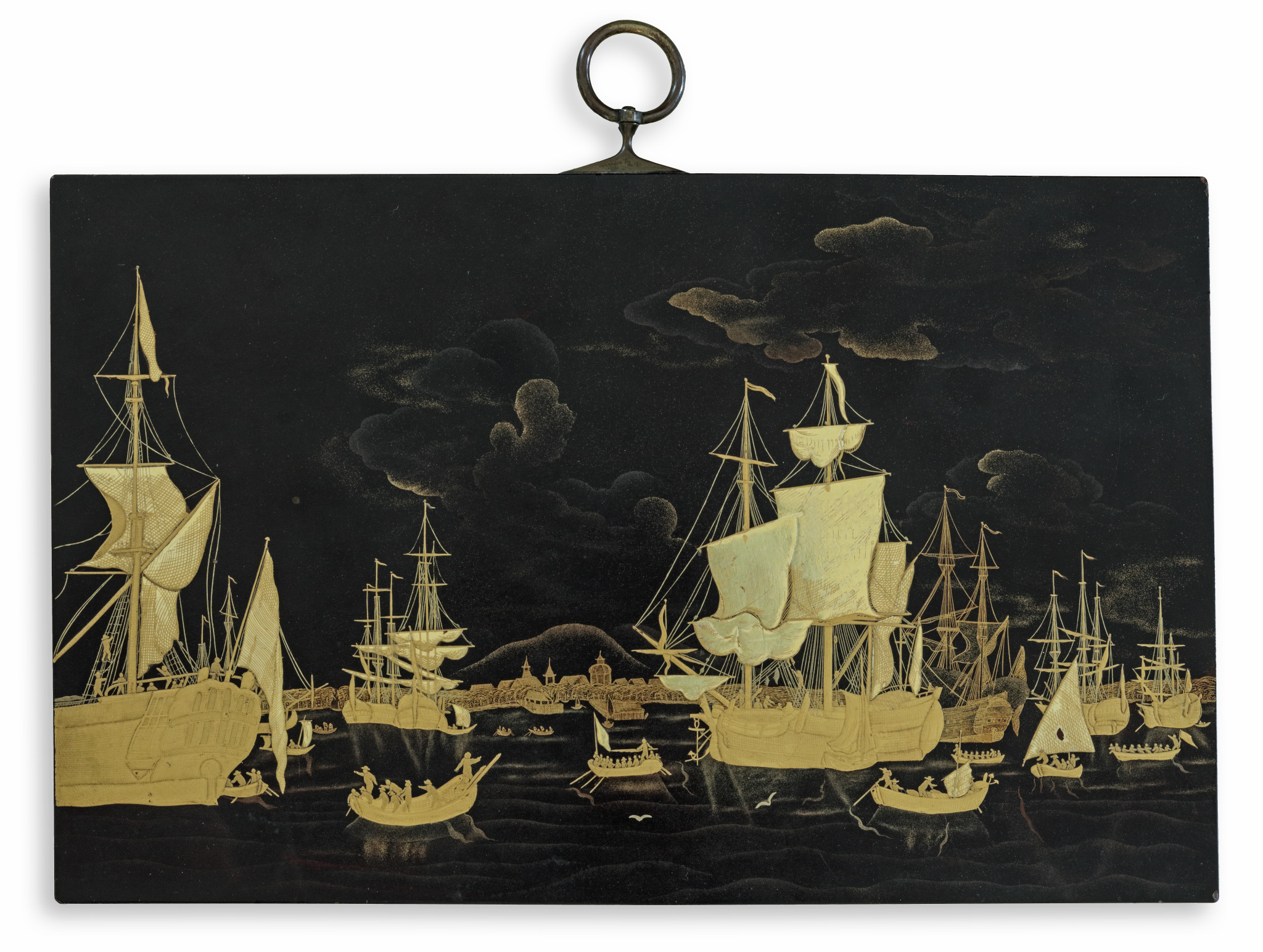
A Japanes lacquer plaque depicting the roadstead of Batavia by 'Lakwerker Sasaya'
By “LAKWERKER SASAYA” (act. circa 1780-1820), Nagasaki, Edo period circa 1800
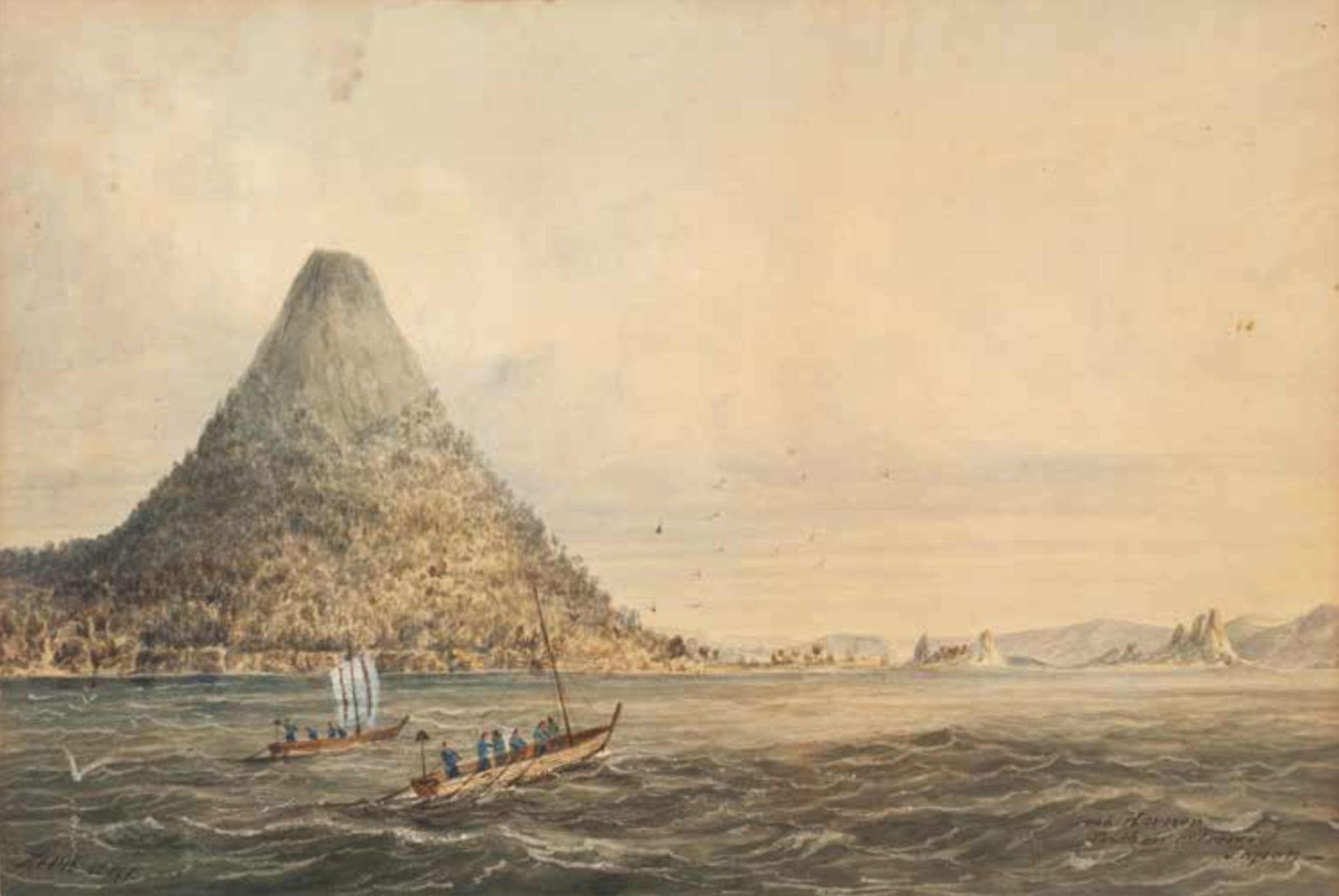
Edward Meyer Kern (1823-1863)
“Peak Horner, Southern extreme of Japan”
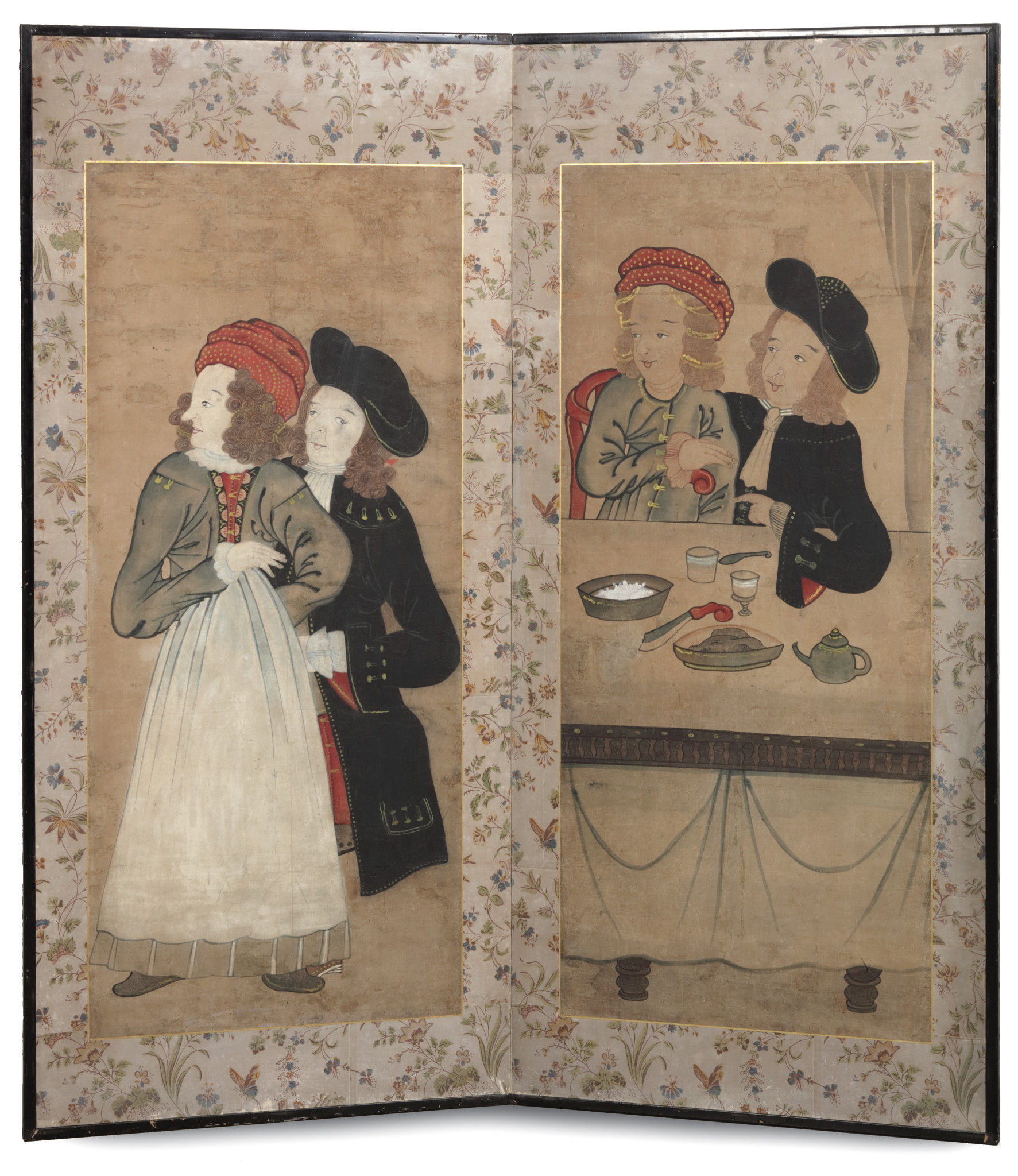
A Japanese two-fold screen, byobu, possibly by Araki Kunsen (1781-1819), depicting a Dutch couple
Edo period, early 19th century
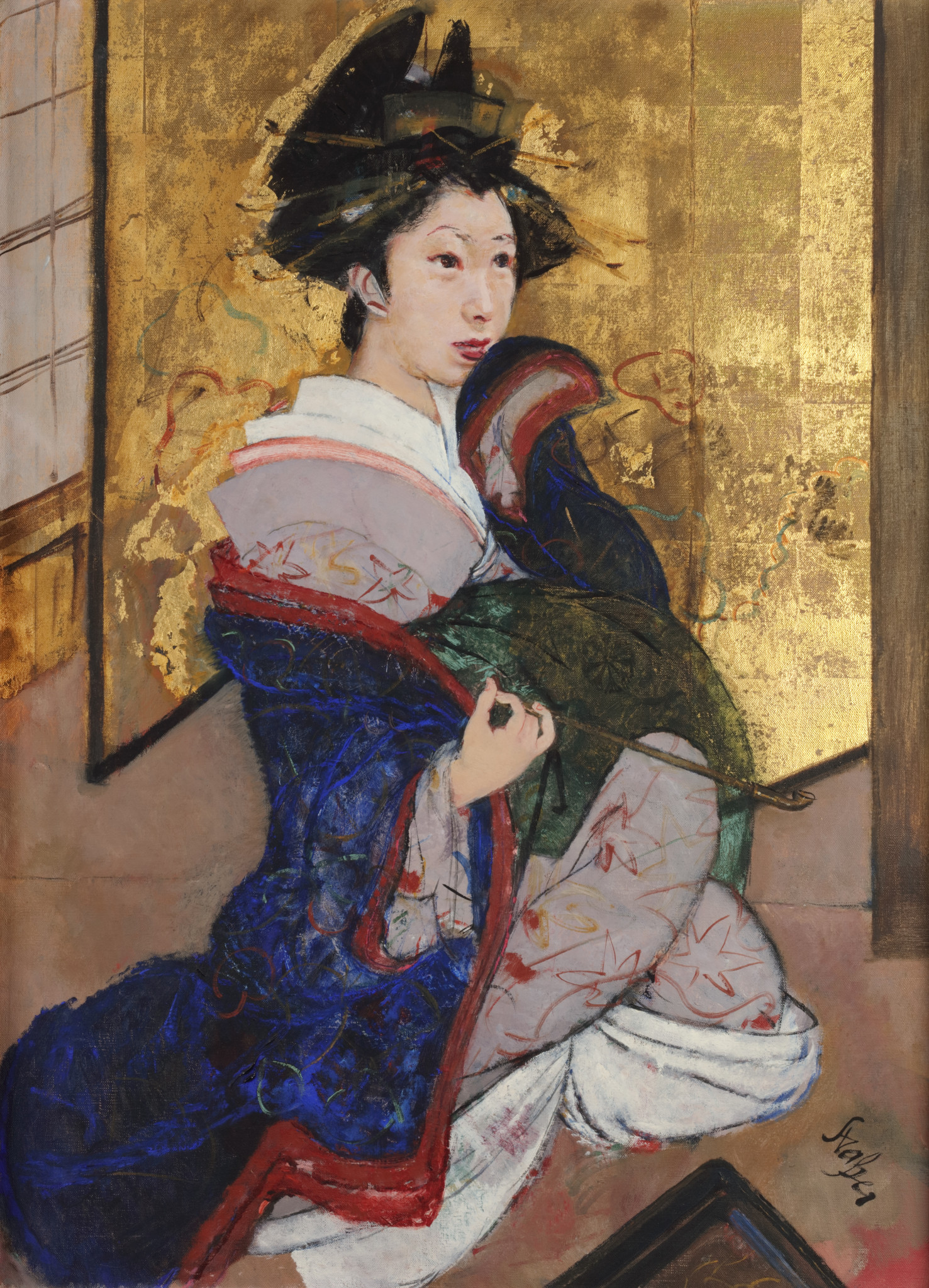
Roland Strasser (1895-1974)
Portrait of a Geisha
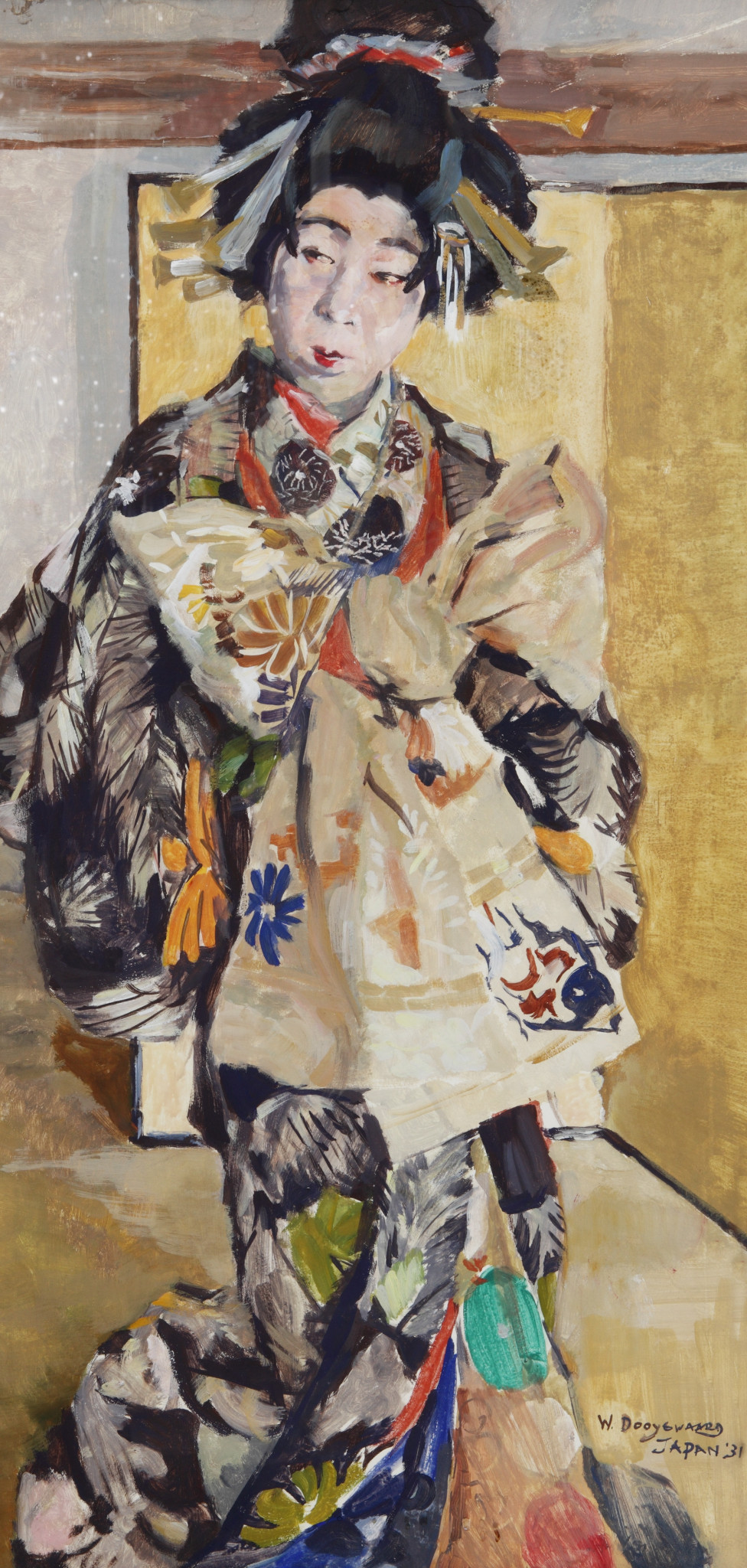
Willem Dooijewaard (1892-1980)
'Inside the Okiya'
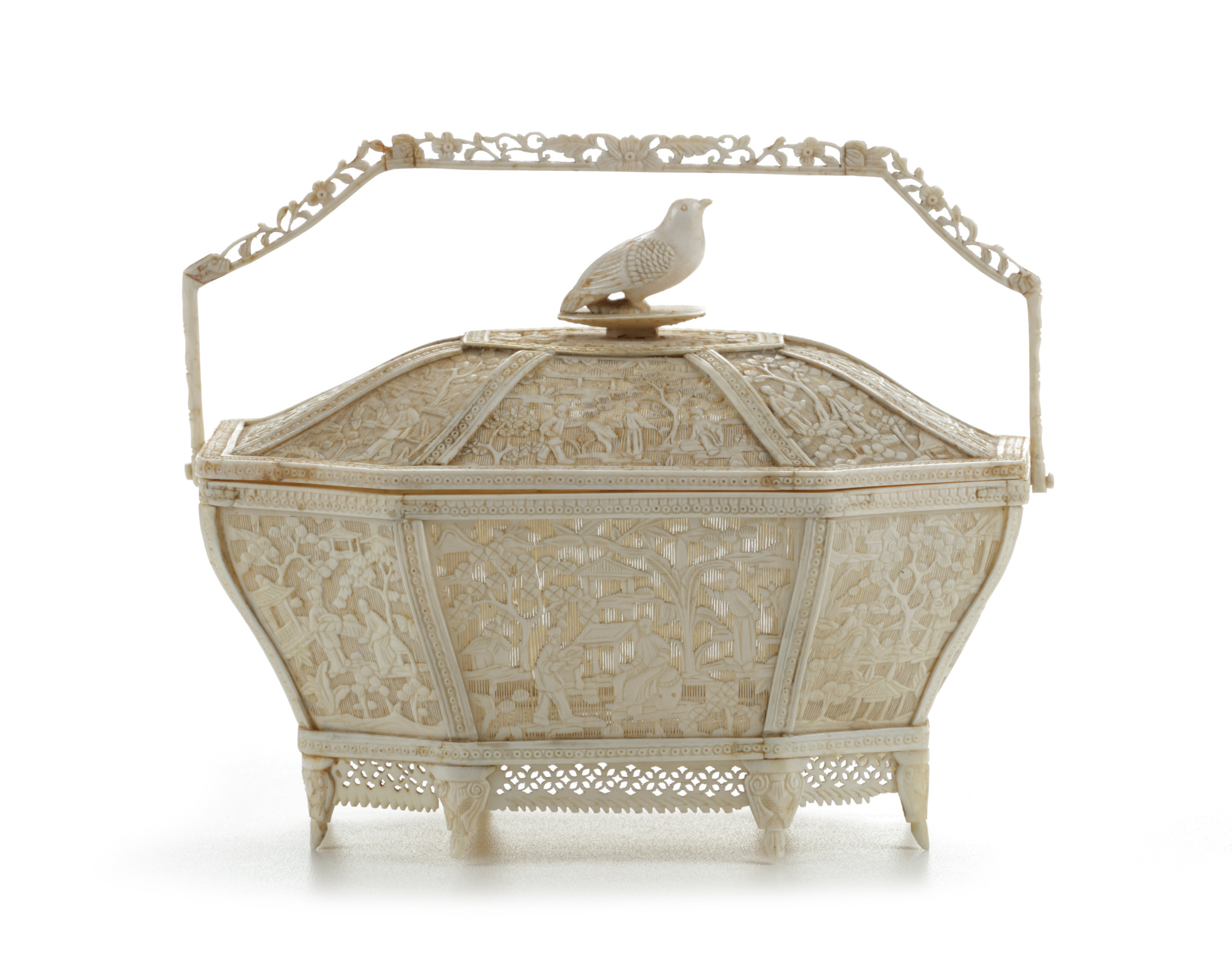
A highly refined Chinese Cantonese ivory openwork basket with lid
Canton, circa 1810
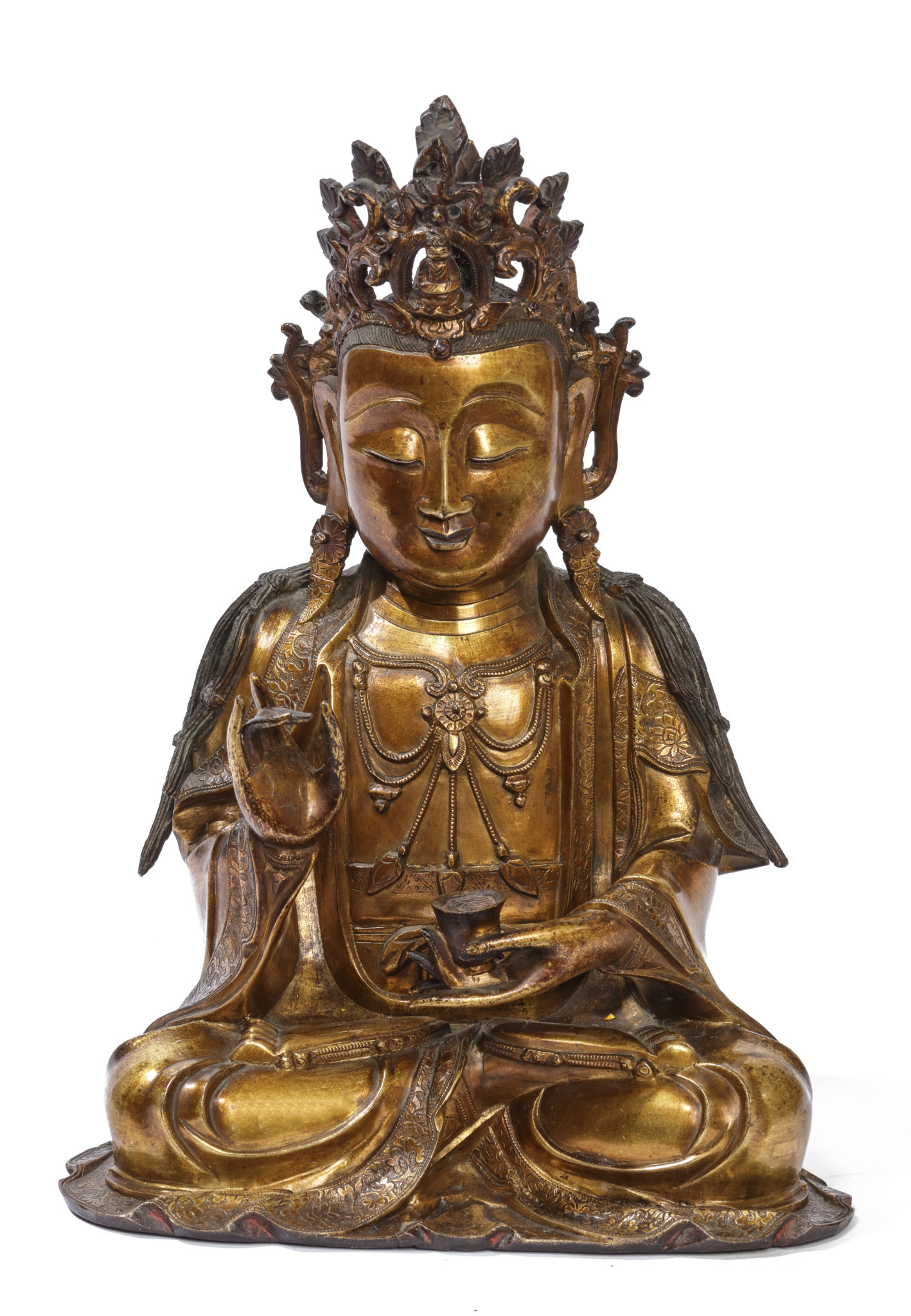
A very fine Chinese gilt-bronze figure of Guanyin
Ming-dynasty, late 16th/early 17th century
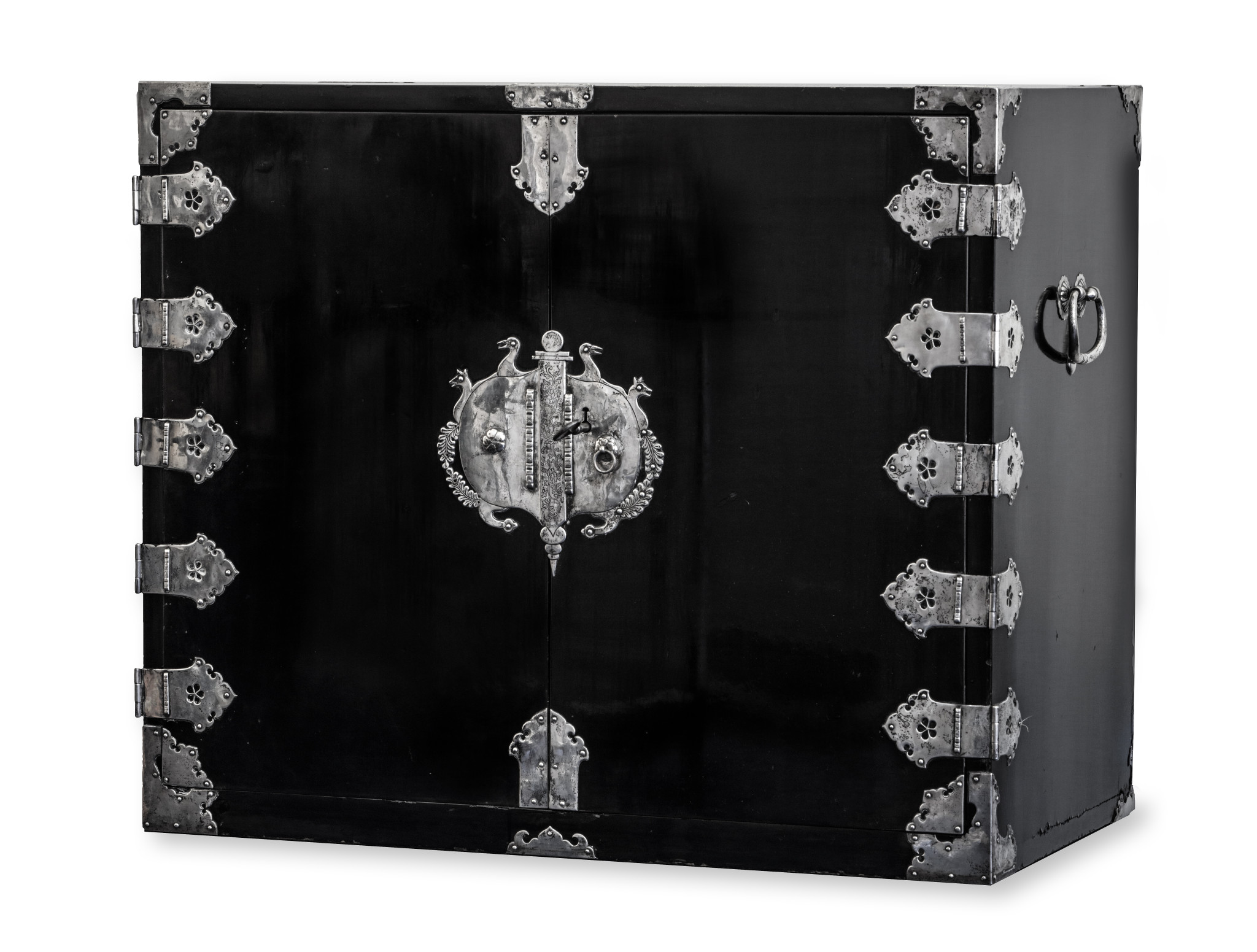
A unique Dutch-Colonial Japanese black lacquer cabinet with silver mounts
Edo period, last quarter 17th century
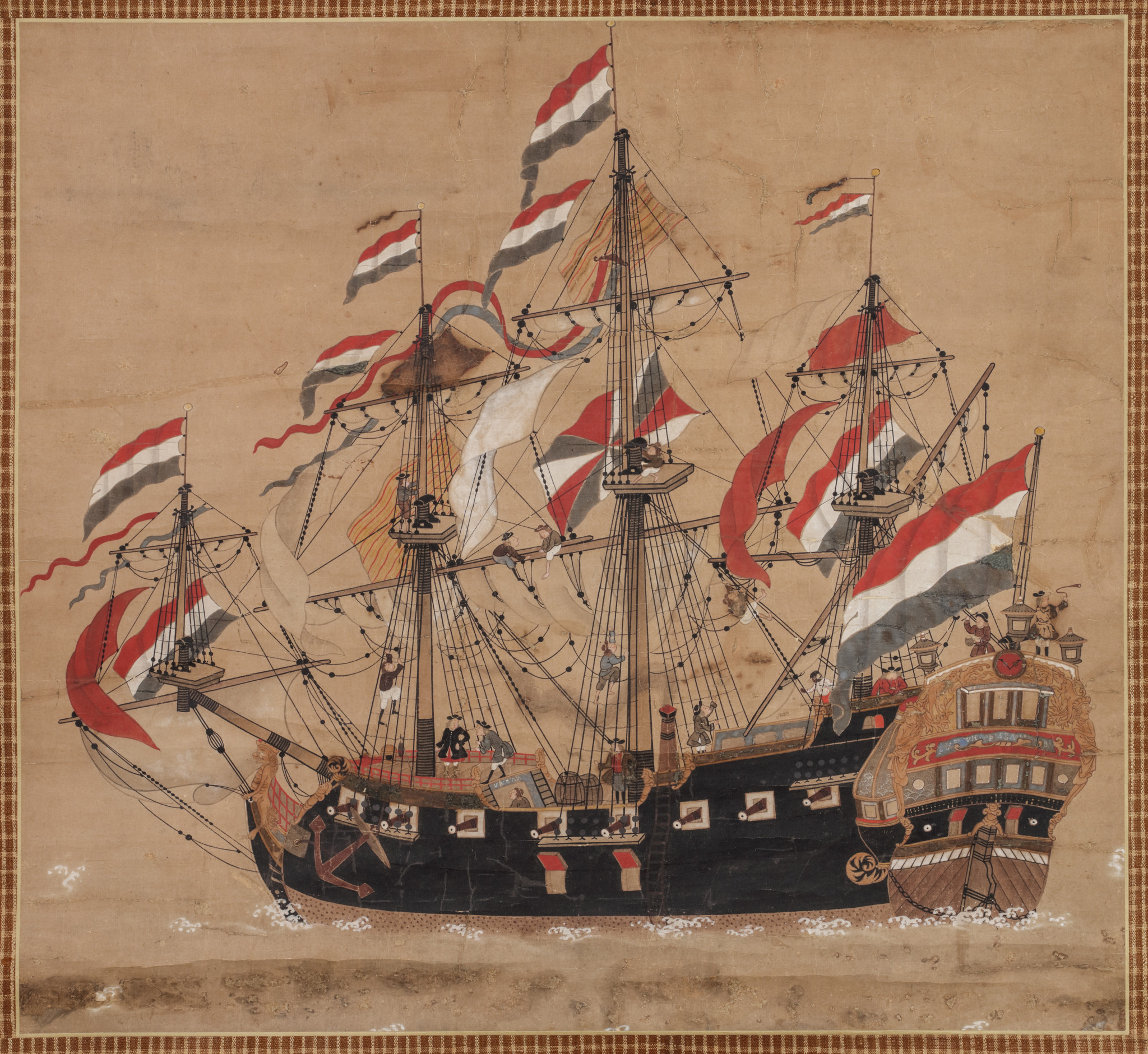
A Japanese scroll painting depicting a Dutch Ship
Nagasaki School, late 18th century
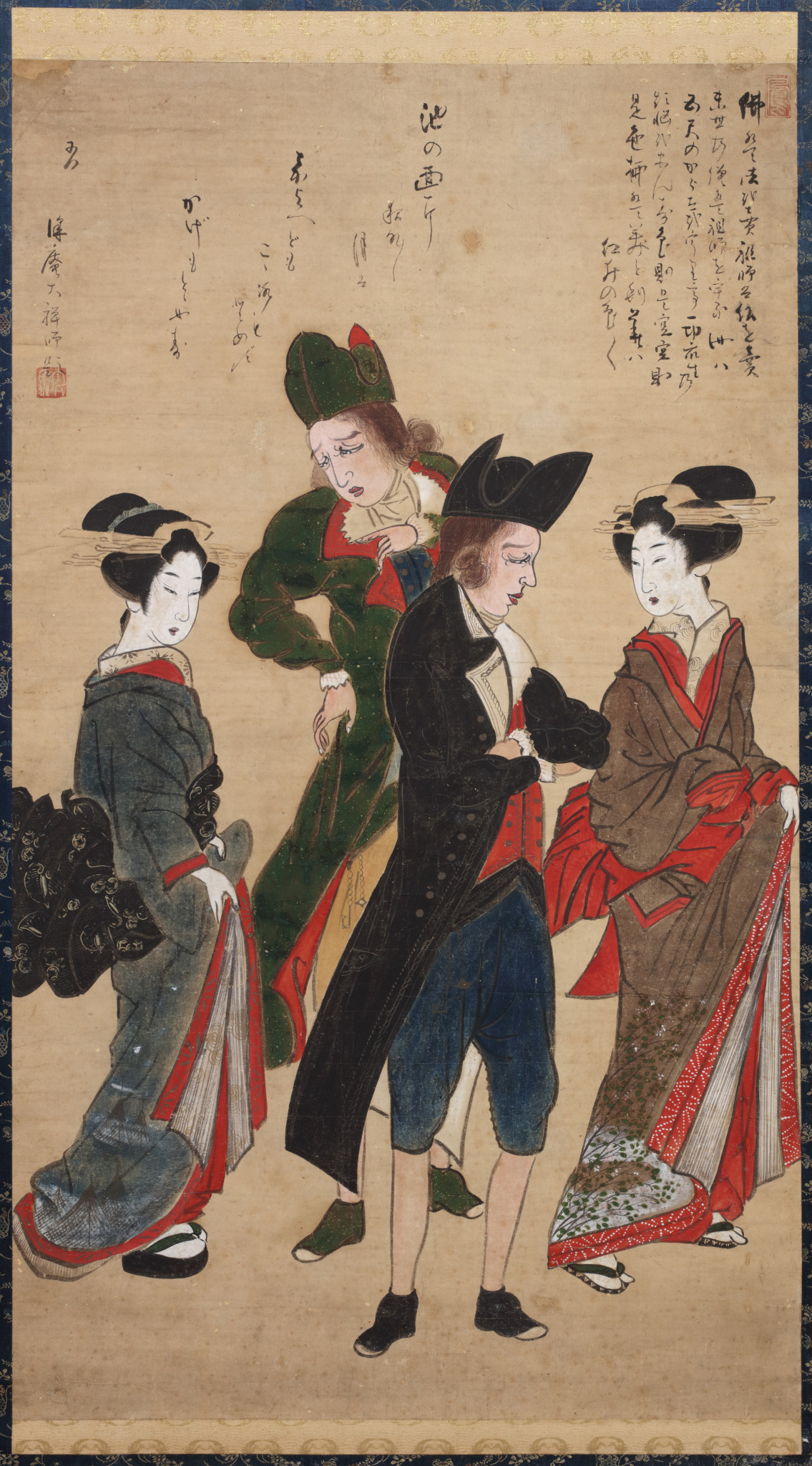
A rare Japanese Nagasaki school scroll painting, Kakemono, depicting Dutchmen and Keisei, attributed to Ishizaki Yũshi (1768-1846)
Late 19th century
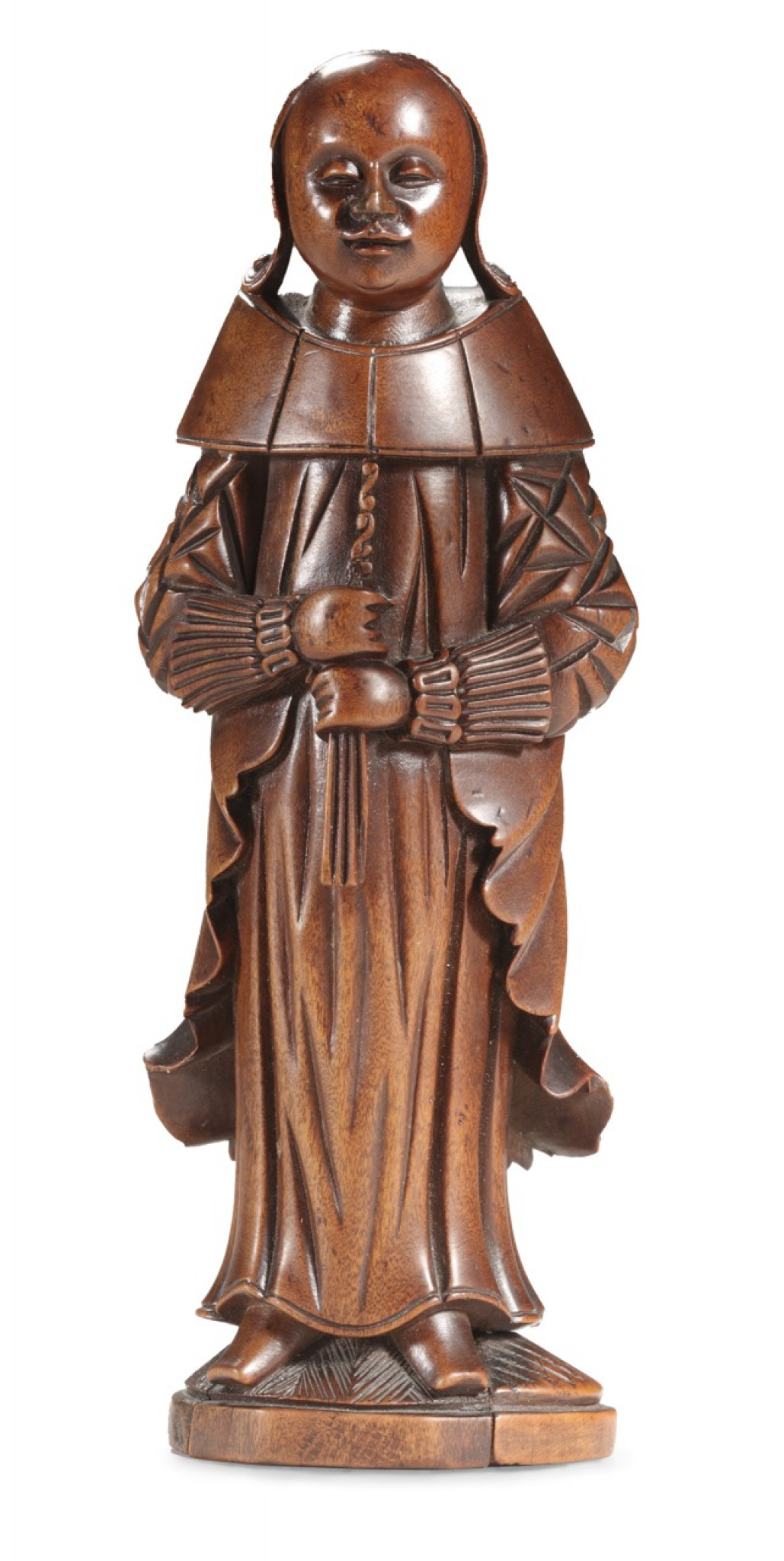
A highly unusual Chinese sandalwood figure of a Dutch lady
Canton or Batavia (Jakarta), late 17th century
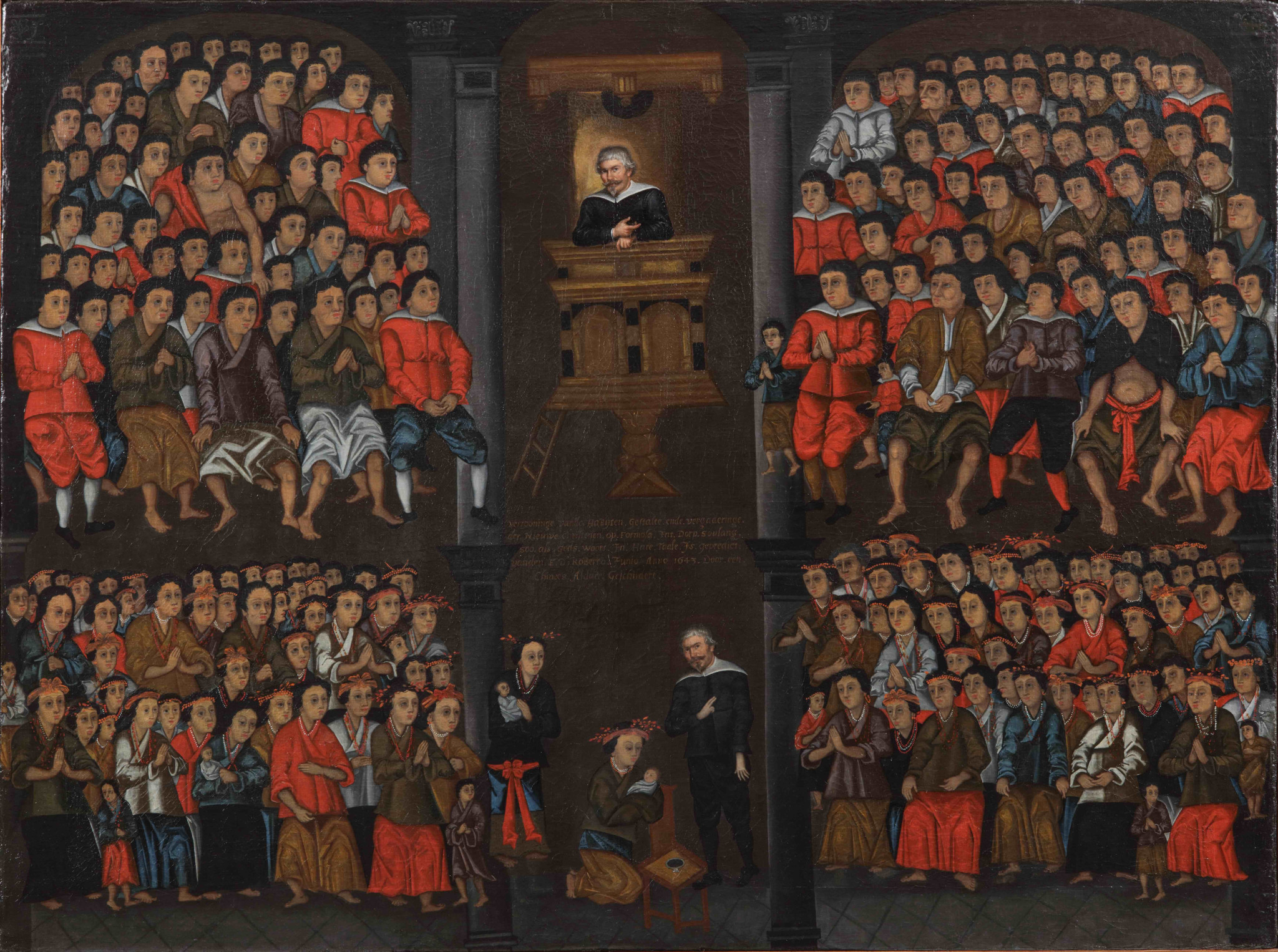
An extremely important painting by Adriaen Souter (1628-1670) and an unknown Chinese painter
Vertooninge. Vande. habijten. Gestalte. ende. vergaderinge. /der. Nieuwe Christenen op. Formosa. Int. Dorp. Soulang. / soo. als. Gods. woort. In Hare Taale Is Gepredict/ vanden. E.D. Roberto. Junio. Anno 1643. Door een/ chinees. Aldaer geschildert.
(Depiction of the clothing, figures and assembly of the new Christians in Formosa in the village of Soulang, while the Word of God is preached in their language by the minister Robert Junius, anno 1643. Painted there by a Chinese artist).
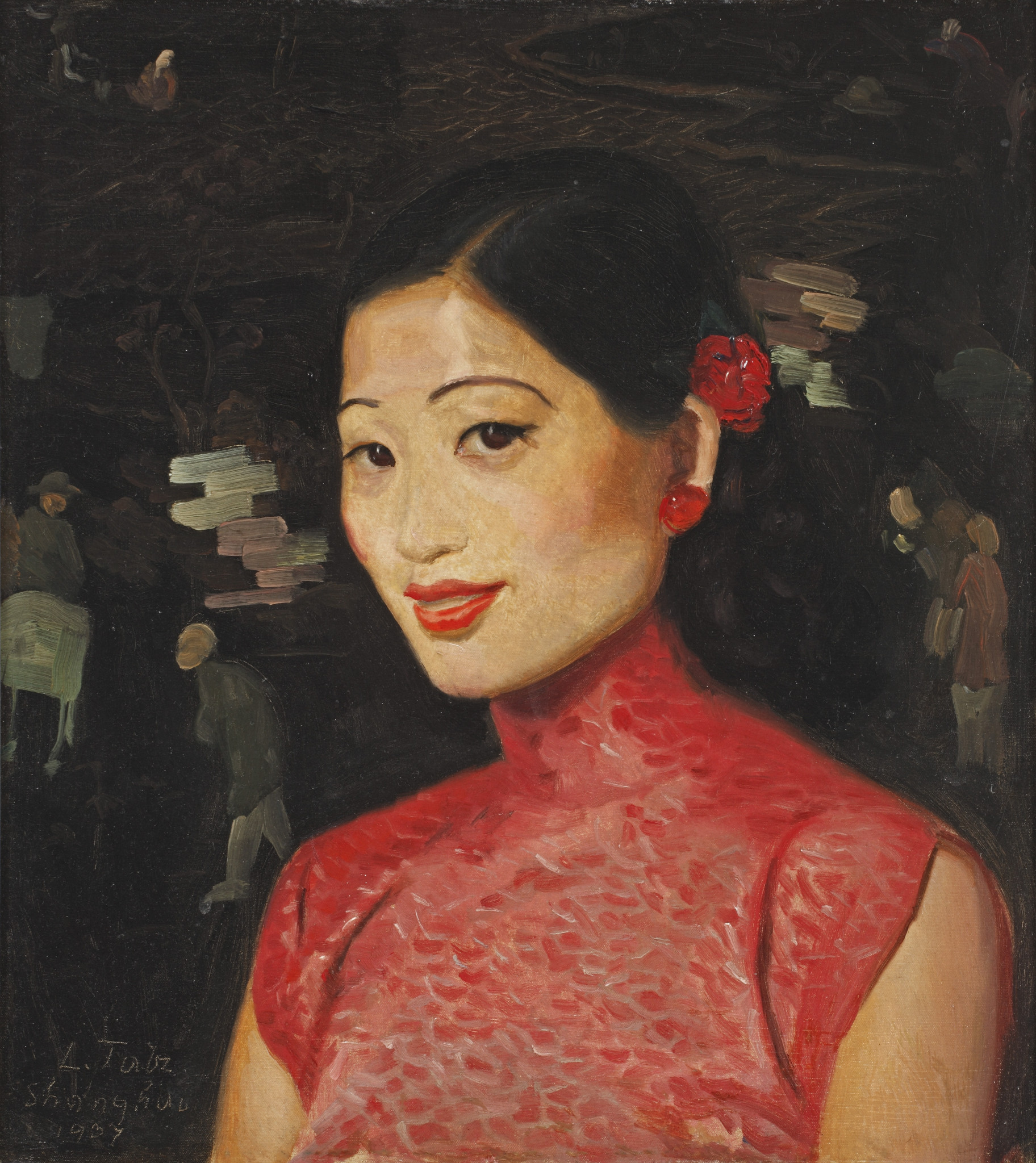
Laszlo Tatz (1881-1951)
Portrait of a Chinese woman
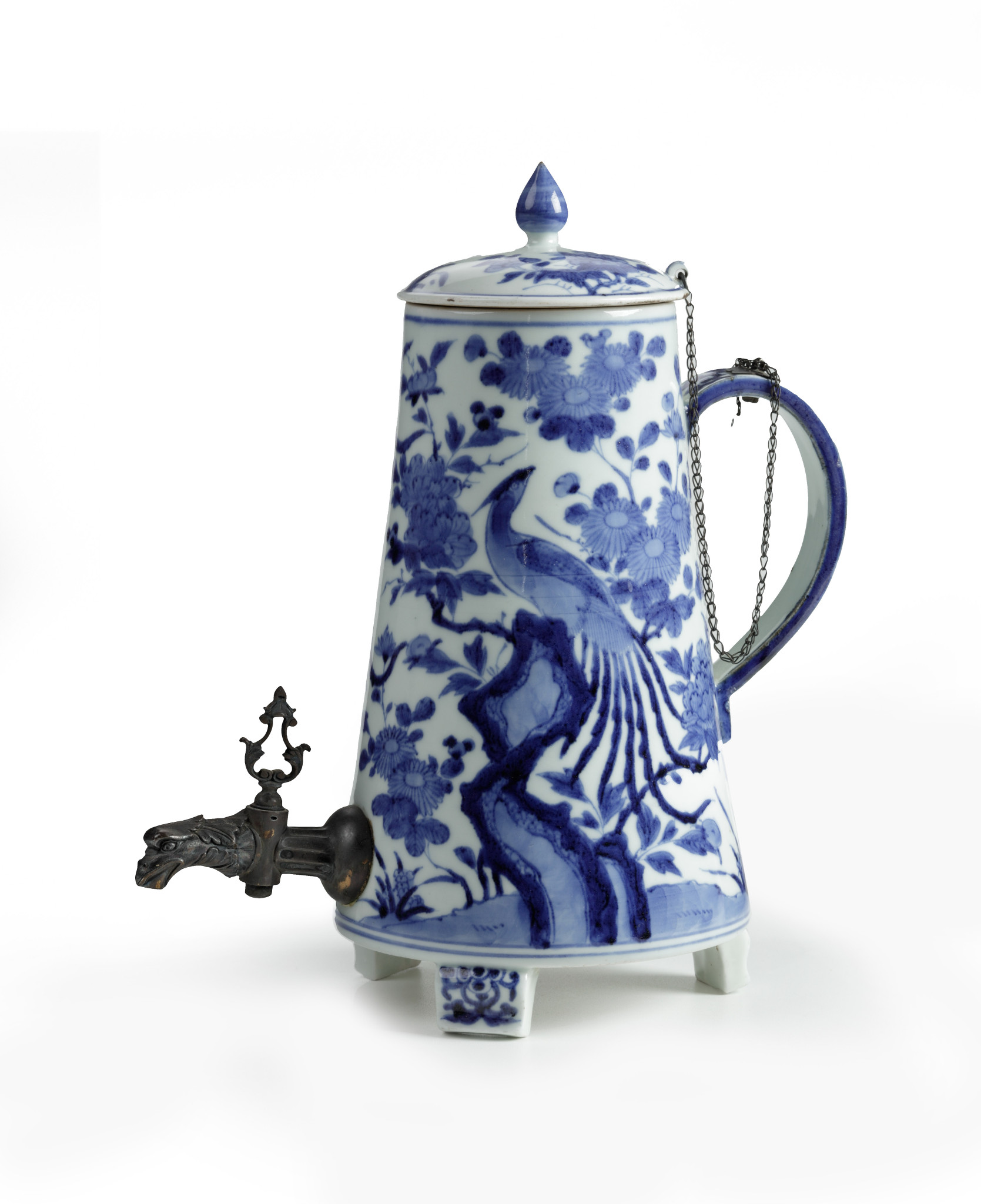
A Japanese Arita Porcelain Coffee Pot with cover
Edo Period, late 17th century
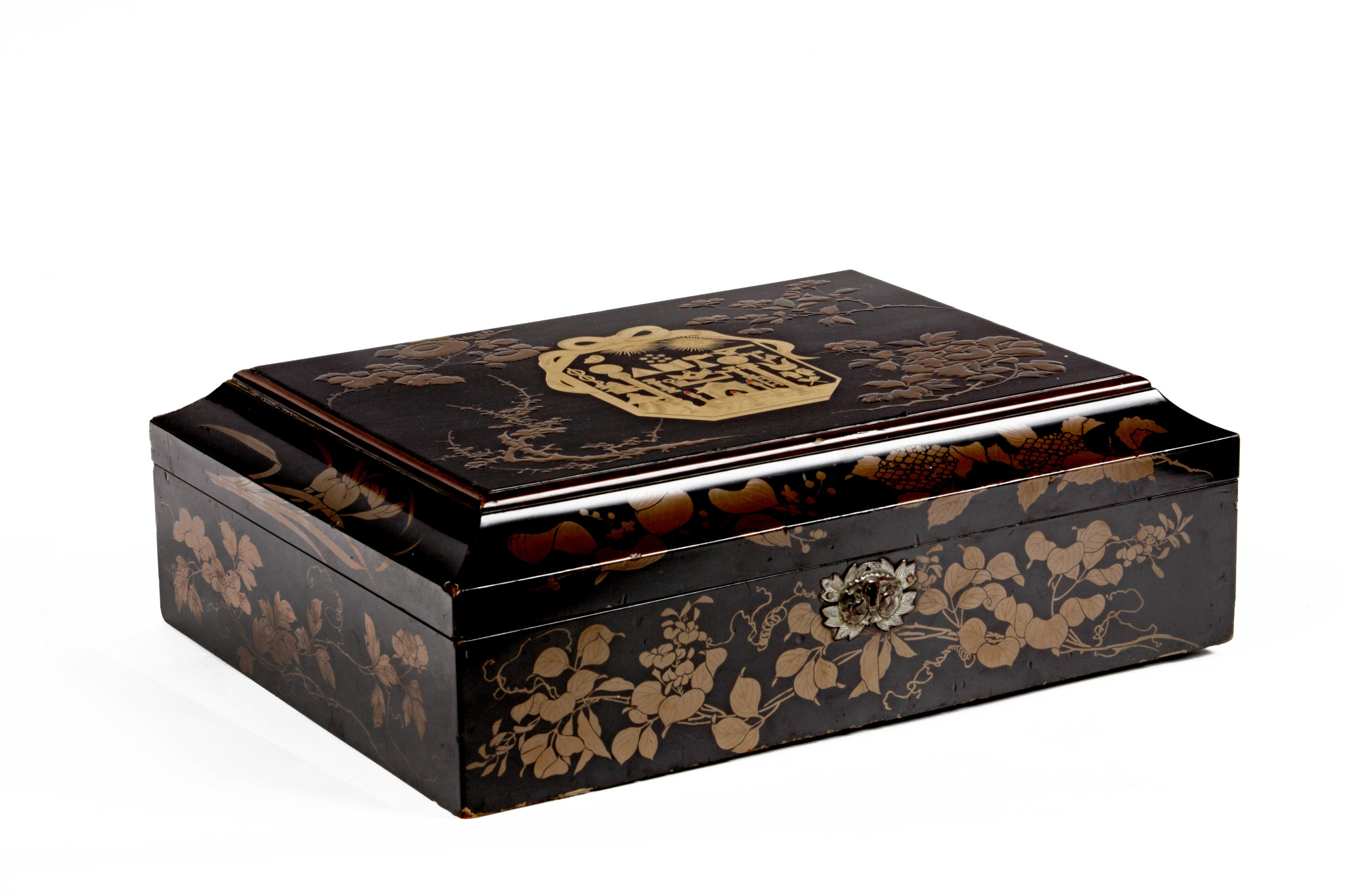
A rare Japanese Lacquer Box with Masonic regalia
Edo Period, early 19th century
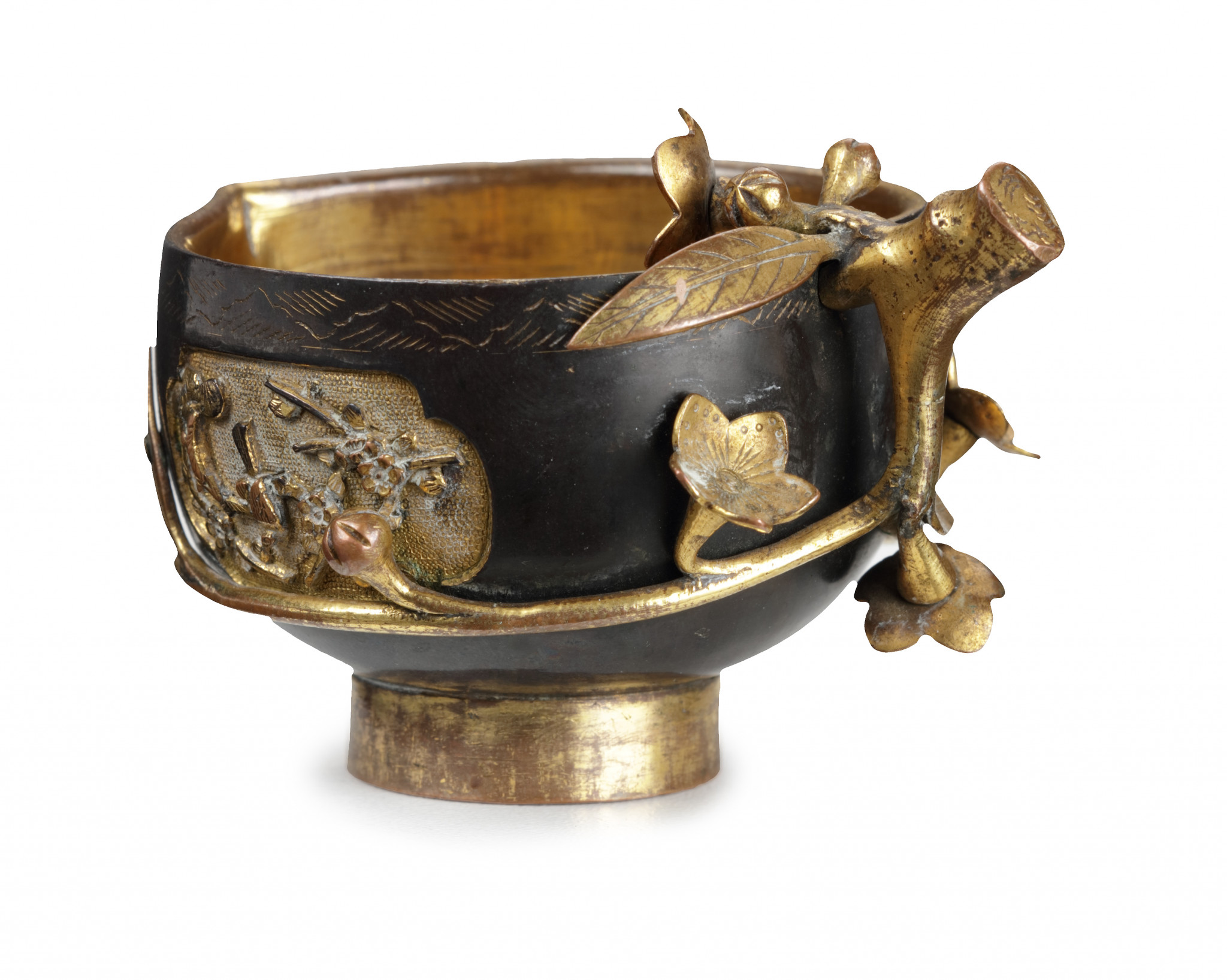
A Japanese small Sawasa 'peach-form' crucible cup
Edo period, early 18th century
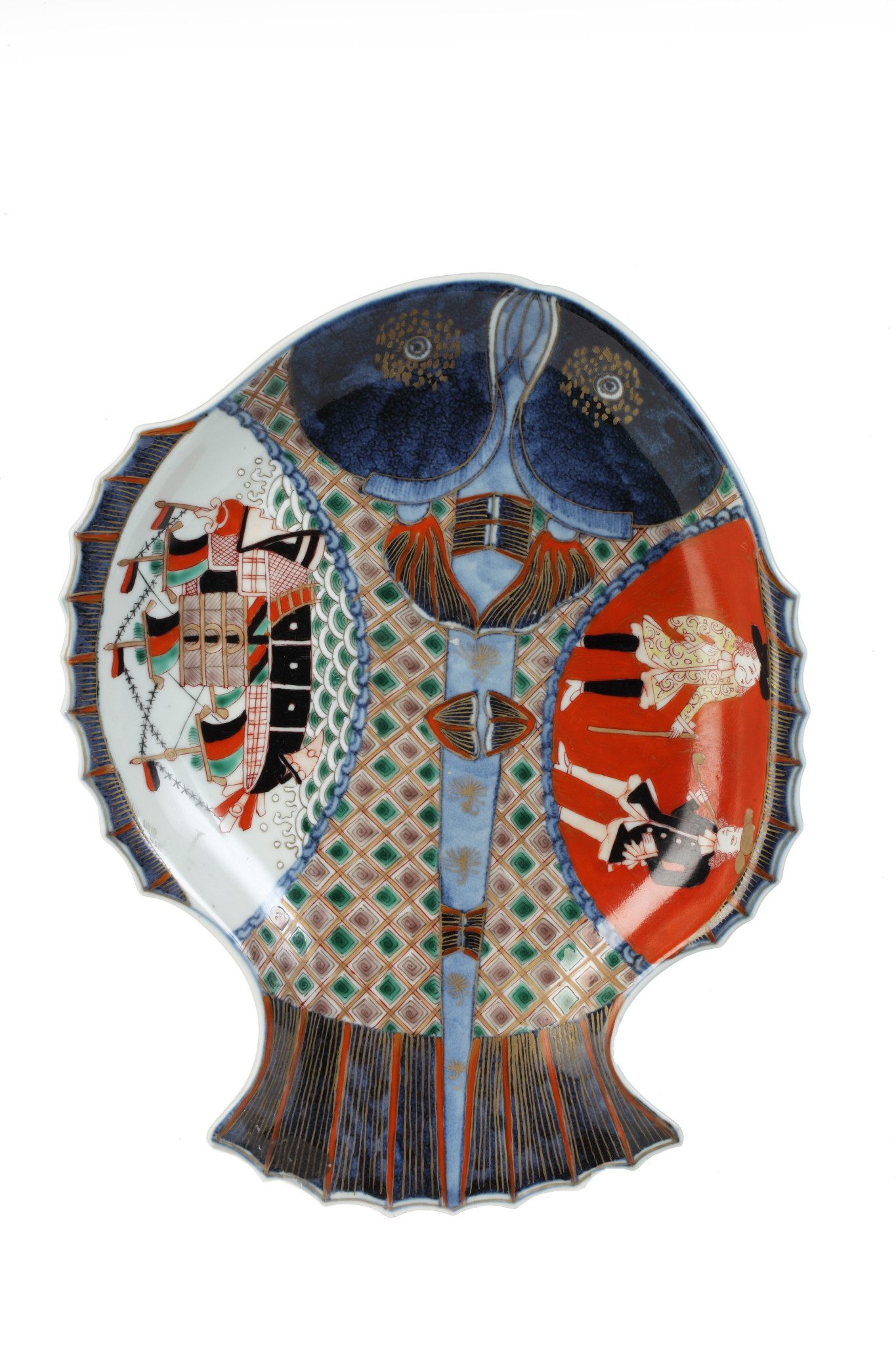
Arita Fish-formed Dutchmen Dish
19th century
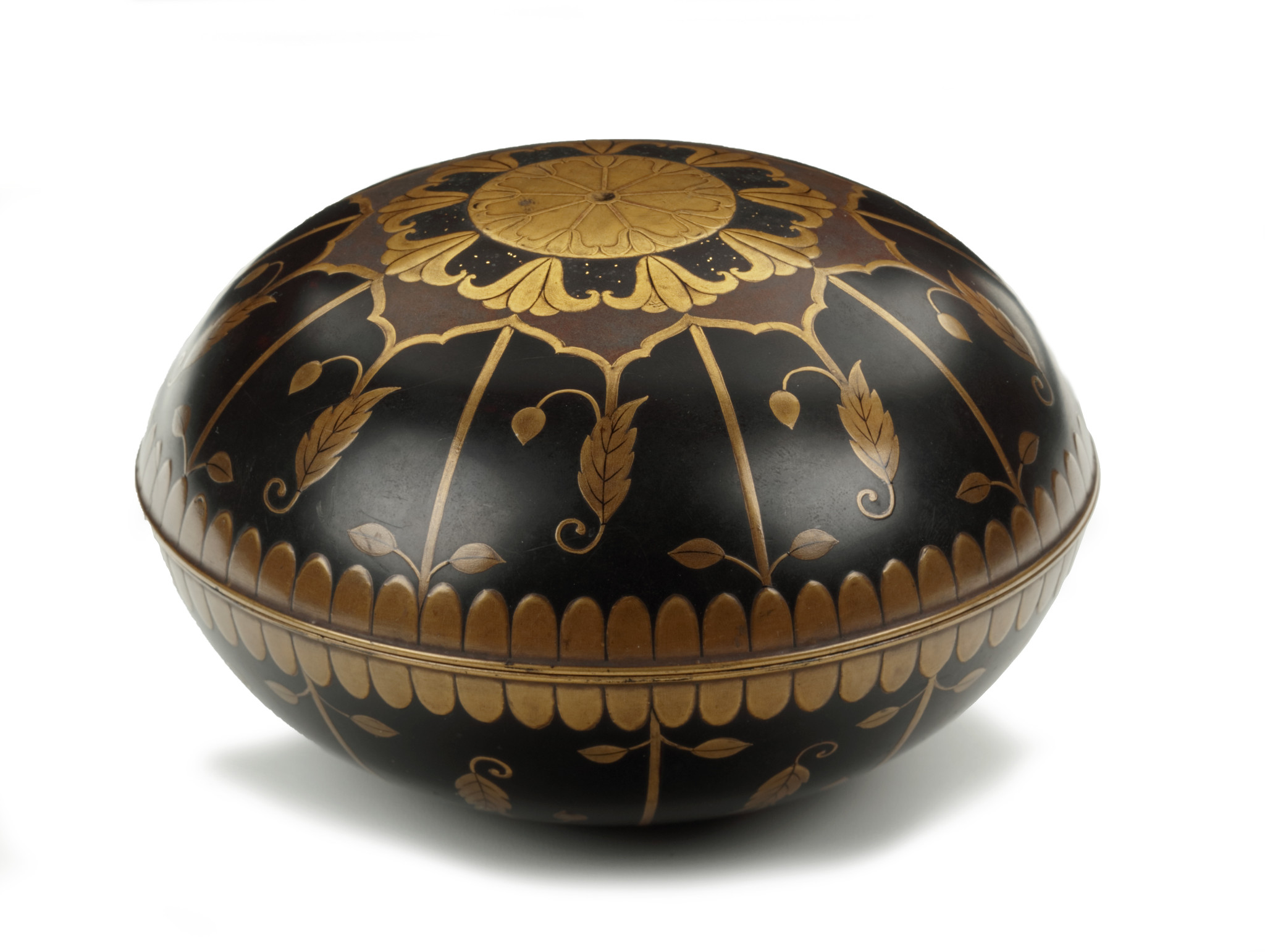
A japanese lacquer box with cover
Property from the Soame Jenyn’s Collection of Japanese and Chinese Art

Chinese Martaban Storage jars
Southern China, 17th/18th century
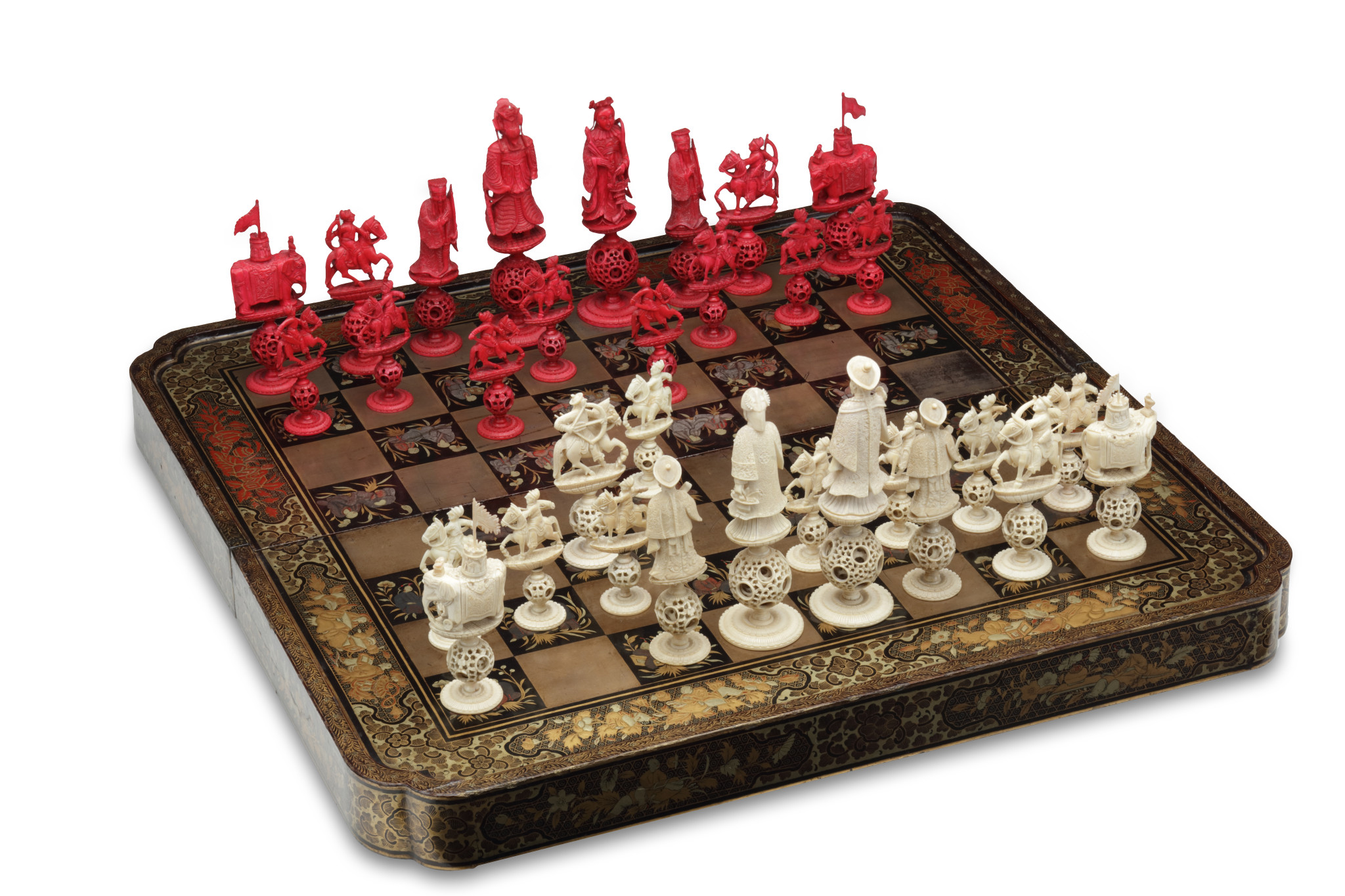
A Chinese lacquer game-chest with ivory chess set
Canton, mid 19th century
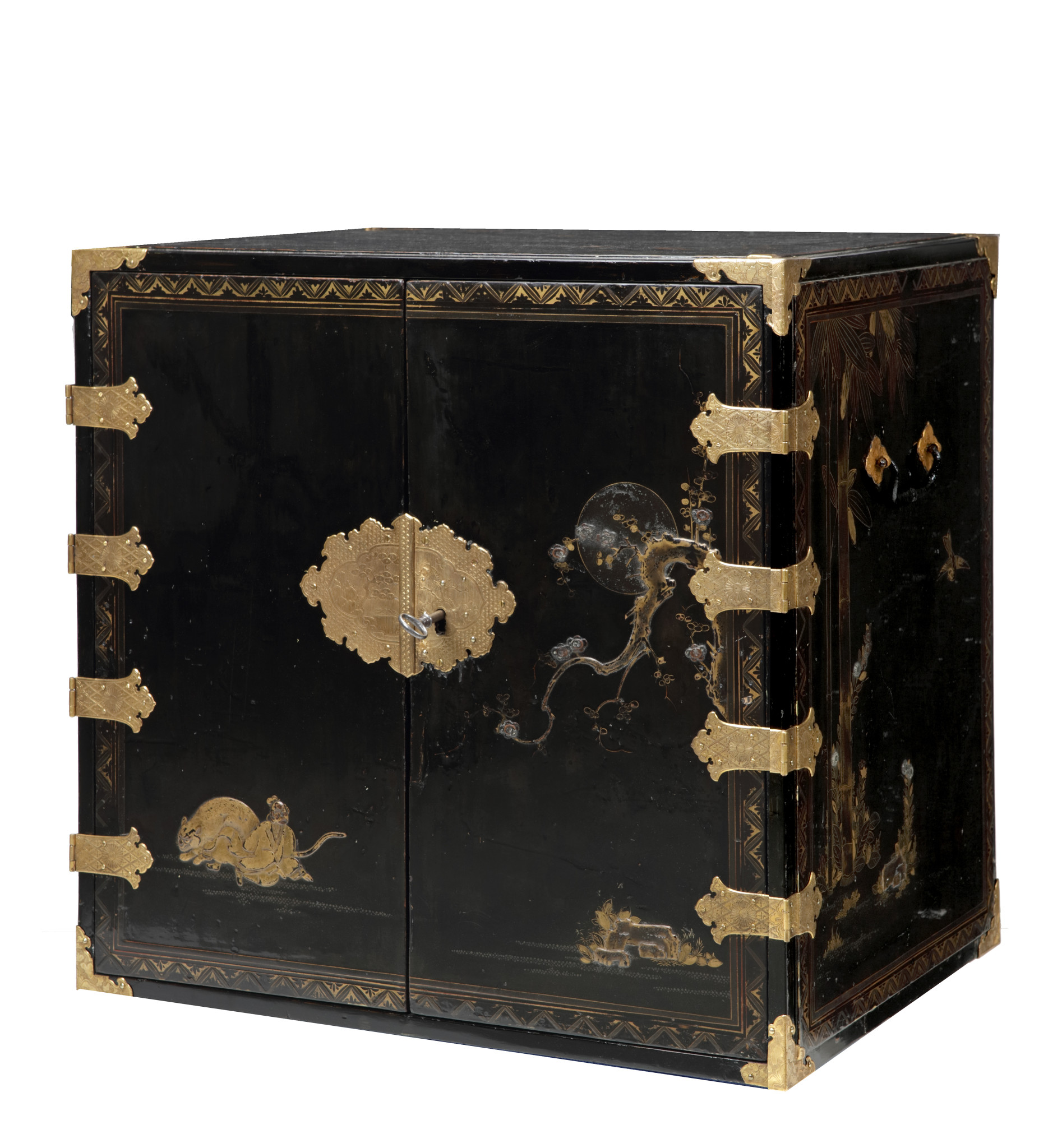
A fine Japanese Pictorial Style Lacquer cabinet with gilt-metal mounts
Kyoto, Edo period, 1670-1690
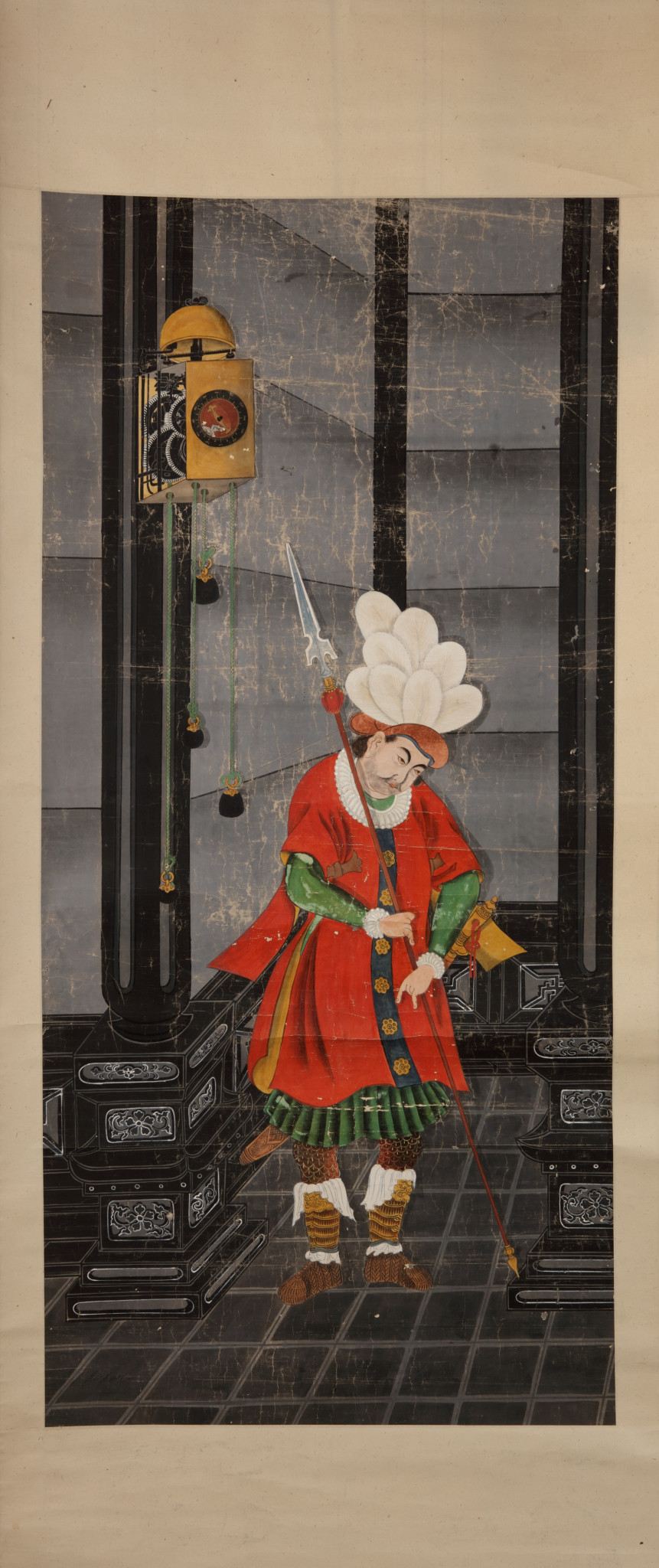
Attributed to Shiba Kokan (1747-1818)
Painting of a Fantasy Dutchman
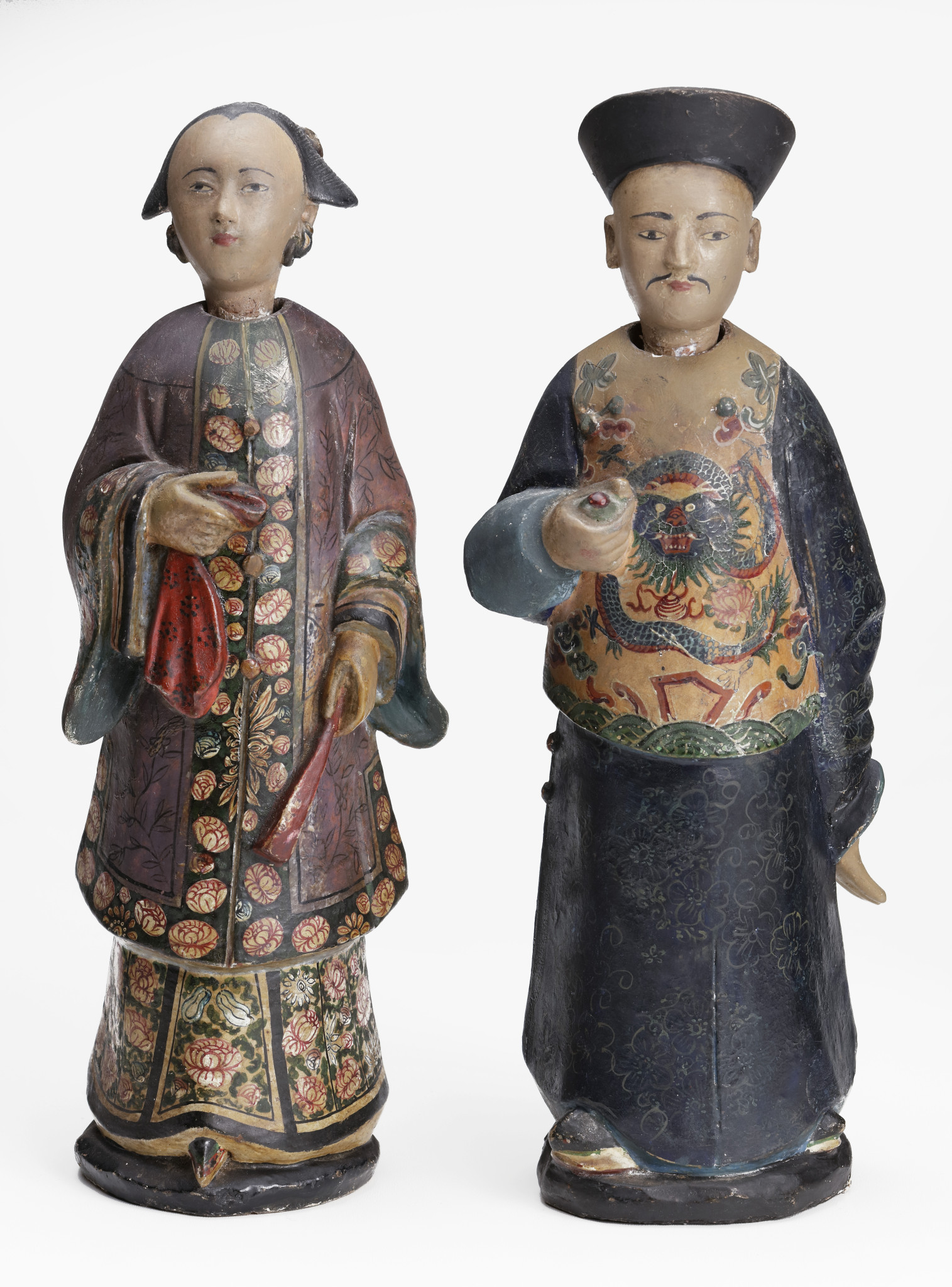
A pair of Chinese export painted earthenware nodding-head figures
Canton, first half 19th century
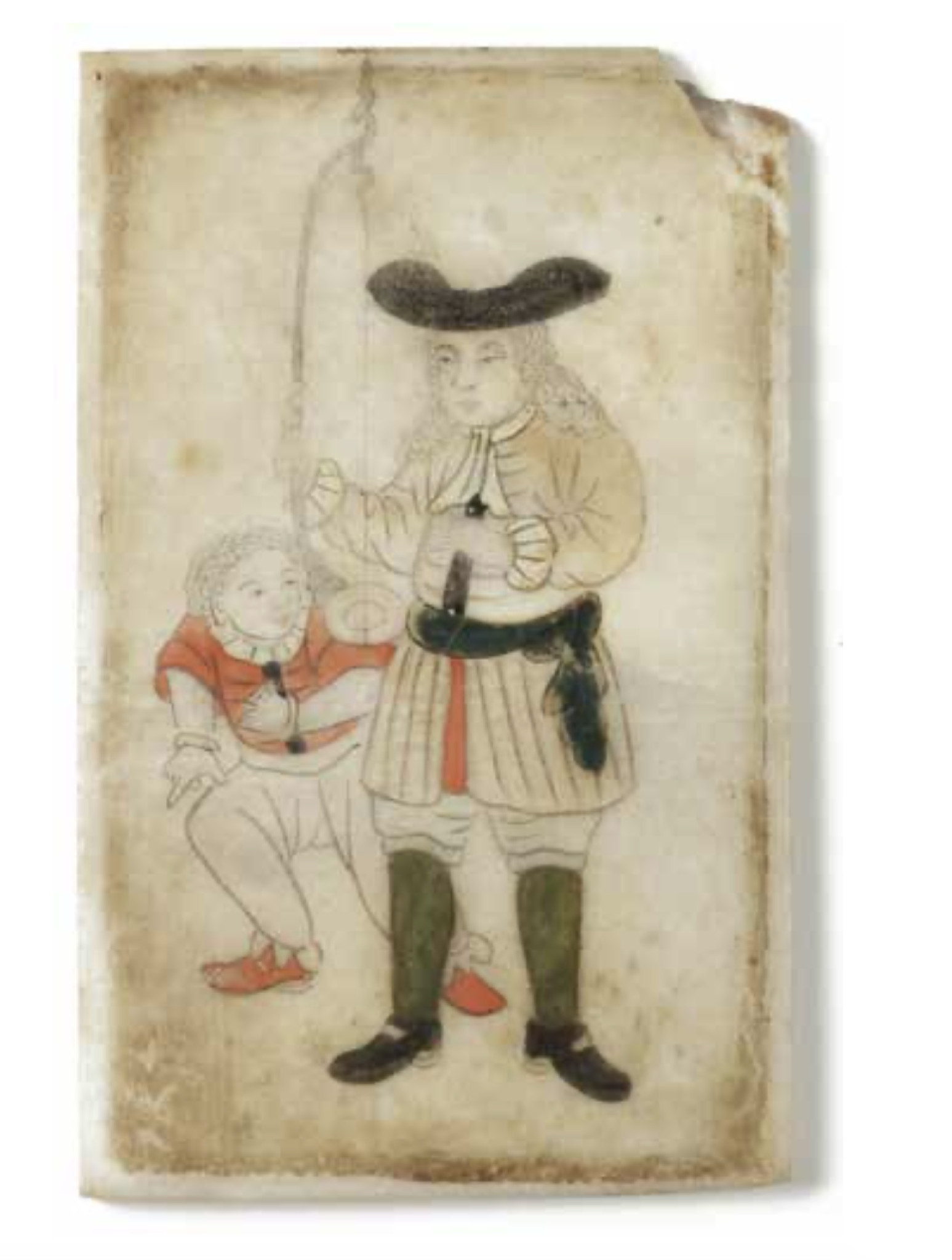
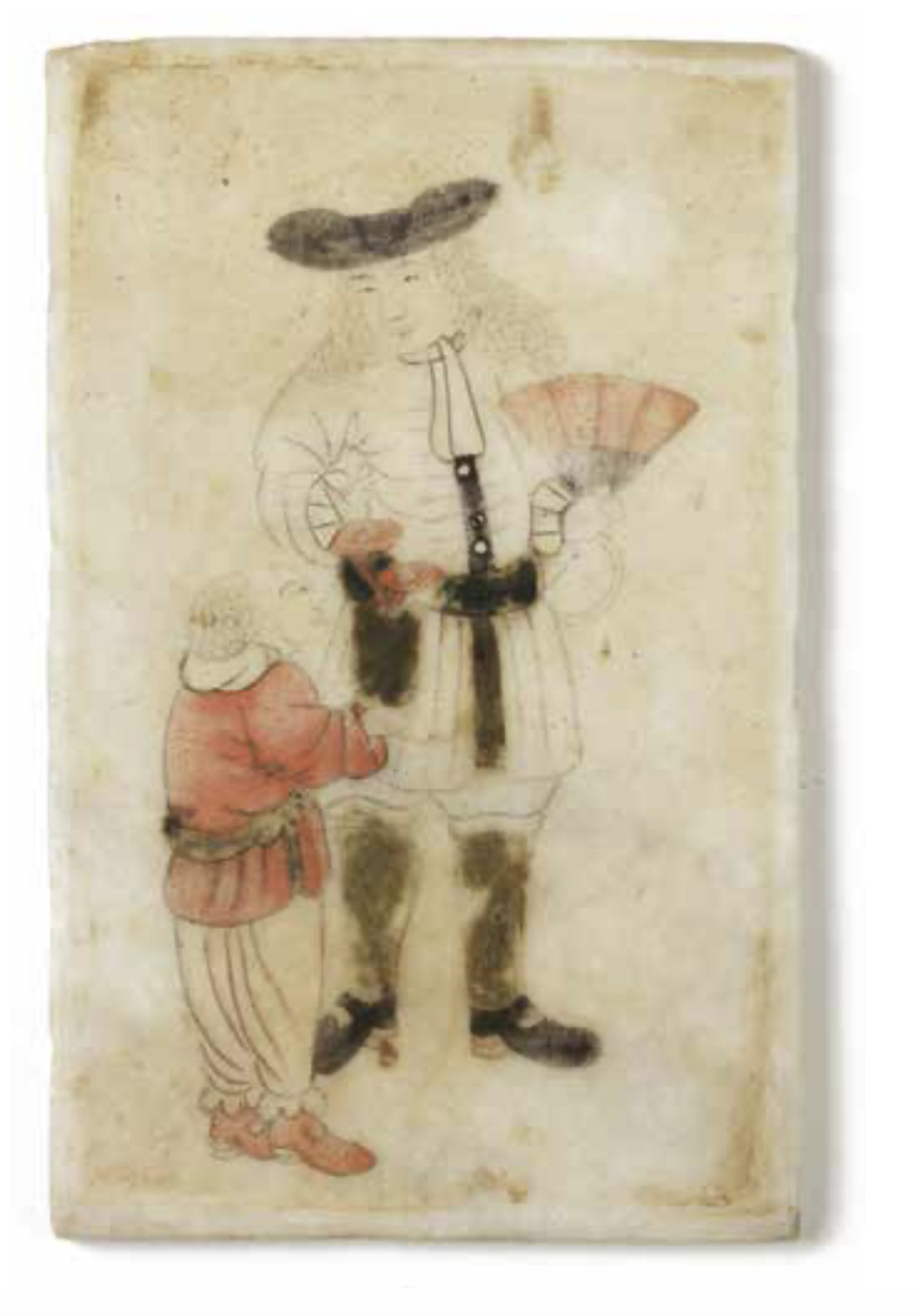
A pair of Chinese table screens with Dutchmen painted on marble
Mid 18th century
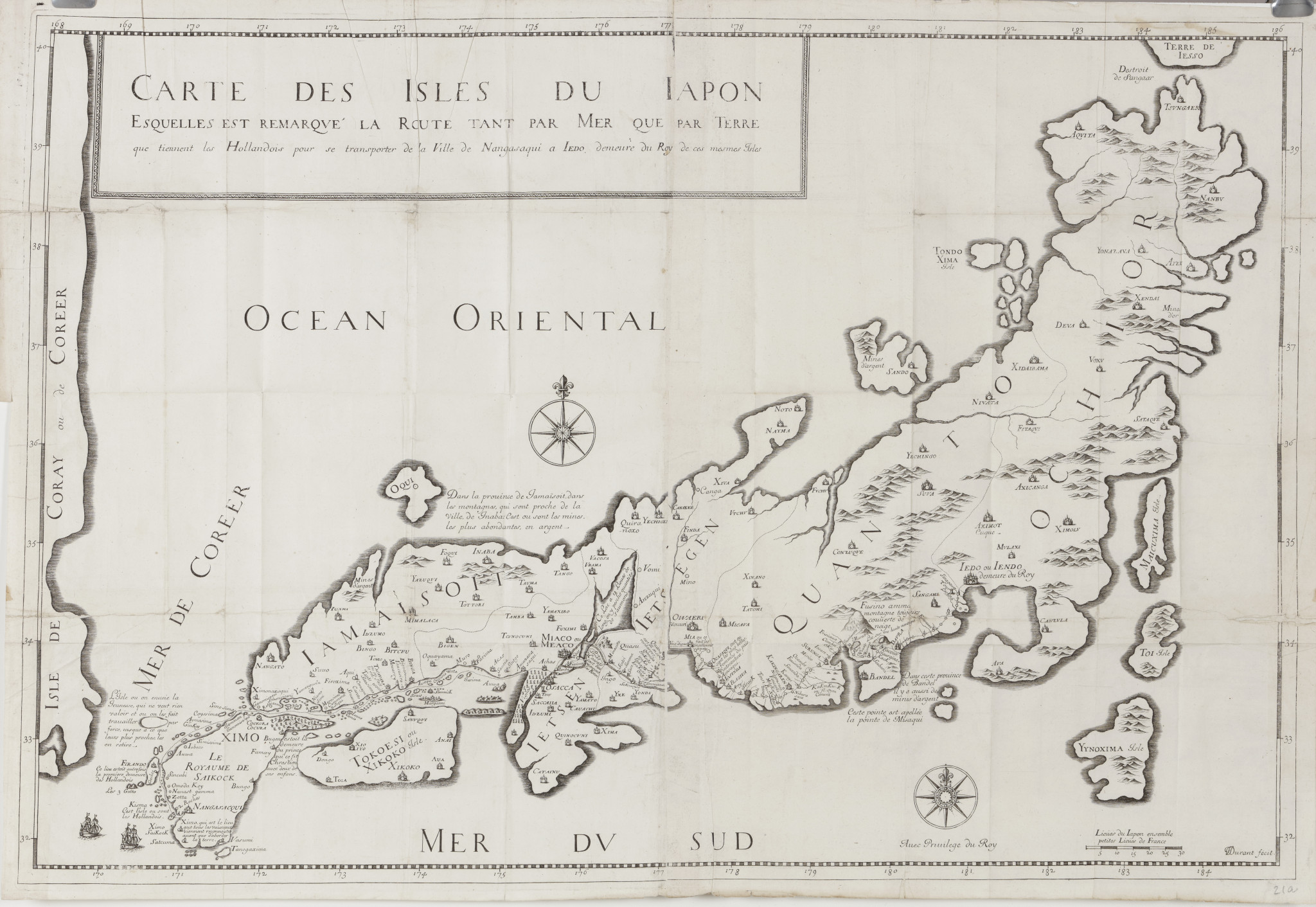
Carte des Isles du Japon, esquelles est remarqué, la Route tant par Mer que par Terre que tiennient les Hollandios pour se transporter de la Ville de Nangasaqui a I'edo demeure du Roy de ses marmes isles
Paris 1679, by Jean-Baptiste Tavernier (1605-1689)
from “Recüeil des plusieurs. Relations et Traitez singuliers et curieux de J.B.Tavernier”
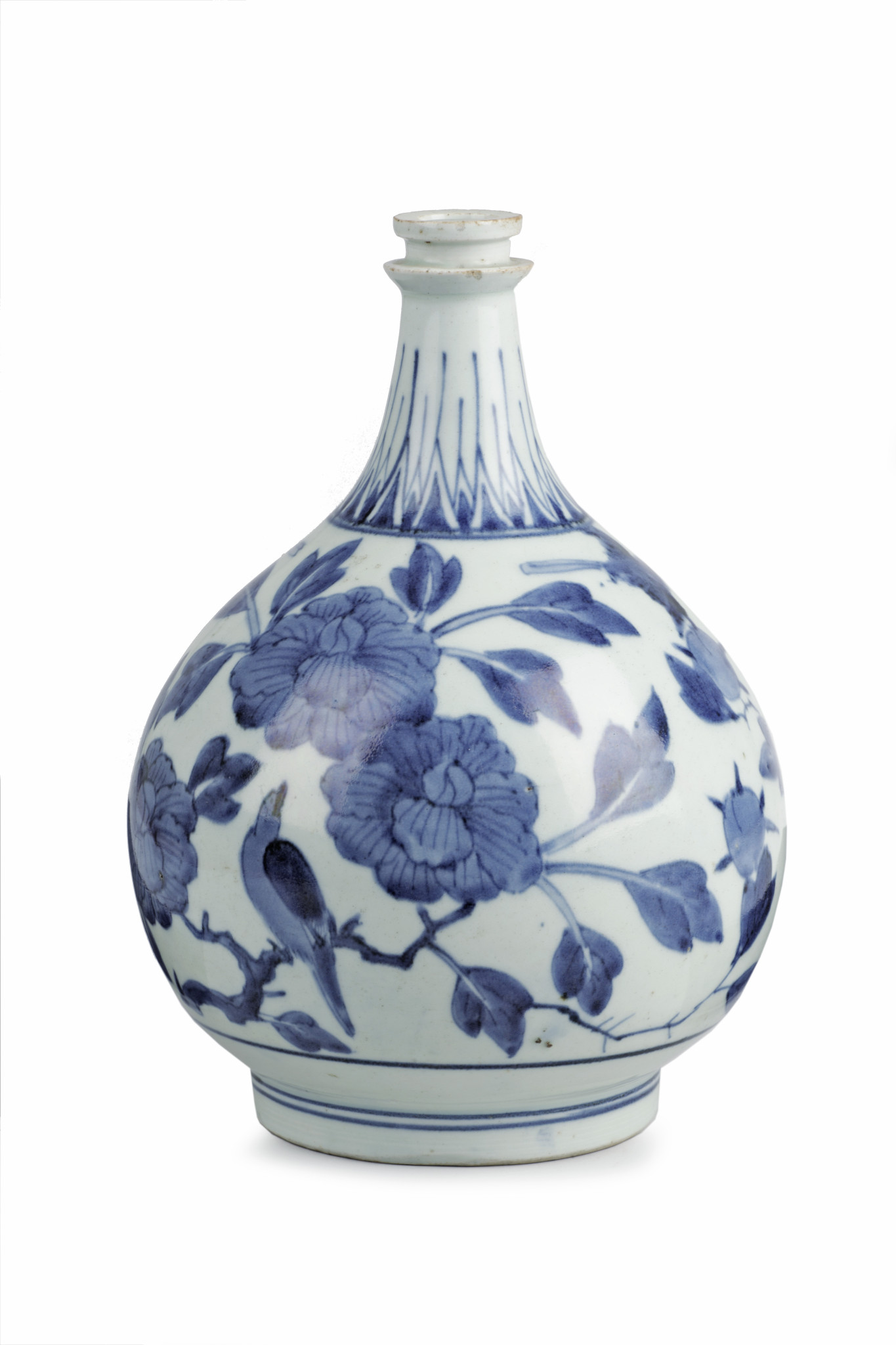
A Japanese Arita porcelain bottle with the initials of Opperhoofd of Deshima and Governor-general of the former Dutch East-Indies Johannes Camphuys
Late 17th century

A Japanese Arita porcelain bottle with the initials of Opperhoofd of Deshima and Governor-general of the former Dutch East-Indies Johannes Camphuys
Late 17th century
A Japanese Arita porcelain apothecary bottle
Late 17th century
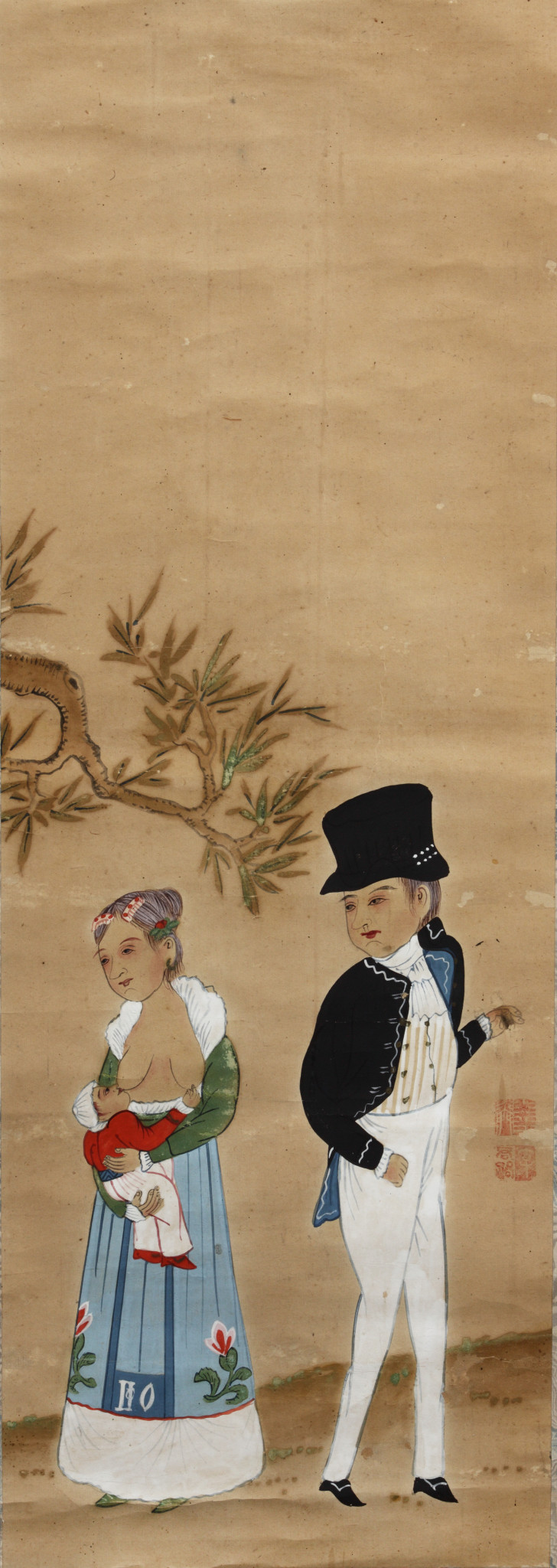
Jô Girin (act. 1779-1859)
Opperhoofd Jan Cock Blomhoff and wet-nurse Petronella feeding Johannes, circa 1817
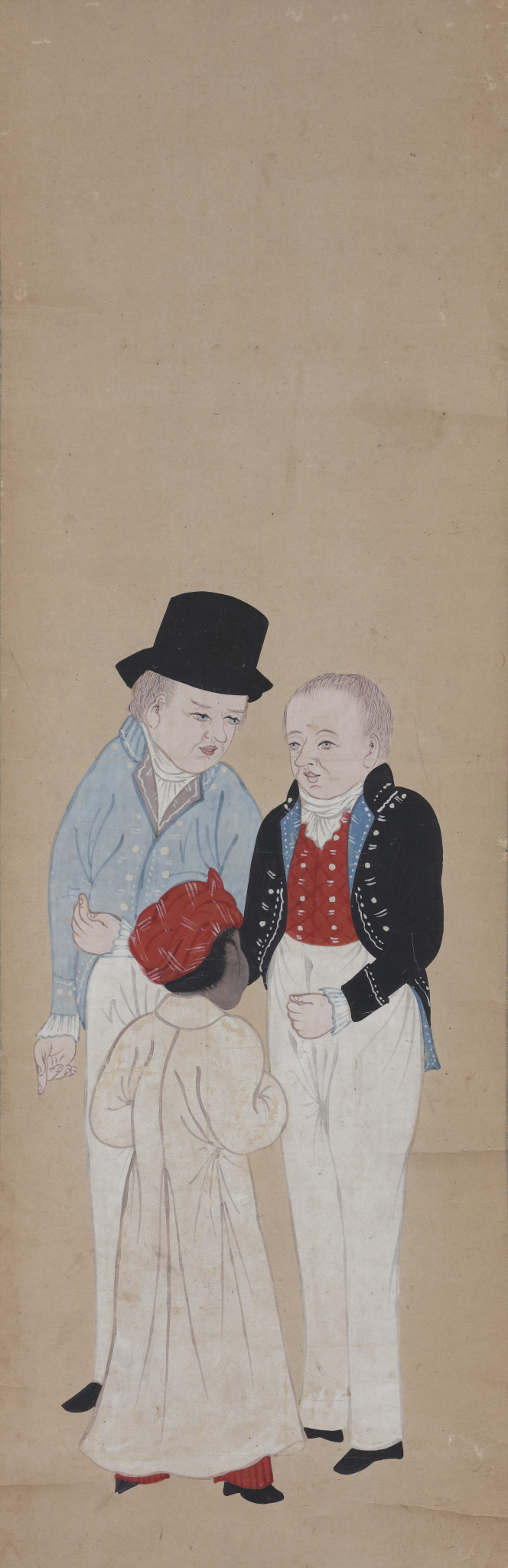
Nagasaki School (early 19th century)
Two Dutchmen with their Javanese servant
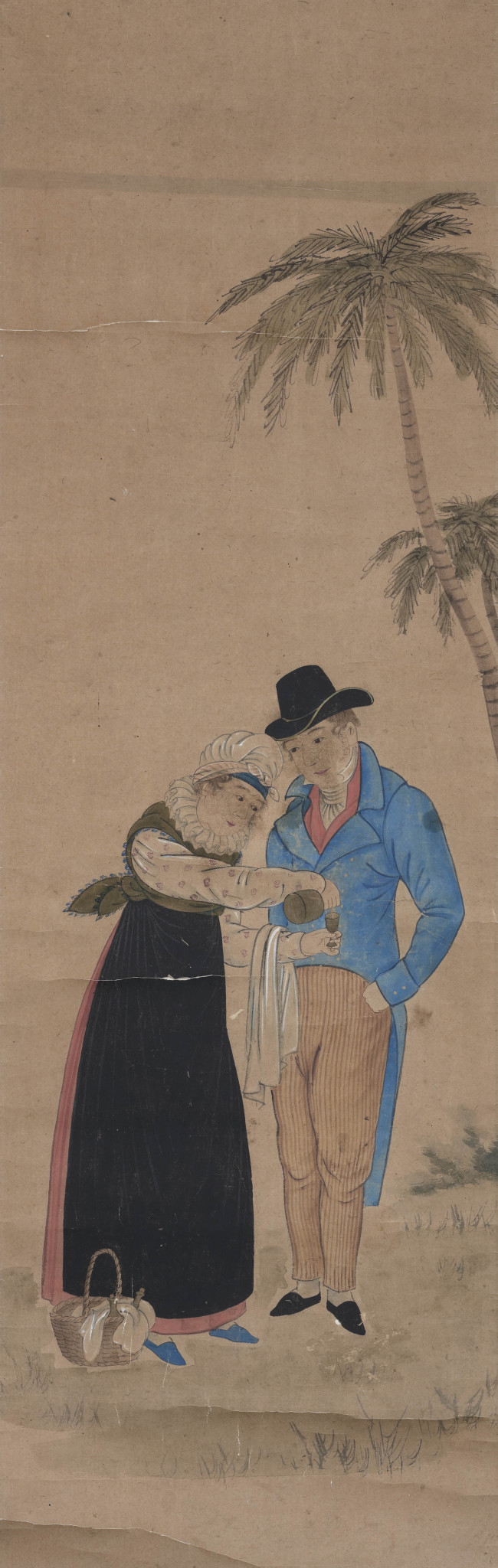
Nagasaki School (early 19th century)
A Dutch woman pouring a Dutchman a glass of Dutch gin
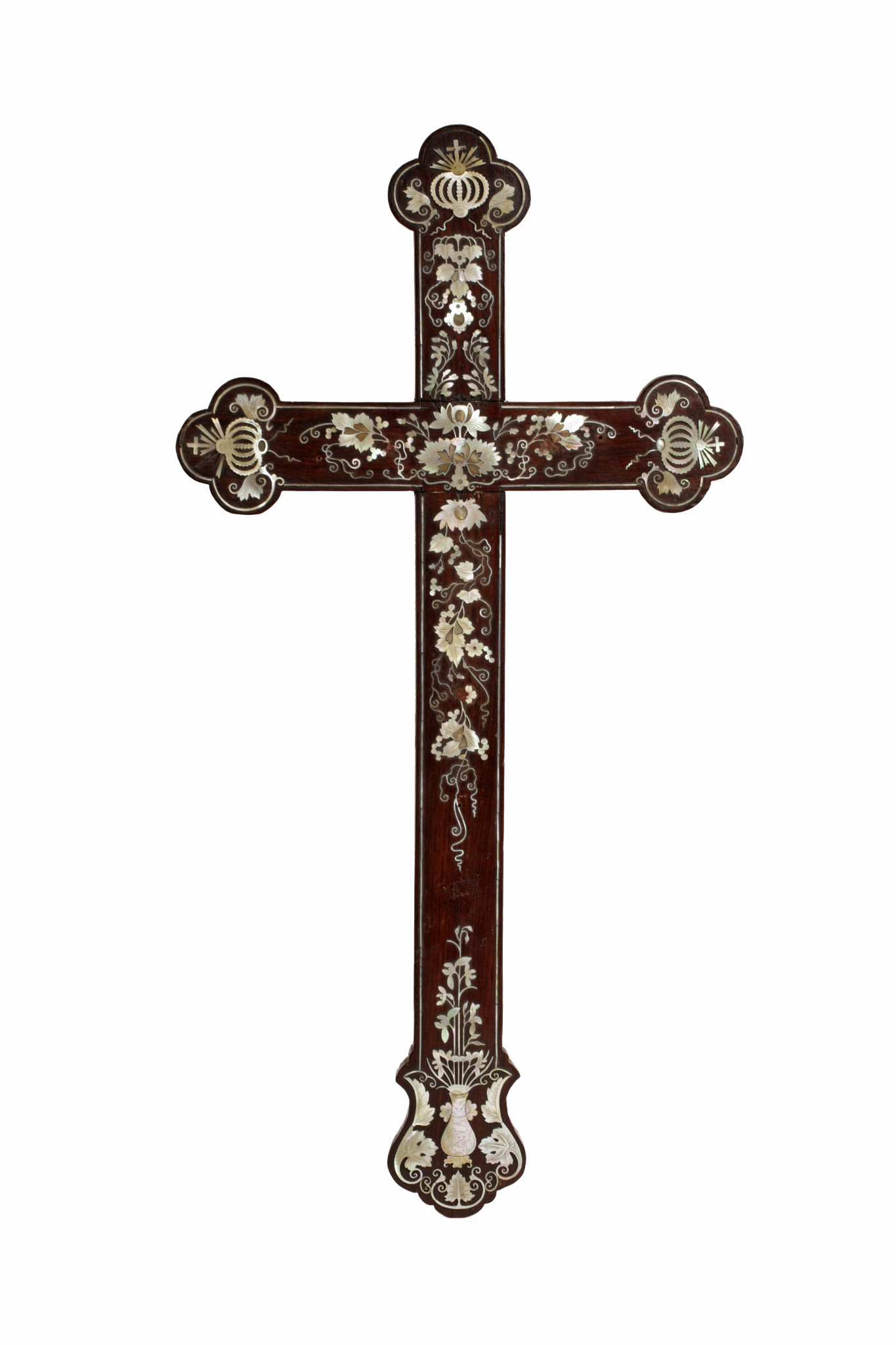
A Chinese rosewood inlaid with incised Mother-of-Pearl cross
Macao, 18th century
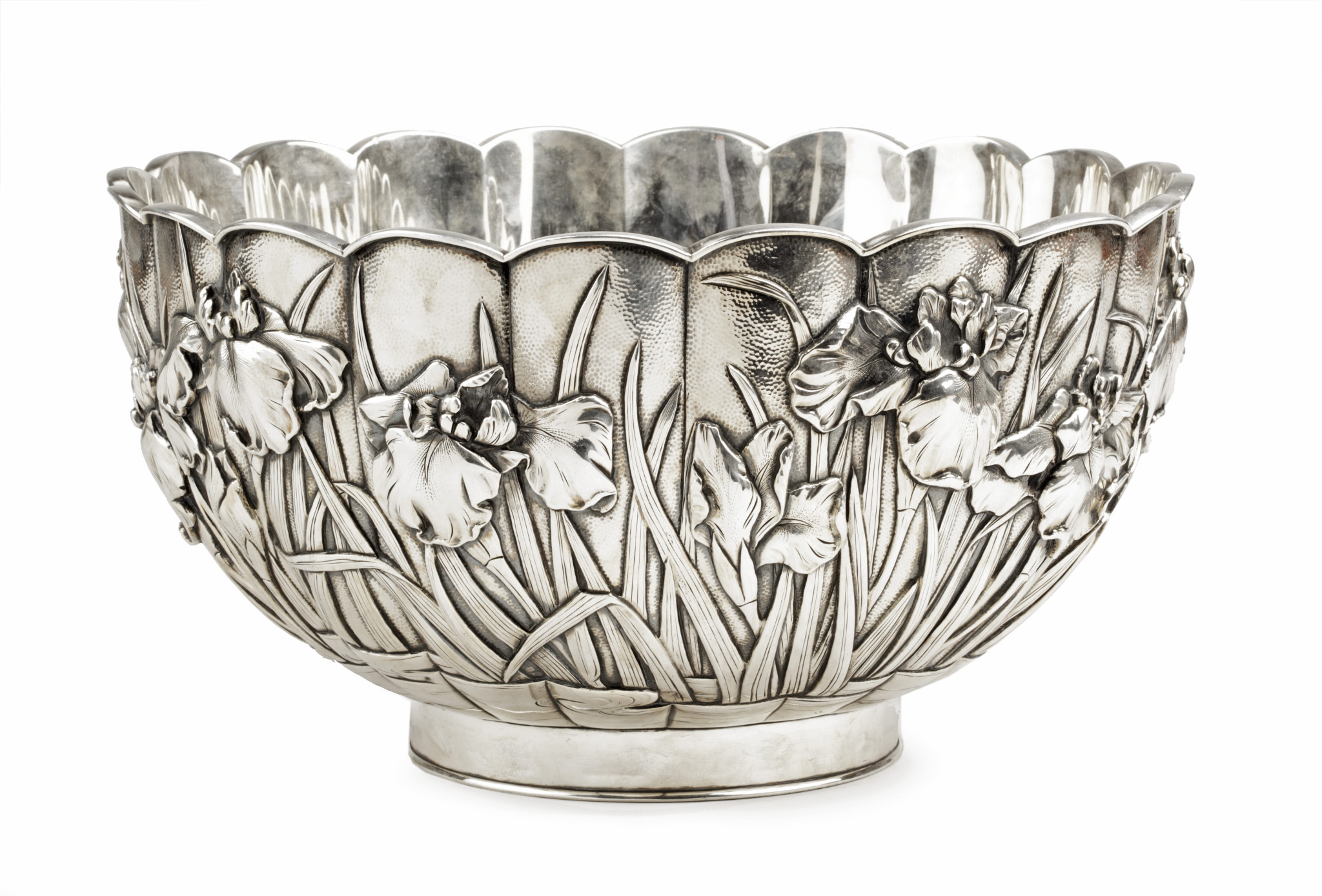
A large Japanese silver punch-bowl by Y. Konoike, Yokohama Japan
Decorated with iris and marked “Pure silver Y. Konoike Yokohama Japan”, circa 1900
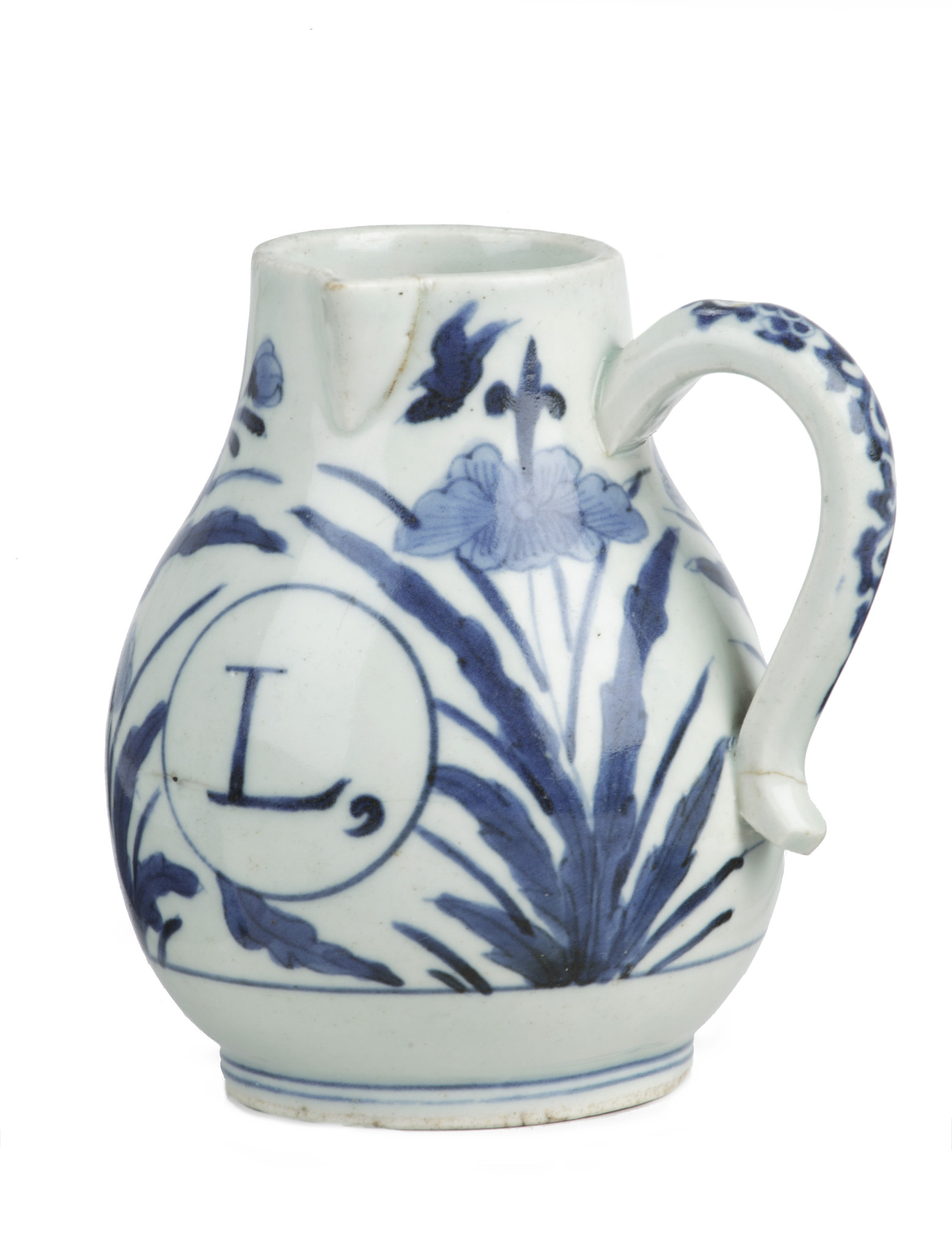
A charming Japanese Arita porcelain 'limoenkannetje' or lemon juice ewer
Late 17th century
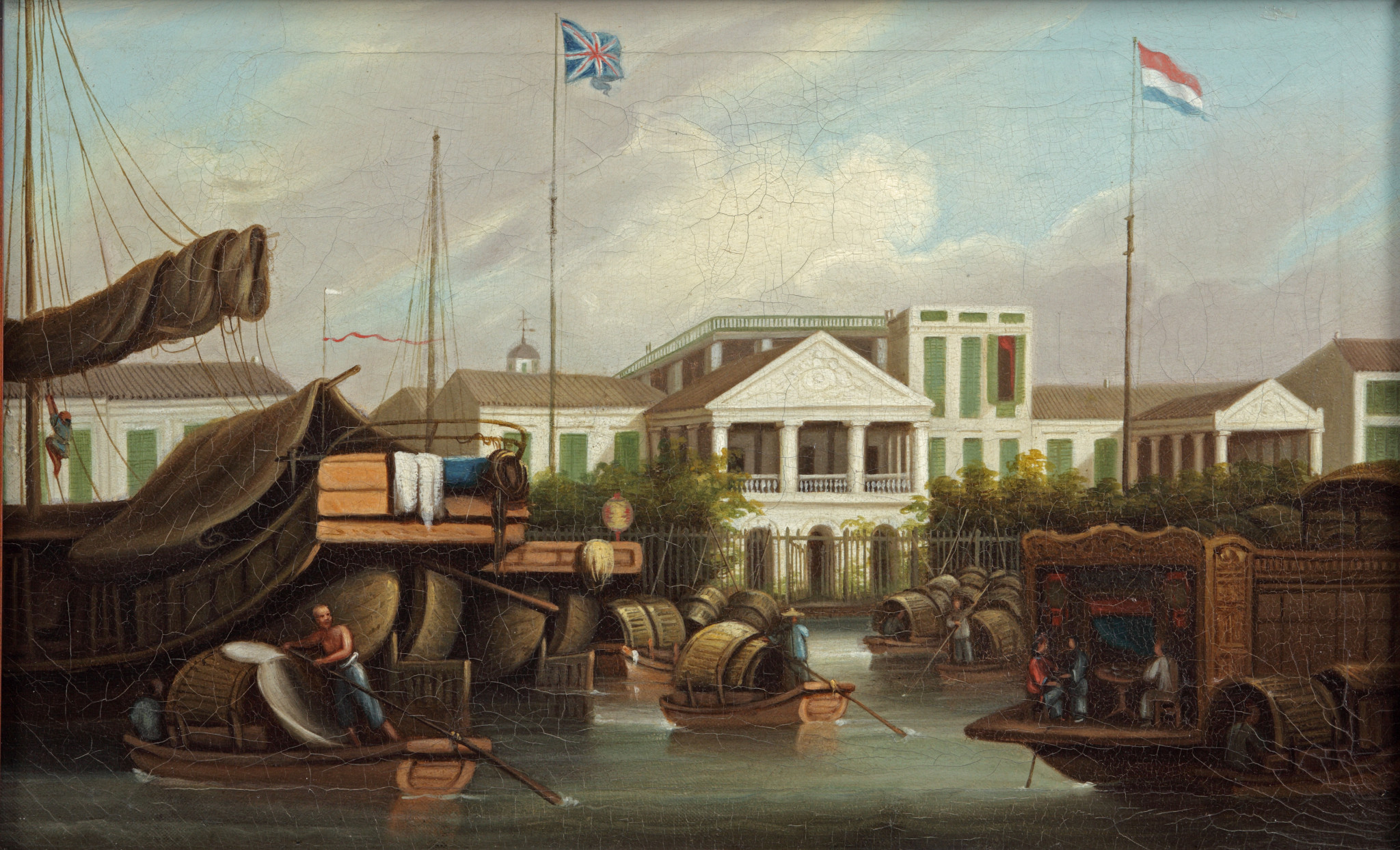
Lamqua (act. 1820 – 1860) or studio
A view of the British and Dutch factories at Canton, 1835-1849
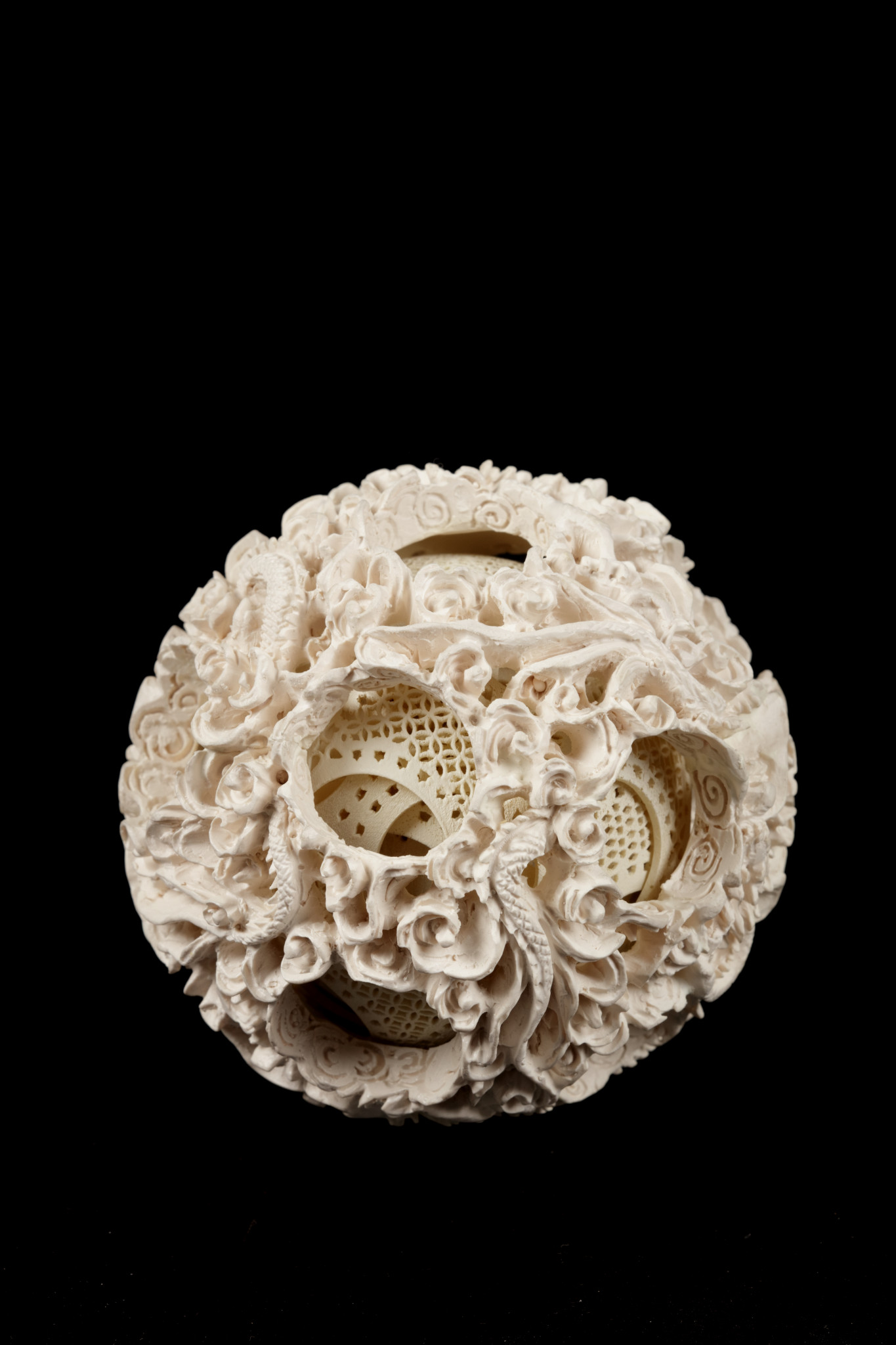
Piers Secunda (b. 1976)
'Painting' of a Chinese Puzzle Ball, 2011-2015
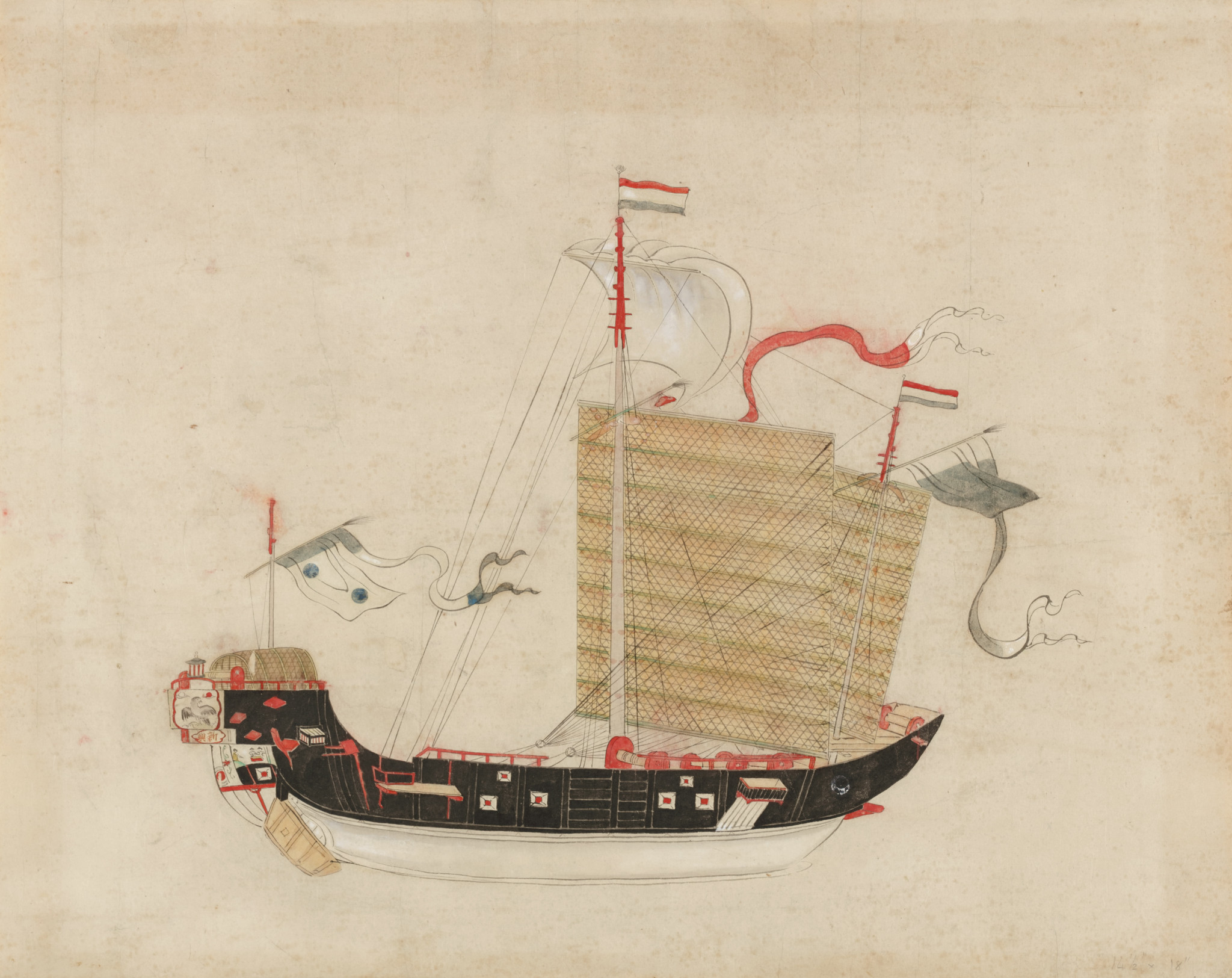
Nagasaki School (early 19th century)
A Chinese junk flying under the Dutch flag
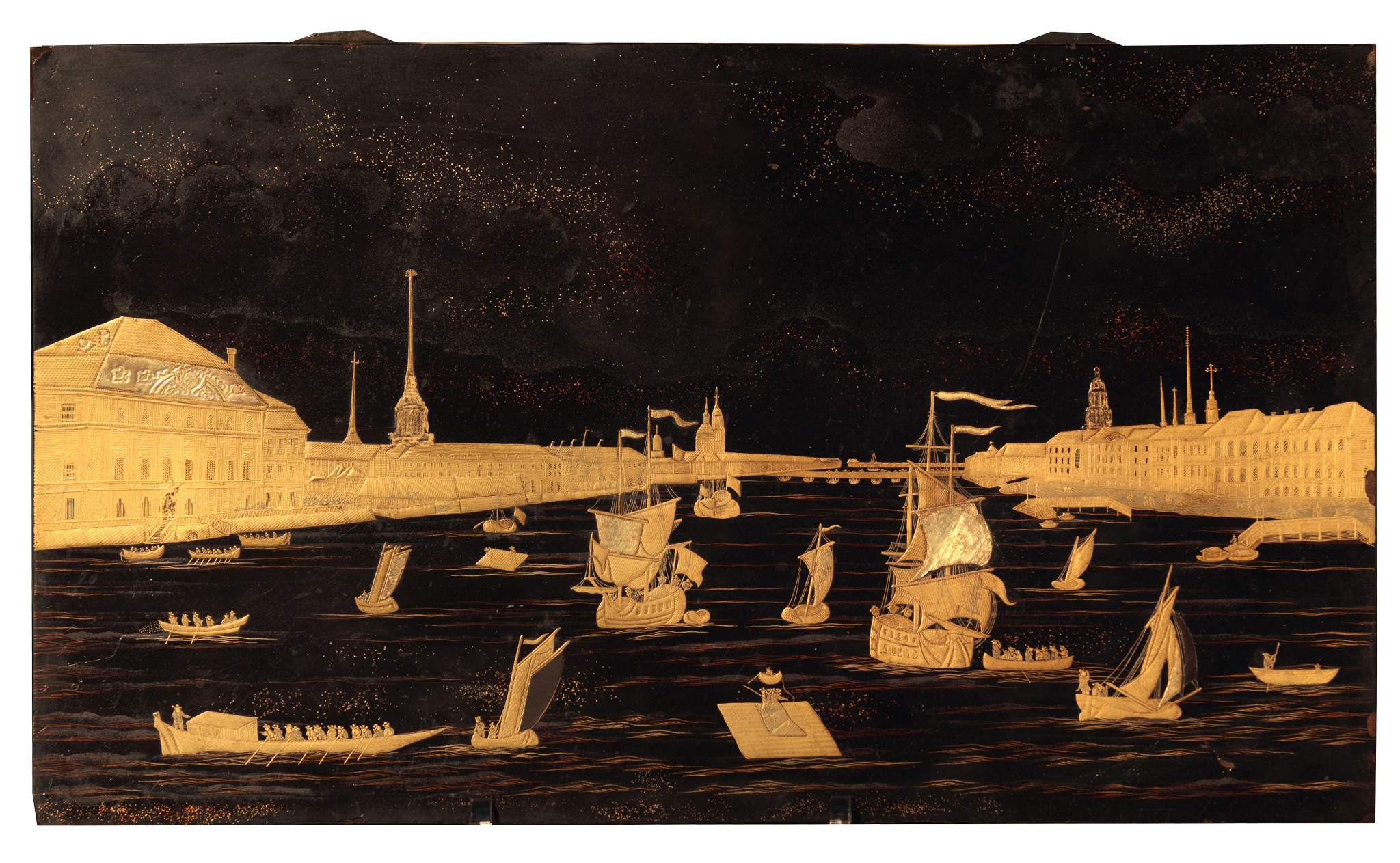
An important Japanese lacquer maki-é panel depicting St. Petersburg on the river Neva with the Winter Palace on the left and the Academy of Science on the right
Nagasaki, 1780-1800
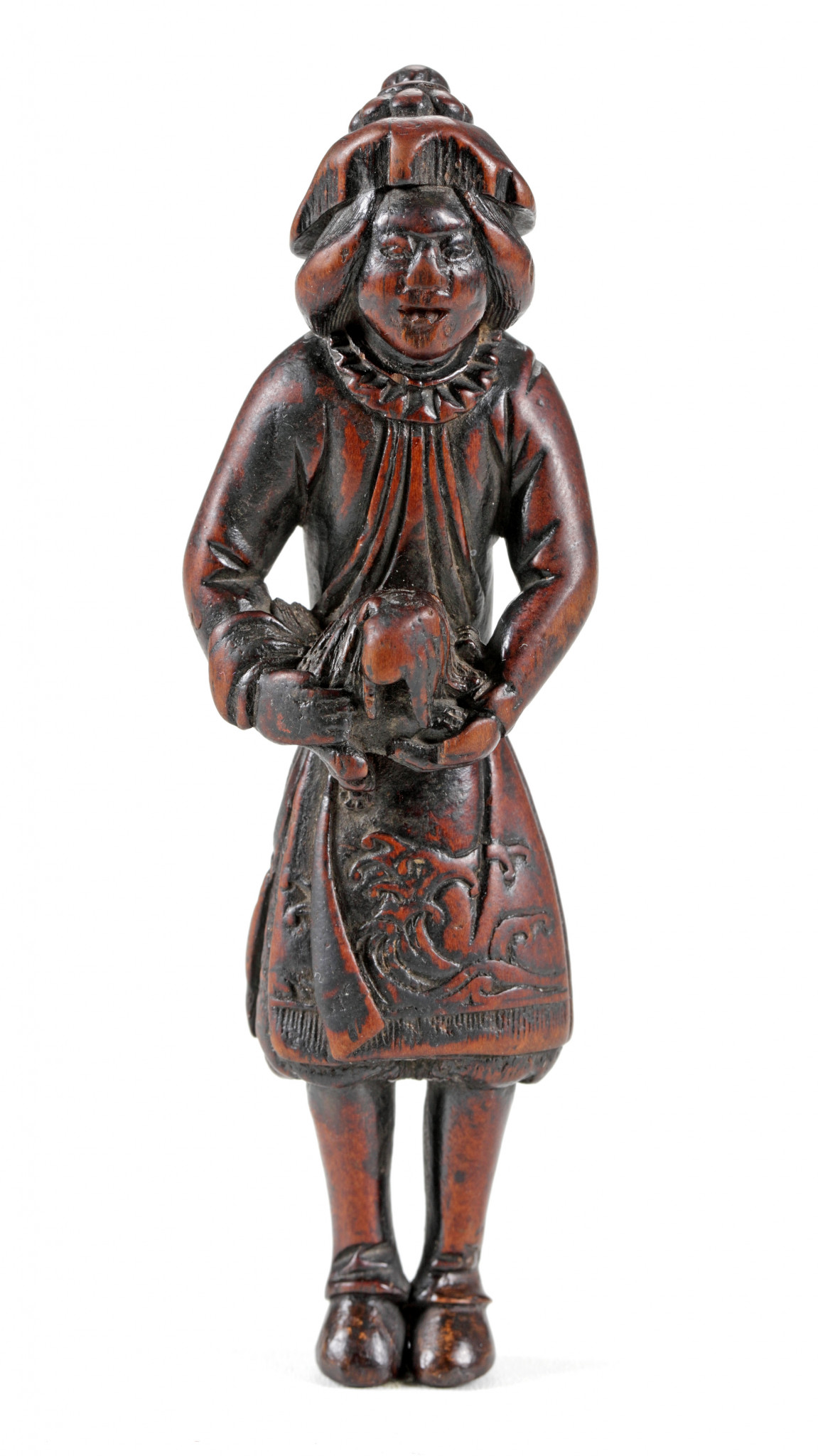
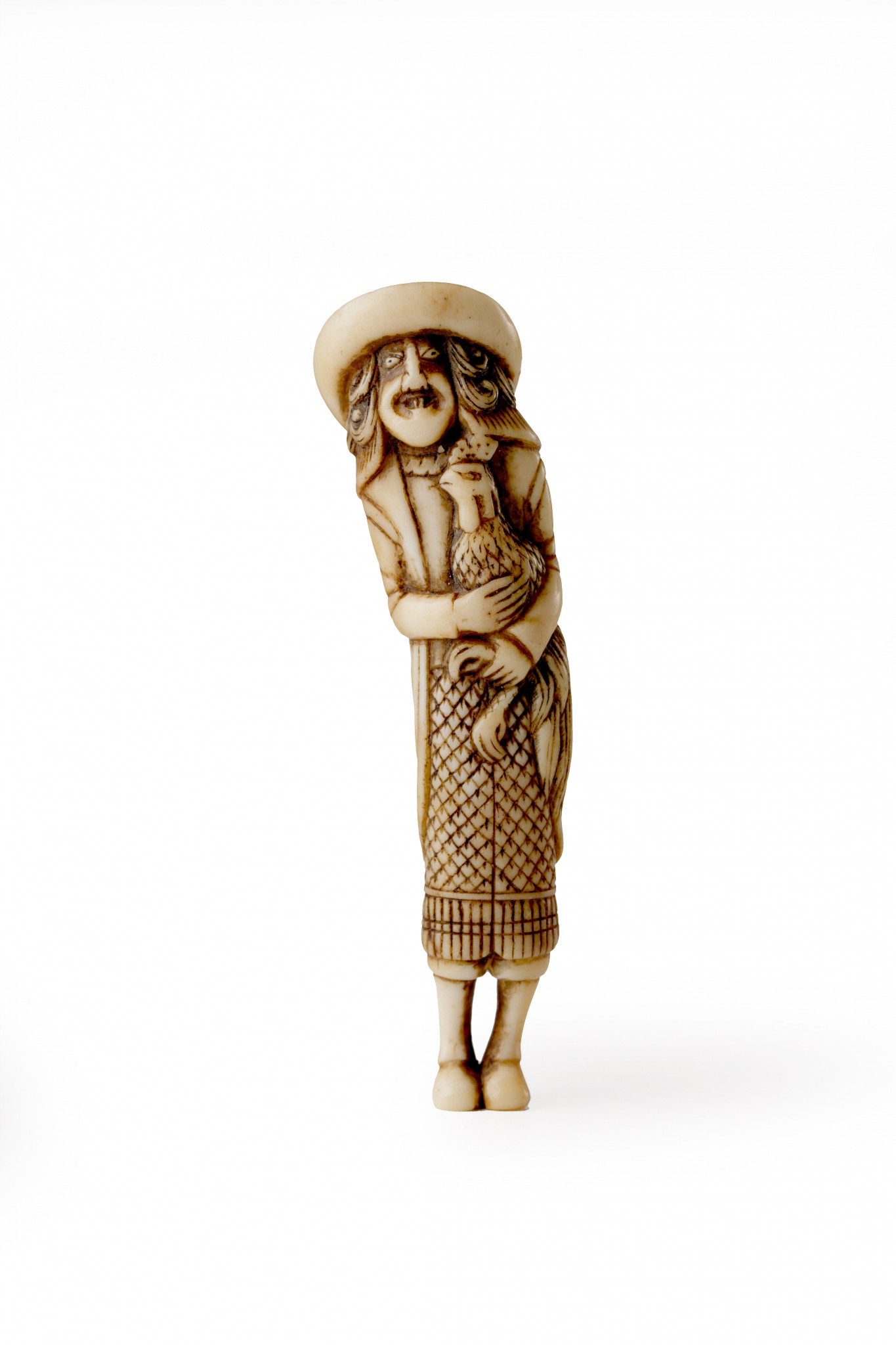
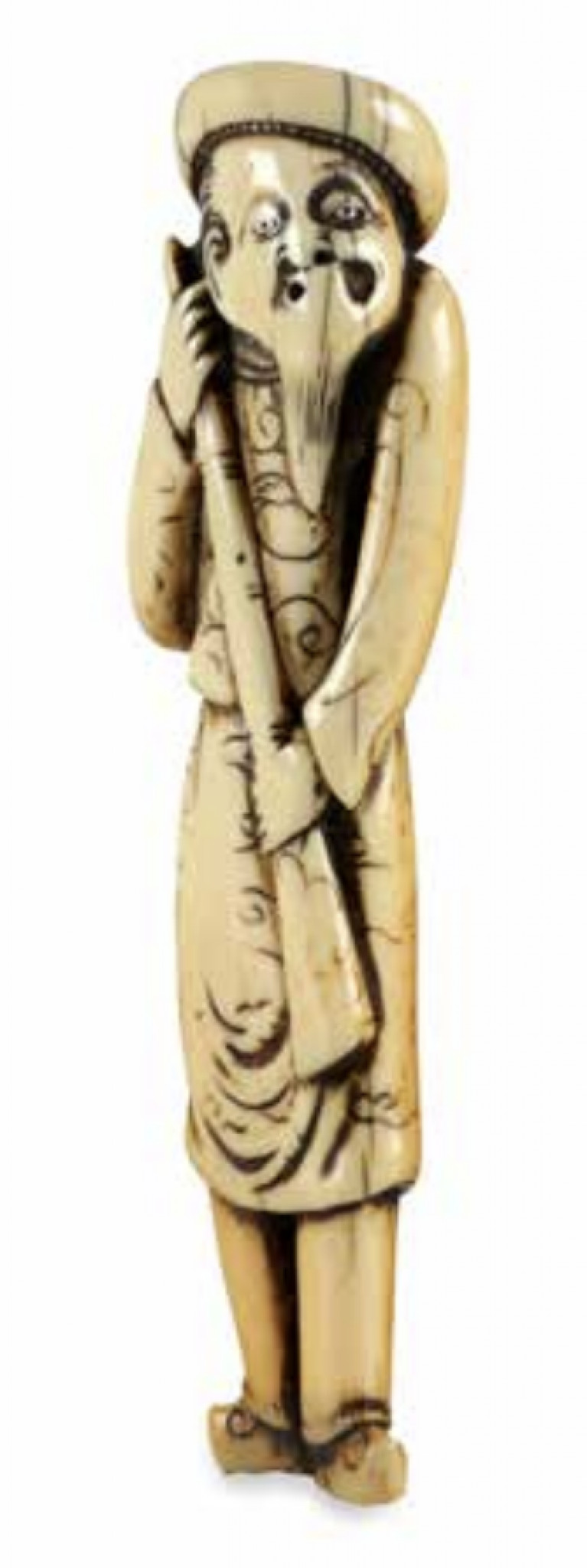
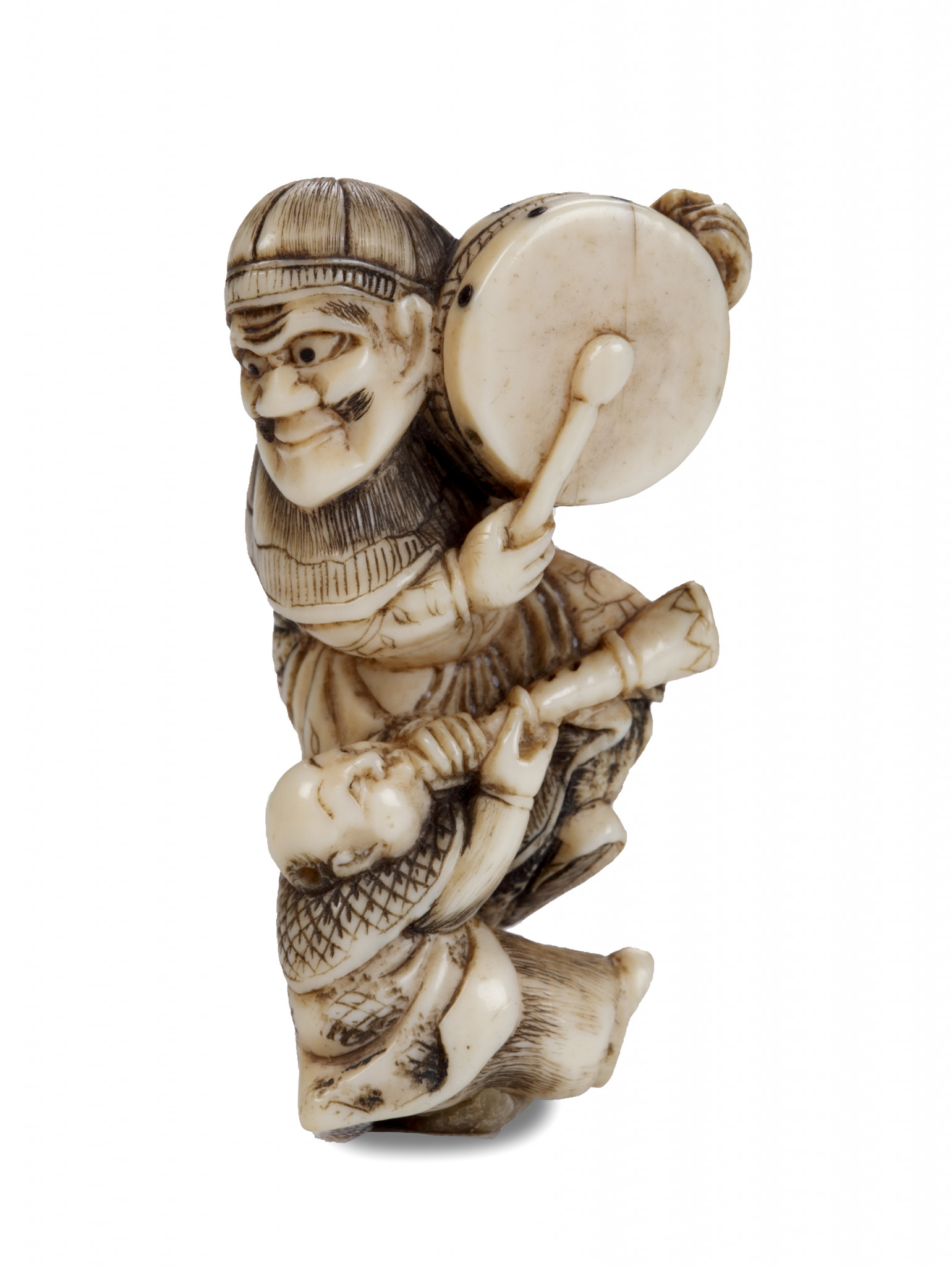
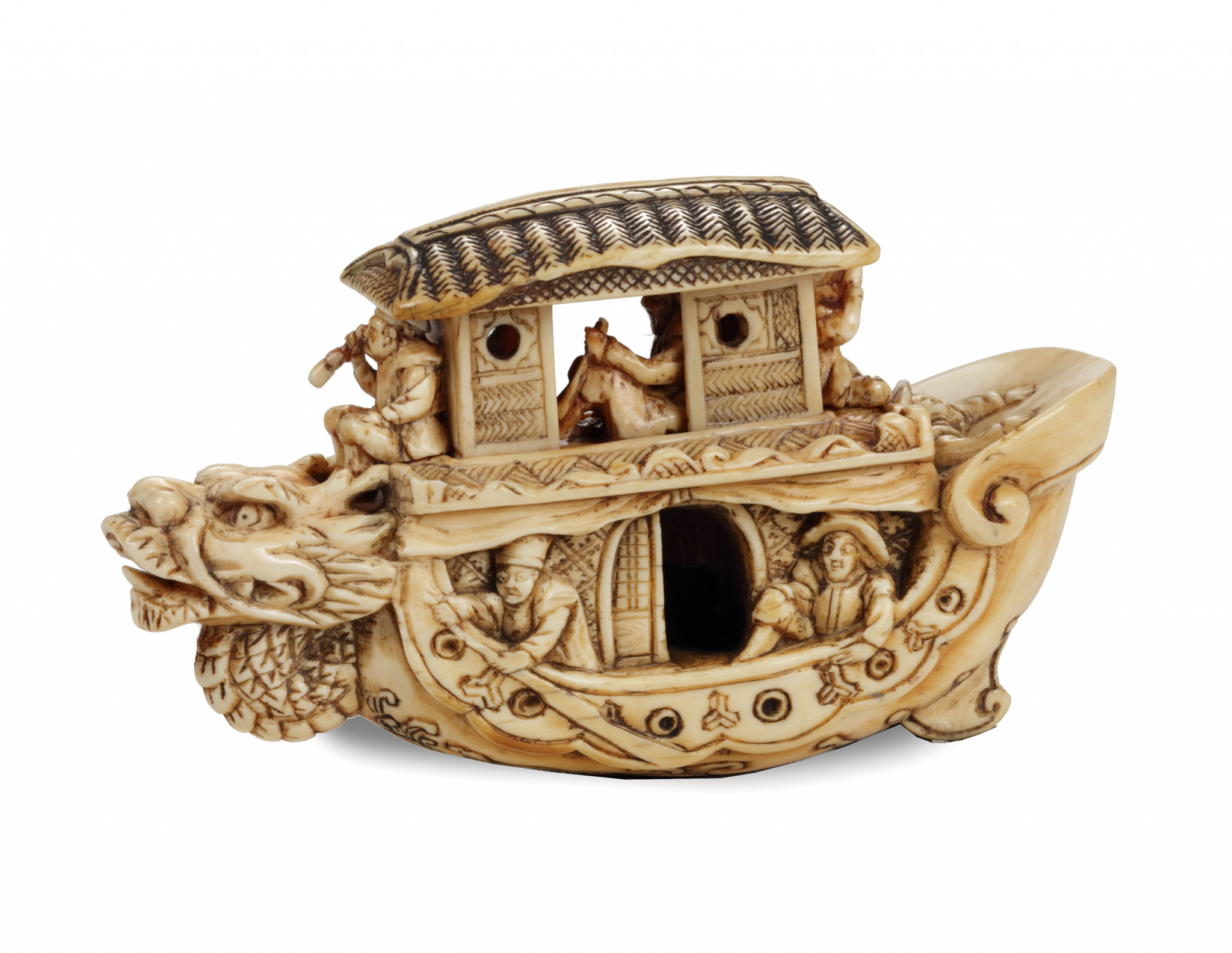
Take a look at our, "Auspicious Dutchies", collection of Dutchmen in miniature!
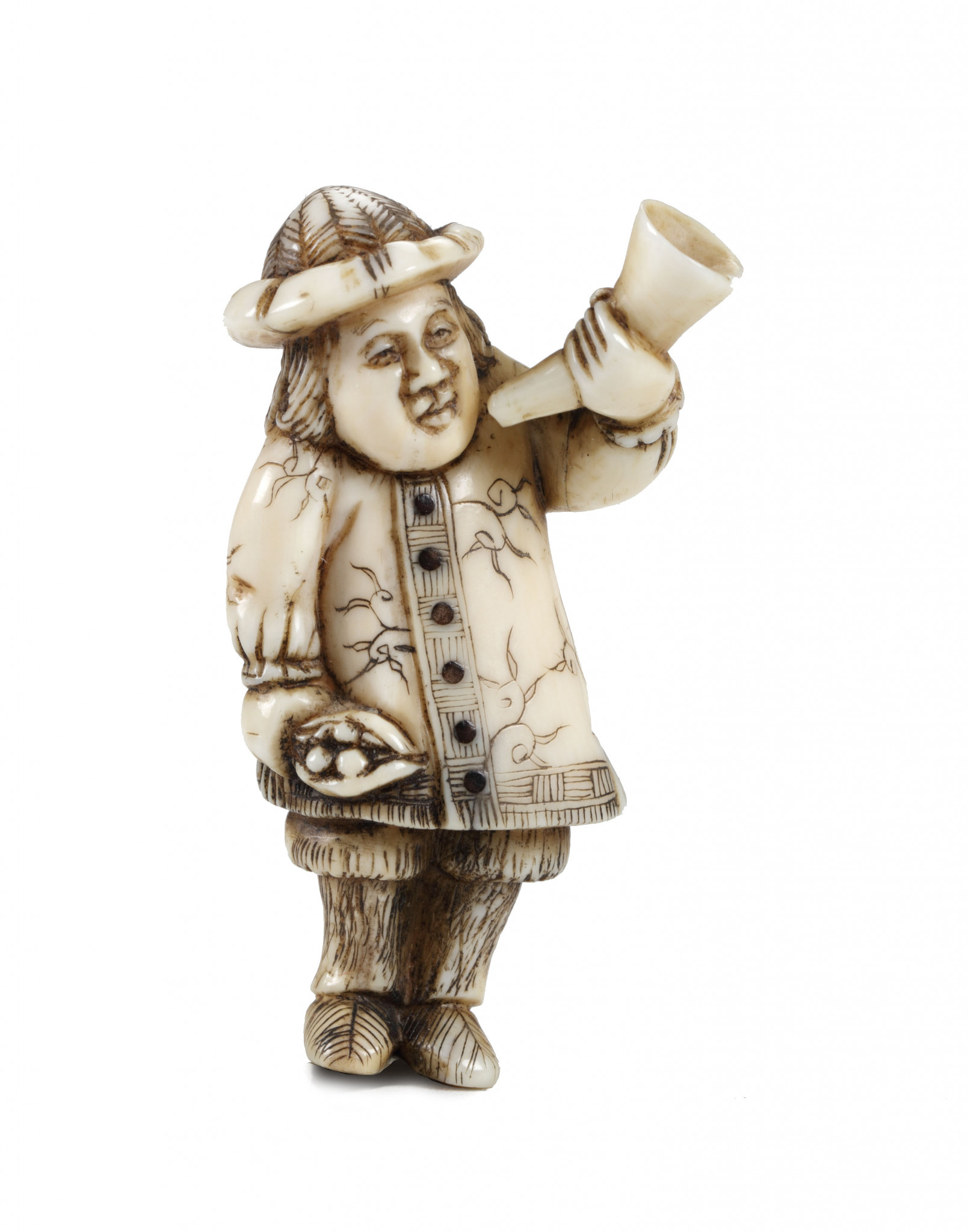
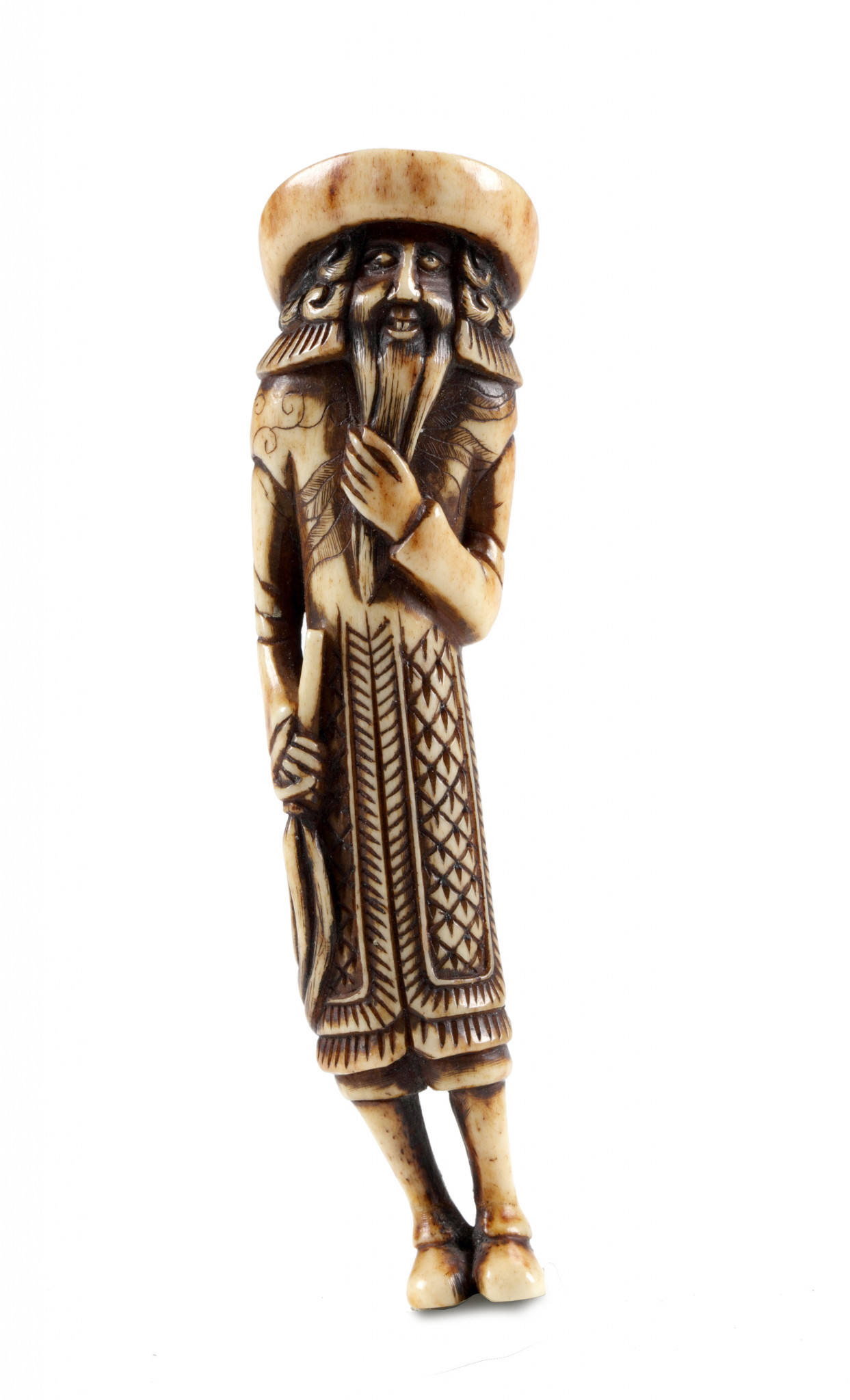
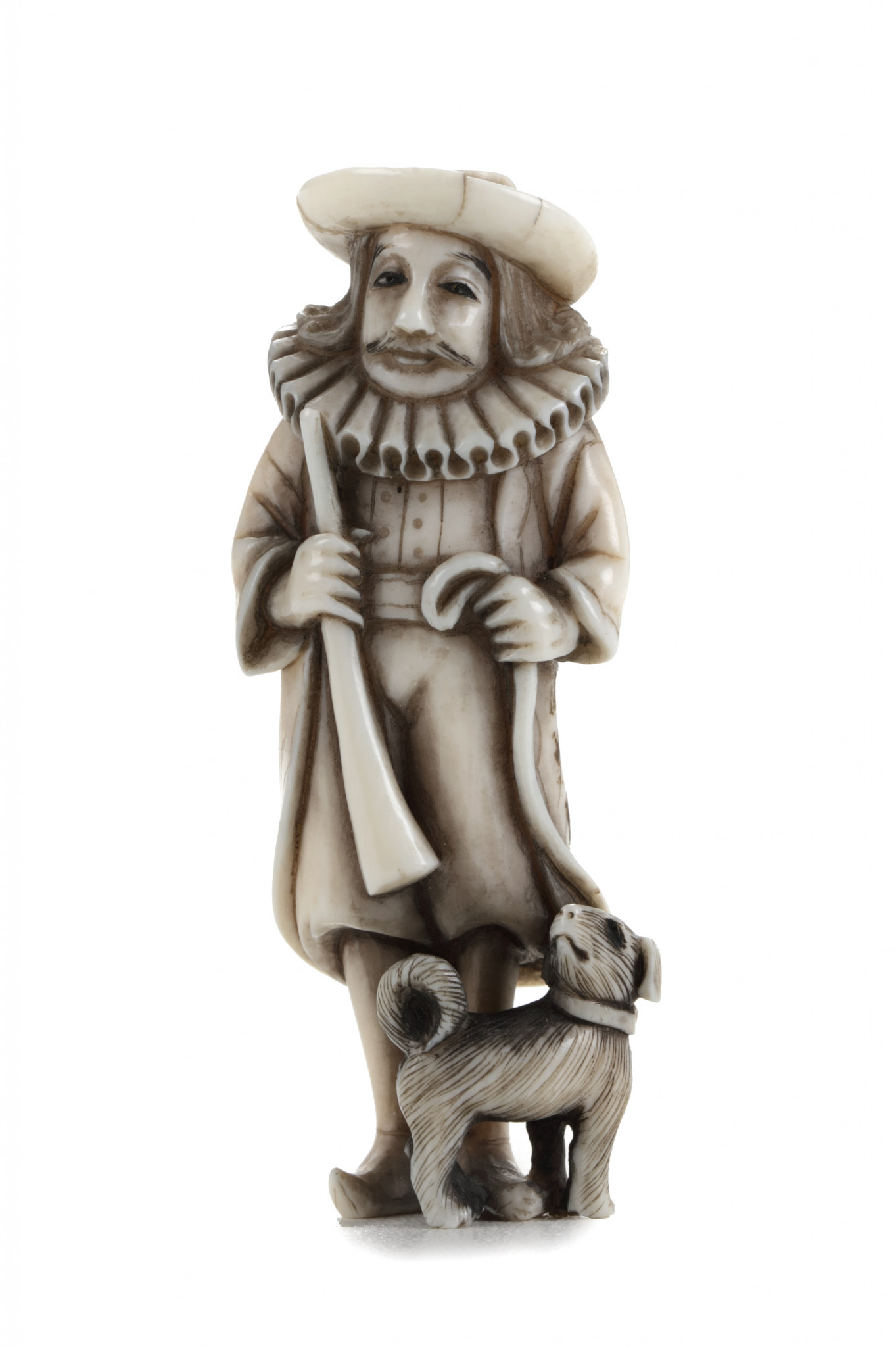
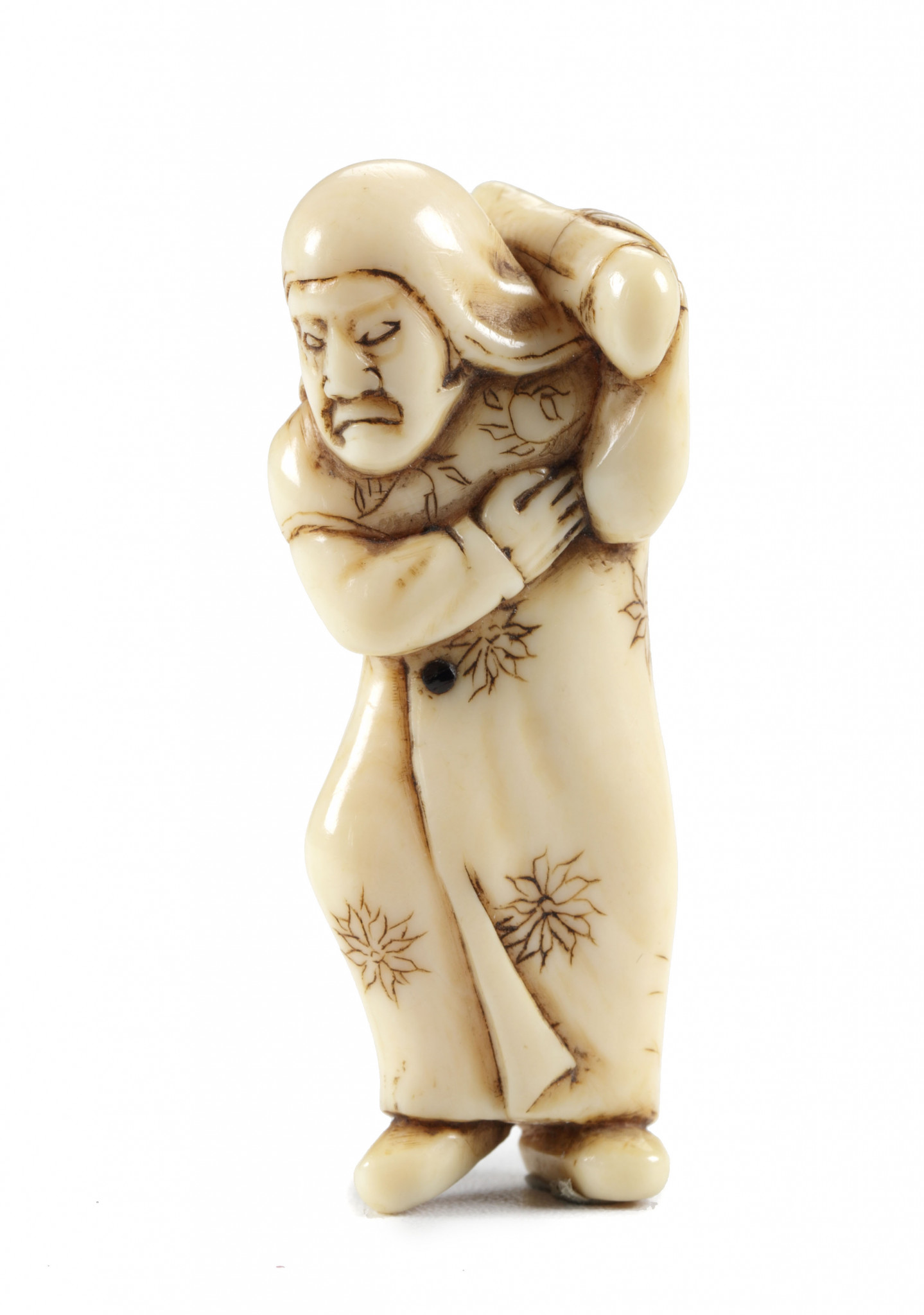
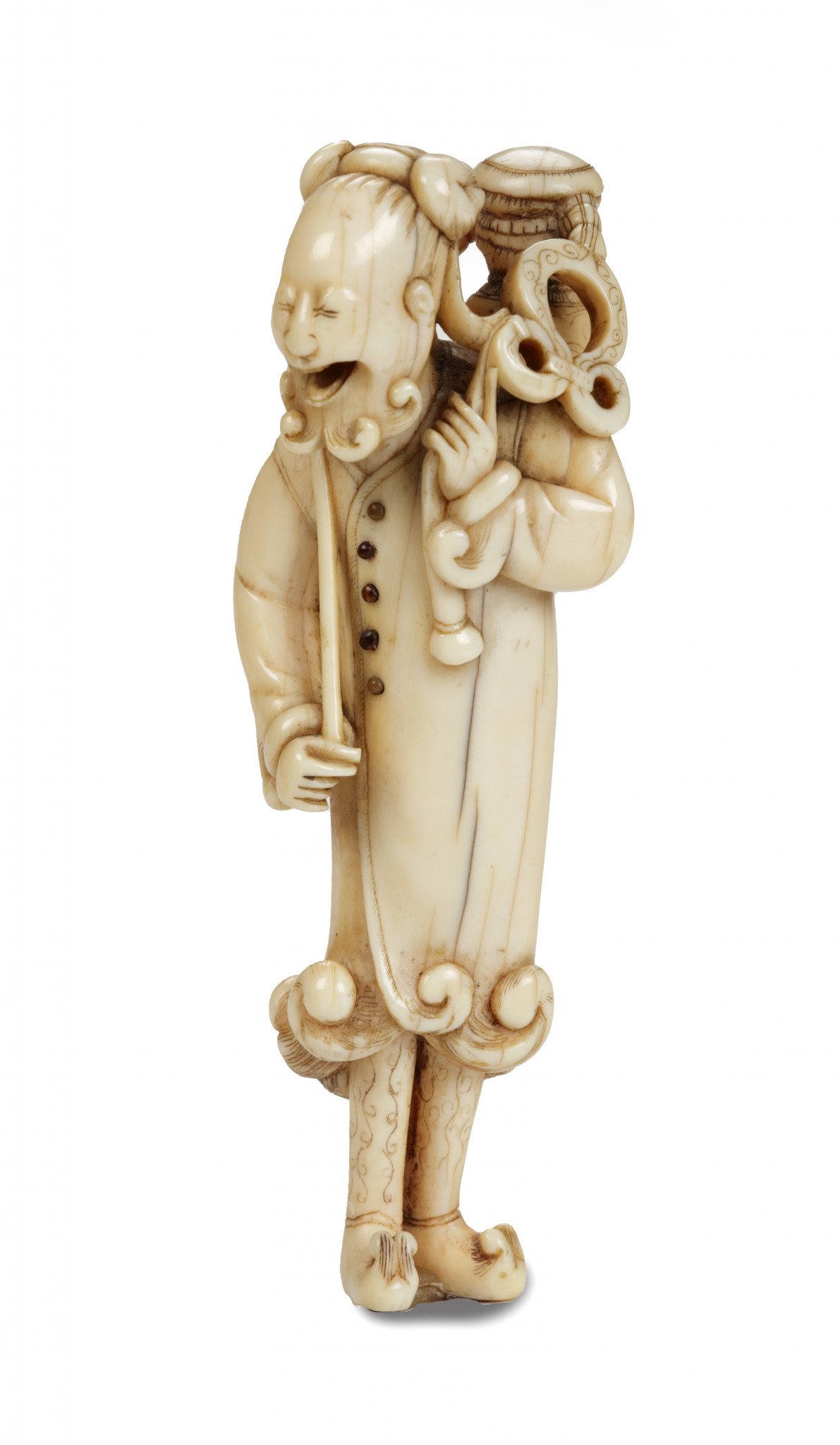
A collection of Japanese Netsuke depicting Dutchmen
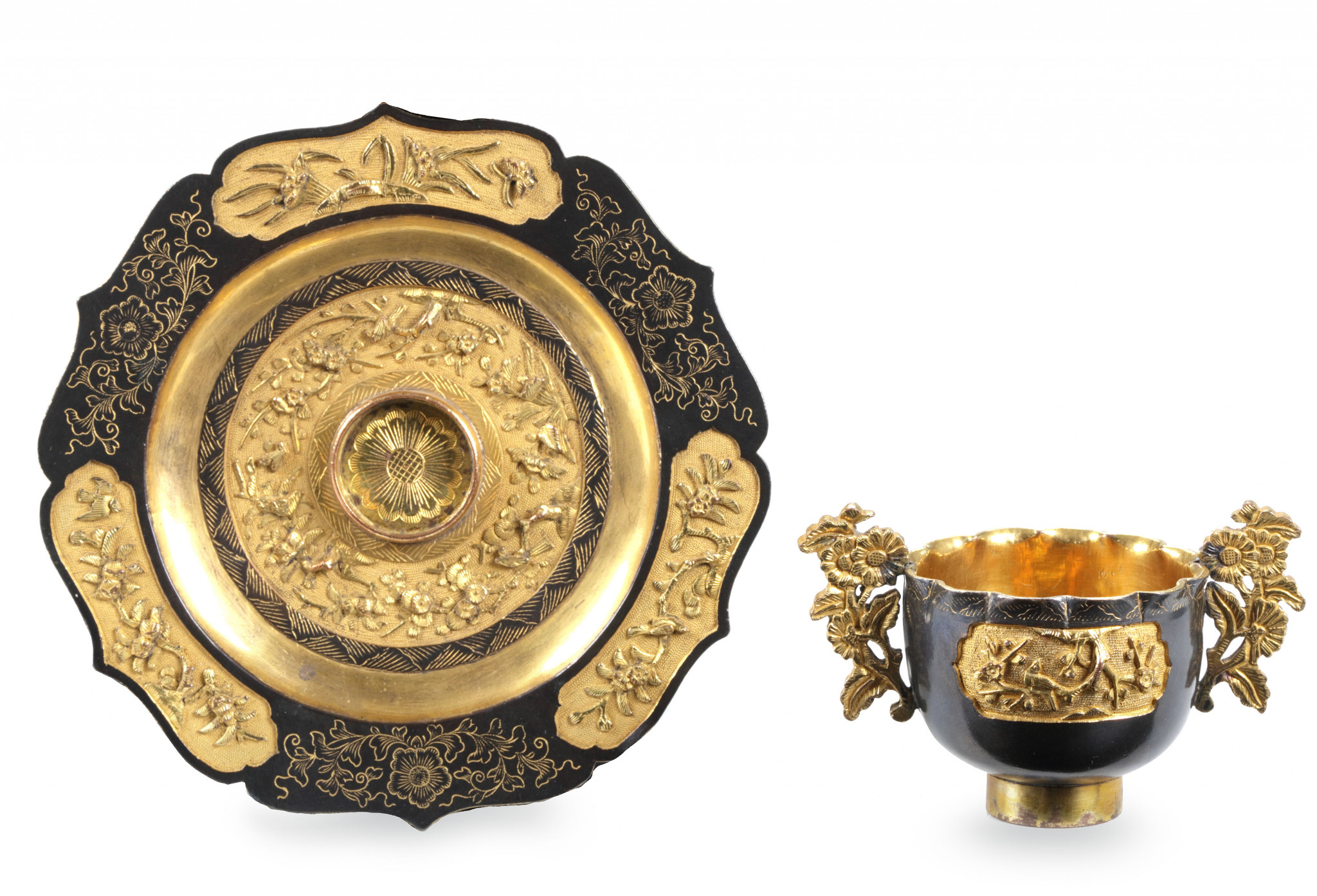
A Japanese Sawasa gilt- and lacquer cup and saucer
Edo-period, early 18th century
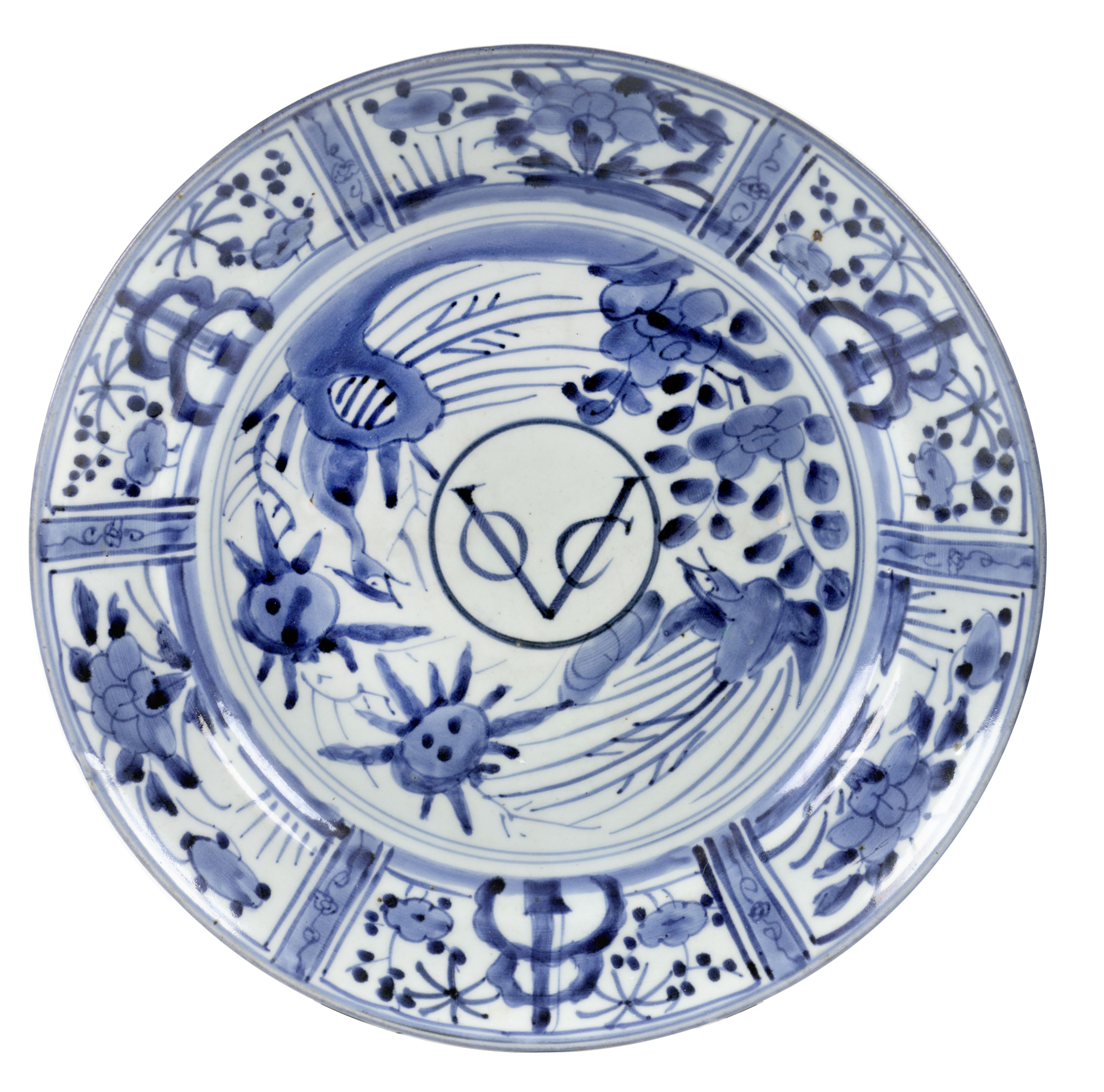
A rare large Japanese Arita blue and white porcelain 'V.O.C.' dish
Late 17th century
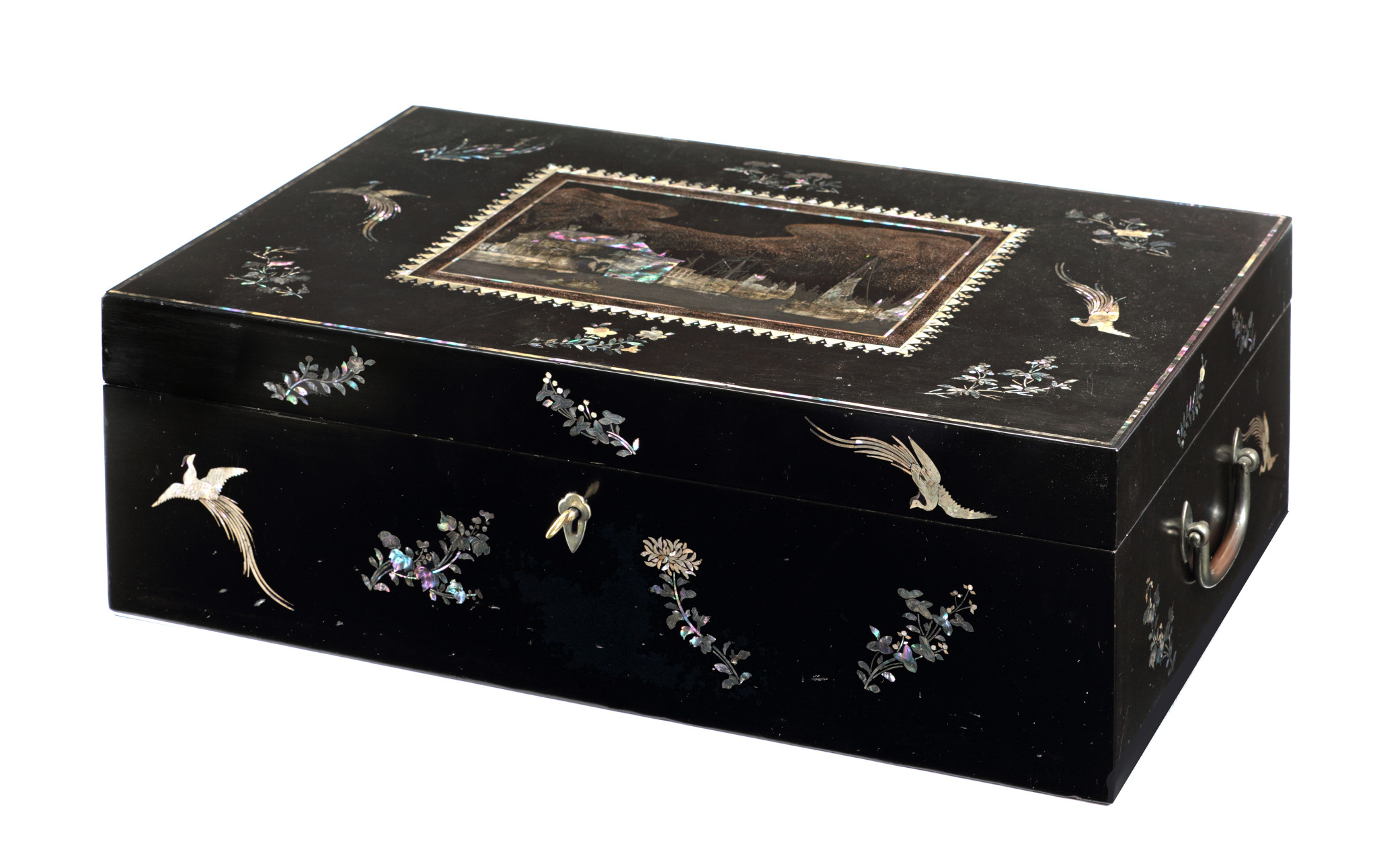
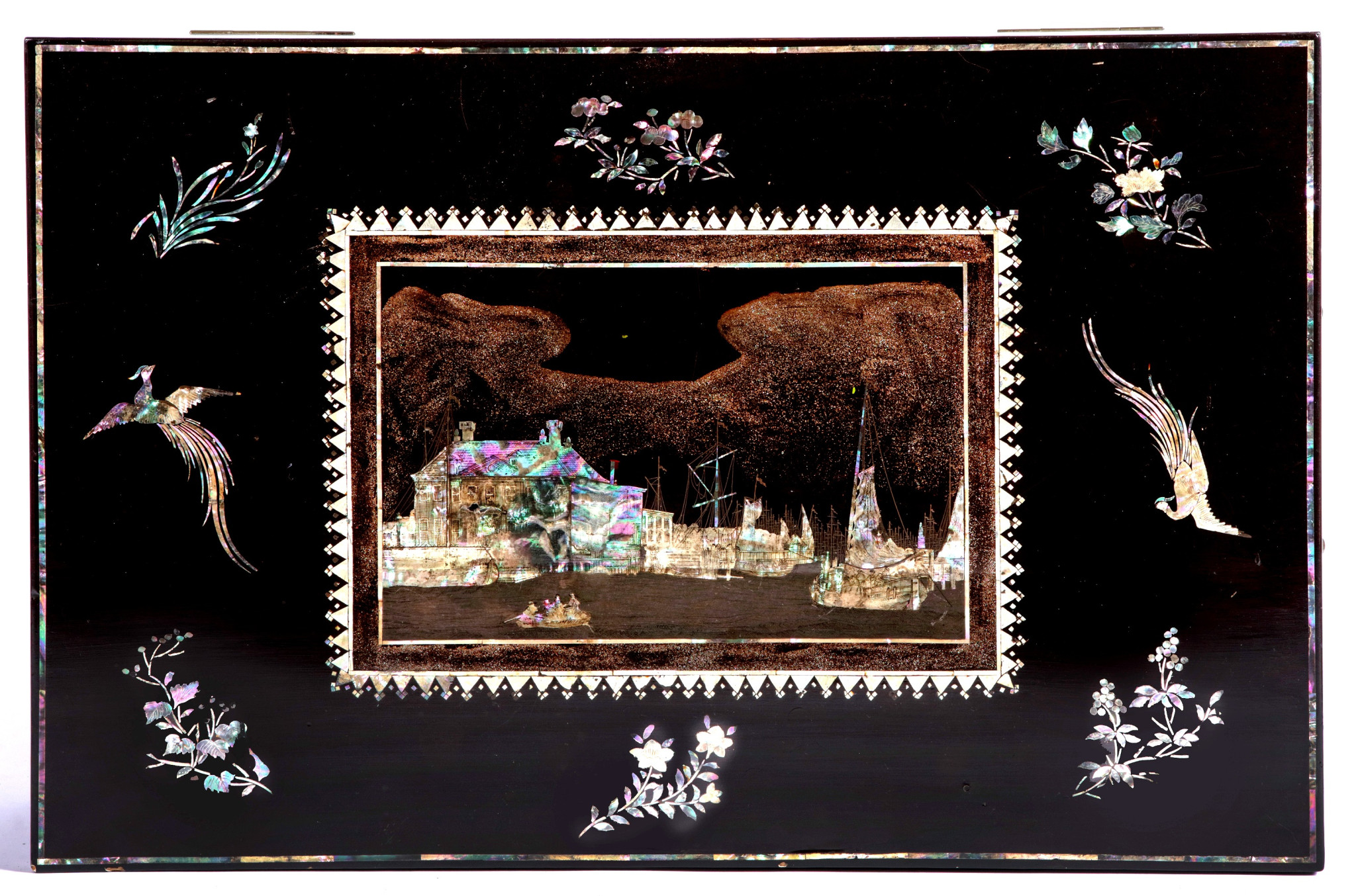
An important Japanese lacquer box with a view of the 'Nieuwe Stadsherberg van Amsterdam' or the Amsterdam waterfront
Nagasaki, Edo-period, 1830-1840
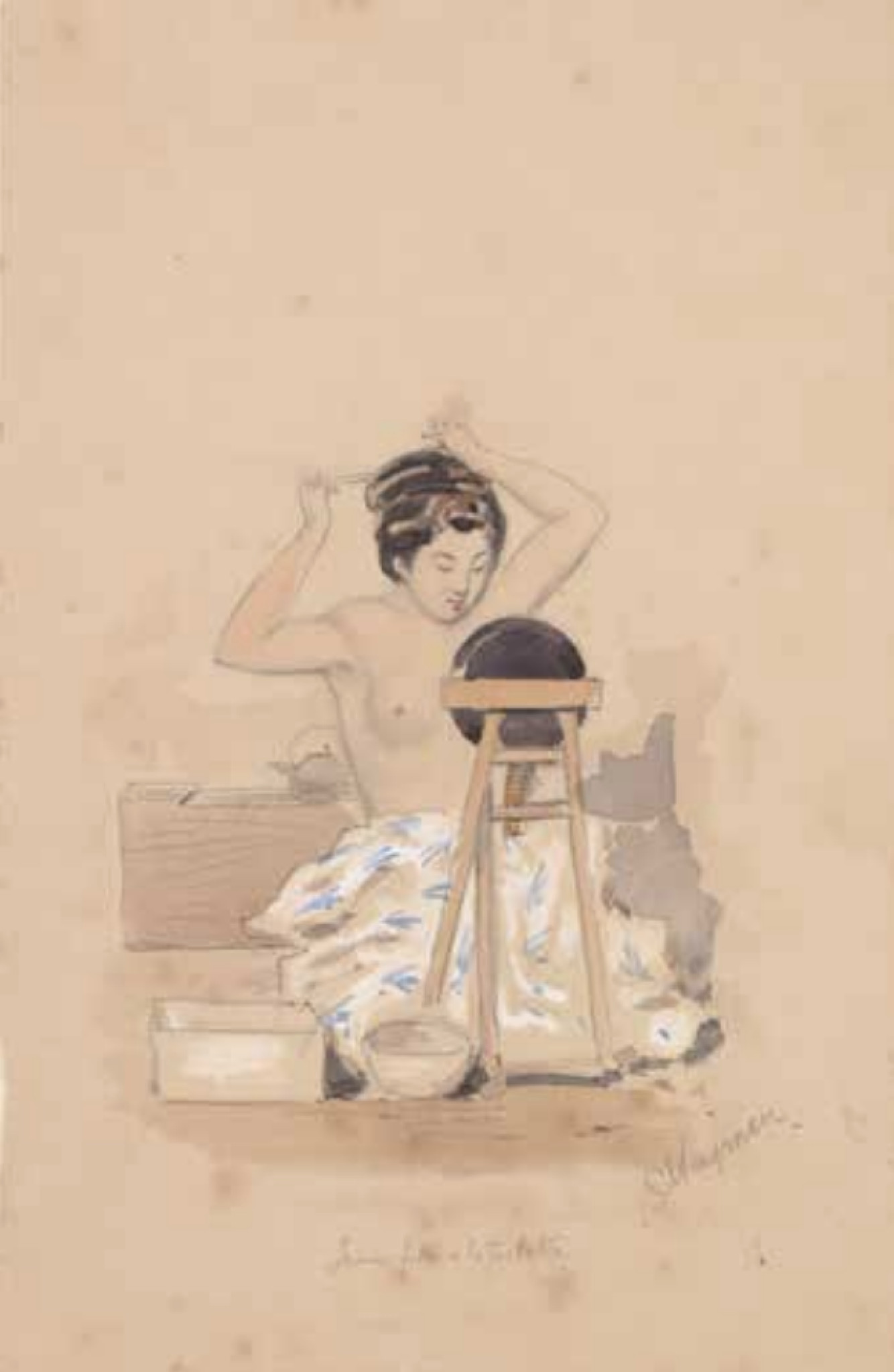
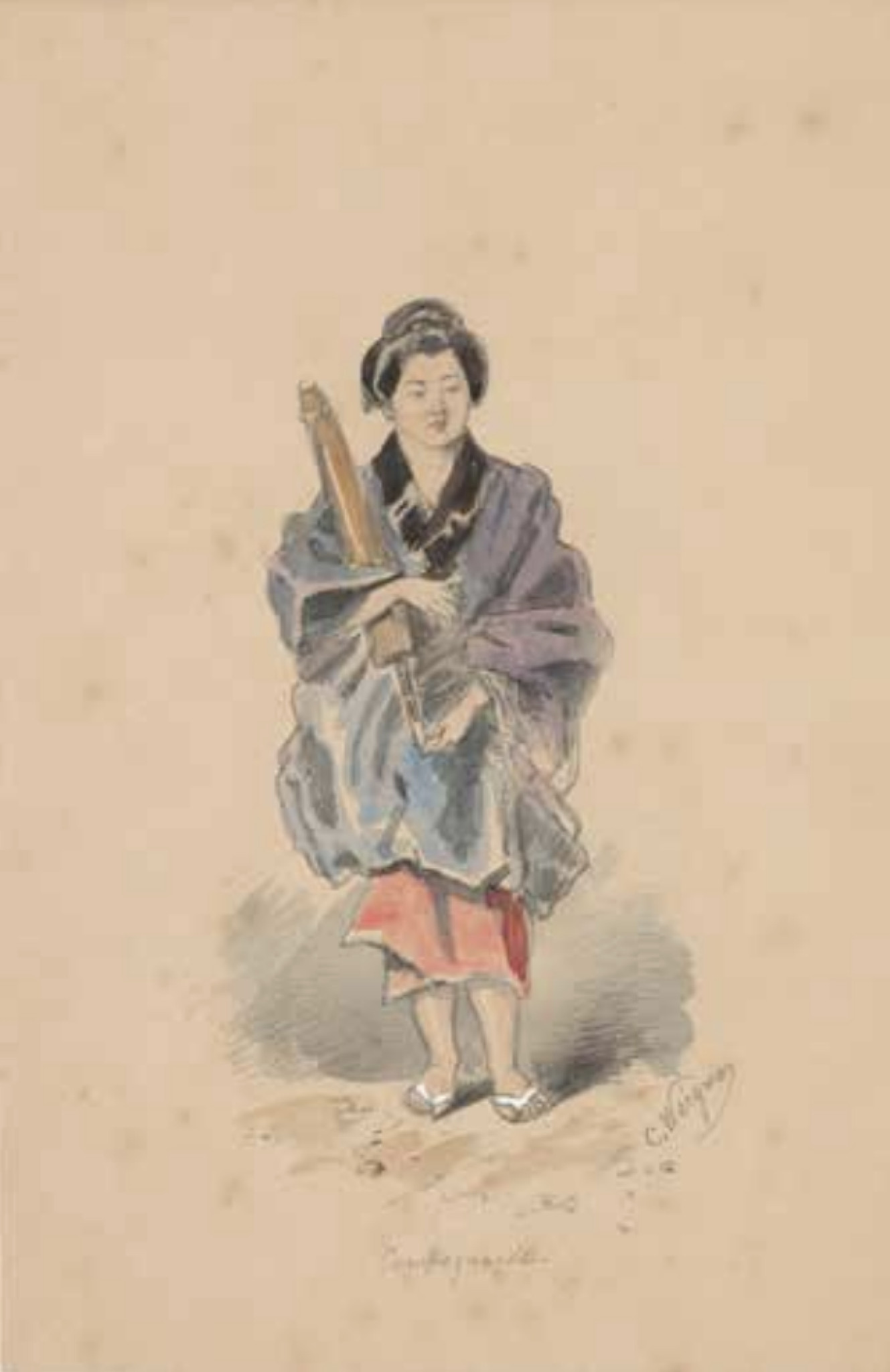
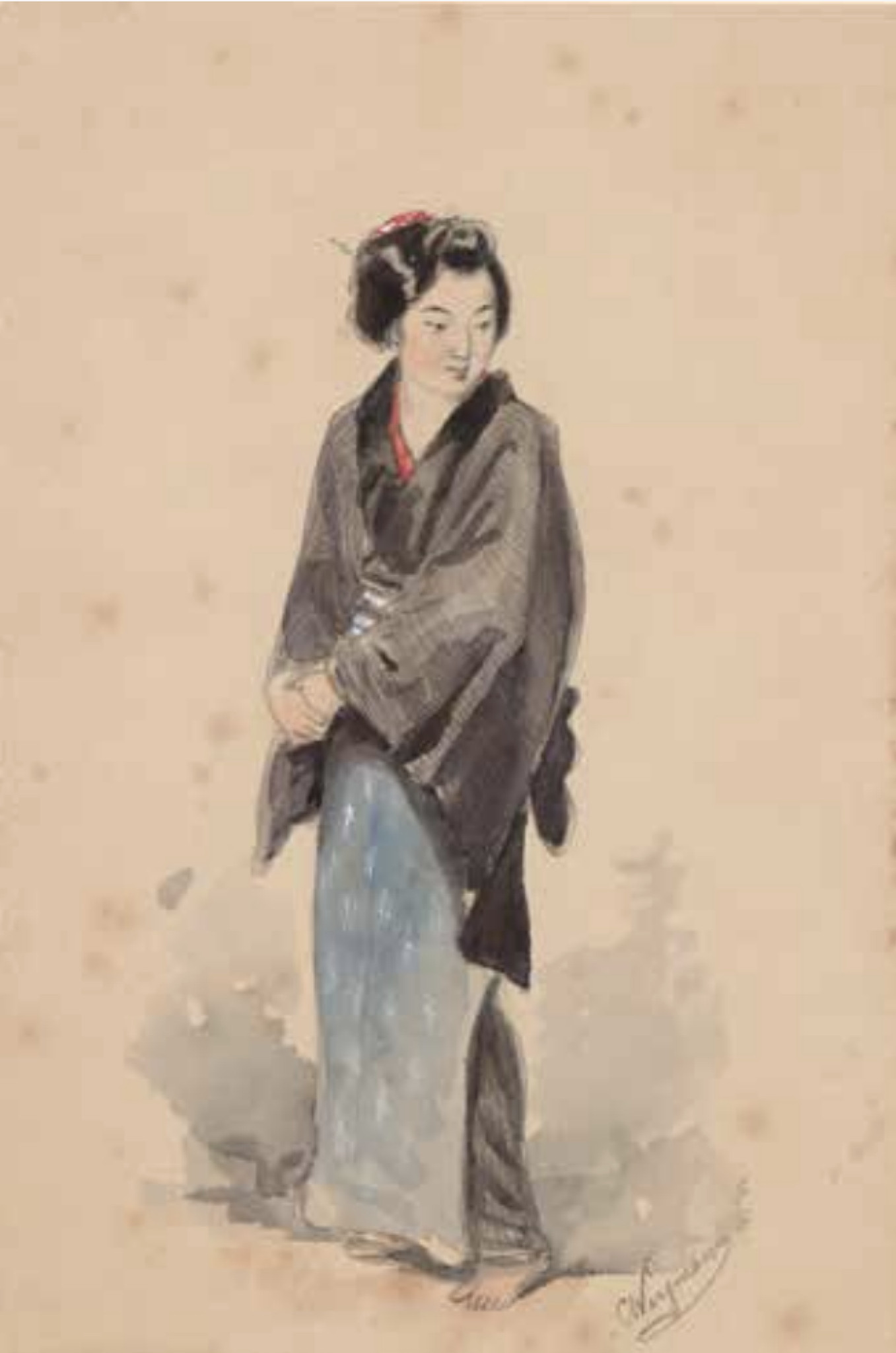
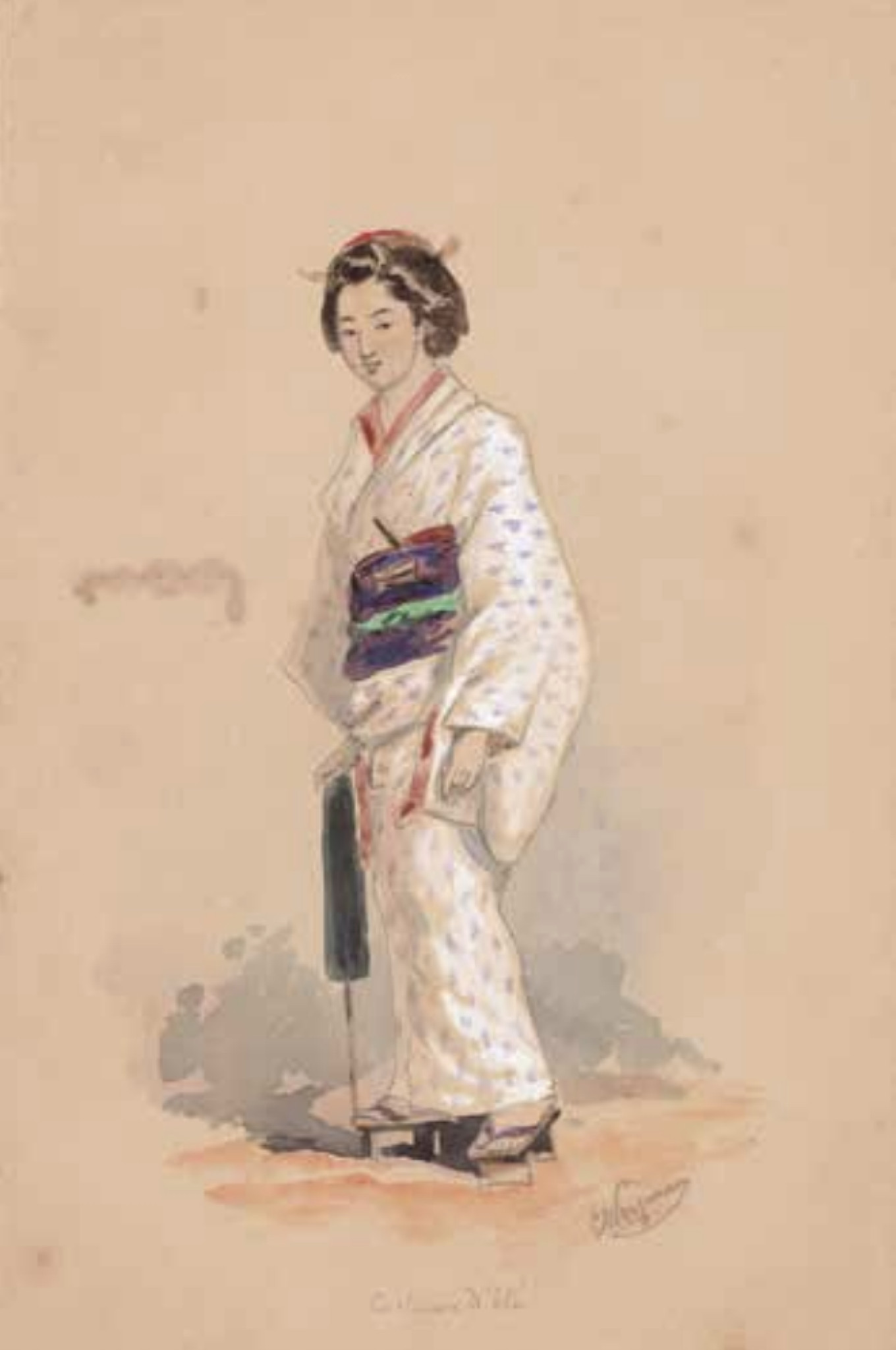
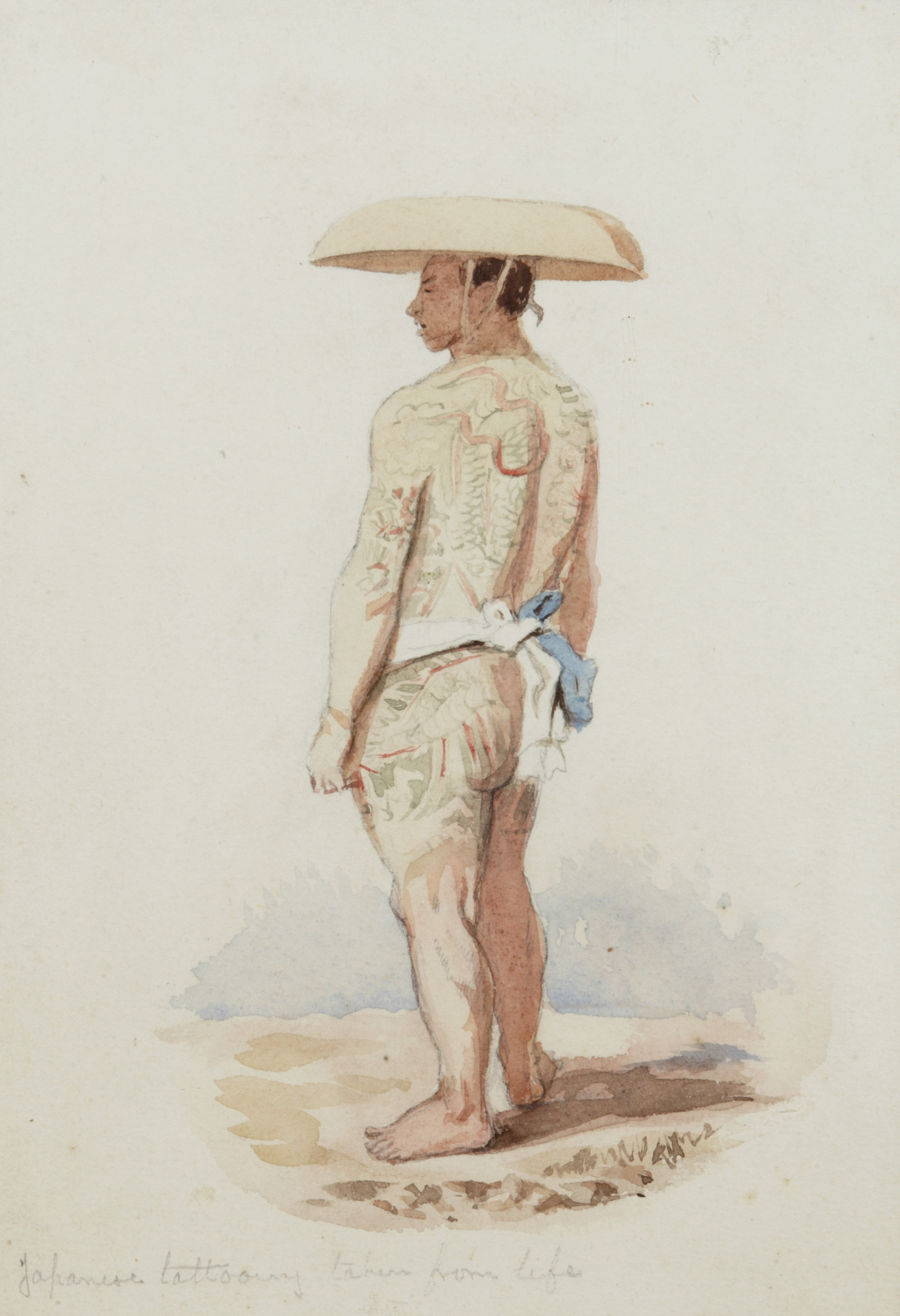
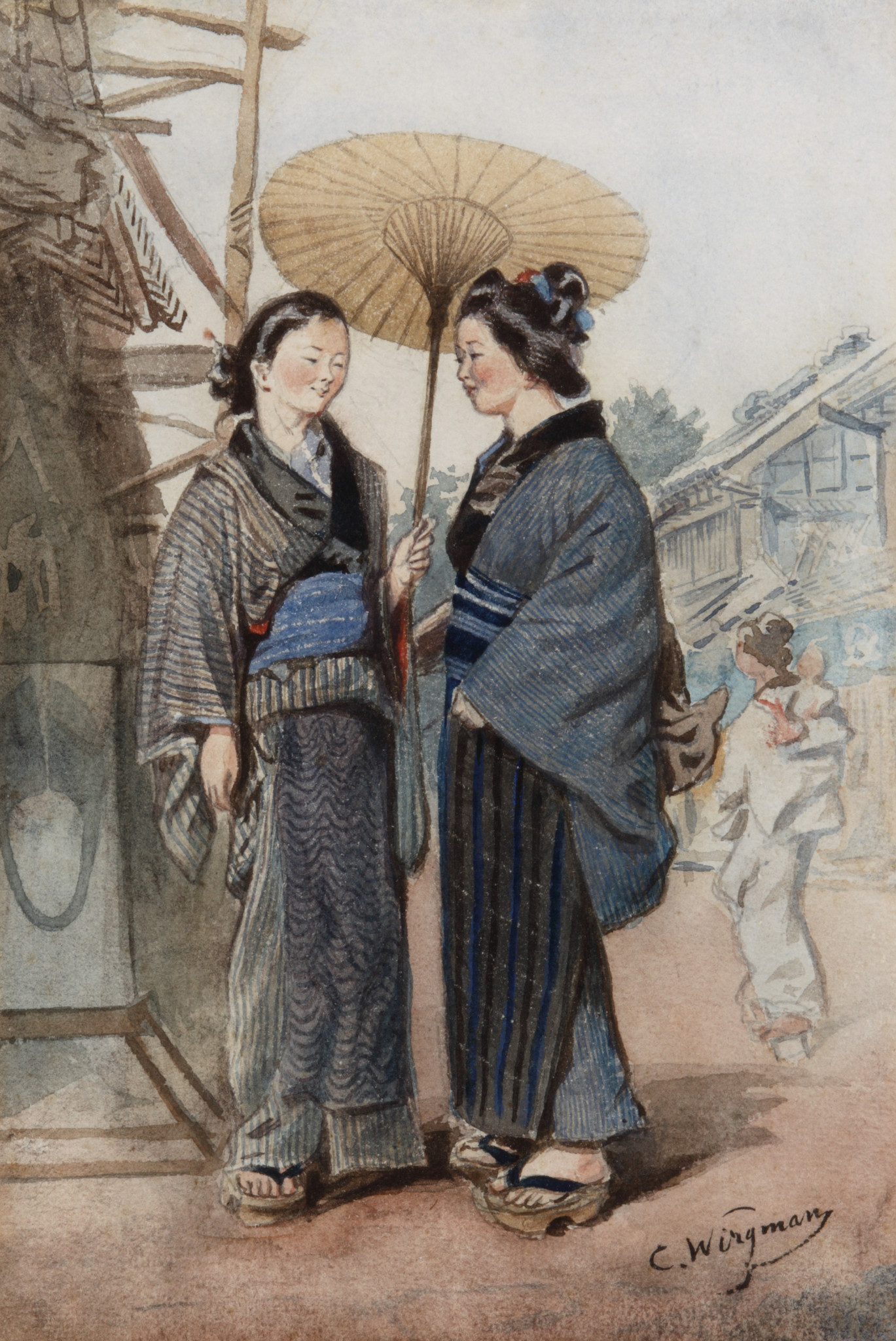
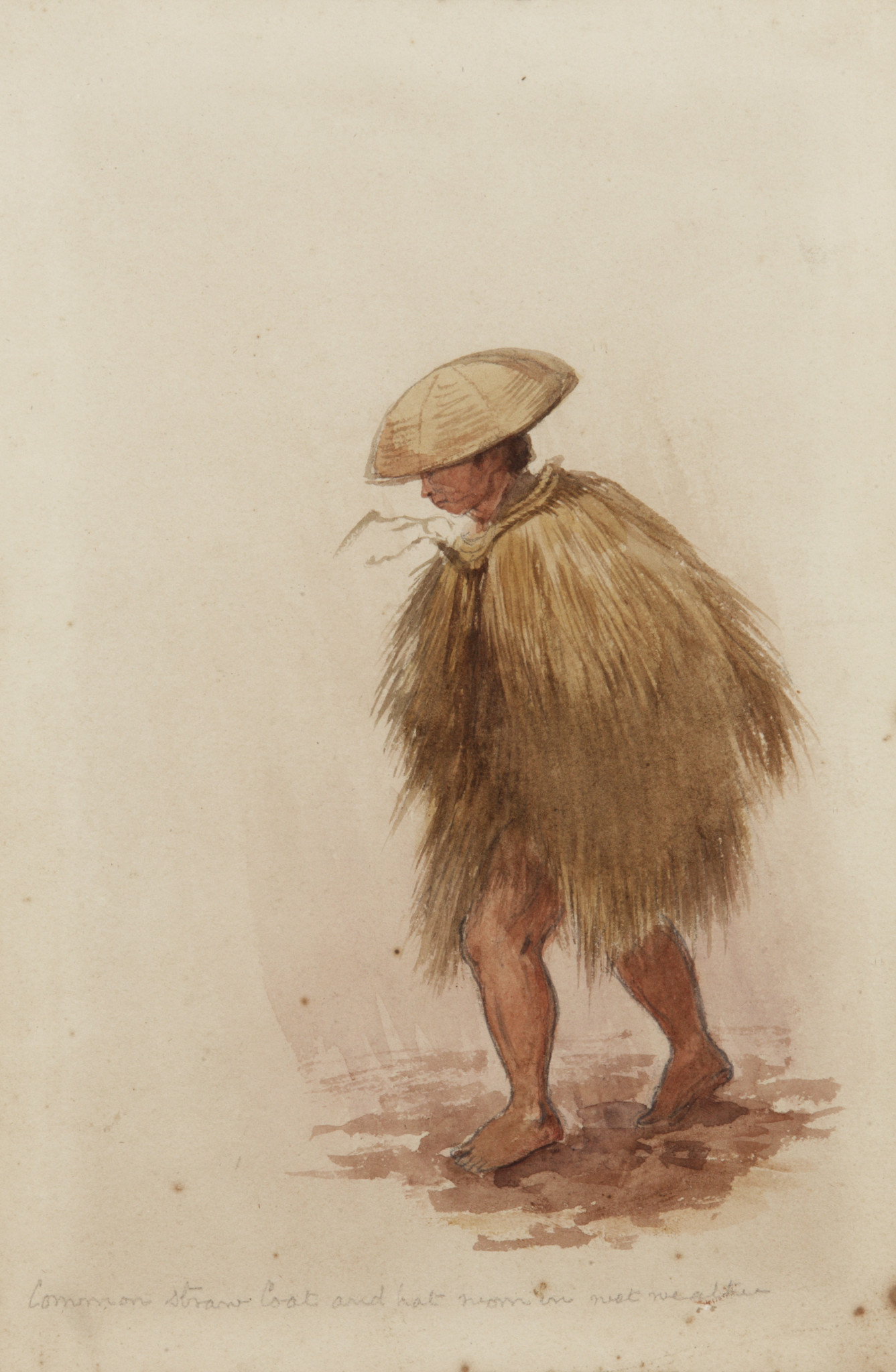
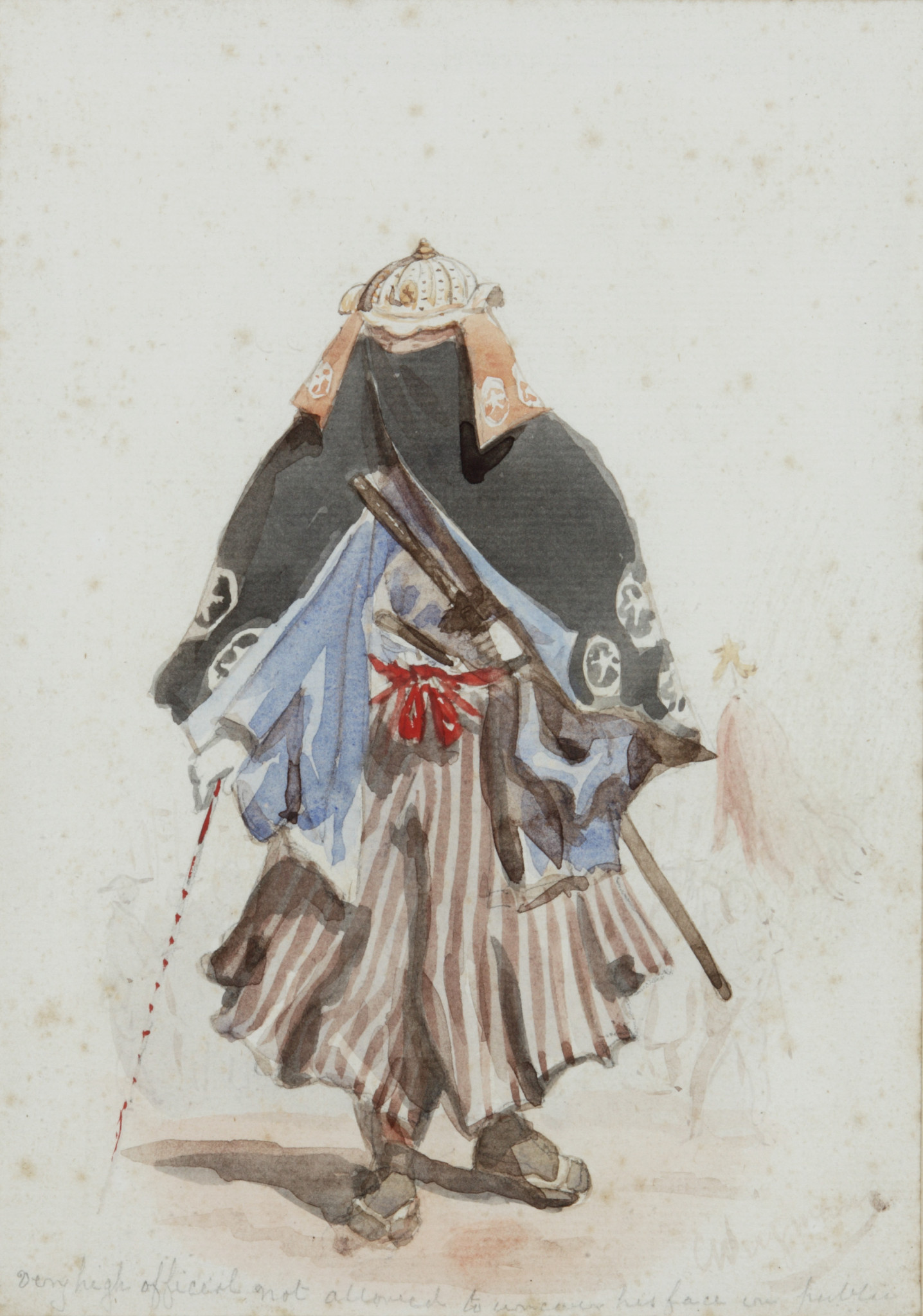
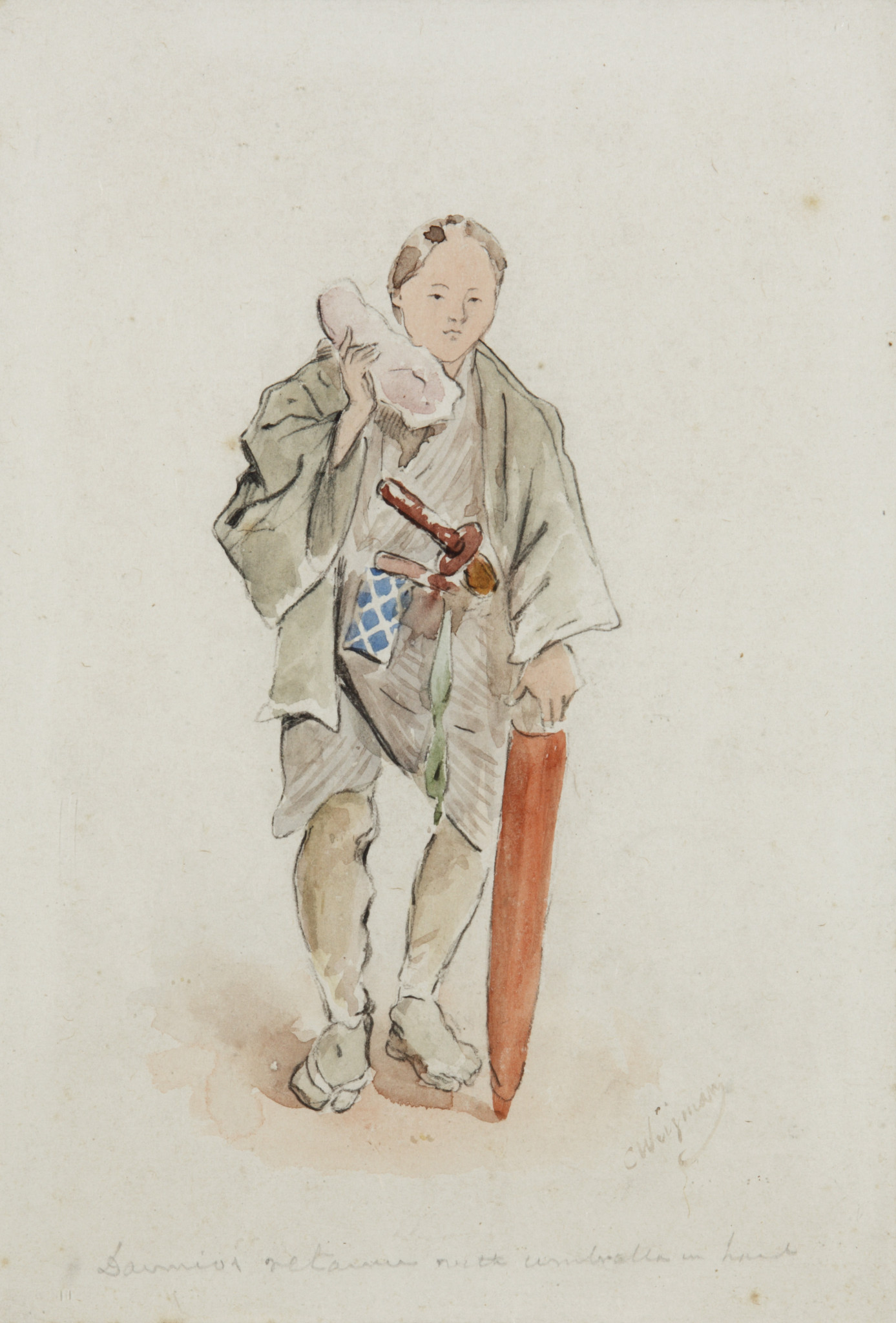
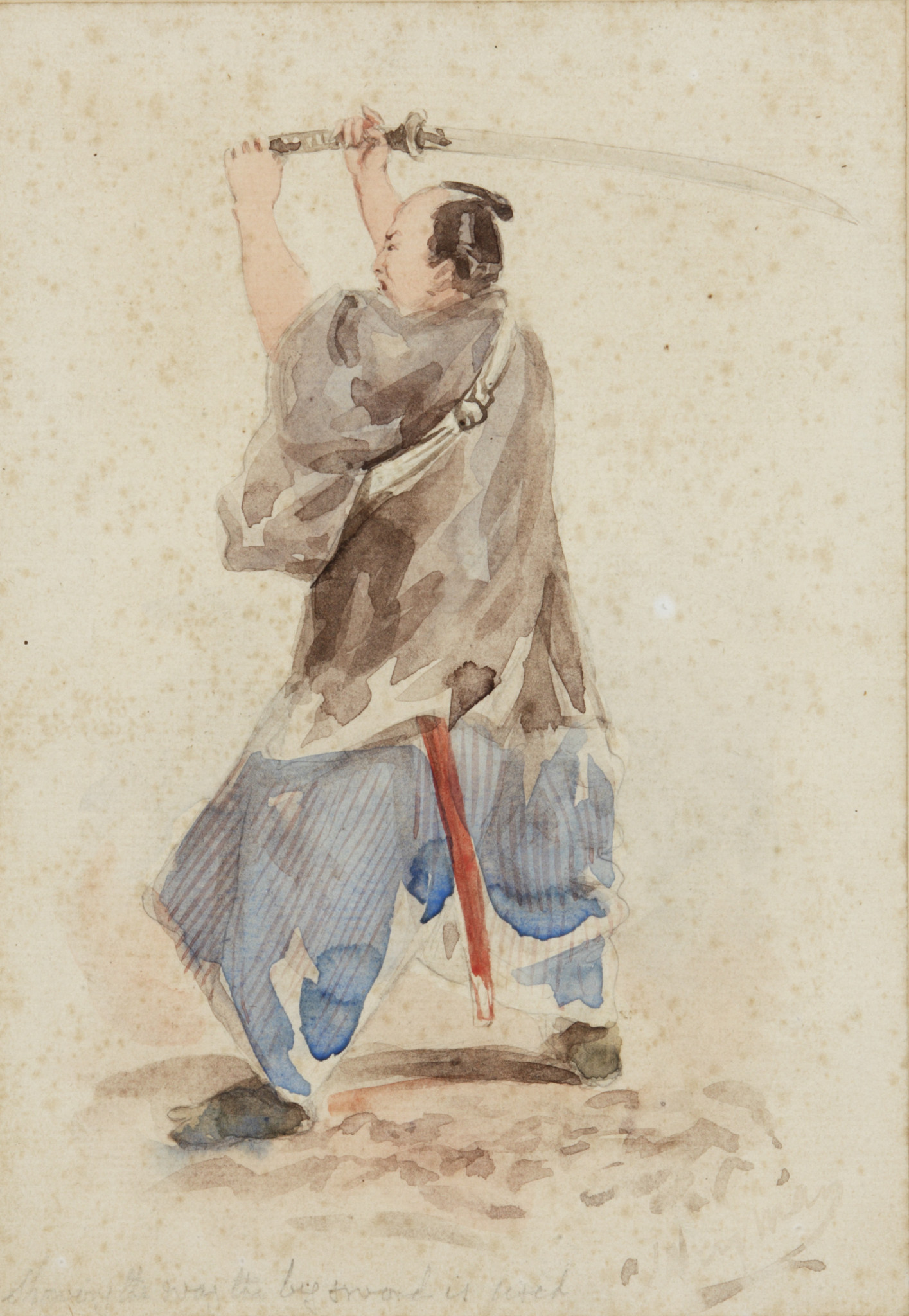
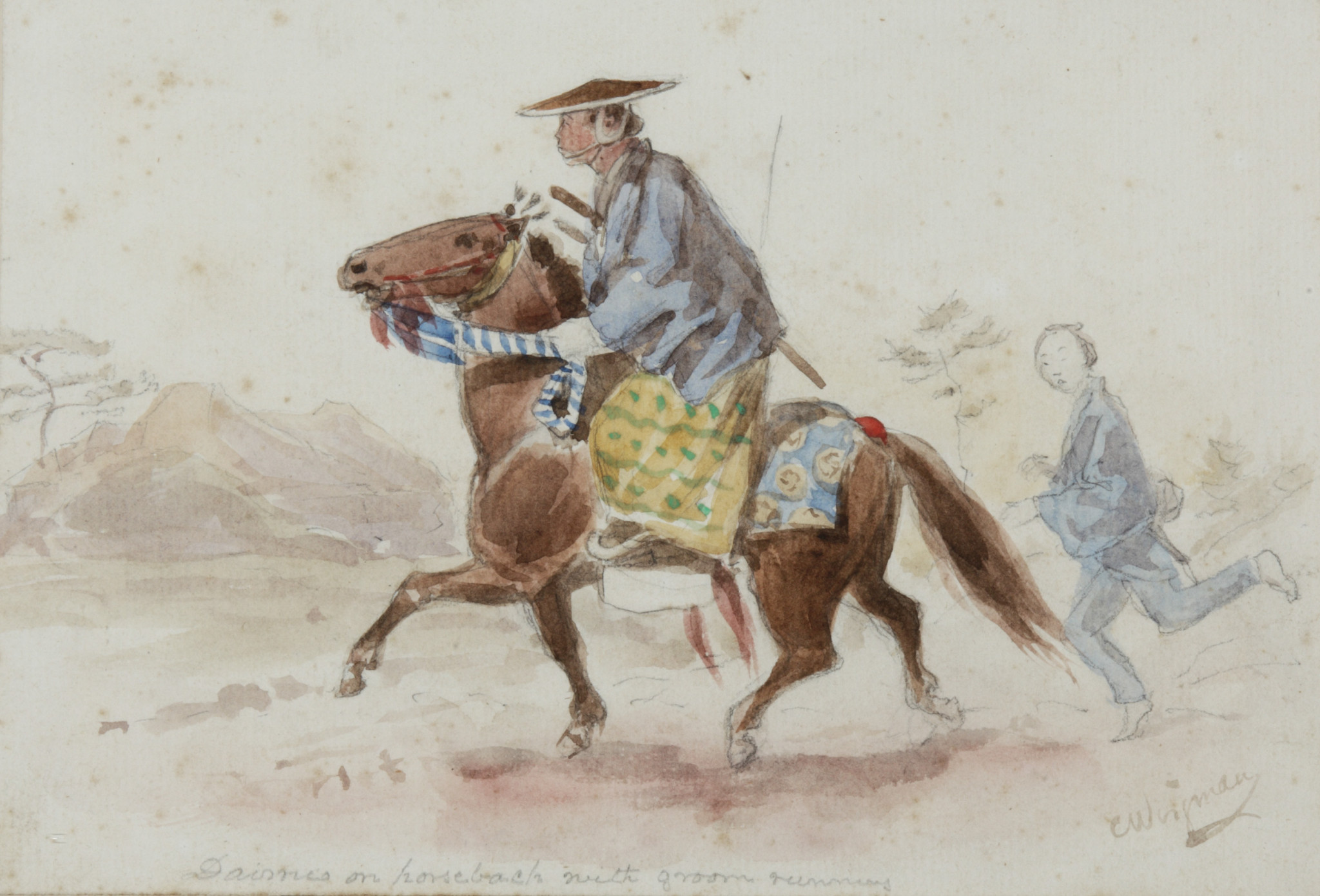
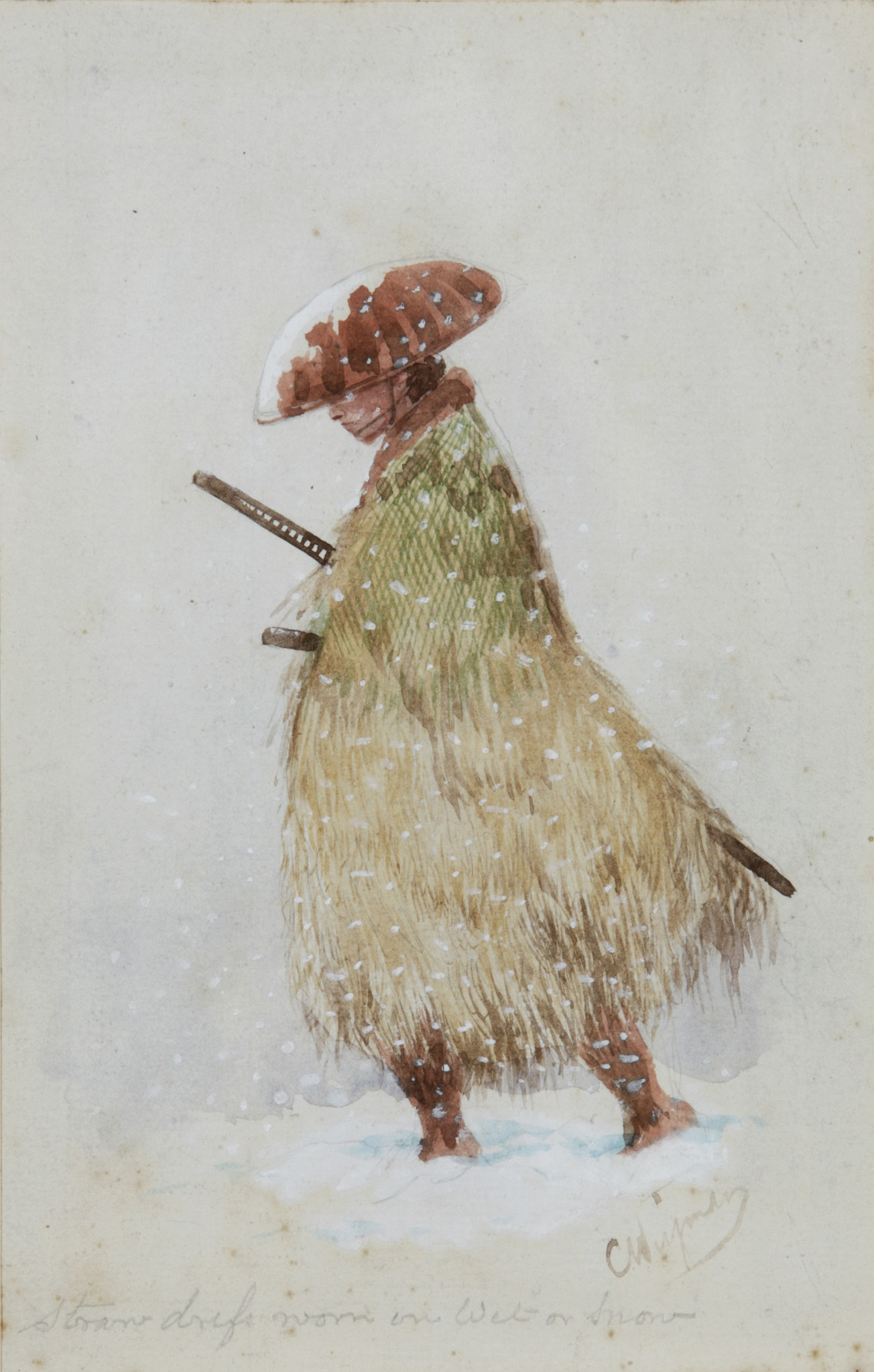
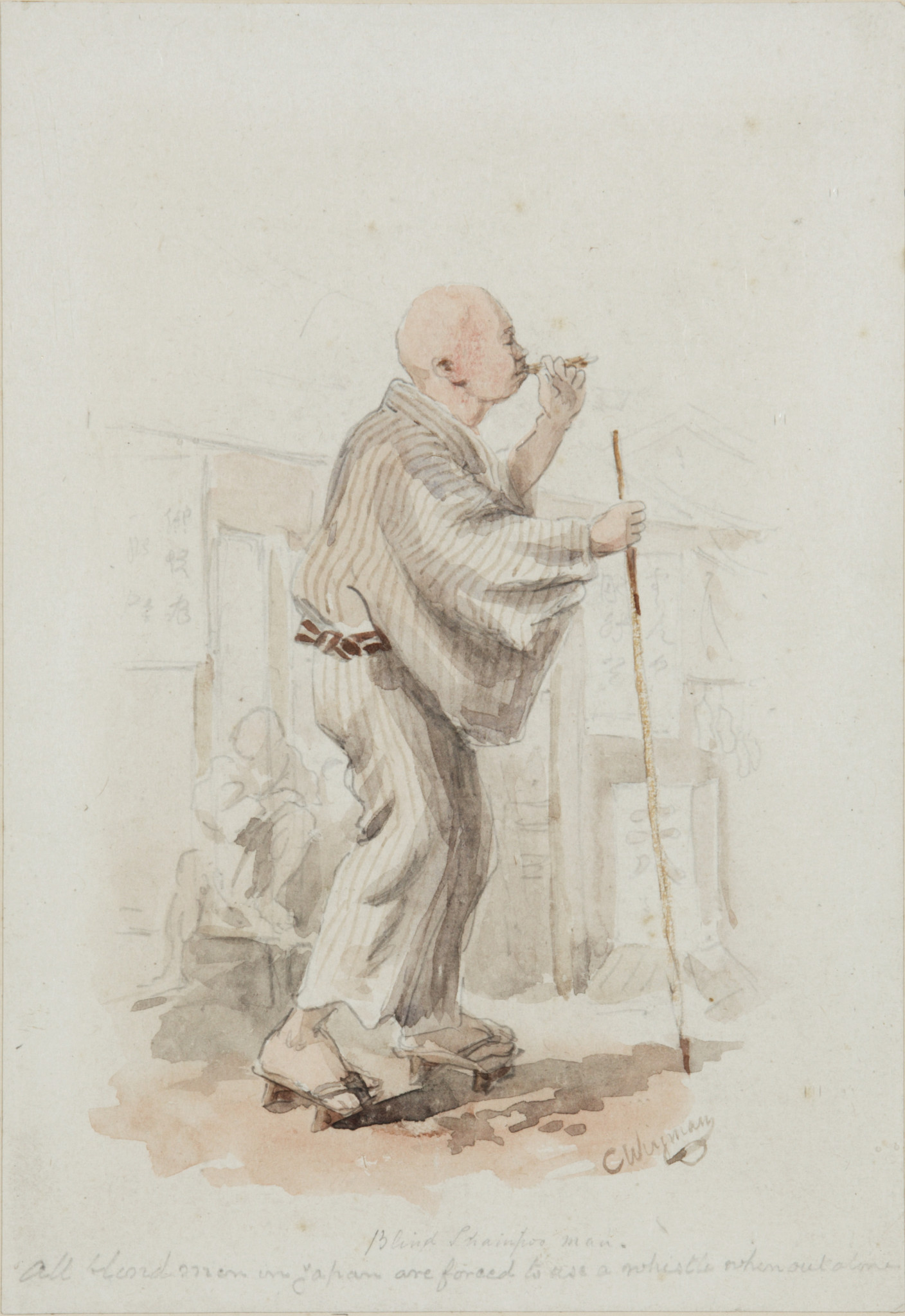
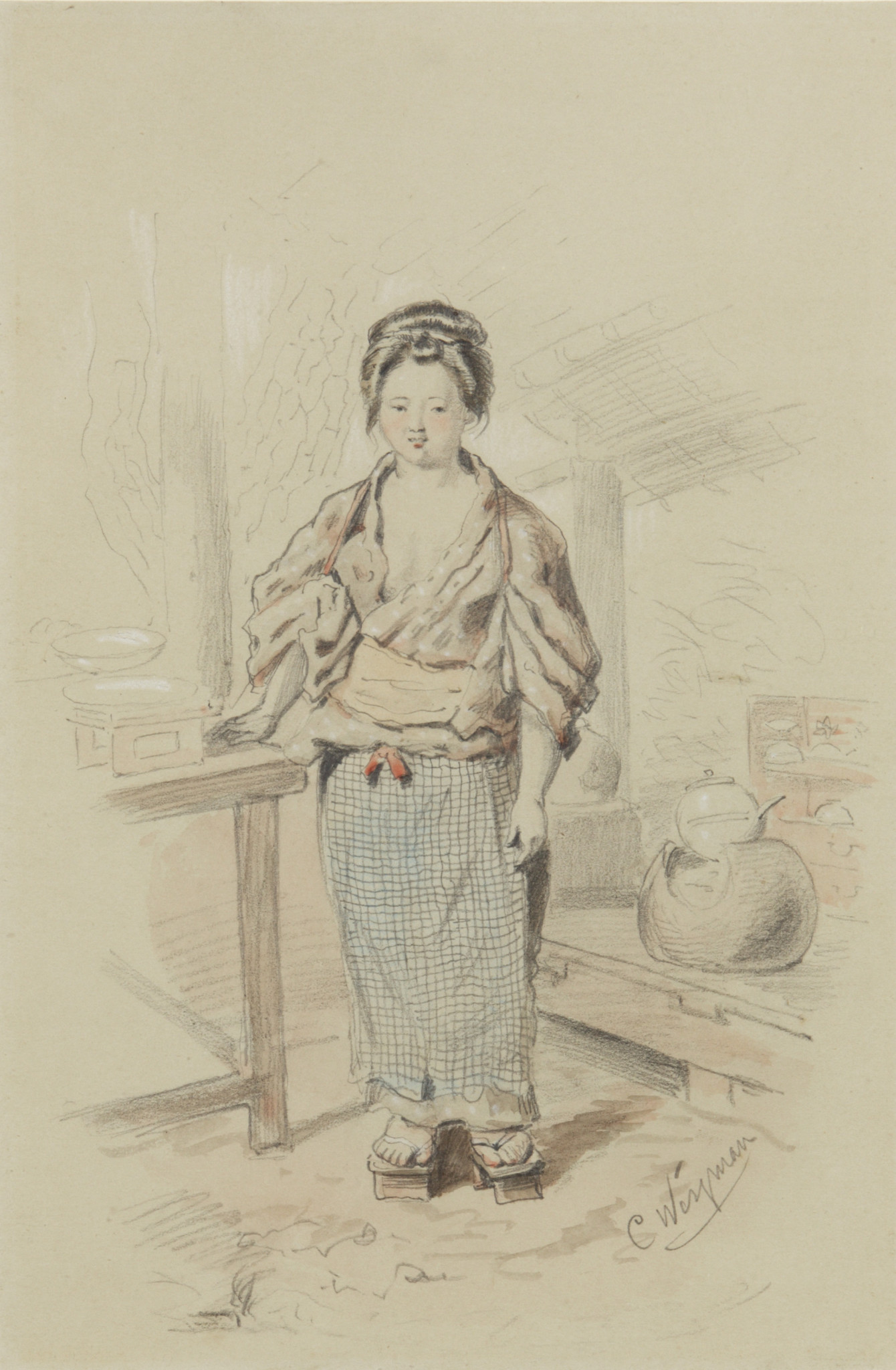
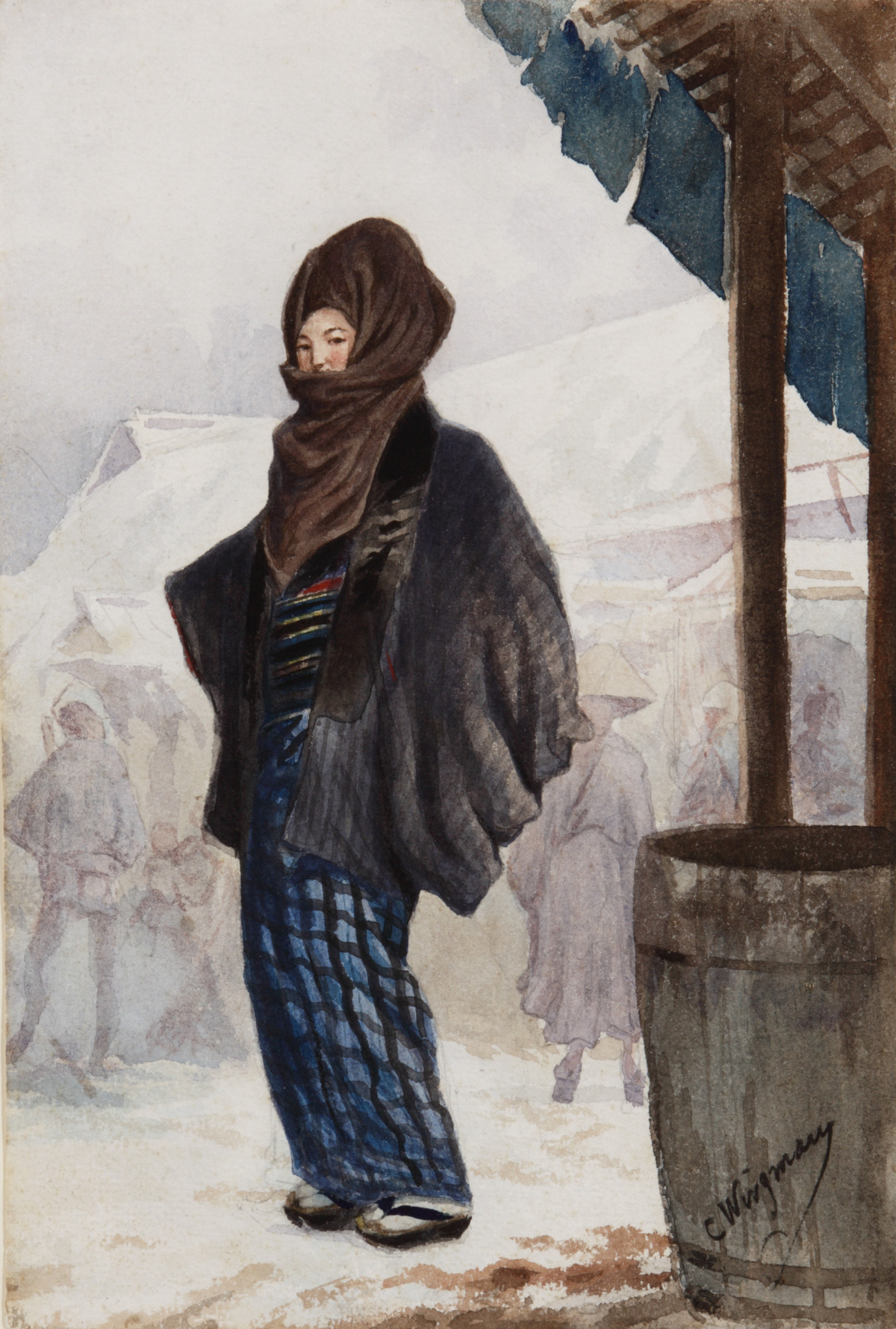
A collection of watercolours of Japan by Charles Wirgman (1832-1891)
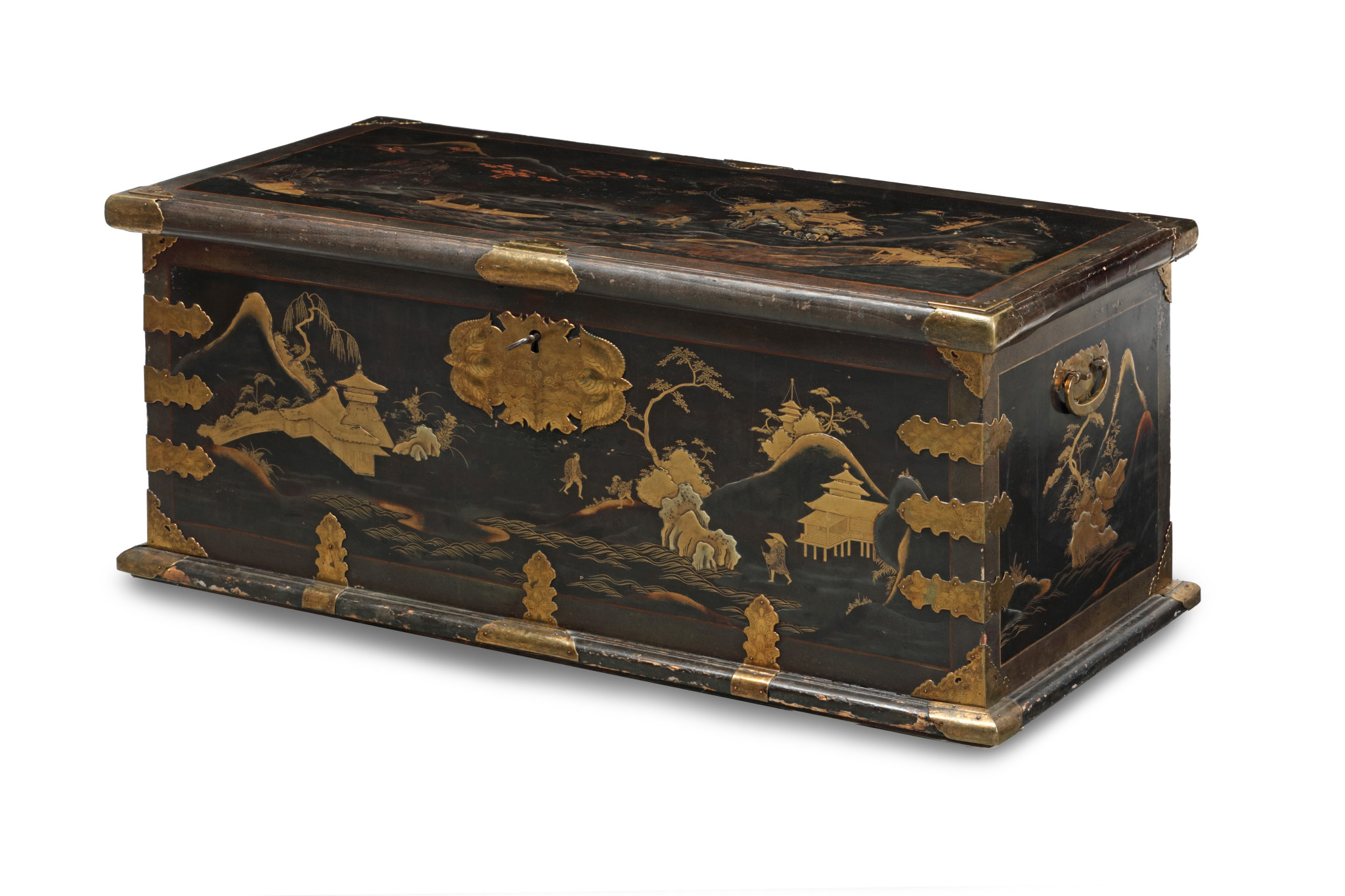
A Large Japanese lacquered chest with gilt-brass mounts
Kyoto, 1640-1690
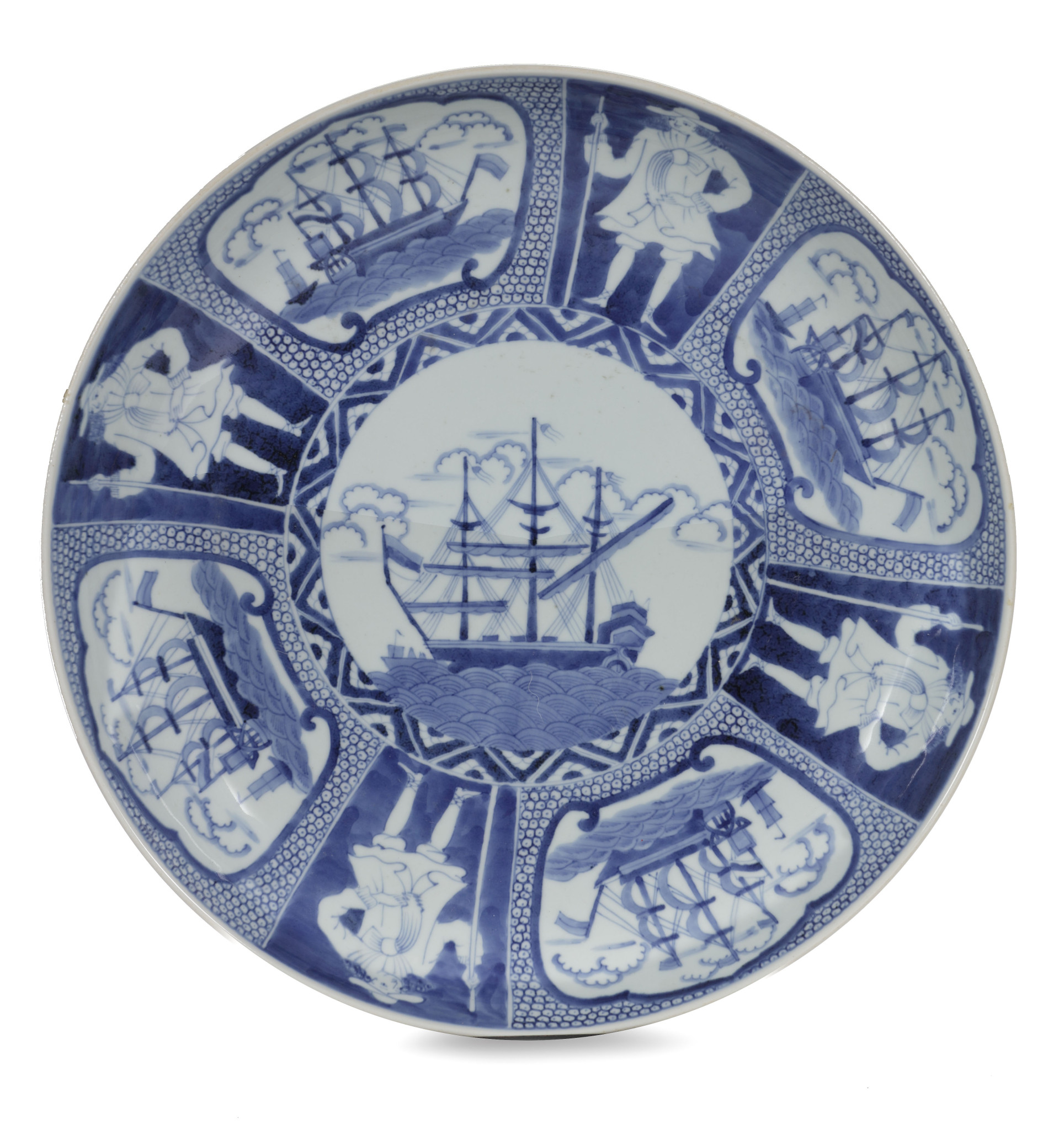
A large arita treasure ship dish
Late 19th/early 20th century
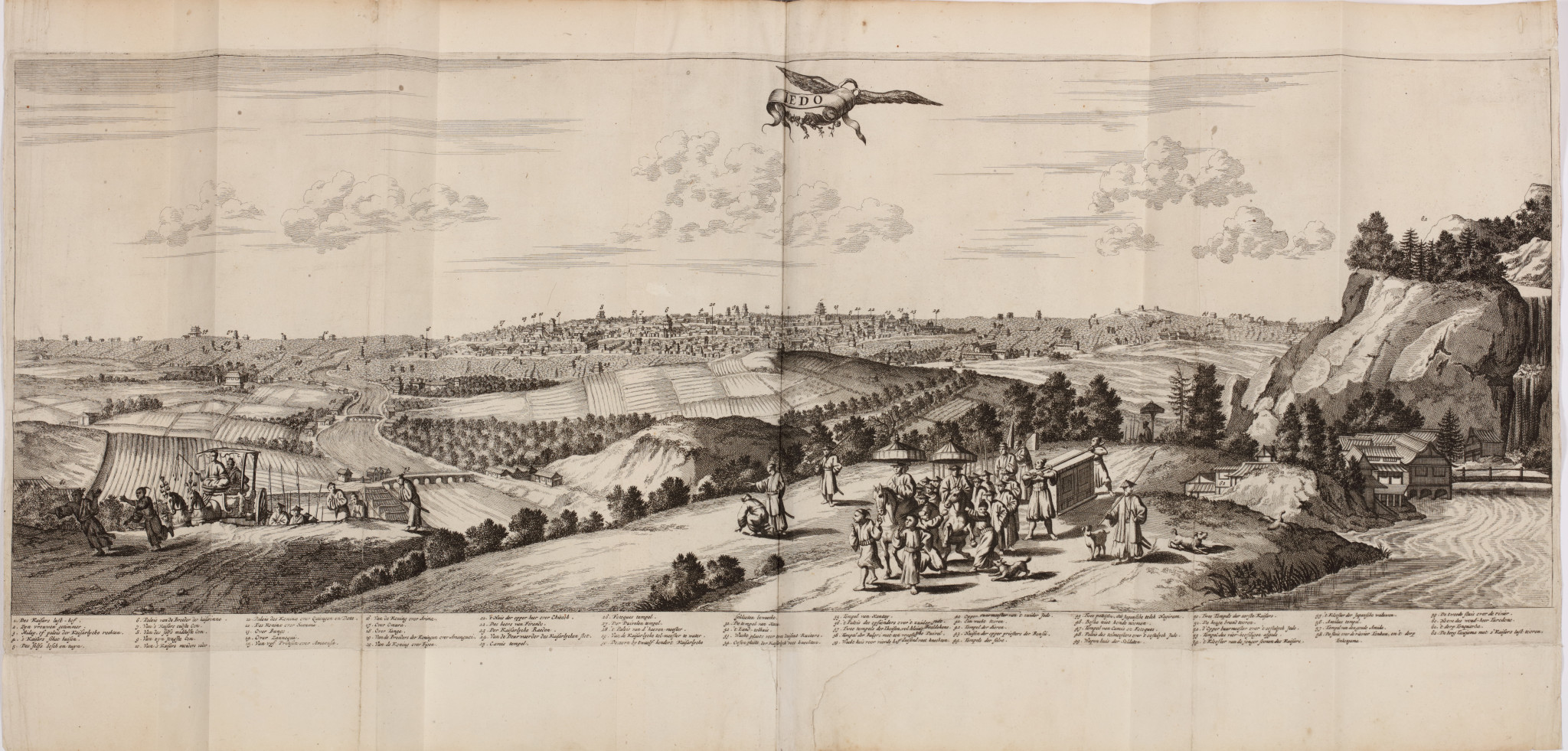
Arnoldus Montanus (1625-1683)
Gedenckwaerdige Gesantschappen der Oost-Indische Martschappy in’t Vereenigde Nederland aen de Kaisaren van Japan, Getrokken uit de Geschriften en Reiseaentekeninge der zelver Gesanten
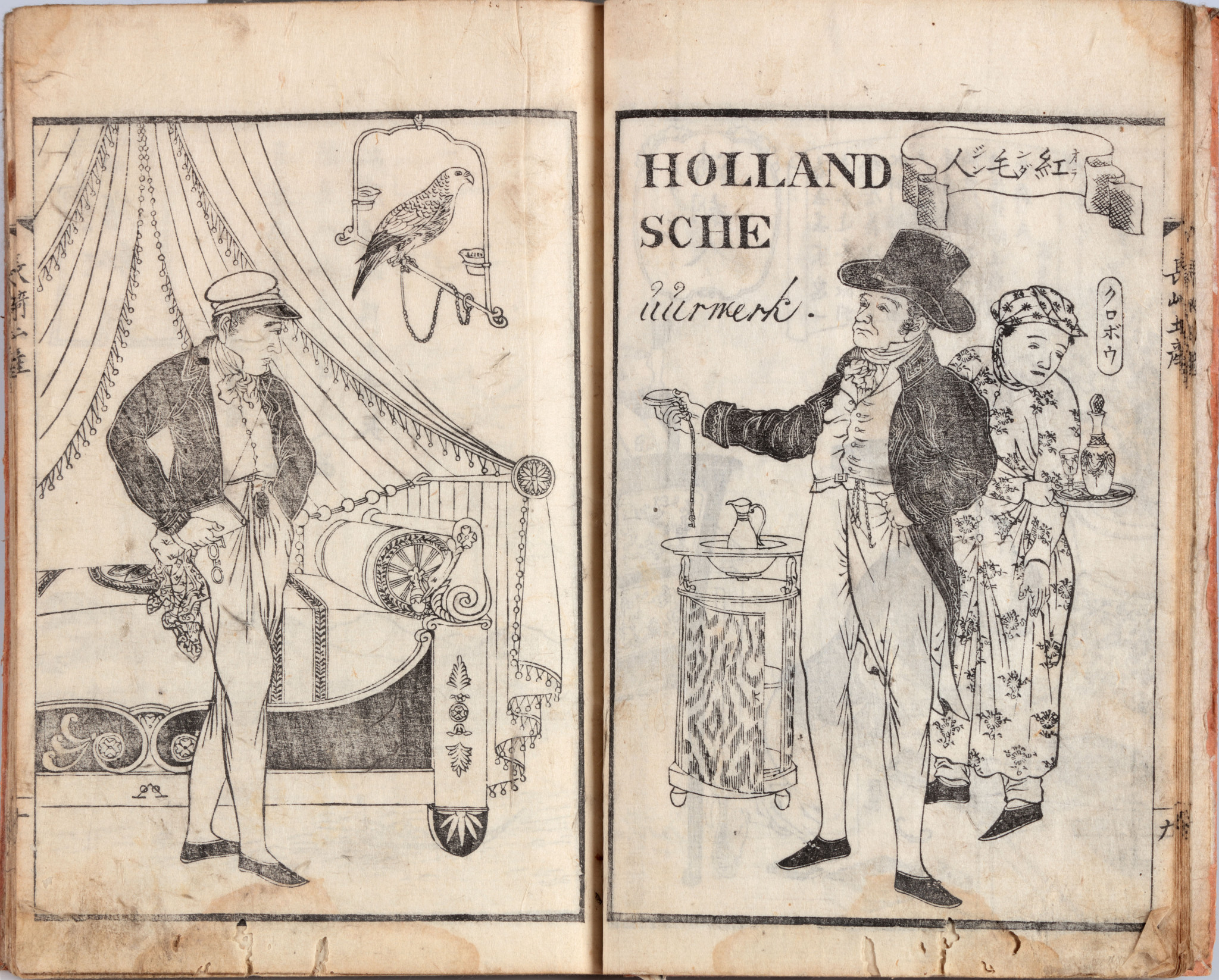
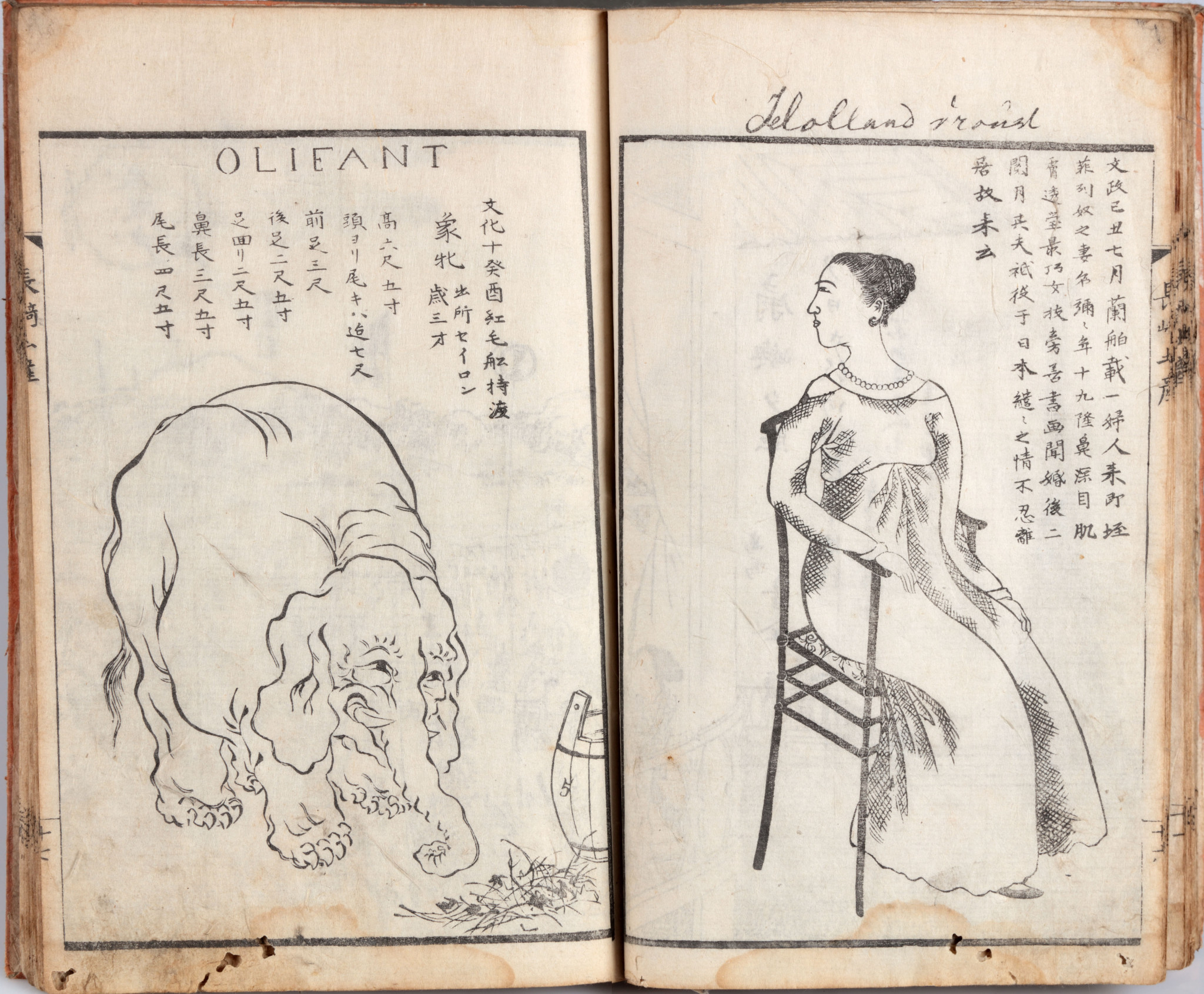
Isono Busai (? - 1857)
'Nagasaki miyage' - Souvernir from Nagasaki, 1847
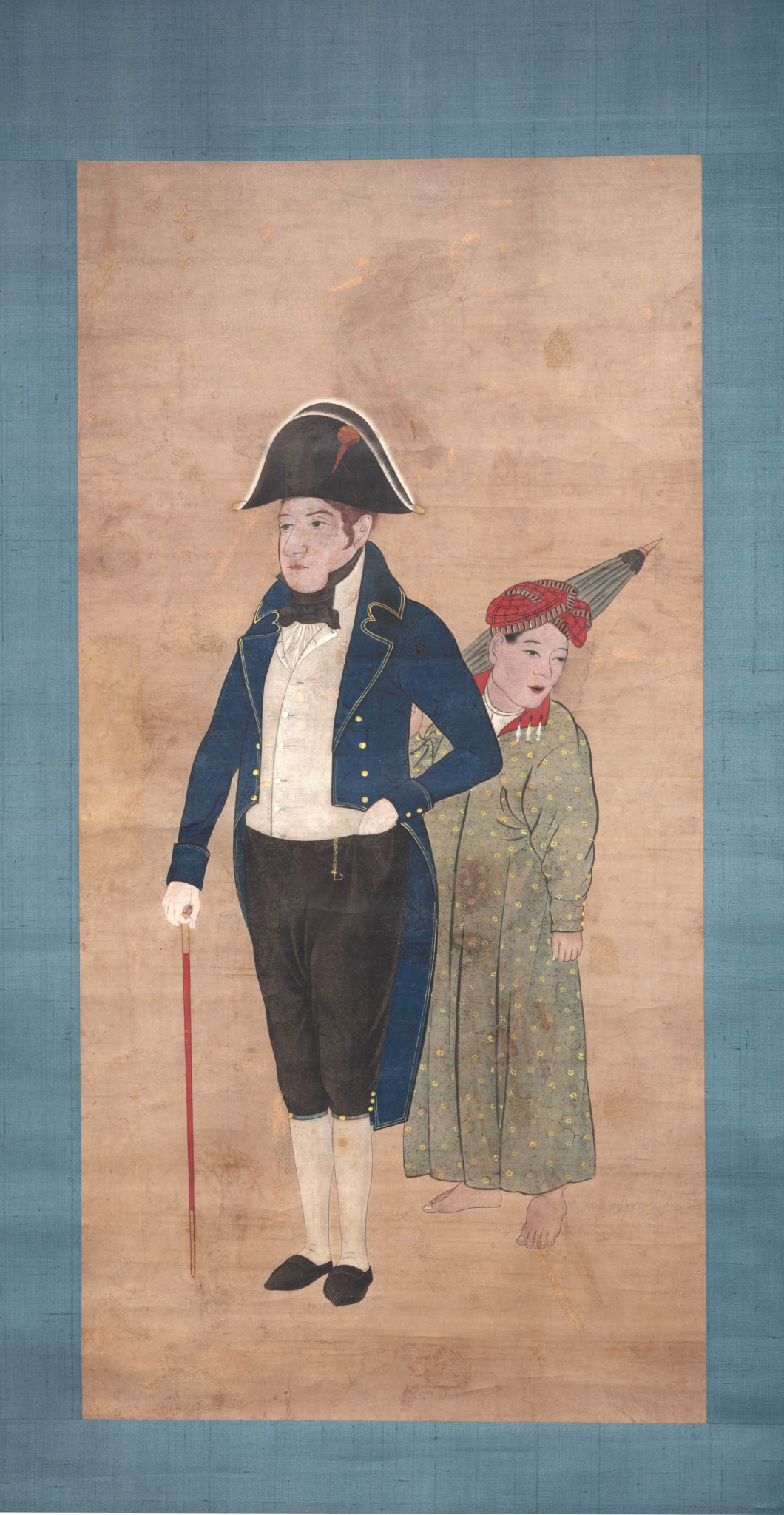
Nagasaki School (early 19th century)
Opperhoofd Hendrik Doeff with Javanese enslaved servant
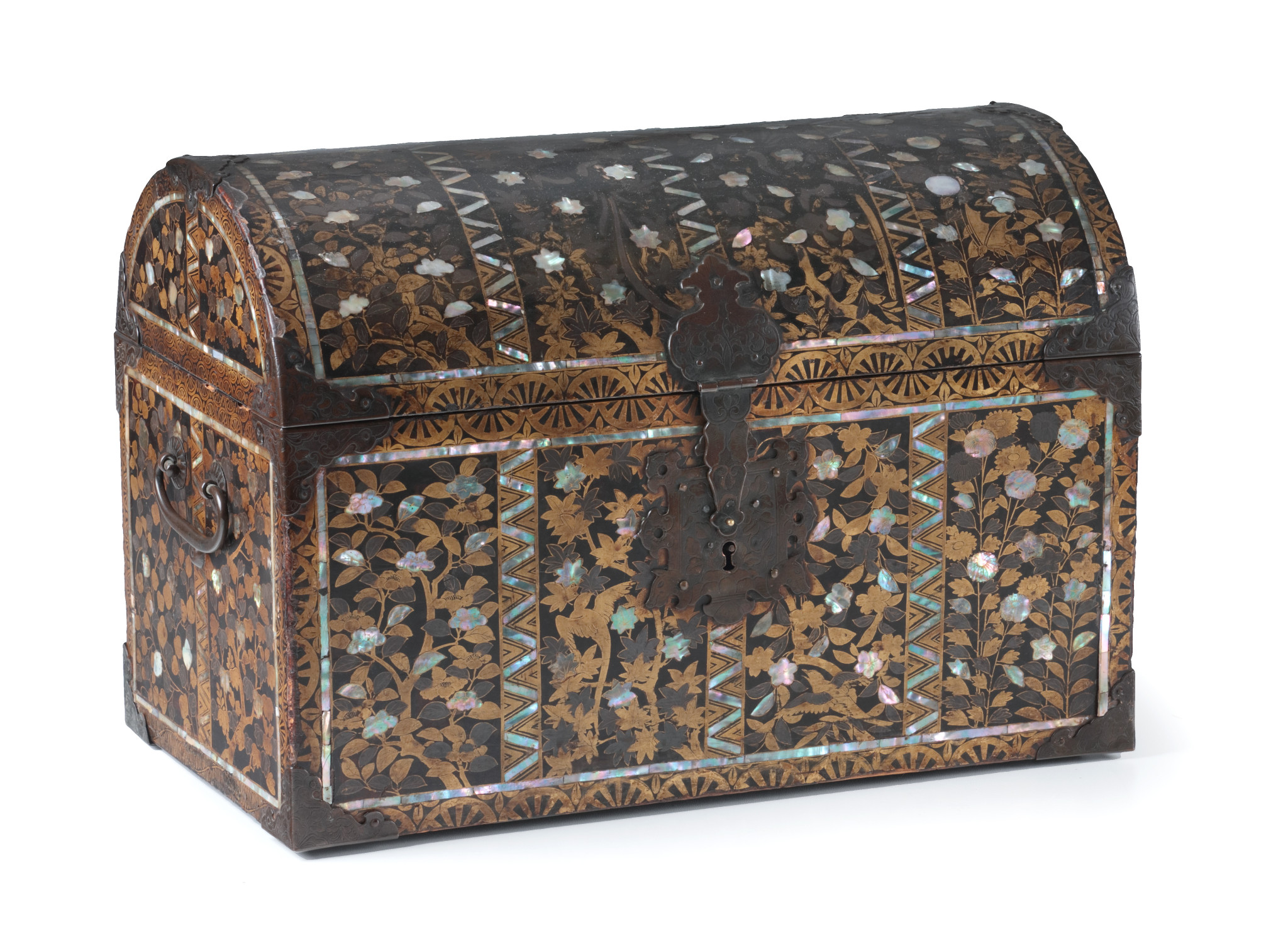
A Japanese export namban coffer
Kyoto, Momoyama period, late 16th/early 17th century
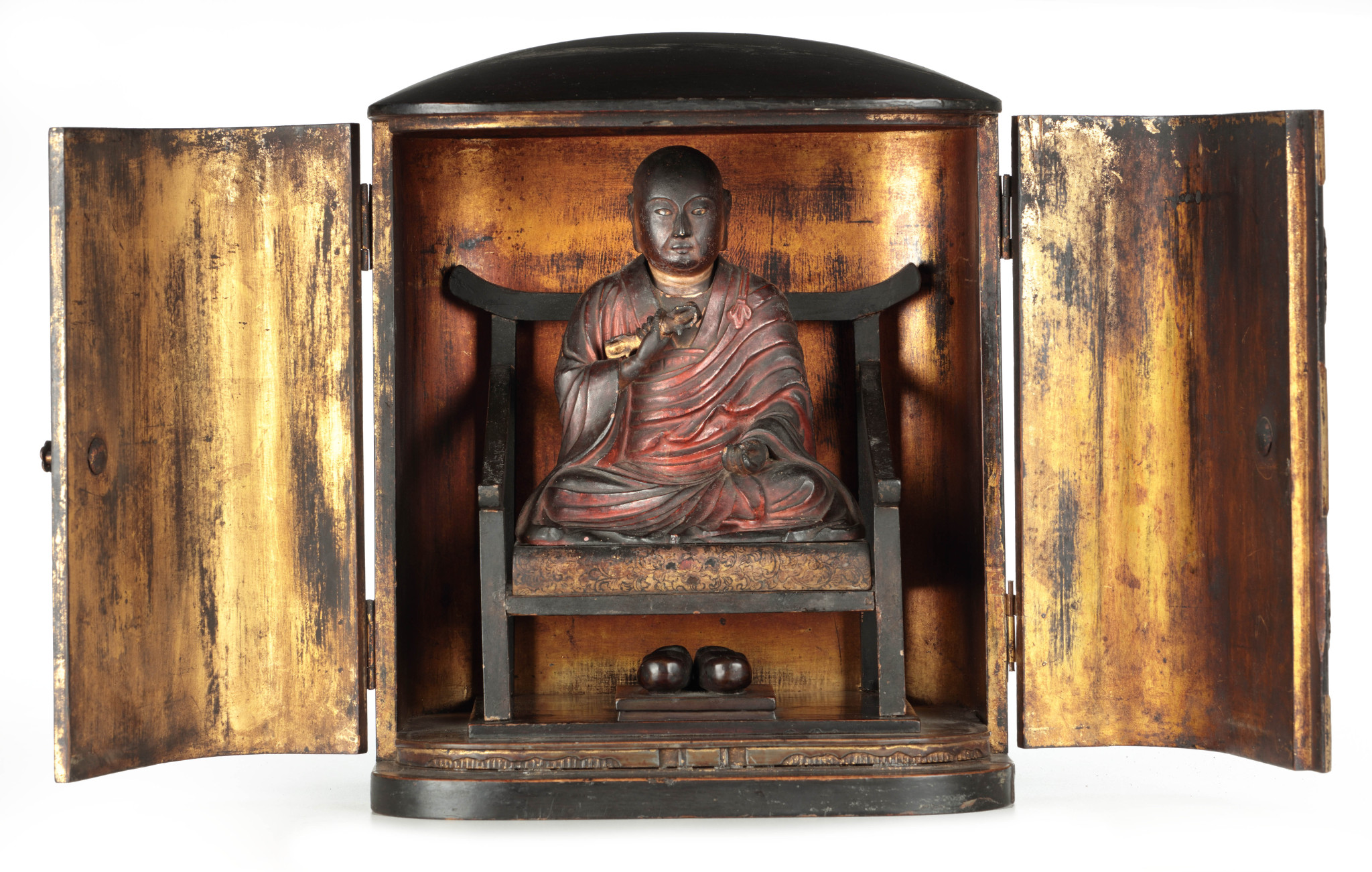
A Japanese Buddhist travelling shrine, Zushi
Meiji-period, 19th century
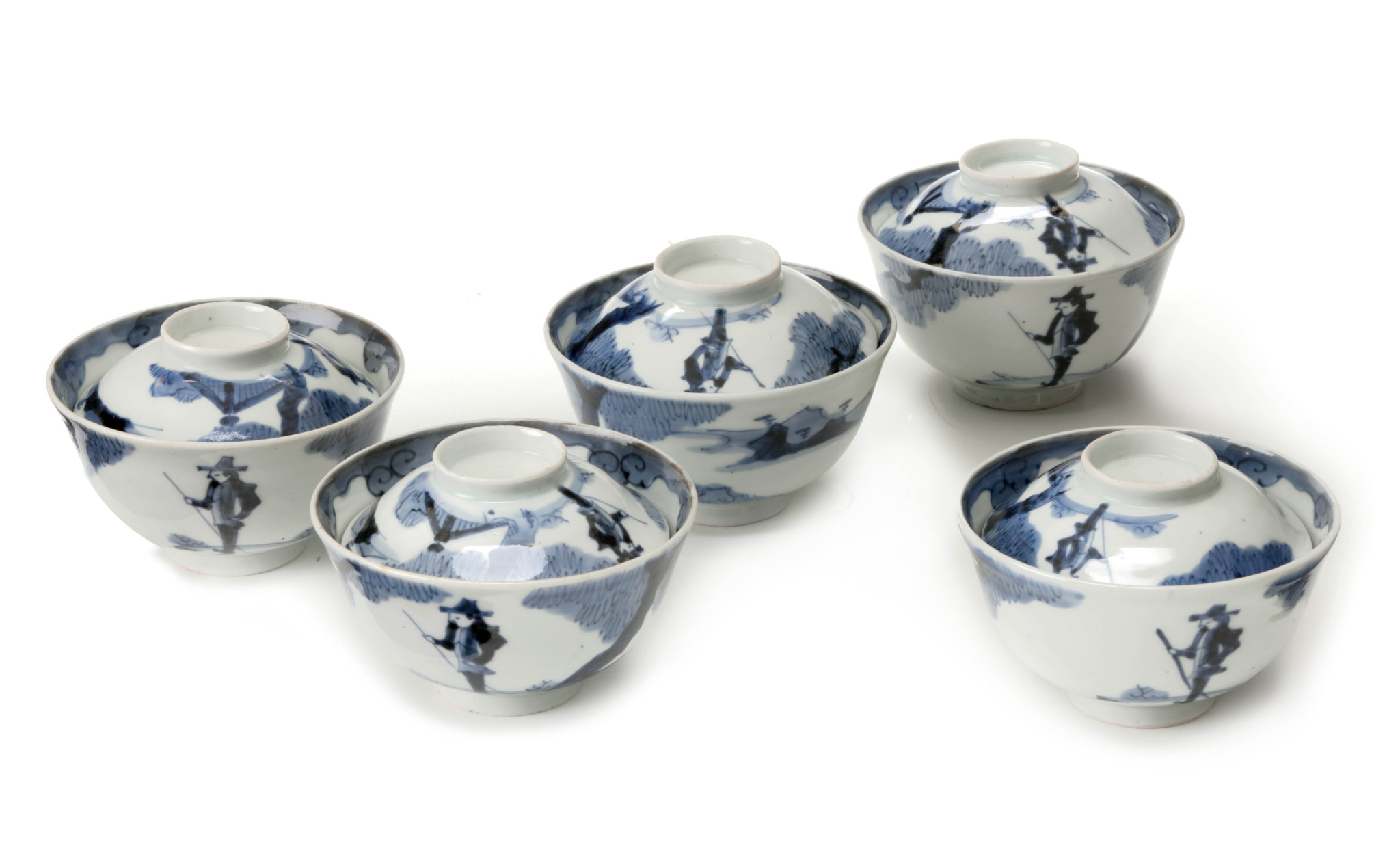
A set of five Japanese Arita blue and white porcelain 'Dutchmen' bowls with covers
Early 19th century
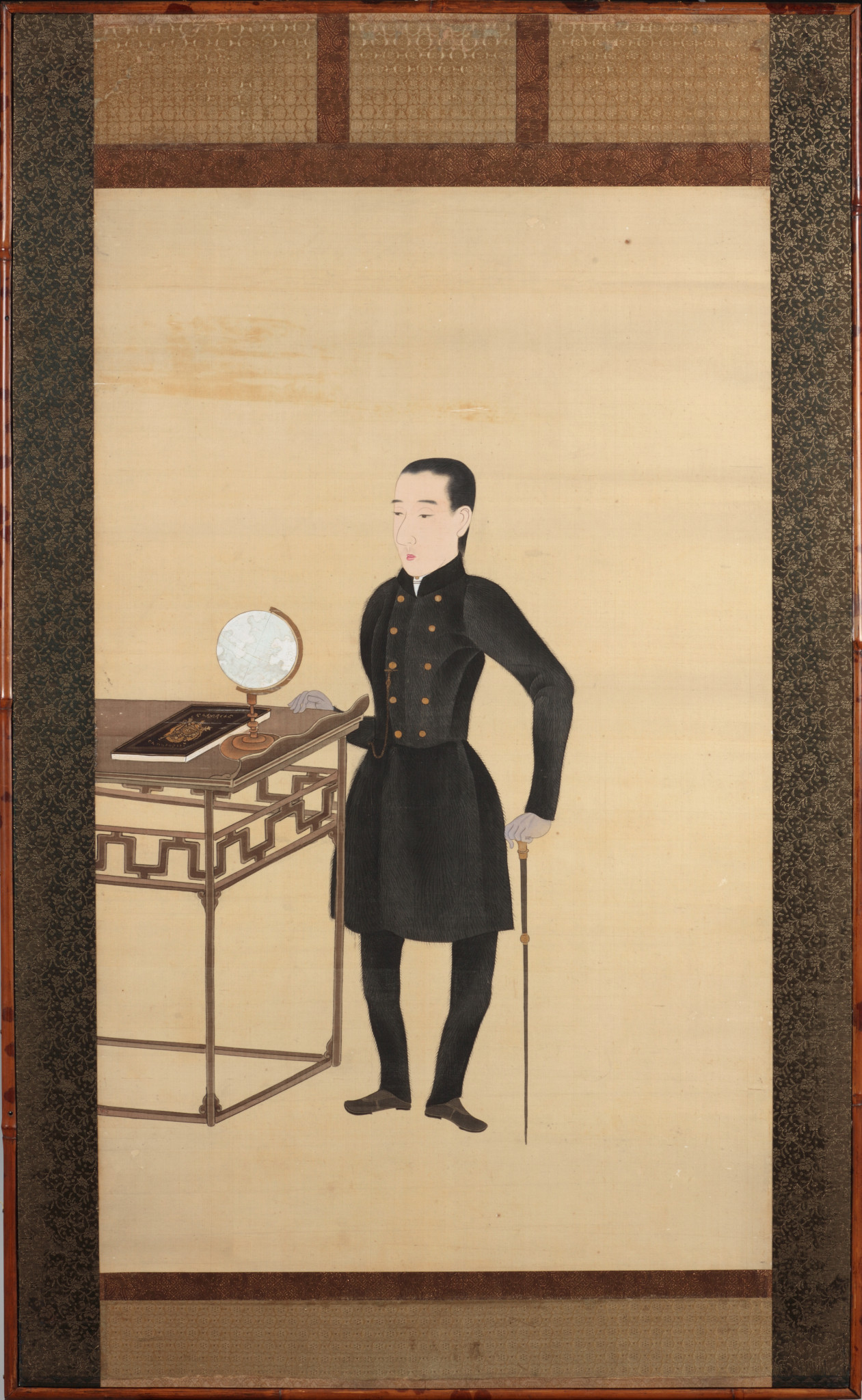
Anonymous Japanese painter (Meiji period, late 19th century)
Portrait of Takeaki Enomoto (1836-1908)
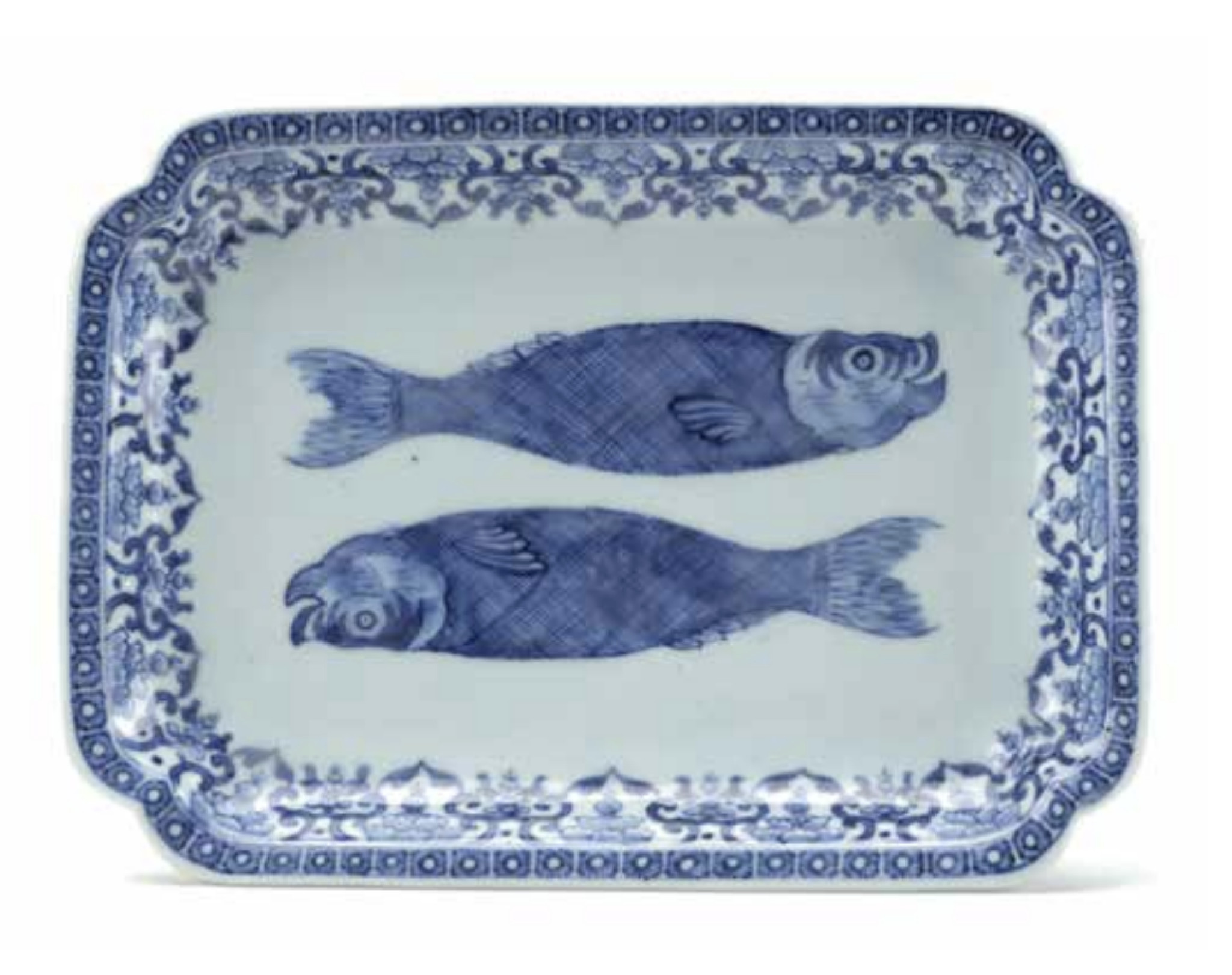
Another Chinese blue and white porcelain 'Herring' dish
Qianlong period, 3rd quarter 18th century
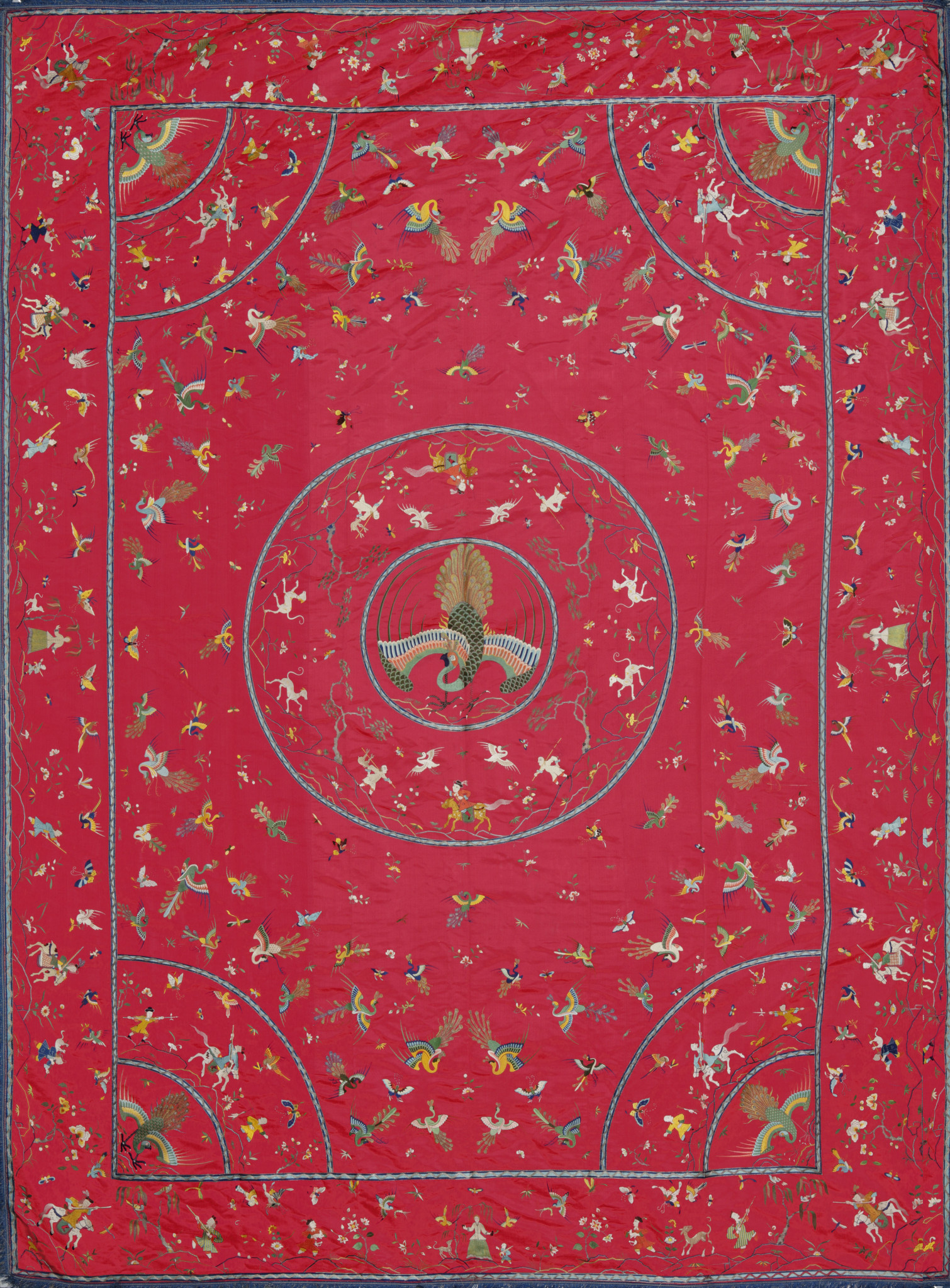
A Chinese red silk embroidered bed-cover for the Dutch market
Guangdong or Macao, mid 18th century
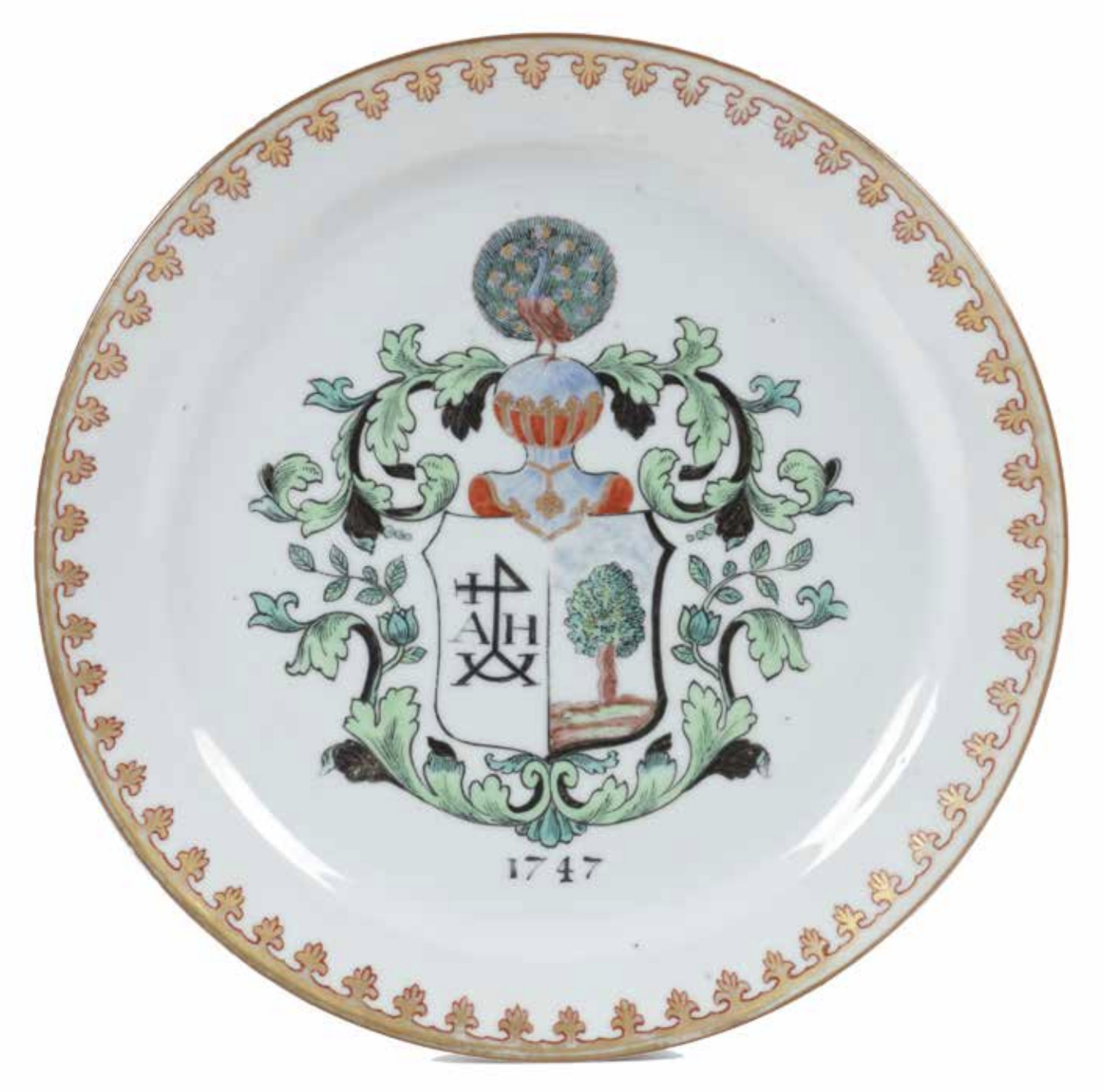
A Chinese famille verte porcelain armorial 'Hesselink' dish
Qianlong period, dated 1747 and with rare merchant's mark
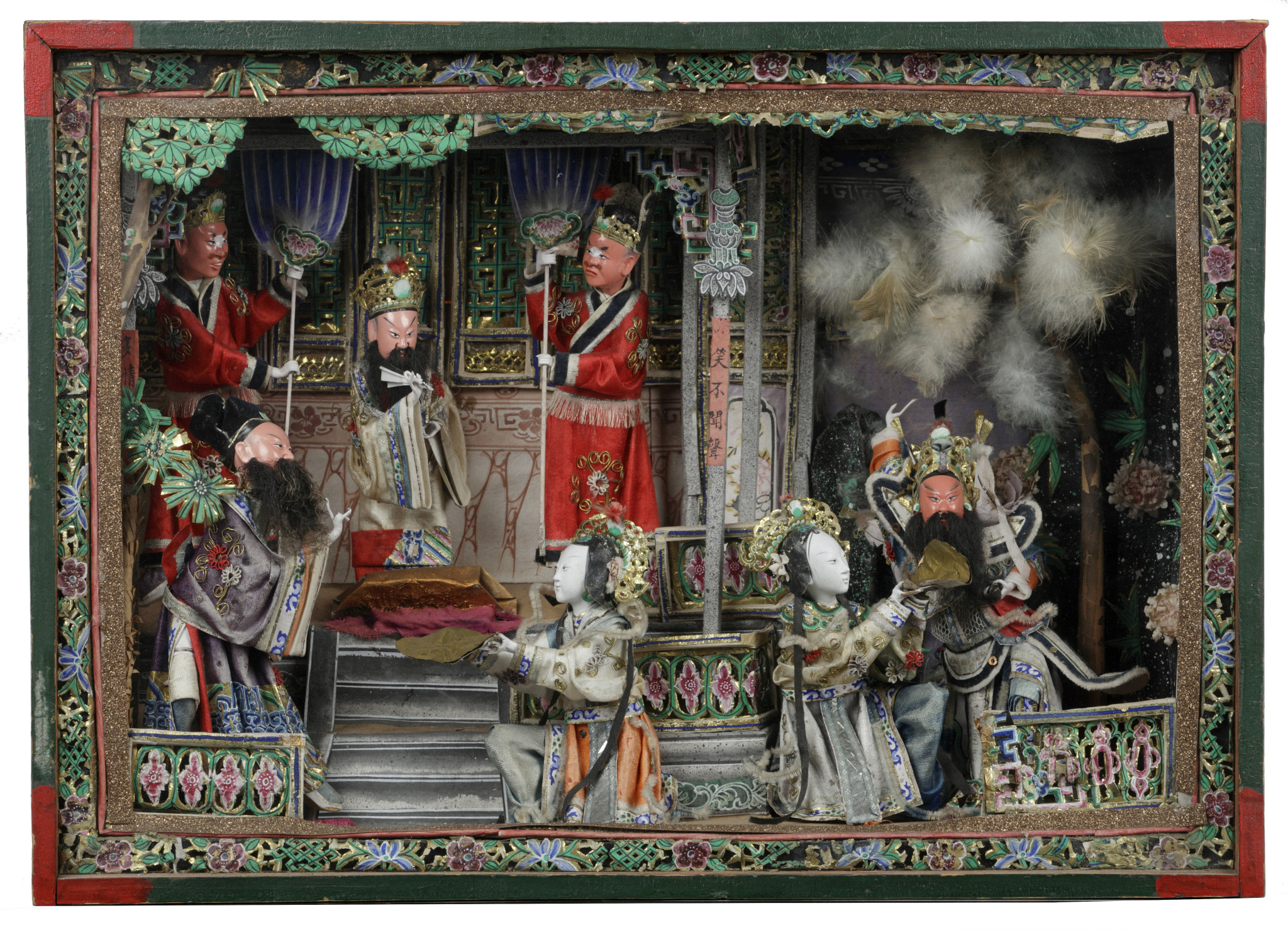
A Chinese diorama representing an opera performance
Anonymous, late 19th/early 20th century
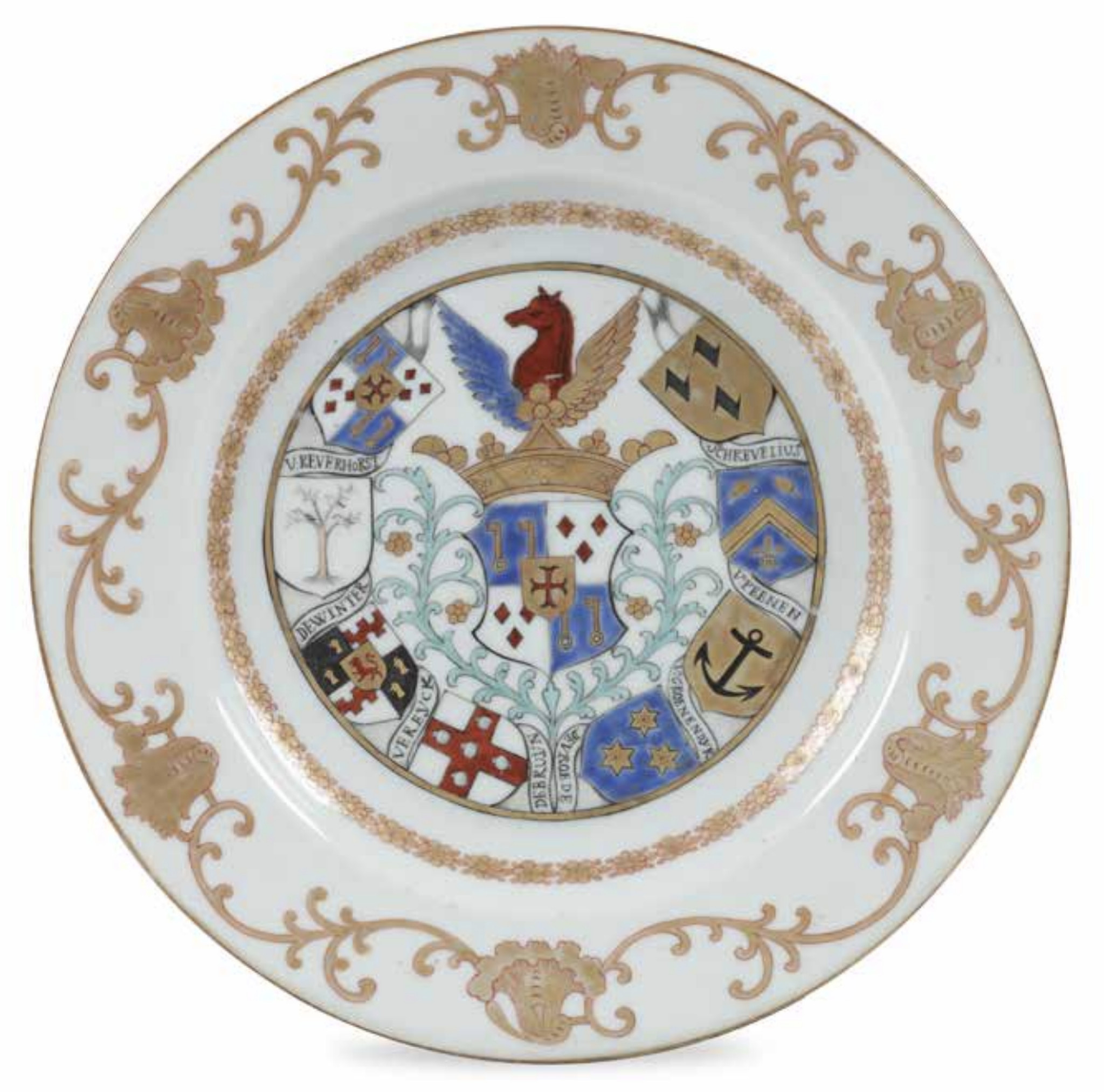
A Chinese export porcelain armorial 'Van Reverhorst' plate
Qianlong period, circa 1745
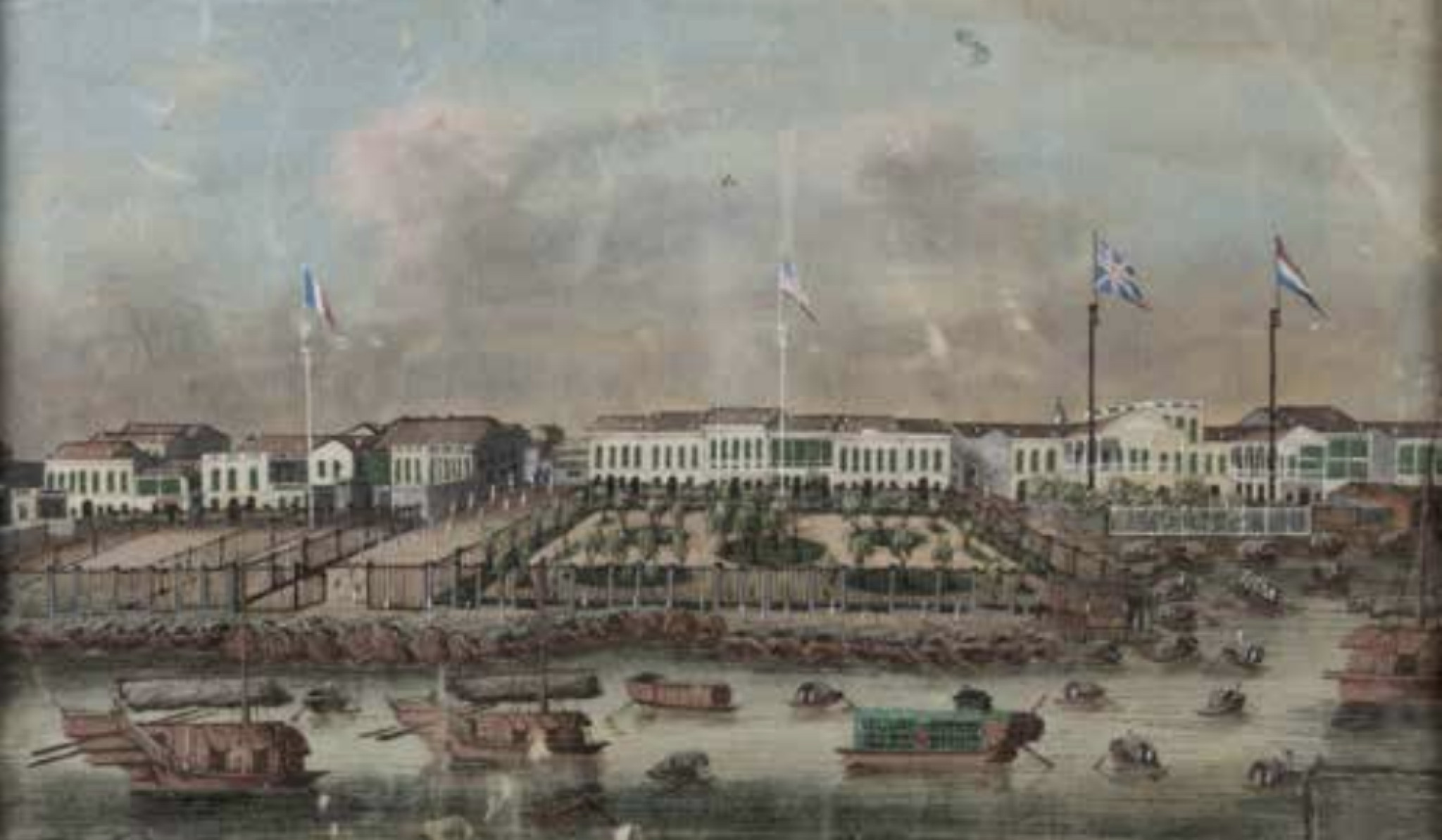
Tinqua (act. 1840-1870) or studio
The Hongs of Canton with the French, American, British and Dutch factories, between August and December 1842
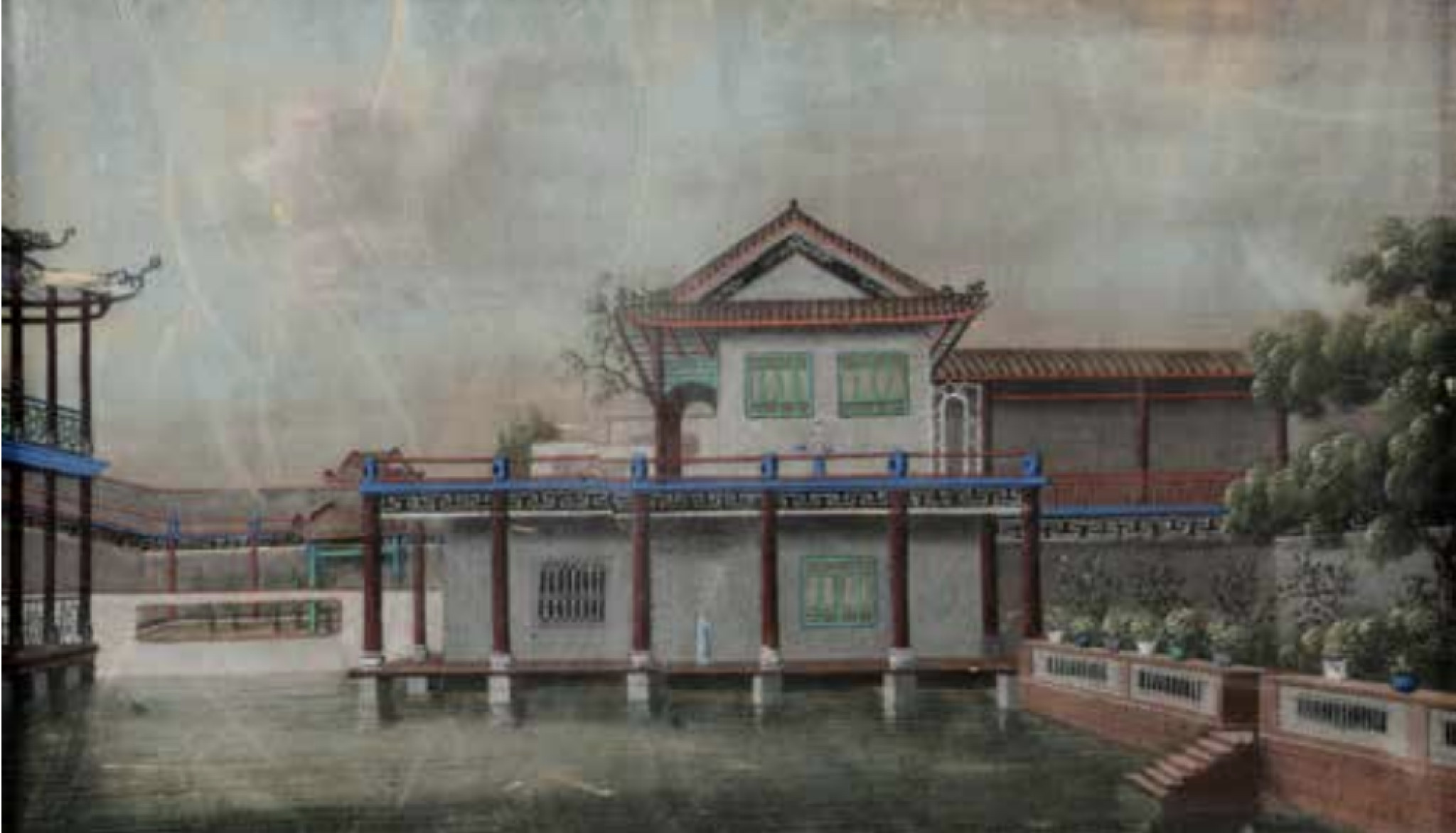
Tinqua (act. 1840-1870) or studio
A walled pavilion and garden at water's edge, 1840-1850
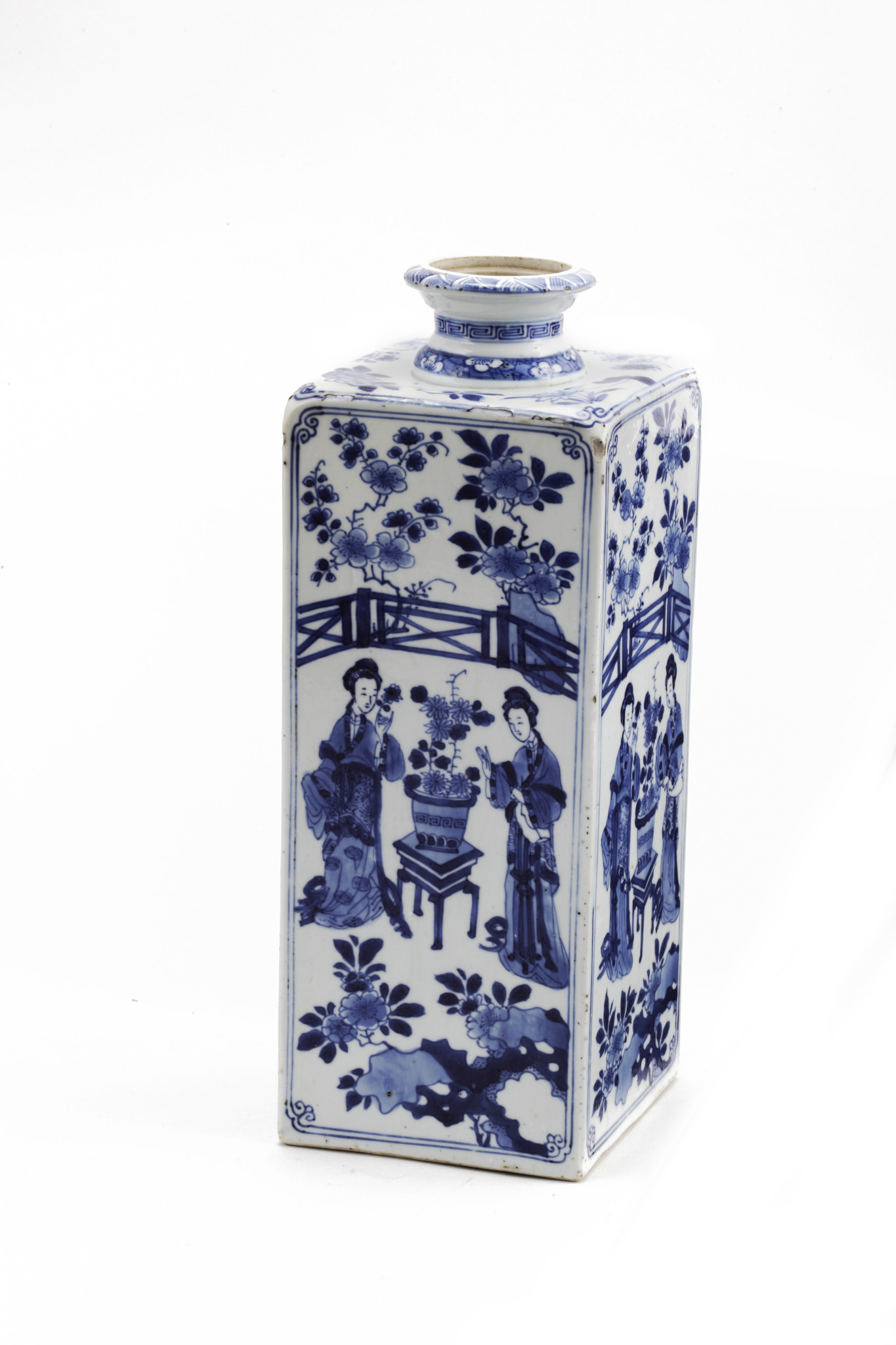
An important Chinese blue and white porcelain bottle, marked with the initials of Joan van Hoorn, Governor-General of the former Dutch East-Indies
Kangxi period, late 17th/early 18th century, marked with the initials of Joan van Hoorn
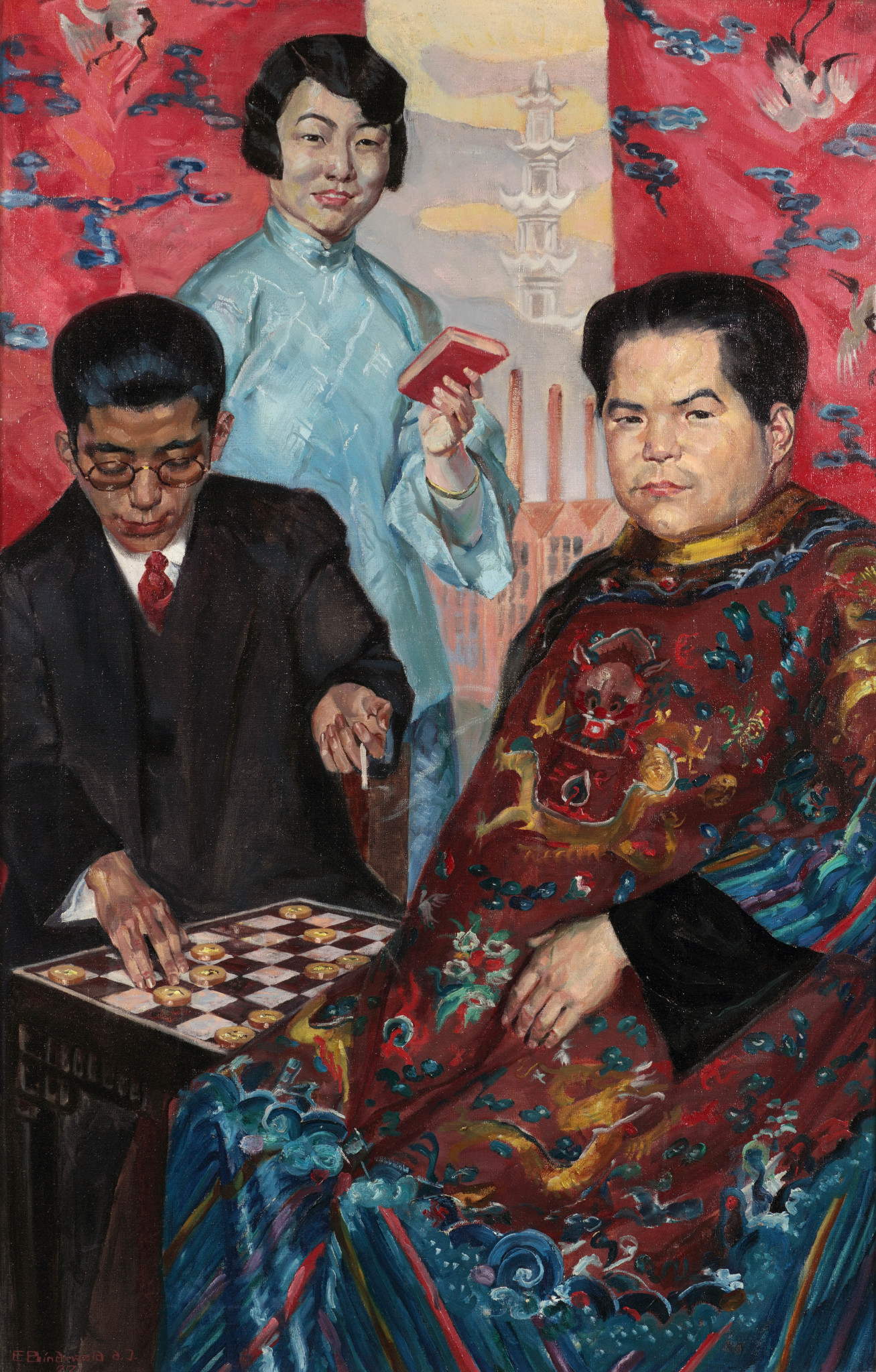
Erwin Bindewald (1897-1950)
Two men playing draughts, a girl with the red book standing behind them
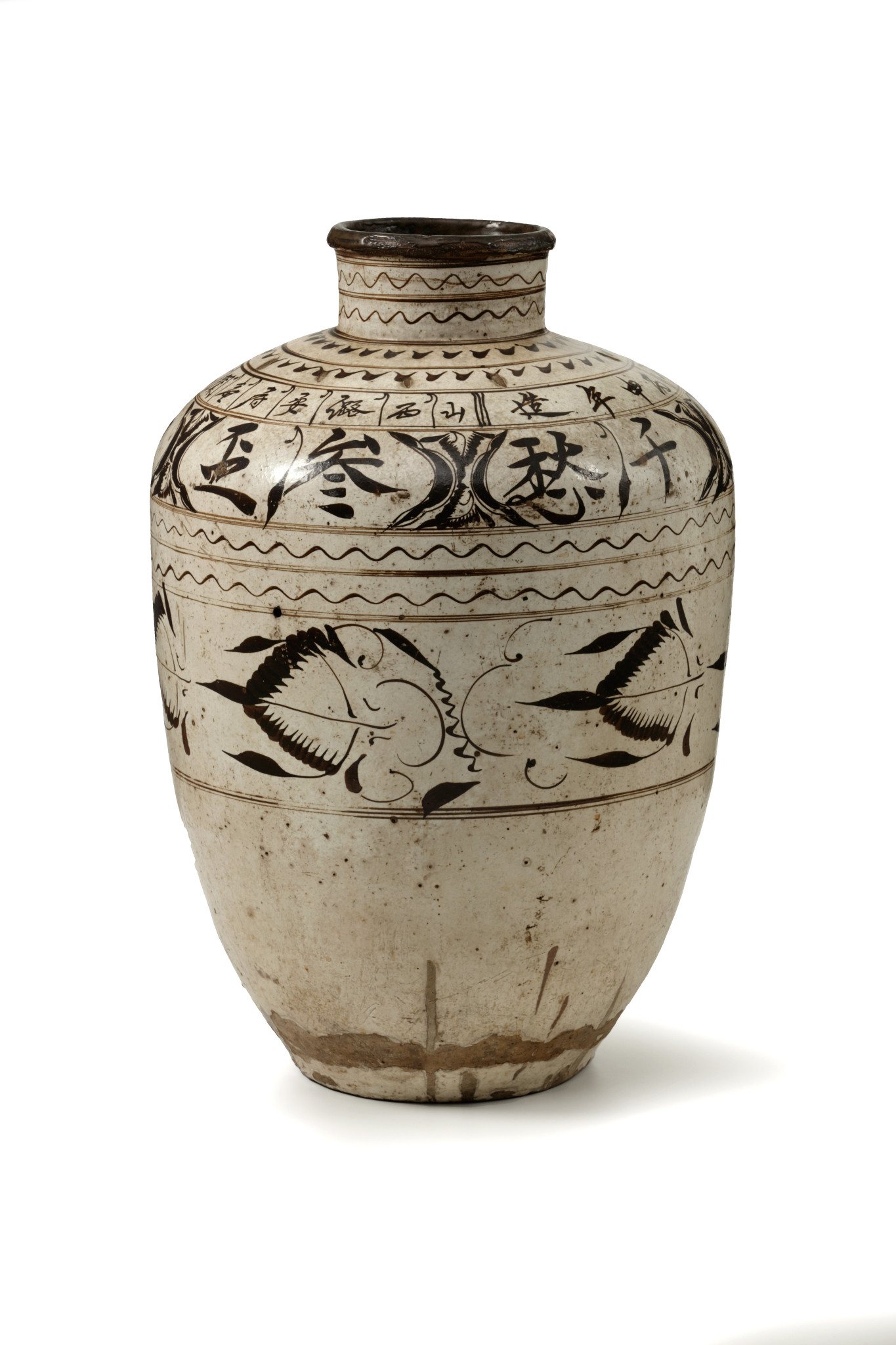
A large stoneware Chinese Cizhou-type Martaban storage jar
China, Hebei province, Ming dynasty, dated 1596
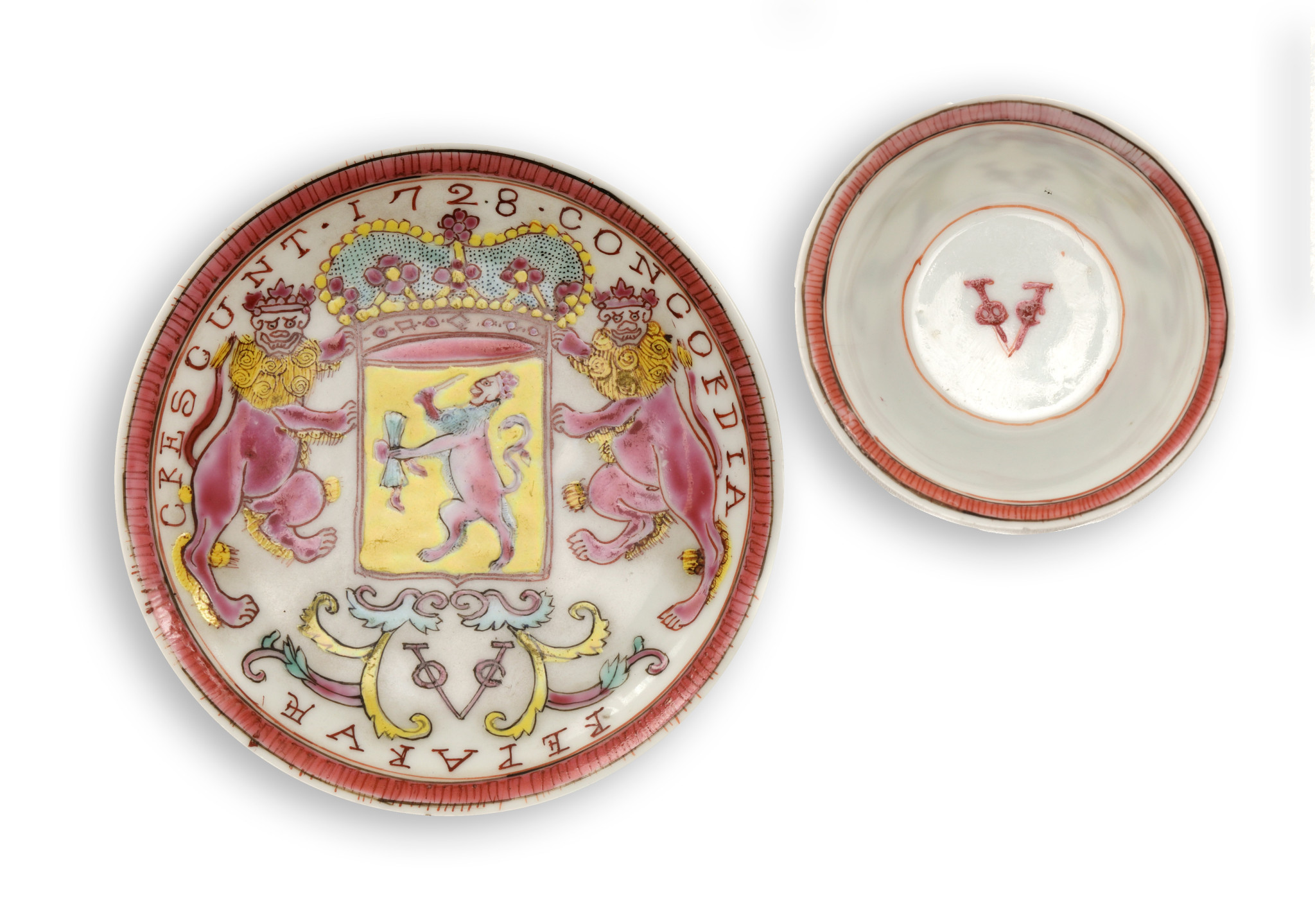
A rare Chinese famille rose 'V.O.C.' tea cup and saucer
Yongzheng period (1723-1735), circa 1730
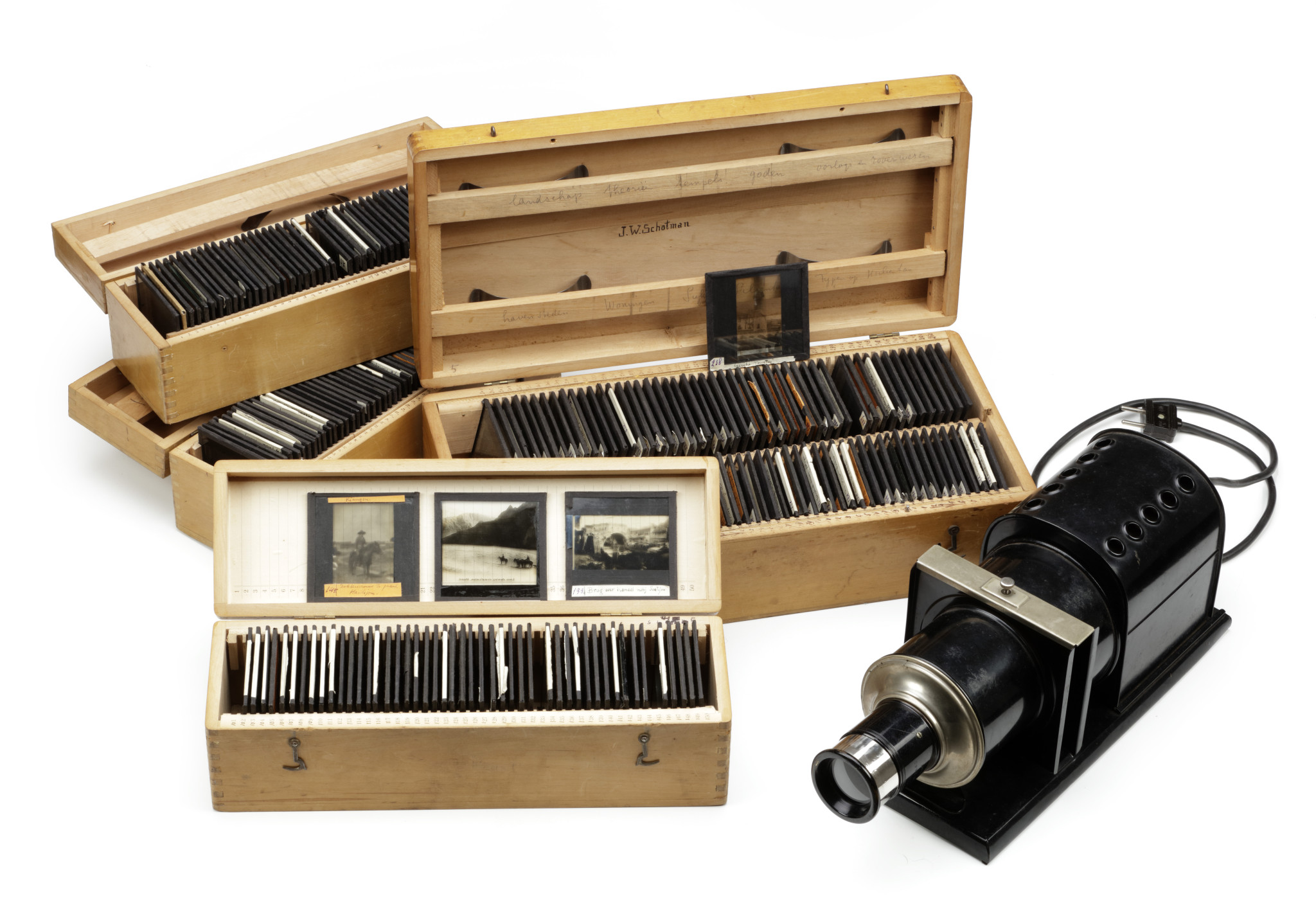
An extensive collection of black and white magic lantern slides of China between 1921 and 1927 in four wooden boxes together with the original magic lantern by Johan Wilhelm Schotman (1892-1976)
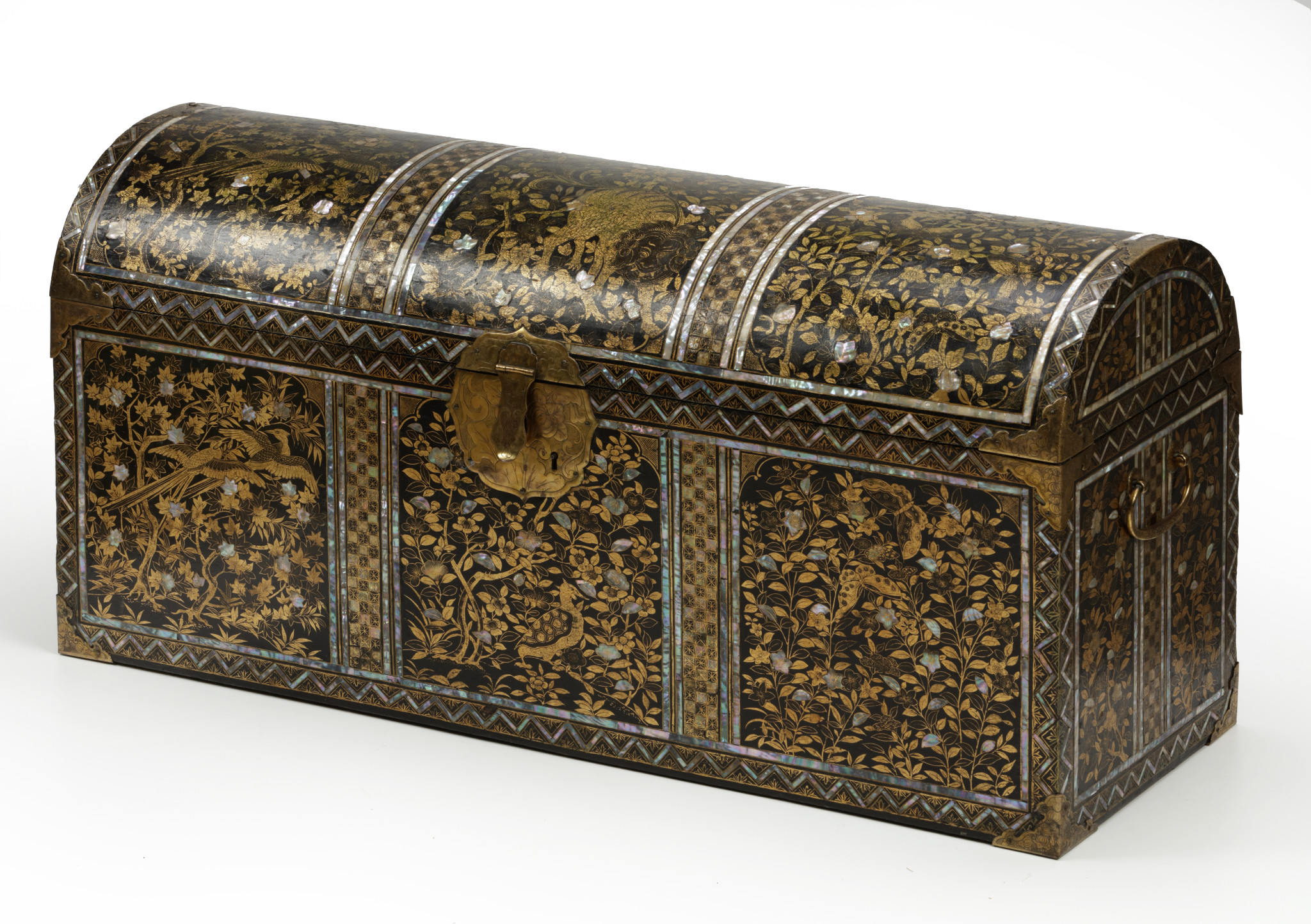
A large Japanese Nambam Lacquer Arqueta coffer for the Portuguese market
Kyoto, Momoyama-period, late 16th century
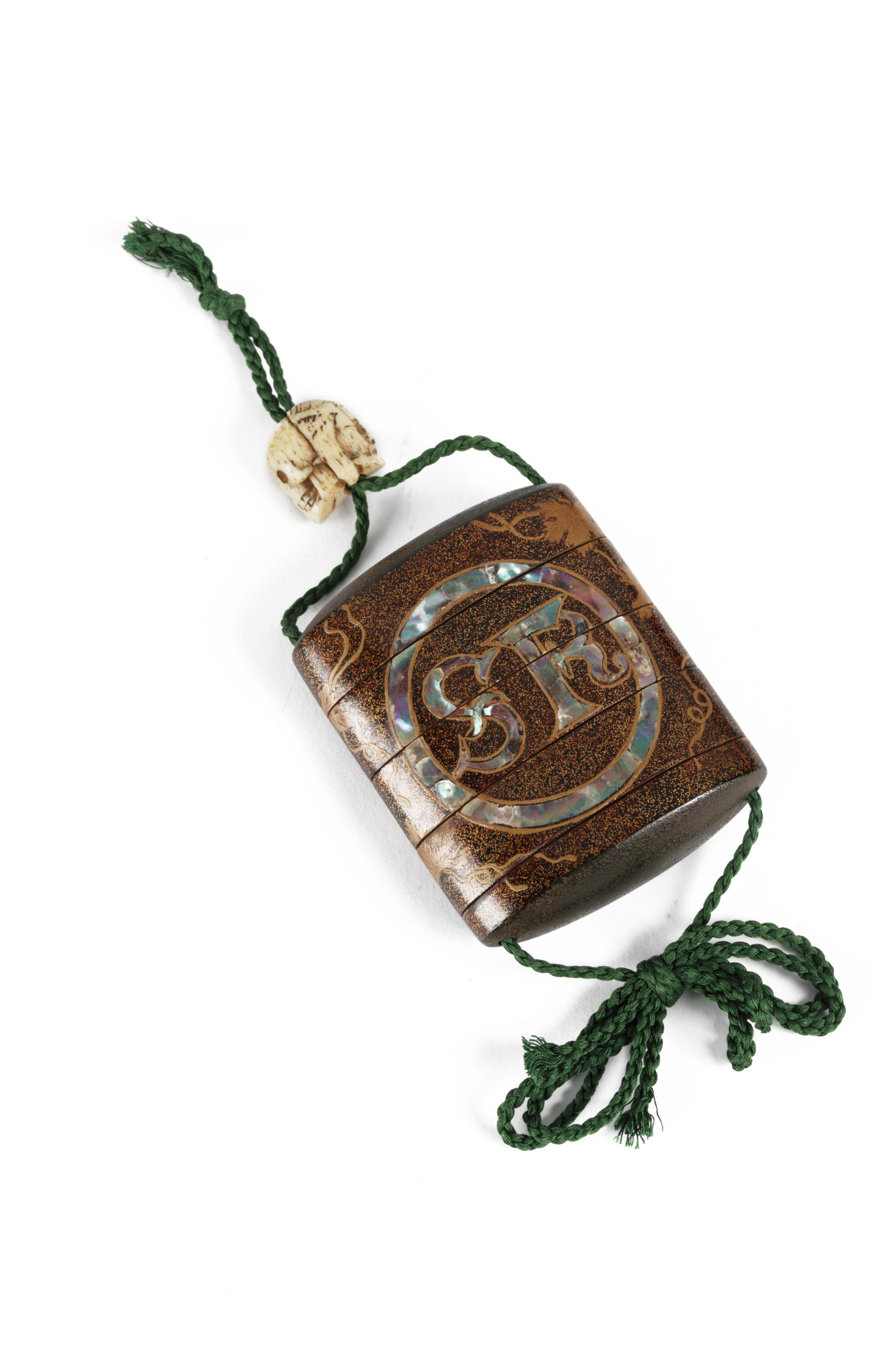
An important and early Japanese Namban four-case inro with the initials of Saint-Francis and Ojime in the form of Jesus and a skull
Late 16th/early 17th century
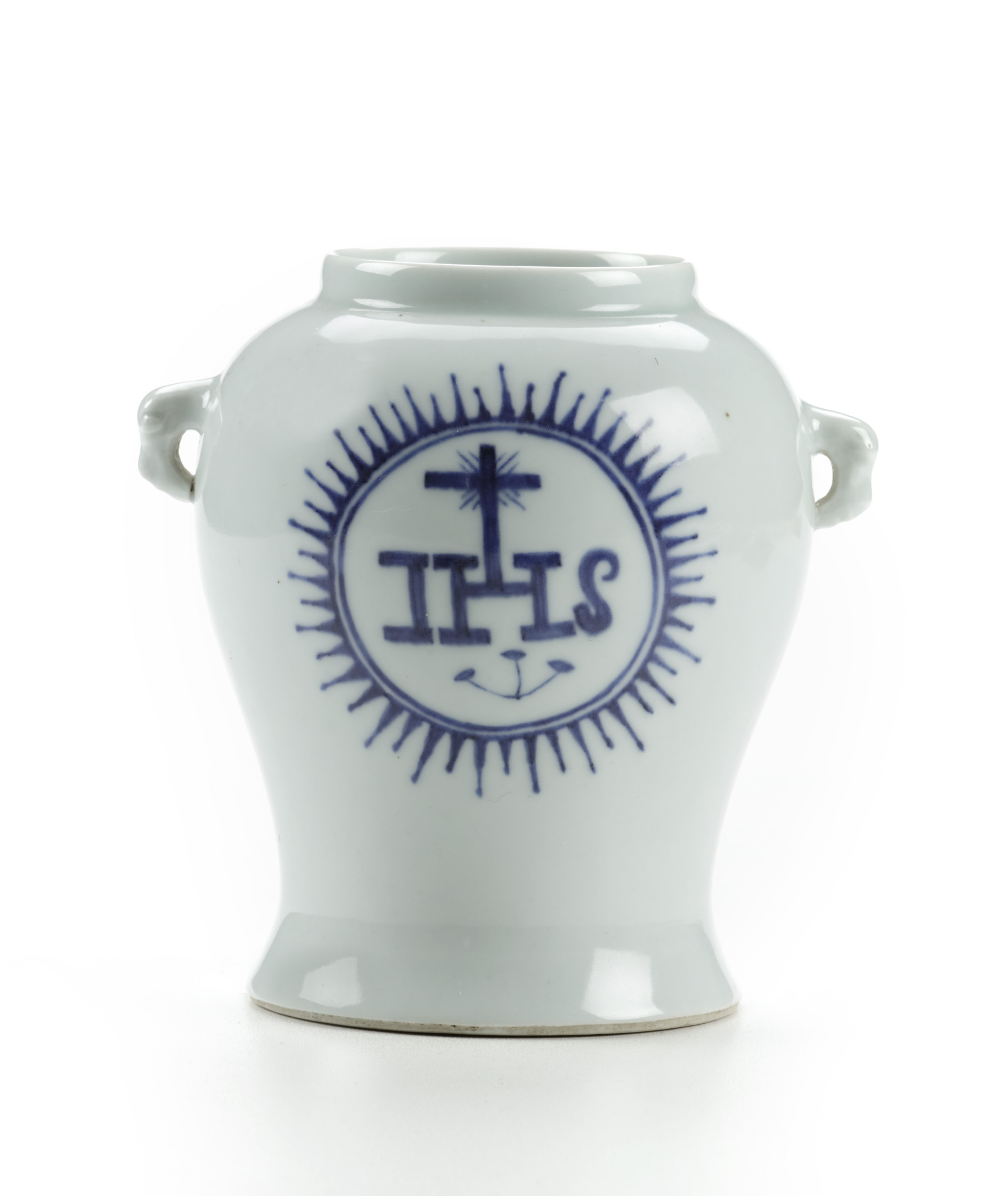
A Chinese blu-and-white porcelain jar with the IHS insignia
Pale white body with centrally an IHS medallion encircled by a halo.
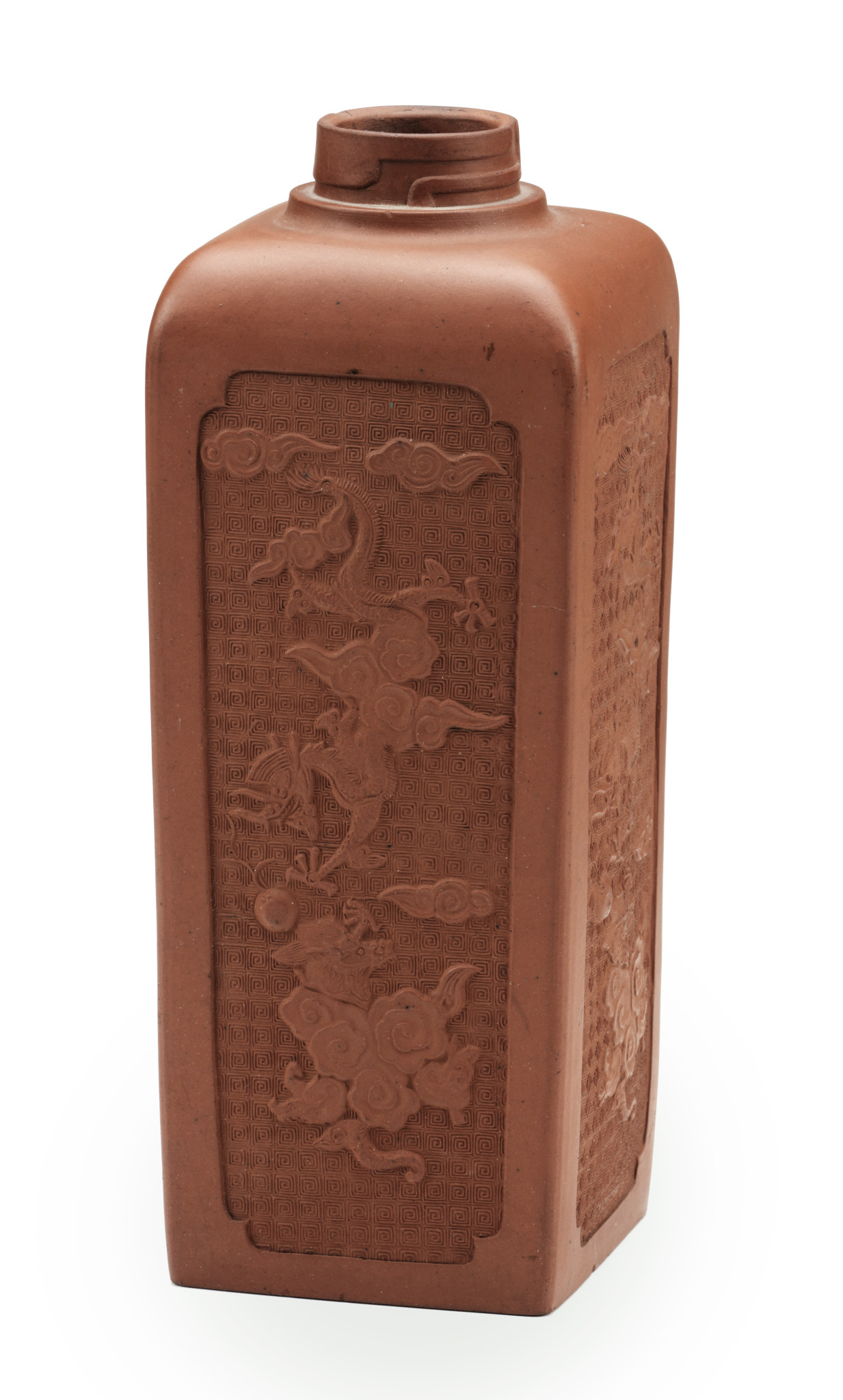
Chinese Yixing Porcelain square tea jar
From the kilns of Yixing in Jiangsu province, 18th century
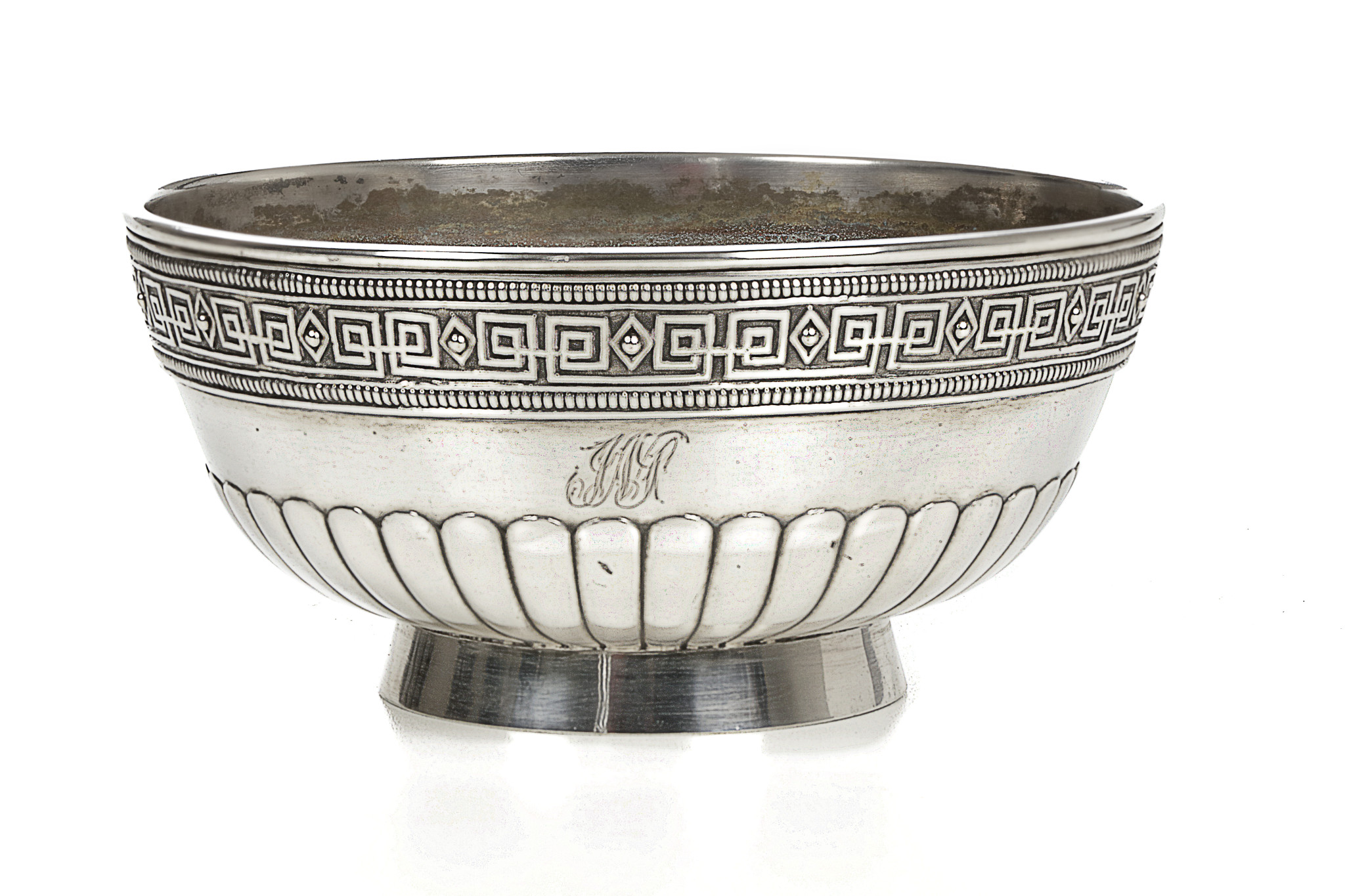
An 18th century China trade silver bowl marked 'T' for silversmith Tunhopp
Circa 1810
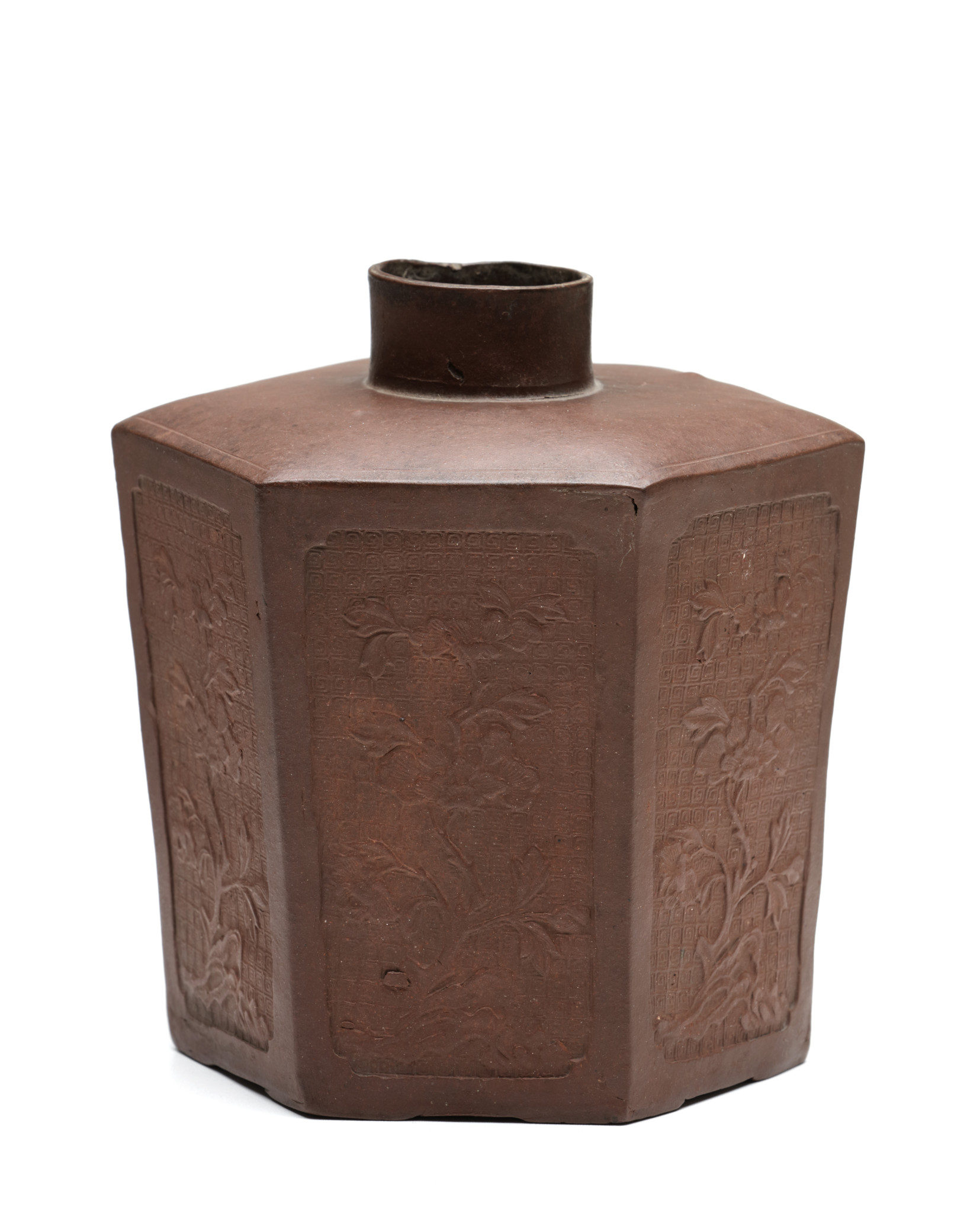
A Chinese Yixing hexagonal tea jar
The base with a four-character mark, from the kilns of Yixing in Jiangsu province, 18th century
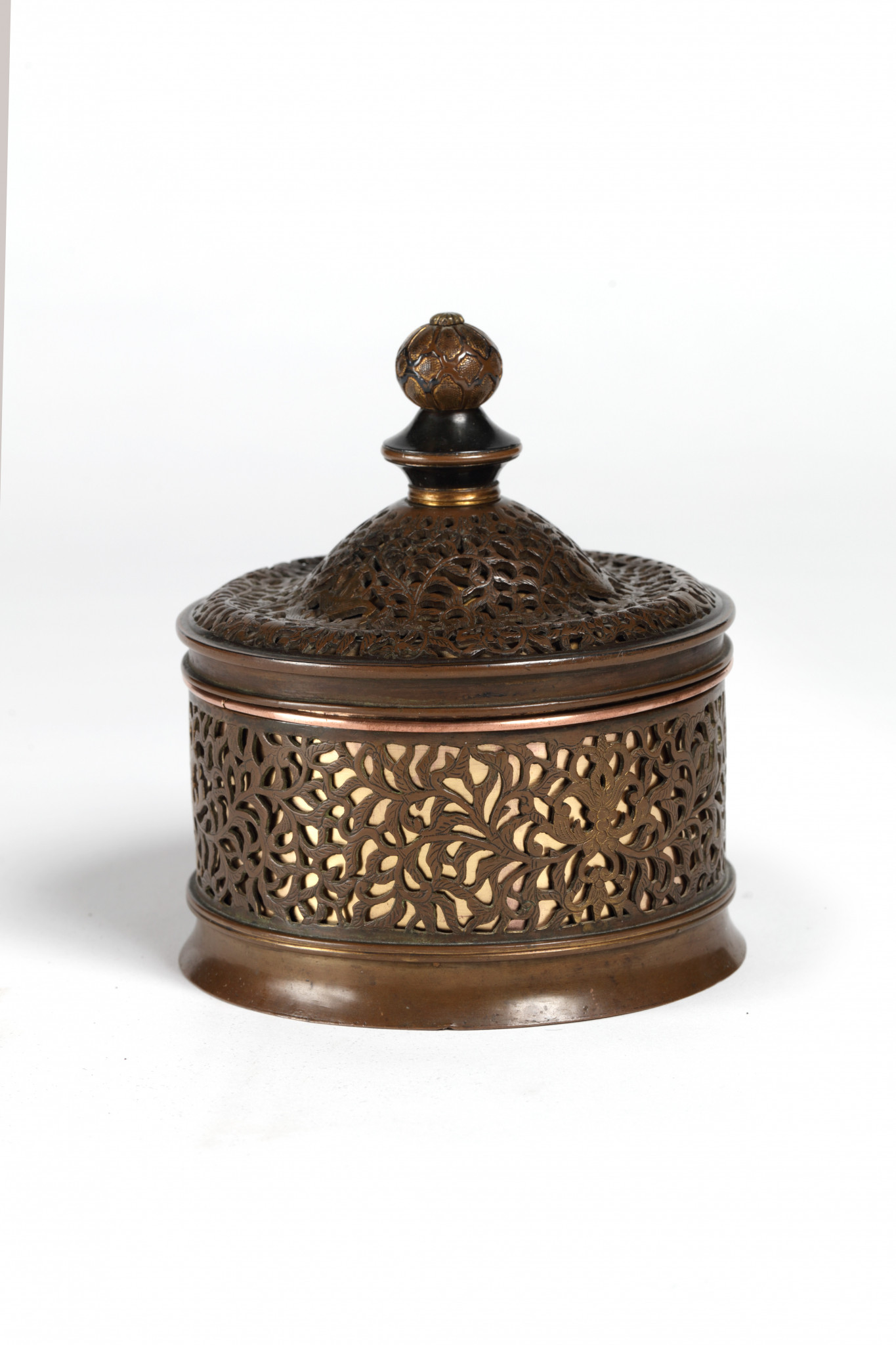
A large Japanese circular Sawasa tobacco jar
The base with a four-character mark, from the kilns of Yixing in Jiangsu province, 18th century
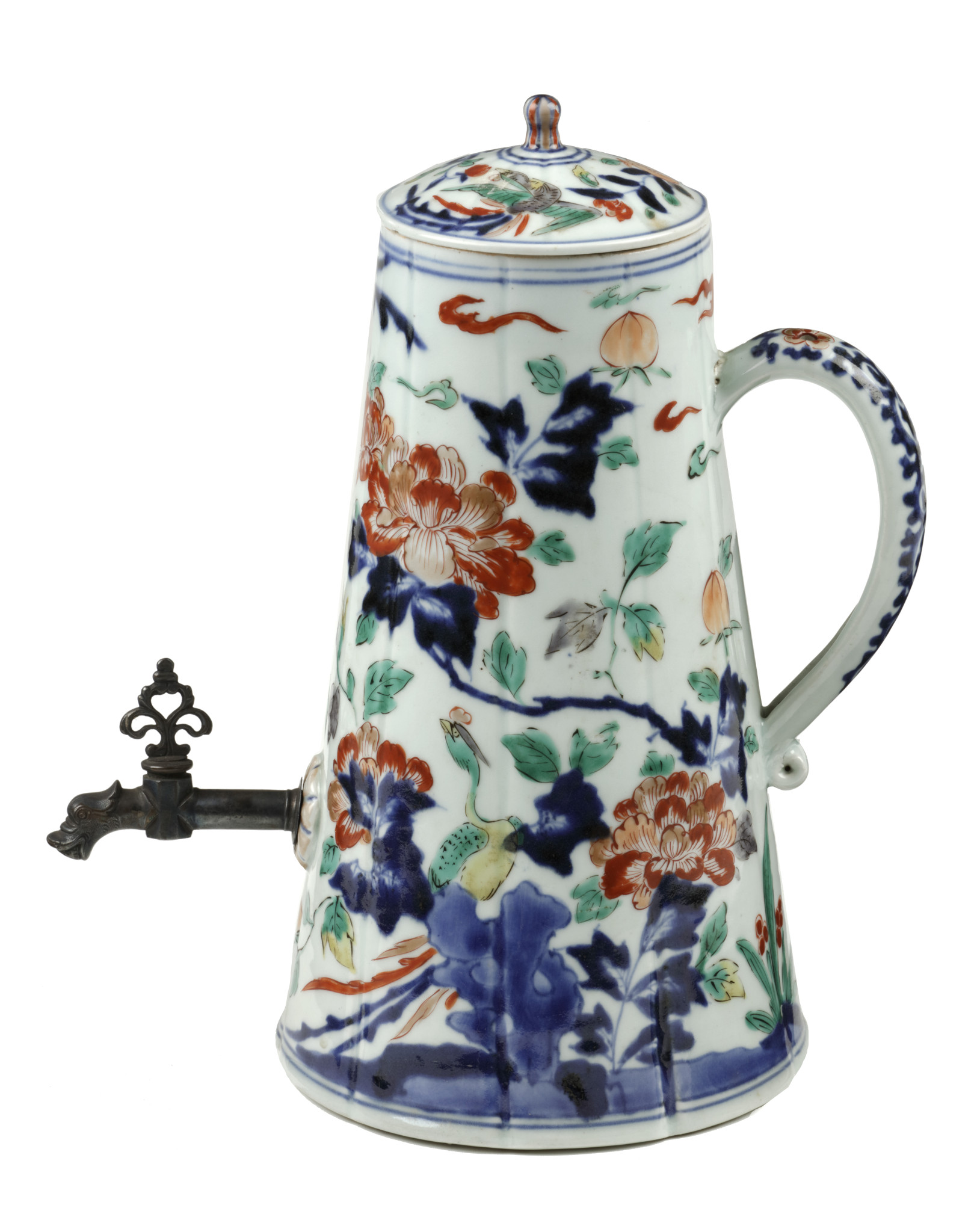
A Very Rare Japanese Imari Porcelain Coffee Pot with cover
Edo period, early 18th century
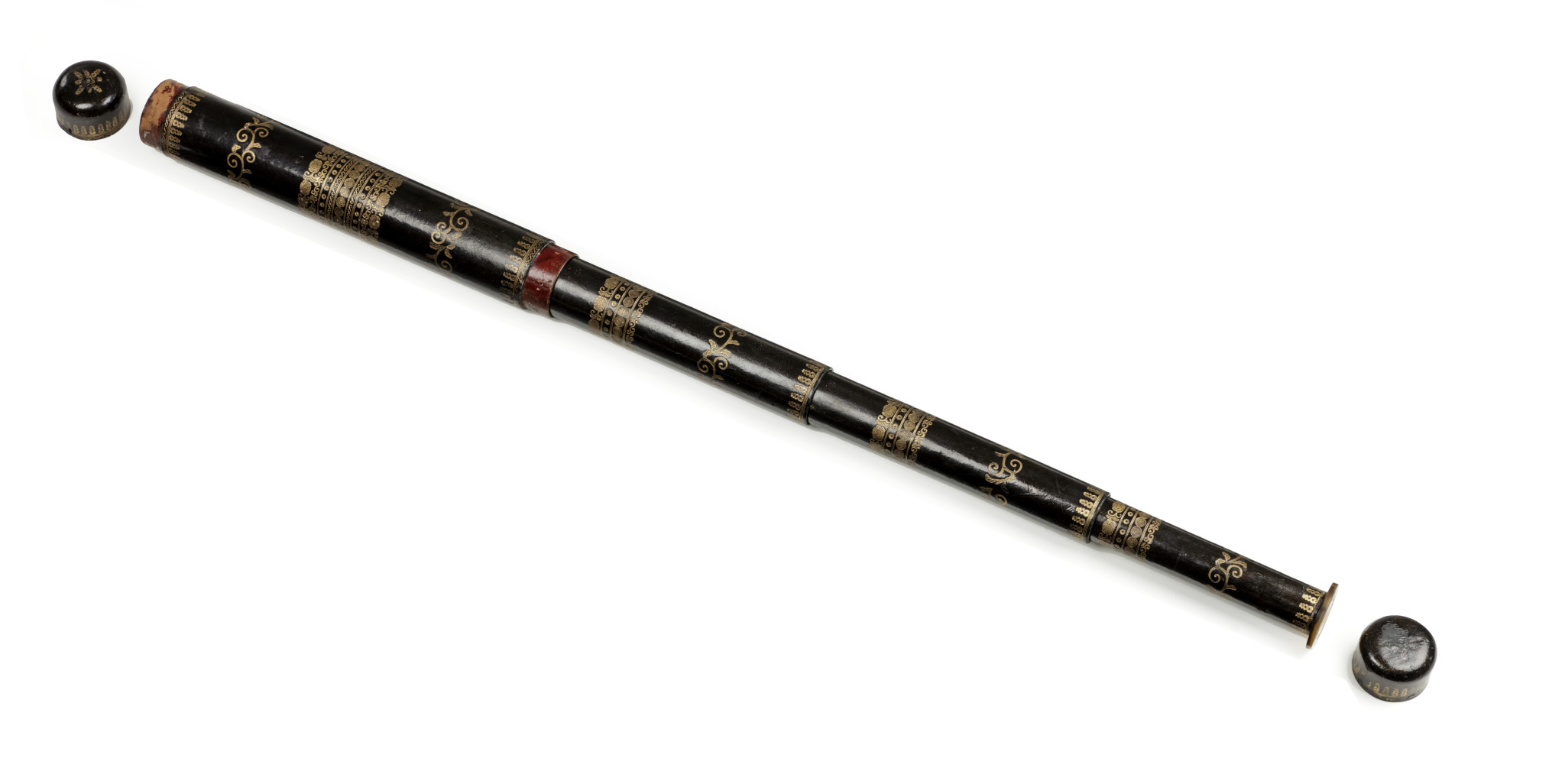
A rare large Japanese lacquered leather telescope
Edo Period, late 18th century
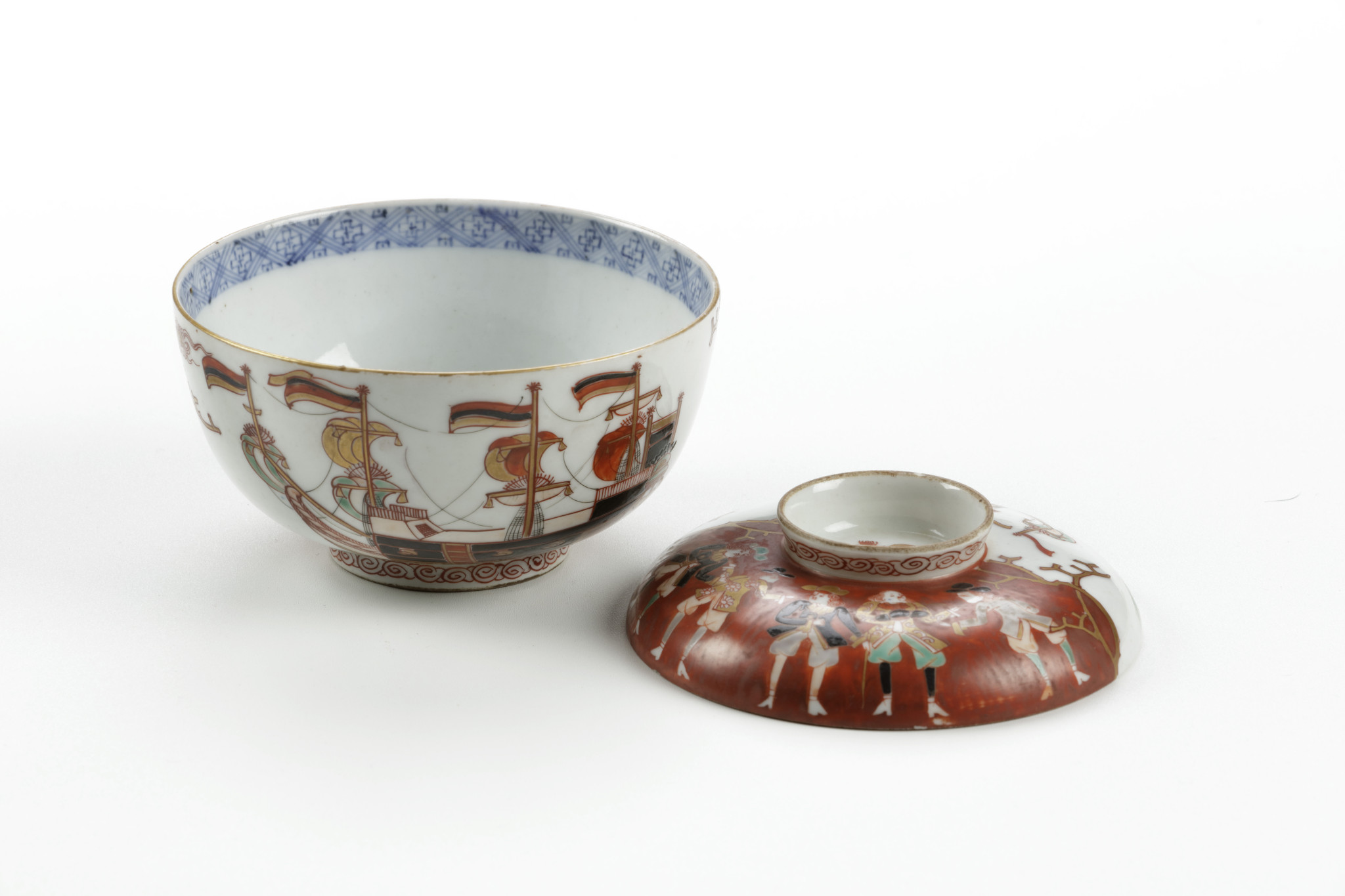
A Japanese Arita porcelain Imari-style bowl and cover with Dutchmen
First half 19th century
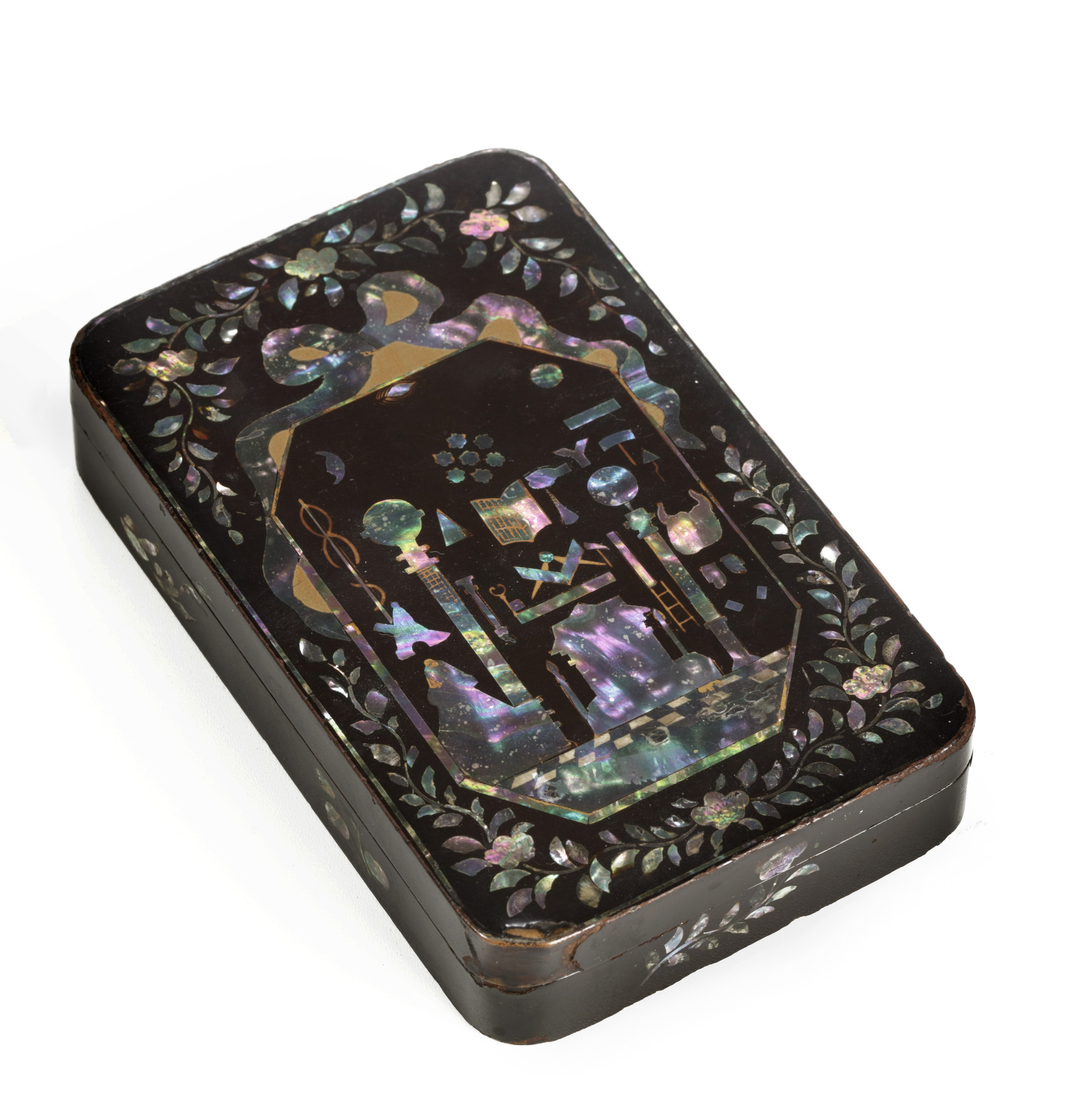
A Japanese Lacquered tobacco Box with Masonic regalia by lacquer-worker Buemon
Nagasaki, dated 1825
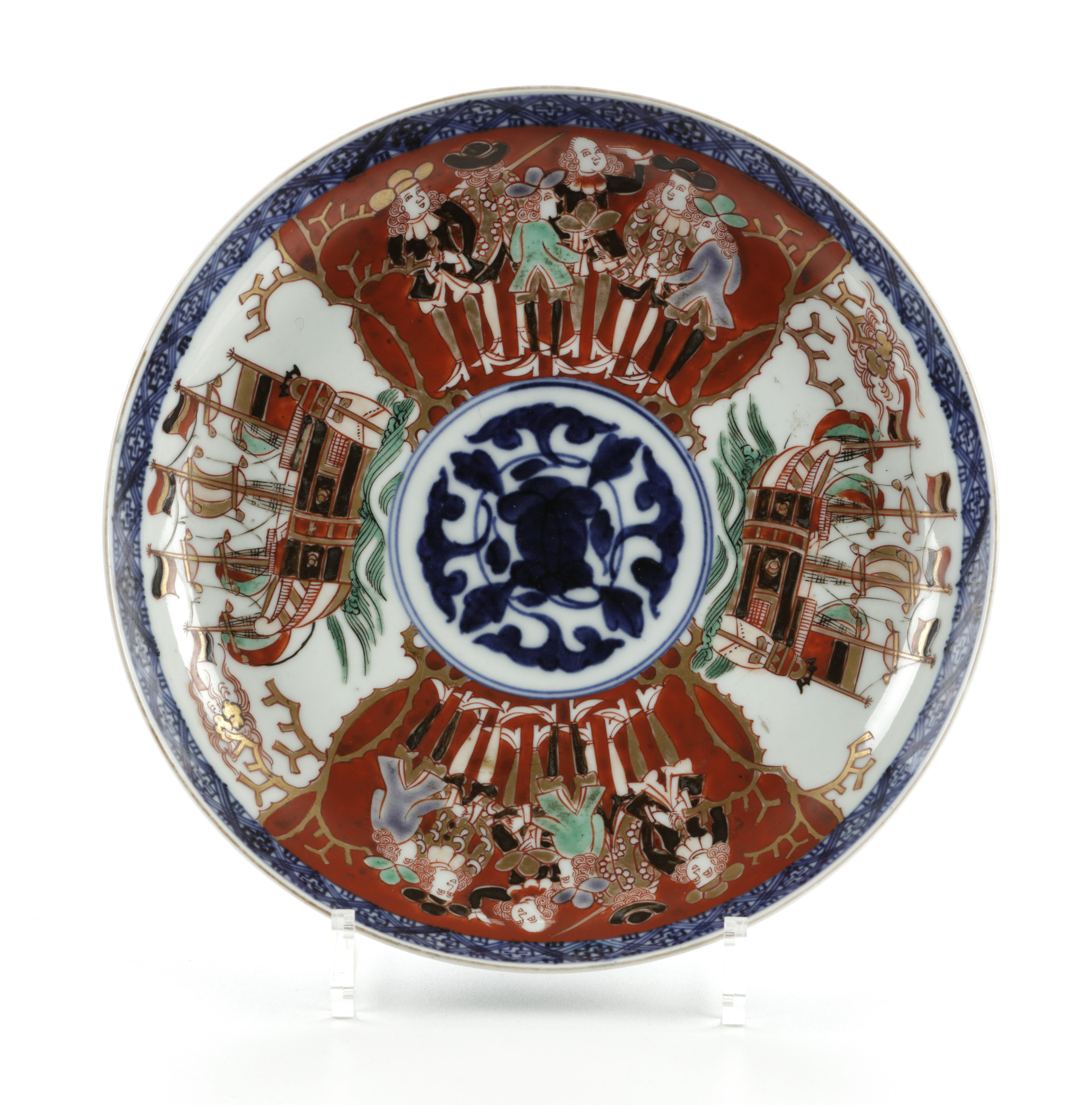
A Japanese Arita porcelain Imari-style treasure-ship Dutchmen plate
First half 19th century
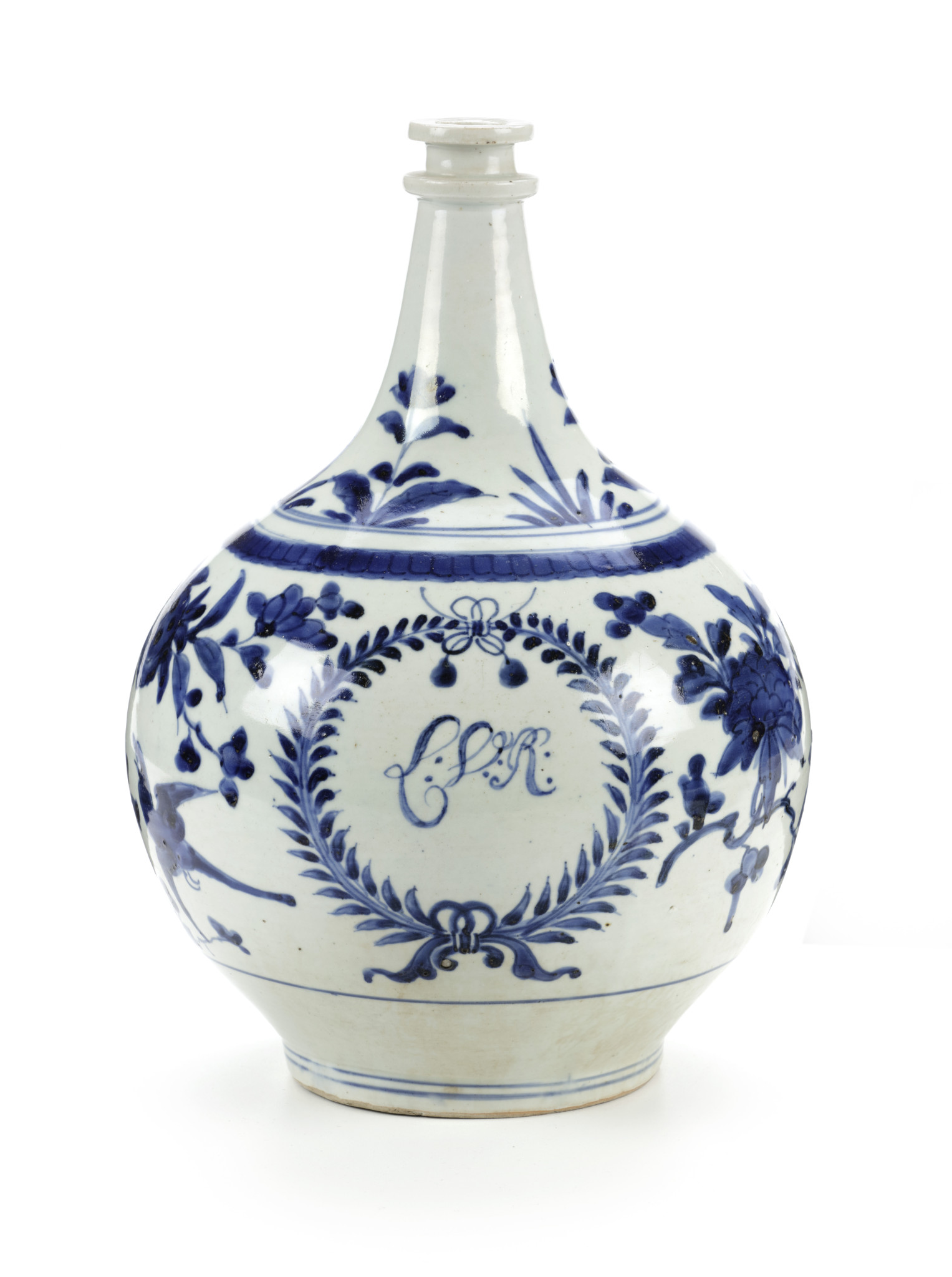
A Japanese Arita blue-and-white porcelain bottle with initials LvR
Last quarter 17th century
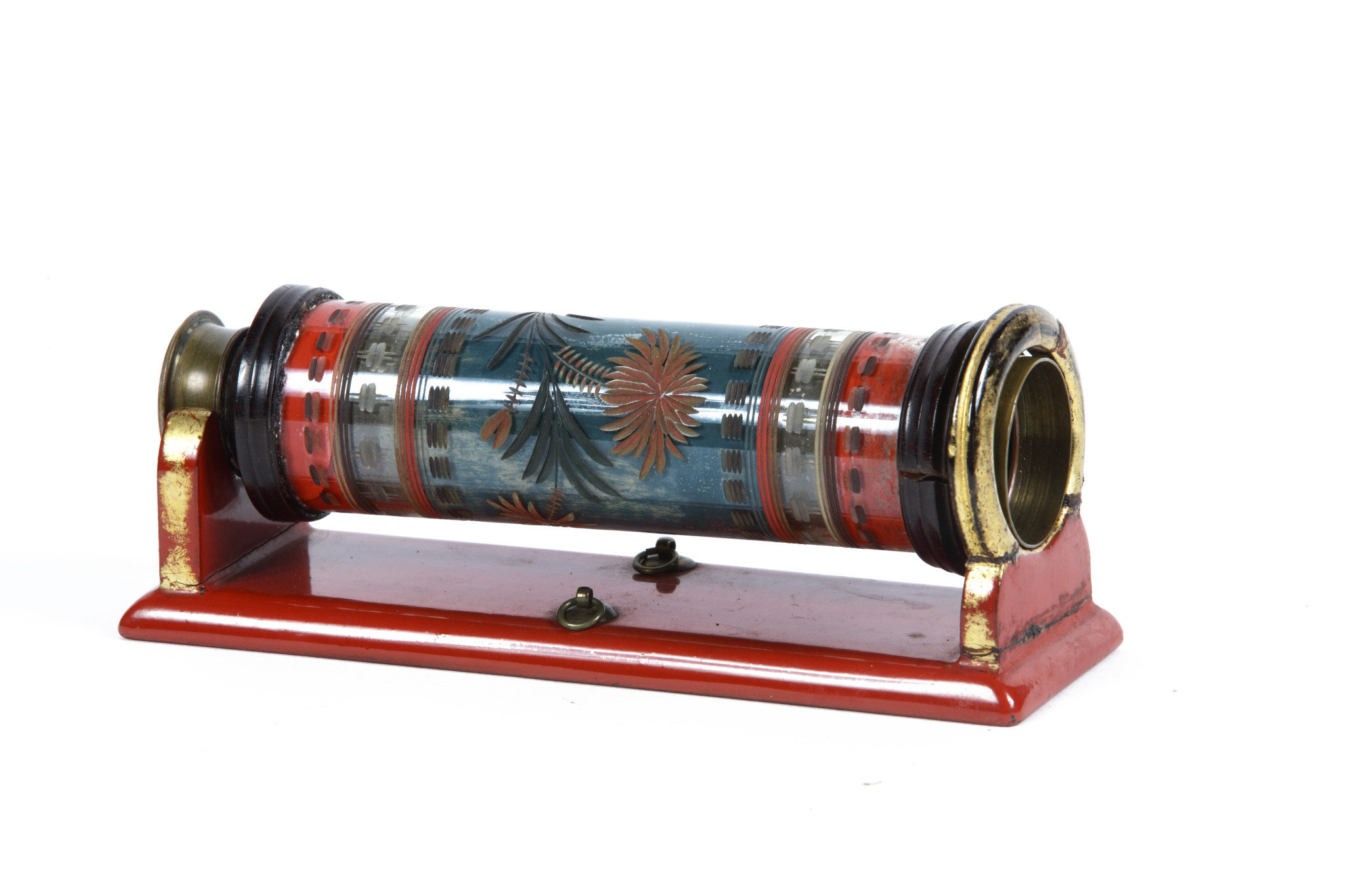
An extremely rare Japanese glass telescope with lacquered stand
Edo Period, late 18th/early 19th century
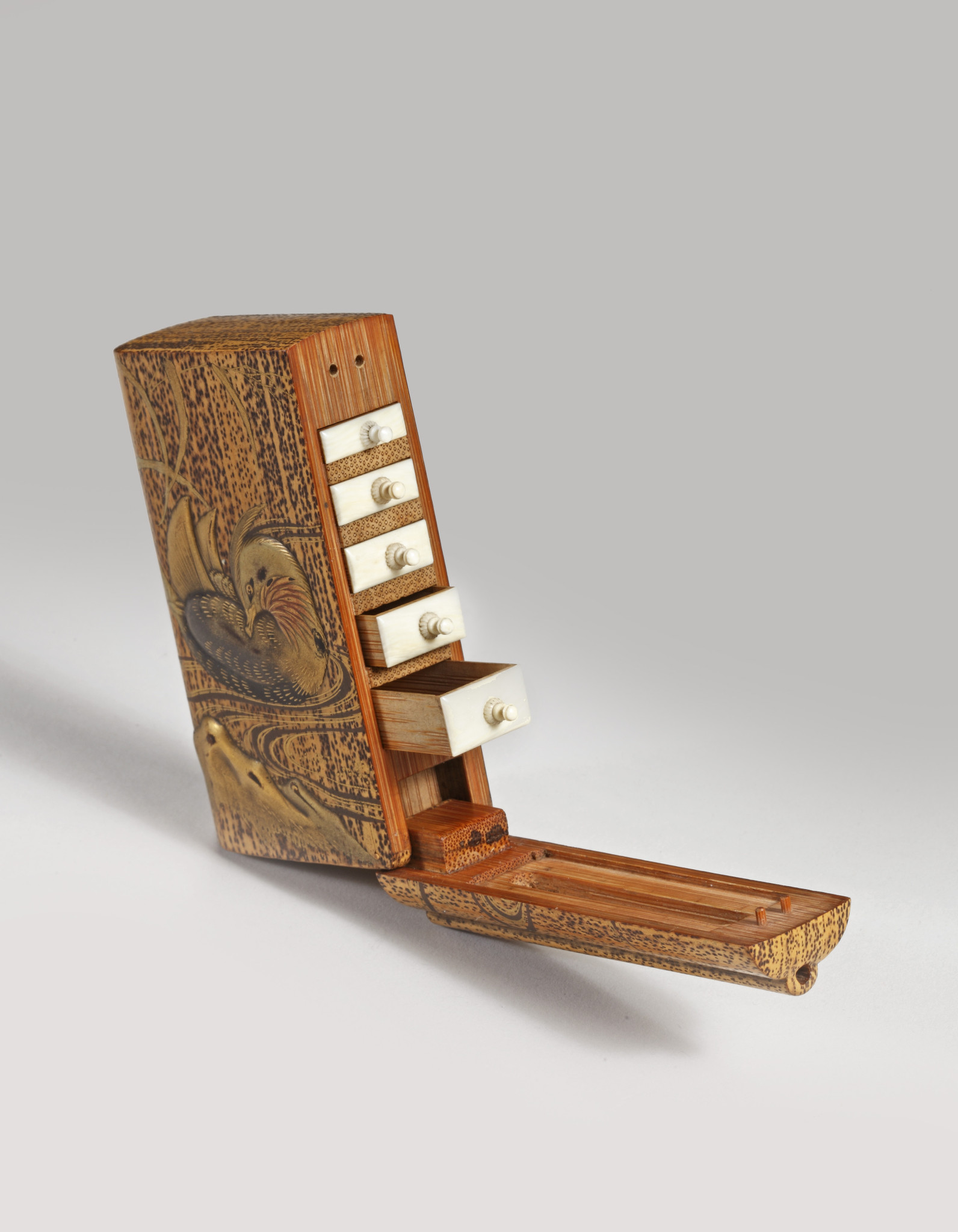
A fine Japanese lacquered bamboo inro in the form of drawers
First half 19th century
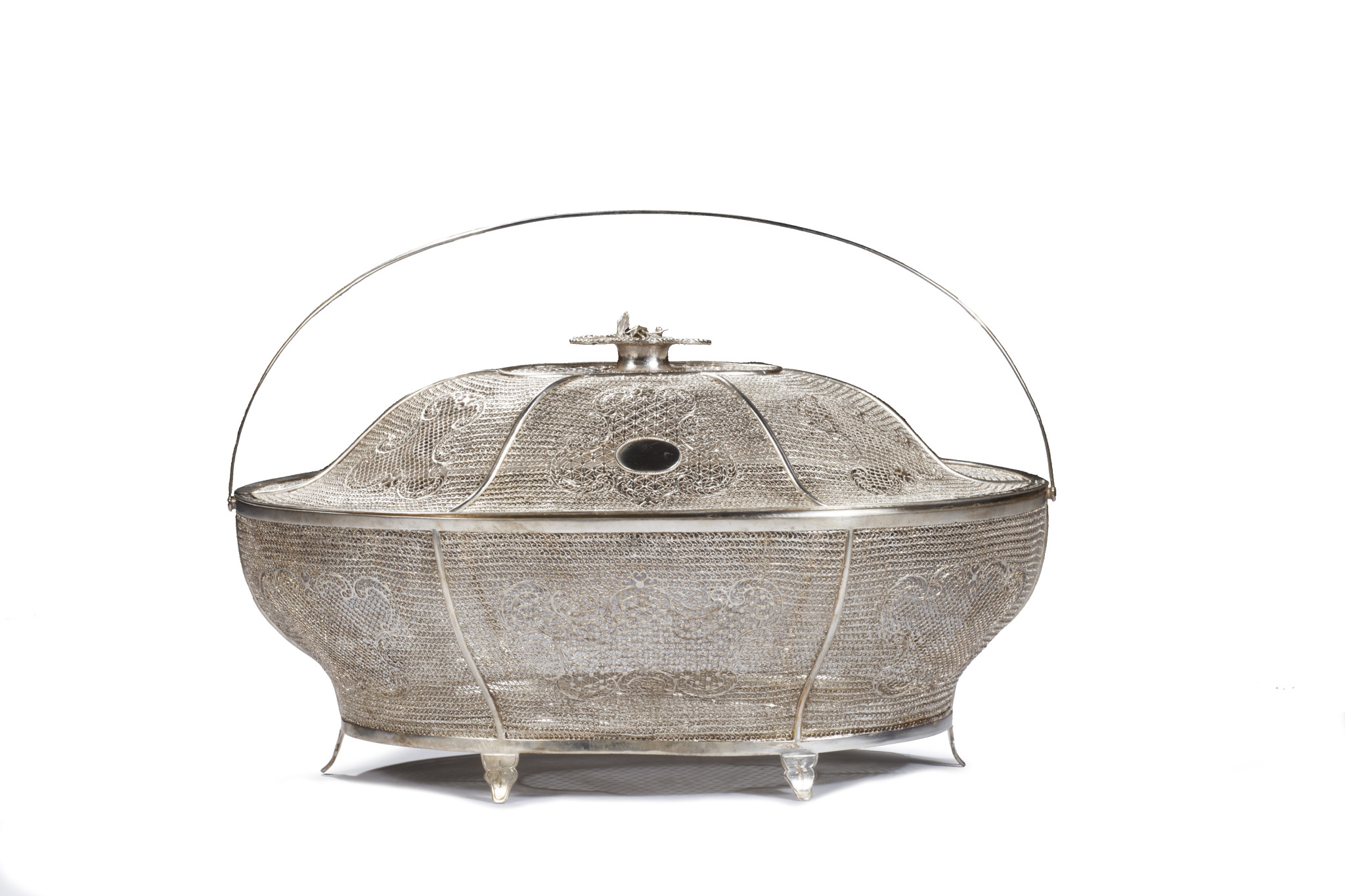
A refined Chinese silver filigree basket with cover
Late 18th/early 19th century
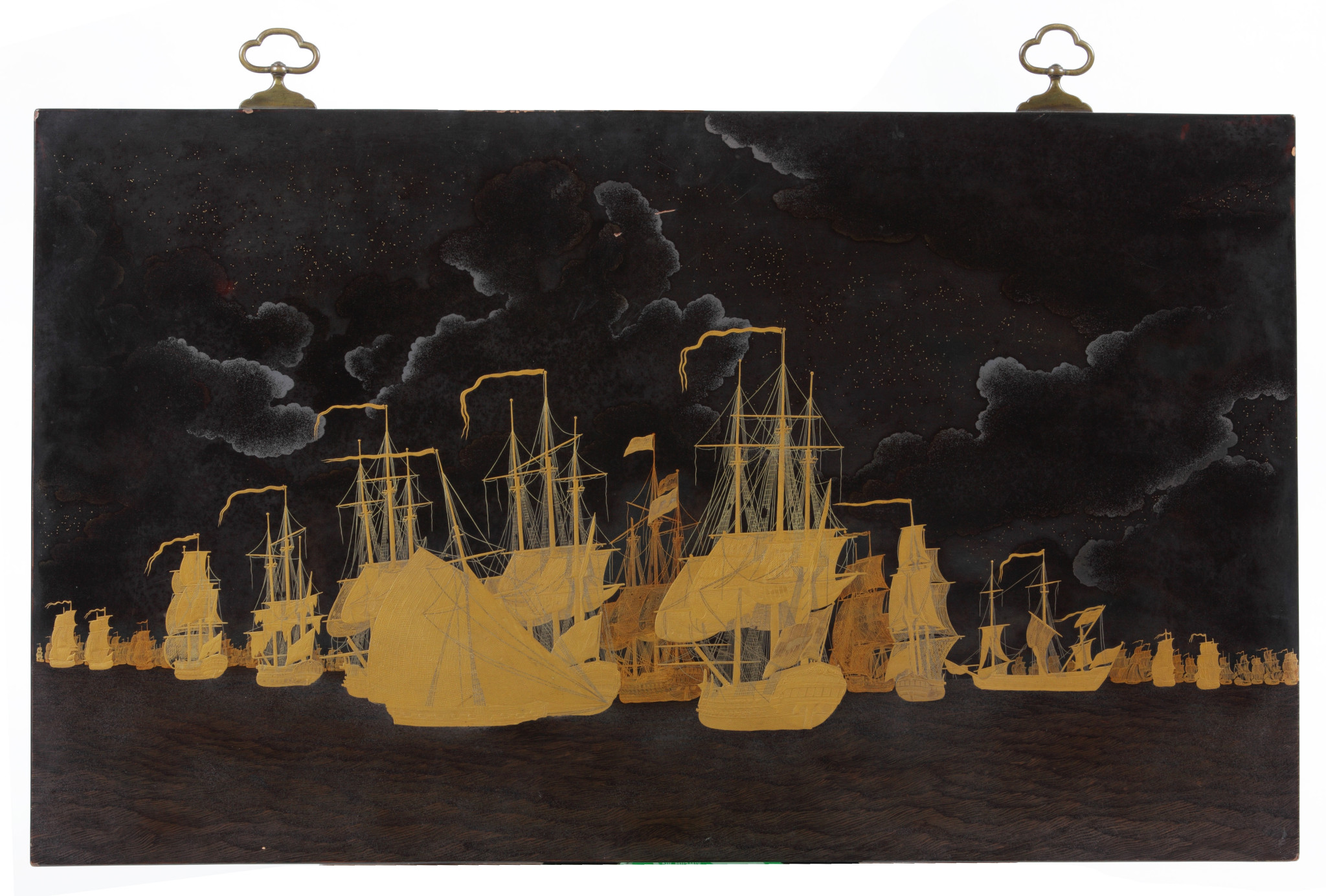
An important Japanese Lacquer Plaque depicting the Battle of Dogger Bank by lakwerker Sasaya (Act. Circa 1780-1820)
Nagasaki, for the Dutch market, circa 1792
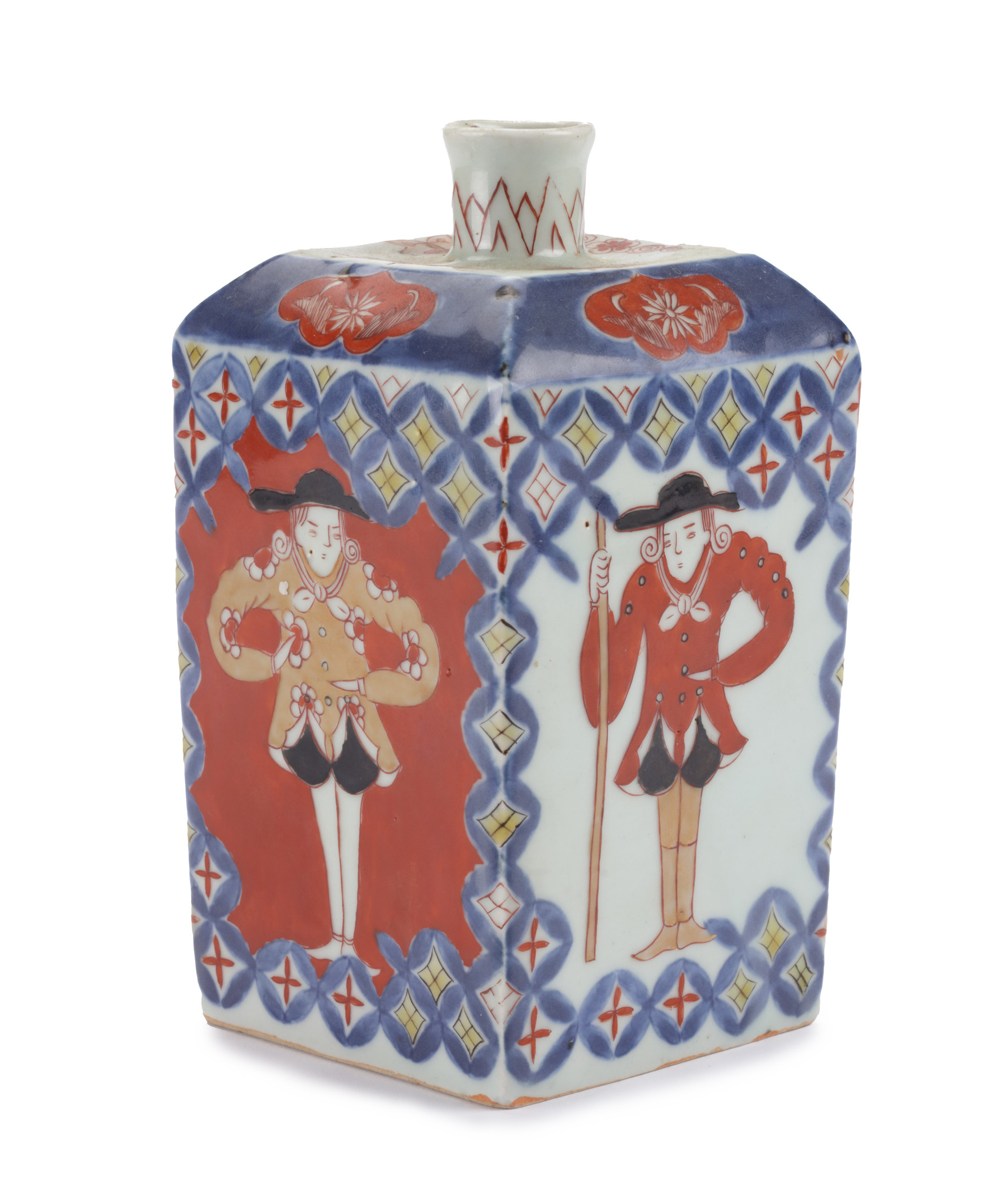
A square Arita porcelain bottle with polychrome decoration of Dutchmen
Late 18th/early 19th century
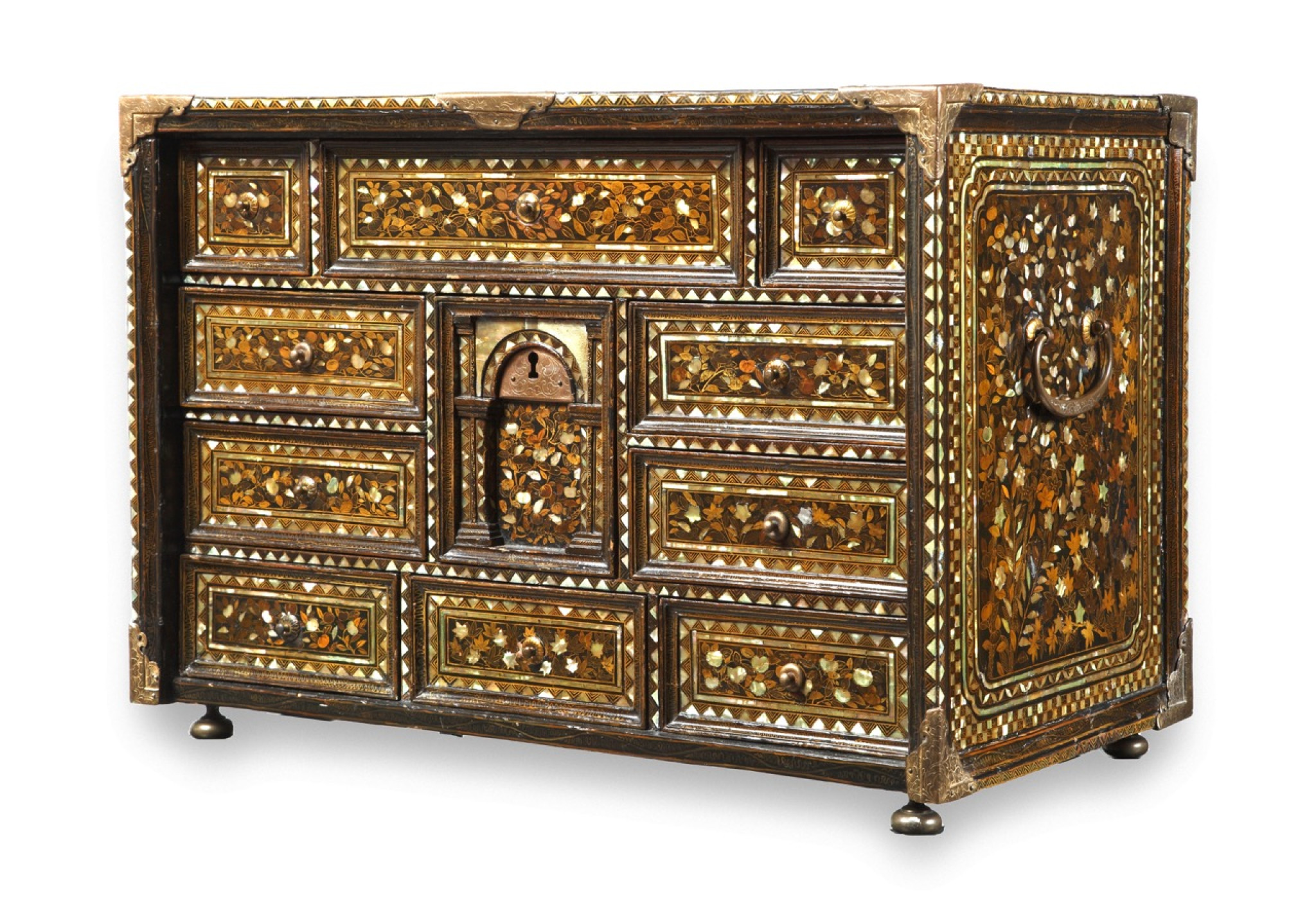
A Portuguese-colonial Japanese Namban lacquer cabinet, comptoir or vargueno
Circa 1600
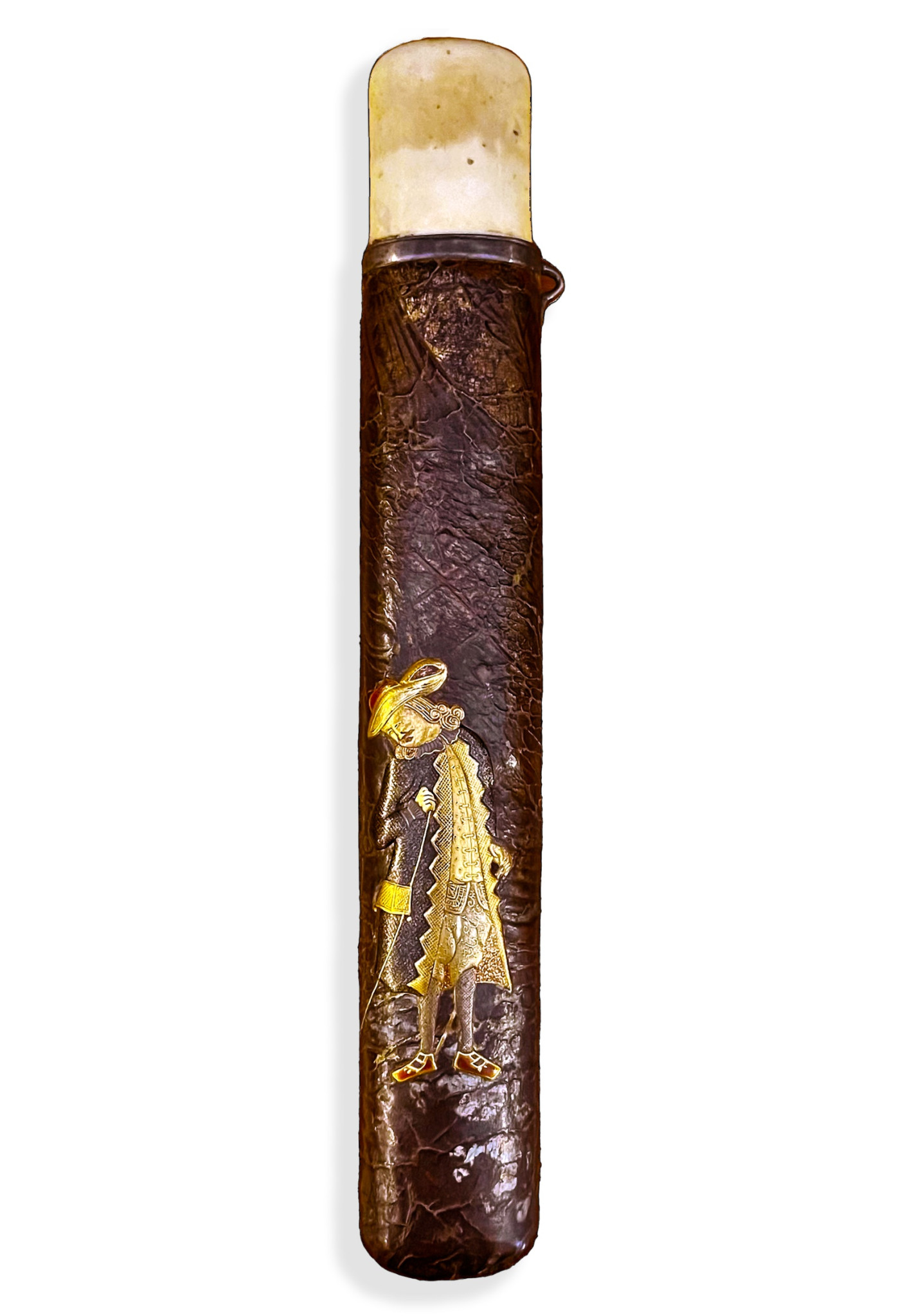
A Japanese kiseruzutsu (pipe case), decorated with a Dutchman, signed Hisamine
Edo period, early 19th century
Unpei Kameyama (1821-1899)
A view of black (American) ships in the bay of Uraga Senminato, Miura district, June 1853, the first arrival of Comodore Perry in Japan
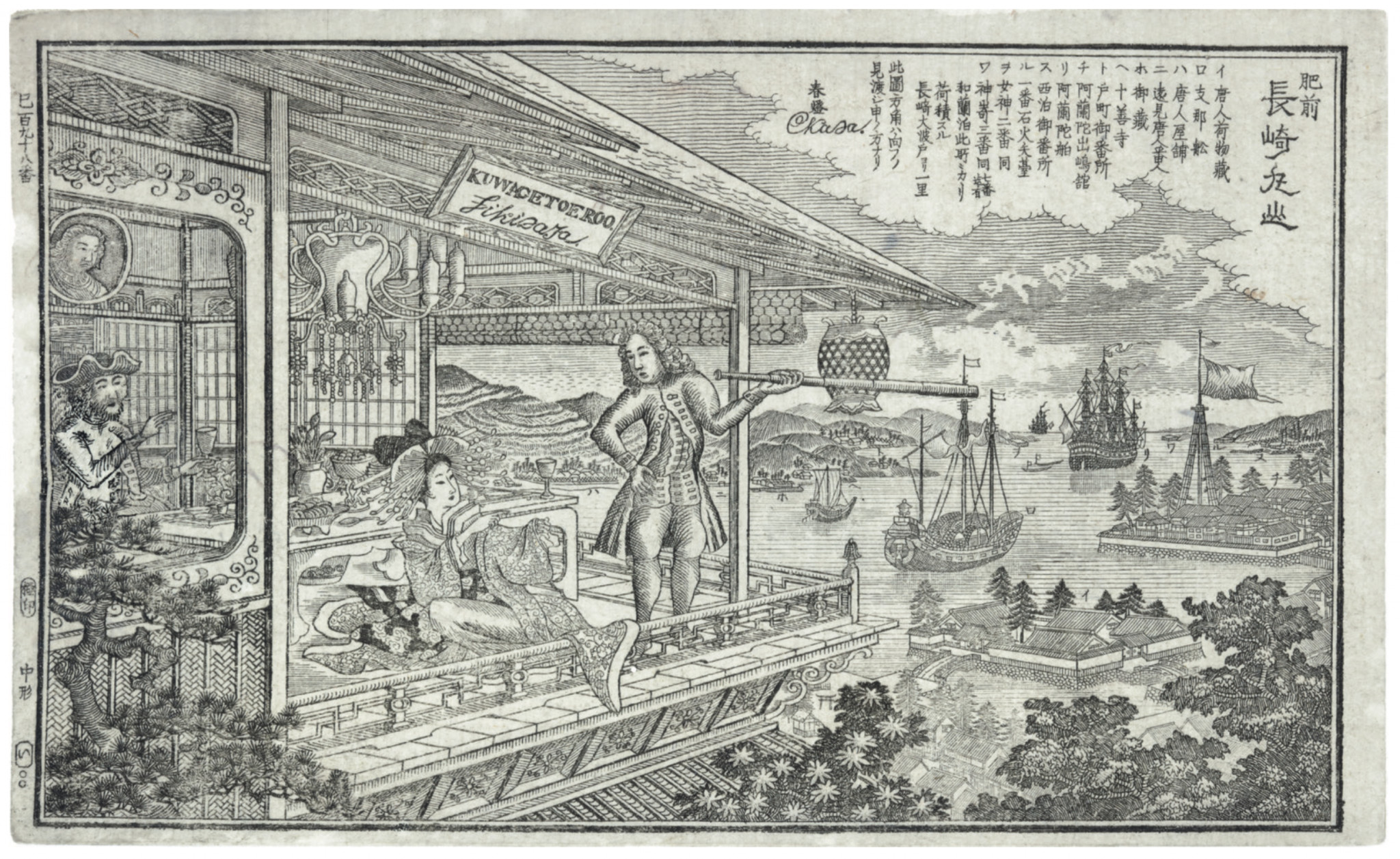
Okada Shuntosai (act. 1832-1861)
Murayama, the red-light district of Nagasaki in the province of Hizen, with Dutch merchants and Japanese courtesan
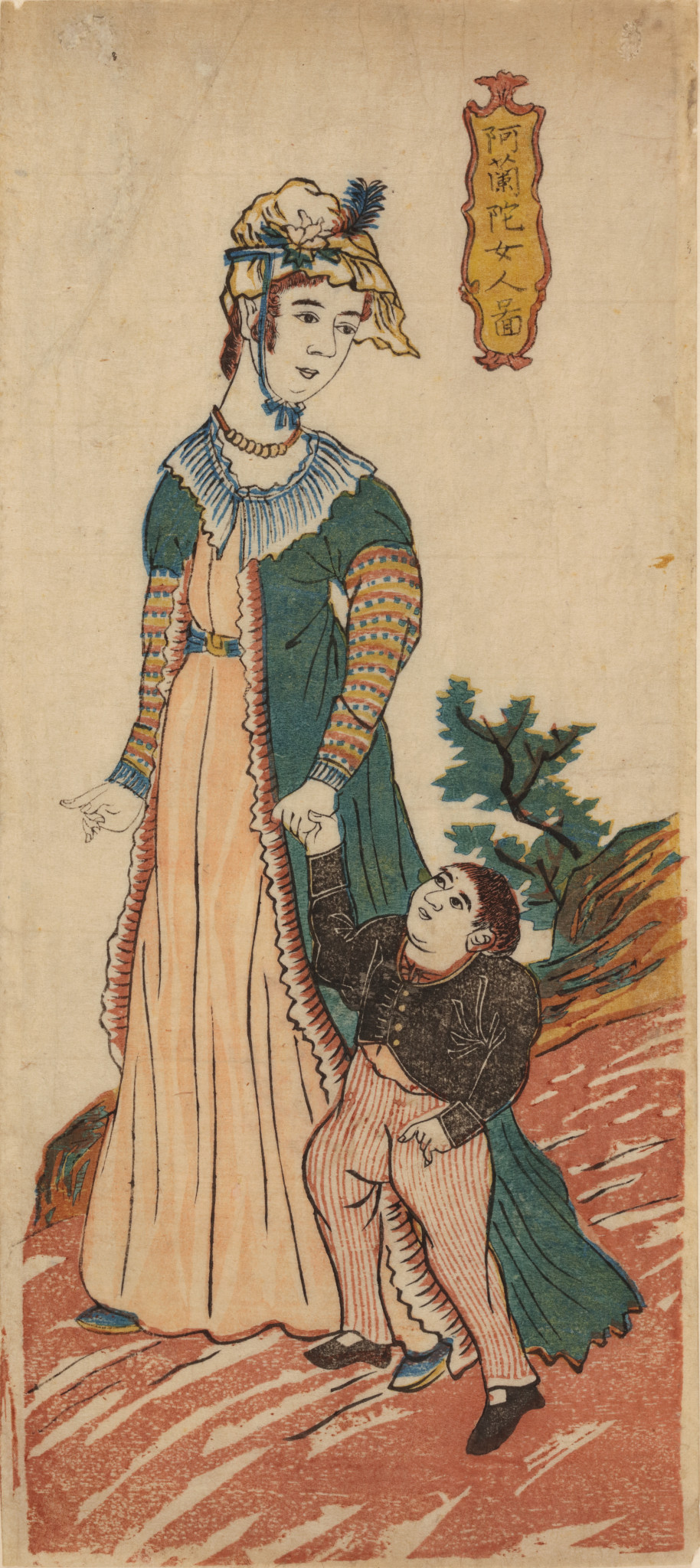
A Japanese colour woodblock print, Nagasaki-e, titled oranda nyonin zu, Dutch woman walking with a child
No publisher mentioned, circa 1817
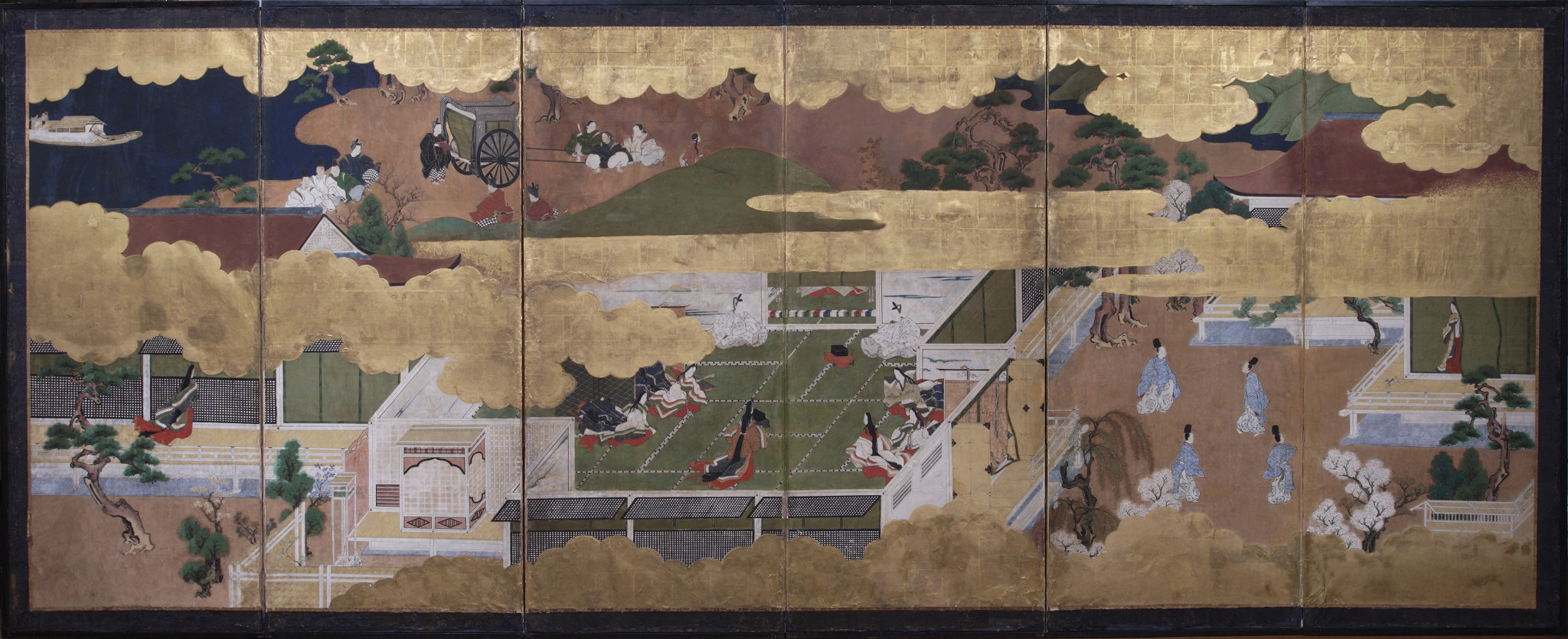
An important Japanese six-fold screen, depicting episodes from the Tale of Genji
Edo period, 17th century
A fine Japanese Kyoto-Nagasaki style black lacquer and mother-of-pearl inlaid, raden, double pipe case for Dutch ‘Gouda’ clay pipes
Edo period, 1800-1830
A Japanese Imari porcelain beer tankard
Arita, 18th century
Two small Japanese imari porcelain ewers for vinegar and soya
Arita, late 17th century
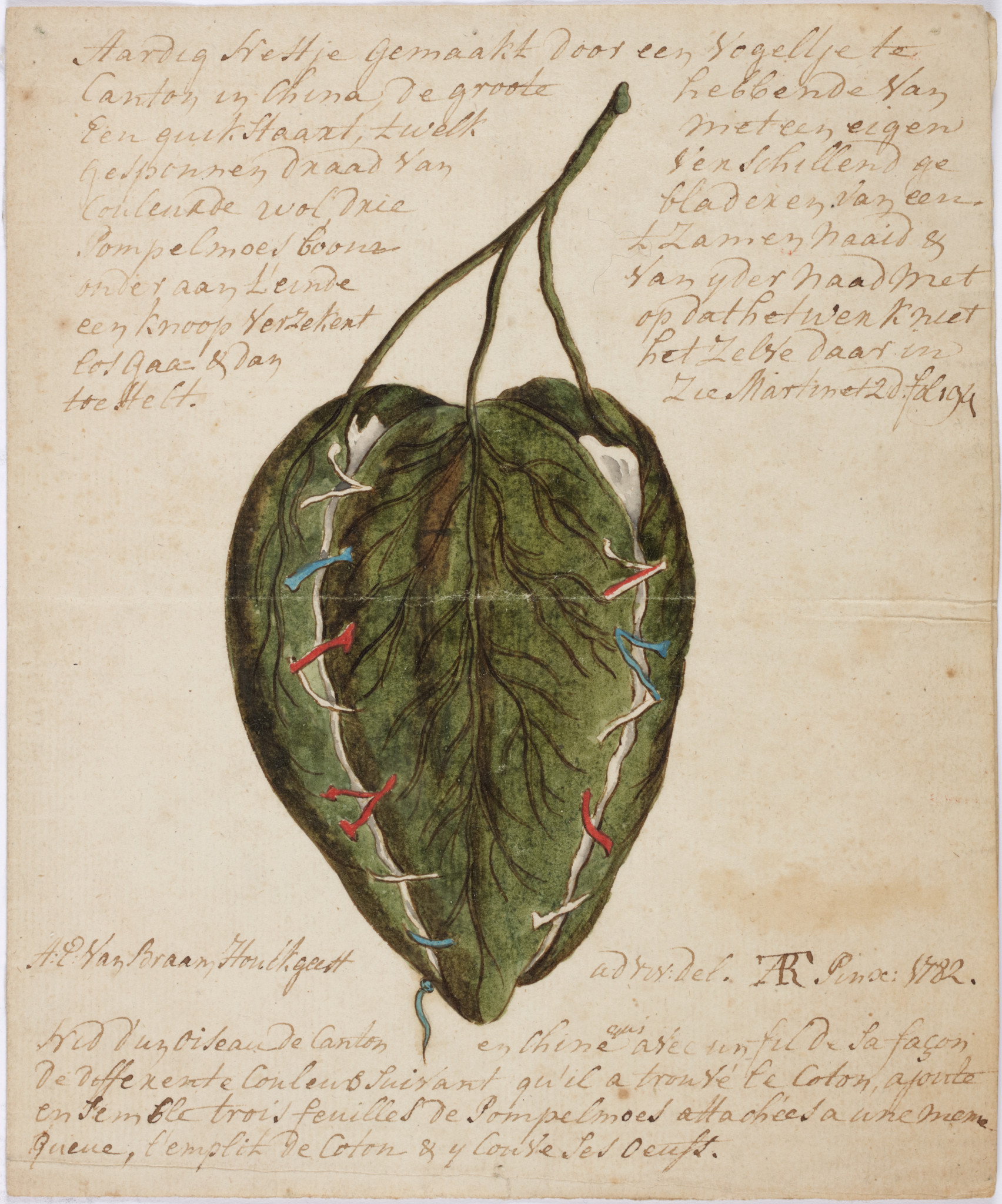
A drawing of a Chinese bird’s nest
Signed and dated A: E: Van Braam Houckgeest ad viv: del., ATR Pinx: 1782
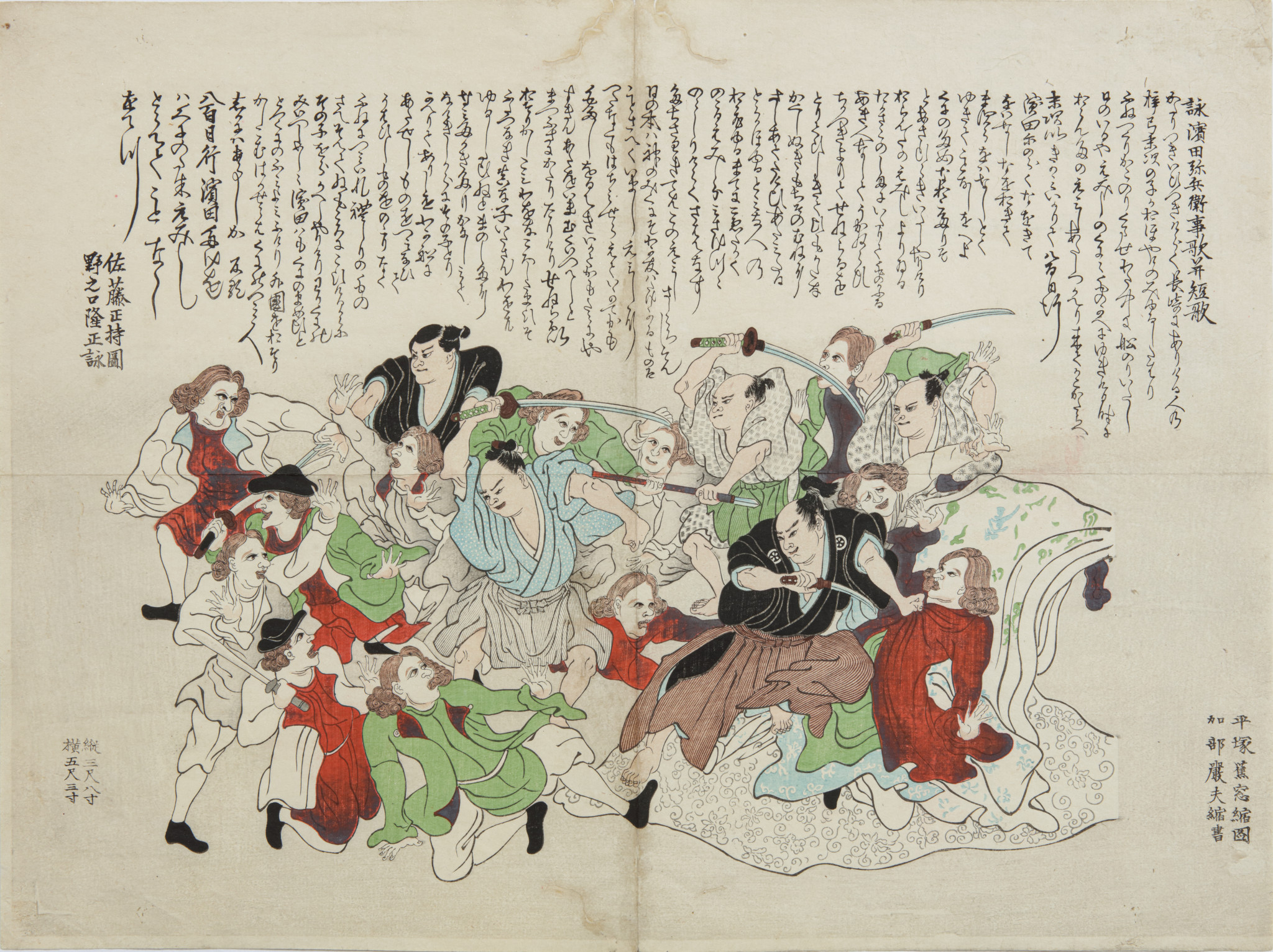
A Japanese woodblock print, Ukiyo-e, depicting the capture of Pieter Nuyts
Meiji period, late 19th century
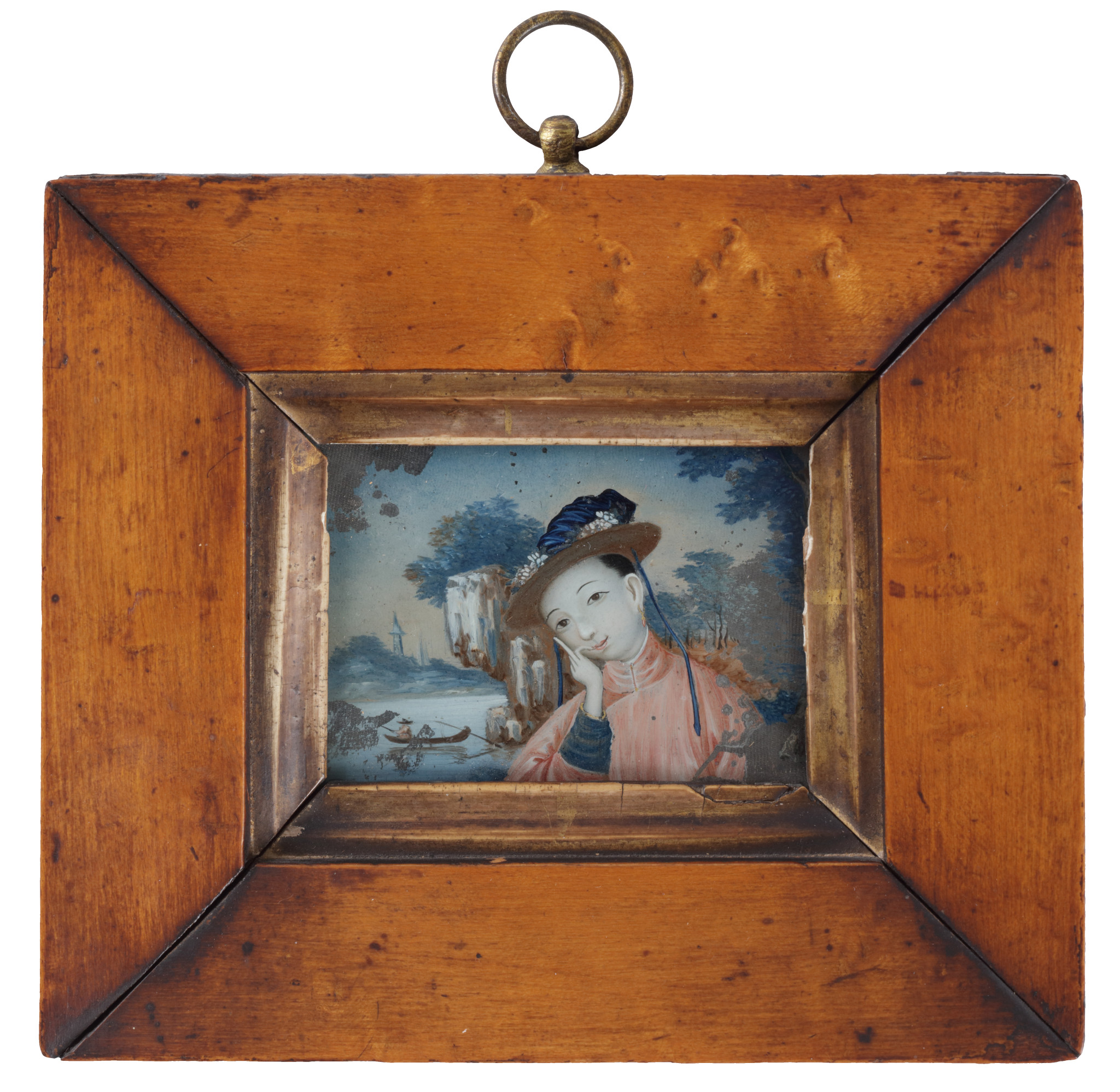
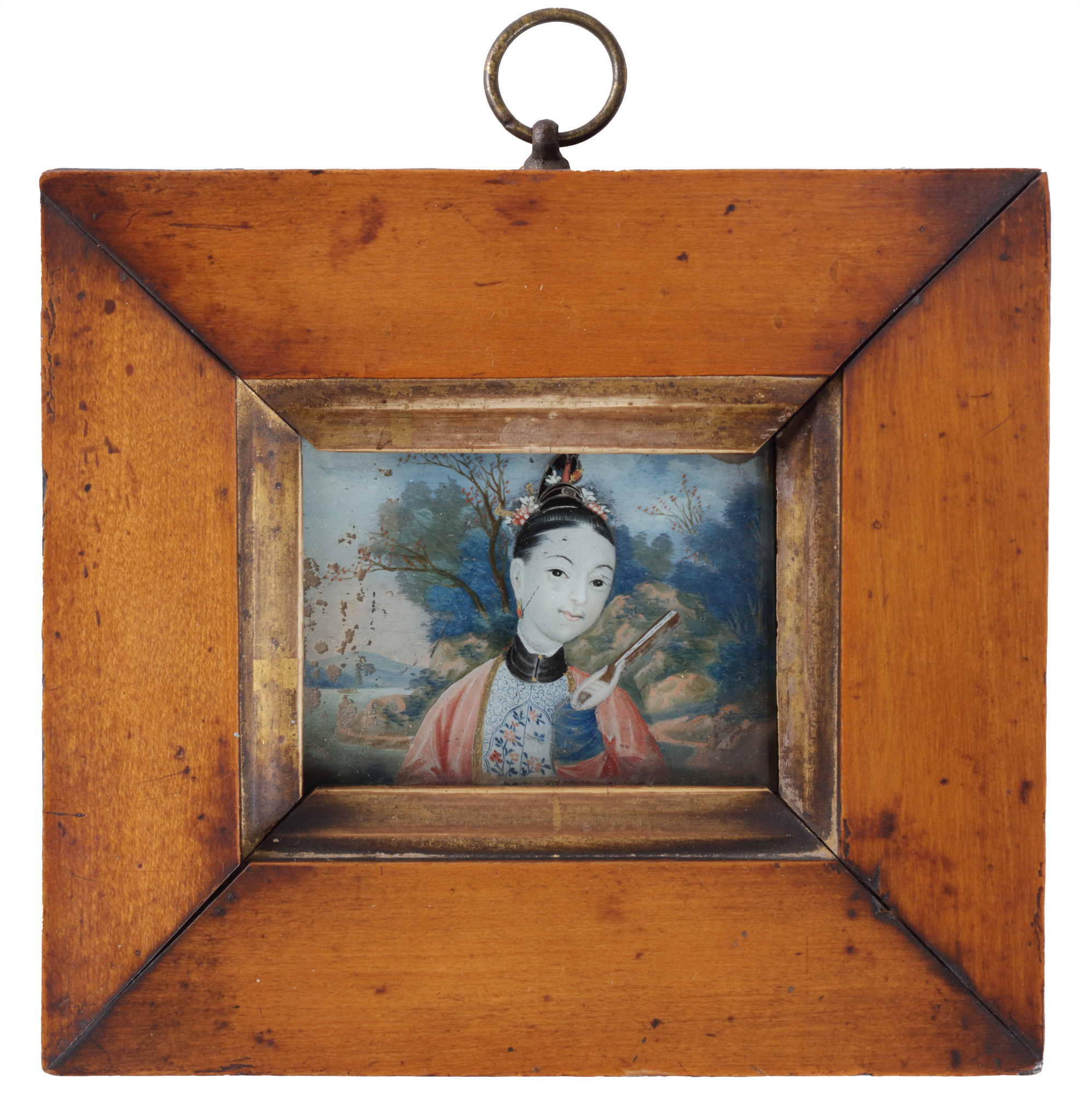
A pair of miniature reverse-glass paintings of ladies in a landscape, in original maple wood frames
Canton, circa 1780
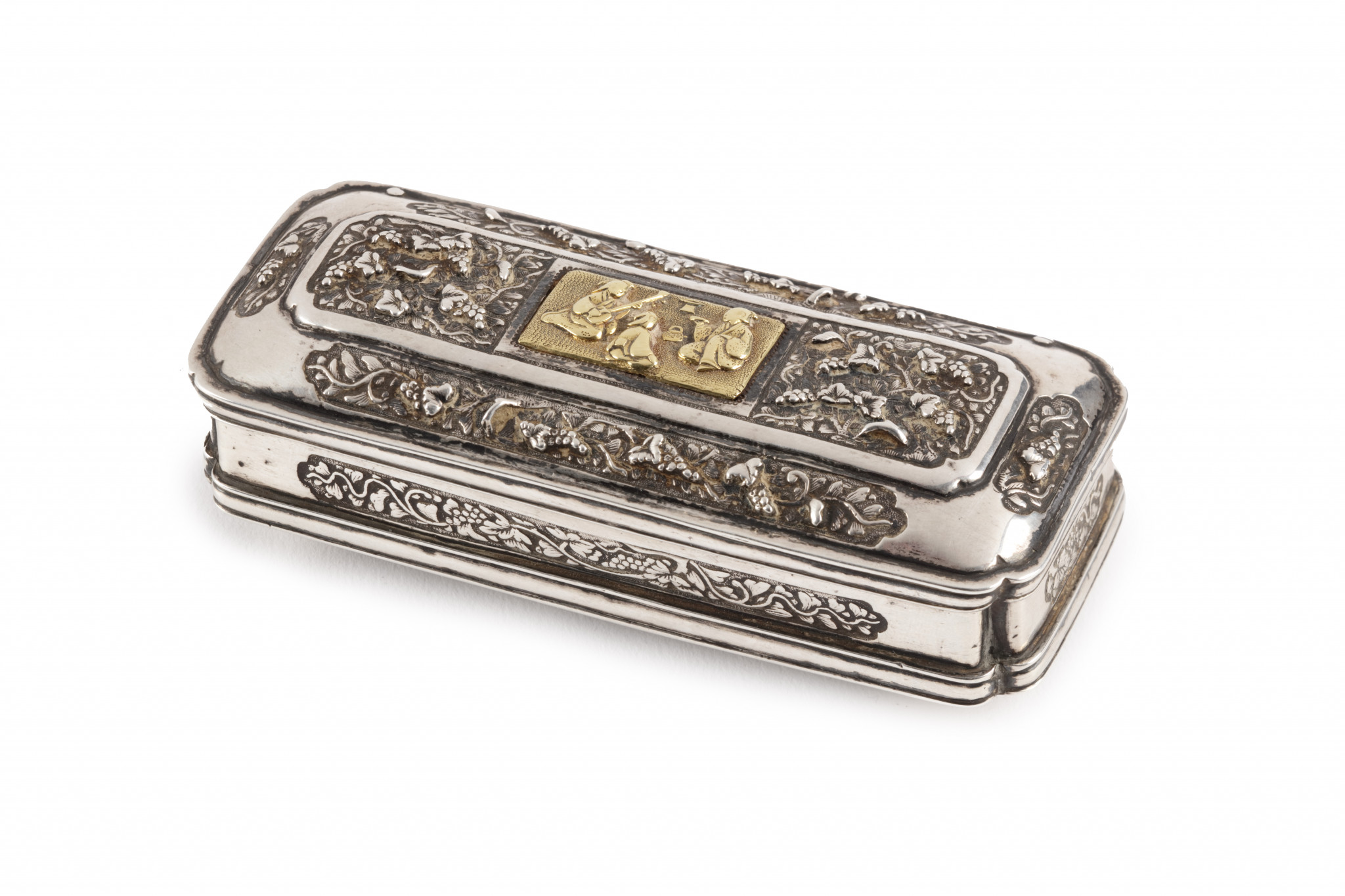
A Sawasa-ware export silver and gold tobacco box
Japan, Nagasaki, 17th century
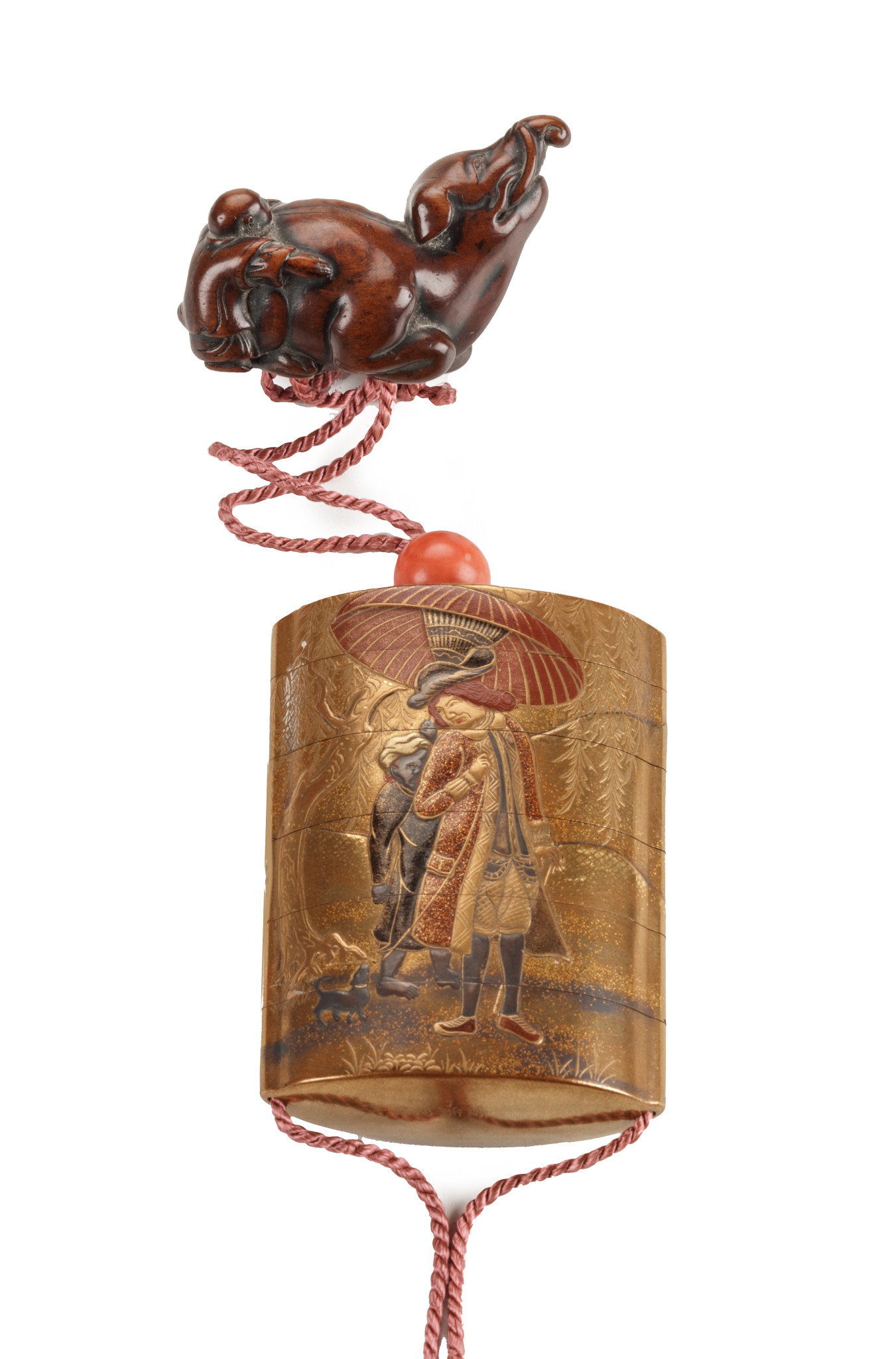
Inro, Ojime and Baku Netsku signed Koma Koryu (died before 1789)
Inro late 18th century, netsuke mid 18th century
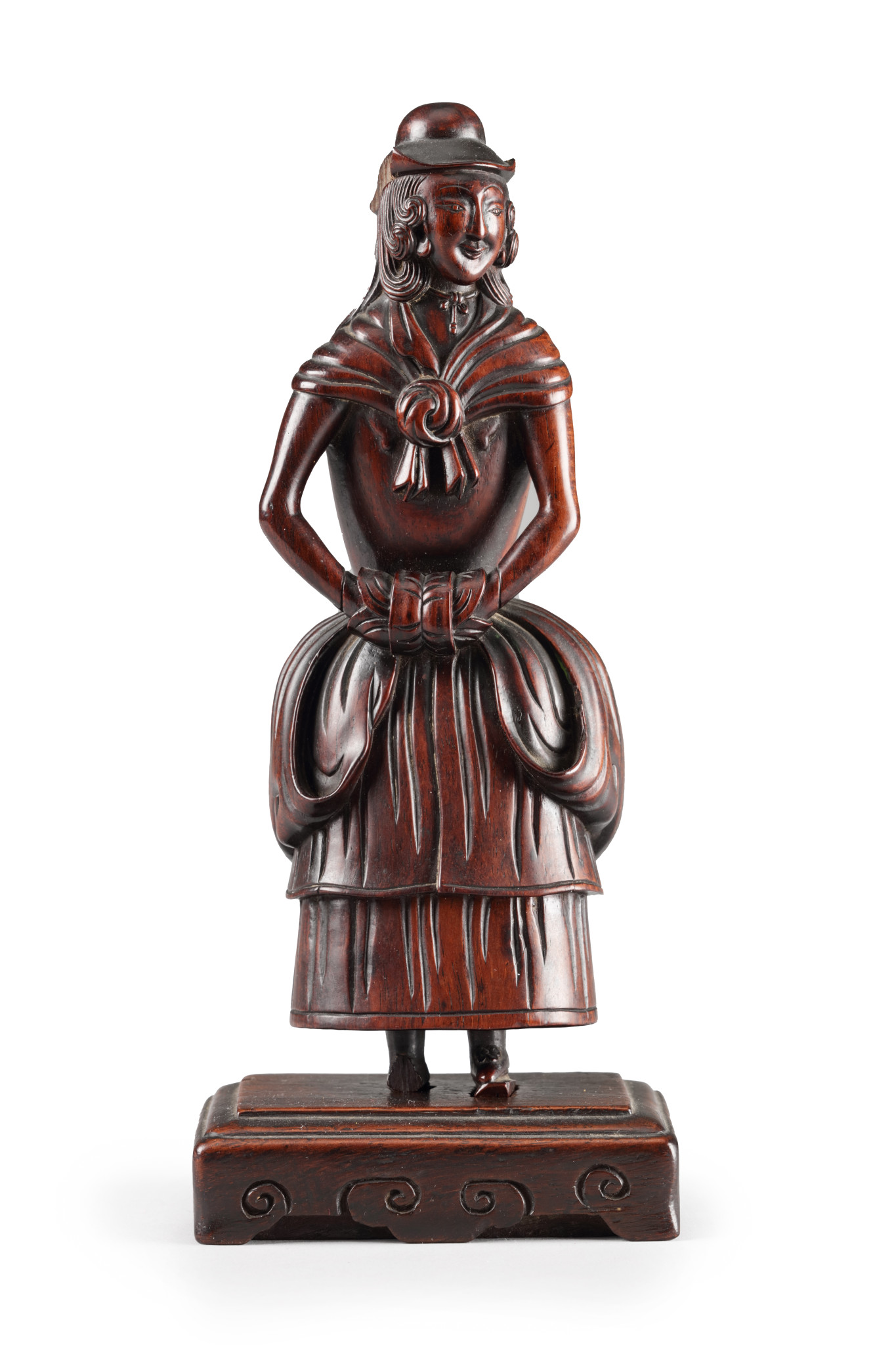
A rare Chinese wood sculpture of a Dutch lady
18th/19th century
A collection of Japanese lacquer portrait medallions depicting famous Europeans
Edo period, late 18th century
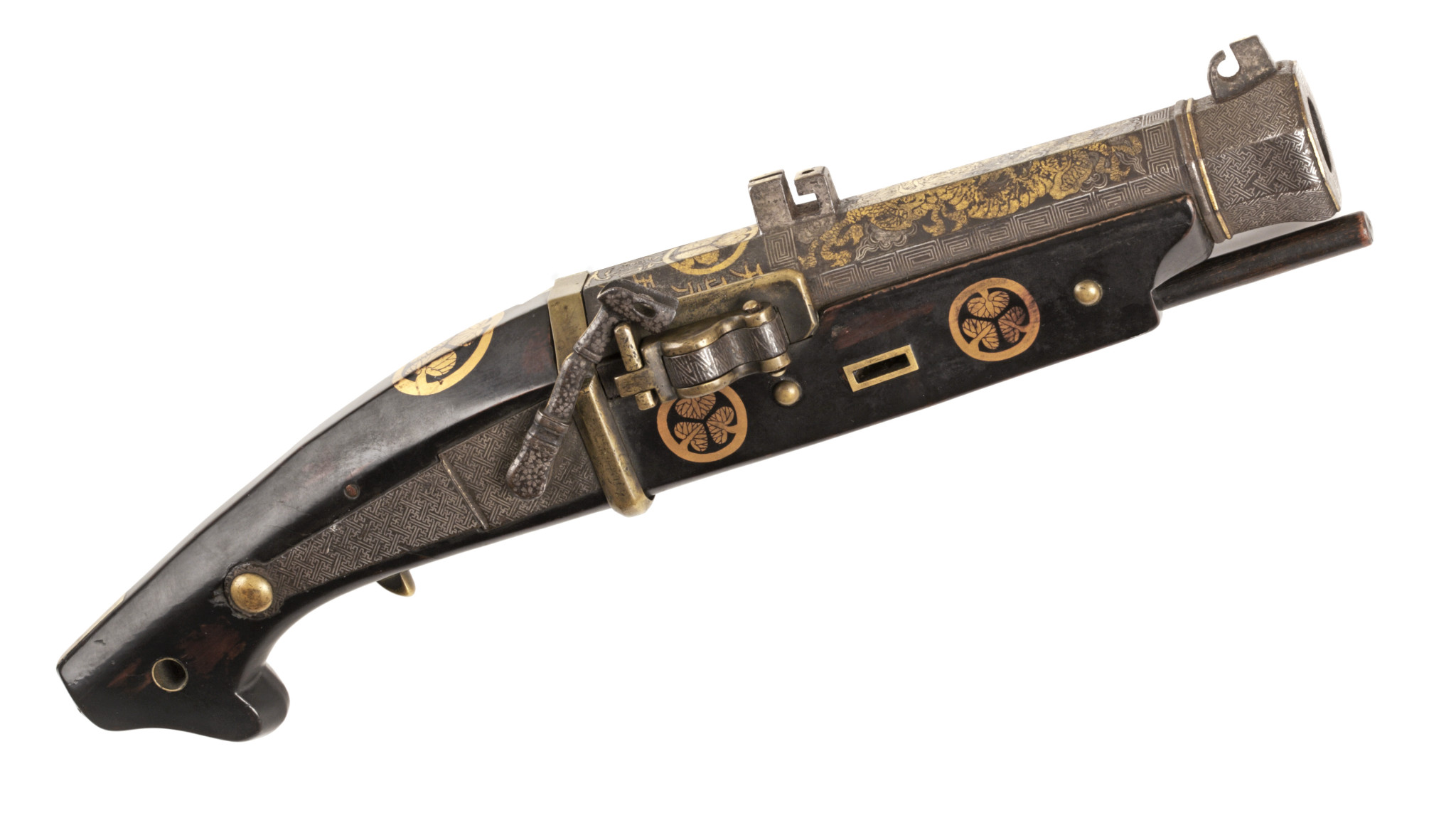
A very rare Japanese matchlock pistol inscribed Tenshõ Gan-nen go-gatsu, Kazari-no, Matsudaira-Awa-no-Kami for the feudal lord of the Awa area
Edo period 17th/18th century
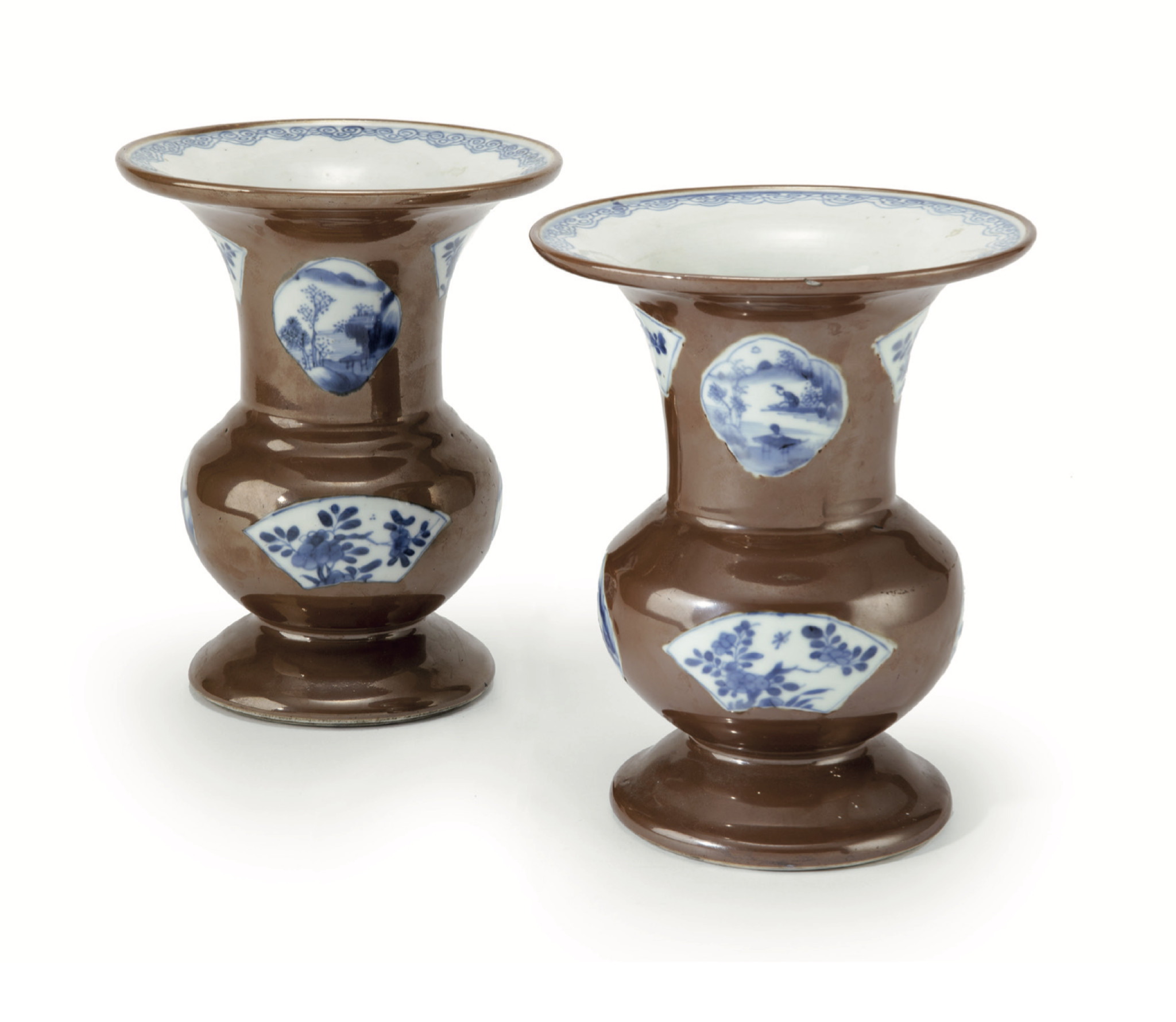
A pair of Chinese porcelain 'Batavia ware' spittons
Qianlong period, circa 1740
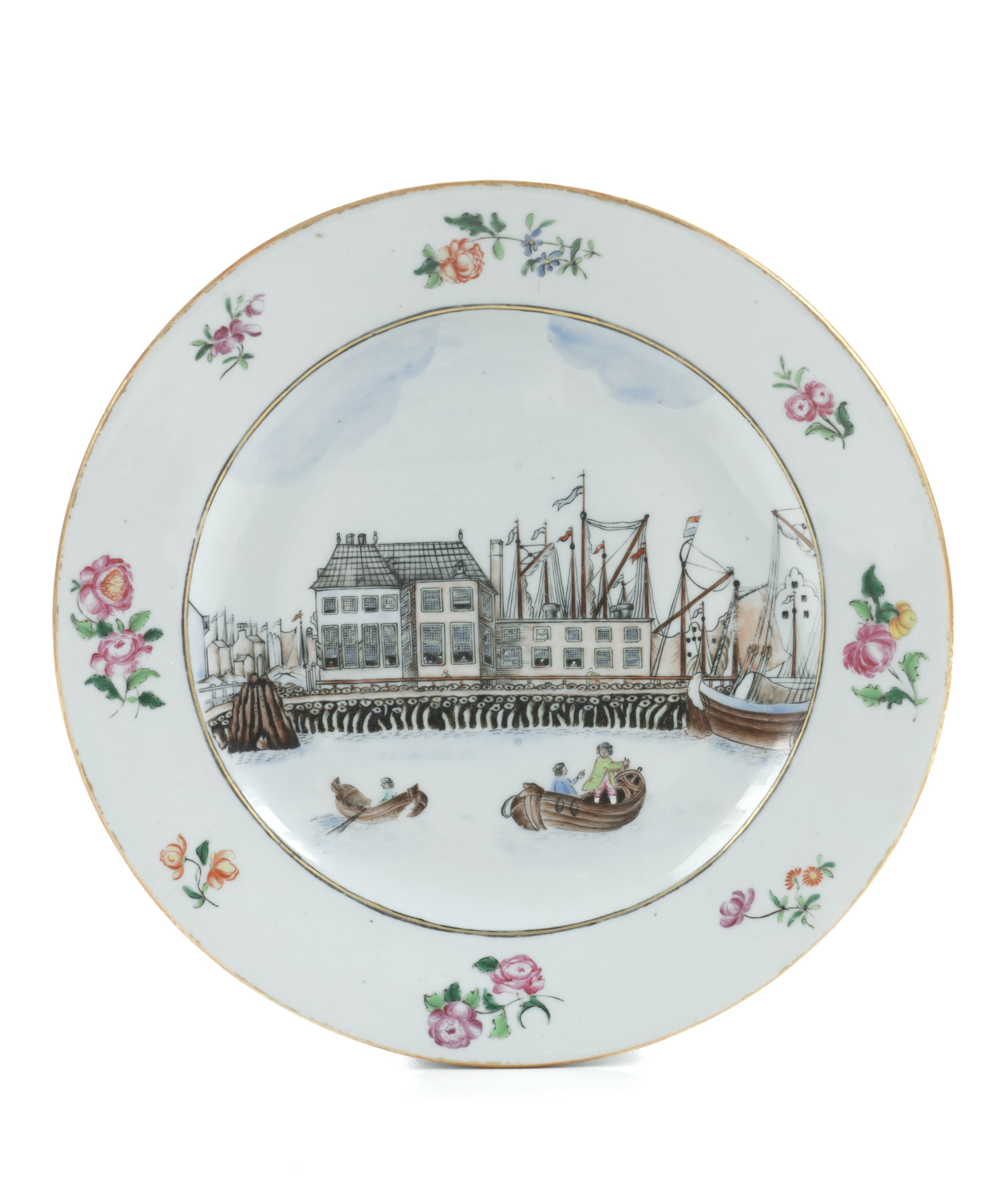
A Chinese famille rose export porcelain 'Amsterdam Waterfront' dish
Qianlong period, circa 1765
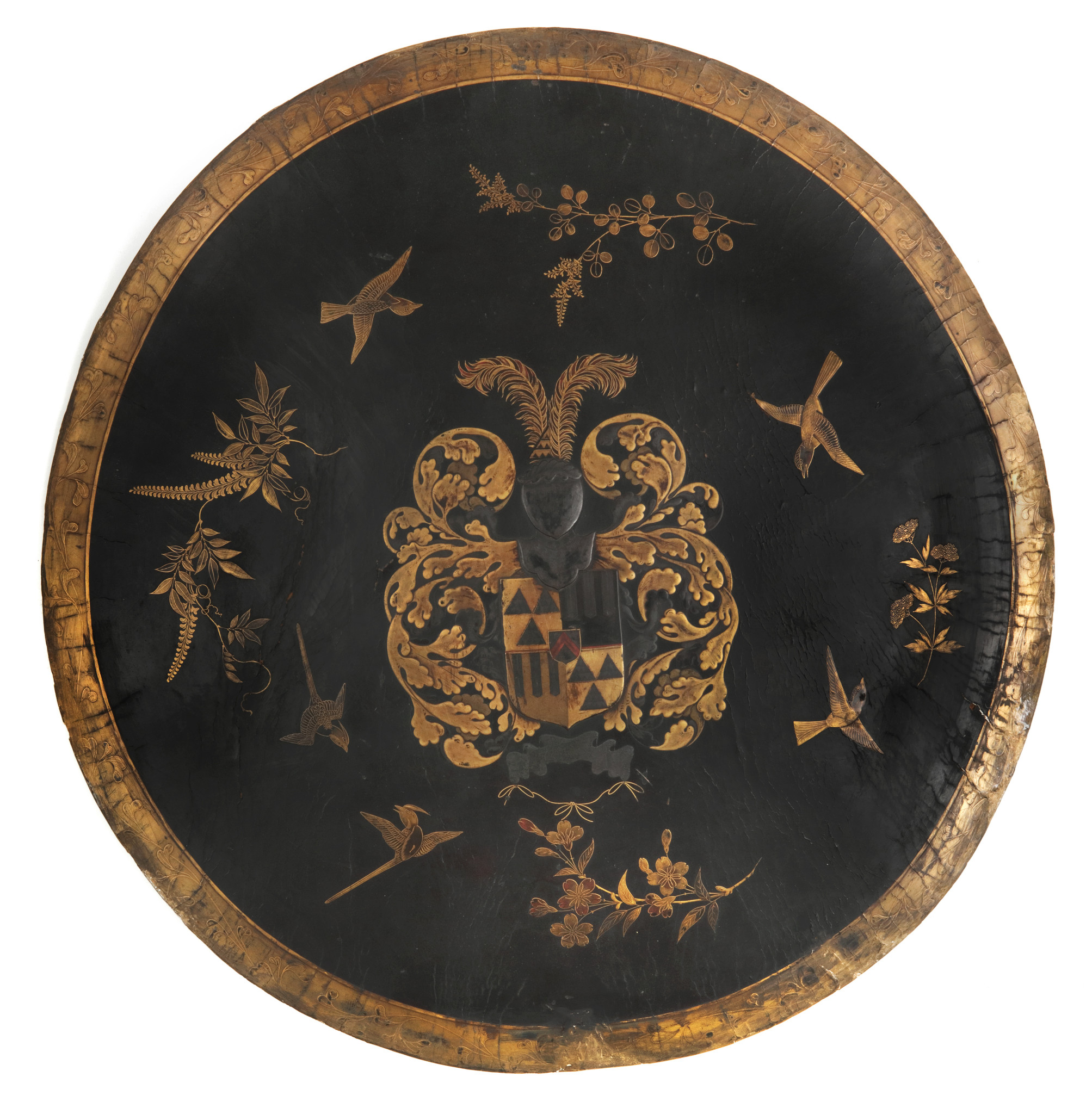
A highly important Japanese export lacquer Indian buffalo shield with the Sweers coat-of-arms, for the Dutch market
Edo period, circa 1690
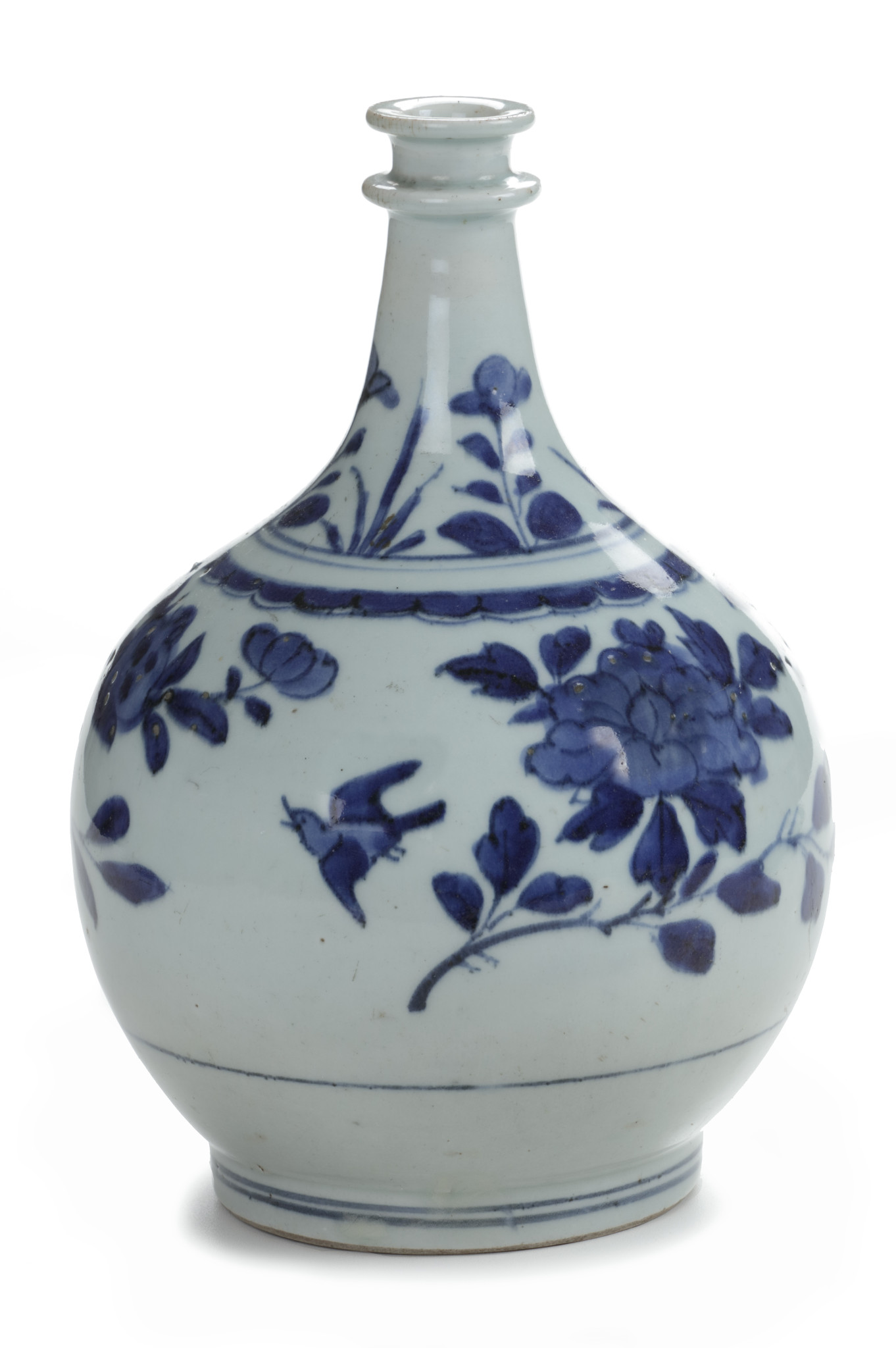
A Japanese Arita Blue and White Porcelain Wine Bottle
Arita, late 17th century
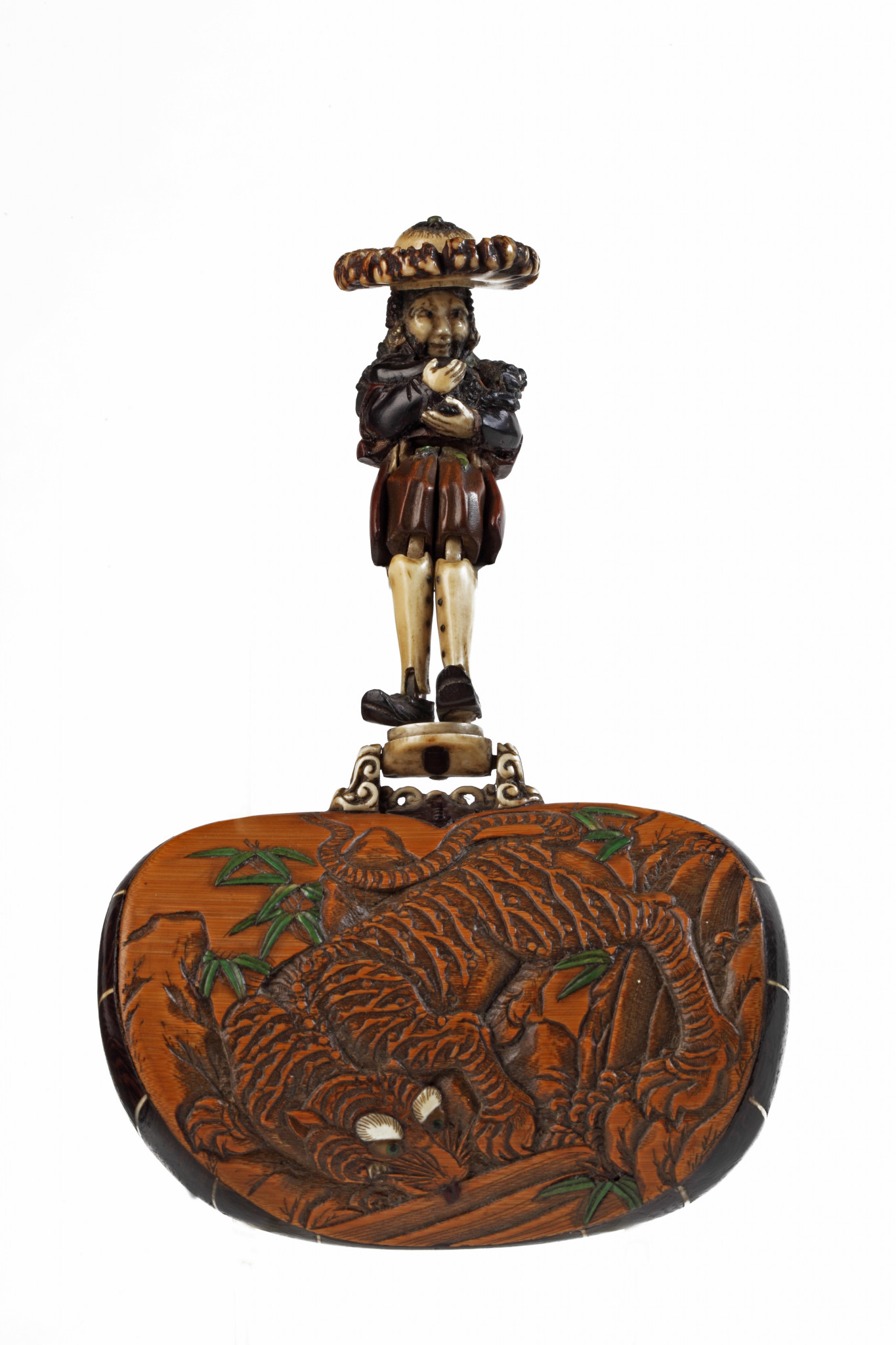
A Tonkotsu (tobacco pouch) and Dutchman netsuke, signed Hasegawa Ikko
Japan, Edo period, circa 1820
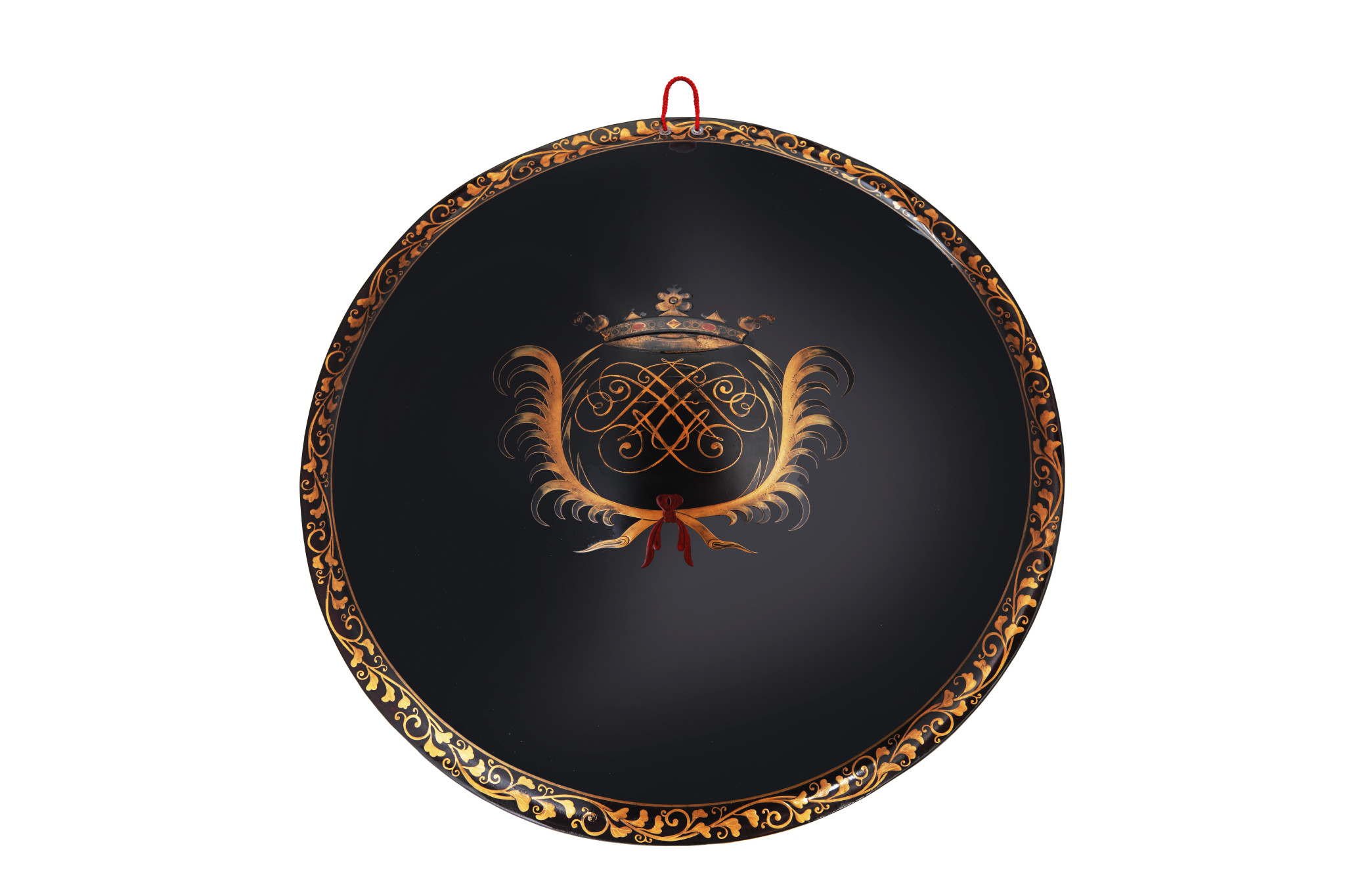
An extremely rare circular Japanese Armorial Lacquer Shield for the Dutch market with initials
17th century
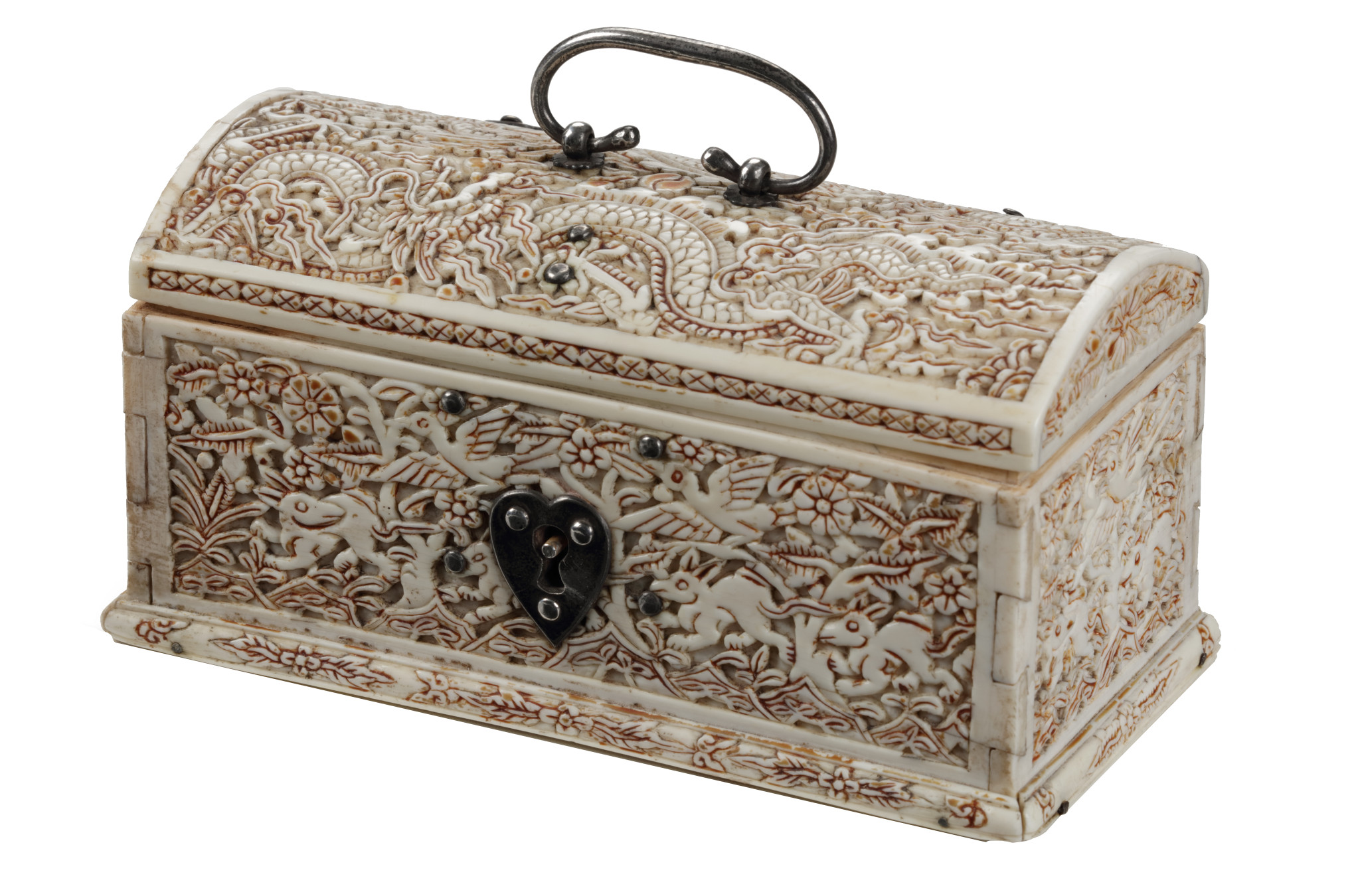
A rare Tonkin ivory box with silver mounts
North Vietnam, Tonkin, mid 17th century
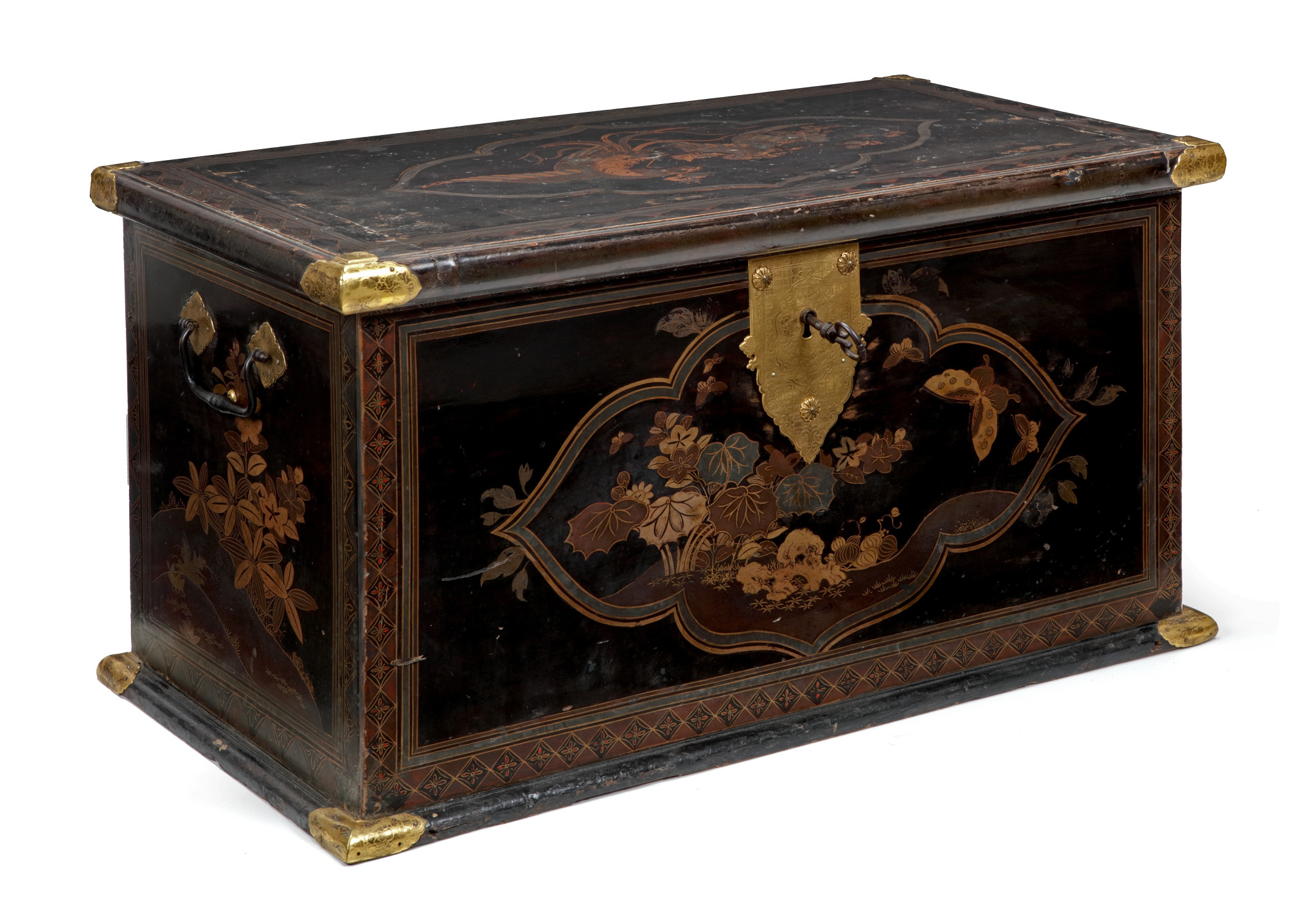
A large Japanese transitional lacquer chest with gilt-metal mounts
Edo period, early 17th century
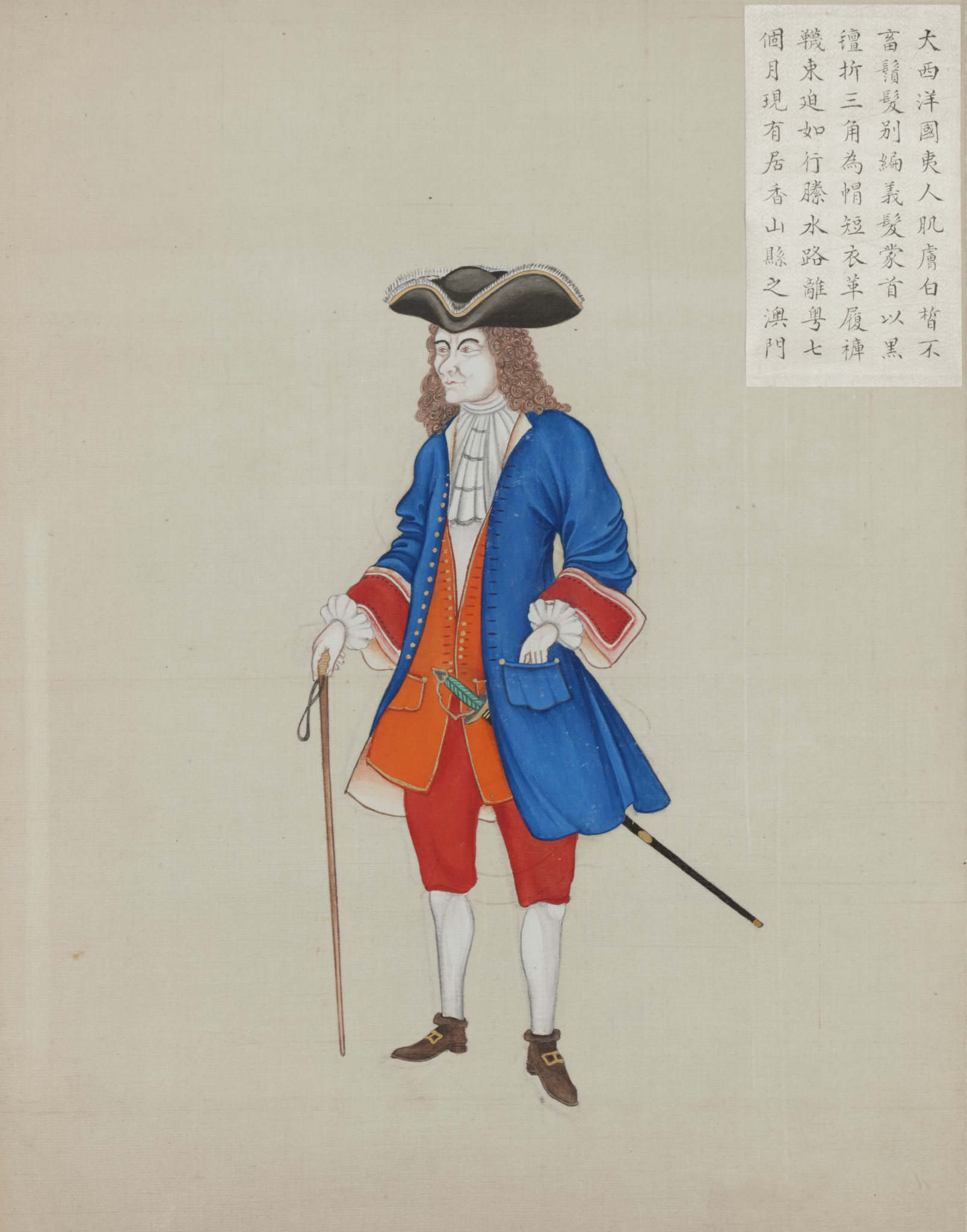
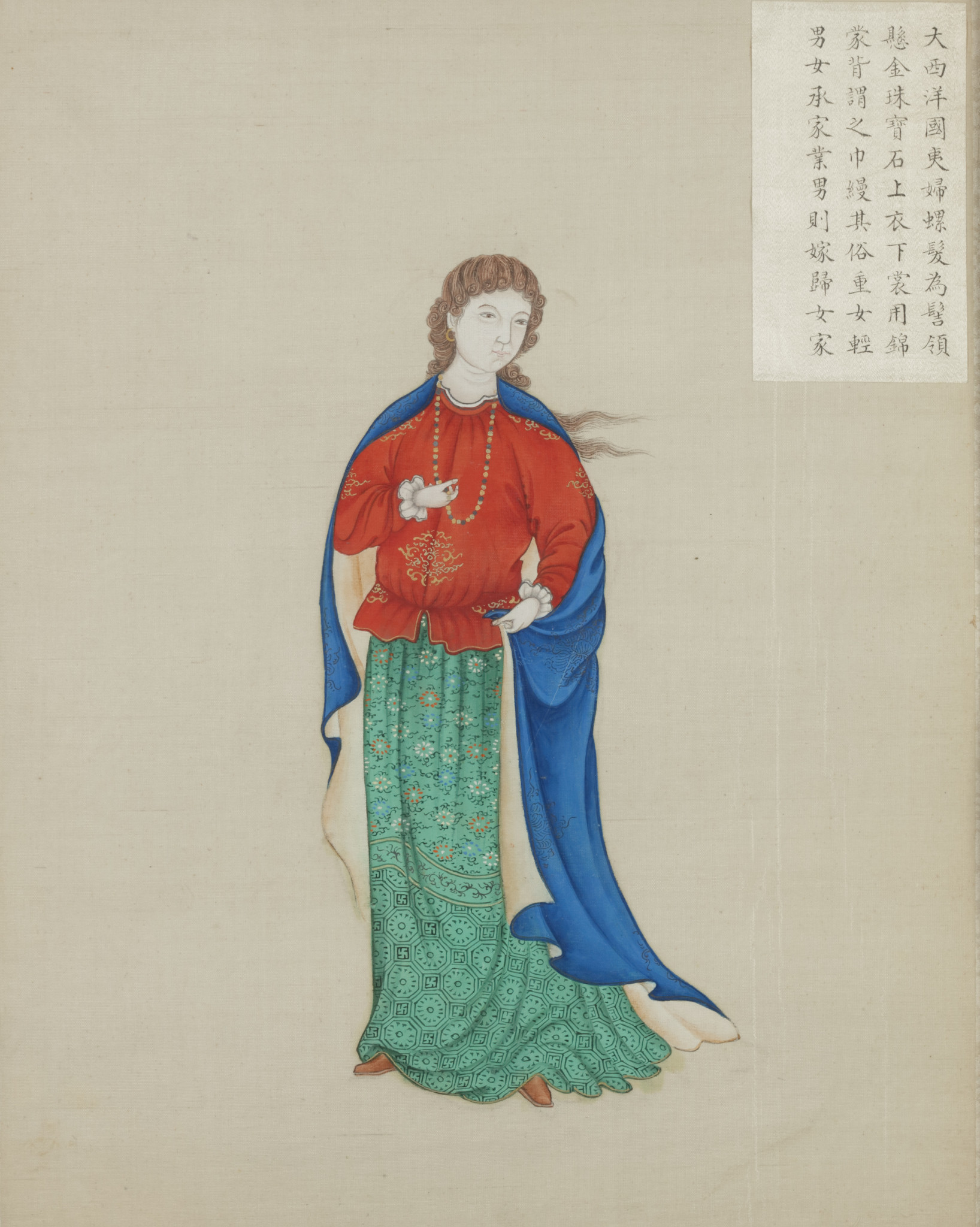
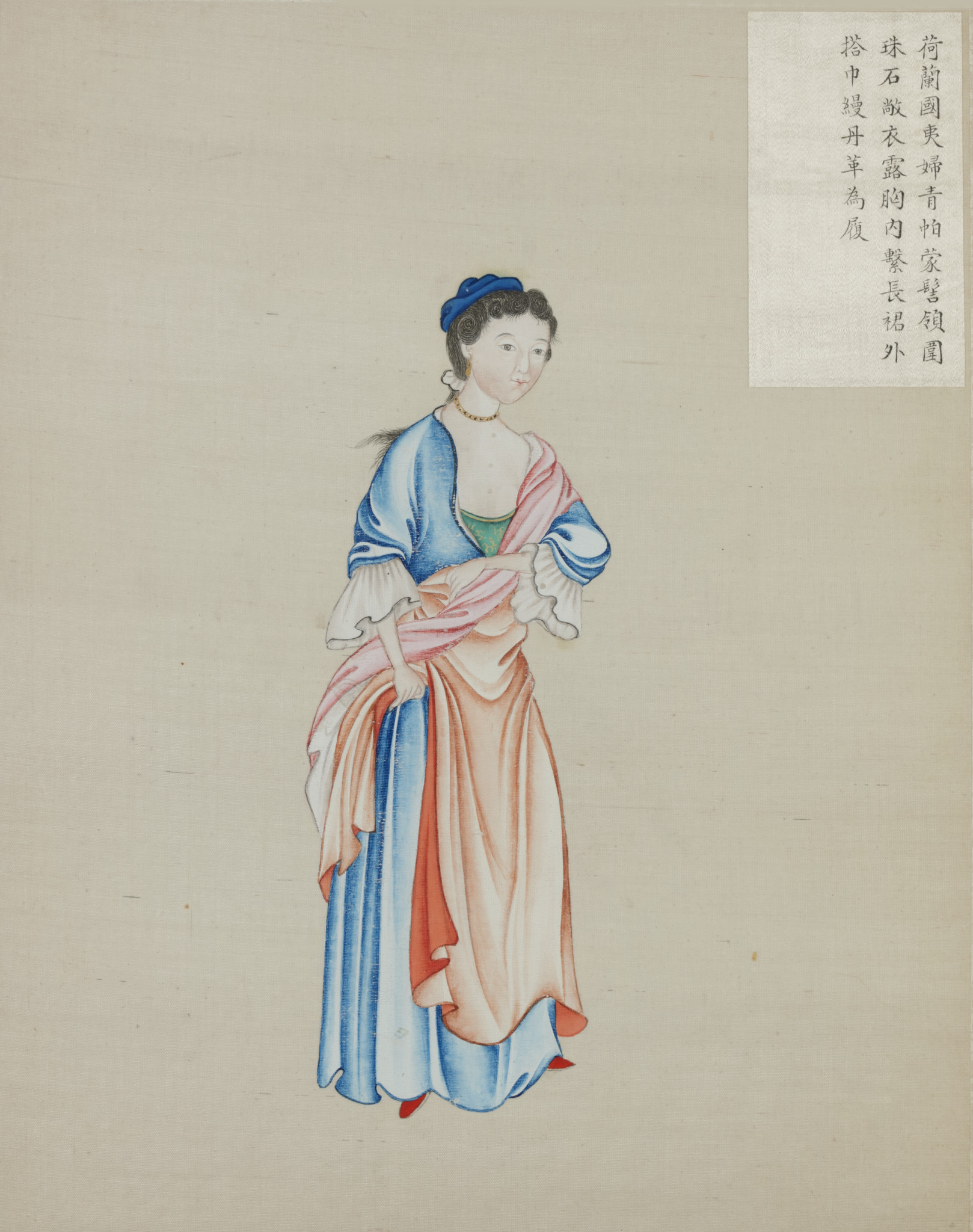
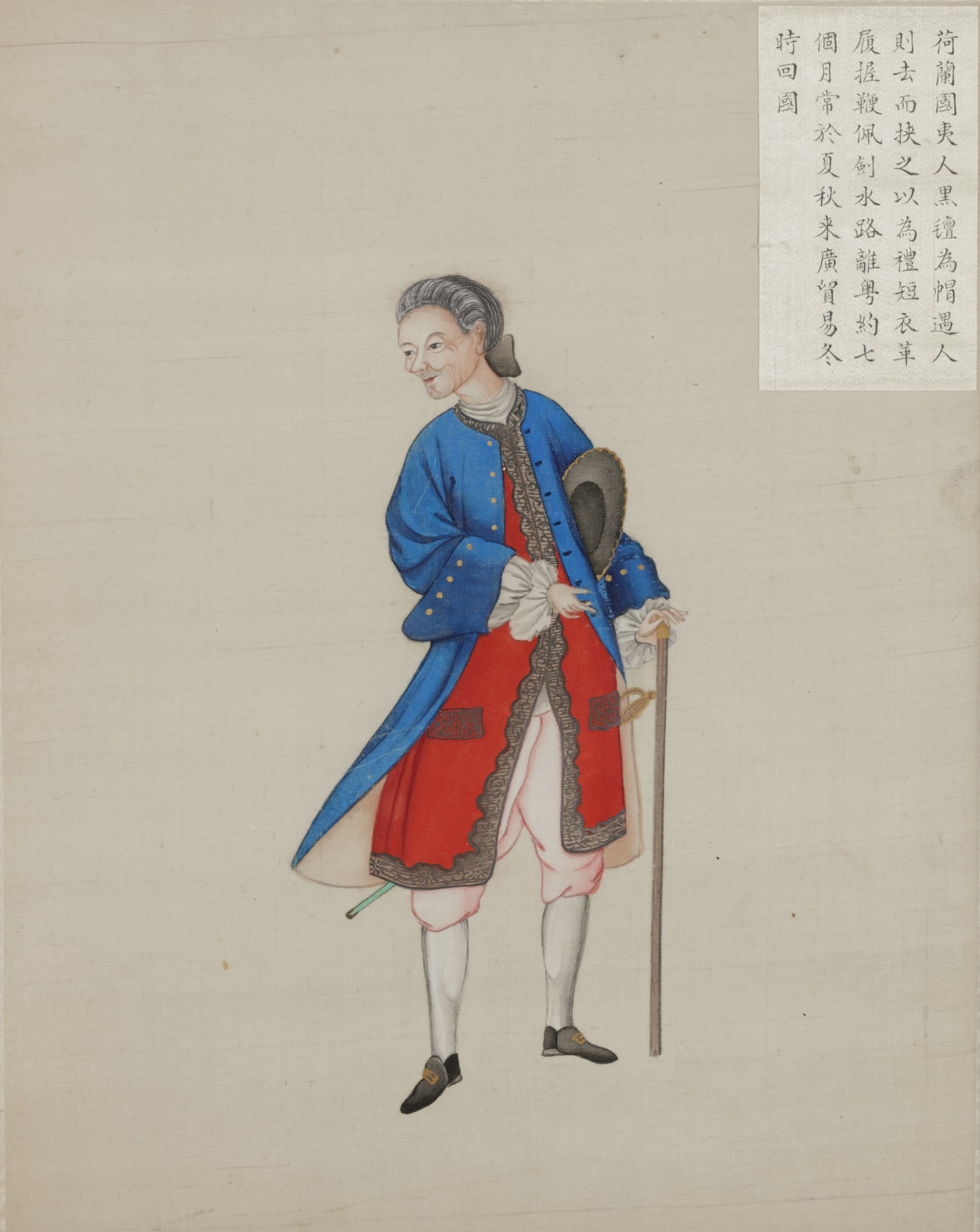
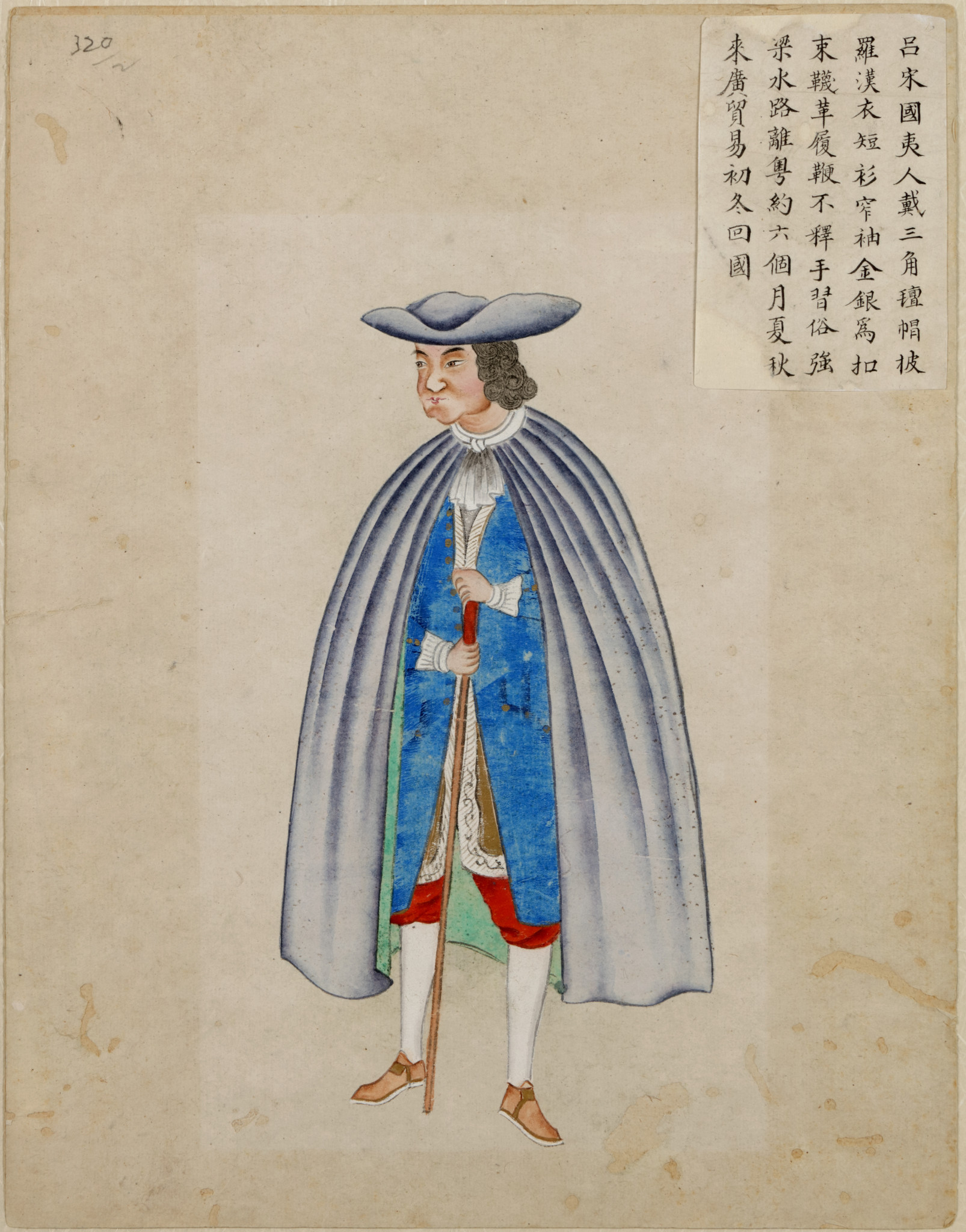
Five rare depictions of Westerners in gouache on silk by an anonymous Chinese artist
Former collection Mr. & Mrs. Rafi Mottahedeh

An important Chinese export 'Swellengrebel' part-dinner service
Canton, circa 1750
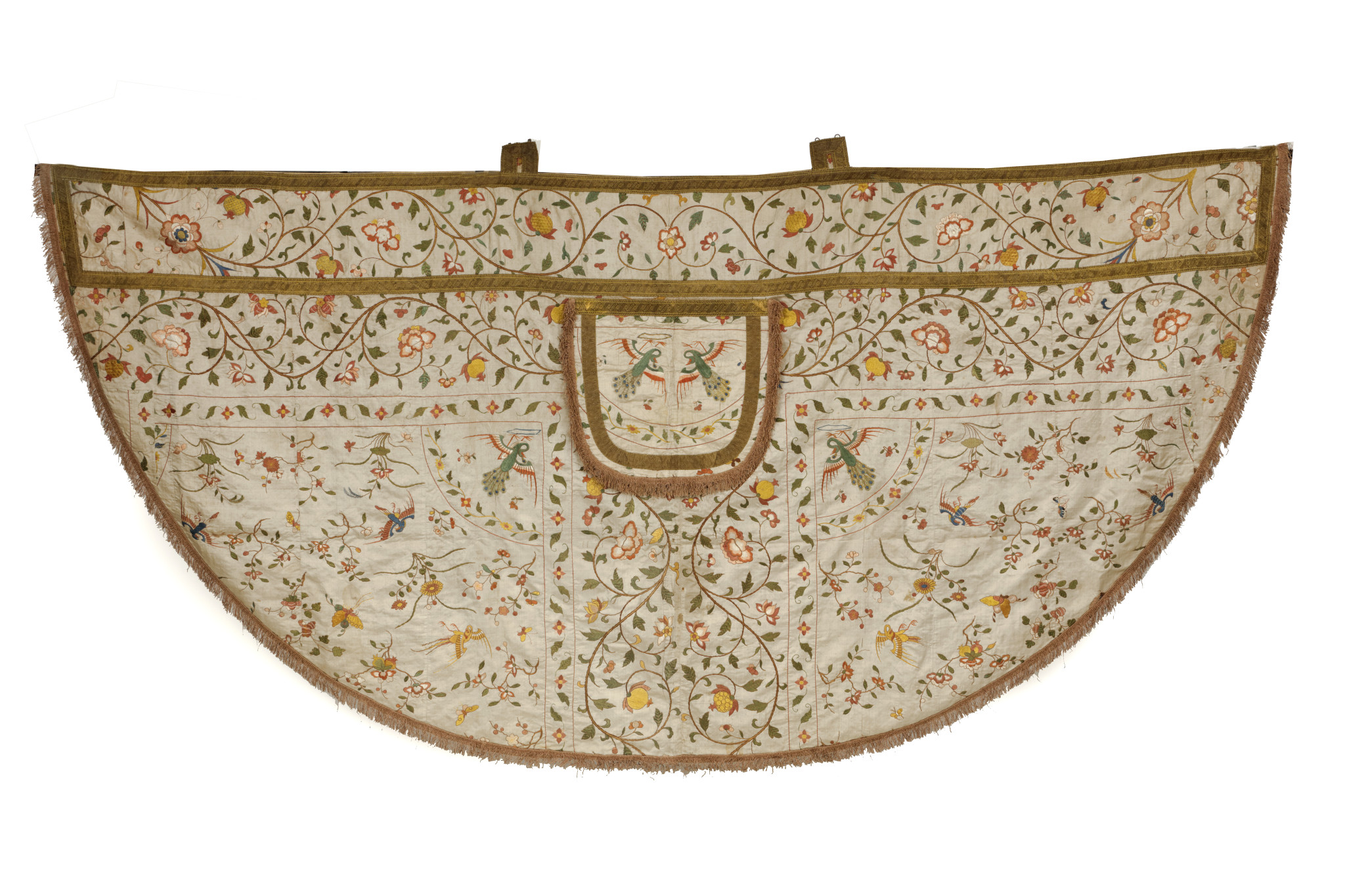
A Chinese white satin embroidered with coloured silk and gold cape for the Portuguese market
Macao, Qing Dynasty, early 18th century