A Balinese keris taken from the body of a Princess
Lombok, Karengasem dynasty, 19th century
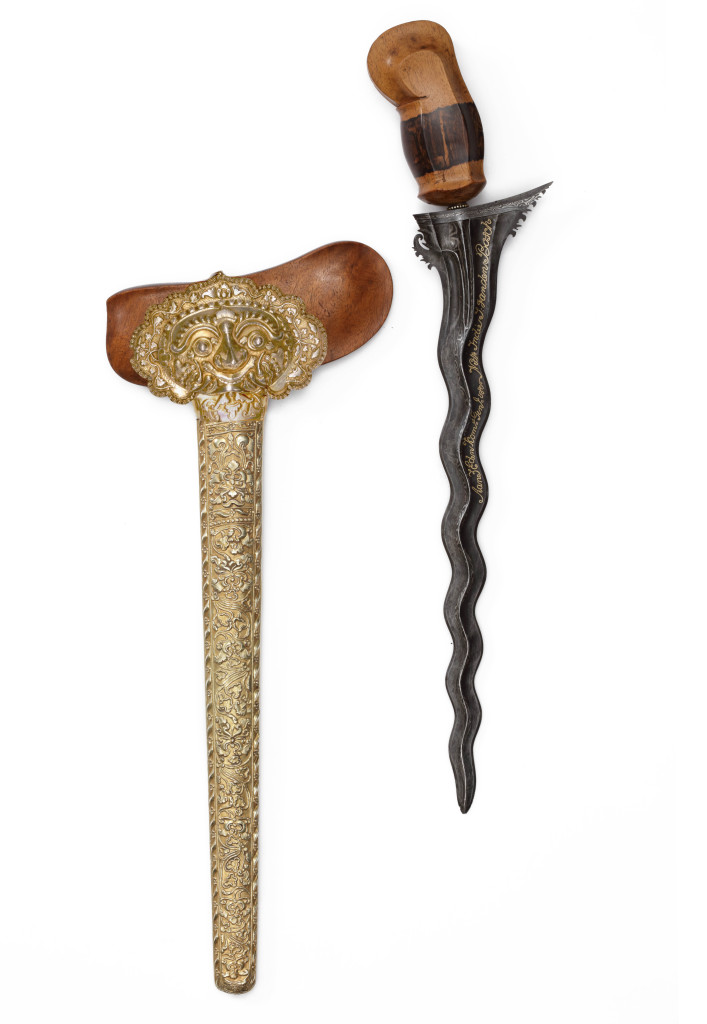
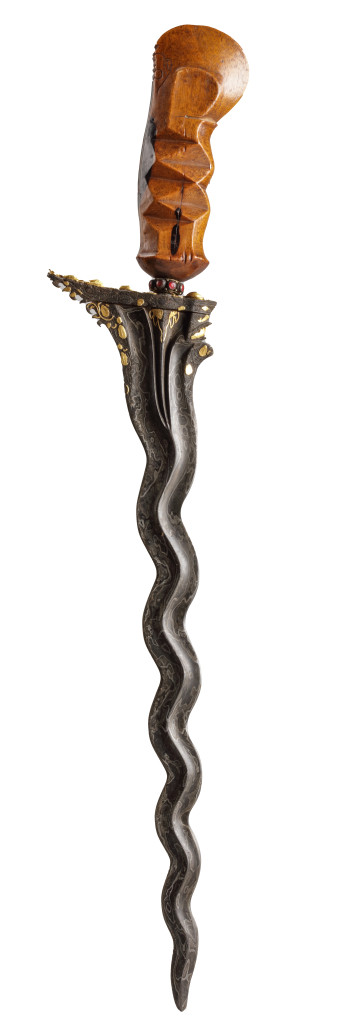
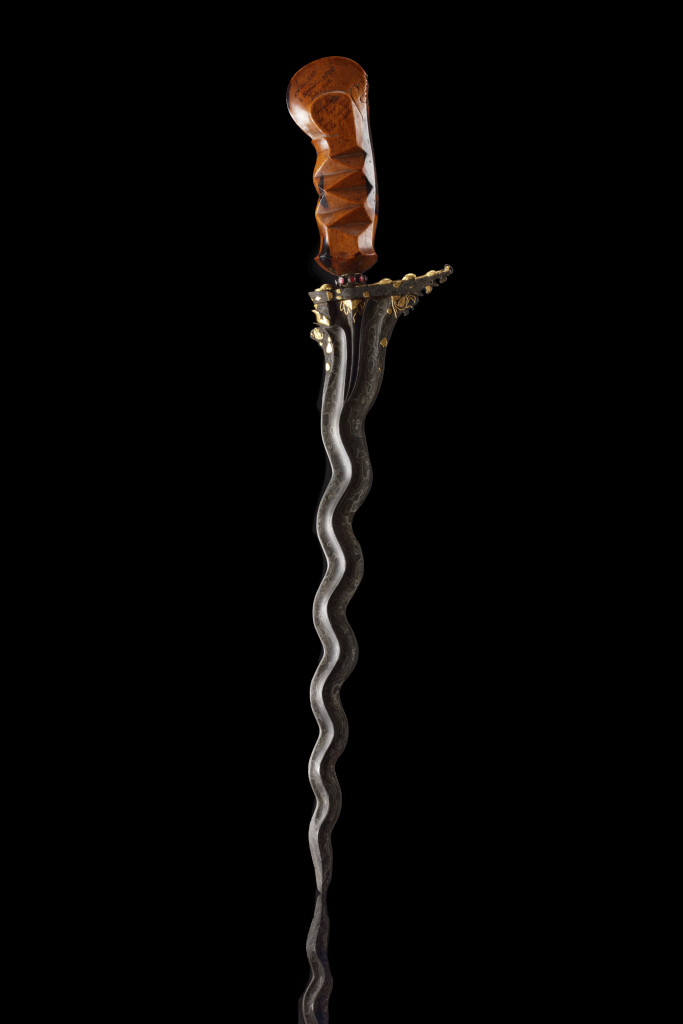
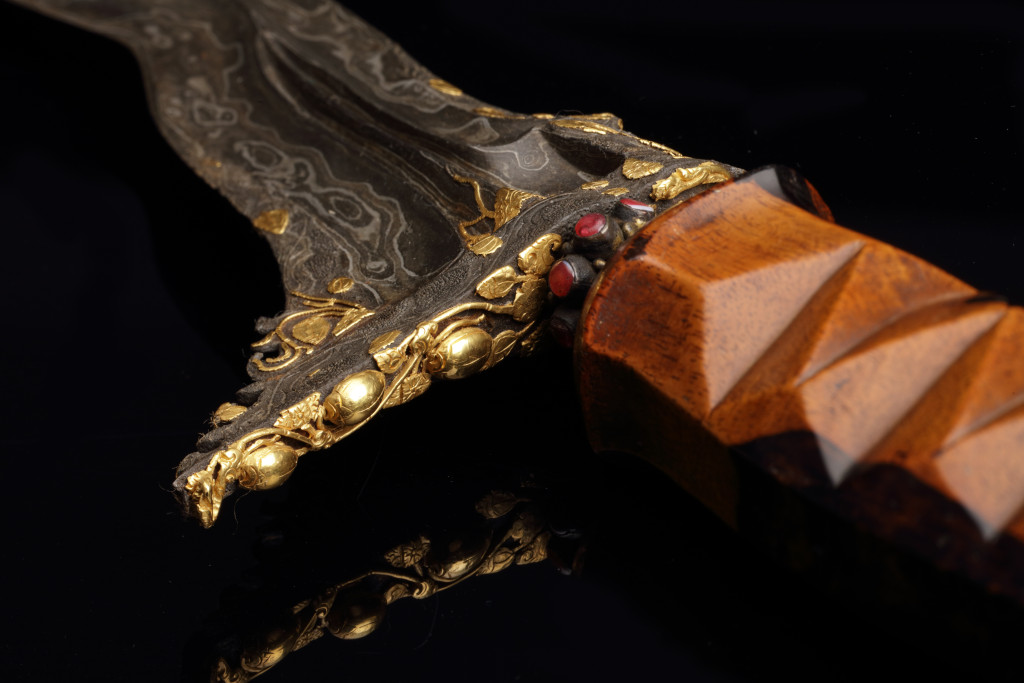
With a Sangkelat Kembang kacang Pugot, with gold decoration, kinata mas, in the form of a Wedono Siji-Bintulu (flame of the sun) symbol on the Sor Boran or base. The pamor is kulit semangka halus (refined watermelon rind) and the hilt cekah solas in Pelet mbelang sapi wood.
L. 56 cm
Provenance:
Collection Witsenburg, the Netherlands
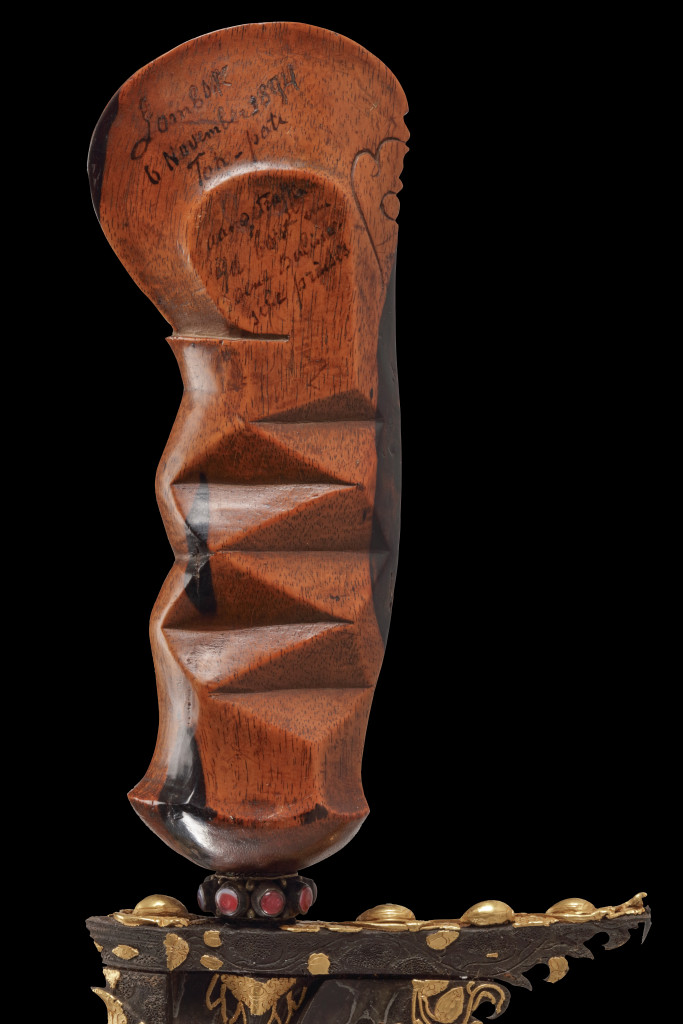
The keris bears an inscription in pen and ink reading:
Lombok, 6 November 1894, Toh-pati
Aangetroffen in den borst van eene Balineesche Prinses
This keris was found in the chest of a Balinese princess, according to the inscription. Keris daggers were usually for peaceful ritual and worship, but in times of war and imminent capture or death, the Balinese would commit ritual suicide or puputan. It might well be that this Princess committed suicide when the Dutch attacked Lombok. The keris probably was looted during the fourth puputan on Lombok, on the 26th of November 1894 at Tohpati
It could be that a female servant killed herself in the name of the Princess against the promise of a large sum of money to her family. Such actions were observed more often, for instance, when a deceased King or Prince was about to be cremated, and his wife had to join him (alive). The promise of riches to one’s family could persuade a lady of a lower kaste to take the place of the Princess. The latter then would disappear too but live her life elsewhere. The above almost makes one forget that it doesn’t matter who was killed with the dagger, for it probably was an innocent mother with children at home, anyway. Something one nowadays sometimes seems to forget.
The Dutch intervention in Karangasem in 1894 was a crucial event in the Dutch colonial expansion in Indonesia, leading to the full colonisation of Bali and Lombok by the early 20th century. Initially, Lombok was under the influence of Balinese rulers from Karangasem, with the Mataram group gaining control over the island by 1839. Following interactions with the English, the Dutch established a treaty with Mataram in 1843 to halt English influence in the region. Mataram allied with the Dutch during their intervention in Bali in 1849 and gained overlordship over Karangasem.
Conflict arose in 1891 when the Muslim Sasak of Eastern Lombok rebelled against the Balinese ruler, leading to a violent confrontation that lasted until 1894. The Sasak sought Dutch intervention, initially limited to a blockade and demands for Mataram’s submission. Following the blockade’s failure, the Dutch launched a military expedition in July 1894, which faced fierce resistance, culminating in a significant Dutch defeat at Mayura Palace in Cakranegara in August 1894, where over 500 Dutch soldiers and allies were killed.
The Dutch returned with reinforcements in November 1894, launching systematic attacks that destroyed Mataram and resulted in the deaths of around 2,000 Balinese, leading to the Dutch victory and control over Lombok and Karangasem. This intervention marked a significant expansion of Dutch influence in the region, with Lombok’s royal treasures seized and the region administered from Bali thereafter. The conflict underscored the Dutch colonial strategy of military intervention to consolidate control over the Indonesian archipelago.
With a Sangkelat Kembang kacang Pugot, with gold decoration, kinata mas, in the form of a Wedono Siji-Bintulu (flame of the sun) symbol on the Sor Boran or base. The pamor is kulit semangka halus (refined watermelon rind) and the hilt cekah solas in Pelet mbelang sapi wood.
L. 56 cm
Provenance:
Collection Witsenburg, the Netherlands
The keris bears an inscription in pen and ink reading:
Lombok, 6 November 1894, Toh-pati
Aangetroffen in den borst van eene Balineesche Prinses
This keris was found in the chest of a Balinese princess, according to the inscription. Keris daggers were usually for peaceful ritual and worship, but in times of war and imminent capture or death, the Balinese would commit ritual suicide or puputan. It might well be that this Princess committed suicide when the Dutch attacked Lombok. The keris probably was looted during the fourth puputan on Lombok, on the 26th of November 1894 at Tohpati
It could be that a female servant killed herself in the name of the Princess against the promise of a large sum of money to her family. Such actions were observed more often, for instance, when a deceased King or Prince was about to be cremated, and his wife had to join him (alive). The promise of riches to one’s family could persuade a lady of a lower kaste to take the place of the Princess. The latter then would disappear too but live her life elsewhere. The above almost makes one forget that it doesn’t matter who was killed with the dagger, for it probably was an innocent mother with children at home, anyway. Something one nowadays sometimes seems to forget.
The Dutch intervention in Karangasem in 1894 was a crucial event in the Dutch colonial expansion in Indonesia, leading to the full colonisation of Bali and Lombok by the early 20th century. Initially, Lombok was under the influence of Balinese rulers from Karangasem, with the Mataram group gaining control over the island by 1839. Following interactions with the English, the Dutch established a treaty with Mataram in 1843 to halt English influence in the region. Mataram allied with the Dutch during their intervention in Bali in 1849 and gained overlordship over Karangasem.
Conflict arose in 1891 when the Muslim Sasak of Eastern Lombok rebelled against the Balinese ruler, leading to a violent confrontation that lasted until 1894. The Sasak sought Dutch intervention, initially limited to a blockade and demands for Mataram’s submission. Following the blockade’s failure, the Dutch launched a military expedition in July 1894, which faced fierce resistance, culminating in a significant Dutch defeat at Mayura Palace in Cakranegara in August 1894, where over 500 Dutch soldiers and allies were killed.
The Dutch returned with reinforcements in November 1894, launching systematic attacks that destroyed Mataram and resulted in the deaths of around 2,000 Balinese, leading to the Dutch victory and control over Lombok and Karangasem. This intervention marked a significant expansion of Dutch influence in the region, with Lombok’s royal treasures seized and the region administered from Bali thereafter. The conflict underscored the Dutch colonial strategy of military intervention to consolidate control over the Indonesian archipelago.
Related objects
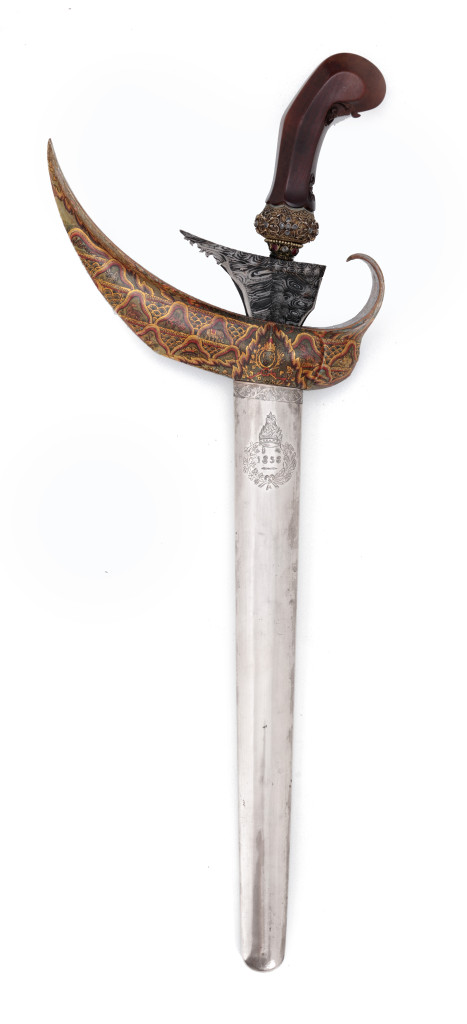
A rare Keris, dated 1858, with initials of Pakubuwono X
Java, Surakarta (Solo),
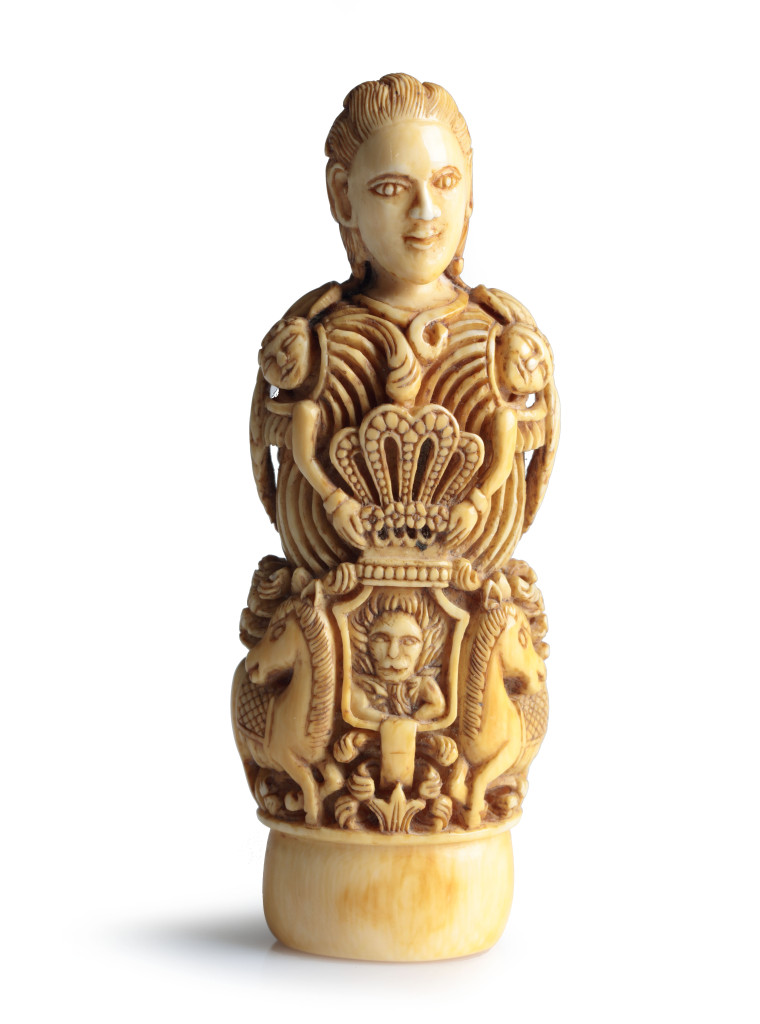
An Indonesian carved ivory keris hilt
Carved ivory keris hilt