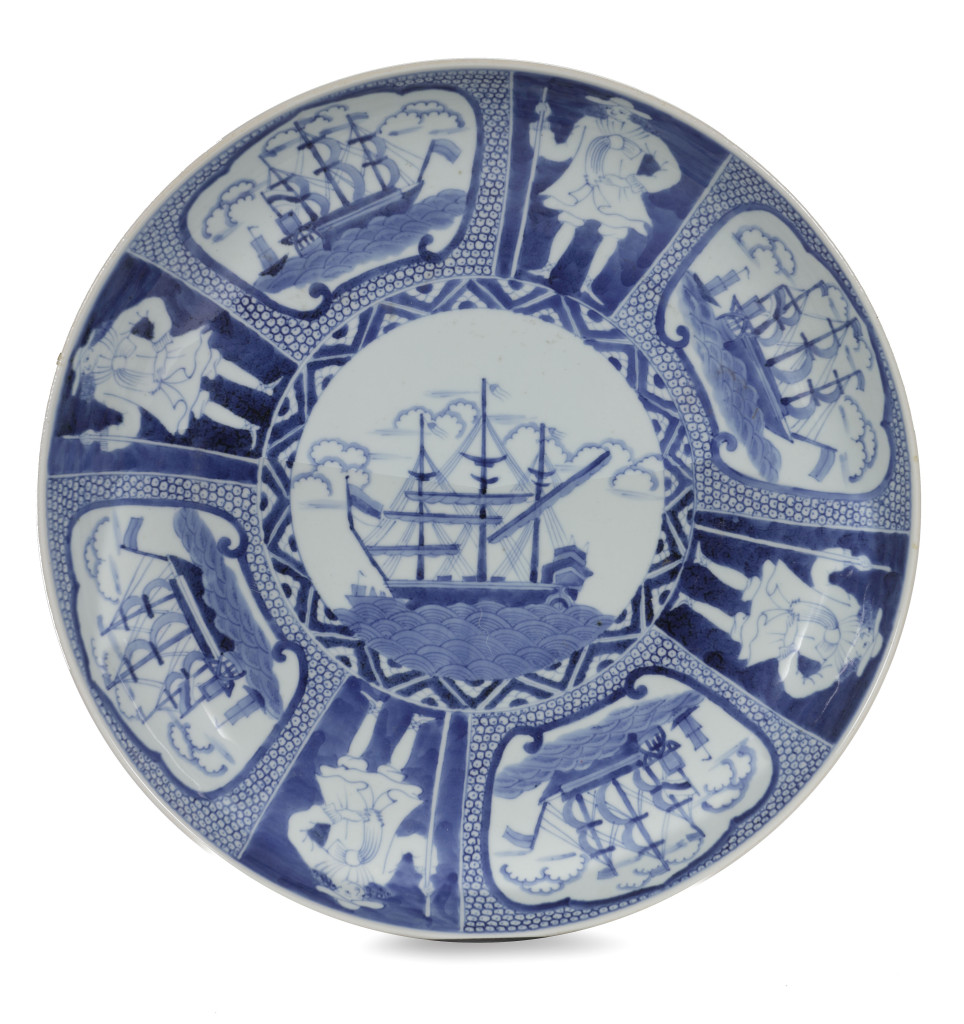
A large arita treasure ship dish
Centrally decorated with a Dutch ship at sea, surrounded by Wanli-style decorated border, the wide rim decorated with alternating cartouches with ships and panels with Dutchmen, marked with imitation Chenghua mark.
Diam. 45.2 cm
Dutchmen and Dutch “treasure” ships are a common decoration on 19th century Arita porcelain, based on an old Japanese belief in raihõshin, foreigners/gods from an unknown land beyond the sea, arriving on treasure ships, bringing happiness and prosperity.
Related objects

A rare small Japanese Arita porcelain 'VOC' plate
This smaller than usual dish is painted in underglaze blue with the VOC (Vereenigde Oost Indische Compagnie) monogram in the centre, surrounded by two “ho-ho” birds and the border with alternating panels of pomegranates and bamboo. The distinctive blue and white plates with the VOC monogram, in the popular Chinese Wanli “Kraak” style were produced in Arita, Japan between 1660 and 1680, during the internal wars in China. The porcelain production at Arita however never was very profitable for the Dutch and when the Qing Dynasty had established itself in China the Dutch and others looked for porcelain in China again. These Arita plates with the VOC monogram for use by Officers of the Company, were ordered by the VOC only once or twice in the early eighties of the 17th century and no more after that period.
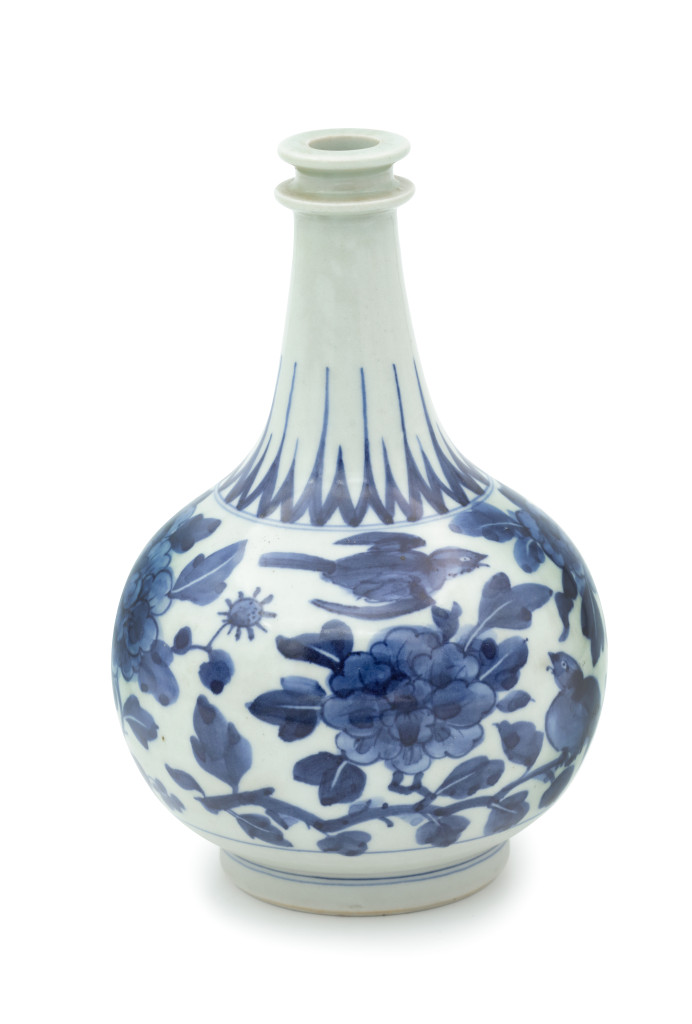
A small Japanese blue-and-white Arita porcelain bottle marked P.VD
In a laurel wreath, the initials P.VD can be seen on the underside of the bottle, standing for Pieter van Dijck. Pieter van Dijck, in 1684, married Cornelia Cleijer in Batavia, becoming the son-in-law of Andreas Cleijer, Opperhoofd or chief merchant in Japan at Deshima from 1682 till 1683 and 1685 till 1686. Pieter himself was an assistant merchant and Tweede Dispensier in Batavia in 1684 and in 1690 Secunde in Japan at Deshima under Opperhoofd Hendrik van Buytenhem. It is most likely he ordered this bottle during his stay on the island tradepost.
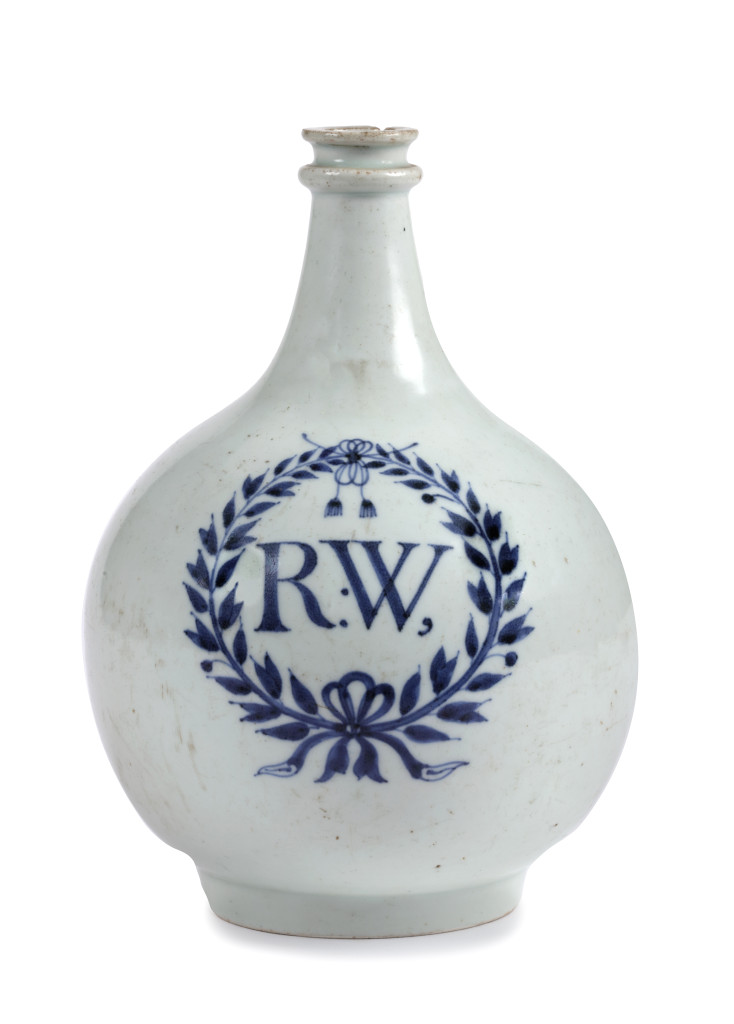
A Japanese Arita blue-and-white porcelain bottle with the initials RW
There is also an Imari bottle with the letters RW inside a simple circle and without the dots between the letters, possibly standing for Rheinland Wine (see: Uit Verre Streken, March 2023, no. 59). R:W, with the dots between the letters and inside a wreath are the initials of a person, in this case probably of Richard Woodward or Richardus Woodwart the younger, ondercoopman, negotieboeckhouder and secunde on Deshima, appointed by opperhoofd Hendrik Dijckman as temporary opperhoofd in Deshima on February 13, 1699, in Dijckman’s place while he himself was on his way to the court to Edo.