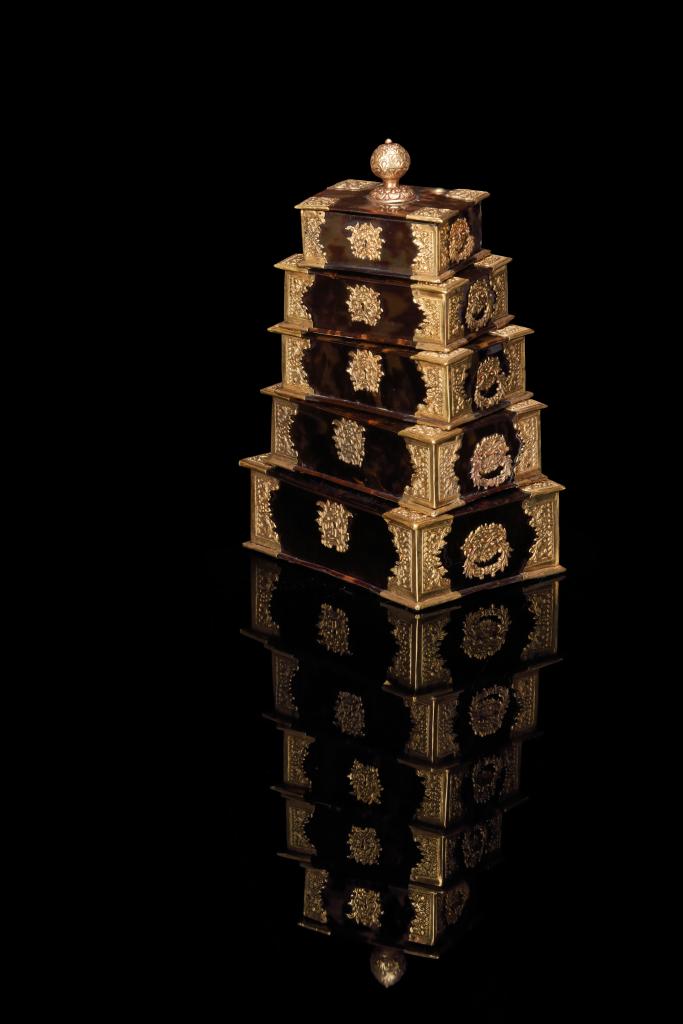
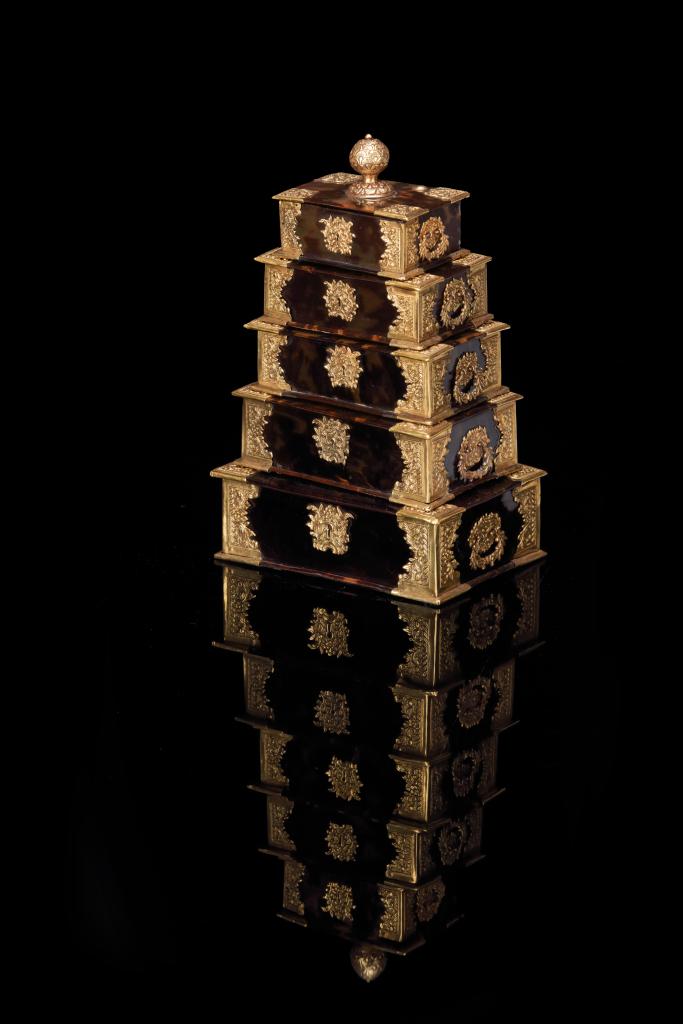
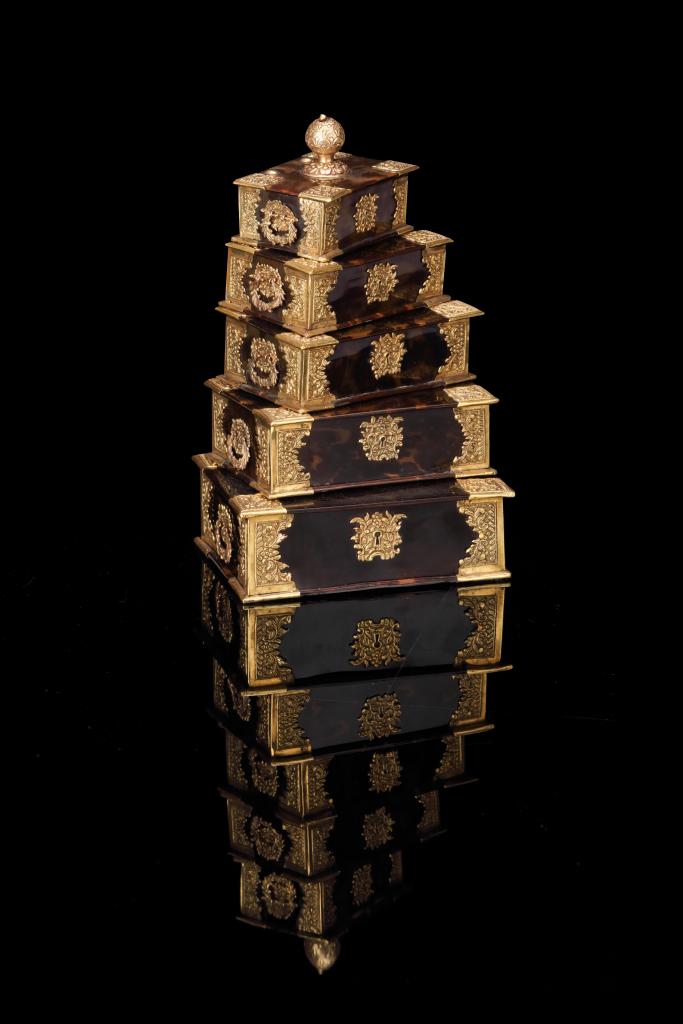
A pyramid of five Dutch-colonial turtleshell sirih caskets with gold mounts
Batavia (Jakarta), early 19th century
The top box with a berry finial, the corners mounted in gilt metal and the sides flanked by swing handles, the interior hinges in white metal.
Largest: H. 5 x W. 10 x L. 14 cm
Provenance:
Röell Antiques, Maastricht
Peter Petrou Works of Art, London
Private collection, United Kingdom
Before settling down to business in the former Dutch East Indies, sirih had to be offered in the most exquisite boxes of gold, silver, inlaid with precious stones, ivory, or tortoiseshell. The costliness of one’s sirih box displayed one’s fortunes. Sirih or Betel boxes with gold mounts are rare because the gold was often melted down in times of dire need. This particular pyramid of boxes belonged to an Indonesian owner because it has a fob lock. Steeling in Indonesian culture means the one who got caught would have to live with one hand or not continue living at all. So, a lock was not needed. However, having a European ‘lock’ in your betel box was rather fashionable.
The top box with a berry finial, the corners mounted in gilt metal and the sides flanked by swing handles, the interior hinges in white metal.
Largest: H. 5 x W. 10 x L. 14 cm
Provenance:
Röell Antiques, Maastricht
Peter Petrou Works of Art, London
Private collection, United Kingdom
Before settling down to business in the former Dutch East Indies, sirih had to be offered in the most exquisite boxes of gold, silver, inlaid with precious stones, ivory, or tortoiseshell. The costliness of one’s sirih box displayed one’s fortunes. Sirih or Betel boxes with gold mounts are rare because the gold was often melted down in times of dire need. This particular pyramid of boxes belonged to an Indonesian owner because it has a fob lock. Steeling in Indonesian culture means the one who got caught would have to live with one hand or not continue living at all. So, a lock was not needed. However, having a European ‘lock’ in your betel box was rather fashionable.
Part of the Indonesian Archipelago collection.
Related objects
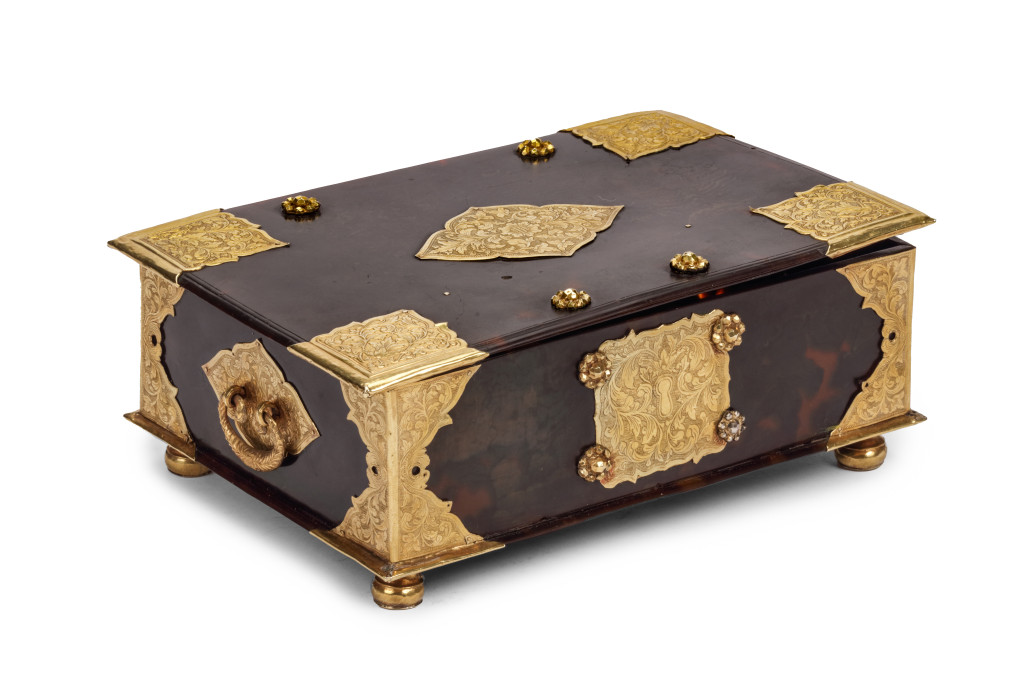
A Dutch-colonial Indonesian tortoiseshell sirih or betel box with gold mounts
_Batavia (Jakarta), early 19th century_ _H. 5 x W. 18 x D. 13 cm_ Provenance: Private collection, the Hague
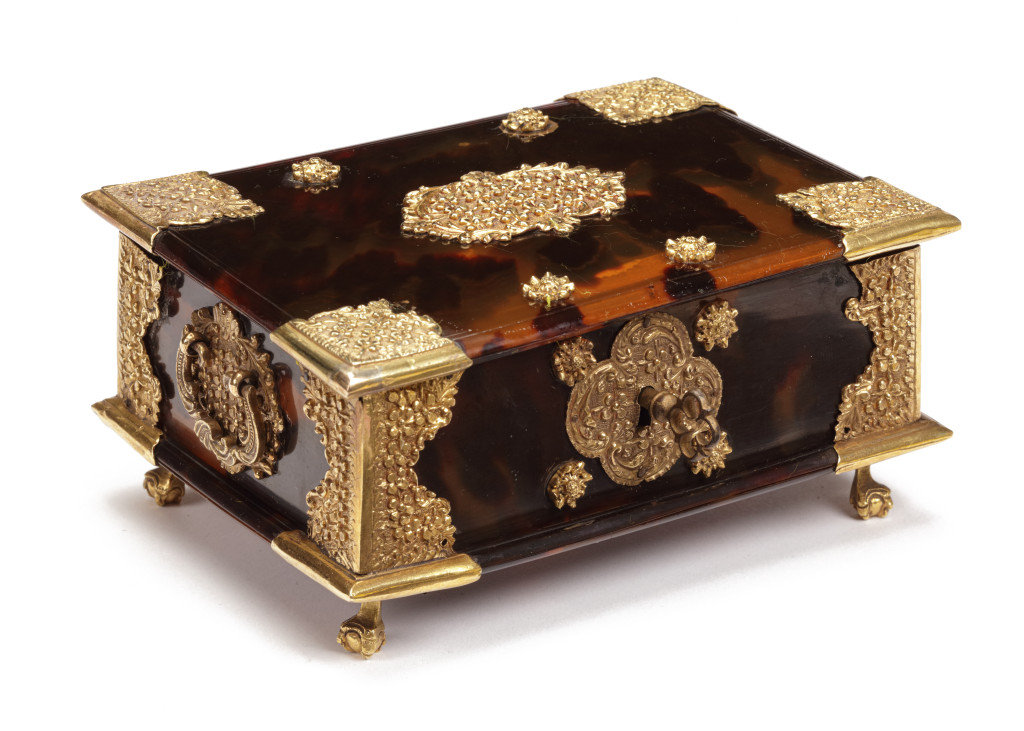
A small Dutch colonial Indonesian tortoiseshell sirih or betel box with gold mounts
Jakarta (Batavia), late 18th century, apparently unmarked L. 14 x W. 9.5 x H. 4.7 cm