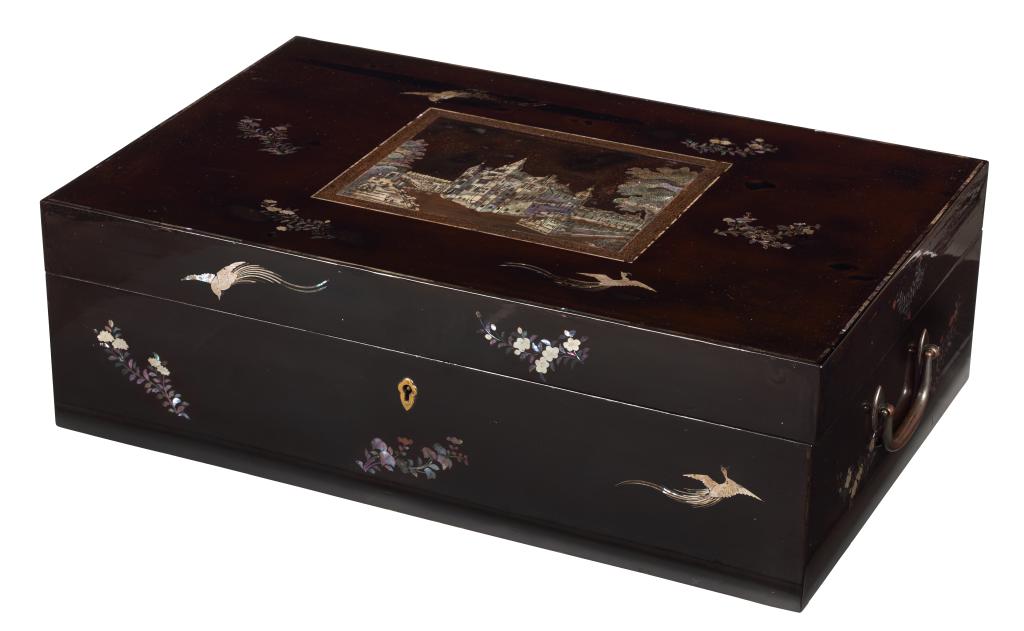
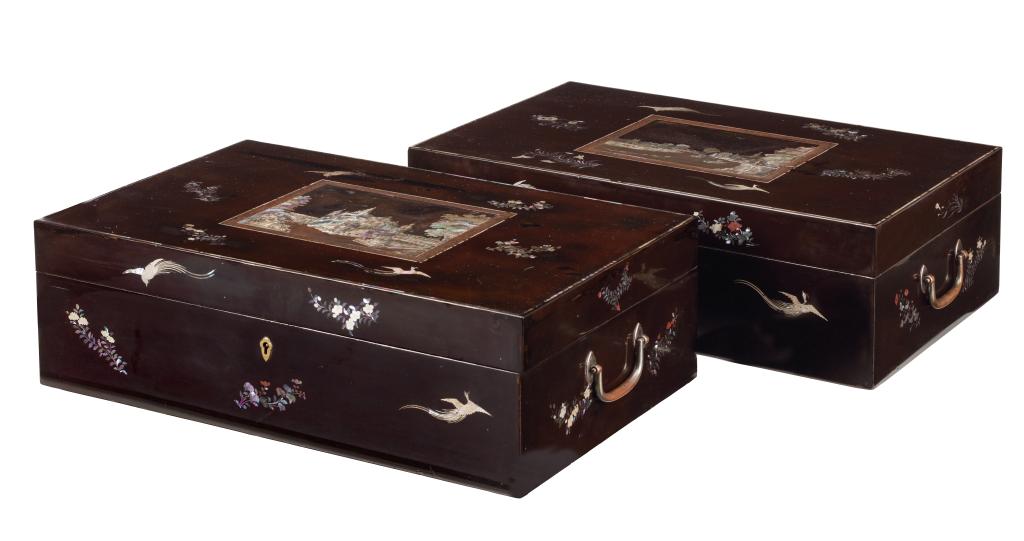
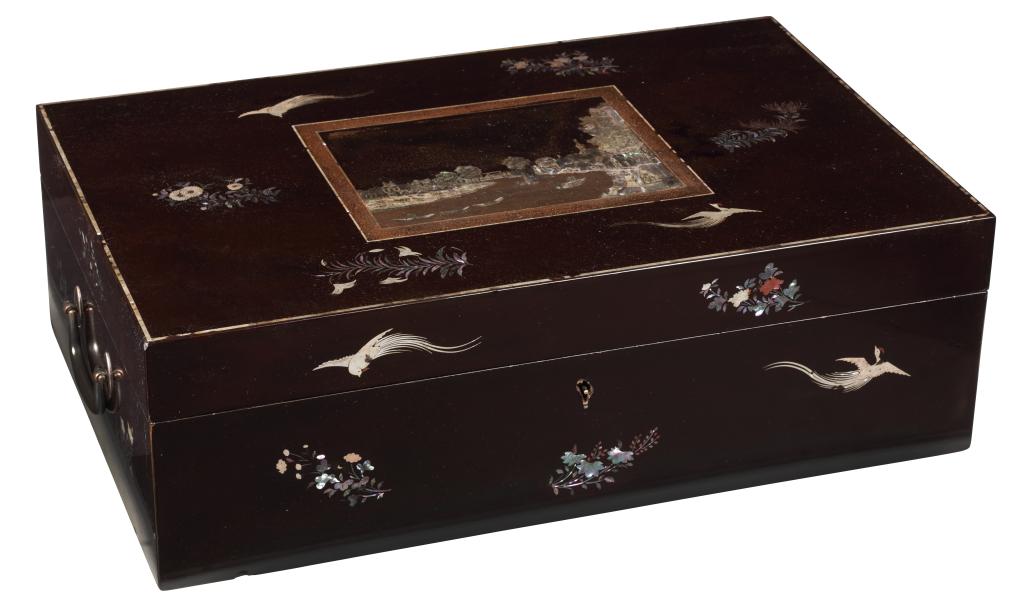
A pair of Japanese export lacquer document boxes with views of Slot Zuylen and the village Zuylen
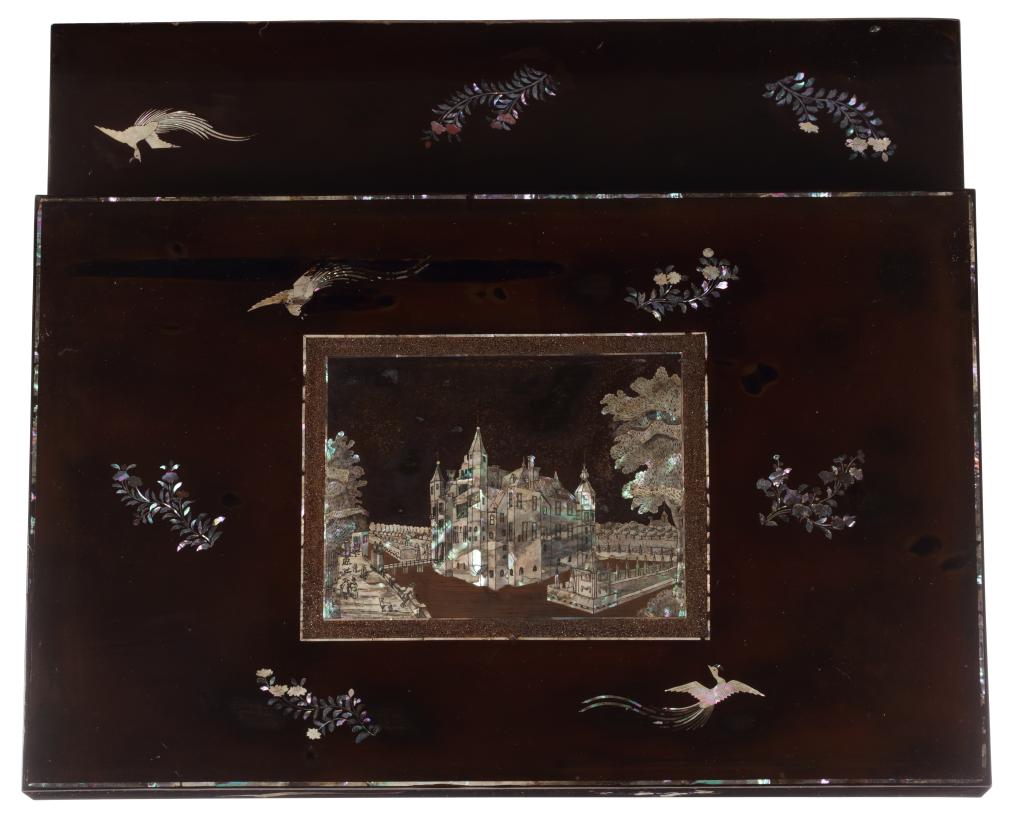
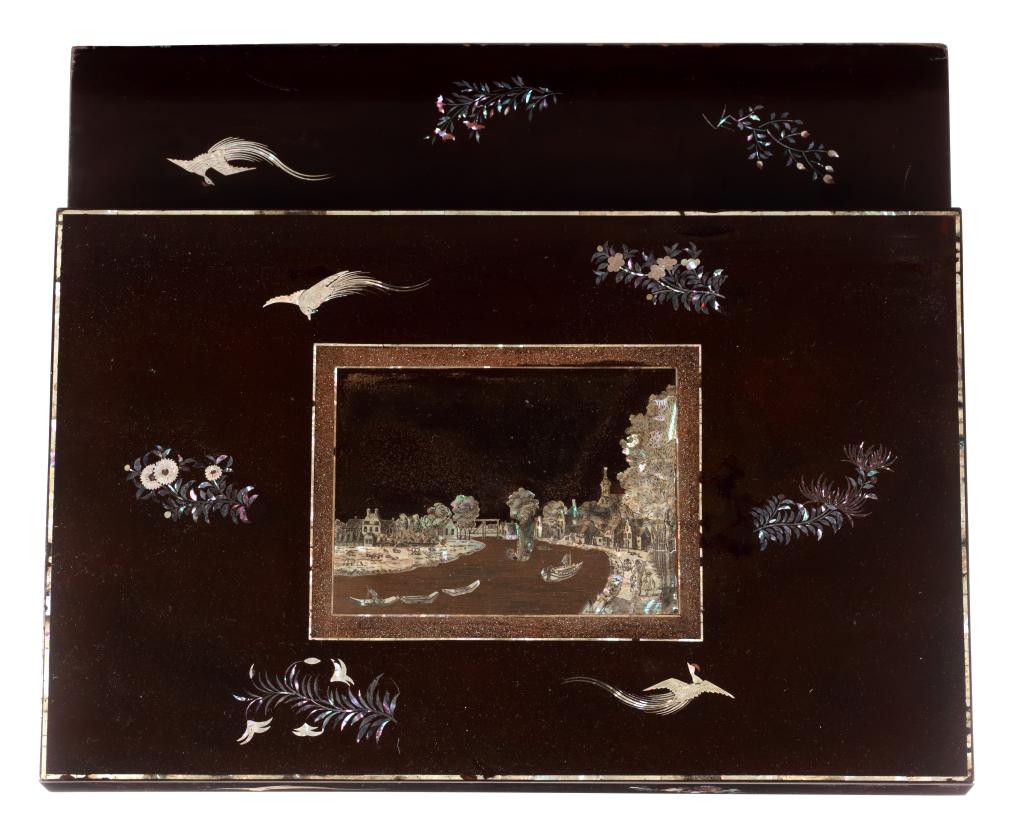
Each rectangular wooden box is urushi-lacquered and allover decorated with scattered birds and flower sprays in mother-of-pearl. The lids have mother-of-pearl views in a rectangular reserve after the engravings Het Huis te ZUYLEN; van den Hr Reynaud Gerard van Thuyl van Serooskerken. / La Maison de ZUYLEN du Sr R: Gerard van Thuyl de Serooskerken, and, Het Dorp ZUYLEN; en daer neven het (1) landhuis van Juffr: du Pon. / Le Village de ZUYLEN avec (1) La maison de Mademoiselle du Pon. Both engravings were published in De Zegepralende Vecht in 1719.
H. 16.6 x W. 52.5 x D. 33.5 cm (each)
Provenance:
Willem René van Tuyll van Serooskerken, Lord of Zuylen (1743-1839); by descent to his son Diederik Jacob van Tuyll van Serooskerken (The Hague, 1772 – Washington, 1826) [...] Private collection, Connecticut; thence by descent to the previous owner
Reynaud or Reinout Gerard van Tuyl van Serooskerken (1677-1727), husband of Isabelle Agnes Hoeufft, was the son of Hendrik Jacob van Tuyl van Serooskerken (1642-1692), who was the first of the Van Tuyll family to own Castle Zuylen by marrying Anna Elisabeth van Reede. His grandson Willem René van Tuyll van Serooskerken, Lord of Zuylen (1743-1839), most likely ordered the pair of lacquer boxes. In 1812, Napoleon Bonaparte raised Willem René to Baron de l’Empire, and after Napoleon was defeated, he was raised to Jonkheer and Baron in the Dutch aristocracy, and in 1815, became a member of De Eerste Kamer der Staten-Generaal. The most famous inhabitant of Castle Zuylen was Belle van Zuylen (1740-1805), sister of Willem René. She was a famous writer, painter, and composer and corresponded with many famous artists and scientists in Europe. The castle remained in the Van Tuyll family till 1952 and is now a much-admired museum.
The house, 'Groenhoven', in the village of Zuylen belonged to Miss Du Pon, the widow of Steven, who was mentioned as the first owner of Groenhoven in 1675. Steven Dupont (or Du Pon) was a rich merchant and soap-boiler, and he married Anna Duynen. After Anna died in 1743, Groenhoven passed through a number of different owners till 1768. In 1768, Groenhoven came into the possession of Hendrik Jacob, Baron van Tuyll van Serooskerken, and remained in the Van Tuyll van Serooskerken family until 1902, when it was demolished.
When the present boxes were made in the early 19th century, both houses were in the possession of Willem René van Tuyl van Serooskerken, who must have ordered the present boxes. No other person would spend such a lavish amount on two boxes with an image of something that's not his.
Willem René’s oldest son, Diederik Jacob or Fjodor van Tuyll van Serooskerken (The Hague, 1772 – Washington, 1826), was a military man. He first served in the Dutch Army, but after the defeat of the Dutch by Napoleon in 1803, he joined the Russian Army, fighting as a major-general in the Napoleonic Wars. After the fall of Napoleon, Czar Alexander sent Diederik Jacob as envoy to Italy, and in 1822, as ambassador to the United States, where he died childless in 1826.
President Andrew Jackson, in 1833, bought a collection of over 75 kilograms of French Empire silver from the estate of Diederik Jacob, engraved with the Van Tuyll family coat of arms, which is still present in the White House. Since the present pair of boxes was acquired from an estate in the United States, Willem René likely passed the boxes on to his oldest son, together with the silverware, which further confirms the provenance.
Part of the Japan collection.
Related objects
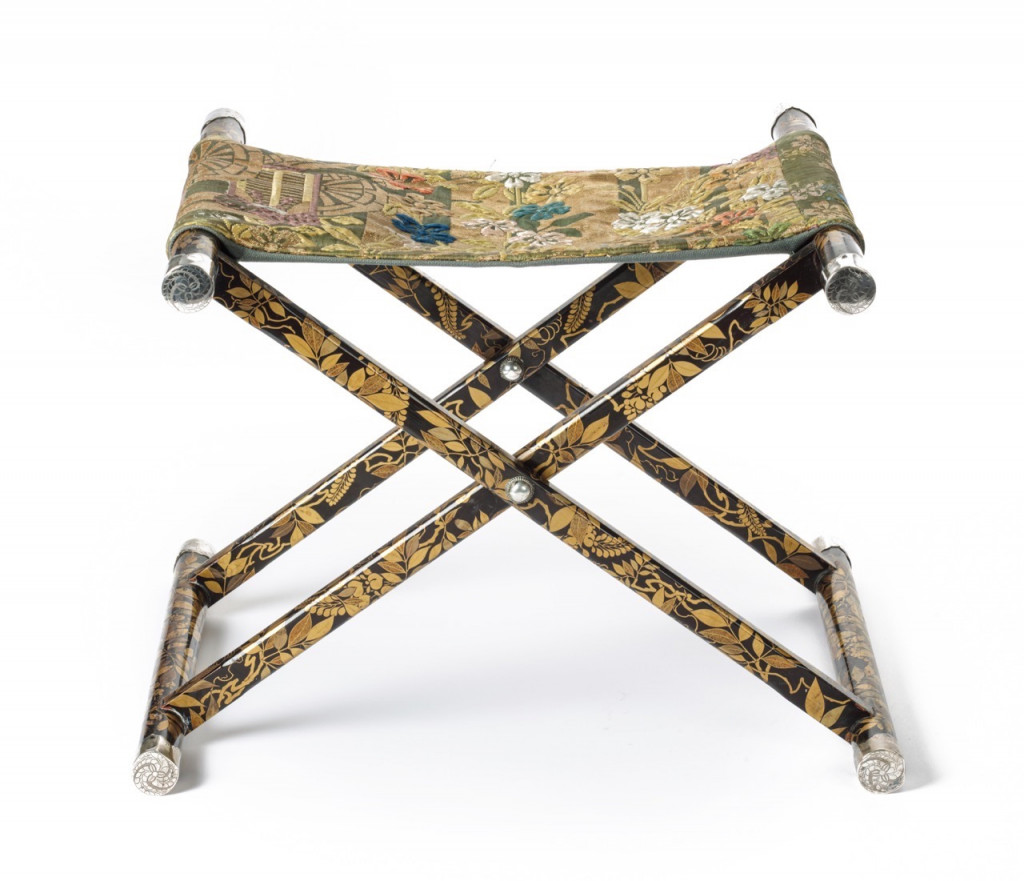
A small Japanese lacquer X-frame folding stool, or kyũsõdai
A Japanese lacquer small X-frame folding stool, kyũsõdai from Kyoto, the Sengoku period, late 16th century. Black and gold lacquer, hiramaki-e decorated in the pictorial style with grape vine and clematis flowers and leaves, in the kodaiji maki-e style with engraved silver knobs with mitsudomoe, whirling motives and a silk textile woven in kinran (gold leaf on paper) with a design of cherry blossom and a kago, palanquin, with alternating green and gold bands. The textile 17th or 18th century.
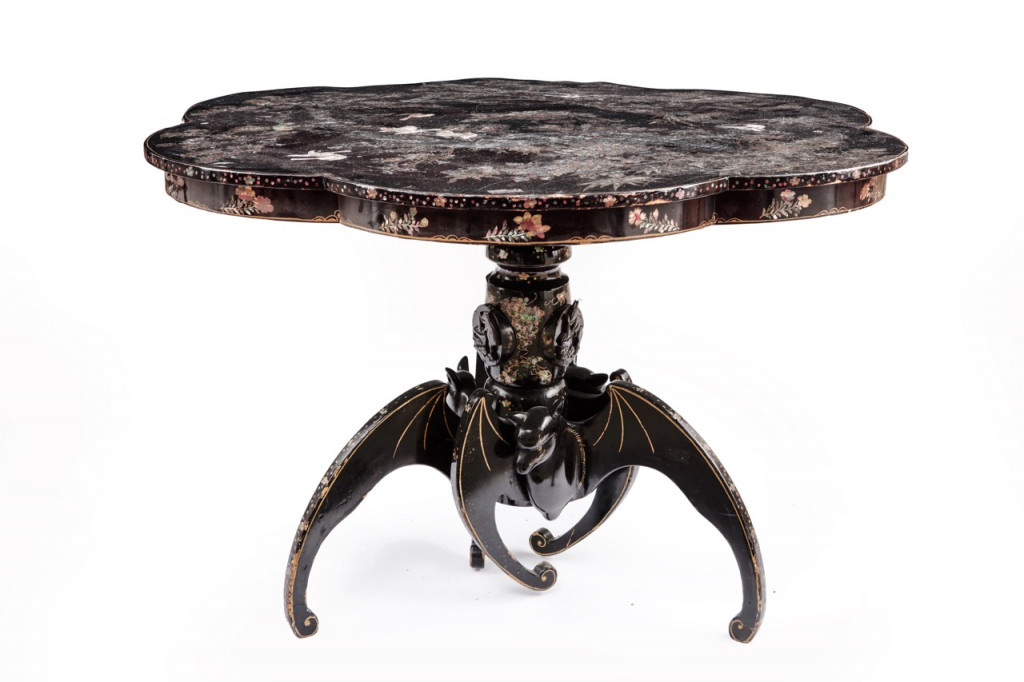
A Japanese export lacquer tripod table with feet shaped as bats
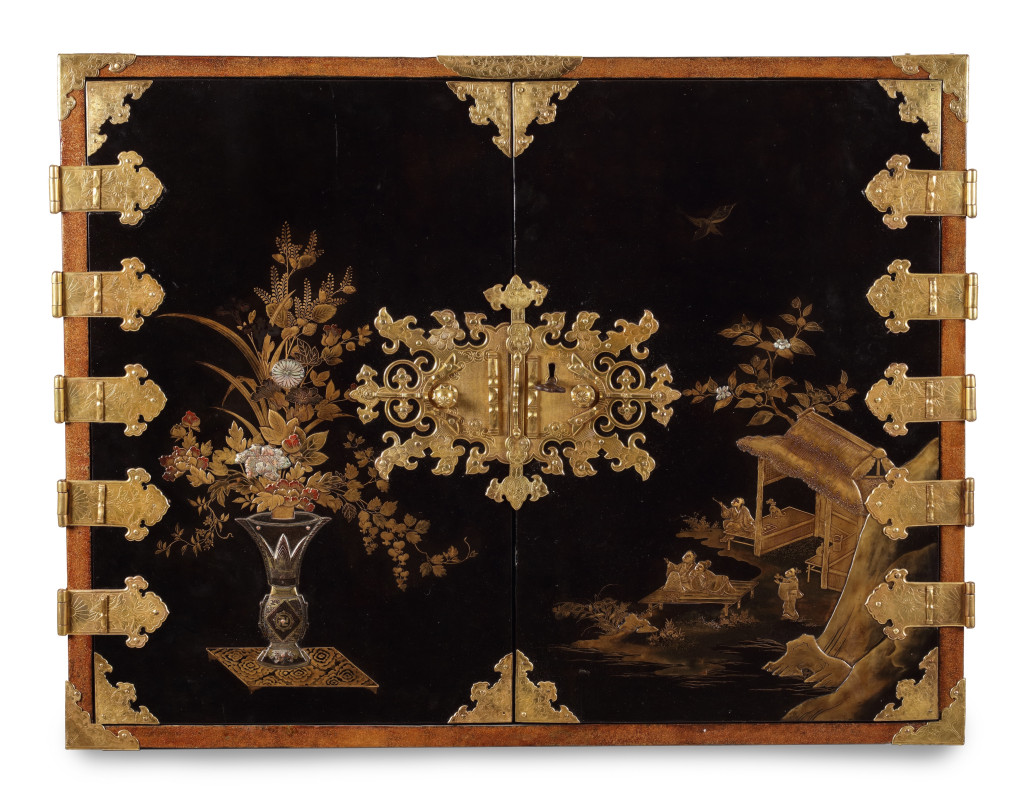
A fine Japanese lacquer cabinet with gilt-copper mounts for the European market
The rectangular cabinet with two hinged doors opening to reveal ten various sized drawers, decorated on the doors with a teapot and a potted shrub in gold, silver and red hiramaki-e, takamaki-e, hirame and nashiji, the sides with birds perched on trees, on a black ground, with the inside of the door with sprinkled gold, nashiji and silver inlaid flower-petals, the drawer fronts decorated with flowers, trees and small pavilions in rocky landscapes (sansui), in gold hiramaki-e and takamaki-e.